BY ELLIE LANGTON 
There are many different codes and conventions of interviews that occur in the documentary genre 
such as;
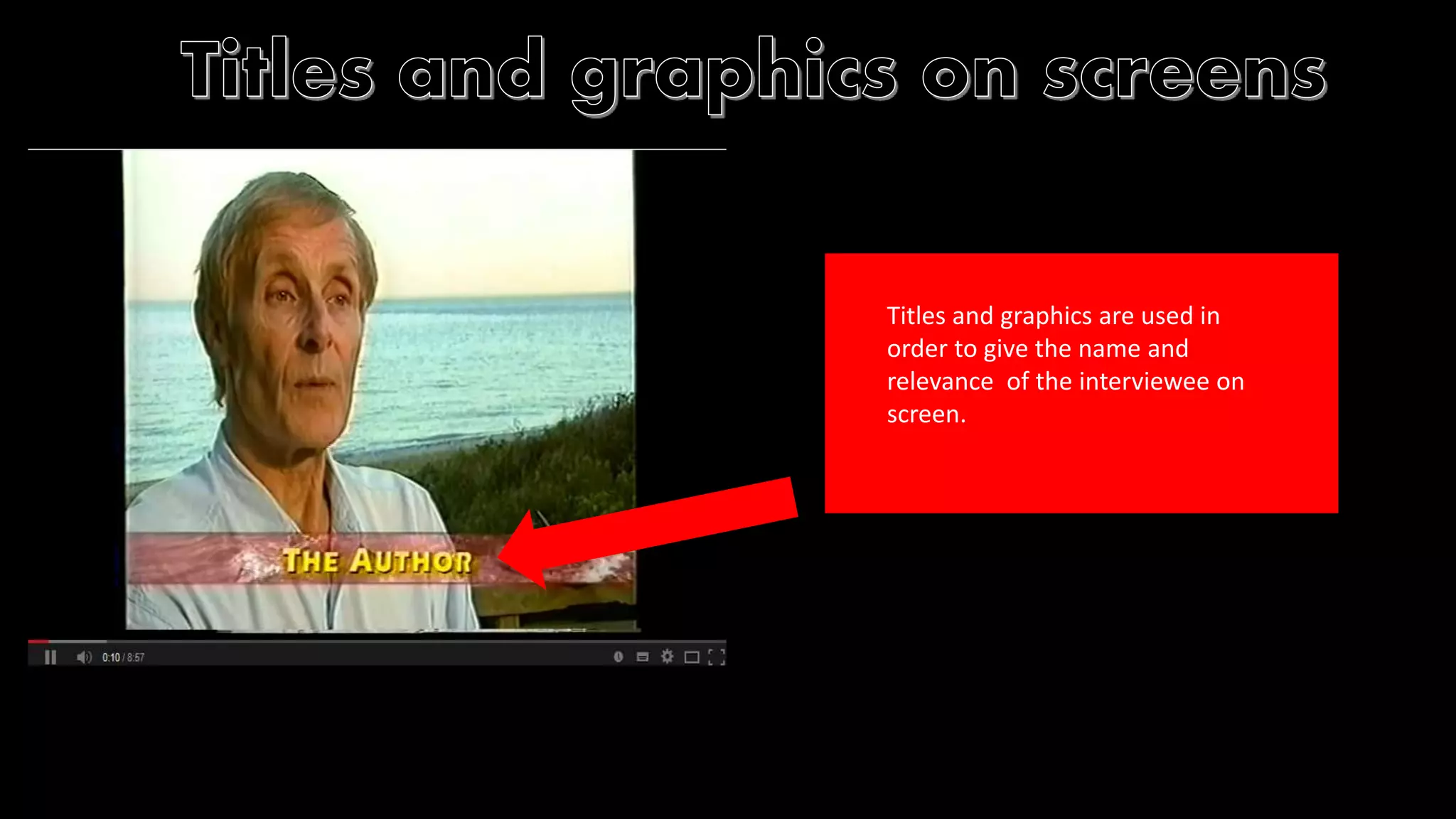
Titles and graphics are used in 
order to give the name and 
relevance of the interviewee on 
screen.
When filiming an interview rule of thirds is very important, this is imaginary guidelines when framing your 
camera lens. The idea is to mentally divide the screen up into 9 squares, or rectangles depending on your 
frame, by using two equally spaced horizontal lines and two equally spaced vertical lines. Where these 
lines cross over, they’ll create 4 cross-sectional points and this is where the focal point is. This means that 
this is where the eye is naturally drawn to when looking at an overall image. Therefore, when you take a 
photo, or want to film, your subject should fall onto one of the cross-section points or along one of the 
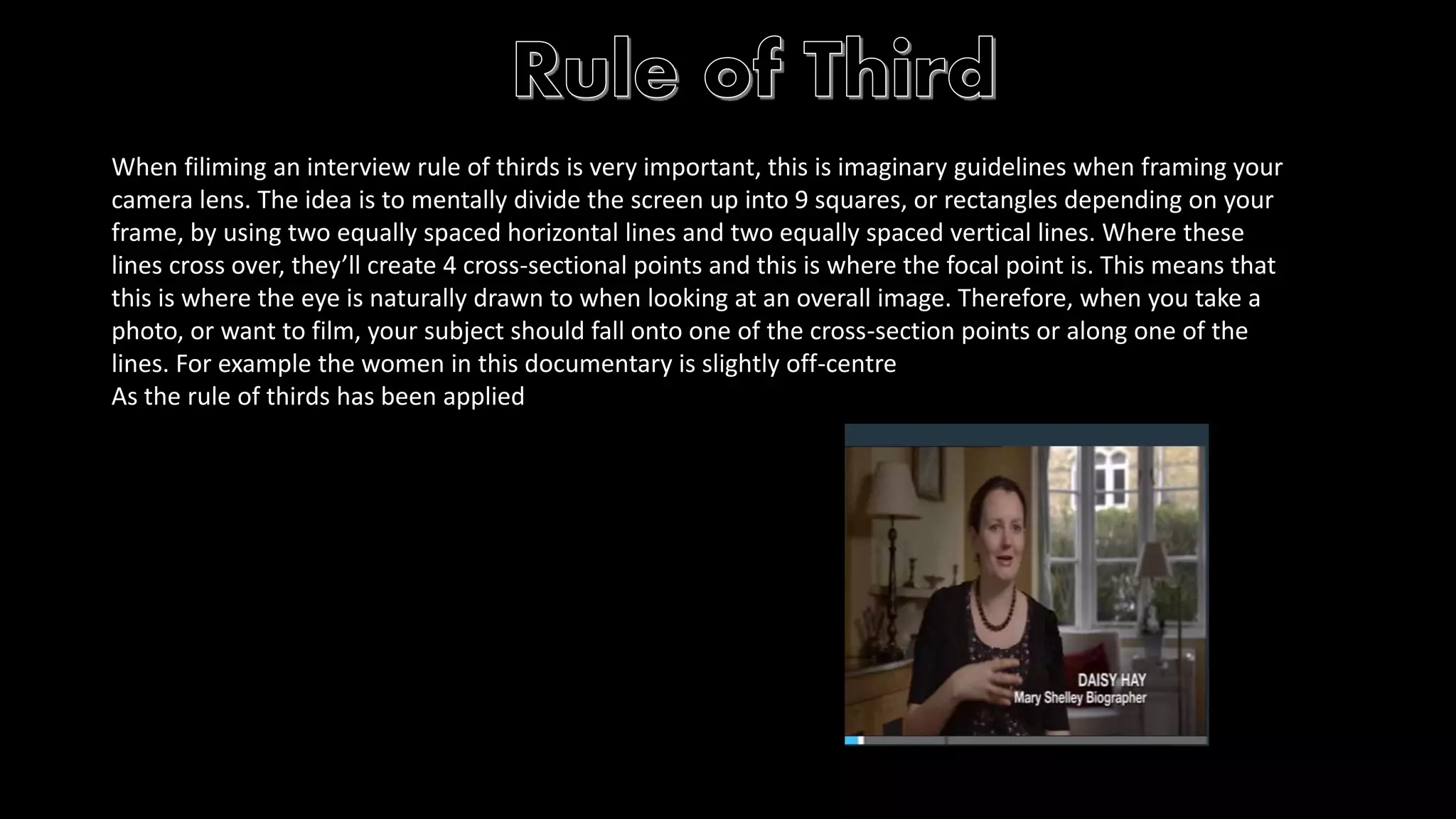
lines. For example the women in this documentary is slightly off-centre 
As the rule of thirds has been applied
The appropriate Mise en scene for all interviews needs to show the 
relevance of the documentary topic and also provide more information on 
their professional role. For example, if you were interviewing a doctor or 
medical professional you would choose the mise en scene to be with in a 
lab or doctors waiting room, and you would have medical equipment 
surrounding it and them wearing a relevant uniform. The lighting of an 
interview is also important as it sets the tone, it is always good when 
interviewing to have high key lighting, as it helps the over all look and the 
interviewee is seen properly, but low key lighting could be used if a specific 
person didn’t want to be identified on camera for a particular reason and if 
you were trying to portray connotations of good and evil.
The majority of interview shots are medium close up which was is to 
show the expressions of the interviewers and to connote their 
professional importance within our documentary. Also, the majority of 
the interviewees are not facing the camera directly to achieve the most 
natural interview as possible. No direct address to lense (audience)
• Questions are edited out of interviews 
• Cutaways are added in, in order to give the interview a 
flowing pace 
• It is a good idea to ask the interviewee to leave pauses before 
they answer a question so there is no overlap when editing 
• Sometimes it is a good idea to play the end of a question 
asked over a cutaway which again just makes sure the 
interviews runs smoothly

Interview codes and conventions[1] media a2

  • 1.
    BY ELLIE LANGTON There are many different codes and conventions of interviews that occur in the documentary genre such as;
  • 2.
    Titles and graphicsare used in order to give the name and relevance of the interviewee on screen.
  • 3.
    When filiming aninterview rule of thirds is very important, this is imaginary guidelines when framing your camera lens. The idea is to mentally divide the screen up into 9 squares, or rectangles depending on your frame, by using two equally spaced horizontal lines and two equally spaced vertical lines. Where these lines cross over, they’ll create 4 cross-sectional points and this is where the focal point is. This means that this is where the eye is naturally drawn to when looking at an overall image. Therefore, when you take a photo, or want to film, your subject should fall onto one of the cross-section points or along one of the lines. For example the women in this documentary is slightly off-centre As the rule of thirds has been applied
  • 4.
    The appropriate Miseen scene for all interviews needs to show the relevance of the documentary topic and also provide more information on their professional role. For example, if you were interviewing a doctor or medical professional you would choose the mise en scene to be with in a lab or doctors waiting room, and you would have medical equipment surrounding it and them wearing a relevant uniform. The lighting of an interview is also important as it sets the tone, it is always good when interviewing to have high key lighting, as it helps the over all look and the interviewee is seen properly, but low key lighting could be used if a specific person didn’t want to be identified on camera for a particular reason and if you were trying to portray connotations of good and evil.
  • 5.
    The majority ofinterview shots are medium close up which was is to show the expressions of the interviewers and to connote their professional importance within our documentary. Also, the majority of the interviewees are not facing the camera directly to achieve the most natural interview as possible. No direct address to lense (audience)
  • 6.
    • Questions areedited out of interviews • Cutaways are added in, in order to give the interview a flowing pace • It is a good idea to ask the interviewee to leave pauses before they answer a question so there is no overlap when editing • Sometimes it is a good idea to play the end of a question asked over a cutaway which again just makes sure the interviews runs smoothly