Embedding Risk Management into
Business Operations
Internal Control
Practical Guide
Ahmad Tariq Bhatti, FCMA, CGMA
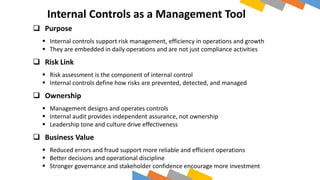
Internal Controls as a Management Tool
 Purpose
 Internal controls support risk management, efficiency in operations and growth
 They are embedded in daily operations and are not just compliance activities
 Risk Link
 Risk assessment is the component of internal control
 Internal controls define how risks are prevented, detected, and managed
 Ownership
 Management designs and operates controls
 Internal audit provides independent assurance, not ownership
 Leadership tone and culture drive effectiveness
 Business Value
 Reduced errors and fraud support more reliable and efficient operations
 Better decisions and operational discipline
 Stronger governance and stakeholder confidence encourage more investment
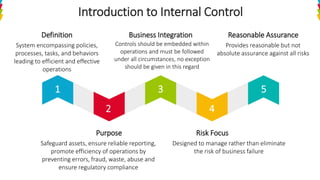
5
Provides reasonable but not
absolute assurance against all risks
Reasonable Assurance
4
Designed to manage rather than eliminate
the risk of business failure
Risk Focus
3
Business Integration
2
Safeguard assets, ensure reliable reporting,
promote efficiency of operations by
preventing errors, fraud, waste, abuse and
ensure regulatory compliance
Purpose
1
System encompassing policies,
processes, tasks, and behaviors
leading to efficient and effective
operations
Definition
Introduction to Internal Control
Controls should be embedded within
operations and must be followed
under all circumstances, no exception
should be given in this regard
ATB 4
ATB 5
ATB 6
ATB 7
ATB 8
ATB 9
ATB 10
ATB 11
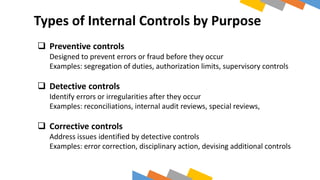
 Preventive controls
Designed to prevent errors or fraud before they occur
Examples: segregation of duties, authorization limits, supervisory controls
 Detective controls
Identify errors or irregularities after they occur
Examples: reconciliations, internal audit reviews, special reviews,
 Corrective controls
Address issues identified by detective controls
Examples: error correction, disciplinary action, devising additional controls
Types of Internal Controls by Purpose
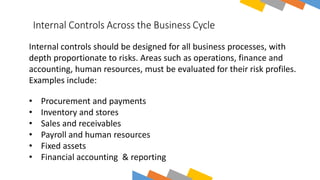
Internal controls should be designed for all business processes, with
depth proportionate to risks. Areas such as operations, finance and
accounting, human resources, must be evaluated for their risk profiles.
Examples include:
• Procurement and payments
• Inventory and stores
• Sales and receivables
• Payroll and human resources
• Fixed assets
• Financial accounting & reporting
ATB 14
ATB 15
ATB 16
ATB 17
6 Internal audit should report regularly
to the Board via the Audit Committee
Board Reporting
5 Function must maintain objectivity and
adequate resources to be effective
Independence Requirement
4 Internal audit should provide value-
added services to the Board
Value-Added Service
3 Evaluate other means of obtaining
sufficient objective assurance if no
internal audit
Assurance Alternative
2 Consider the complexity, diversity and scale of
business operations, evaluate the effectiveness of
current controls, reinforce them with the additional
controls, check the need for new controls, review
employee numbers and corporate culture
Risk Factors
1 Board should annually assess the need
for internal audit function, new areas
and review resources
Annual Review
Internal Audit Function
ATB 19
6 Implement ongoing monitoring and
annual effectiveness reviews for
continuous improvement
Continuous Improvement
5 Determine resource requirements and
obtain board commitment for process
implementation
Resource Mobilization
4 Design new or adapt existing processes
with management and assurance
function input
Design Process
3 Develop a clear vision and framework
defining what successful risk
management looks like
Clear Vision
2 Document and assess existing
processes before implementing a new
risk management framework
Current State
1 Making a business case demonstrating
risk management benefits to business
performance, efficiency & growth
Case for Risk Management
Embedding Risk-Based Methodology
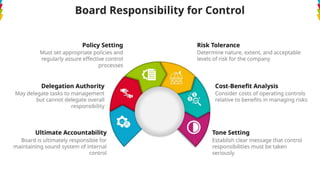
Role of the Management & Internal Audit
• Management designs and operates controls
• Controls are part of daily work and activities
• Internal audit independently evaluates controls
• Audit provides assurance, not ownership
• Strong controls mitigate risks
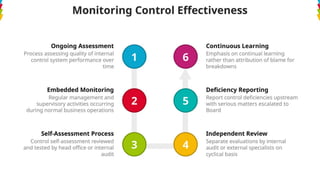
• Controls are reviewed through ongoing management
oversight, periodic evaluations, and internal audit. They should
be fortified after regular reviews
• Business units should assess the effectiveness of controls
• CSA promotes ownership and accountability
• It identifies control weaknesses early
• It encourages risk awareness and mitigation
• It reduces surprises during audits
• It helps management in developing and implementing an effective
system of controls
• CSA results should be independently validated to mitigate self-
assessment bias by the internal audit
Control Self-Assessment (CSA)
Finally,
Effective internal control is a shared responsibility
across management, operations, and assurance
functions.
ATB 24
ATB 25

Internal Control Practical Guide (Developing & Implementing Internal Controls)

  • 1.
    Embedding Risk Managementinto Business Operations Internal Control Practical Guide Ahmad Tariq Bhatti, FCMA, CGMA
  • 2.
    Internal Controls asa Management Tool  Purpose  Internal controls support risk management, efficiency in operations and growth  They are embedded in daily operations and are not just compliance activities  Risk Link  Risk assessment is the component of internal control  Internal controls define how risks are prevented, detected, and managed  Ownership  Management designs and operates controls  Internal audit provides independent assurance, not ownership  Leadership tone and culture drive effectiveness  Business Value  Reduced errors and fraud support more reliable and efficient operations  Better decisions and operational discipline  Stronger governance and stakeholder confidence encourage more investment
  • 3.
    5 Provides reasonable butnot absolute assurance against all risks Reasonable Assurance 4 Designed to manage rather than eliminate the risk of business failure Risk Focus 3 Business Integration 2 Safeguard assets, ensure reliable reporting, promote efficiency of operations by preventing errors, fraud, waste, abuse and ensure regulatory compliance Purpose 1 System encompassing policies, processes, tasks, and behaviors leading to efficient and effective operations Definition Introduction to Internal Control Controls should be embedded within operations and must be followed under all circumstances, no exception should be given in this regard
  • 4.
  • 5.
  • 6.
  • 7.
  • 8.
  • 9.
  • 10.
  • 11.
  • 12.
     Preventive controls Designedto prevent errors or fraud before they occur Examples: segregation of duties, authorization limits, supervisory controls  Detective controls Identify errors or irregularities after they occur Examples: reconciliations, internal audit reviews, special reviews,  Corrective controls Address issues identified by detective controls Examples: error correction, disciplinary action, devising additional controls Types of Internal Controls by Purpose
  • 13.
    Internal controls shouldbe designed for all business processes, with depth proportionate to risks. Areas such as operations, finance and accounting, human resources, must be evaluated for their risk profiles. Examples include: • Procurement and payments • Inventory and stores • Sales and receivables • Payroll and human resources • Fixed assets • Financial accounting & reporting
  • 14.
  • 15.
  • 16.
  • 17.
  • 18.
    6 Internal auditshould report regularly to the Board via the Audit Committee Board Reporting 5 Function must maintain objectivity and adequate resources to be effective Independence Requirement 4 Internal audit should provide value- added services to the Board Value-Added Service 3 Evaluate other means of obtaining sufficient objective assurance if no internal audit Assurance Alternative 2 Consider the complexity, diversity and scale of business operations, evaluate the effectiveness of current controls, reinforce them with the additional controls, check the need for new controls, review employee numbers and corporate culture Risk Factors 1 Board should annually assess the need for internal audit function, new areas and review resources Annual Review Internal Audit Function
  • 19.
  • 20.
    6 Implement ongoingmonitoring and annual effectiveness reviews for continuous improvement Continuous Improvement 5 Determine resource requirements and obtain board commitment for process implementation Resource Mobilization 4 Design new or adapt existing processes with management and assurance function input Design Process 3 Develop a clear vision and framework defining what successful risk management looks like Clear Vision 2 Document and assess existing processes before implementing a new risk management framework Current State 1 Making a business case demonstrating risk management benefits to business performance, efficiency & growth Case for Risk Management Embedding Risk-Based Methodology
  • 21.
    Role of theManagement & Internal Audit • Management designs and operates controls • Controls are part of daily work and activities • Internal audit independently evaluates controls • Audit provides assurance, not ownership • Strong controls mitigate risks • Controls are reviewed through ongoing management oversight, periodic evaluations, and internal audit. They should be fortified after regular reviews
  • 22.
    • Business unitsshould assess the effectiveness of controls • CSA promotes ownership and accountability • It identifies control weaknesses early • It encourages risk awareness and mitigation • It reduces surprises during audits • It helps management in developing and implementing an effective system of controls • CSA results should be independently validated to mitigate self- assessment bias by the internal audit Control Self-Assessment (CSA)
  • 23.
    Finally, Effective internal controlis a shared responsibility across management, operations, and assurance functions.
  • 24.
  • 25.