Intensive Needs
at ISB:
Our Program
and How we work with our Nursing staff
By: Lori Boll
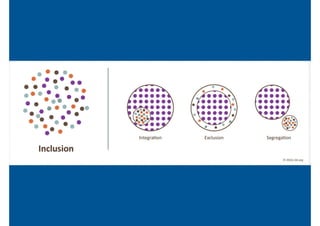
The program (LRE) will look different for
each student
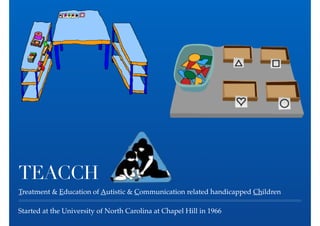
TEACCH
Treatment & Education of Autistic & Communication related handicapped Children
Started at the University of North Carolina at Chapel Hill in 1966
01
|
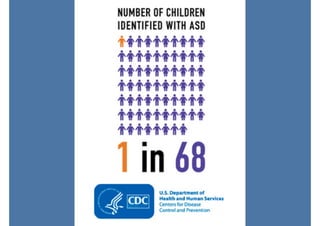
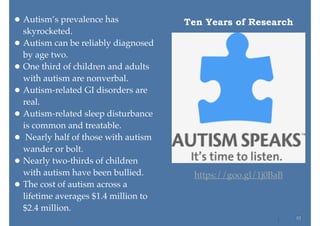
•Autism’s prevalence has
skyrocketed.
•Autism can be reliably diagnosed
by age two.
•One third of children and adults
with autism are nonverbal.
•Autism-related GI disorders are
real.
•Autism-related sleep disturbance
is common and treatable.
• Nearly half of those with autism
wander or bolt.
•Nearly two-thirds of children
with autism have been bullied.
•The cost of autism across a
lifetime averages $1.4 million to
$2.4 million.
https://goo.gl/1j0BaB
Ten Years of Research
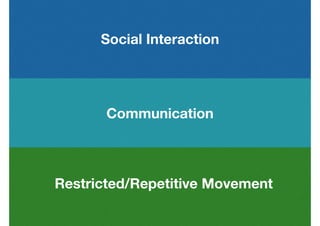
Social Interaction
Communication
Restricted/Repetitive Movement
Social Interaction
• Limited use and understanding of non-verbal
communication such as eye gaze, facial expression and
gesture
• Difficulties forming and sustaining friendships
• Lack of seeking to share enjoyment, interests and
activities with other people
• Difficulties with social and emotional responsiveness
https://www.autismspectrum.org.au/learning-module/social-interaction
Communication
• Echolalia
• Non-verbal
• Poor language pragmatics
• Non-reciprocal speech
• Poor topic maintenance
• Palialia
• Lack of reciprocity
• Need to control topic
• Lack of meaningful
speech
• Lack of expression
https://www.autismspeaks.org/what-autism/diagnosis/dsm-5-diagnostic-criteria
Restricted/Repetitive
Movement
• Stereotyped or repetitive motor movements, use of
objects, or speech
• Insistence on sameness, inflexible adherence to routines,
or ritualized patterns or verbal nonverbal behavior
• Highly restricted, fixated interests that are abnormal in
intensity or focus
• Hyper- or hyporeactivity to sensory input or unusual
interests in sensory aspects of the environment
https://www.autismspeaks.org/what-autism/diagnosis/dsm-5-diagnostic-criteria
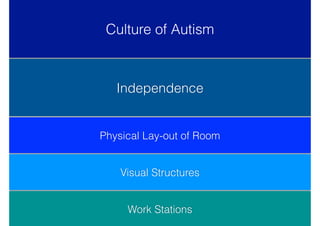
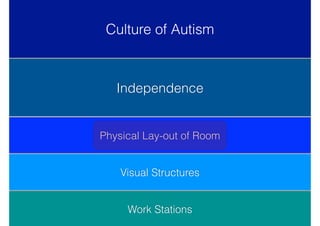
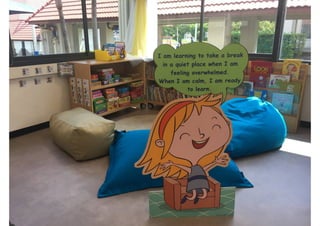
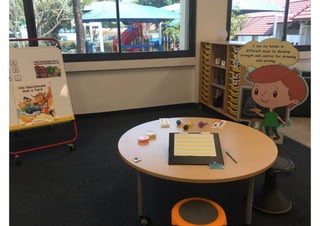
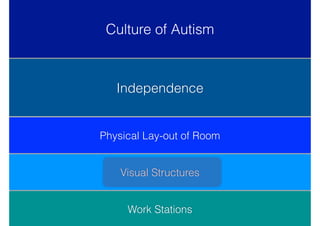
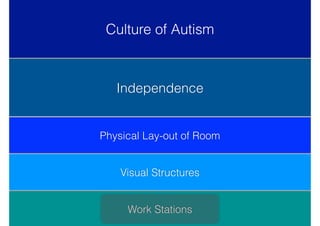
Physical Lay-out of Room
Culture of Autism
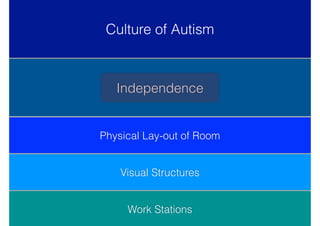
Independence
Independence
Visual Structures
Work Stations
Culture of Autism
• Strength is processing visual information
• Attention to detail without understanding of how
details fit together
• Difficulties: Organization, attention, recognising the
beginning, middle, and end of activities.
• Communication is often a challenge (verbalizing
and/or social communication called pragmatics)
• Tendency to become attached to routines
• Disruptions to routines can be extremely upsetting
• Marked sensory preferences or dislikes
• Tendency to engage in preferred activities with
difficulties disengaging when asked
Physical Lay-out of Room
Culture of Autism
Independence
Independence
Visual Structures
Work Stations
Physical Lay-out of Room
Culture of Autism
Independence
Independence
Visual Structures
Work Stations
Physical Lay-out of Room
Culture of Autism
Independence
Independence
Visual Structures
Work Stations
Physical Lay-out of Room
Culture of Autism
Independence
Independence
Visual Structures
Work Stations
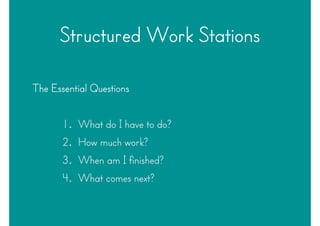
Structured Work Stations
The Essential Questions
1. What do I have to do?
2. How much work?
3. When am I finished?
4. What comes next?
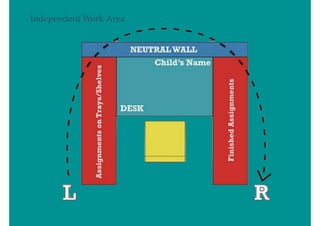
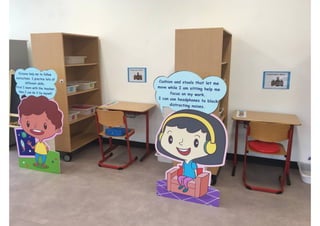
Independent Work Area
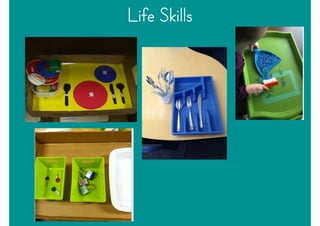
Life Skills
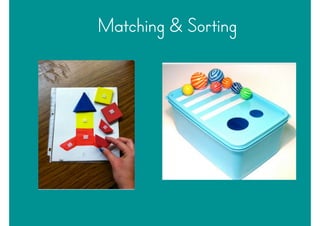
Matching & Sorting
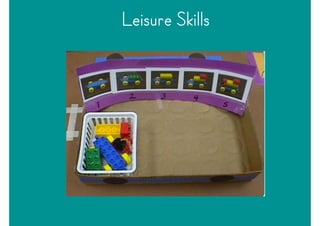
Leisure Skills
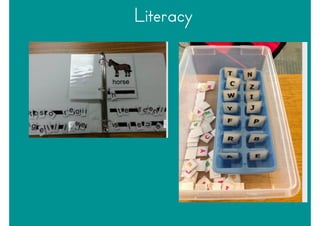
Literacy
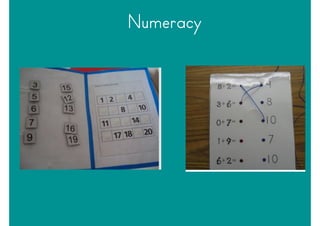
Numeracy
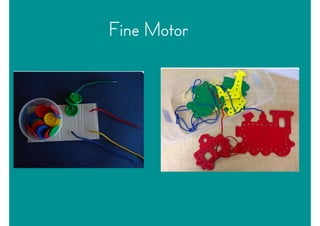
Fine Motor
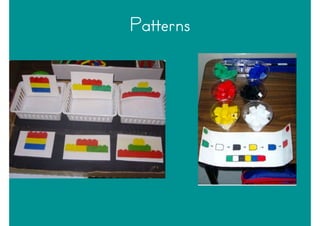
Patterns
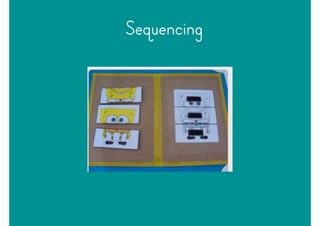
Sequencing
Sensory
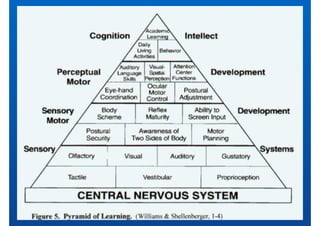
Processing
01
LoriBoll.me | @LoriBoll
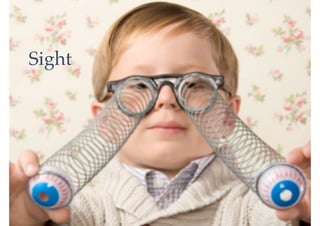
Picture of sight sensory
Sight
LoriBoll.me | @LoriBoll
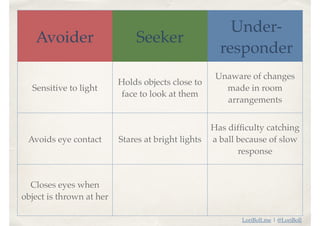
Sensitive to light
Holds objects close to
face to look at them
Unaware of changes
made in room
arrangements
Avoids eye contact Stares at bright lights
Has difficulty catching
a ball because of slow
response
Closes eyes when
object is thrown at her
Avoider Seeker
Under-
responder
LoriBoll.me | @LoriBoll
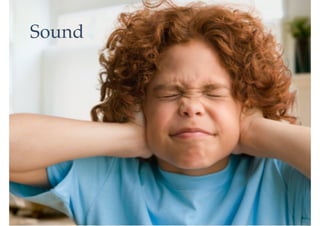
Picture of sound (headphones)
–Johnny Appleseed
Sound
LoriBoll.me | @LoriBoll
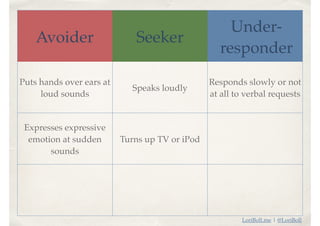
Puts hands over ears at
loud sounds
Speaks loudly
Responds slowly or not
at all to verbal requests
Expresses expressive
emotion at sudden
sounds
Turns up TV or iPod
Avoider Seeker
Under-
responder
LoriBoll.me | @LoriBoll
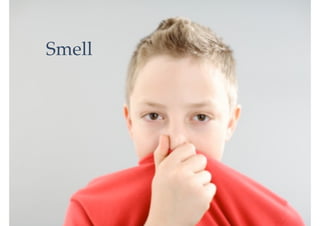
Picture of nose
–Johnny Appleseed
Smell
LoriBoll.me | @LoriBoll
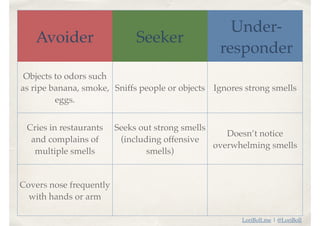
Objects to odors such
as ripe banana, smoke,
eggs.
Sniffs people or objects Ignores strong smells
Cries in restaurants
and complains of
multiple smells
Seeks out strong smells
(including offensive
smells)
Doesn’t notice
overwhelming smells
Covers nose frequently
with hands or arm
Avoider Seeker
Under-
responder
LoriBoll.me | @LoriBoll
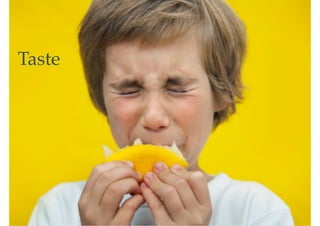
Taste picture
–Johnny Appleseed
Taste
LoriBoll.me | @LoriBoll
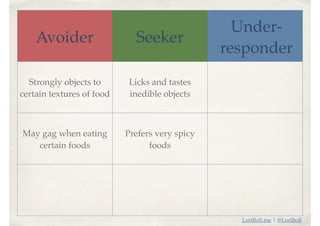
Strongly objects to
certain textures of food
Licks and tastes
inedible objects
May gag when eating
certain foods
Prefers very spicy
foods
Avoider Seeker
Under-
responder
LoriBoll.me | @LoriBoll
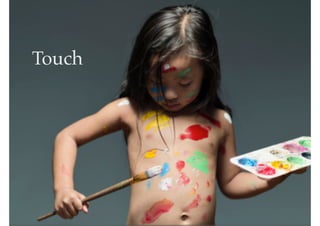
Picture of touch
–Johnny Appleseed
Touch
LoriBoll.me | @LoriBoll
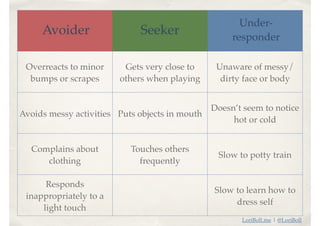
Overreacts to minor
bumps or scrapes
Gets very close to
others when playing
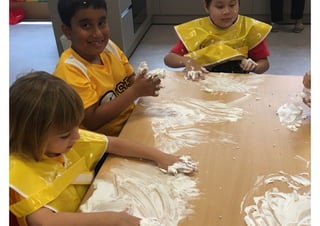
Unaware of messy/
dirty face or body
Avoids messy activities Puts objects in mouth
Doesn’t seem to notice
hot or cold
Complains about
clothing
Touches others
frequently
Slow to potty train
Responds
inappropriately to a
light touch
Slow to learn how to
dress self
Avoider Seeker
Under-
responder
LoriBoll.me | @LoriBoll
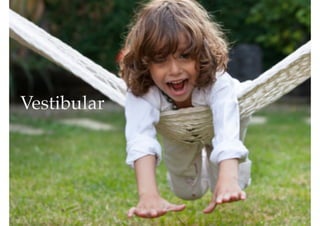
Vestibular picture (Movement and Balance)
–Johnny Appleseed
Vestibular
LoriBoll.me | @LoriBoll
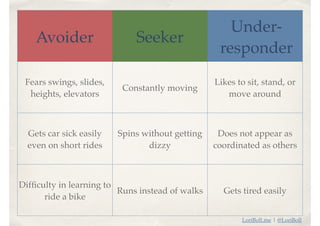
Fears swings, slides,
heights, elevators
Constantly moving
Likes to sit, stand, or
move around
Gets car sick easily
even on short rides
Spins without getting
dizzy
Does not appear as
coordinated as others
Difficulty in learning to
ride a bike
Runs instead of walks Gets tired easily
Avoider Seeker
Under-
responder
LoriBoll.me | @LoriBoll
Picture of Proprioceptive (Body awareness)
–Johnny Appleseed
Proprioceptive
LoriBoll.me | @LoriBoll
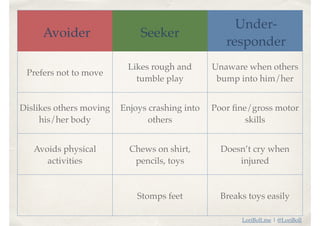
Prefers not to move
Likes rough and
tumble play
Unaware when others
bump into him/her
Dislikes others moving
his/her body
Enjoys crashing into
others
Poor fine/gross motor
skills
Avoids physical
activities
Chews on shirt,
pencils, toys
Doesn’t cry when
injured
Stomps feet Breaks toys easily
Avoider Seeker
Under-
responder
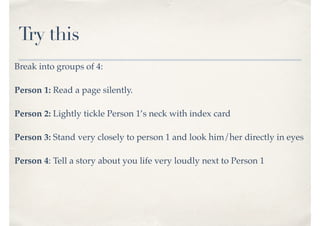
Try this
Break into groups of 4:
Person 1: Read a page silently.
Person 2: Lightly tickle Person 1’s neck with index card
Person 3: Stand very closely to person 1 and look him/her directly in eyes
Person 4: Tell a story about you life very loudly next to Person 1
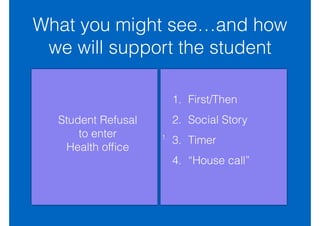
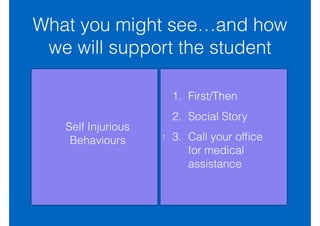
What you might see…and how
we will support the student
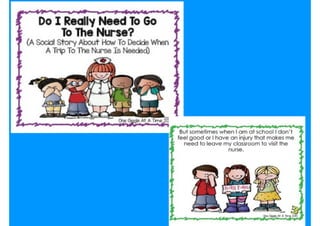
Student Refusal
to enter
Health office
1.
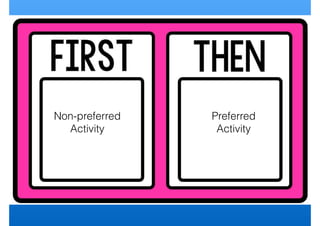
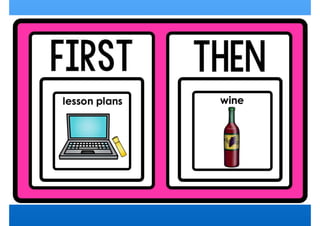
1. First/Then
2. Social Story
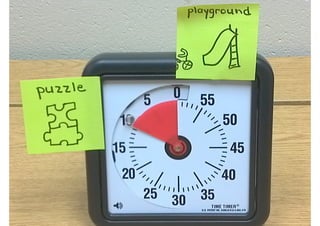
3. Timer
4. “House call”
Non-preferred
Activity
Preferred
Activity
What you might see…and how
we will support the student
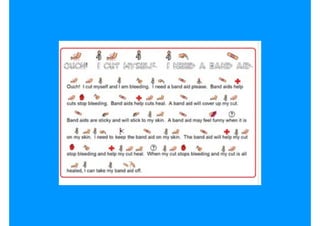
Self Injurious
Behaviours 1.
1. First/Then
2. Social Story
3. Call your office
for medical
assistance
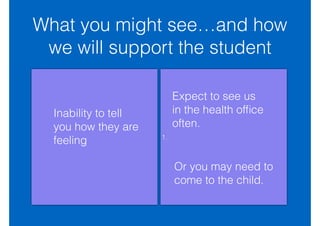
What you might see…and how
we will support the student
Inability to tell
you how they are
feeling 1.
Expect to see us
in the health office
often.
Or you may need to
come to the child.
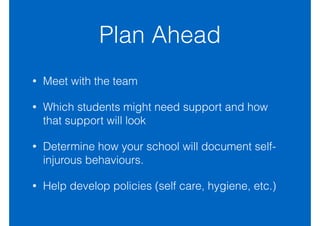
Plan Ahead
• Meet with the team
• Which students might need support and how
that support will look
• Determine how your school will document self-
injurous behaviours.
• Help develop policies (self care, hygiene, etc.)
Intensive Needs Program at International School Bangkok
Intensive Needs Program at International School Bangkok

  • 1.
    Intensive Needs at ISB: OurProgram and How we work with our Nursing staff By: Lori Boll
  • 5.
    The program (LRE)will look different for each student
  • 6.
    TEACCH Treatment & Educationof Autistic & Communication related handicapped Children Started at the University of North Carolina at Chapel Hill in 1966
  • 9.
    01 | •Autism’s prevalence has skyrocketed. •Autismcan be reliably diagnosed by age two. •One third of children and adults with autism are nonverbal. •Autism-related GI disorders are real. •Autism-related sleep disturbance is common and treatable. • Nearly half of those with autism wander or bolt. •Nearly two-thirds of children with autism have been bullied. •The cost of autism across a lifetime averages $1.4 million to $2.4 million. https://goo.gl/1j0BaB Ten Years of Research
  • 10.
  • 11.
    Social Interaction • Limiteduse and understanding of non-verbal communication such as eye gaze, facial expression and gesture • Difficulties forming and sustaining friendships • Lack of seeking to share enjoyment, interests and activities with other people • Difficulties with social and emotional responsiveness https://www.autismspectrum.org.au/learning-module/social-interaction
  • 12.
    Communication • Echolalia • Non-verbal •Poor language pragmatics • Non-reciprocal speech • Poor topic maintenance • Palialia • Lack of reciprocity • Need to control topic • Lack of meaningful speech • Lack of expression https://www.autismspeaks.org/what-autism/diagnosis/dsm-5-diagnostic-criteria
  • 13.
    Restricted/Repetitive Movement • Stereotyped orrepetitive motor movements, use of objects, or speech • Insistence on sameness, inflexible adherence to routines, or ritualized patterns or verbal nonverbal behavior • Highly restricted, fixated interests that are abnormal in intensity or focus • Hyper- or hyporeactivity to sensory input or unusual interests in sensory aspects of the environment https://www.autismspeaks.org/what-autism/diagnosis/dsm-5-diagnostic-criteria
  • 14.
    Physical Lay-out ofRoom Culture of Autism Independence Independence Visual Structures Work Stations
  • 15.
    Culture of Autism •Strength is processing visual information • Attention to detail without understanding of how details fit together • Difficulties: Organization, attention, recognising the beginning, middle, and end of activities. • Communication is often a challenge (verbalizing and/or social communication called pragmatics)
  • 16.
    • Tendency tobecome attached to routines • Disruptions to routines can be extremely upsetting • Marked sensory preferences or dislikes • Tendency to engage in preferred activities with difficulties disengaging when asked
  • 17.
    Physical Lay-out ofRoom Culture of Autism Independence Independence Visual Structures Work Stations
  • 20.
    Physical Lay-out ofRoom Culture of Autism Independence Independence Visual Structures Work Stations
  • 24.
    Physical Lay-out ofRoom Culture of Autism Independence Independence Visual Structures Work Stations
  • 27.
    Physical Lay-out ofRoom Culture of Autism Independence Independence Visual Structures Work Stations
  • 28.
    Structured Work Stations TheEssential Questions 1. What do I have to do? 2. How much work? 3. When am I finished? 4. What comes next?
  • 29.
  • 31.
  • 32.
  • 33.
  • 34.
  • 35.
  • 36.
  • 37.
  • 38.
  • 39.
  • 40.
  • 41.
    LoriBoll.me | @LoriBoll Pictureof sight sensory Sight
  • 42.
    LoriBoll.me | @LoriBoll Sensitiveto light Holds objects close to face to look at them Unaware of changes made in room arrangements Avoids eye contact Stares at bright lights Has difficulty catching a ball because of slow response Closes eyes when object is thrown at her Avoider Seeker Under- responder
  • 43.
    LoriBoll.me | @LoriBoll Pictureof sound (headphones) –Johnny Appleseed Sound
  • 44.
    LoriBoll.me | @LoriBoll Putshands over ears at loud sounds Speaks loudly Responds slowly or not at all to verbal requests Expresses expressive emotion at sudden sounds Turns up TV or iPod Avoider Seeker Under- responder
  • 45.
    LoriBoll.me | @LoriBoll Pictureof nose –Johnny Appleseed Smell
  • 46.
    LoriBoll.me | @LoriBoll Objectsto odors such as ripe banana, smoke, eggs. Sniffs people or objects Ignores strong smells Cries in restaurants and complains of multiple smells Seeks out strong smells (including offensive smells) Doesn’t notice overwhelming smells Covers nose frequently with hands or arm Avoider Seeker Under- responder
  • 47.
    LoriBoll.me | @LoriBoll Tastepicture –Johnny Appleseed Taste
  • 48.
    LoriBoll.me | @LoriBoll Stronglyobjects to certain textures of food Licks and tastes inedible objects May gag when eating certain foods Prefers very spicy foods Avoider Seeker Under- responder
  • 49.
    LoriBoll.me | @LoriBoll Pictureof touch –Johnny Appleseed Touch
  • 50.
    LoriBoll.me | @LoriBoll Overreactsto minor bumps or scrapes Gets very close to others when playing Unaware of messy/ dirty face or body Avoids messy activities Puts objects in mouth Doesn’t seem to notice hot or cold Complains about clothing Touches others frequently Slow to potty train Responds inappropriately to a light touch Slow to learn how to dress self Avoider Seeker Under- responder
  • 51.
    LoriBoll.me | @LoriBoll Vestibularpicture (Movement and Balance) –Johnny Appleseed Vestibular
  • 52.
    LoriBoll.me | @LoriBoll Fearsswings, slides, heights, elevators Constantly moving Likes to sit, stand, or move around Gets car sick easily even on short rides Spins without getting dizzy Does not appear as coordinated as others Difficulty in learning to ride a bike Runs instead of walks Gets tired easily Avoider Seeker Under- responder
  • 53.
    LoriBoll.me | @LoriBoll Pictureof Proprioceptive (Body awareness) –Johnny Appleseed Proprioceptive
  • 54.
    LoriBoll.me | @LoriBoll Prefersnot to move Likes rough and tumble play Unaware when others bump into him/her Dislikes others moving his/her body Enjoys crashing into others Poor fine/gross motor skills Avoids physical activities Chews on shirt, pencils, toys Doesn’t cry when injured Stomps feet Breaks toys easily Avoider Seeker Under- responder
  • 57.
    Try this Break intogroups of 4: Person 1: Read a page silently. Person 2: Lightly tickle Person 1’s neck with index card Person 3: Stand very closely to person 1 and look him/her directly in eyes Person 4: Tell a story about you life very loudly next to Person 1
  • 59.
    What you mightsee…and how we will support the student Student Refusal to enter Health office 1. 1. First/Then 2. Social Story 3. Timer 4. “House call”
  • 60.
  • 65.
    What you mightsee…and how we will support the student Self Injurious Behaviours 1. 1. First/Then 2. Social Story 3. Call your office for medical assistance
  • 66.
    What you mightsee…and how we will support the student Inability to tell you how they are feeling 1. Expect to see us in the health office often. Or you may need to come to the child.
  • 67.
    Plan Ahead • Meetwith the team • Which students might need support and how that support will look • Determine how your school will document self- injurous behaviours. • Help develop policies (self care, hygiene, etc.)