Intellectual Property
World Intellectual Property Organization
(WIPO) defined Intellectual property as
creations of the mind, such as inventions;
literary and artistic works; designs; and
symbols, names, and images used in
commerce. These creations were protected
by law for inventors to be recognized and
Republic Act 8293 also known as
the Intellectual Property Code of
the Philippines.
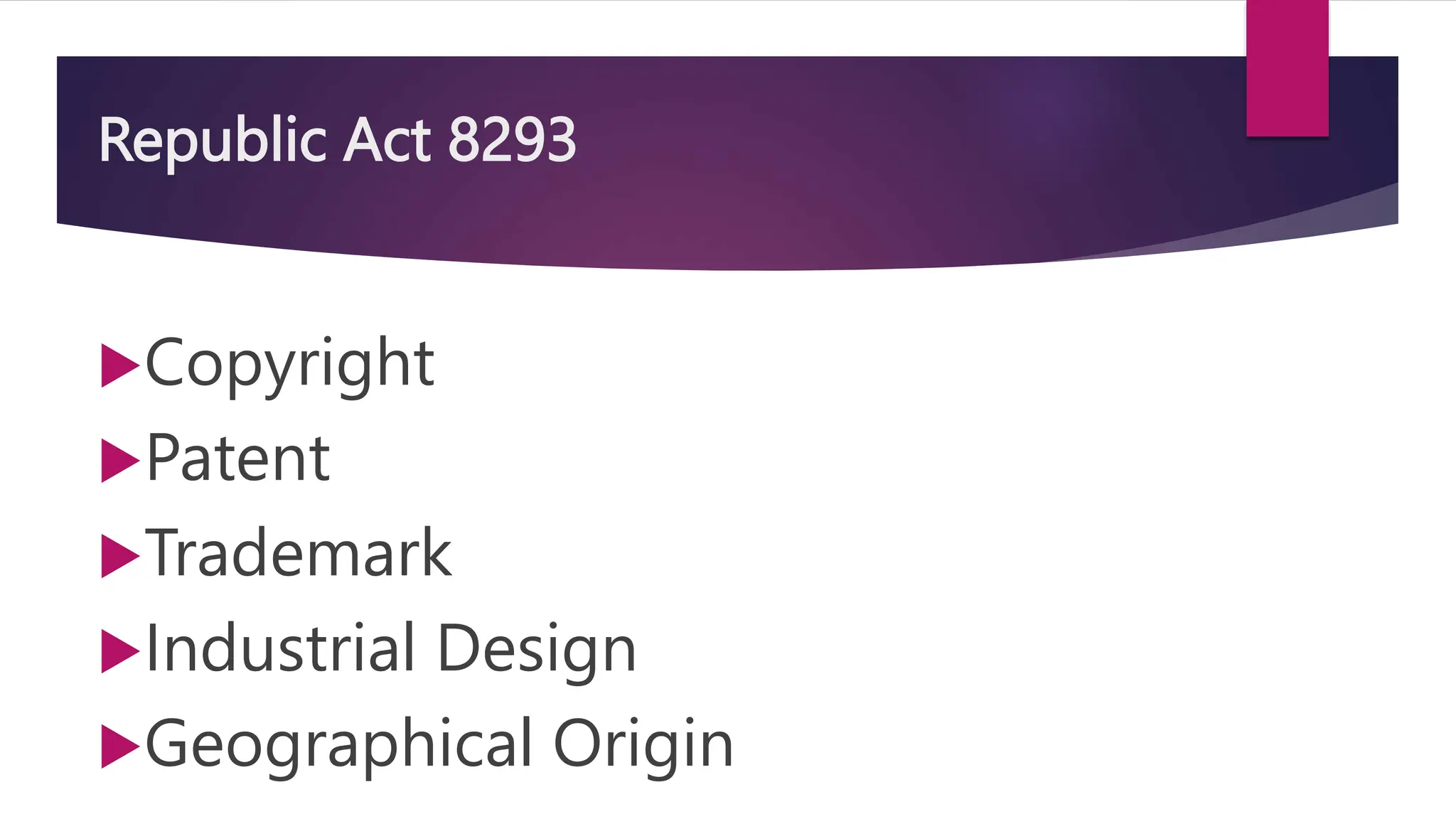
Republic Act 8293
Copyright
Patent
Trademark
Industrial Design
Geographical Origin
Copyright
Is a legal term used to describe the rights that
creators have over their literary and artistic
works. Works covered by copyright range from
books, music, paintings, sculpture and films, to
computer programs, databases,
advertisements, maps, and technical drawings.
Patent
 Is an exclusive right granted for an invention.
 a patent is a type of intellectual property that
gives its owner the legal right to exclude others
from making, using, or selling an invention for a
limited period of time in exchange for publishing
an enabling disclosure of the invention.
Trademark
 Is a sign capable of distinguishing the goods
or services of one enterprise from those of
other enterprises.
Industrial Design
 constitutes the ornamental or aesthetic aspect
of an article.
 May consist of three dimensional features,
such as the shape or surface of an article or
two dimensional features such as patterns,
lines or color.
Geographical Origin
are signs used on goods that have a specific
geographical origin and posses qualities, a
reputation or characteristics that are
essentially attributable to that place of
origin.
Furthermore, another concern raised
on the violation of Intellectual
Property is Plagiarism.
 Copying media (especially images) from other websites to
paste them into your own papers or websites.
 Making a video using footage from others’ videos or using
copyrighted music as part of the soundtrack.
 Performing another person’s copyrighted music (i.e.,
playing a cover).
 Composing a piece of music that borrows heavily from
another composition.
The following activities are considered
plagiarism.
Violation of intellectual property law is called
INFRINGEMENT.
-It refers to the unauthorized use, copying,
reproduction or distribution of products that
have IP rights protection.
FAIR USE
-It refers to the use of copyrighted material without a
license only for certain purposes. These include:
Commentary, Criticism, Reporting, Research and
Teaching.
The following are guidelines to be considered for Fair
use:
- A majority of the content you create must be your own.
- Give credit to the copyright holder.
- Don’t make money off of the copyrighted work.
CREATIVE COMMONS
-is an American non-profit organization devoted
to expanding the range of creative works available
for others to build upon legally and to share. They
released several copyright-licenses known as
Creative Commons licenses free of charge to the
public.
Creative commons
guidelines:

INTELLECTUAL PROPERTY and modules Grade12.pptx

  • 1.
  • 2.
    Intellectual Property World IntellectualProperty Organization (WIPO) defined Intellectual property as creations of the mind, such as inventions; literary and artistic works; designs; and symbols, names, and images used in commerce. These creations were protected by law for inventors to be recognized and
  • 3.
    Republic Act 8293also known as the Intellectual Property Code of the Philippines.
  • 4.
  • 5.
    Copyright Is a legalterm used to describe the rights that creators have over their literary and artistic works. Works covered by copyright range from books, music, paintings, sculpture and films, to computer programs, databases, advertisements, maps, and technical drawings.
  • 6.
    Patent  Is anexclusive right granted for an invention.  a patent is a type of intellectual property that gives its owner the legal right to exclude others from making, using, or selling an invention for a limited period of time in exchange for publishing an enabling disclosure of the invention.
  • 7.
    Trademark  Is asign capable of distinguishing the goods or services of one enterprise from those of other enterprises.
  • 8.
    Industrial Design  constitutesthe ornamental or aesthetic aspect of an article.  May consist of three dimensional features, such as the shape or surface of an article or two dimensional features such as patterns, lines or color.
  • 9.
    Geographical Origin are signsused on goods that have a specific geographical origin and posses qualities, a reputation or characteristics that are essentially attributable to that place of origin.
  • 10.
    Furthermore, another concernraised on the violation of Intellectual Property is Plagiarism.
  • 11.
     Copying media(especially images) from other websites to paste them into your own papers or websites.  Making a video using footage from others’ videos or using copyrighted music as part of the soundtrack.  Performing another person’s copyrighted music (i.e., playing a cover).  Composing a piece of music that borrows heavily from another composition. The following activities are considered plagiarism.
  • 12.
    Violation of intellectualproperty law is called INFRINGEMENT. -It refers to the unauthorized use, copying, reproduction or distribution of products that have IP rights protection.
  • 13.
    FAIR USE -It refersto the use of copyrighted material without a license only for certain purposes. These include: Commentary, Criticism, Reporting, Research and Teaching. The following are guidelines to be considered for Fair use: - A majority of the content you create must be your own. - Give credit to the copyright holder. - Don’t make money off of the copyrighted work.
  • 14.
    CREATIVE COMMONS -is anAmerican non-profit organization devoted to expanding the range of creative works available for others to build upon legally and to share. They released several copyright-licenses known as Creative Commons licenses free of charge to the public.
  • 15.