


Human Anatomy & Physiology
 IINNTTEEGGUUMMEENNTTAARRYY 
SSYYSSTTEEMM
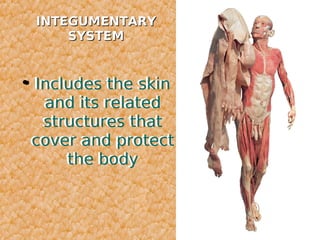
 Includes the skin 
and its related 
structures that 
cover and protect 
the body 
 IINNTTEEGGUUMMEENNTTAARRYY 
SSYYSSTTEEMM
Skin layers 
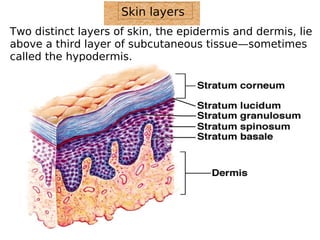
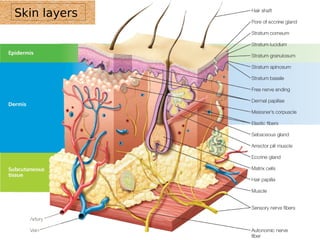
Two distinct layers of skin, the epidermis and dermis, lie 
above a third layer of subcutaneous tissue—sometimes 
called the hypodermis.
Skin layers
Skin layers 
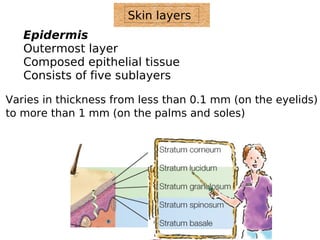
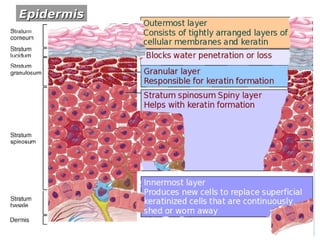
Epidermis 
Outermost layer 
Composed epithelial tissue 
Consists of five sublayers 
Varies in thickness from less than 0.1 mm (on the eyelids) 
to more than 1 mm (on the palms and soles)
EEppiiddeerrmmiiss
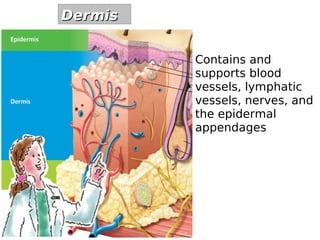
Contains and 
supports blood 
vessels, lymphatic 
vessels, nerves, and 
the epidermal 
appendages 
DDeerrmmiiss
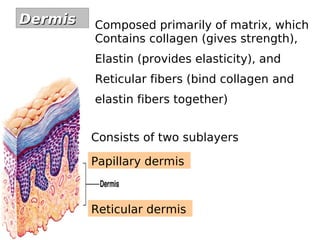
Composed primarily of matrix, which 
Contains collagen (gives strength), 
Elastin (provides elasticity), and 
Reticular fibers (bind collagen and 
elastin fibers together) 
Consists of two sublayers 
DDeerrmmiiss 
Papillary dermis 
Reticular dermis
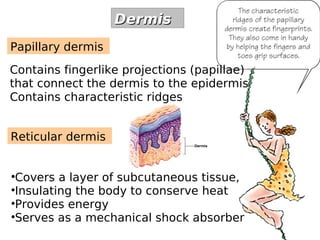
Papillary dermis 
DDeerrmmiiss 
Contains fingerlike projections (papillae) 
that connect the dermis to the epidermis 
Contains characteristic ridges 
Reticular dermis 
Covers a layer of subcutaneous tissue, 
Insulating the body to conserve heat 
Provides energy 
Serves as a mechanical shock absorber
SSkkiinn ffuunnccttiioonnss 
The integumentary system is the largest body 
system. In addition to the skin, or integument , it 
includes the hair, nails, and certain glands 
Functions of Skin 
Protection 
Sensory Perception 
Excretion 
Body temperature
SSkkiinn ffuunnccttiioonnss Protection 
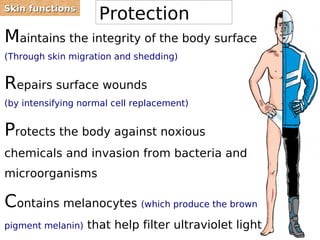
Maintains the integrity of the body surface 
(Through skin migration and shedding) 
Repairs surface wounds 
(by intensifying normal cell replacement) 
Protects the body against noxious 
chemicals and invasion from bacteria and 
microorganisms 
Contains melanocytes (which produce the brown 
pigment melanin) that help filter ultraviolet light
SSkkiinn ffuunnccttiioonnss Sensory Perception 
Contains sensory nerve fibers that supply specific 
areas of the skin (dermatomes) 
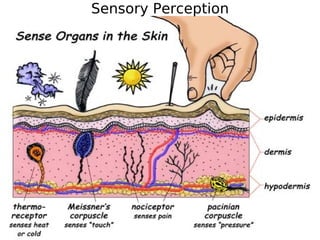
Allows for perception of temperature, touch, 
pressure, pain, and itching 
Contains autonomic nerve fibers that carry impulses 
to smooth muscle
Sensory Perception
Excretion 
SSkkiinn ffuunnccttiioonnss 
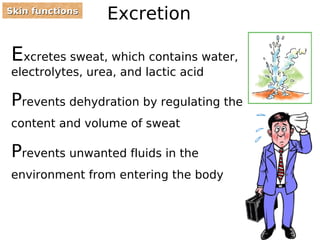
Excretes sweat, which contains water, 
electrolytes, urea, and lactic acid 
Prevents dehydration by regulating the 
content and volume of sweat 
Prevents unwanted fluids in the 
environment from entering the body
Body temperature 
SSkkiinn ffuunnccttiioonnss 
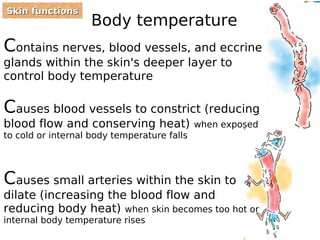
Contains nerves, blood vessels, and eccrine 
glands within the skin's deeper layer to 
control body temperature 
Causes blood vessels to constrict (reducing 
blood flow and conserving heat) when exposed 
to cold or internal body temperature falls 
Causes small arteries within the skin to 
dilate (increasing the blood flow and 
reducing body heat) when skin becomes too hot or 
internal body temperature rises
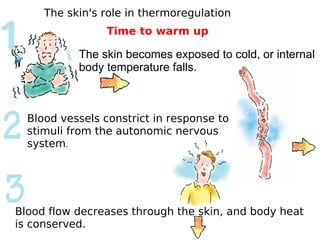
The skin's role in thermoregulation 
Time to warm up 
The skin becomes exposed to cold, or internal 
body temperature falls. 
Blood vessels constrict in response to 
stimuli from the autonomic nervous 
system. 
Blood flow decreases through the skin, and body heat 
is conserved.
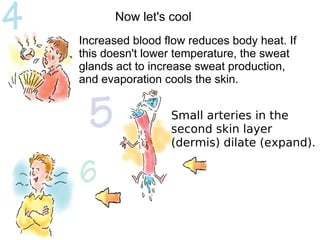
Now let's cool 
Increased blood flow reduces body heat. If 
this doesn't lower temperature, the sweat 
glands act to increase sweat production, 
and evaporation cools the skin. 
Small arteries in the 
second skin layer 
(dermis) dilate (expand).
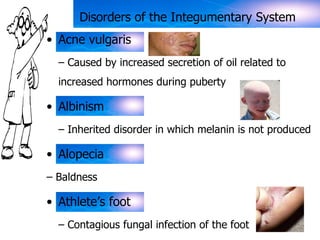
Disorders of the Integumentary System 
• Acne vulgaris 
– Caused by increased secretion of oil related to 
increased hormones during puberty 
• Albinism 
– Inherited disorder in which melanin is not produced 
• Alopecia 
– Baldness 
• Athlete’s foot 
– Contagious fungal infection of the foot
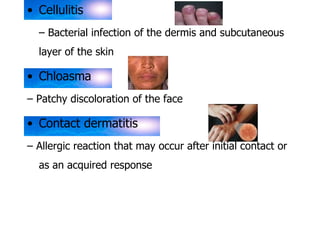
• Cellulitis 
– Bacterial infection of the dermis and subcutaneous 
layer of the skin 
• Chloasma 
– Patchy discoloration of the face 
• Contact dermatitis 
– Allergic reaction that may occur after initial contact or 
as an acquired response
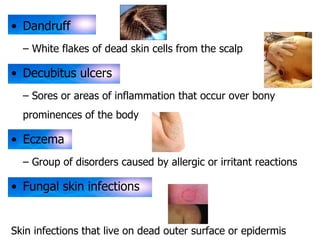
• Dandruff 
– White flakes of dead skin cells from the scalp 
• Decubitus ulcers 
– Sores or areas of inflammation that occur over bony 
prominences of the body 
• Eczema 
– Group of disorders caused by allergic or irritant reactions 
• Fungal skin infections 
Skin infections that live on dead outer surface or epidermis
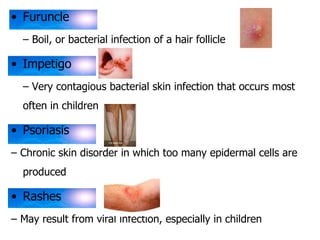
• Furuncle 
– Boil, or bacterial infection of a hair follicle 
• Impetigo 
– Very contagious bacterial skin infection that occurs most 
often in children 
• Psoriasis 
– Chronic skin disorder in which too many epidermal cells are 
produced 
• Rashes 
– May result from viral infection, especially in children
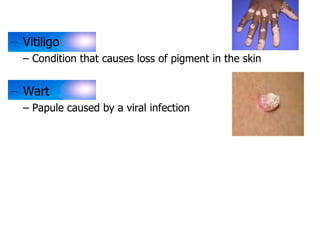
– Vitiligo 
– Condition that causes loss of pigment in the skin 
– Wart 
– Papule caused by a viral infection
THANK YOU 
kammph@gmail.com

The Integumentary System

  • 1.
    Human Anatomy &Physiology
  • 2.
  • 3.
     Includes theskin and its related structures that cover and protect the body  IINNTTEEGGUUMMEENNTTAARRYY SSYYSSTTEEMM
  • 4.
    Skin layers Twodistinct layers of skin, the epidermis and dermis, lie above a third layer of subcutaneous tissue—sometimes called the hypodermis.
  • 5.
  • 6.
    Skin layers Epidermis Outermost layer Composed epithelial tissue Consists of five sublayers Varies in thickness from less than 0.1 mm (on the eyelids) to more than 1 mm (on the palms and soles)
  • 7.
  • 8.
    Contains and supportsblood vessels, lymphatic vessels, nerves, and the epidermal appendages DDeerrmmiiss
  • 9.
    Composed primarily ofmatrix, which Contains collagen (gives strength), Elastin (provides elasticity), and Reticular fibers (bind collagen and elastin fibers together) Consists of two sublayers DDeerrmmiiss Papillary dermis Reticular dermis
  • 10.
    Papillary dermis DDeerrmmiiss Contains fingerlike projections (papillae) that connect the dermis to the epidermis Contains characteristic ridges Reticular dermis Covers a layer of subcutaneous tissue, Insulating the body to conserve heat Provides energy Serves as a mechanical shock absorber
  • 11.
    SSkkiinn ffuunnccttiioonnss Theintegumentary system is the largest body system. In addition to the skin, or integument , it includes the hair, nails, and certain glands Functions of Skin Protection Sensory Perception Excretion Body temperature
  • 12.
    SSkkiinn ffuunnccttiioonnss Protection Maintains the integrity of the body surface (Through skin migration and shedding) Repairs surface wounds (by intensifying normal cell replacement) Protects the body against noxious chemicals and invasion from bacteria and microorganisms Contains melanocytes (which produce the brown pigment melanin) that help filter ultraviolet light
  • 13.
    SSkkiinn ffuunnccttiioonnss SensoryPerception Contains sensory nerve fibers that supply specific areas of the skin (dermatomes) Allows for perception of temperature, touch, pressure, pain, and itching Contains autonomic nerve fibers that carry impulses to smooth muscle
  • 14.
  • 15.
    Excretion SSkkiinn ffuunnccttiioonnss Excretes sweat, which contains water, electrolytes, urea, and lactic acid Prevents dehydration by regulating the content and volume of sweat Prevents unwanted fluids in the environment from entering the body
  • 16.
    Body temperature SSkkiinnffuunnccttiioonnss Contains nerves, blood vessels, and eccrine glands within the skin's deeper layer to control body temperature Causes blood vessels to constrict (reducing blood flow and conserving heat) when exposed to cold or internal body temperature falls Causes small arteries within the skin to dilate (increasing the blood flow and reducing body heat) when skin becomes too hot or internal body temperature rises
  • 17.
    The skin's rolein thermoregulation Time to warm up The skin becomes exposed to cold, or internal body temperature falls. Blood vessels constrict in response to stimuli from the autonomic nervous system. Blood flow decreases through the skin, and body heat is conserved.
  • 18.
    Now let's cool Increased blood flow reduces body heat. If this doesn't lower temperature, the sweat glands act to increase sweat production, and evaporation cools the skin. Small arteries in the second skin layer (dermis) dilate (expand).
  • 19.
    Disorders of theIntegumentary System • Acne vulgaris – Caused by increased secretion of oil related to increased hormones during puberty • Albinism – Inherited disorder in which melanin is not produced • Alopecia – Baldness • Athlete’s foot – Contagious fungal infection of the foot
  • 20.
    • Cellulitis –Bacterial infection of the dermis and subcutaneous layer of the skin • Chloasma – Patchy discoloration of the face • Contact dermatitis – Allergic reaction that may occur after initial contact or as an acquired response
  • 21.
    • Dandruff –White flakes of dead skin cells from the scalp • Decubitus ulcers – Sores or areas of inflammation that occur over bony prominences of the body • Eczema – Group of disorders caused by allergic or irritant reactions • Fungal skin infections Skin infections that live on dead outer surface or epidermis
  • 22.
    • Furuncle –Boil, or bacterial infection of a hair follicle • Impetigo – Very contagious bacterial skin infection that occurs most often in children • Psoriasis – Chronic skin disorder in which too many epidermal cells are produced • Rashes – May result from viral infection, especially in children
  • 23.
    – Vitiligo –Condition that causes loss of pigment in the skin – Wart – Papule caused by a viral infection
  • 24.