Institutional Planning – Meaning and Importance
Institutional planning refers to the process of preparing a comprehensive and systematic plan for the development of an individual educational institution. It is a decentralized form of educational planning, where each school or college formulates its own plan according to its unique needs, resources, and objectives. Instead of relying solely on centralized directives, institutional planning empowers institutions to identify their strengths and weaknesses, set priorities, and work towards improving the quality of education within their specific context.
The concept emphasizes that every educational institution is different in terms of location, student background, infrastructure, financial support, and community involvement. Therefore, a uniform plan cannot meet the requirements of all institutions. Institutional planning ensures that local conditions and resources are taken into account. It involves the participation of principals, teachers, students, parents, and the community, making it a collaborative and democratic process.
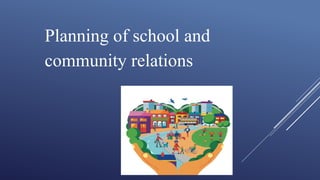
The importance of institutional planning lies in its practical benefits. First, it helps in the optimum utilization of available resources by reducing wastage and directing efforts toward clearly defined goals. Second, it improves teaching–learning conditions by focusing on curriculum enrichment, teacher training, and student support activities. Third, it encourages innovation, as schools can design programs suited to their learners’ needs. Fourth, it fosters a sense of responsibility and cooperation among teachers and staff, leading to better teamwork. Fifth, it strengthens the relationship between the school and the community, as local involvement is essential for successful implementation.
In short, institutional planning provides a framework for continuous growth and self-improvement of an educational institution. By linking national educational goals with local realities, it ensures that development in education is both meaningful and effective. Thus, it is a vital tool for raising the standards of schools and ensuring quality education for all.