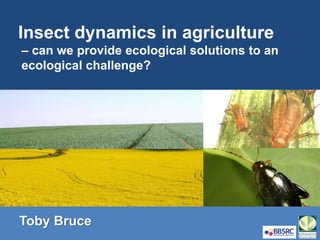
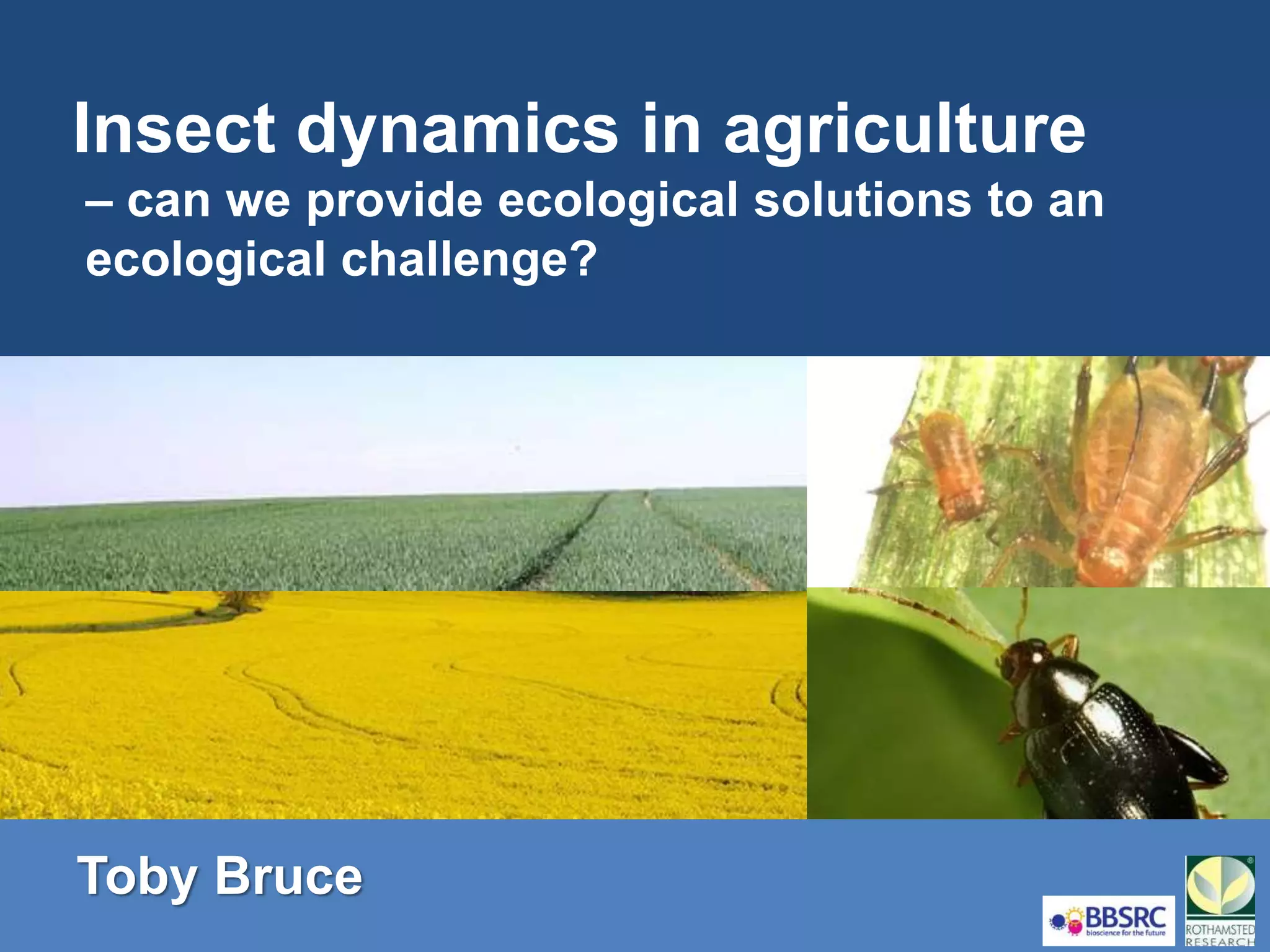

Insect dynamics in agriculture
– can we provide ecological solutions to an
ecological challenge?
Toby Bruce
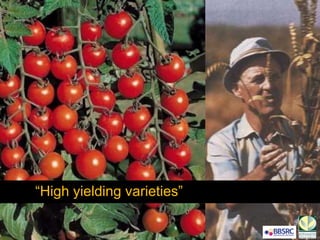
“High yielding varieties”
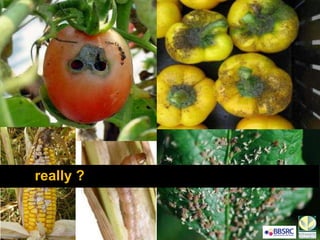
really ?
Split second
decisions
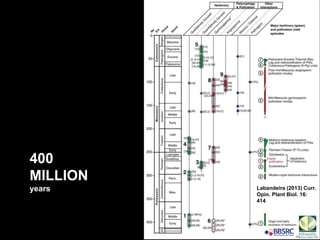
Labandeira (2013) Curr.
Opin. Plant Biol. 16:
414
400
MILLION
years
Toby J. A. Bruce J. Exp. Bot. 2012;63:537-541
© The Author [2011]. Published by Oxford University Press [on behalf of the Society for
Experimental Biology]. All rights reserved. For Permissions, please e-mail:
journals.permissions@oup.com
Factors influencing crop protection in an agro-ecosystem
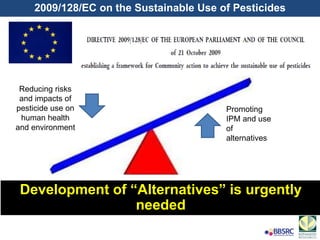
Promoting
IPM and use
of
alternatives
2009/128/EC on the Sustainable Use of Pesticides
Reducing risks
and impacts of
pesticide use on
human health
and environment
Development of “Alternatives” is urgently
needed
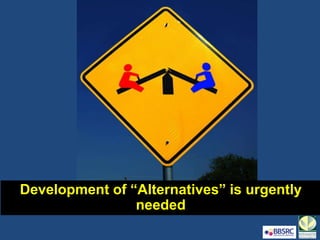
Development of “Alternatives” is urgently
needed
Why is it needed?
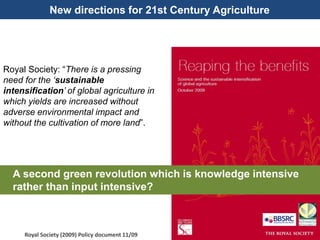
New directions for 21st Century Agriculture
Royal Society: “There is a pressing
need for the ‘sustainable
intensification’ of global agriculture in
which yields are increased without
adverse environmental impact and
without the cultivation of more land”.
Royal Society (2009) Policy document 11/09
A second green revolution which is knowledge intensive
rather than input intensive?
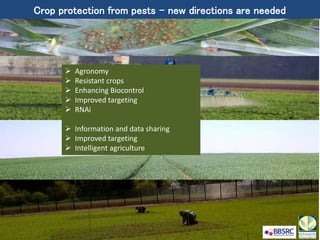
 Agronomy
 Resistant crops
 Enhancing Biocontrol
 Improved targeting
 RNAi
 Information and data sharing
 Improved targeting
 Intelligent agriculture
Crop protection from pests – new directions are needed
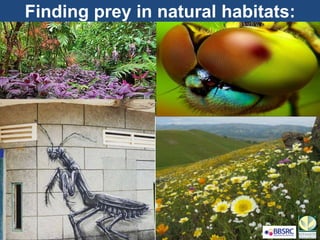
Finding prey in natural habitats:
Insects have evolved
remarkable sensory abilities
Challenging assumptions
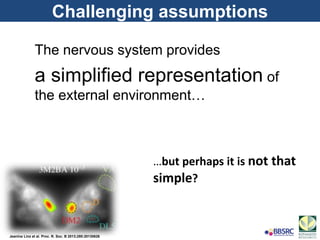
The nervous system provides
a simplified representation of
the external environment…
…but perhaps it is not that
simple?
Jeanine Linz et al. Proc. R. Soc. B 2013;280:20130626
Challenging assumptions
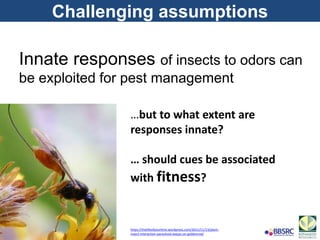
Innate responses of insects to odors can
be exploited for pest management
…but to what extent are
responses innate?
… should cues be associated
with fitness?
https://thelifeofyourtime.wordpress.com/2011/11/13/plant-
insect-interaction-parasitoid-wasps-on-goldenrod/
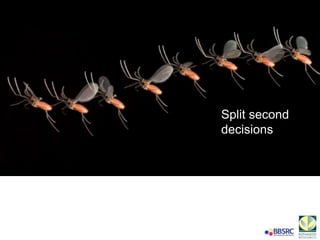
Split second
decisions
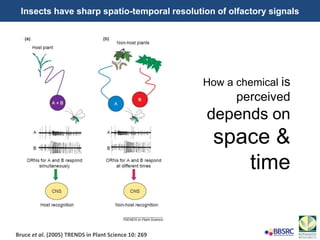
Insects have sharp spatio-temporal resolution of olfactory signals
How a chemical is
perceived
depends on
space &
time
Bruce et al. (2005) TRENDS in Plant Science 10: 269
HO
o
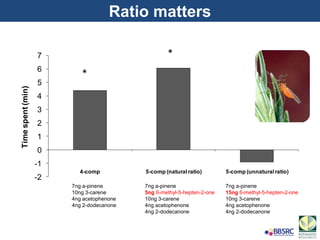
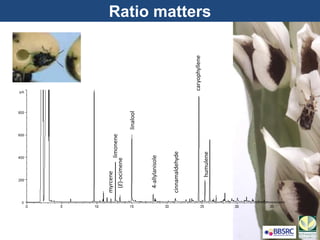
Ratio matters
-2
-1
0
1
2
3
4
5
6
7
4-comp 5-comp (naturalratio) 5-comp (unnaturalratio)
Timespent(min)
7ng a-pinene
5ng 6-methyl-5-hepten-2-one
10ng 3-carene
4ng acetophenone
4ng 2-dodecanone
7ng a-pinene
15ng 6-methyl-5-hepten-2-one
10ng 3-carene
4ng acetophenone
4ng 2-dodecanone
7ng a-pinene
10ng 3-carene
4ng acetophenone
4ng 2-dodecanone
*
*
caryophyllene
humulene
4-allylanisole
cinnamaldehyde
linalool
(E)-ocimene
limonene
myrcene
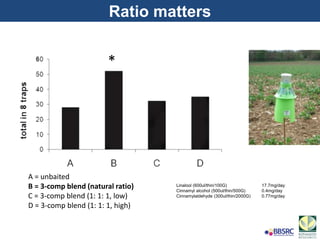
Ratio matters
*
A = unbaited
B = 3-comp blend (natural ratio)
C = 3-comp blend (1: 1: 1, low)
D = 3-comp blend (1: 1: 1, high)
Linalool (600ul/thin/100G) 17.7mg/day
Cinnamyl alcohol (500ul/thin/500G) 0.4mg/day
Cinnamylaldehyde (300ul/thin/2000G) 0.77mg/day
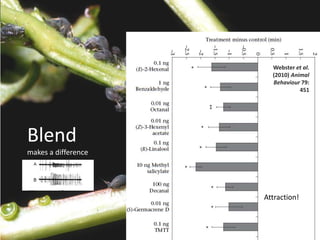
Ratio matters
Attraction!
Blend
makes a difference
Webster et al.
(2010) Animal
Behaviour 79:
451
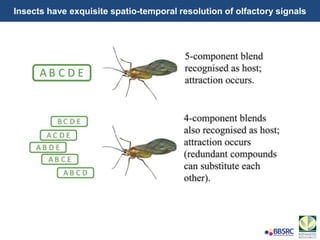
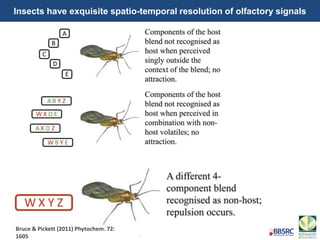
Insects have exquisite spatio-temporal resolution of olfactory signals
Bruce & Pickett (2011) Phytochem. 72:
1605
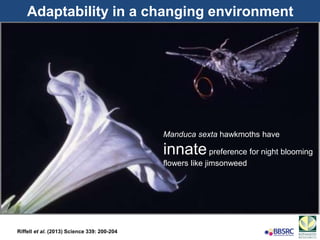
Riffell et al. (2013) Science 339: 200-204
Adaptability in a changing environment
Manduca sexta hawkmoths have
innatepreference for night blooming
flowers like jimsonweed
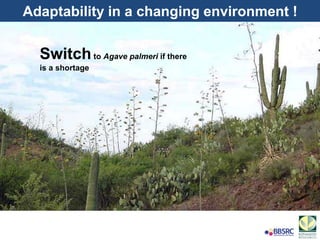
Adaptability in a changing environment !
Switchto Agave palmeri if there
is a shortage
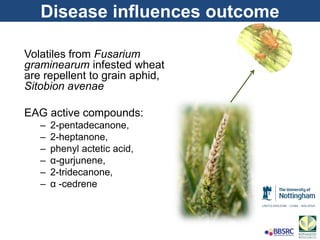
Disease influences outcome
Volatiles from Fusarium
graminearum infested wheat
are repellent to grain aphid,
Sitobion avenae
EAG active compounds:
– 2-pentadecanone,
– 2-heptanone,
– phenyl actetic acid,
– α-gurjunene,
– 2-tridecanone,
– α -cedrene
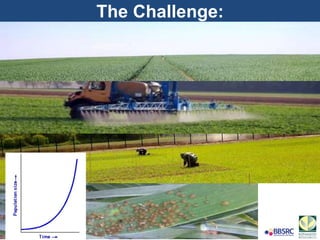
The Challenge:
Rachel Carson in “Silent Spring”
“A truly extraordinary variety of alternatives to
the chemical control of insects is available.
Some are already in use and have achieved brilliant success.
Others are in the stage of laboratory testing. Still others are little
more than ideas in the minds of imaginative scientists, waiting for
the opportunity to put them to the test. All have this in common:
they are biological solutions, based on the understanding of the
living organisms they seek to control and of the whole fabric of life
to which these organisms belong. Specialists
representing various areas of the vast field
of biology are contributing—entomologists,
pathologists, geneticists, physiologists,
biochemists, ecologists—all pouring their
knowledge and their creative inspirations
into the formation of a new science of
biotic controls.”
Carson, 1962
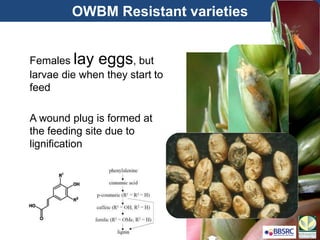
OWBM Resistant varieties
Females lay eggs, but
larvae die when they start to
feed
A wound plug is formed at
the feeding site due to
lignification
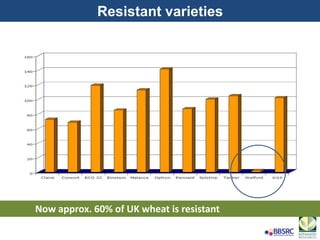
Resistant varieties
Now approx. 60% of UK wheat is resistant
Bruce et al. (2007) Pest Man. Sci. 63: 49
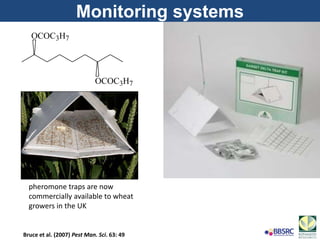
pheromone traps are now
commercially available to wheat
growers in the UK
Monitoring systems
OCOC3H7
OCOC3H7
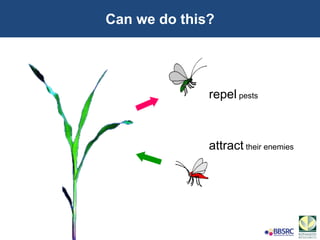
Can we do this?
repel pests
attract their enemies
Can pest management become symbiotic?
From an ecological and evolutionary
point of view, perhaps easier to
work with beneficial
insectsthan against pest insects?
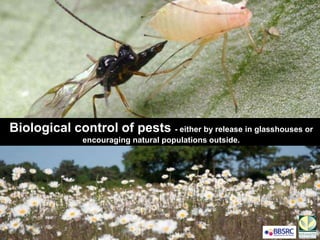
Biological control of pests - either by release in glasshouses or
encouraging natural populations outside.
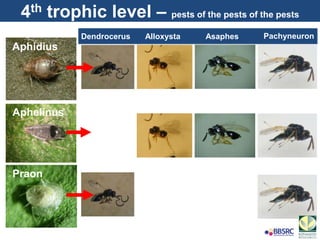
Aphidius
Aphelinus
Dendrocerus Alloxysta PachyneuronAsaphes
Praon
4th trophic level – pests of the pests of the pests
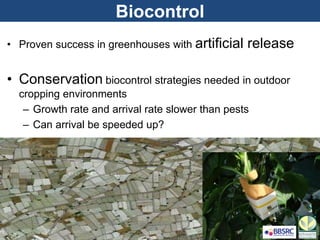
Biocontrol
• Proven success in greenhouses with artificial release
• Conservation biocontrol strategies needed in outdoor
cropping environments
– Growth rate and arrival rate slower than pests
– Can arrival be speeded up?
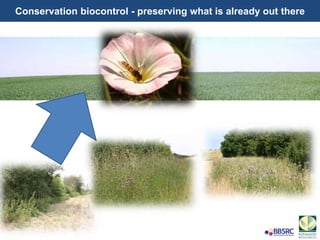
Conservation biocontrol - preserving what is already out there
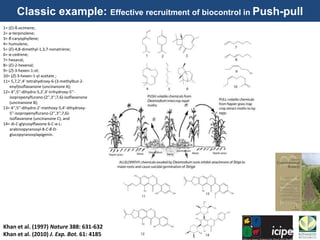
1= (E)-ß-ocimene;
2= α-terpinolene;
3= β-caryophyllene;
4= humulene;
5= (E)-4,8-dimethyl-1,3,7-nonatriene;
6= α-cedrene;
7= hexanal;
8= (E)-2-hexenal;
9= (Z)-3-hexen-1-ol;
10= (Z)-3-hexen-1-yl acetate ;
11= 5,7,2′,4′-tetrahydroxy-6-(3-methylbut-2-
enyl)isoflavanone (uncinanone A);
12= 4′′,5′′-dihydro-5,2′,4′-trihydroxy-5′′-
isopropenylfurano-(2′′,3′′;7,6)-isoflavanone
(uncinanone B);
13= 4′′,5′′-dihydro-2′-methoxy-5,4′-dihydroxy-
5′′-isopropenylfurano-(2′′,3′′;7,6)-
isoflavanone (uncinanone C), and
14= di-C-glycosylflavone 6-C-α-L-
arabinopyranosyl-8-C-β-D-
glucopyranosylapigenin.
Khan et al. (1997) Nature 388: 631-632
Khan et al. (2010) J. Exp. Bot. 61: 4185
Classic example: Effective recruitment of biocontrol in Push-pull
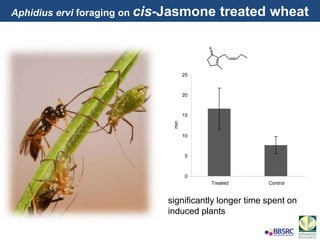
significantly longer time spent on
induced plants
0
5
10
15
20
25
Treated Control
min
O
Aphidius ervi foraging on cis-Jasmone treated wheat
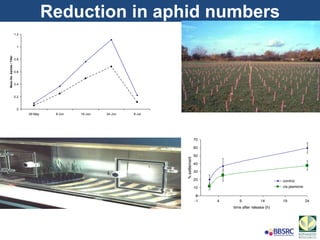
Reduction in aphid numbers
0
0.2
0.4
0.6
0.8
1
1.2
28-May 8-Jun 16-Jun 24-Jun 6-Jul
MeanNo.Aphids/Tiller
0
10
20
30
40
50
60
70
-1 4 9 14 19 24
time after release (h)
%settlement
control
cis-jasmone
0
50
100
150
200
250
300
20-
Jun
27-
Jun
04-
Jul
11-
Jul
18-
Jul
25-
Jul
01-
Aug
CumulativeAphidNos.-75Tillers
Control Pheromone
Pheromone
impact period
Aphid load reduced
by half
0
50
100
150
200
250
300
20-
Jun
27-
Jun
04-
Jul
11-
Jul
18-
Jul
25-
Jul
01-
Aug
CumulativeAphidNos.-75Tillers
Control Pheromone
Aphid load reduced
by half
Pheromone
impact period
June July Aug
p<0.01
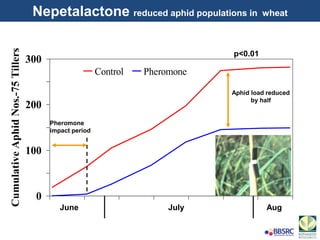
Nepetalactone reduced aphid populations in wheat
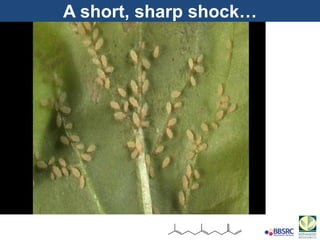
A short, sharp shock…
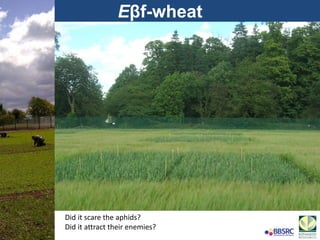
Eβf-wheat
Did it scare the aphids?
Did it attract their enemies?
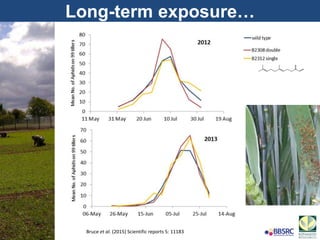
Long-term exposure…
Bruce et al. (2015) Scientific reports 5: 11183
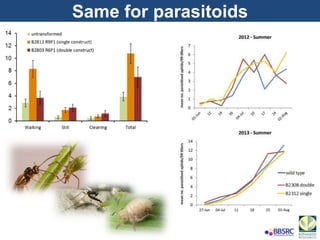
Same for parasitoids
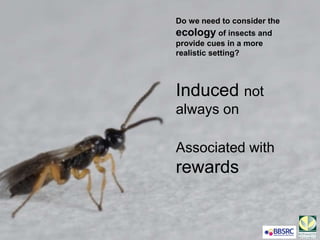
Do we need to consider the
ecology of insects and
provide cues in a more
realistic setting?
Induced not
always on
Associated with
rewards
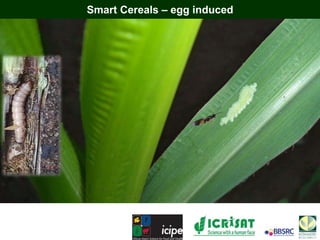
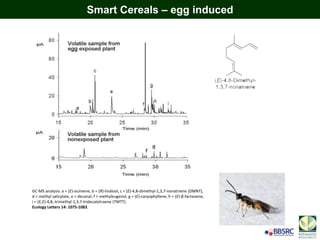
Smart Cereals – egg induced
GC-MS analysis: a = (E)-ocimene, b = (R)-linalool, c = (E)-4,8-dimethyl-1,3,7-nonatriene (DMNT),
d = methyl salicylate, e = decanal, f = methyleugenol, g = (E)-caryophyllene, h = (E)-β-farnesene,
i = (E,E)-4,8,-trimethyl-1,3,7-tridecatetraene (TMTT).
Ecology Letters 14: 1075-1083.
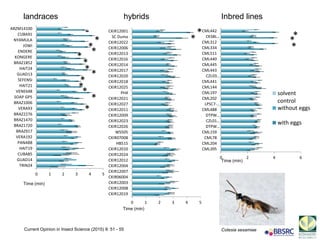
Smart Cereals – egg induced
0 1 2 3 4 5
CKIR12019
CKIR12008
CKIR12003
CKIR06004
CKIR12007
CKIR12004
CKIR12012
CKIR12024
CKIR12010
HB515
CKIR07008
WS505
CKIR12026
CKIR12023
CKIR12009
CKIR12011
CKIR12027
CKIR12021
PH4
CKIR12025
CKIR12018
CKIR12020
CKIR12017
CKIR12014
CKIR12016
CKIR12013
CKIR12006
CKIR12022
SC Duma
CKIR12001
*
*
0 1 2 3 4 5
TRIN24
GUAD14
CUBA85
HAIT19
PANA88
VERA192
BRAZ917
BRAZ1720
BRAZ1470
BRAZ2276
VERA93
BRAZ1006
SOAP GP5
VENE648
HAIT21
SEFENSI
GUAD13
HAIT24
BRAZ1852
KONGERE
ENDERE
JOWI
NYAMULA
CUBA91
ARZM14100
*
*
*
* **
*
*
*
*
**
*
0 2 4 6
CML395
CML204
CML78
CML159
DTPW…
CZL01…
DTPW…
CML488
LPSC7-…
CML202
CML197
CML144
CML441
CZL03…
CML443
CML445
CML440
CML511
CML334
CML312
CKSBL…
CML442
solvent
control
without eggs
with eggs
**
*
landraces hybrids Inbred lines
Time (min)
Time (min)
Time (min)
Cotesia sesamiaeCurrent Opinion in Insect Science (2015) 9: 51 - 55
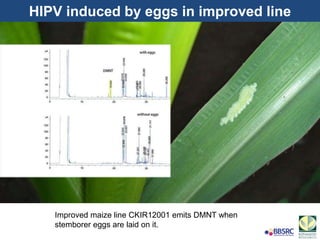
Improved maize line CKIR12001 emits DMNT when
stemborer eggs are laid on it.
HIPV induced by eggs in improved line
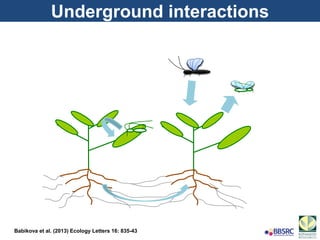
Underground interactions
Babikova et al. (2013) Ecology Letters 16: 835-43
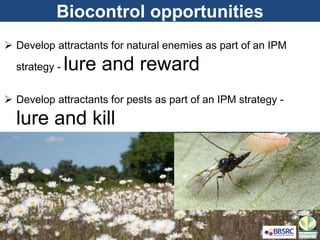
Biocontrol opportunities
 Develop attractants for natural enemies as part of an IPM
strategy - lure and reward
 Develop attractants for pests as part of an IPM strategy -
lure and kill
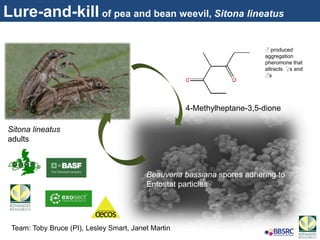
4-Methylheptane-3,5-dione
Beauveria bassiana spores adhering to
Entostat particles
Sitona lineatus
adults
♂ produced
aggregation
pheromone that
attracts ♀s and
♂s
Team: Toby Bruce (PI), Lesley Smart, Janet Martin
Lure-and-kill of pea and bean weevil, Sitona lineatus
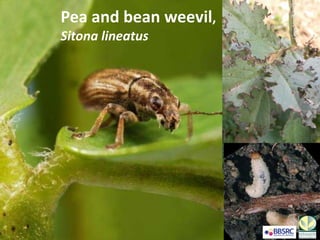
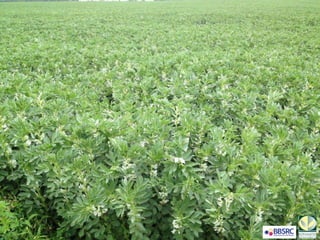
Pea and bean weevil,
Sitona lineatus
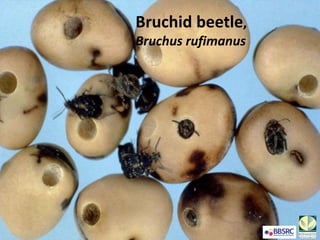
Bruchid beetle,
Bruchus rufimanus
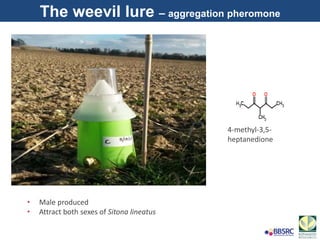
4-methyl-3,5-
heptanedione
The weevil lure – aggregation pheromone
• Male produced
• Attract both sexes of Sitona lineatus
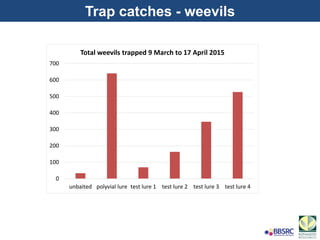
Trap catches - weevils
0
100
200
300
400
500
600
700
unbaited polyvial lure test lure 1 test lure 2 test lure 3 test lure 4
Total weevils trapped 9 March to 17 April 2015
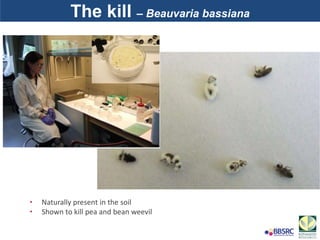
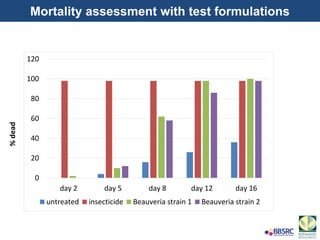
The kill – Beauvaria bassiana
• Naturally present in the soil
• Shown to kill pea and bean weevil
0
20
40
60
80
100
120
day 2 day 5 day 8 day 12 day 16
untreated insecticide Beauveria strain 1 Beauveria strain 2
%dead Mortality assessment with test formulations
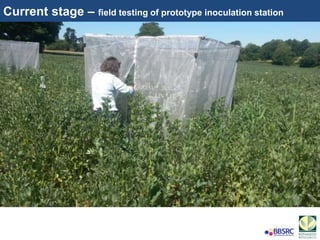
Current stage – field testing of prototype inoculation station
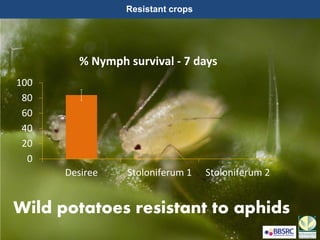
Wild potatoes resistant to aphids
0
20
40
60
80
100
Desiree Stoloniferum 1 Stoloniferum 2
% Nymph survival - 7 days
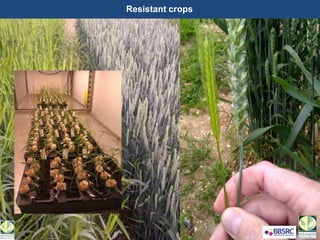
Resistant crops
Resistant crops
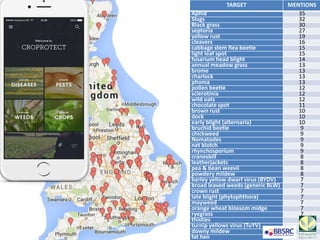
TARGET MENTIONS
Aphid 35
Slugs 32
Black grass 30
septoria 27
yellow rust 19
cleavers 16
cabbage stem flea beetle 15
light leaf spot 15
fusarium head blight 14
annual meadow grass 13
brome 13
charlock 13
phoma 13
pollen beetle 12
sclerotinia 12
wild oats 12
chocolate spot 11
brown rust 10
dock 10
early blight (alternaria) 10
bruchid beetle 9
chickweed 9
Nematodes 9
net blotch 9
rhynchosporium 9
cranesbill 8
leatherjackets 8
pea & bean weevil 8
powdery mildew 8
barley yellow dwarf virus (BYDV) 7
broad leaved weeds (generic BLW) 7
crown rust 7
late blight (phytophthora) 7
mayweed 7
orange wheat blossom midge 7
ryegrass 7
thistles 7
turnip yellows virus (TuYV) 7
downy mildew 6
fat hen 6
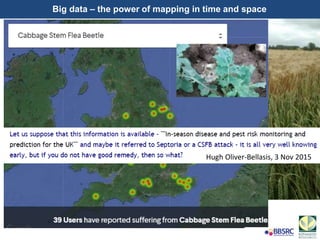
Big data – the power of mapping in time and space
Hugh Oliver-Bellasis, 3 Nov 2015
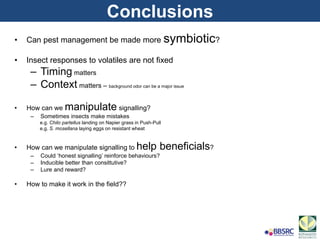
• Can pest management be made more symbiotic?
• Insect responses to volatiles are not fixed
– Timing matters
– Context matters – background odor can be a major issue
• How can we manipulate signalling?
– Sometimes insects make mistakes
e.g. Chilo partellus landing on Napier grass in Push-Pull
e.g. S. mosellana laying eggs on resistant wheat
• How can we manipulate signalling to help beneficials?
– Could ‘honest signalling’ reinforce behaviours?
– Inducible better than consittutive?
– Lure and reward?
• How to make it work in the field??
Conclusions
Thanks

Insect Dynamics in Agriculture

  • 1.
    Insect dynamics inagriculture – can we provide ecological solutions to an ecological challenge? Toby Bruce
  • 2.
  • 3.
  • 4.
    Split second decisions Labandeira (2013)Curr. Opin. Plant Biol. 16: 414 400 MILLION years
  • 6.
    Toby J. A.Bruce J. Exp. Bot. 2012;63:537-541 © The Author [2011]. Published by Oxford University Press [on behalf of the Society for Experimental Biology]. All rights reserved. For Permissions, please e-mail: journals.permissions@oup.com Factors influencing crop protection in an agro-ecosystem
  • 7.
    Promoting IPM and use of alternatives 2009/128/ECon the Sustainable Use of Pesticides Reducing risks and impacts of pesticide use on human health and environment Development of “Alternatives” is urgently needed
  • 8.
  • 12.
    Why is itneeded?
  • 13.
    New directions for21st Century Agriculture Royal Society: “There is a pressing need for the ‘sustainable intensification’ of global agriculture in which yields are increased without adverse environmental impact and without the cultivation of more land”. Royal Society (2009) Policy document 11/09 A second green revolution which is knowledge intensive rather than input intensive?
  • 14.
     Agronomy  Resistantcrops  Enhancing Biocontrol  Improved targeting  RNAi  Information and data sharing  Improved targeting  Intelligent agriculture Crop protection from pests – new directions are needed
  • 15.
    Finding prey innatural habitats: Insects have evolved remarkable sensory abilities
  • 16.
    Challenging assumptions The nervoussystem provides a simplified representation of the external environment… …but perhaps it is not that simple? Jeanine Linz et al. Proc. R. Soc. B 2013;280:20130626
  • 17.
    Challenging assumptions Innate responsesof insects to odors can be exploited for pest management …but to what extent are responses innate? … should cues be associated with fitness? https://thelifeofyourtime.wordpress.com/2011/11/13/plant- insect-interaction-parasitoid-wasps-on-goldenrod/
  • 18.
  • 19.
    Insects have sharpspatio-temporal resolution of olfactory signals How a chemical is perceived depends on space & time Bruce et al. (2005) TRENDS in Plant Science 10: 269
  • 20.
  • 21.
  • 22.
    Ratio matters -2 -1 0 1 2 3 4 5 6 7 4-comp 5-comp(naturalratio) 5-comp (unnaturalratio) Timespent(min) 7ng a-pinene 5ng 6-methyl-5-hepten-2-one 10ng 3-carene 4ng acetophenone 4ng 2-dodecanone 7ng a-pinene 15ng 6-methyl-5-hepten-2-one 10ng 3-carene 4ng acetophenone 4ng 2-dodecanone 7ng a-pinene 10ng 3-carene 4ng acetophenone 4ng 2-dodecanone * *
  • 23.
  • 24.
    * A = unbaited B= 3-comp blend (natural ratio) C = 3-comp blend (1: 1: 1, low) D = 3-comp blend (1: 1: 1, high) Linalool (600ul/thin/100G) 17.7mg/day Cinnamyl alcohol (500ul/thin/500G) 0.4mg/day Cinnamylaldehyde (300ul/thin/2000G) 0.77mg/day Ratio matters
  • 25.
    Attraction! Blend makes a difference Websteret al. (2010) Animal Behaviour 79: 451
  • 26.
    Insects have exquisitespatio-temporal resolution of olfactory signals
  • 27.
    Insects have exquisitespatio-temporal resolution of olfactory signals Bruce & Pickett (2011) Phytochem. 72: 1605
  • 28.
    Riffell et al.(2013) Science 339: 200-204 Adaptability in a changing environment Manduca sexta hawkmoths have innatepreference for night blooming flowers like jimsonweed
  • 29.
    Adaptability in achanging environment ! Switchto Agave palmeri if there is a shortage
  • 30.
    Disease influences outcome Volatilesfrom Fusarium graminearum infested wheat are repellent to grain aphid, Sitobion avenae EAG active compounds: – 2-pentadecanone, – 2-heptanone, – phenyl actetic acid, – α-gurjunene, – 2-tridecanone, – α -cedrene
  • 31.
  • 32.
    Rachel Carson in“Silent Spring” “A truly extraordinary variety of alternatives to the chemical control of insects is available. Some are already in use and have achieved brilliant success. Others are in the stage of laboratory testing. Still others are little more than ideas in the minds of imaginative scientists, waiting for the opportunity to put them to the test. All have this in common: they are biological solutions, based on the understanding of the living organisms they seek to control and of the whole fabric of life to which these organisms belong. Specialists representing various areas of the vast field of biology are contributing—entomologists, pathologists, geneticists, physiologists, biochemists, ecologists—all pouring their knowledge and their creative inspirations into the formation of a new science of biotic controls.” Carson, 1962
  • 33.
    OWBM Resistant varieties Femaleslay eggs, but larvae die when they start to feed A wound plug is formed at the feeding site due to lignification
  • 34.
    Resistant varieties Now approx.60% of UK wheat is resistant
  • 35.
    Bruce et al.(2007) Pest Man. Sci. 63: 49 pheromone traps are now commercially available to wheat growers in the UK Monitoring systems OCOC3H7 OCOC3H7
  • 36.
    Can we dothis? repel pests attract their enemies
  • 37.
    Can pest managementbecome symbiotic? From an ecological and evolutionary point of view, perhaps easier to work with beneficial insectsthan against pest insects?
  • 38.
    Biological control ofpests - either by release in glasshouses or encouraging natural populations outside.
  • 39.
    Aphidius Aphelinus Dendrocerus Alloxysta PachyneuronAsaphes Praon 4thtrophic level – pests of the pests of the pests
  • 40.
    Biocontrol • Proven successin greenhouses with artificial release • Conservation biocontrol strategies needed in outdoor cropping environments – Growth rate and arrival rate slower than pests – Can arrival be speeded up?
  • 41.
    Conservation biocontrol -preserving what is already out there
  • 42.
    1= (E)-ß-ocimene; 2= α-terpinolene; 3=β-caryophyllene; 4= humulene; 5= (E)-4,8-dimethyl-1,3,7-nonatriene; 6= α-cedrene; 7= hexanal; 8= (E)-2-hexenal; 9= (Z)-3-hexen-1-ol; 10= (Z)-3-hexen-1-yl acetate ; 11= 5,7,2′,4′-tetrahydroxy-6-(3-methylbut-2- enyl)isoflavanone (uncinanone A); 12= 4′′,5′′-dihydro-5,2′,4′-trihydroxy-5′′- isopropenylfurano-(2′′,3′′;7,6)-isoflavanone (uncinanone B); 13= 4′′,5′′-dihydro-2′-methoxy-5,4′-dihydroxy- 5′′-isopropenylfurano-(2′′,3′′;7,6)- isoflavanone (uncinanone C), and 14= di-C-glycosylflavone 6-C-α-L- arabinopyranosyl-8-C-β-D- glucopyranosylapigenin. Khan et al. (1997) Nature 388: 631-632 Khan et al. (2010) J. Exp. Bot. 61: 4185 Classic example: Effective recruitment of biocontrol in Push-pull
  • 43.
    significantly longer timespent on induced plants 0 5 10 15 20 25 Treated Control min O Aphidius ervi foraging on cis-Jasmone treated wheat
  • 44.
    Reduction in aphidnumbers 0 0.2 0.4 0.6 0.8 1 1.2 28-May 8-Jun 16-Jun 24-Jun 6-Jul MeanNo.Aphids/Tiller 0 10 20 30 40 50 60 70 -1 4 9 14 19 24 time after release (h) %settlement control cis-jasmone
  • 45.
    0 50 100 150 200 250 300 20- Jun 27- Jun 04- Jul 11- Jul 18- Jul 25- Jul 01- Aug CumulativeAphidNos.-75Tillers Control Pheromone Pheromone impact period Aphidload reduced by half 0 50 100 150 200 250 300 20- Jun 27- Jun 04- Jul 11- Jul 18- Jul 25- Jul 01- Aug CumulativeAphidNos.-75Tillers Control Pheromone Aphid load reduced by half Pheromone impact period June July Aug p<0.01 Nepetalactone reduced aphid populations in wheat
  • 46.
  • 47.
    Eβf-wheat Did it scarethe aphids? Did it attract their enemies?
  • 48.
    Long-term exposure… Bruce etal. (2015) Scientific reports 5: 11183
  • 49.
  • 50.
    Do we needto consider the ecology of insects and provide cues in a more realistic setting? Induced not always on Associated with rewards
  • 51.
    Smart Cereals –egg induced
  • 52.
    GC-MS analysis: a= (E)-ocimene, b = (R)-linalool, c = (E)-4,8-dimethyl-1,3,7-nonatriene (DMNT), d = methyl salicylate, e = decanal, f = methyleugenol, g = (E)-caryophyllene, h = (E)-β-farnesene, i = (E,E)-4,8,-trimethyl-1,3,7-tridecatetraene (TMTT). Ecology Letters 14: 1075-1083. Smart Cereals – egg induced
  • 53.
    0 1 23 4 5 CKIR12019 CKIR12008 CKIR12003 CKIR06004 CKIR12007 CKIR12004 CKIR12012 CKIR12024 CKIR12010 HB515 CKIR07008 WS505 CKIR12026 CKIR12023 CKIR12009 CKIR12011 CKIR12027 CKIR12021 PH4 CKIR12025 CKIR12018 CKIR12020 CKIR12017 CKIR12014 CKIR12016 CKIR12013 CKIR12006 CKIR12022 SC Duma CKIR12001 * * 0 1 2 3 4 5 TRIN24 GUAD14 CUBA85 HAIT19 PANA88 VERA192 BRAZ917 BRAZ1720 BRAZ1470 BRAZ2276 VERA93 BRAZ1006 SOAP GP5 VENE648 HAIT21 SEFENSI GUAD13 HAIT24 BRAZ1852 KONGERE ENDERE JOWI NYAMULA CUBA91 ARZM14100 * * * * ** * * * * ** * 0 2 4 6 CML395 CML204 CML78 CML159 DTPW… CZL01… DTPW… CML488 LPSC7-… CML202 CML197 CML144 CML441 CZL03… CML443 CML445 CML440 CML511 CML334 CML312 CKSBL… CML442 solvent control without eggs with eggs ** * landraces hybrids Inbred lines Time (min) Time (min) Time (min) Cotesia sesamiaeCurrent Opinion in Insect Science (2015) 9: 51 - 55
  • 54.
    Improved maize lineCKIR12001 emits DMNT when stemborer eggs are laid on it. HIPV induced by eggs in improved line
  • 55.
    Underground interactions Babikova etal. (2013) Ecology Letters 16: 835-43
  • 56.
    Biocontrol opportunities  Developattractants for natural enemies as part of an IPM strategy - lure and reward  Develop attractants for pests as part of an IPM strategy - lure and kill
  • 57.
    4-Methylheptane-3,5-dione Beauveria bassiana sporesadhering to Entostat particles Sitona lineatus adults ♂ produced aggregation pheromone that attracts ♀s and ♂s Team: Toby Bruce (PI), Lesley Smart, Janet Martin Lure-and-kill of pea and bean weevil, Sitona lineatus
  • 58.
    Pea and beanweevil, Sitona lineatus
  • 59.
  • 63.
    4-methyl-3,5- heptanedione The weevil lure– aggregation pheromone • Male produced • Attract both sexes of Sitona lineatus
  • 64.
    Trap catches -weevils 0 100 200 300 400 500 600 700 unbaited polyvial lure test lure 1 test lure 2 test lure 3 test lure 4 Total weevils trapped 9 March to 17 April 2015
  • 65.
    The kill –Beauvaria bassiana • Naturally present in the soil • Shown to kill pea and bean weevil
  • 66.
    0 20 40 60 80 100 120 day 2 day5 day 8 day 12 day 16 untreated insecticide Beauveria strain 1 Beauveria strain 2 %dead Mortality assessment with test formulations
  • 67.
    Current stage –field testing of prototype inoculation station
  • 68.
    Wild potatoes resistantto aphids 0 20 40 60 80 100 Desiree Stoloniferum 1 Stoloniferum 2 % Nymph survival - 7 days Resistant crops
  • 69.
  • 70.
    TARGET MENTIONS Aphid 35 Slugs32 Black grass 30 septoria 27 yellow rust 19 cleavers 16 cabbage stem flea beetle 15 light leaf spot 15 fusarium head blight 14 annual meadow grass 13 brome 13 charlock 13 phoma 13 pollen beetle 12 sclerotinia 12 wild oats 12 chocolate spot 11 brown rust 10 dock 10 early blight (alternaria) 10 bruchid beetle 9 chickweed 9 Nematodes 9 net blotch 9 rhynchosporium 9 cranesbill 8 leatherjackets 8 pea & bean weevil 8 powdery mildew 8 barley yellow dwarf virus (BYDV) 7 broad leaved weeds (generic BLW) 7 crown rust 7 late blight (phytophthora) 7 mayweed 7 orange wheat blossom midge 7 ryegrass 7 thistles 7 turnip yellows virus (TuYV) 7 downy mildew 6 fat hen 6
  • 71.
    Big data –the power of mapping in time and space Hugh Oliver-Bellasis, 3 Nov 2015
  • 72.
    • Can pestmanagement be made more symbiotic? • Insect responses to volatiles are not fixed – Timing matters – Context matters – background odor can be a major issue • How can we manipulate signalling? – Sometimes insects make mistakes e.g. Chilo partellus landing on Napier grass in Push-Pull e.g. S. mosellana laying eggs on resistant wheat • How can we manipulate signalling to help beneficials? – Could ‘honest signalling’ reinforce behaviours? – Inducible better than consittutive? – Lure and reward? • How to make it work in the field?? Conclusions
  • 73.

Editor's Notes

  • #7 Factors influencing crop protection in an agro-ecosystem. Current trends are making the system more vulnerable to pests, weeds, and diseases, but GM could provide novel resistance traits and increase crop genetic diversity.
  • #52 Stemborers are devastating pests of staple cereals in sub-Saharan Africa that reduce yields by up to 80%. Recently we have discovered that certain landraces of maize have an inducible indirect defence trait, not present in commercial hybrids, that involves release of semiochemicals attractive to natural enemies of the stemborer after eggs are laid on the plant. The same semiochemicals are released by companion plants in the push-pull companion cropping system. If this novel defence trait could be bred into cereal cultivars with other favourable agronomic characteristics, crop losses could be saved without having to grow companion plants to release semiochemicals. This project is developing molecular markers for the defence trait that will allow breeders to introgress it into improved lines of maize and sorghum. The project involves growing many different lines of maize from which headspace samples of volatiles are collected and samples of DNA taken. Lines that show induction of semiochemicals after stemborer oviposition are tested in bioassays with stemborer parasitoids (key natural enemies) and will be grown in field plot trials to assess stemborer infestation levels. Genotyping by sequencing and subsequent association mapping is being used to map the trait to the genes responsible.
  • #54 These charts show behavioural responses of parasitoid wasps to plants with and without eggs. Where there is a star there is significant attraction to the plants with eggs. Although there are quite a few charts it is easy to see that the trait is much rarer in hybrids and inbred lines (fewer stars). This summarises a large volume of phenotyping work. Plant defence responses to insect oviposition, including tritrophic interactions with natural enemies of herbivores, have rarely been targeted in crop breeding programmes. Emission of herbivore induced plant volatiles (HIPVs) that attract natural enemies early on at the egg-laying stage of herbivore attack could provide timely biological control of pests and deter subsequent oviposition. This is needed in an agroecological context where the third trophic level often does not keep pace with the growth rate of pests. Our very recent data, using maize as an example, show that herbivore egg induced volatile emission is very rare in commercial hybrids but common in farmer selected landraces. Strategies for crop genetic improvement to enhance such responses to insect attack are considered.
  • #58 Our innovative Agri-tech Catalyst project, is developing a “lure-and-kill” approach to manage agricultural pests. Currently blanket sprays of insecticide are used against the pea and bean weevil (Sitona lineatus) which attacks nitrogen fixing root nodules of field beans and peas and the bruchid beetle (Bruchus rufimanus) which severely reduces the saleable quality of field beans by burrowing holes in them. Instead of applying blanket sprays to the entire crop canopy, which is hard to penetrate and makes targeted application difficult, our vision is to lure the pests to a bait station containing small amounts of bioinsecticide which stick to the body of the pest. We are using an aggregation pheromone which attracts both sexes of the insect (i.e. it gets the females that lay the eggs that lead to the damaging larval stage). This will improve the targeting of the control measures and provide a much needed new solution because pyrethroid pesticide resistance is evolving in the pea and bean weevil.