Innovative approaches to analyses
    of online social networks
          Panel for IR13 – Salford October 18th-21st 2012

                    Jakob Linaa Jensen (chair)
                          Frauke Zeller
                          Andra Siibak
                          Niels Brügger
Background
   EU COST Action “Transforming audiences, transforming societies”

   Working group on social media and social networking – and it’s
    consequences for audience research

   Europan task force on social media methods
       Mapping the research field within Europe and beyond
       Publishing (journals, edited books, panels)
       Outreach (new research projects, connections beyond Europe)
Comparative studies
   Klaus Bruhn Jensen in charge

   Survey in 13 countries

   Data collection January 2013

   IPSOS to carry out surveys in most countries
Twitter and the public sphere - The European elections
in 2014

   Joint Research proposal COST Action 'Transforming Audiences, Transforming
    Societies’:

   Pieter Verdegem, Cédric Courtois and Peter Mechant (Ghent University,
    Belgium), Jakob Linaa Jensen (Aarhus University, Denmark), Stine Lomborg
    (University of Copenhagen)

   Call distributed, so far participants from 10+ countries (Pieter?)
This panel
Accessing use of online social networks in everyday life – a suggested framework

Jakob Linaa Jensen, University of Aarhus, Denmark

Mixed Methods in Online Social Network Analysis

Frauke Zeller, Technical University of Ilmenau, Germany

Historical Network Analysis: Methodological Challenges

Niels Brügger, University of Aarhus, Denmark

Making use of creative research methods for studying social media

Andra Siibak, University of Tartu, Estonia
Accessing use of online social networks in
 everyday life – a suggested framework
                 Jakob Linaa Jensen, Ph.D.
            Associate professor in media studies
                Center for Internet Research
                Aarhus University, Denmark
                  E-mail:linaa@imv.au.dk
                    Twitter: jakoblinaa
                    Web: www.linaa.net
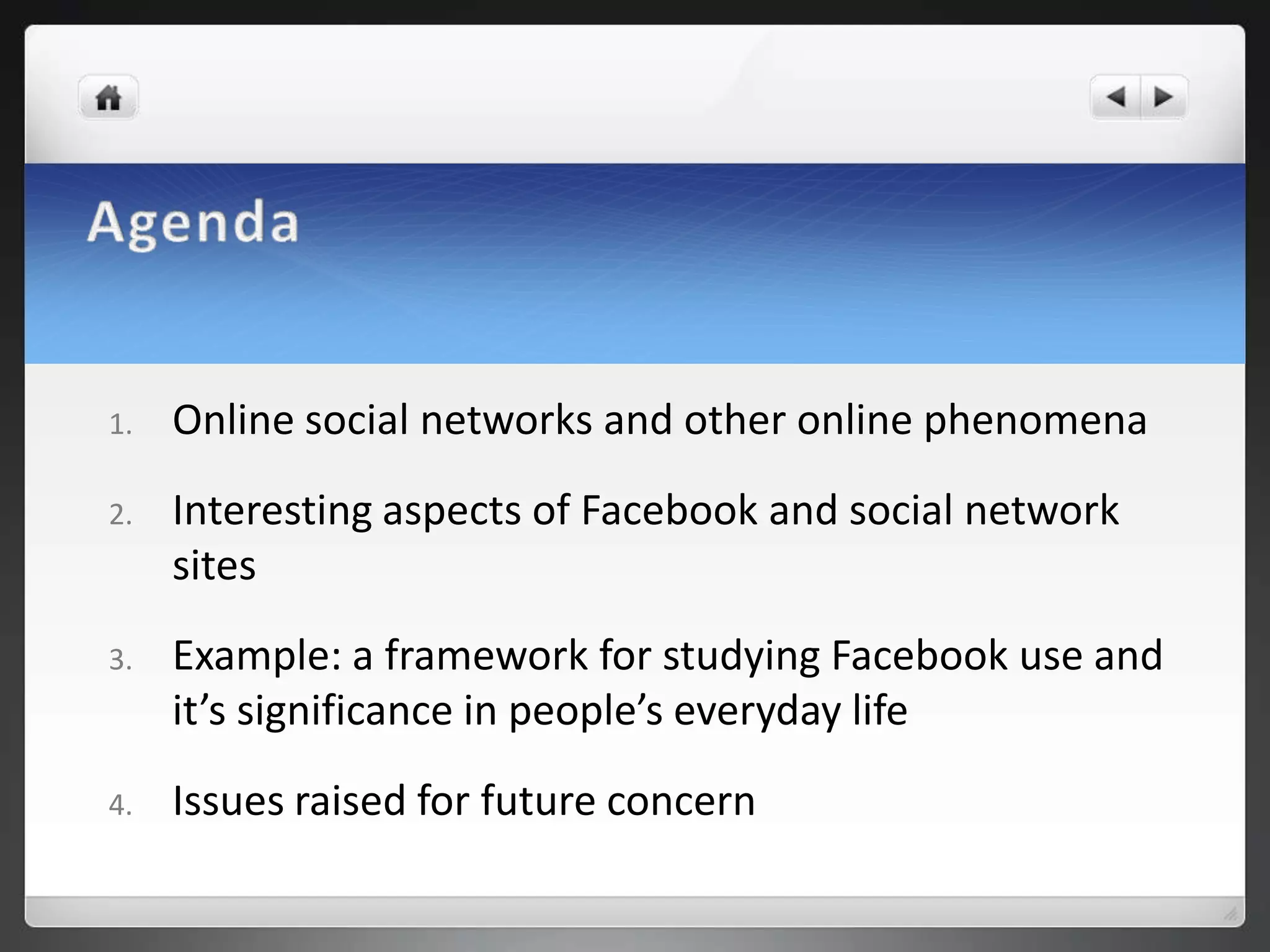
1.   Online social networks and other online phenomena
2.   Interesting aspects of Facebook and social network
     sites
3.   Example: a framework for studying Facebook use and
     it’s significance in people’s everyday life
4.   Issues raised for future concern
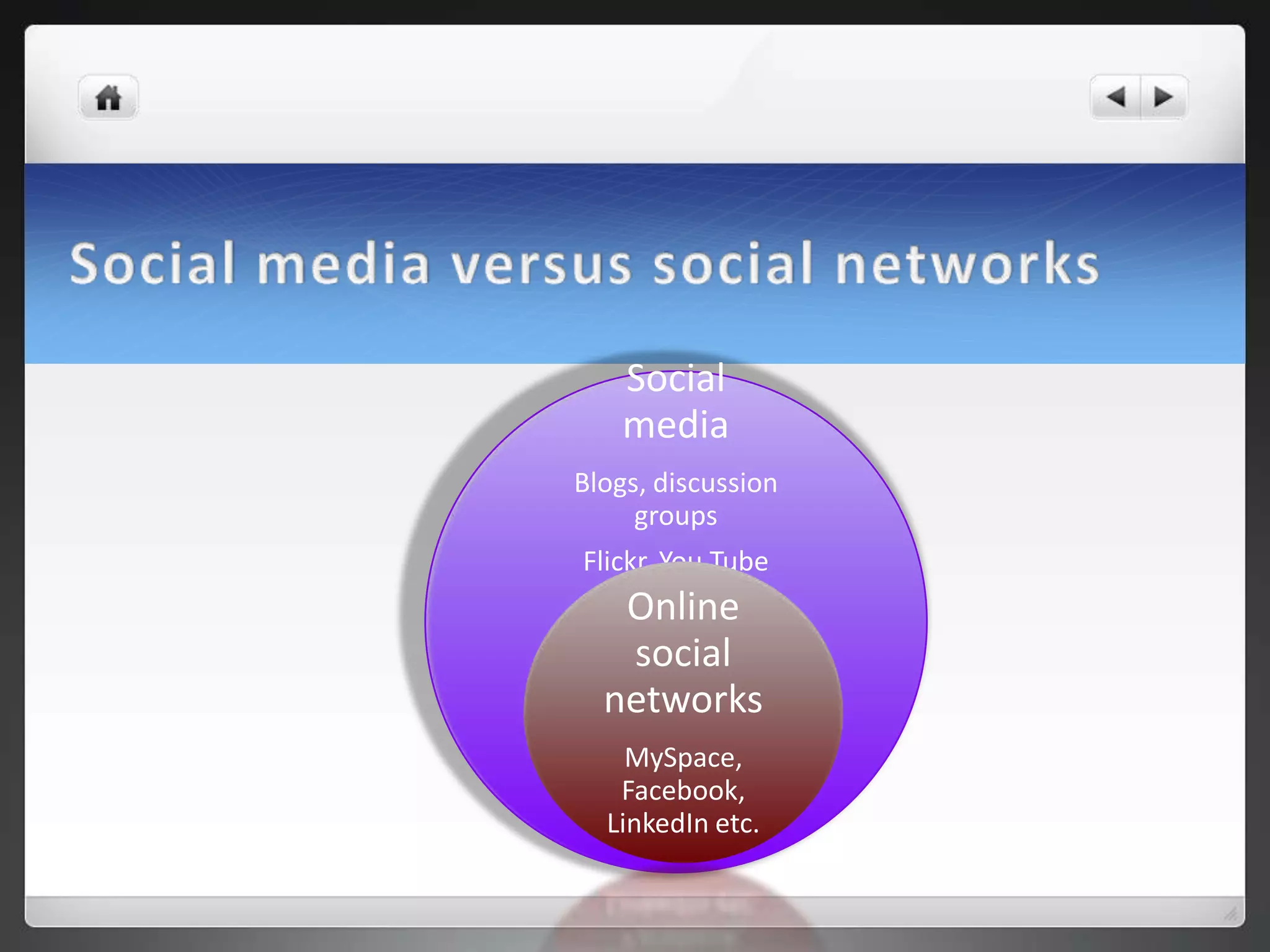
Social
    media
Blogs, discussion
     groups
Flickr, You Tube
       etc.
   Online
   social
  networks
    MySpace,
   Facebook,
  LinkedIn etc.
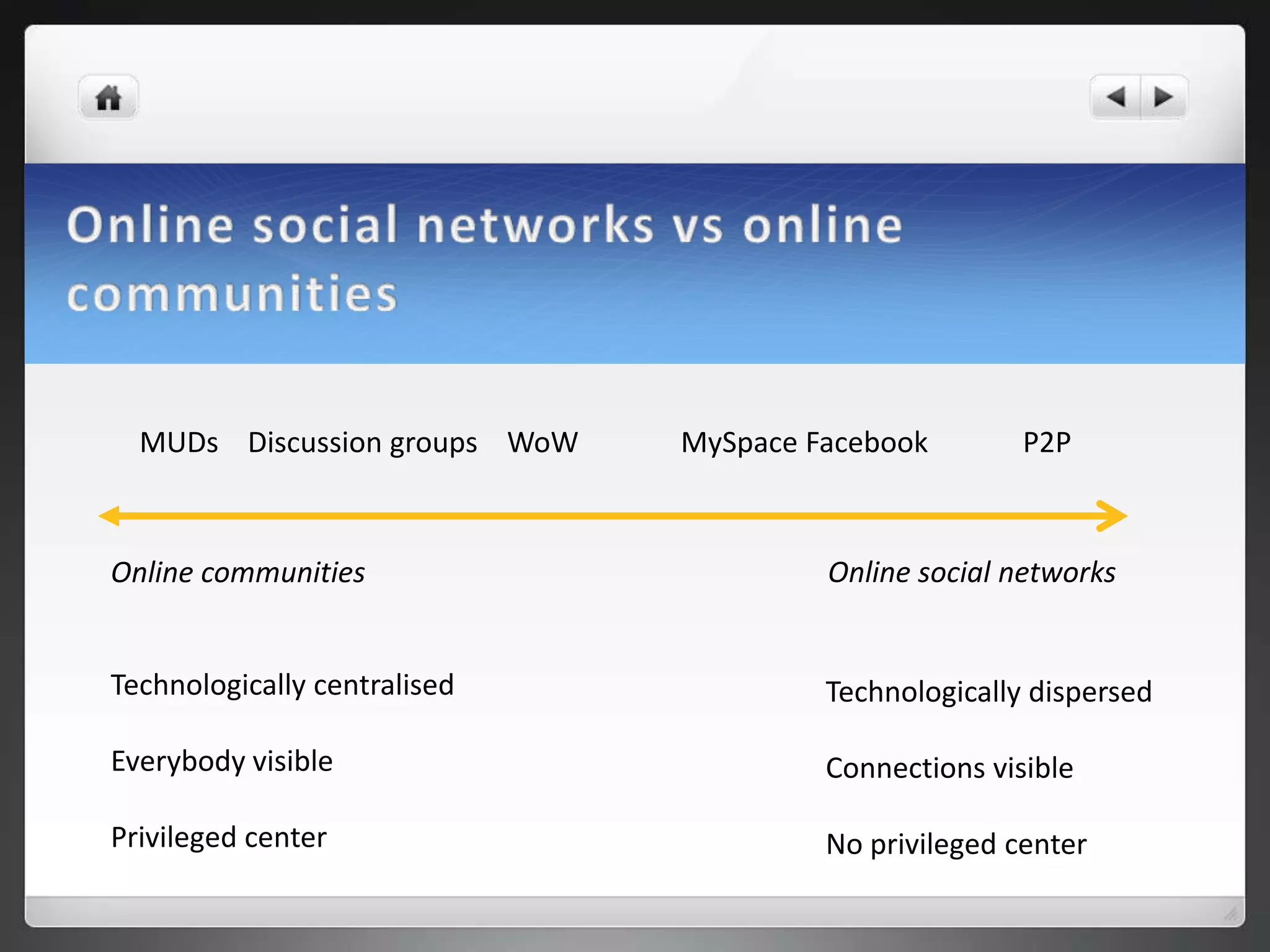
MUDs Discussion groups WoW   MySpace Facebook        P2P


Online communities                      Online social networks


Technologically centralised             Technologically dispersed

Everybody visible                       Connections visible

Privileged center                       No privileged center
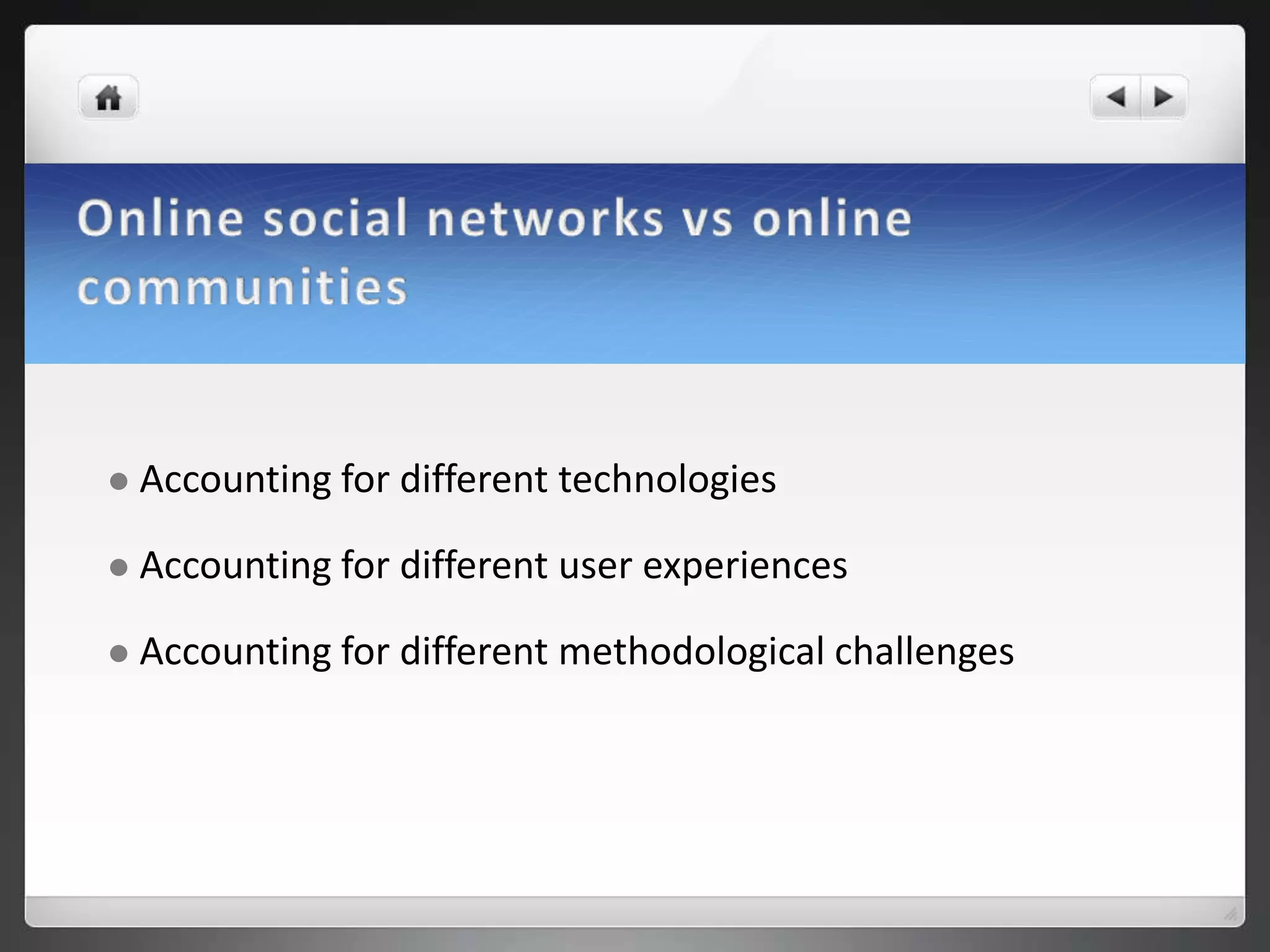
   Accounting for different technologies

   Accounting for different user experiences

   Accounting for different methodological challenges
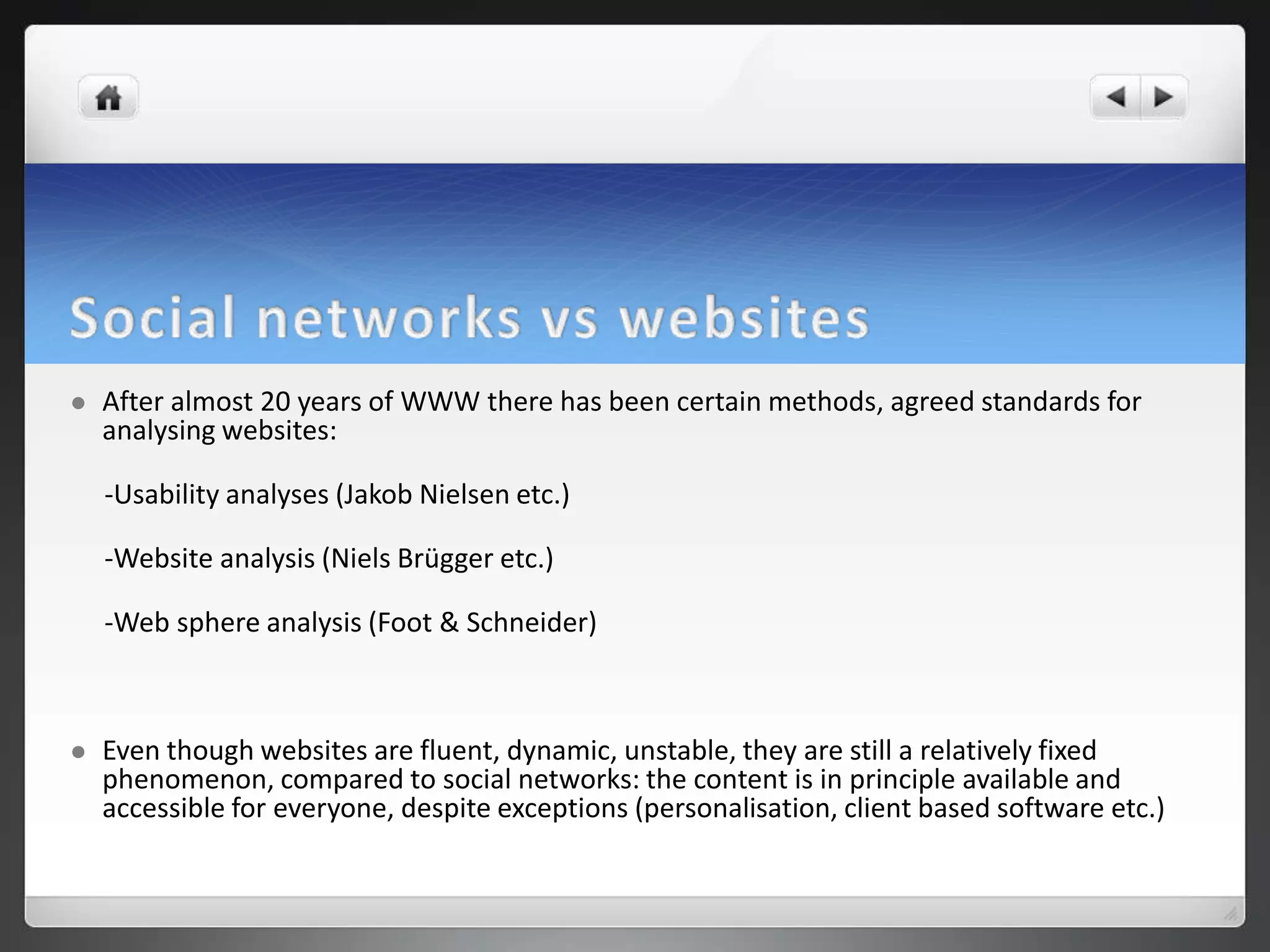
   After almost 20 years of WWW there has been certain methods, agreed standards for
    analysing websites:

    -Usability analyses (Jakob Nielsen etc.)

    -Website analysis (Niels Brügger etc.)

    -Web sphere analysis (Foot & Schneider)


   Even though websites are fluent, dynamic, unstable, they are still a relatively fixed
    phenomenon, compared to social networks: the content is in principle available and
    accessible for everyone, despite exceptions (personalisation, client based software etc.)
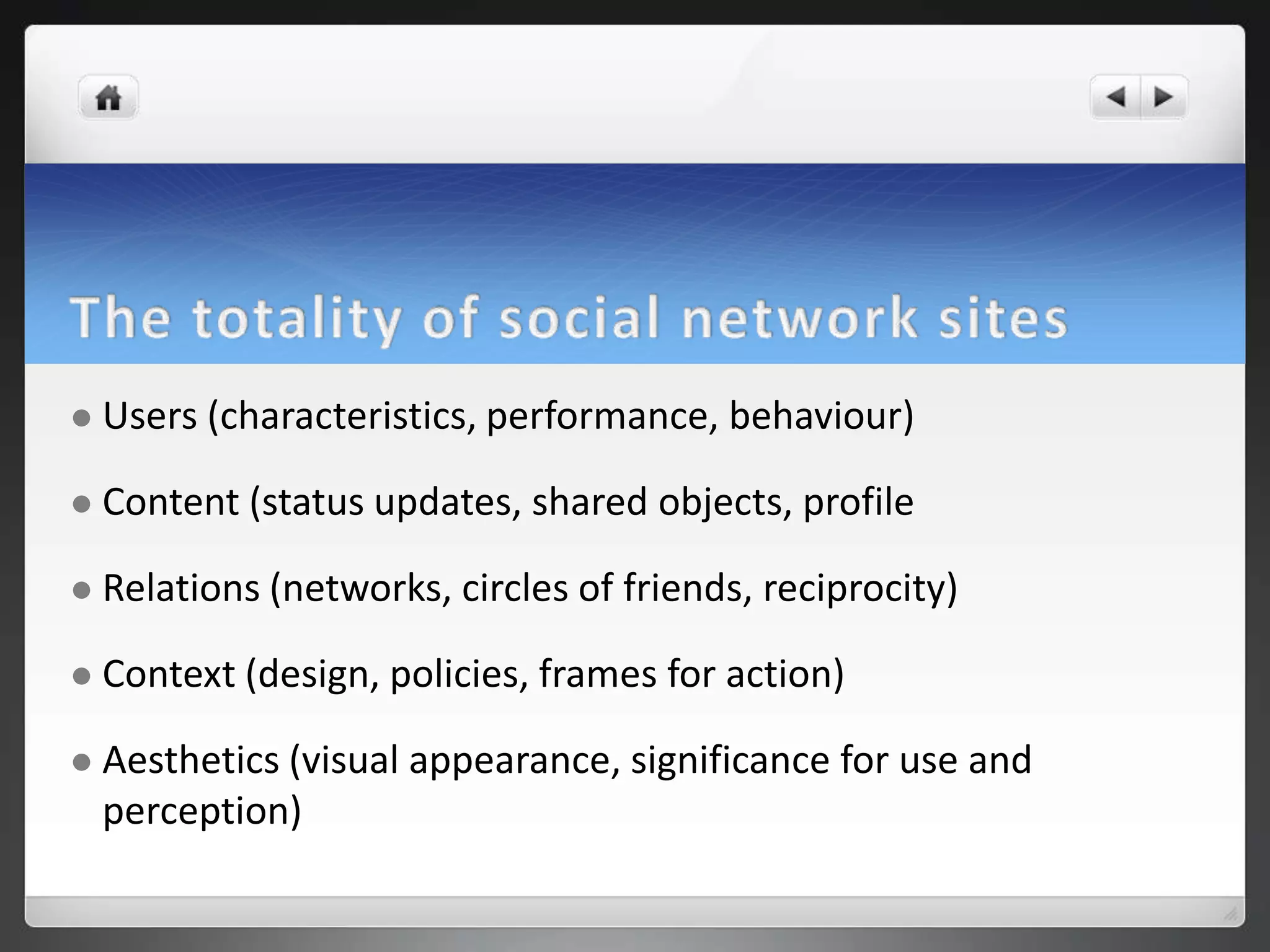
   Users (characteristics, performance, behaviour)

   Content (status updates, shared objects, profile

   Relations (networks, circles of friends, reciprocity)

   Context (design, policies, frames for action)

   Aesthetics (visual appearance, significance for use and
    perception)
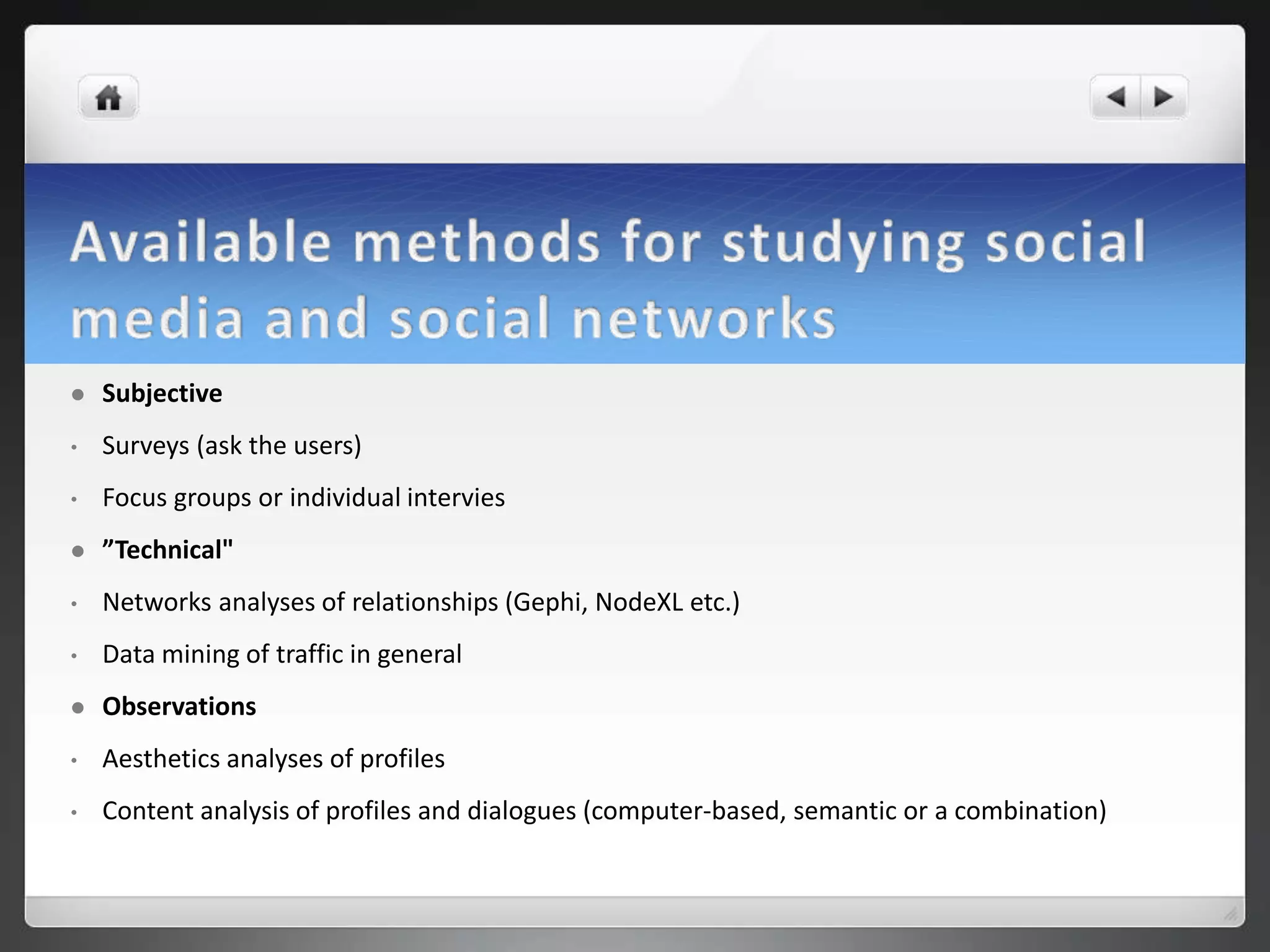
   Subjective
•   Surveys (ask the users)
•   Focus groups or individual intervies
   ”Technical"
•   Networks analyses of relationships (Gephi, NodeXL etc.)
•   Data mining of traffic in general
   Observations
•   Aesthetics analyses of profiles
•   Content analysis of profiles and dialogues (computer-based, semantic or a combination)
•   2009 project survey (N= 1710)

•   General survey on the public sphere, media use, participation, citizenship

•   Sponsored by Danish National Research Council
•   How are social media used to perform political and cultural
    citizenship?

•   Which role do social media play in respondents’ everyday life?

•   How do users perform online compared to their own
    presentation and perception of their online presence?
•   Quantitative survey among Danish Internet users (N=1710)

•   Subsequent focus groups (4, N=20) among strategically selected
    Facebook users

•   Access to profiles and all information of the focus group
    participants (N=17)
   Knowledge on respondents’ general media use and other variables

   Specific knowledge on use and attitudes towards social network sites

   Attitudes and experiences discussed and negotiated in a social context

   Observation of actual behaviour and practices versus norms and ideal conceptions
   Discrepancy between statements in social contexts (focus groups) and
    practices while alone

   A well-known methodological problem

   Here the triangulation of focus groups and ”eaves-dropping” profiles
    illustrates such discrepancies, otherwise hard to get

   This is good to cover aspects of daily practices and norms

   One could have added analyses of relations, meta-analyses of content

Innovative approaches to analyses of online social networks

  • 1.
    Innovative approaches toanalyses of online social networks Panel for IR13 – Salford October 18th-21st 2012 Jakob Linaa Jensen (chair) Frauke Zeller Andra Siibak Niels Brügger
  • 2.
    Background  EU COST Action “Transforming audiences, transforming societies”  Working group on social media and social networking – and it’s consequences for audience research  Europan task force on social media methods  Mapping the research field within Europe and beyond  Publishing (journals, edited books, panels)  Outreach (new research projects, connections beyond Europe)
  • 3.
    Comparative studies  Klaus Bruhn Jensen in charge  Survey in 13 countries  Data collection January 2013  IPSOS to carry out surveys in most countries
  • 4.
    Twitter and thepublic sphere - The European elections in 2014  Joint Research proposal COST Action 'Transforming Audiences, Transforming Societies’:  Pieter Verdegem, Cédric Courtois and Peter Mechant (Ghent University, Belgium), Jakob Linaa Jensen (Aarhus University, Denmark), Stine Lomborg (University of Copenhagen)  Call distributed, so far participants from 10+ countries (Pieter?)
  • 5.
    This panel Accessing useof online social networks in everyday life – a suggested framework Jakob Linaa Jensen, University of Aarhus, Denmark Mixed Methods in Online Social Network Analysis Frauke Zeller, Technical University of Ilmenau, Germany Historical Network Analysis: Methodological Challenges Niels Brügger, University of Aarhus, Denmark Making use of creative research methods for studying social media Andra Siibak, University of Tartu, Estonia
  • 6.
    Accessing use ofonline social networks in everyday life – a suggested framework Jakob Linaa Jensen, Ph.D. Associate professor in media studies Center for Internet Research Aarhus University, Denmark E-mail:linaa@imv.au.dk Twitter: jakoblinaa Web: www.linaa.net
  • 7.
    1. Online social networks and other online phenomena 2. Interesting aspects of Facebook and social network sites 3. Example: a framework for studying Facebook use and it’s significance in people’s everyday life 4. Issues raised for future concern
  • 8.
    Social media Blogs, discussion groups Flickr, You Tube etc. Online social networks MySpace, Facebook, LinkedIn etc.
  • 9.
    MUDs Discussion groupsWoW MySpace Facebook P2P Online communities Online social networks Technologically centralised Technologically dispersed Everybody visible Connections visible Privileged center No privileged center
  • 10.
    Accounting for different technologies  Accounting for different user experiences  Accounting for different methodological challenges
  • 11.
    After almost 20 years of WWW there has been certain methods, agreed standards for analysing websites: -Usability analyses (Jakob Nielsen etc.) -Website analysis (Niels Brügger etc.) -Web sphere analysis (Foot & Schneider)  Even though websites are fluent, dynamic, unstable, they are still a relatively fixed phenomenon, compared to social networks: the content is in principle available and accessible for everyone, despite exceptions (personalisation, client based software etc.)
  • 12.
    Users (characteristics, performance, behaviour)  Content (status updates, shared objects, profile  Relations (networks, circles of friends, reciprocity)  Context (design, policies, frames for action)  Aesthetics (visual appearance, significance for use and perception)
  • 13.
    Subjective • Surveys (ask the users) • Focus groups or individual intervies  ”Technical" • Networks analyses of relationships (Gephi, NodeXL etc.) • Data mining of traffic in general  Observations • Aesthetics analyses of profiles • Content analysis of profiles and dialogues (computer-based, semantic or a combination)
  • 14.
    2009 project survey (N= 1710) • General survey on the public sphere, media use, participation, citizenship • Sponsored by Danish National Research Council
  • 15.
    How are social media used to perform political and cultural citizenship? • Which role do social media play in respondents’ everyday life? • How do users perform online compared to their own presentation and perception of their online presence?
  • 16.
    Quantitative survey among Danish Internet users (N=1710) • Subsequent focus groups (4, N=20) among strategically selected Facebook users • Access to profiles and all information of the focus group participants (N=17)
  • 17.
    Knowledge on respondents’ general media use and other variables  Specific knowledge on use and attitudes towards social network sites  Attitudes and experiences discussed and negotiated in a social context  Observation of actual behaviour and practices versus norms and ideal conceptions
  • 20.
    Discrepancy between statements in social contexts (focus groups) and practices while alone  A well-known methodological problem  Here the triangulation of focus groups and ”eaves-dropping” profiles illustrates such discrepancies, otherwise hard to get  This is good to cover aspects of daily practices and norms  One could have added analyses of relations, meta-analyses of content