Innovation Barriers
material minds
material minds 2
Why Don’t People Innovate?
Even if there are strong triggers that are acting on people
to get them to innovate, there can be barriers that get in
the way.
Transaction costs
3
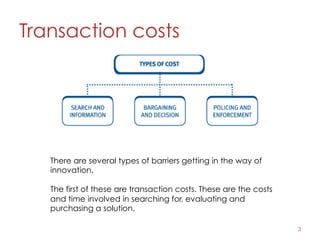
There are several types of barriers getting in the way of
innovation.
The first of these are transaction costs. These are the costs
and time involved in searching for, evaluating and
purchasing a solution.
Learning costs
4
Secondly there are learning
costs.
These arise form the time and
expense of implementing a
new solution and learning how
to use it.
Obsolescence costs
5
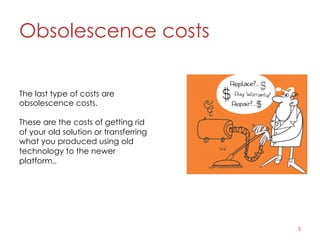
The last type of costs are
obsolescence costs.
These are the costs of getting rid
of your old solution or transferring
what you produced using old
technology to the newer
platform..
Risk to innovating
material minds 6
There are also risks to innovating as the new solution may
be worse than the last or may fail totally.
Psychological costs
7
People must also recognize
they are currently doing
something wrong in order
to think that they should
change it and innovate.
People have a hard time
making that switch. that’s
why you hear them say
things like “It has worked for
us for 10 years so why
should we change what
isn’t broken.”
Endowment Effect
material minds 8
Consumers view what they own as
part of their endowment.
They assess innovations in terms of
what they gain and lose relative to
their endowment.
Status Quo Bias
material minds 9
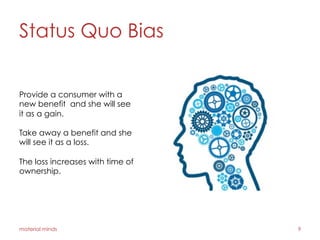
Provide a consumer with a
new benefit and she will see
it as a gain.
Take away a benefit and she
will see it as a loss.
The loss increases with time of
ownership.
The Sloth Factor
material minds 10
People are lazy and innovation requires
work, effort, and thought.
The status quo requires no work.
Psychological Costs
material minds 11
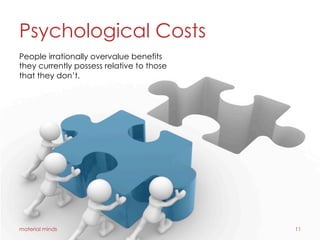
People irrationally overvalue benefits
they currently possess relative to those
that they don’t.
Consumers overvalue existing
benefits
material minds 12
They value the advantages of the
products they own more than the
benefits of the new one.
Executives overvalue innovation
benefits
material minds 13
Suppliers value the benefits of
innovations they’ve developed over
the advantages of incumbent
products.
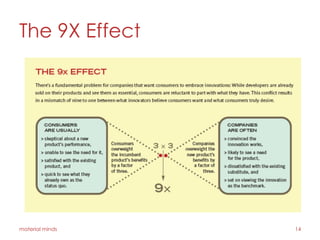
The 9X Effect
material minds 14
If there are strong barriers
material minds 15
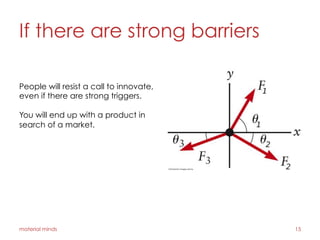
People will resist a call to innovate,
even if there are strong triggers.
You will end up with a product in
search of a market.
Before you build a product, find
out what their barriers are and
how you can change your
product or marketing to avoid
or negate the barriers.
material minds 16
In addition to barriers
There are triggers to
innovation and
competitive forces you
must overcome to
succeed.
But more of those issues
in another slide deck.
material minds 17
material minds
We help technology entrepreneurs innovate,
communicate and execute.
We focus on helping improve business processes that
require an in-depth understanding of human behavior
for them to be effective.
We provide Business Advisory Services, Workshops and
speak at events.
Charles Plant
cplant (at) materialminds.com
@cplant
416.458.4850
material minds 18

Innovation Barriers

  • 1.
  • 2.
    material minds 2 WhyDon’t People Innovate? Even if there are strong triggers that are acting on people to get them to innovate, there can be barriers that get in the way.
  • 3.
    Transaction costs 3 There areseveral types of barriers getting in the way of innovation. The first of these are transaction costs. These are the costs and time involved in searching for, evaluating and purchasing a solution.
  • 4.
    Learning costs 4 Secondly thereare learning costs. These arise form the time and expense of implementing a new solution and learning how to use it.
  • 5.
    Obsolescence costs 5 The lasttype of costs are obsolescence costs. These are the costs of getting rid of your old solution or transferring what you produced using old technology to the newer platform..
  • 6.
    Risk to innovating materialminds 6 There are also risks to innovating as the new solution may be worse than the last or may fail totally.
  • 7.
    Psychological costs 7 People mustalso recognize they are currently doing something wrong in order to think that they should change it and innovate. People have a hard time making that switch. that’s why you hear them say things like “It has worked for us for 10 years so why should we change what isn’t broken.”
  • 8.
    Endowment Effect material minds8 Consumers view what they own as part of their endowment. They assess innovations in terms of what they gain and lose relative to their endowment.
  • 9.
    Status Quo Bias materialminds 9 Provide a consumer with a new benefit and she will see it as a gain. Take away a benefit and she will see it as a loss. The loss increases with time of ownership.
  • 10.
    The Sloth Factor materialminds 10 People are lazy and innovation requires work, effort, and thought. The status quo requires no work.
  • 11.
    Psychological Costs material minds11 People irrationally overvalue benefits they currently possess relative to those that they don’t.
  • 12.
    Consumers overvalue existing benefits materialminds 12 They value the advantages of the products they own more than the benefits of the new one.
  • 13.
    Executives overvalue innovation benefits materialminds 13 Suppliers value the benefits of innovations they’ve developed over the advantages of incumbent products.
  • 14.
  • 15.
    If there arestrong barriers material minds 15 People will resist a call to innovate, even if there are strong triggers. You will end up with a product in search of a market.
  • 16.
    Before you builda product, find out what their barriers are and how you can change your product or marketing to avoid or negate the barriers. material minds 16
  • 17.
    In addition tobarriers There are triggers to innovation and competitive forces you must overcome to succeed. But more of those issues in another slide deck. material minds 17
  • 18.
    material minds We helptechnology entrepreneurs innovate, communicate and execute. We focus on helping improve business processes that require an in-depth understanding of human behavior for them to be effective. We provide Business Advisory Services, Workshops and speak at events. Charles Plant cplant (at) materialminds.com @cplant 416.458.4850 material minds 18