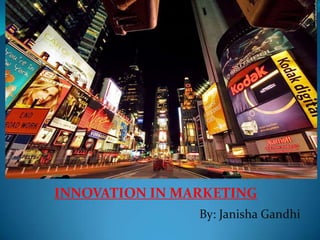
INNOVATION IN MARKETING
                By: Janisha Gandhi
AGENDA
 WHAT IS MARKETING ?
 WHAT IS INNOVATION ?
 WHAT IS MARKETING INNOVATION ?
 WHY DO WE NEED MARKETING INNOVATION ?
 INNOVATION CHANNEL
 INNOVATION PRICING
 INNOVATION PRODUCT
 INNOVATION PROMOTION
MARKETING
 Marketing is the process of communicating the
  value of a product or service to customers. It
  includes the coordination of four elements called
  the 4 P's of marketing :
 Product
 Promotion
 Price
 Place (Distribution)
INNOVATION
 The term innovation refers to a new way of doing
  something.
 An innovation is viewed as anything new that
  solves needs by offering a significant advantage
  (e.g., more features, more convenient, easier to
  use, lower cost, etc.)
 In order to generate more profits and revenue,
  firms offers its customers new products or services
  or finds new users for older products and services.
MARKETING INNOVATION
• ‘A new marketing method involving significant
  changes in product design or packaging, product
  placement, product promotion or pricing.

 For example, Amazon was the first established
  online bookseller. Shortly thereafter, companies
  like Barnes and Noble started selling books online
  as                                           well.
WHY DO WE NEED MARKETING
INNOVATION
 Steady decline in sales volume and/or revenue.
 Steady decline in profitability and return on
  investment.
 Steady increase in customer complaints.
 Products and/or services offered are essentially
  commodities with very little differentiation.
 Price competition dominates sales activity.
 No new or improved products or services are under
  development.
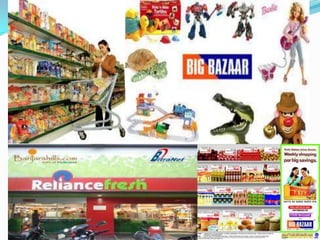
INNOVATION CHANNEL
 Creates new channels for distribution and transaction (e.g.,
  electronic commerce) that include making it easier for
  buyers to place orders.
 Marketing-to-person is replacing mass marketing. For
  customer service, technology makes it easier to manage
  relationships and allows for rapid response to customer’s
  needs.
 Implementation of a new concept for product presentation
  such as sales rooms for furniture that are designed
  according to themes, allowing customers to view products
  in fully decorated rooms
INNOVATION PRICING
 Enables the use of dynamic pricing methods.
 Introduction of a new method that allows customers
  to choose desired product specifications on the firm’s
  Web site and then see the price for the specified
  product.
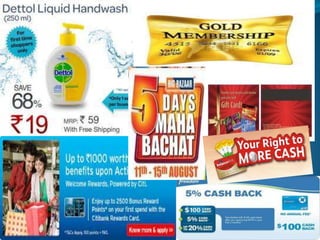
 First-time use of in-store special offers that are only
  accessible to holders of the store’s credit card or
  reward card.
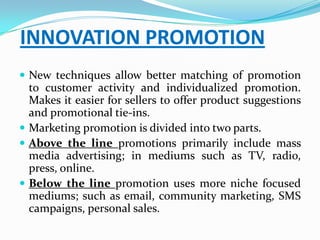
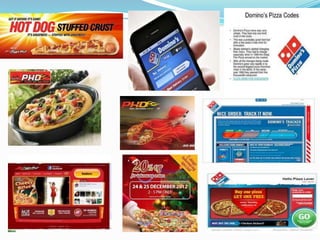
INNOVATION PROMOTION
 New techniques allow better matching of promotion
  to customer activity and individualized promotion.
  Makes it easier for sellers to offer product suggestions
  and promotional tie-ins.
 Marketing promotion is divided into two parts.
 Above the line promotions primarily include mass
  media advertising; in mediums such as TV, radio,
  press, online.
 Below the line promotion uses more niche focused
  mediums; such as email, community marketing, SMS
  campaigns, personal sales.
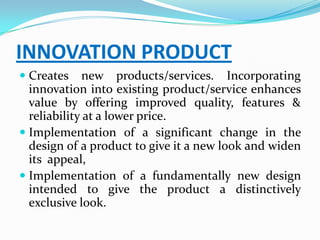
INNOVATION PRODUCT
 Creates new products/services. Incorporating
  innovation into existing product/service enhances
  value by offering improved quality, features &
  reliability at a lower price.
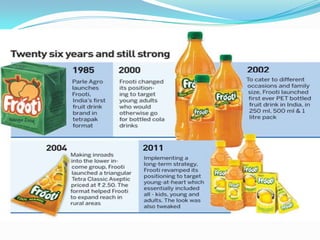
 Implementation of a significant change in the
  design of a product to give it a new look and widen
  its appeal,
 Implementation of a fundamentally new design
 intended to give the product a distinctively
 exclusive look.
INNOVATION IN
MARKETING
Innovation in marketing.ppt

Innovation in marketing.ppt

  • 1.
    INNOVATION IN MARKETING By: Janisha Gandhi
  • 2.
    AGENDA  WHAT ISMARKETING ?  WHAT IS INNOVATION ?  WHAT IS MARKETING INNOVATION ?  WHY DO WE NEED MARKETING INNOVATION ?  INNOVATION CHANNEL  INNOVATION PRICING  INNOVATION PRODUCT  INNOVATION PROMOTION
  • 3.
    MARKETING  Marketing isthe process of communicating the value of a product or service to customers. It includes the coordination of four elements called the 4 P's of marketing :  Product  Promotion  Price  Place (Distribution)
  • 4.
    INNOVATION  The terminnovation refers to a new way of doing something.  An innovation is viewed as anything new that solves needs by offering a significant advantage (e.g., more features, more convenient, easier to use, lower cost, etc.)  In order to generate more profits and revenue, firms offers its customers new products or services or finds new users for older products and services.
  • 5.
    MARKETING INNOVATION • ‘Anew marketing method involving significant changes in product design or packaging, product placement, product promotion or pricing.  For example, Amazon was the first established online bookseller. Shortly thereafter, companies like Barnes and Noble started selling books online as well.
  • 6.
    WHY DO WENEED MARKETING INNOVATION  Steady decline in sales volume and/or revenue.  Steady decline in profitability and return on investment.  Steady increase in customer complaints.  Products and/or services offered are essentially commodities with very little differentiation.  Price competition dominates sales activity.  No new or improved products or services are under development.
  • 7.
    INNOVATION CHANNEL  Createsnew channels for distribution and transaction (e.g., electronic commerce) that include making it easier for buyers to place orders.  Marketing-to-person is replacing mass marketing. For customer service, technology makes it easier to manage relationships and allows for rapid response to customer’s needs.  Implementation of a new concept for product presentation such as sales rooms for furniture that are designed according to themes, allowing customers to view products in fully decorated rooms
  • 9.
    INNOVATION PRICING  Enablesthe use of dynamic pricing methods.  Introduction of a new method that allows customers to choose desired product specifications on the firm’s Web site and then see the price for the specified product.  First-time use of in-store special offers that are only accessible to holders of the store’s credit card or reward card.
  • 11.
    INNOVATION PROMOTION  Newtechniques allow better matching of promotion to customer activity and individualized promotion. Makes it easier for sellers to offer product suggestions and promotional tie-ins.  Marketing promotion is divided into two parts.  Above the line promotions primarily include mass media advertising; in mediums such as TV, radio, press, online.  Below the line promotion uses more niche focused mediums; such as email, community marketing, SMS campaigns, personal sales.
  • 14.
    INNOVATION PRODUCT  Createsnew products/services. Incorporating innovation into existing product/service enhances value by offering improved quality, features & reliability at a lower price.  Implementation of a significant change in the design of a product to give it a new look and widen its appeal,  Implementation of a fundamentally new design intended to give the product a distinctively exclusive look.
  • 16.