Infrared Radiation
By :PALAK DESAI
First year BPT
What are infrared rays?
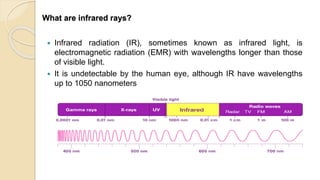
 Infrared radiation (IR), sometimes known as infrared light, is
electromagnetic radiation (EMR) with wavelengths longer than those
of visible light.
 It is undetectable by the human eye, although IR have wavelengths
up to 1050 nanometers
Sources and Characteristics
 Infrared radiations is also referred to as heat or thermal waves
or electromagnetic waves. This is because they have a heat-inducing
property.
 Sometimes infrared rays are classified as near-infrared and far-
infrared.
 Near-infrared rays are used in electronic applications like TV remote
sensors and photography. Their applications can be similar to visible
light applications since their wavelength ranges are close.
 Far infrared rays are more thermal. Anything generating heat gives
out far-infrared radiation.
 All heated bodies such as heated iron balls, flame, fire etc. are the
sources of infrared radiations. Sun is also a source of infrared
radiation.
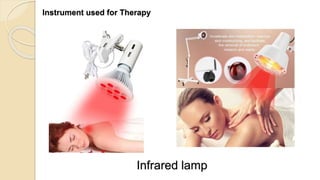
Instrument used for Therapy
Infrared lamp
Therapeutic Uses
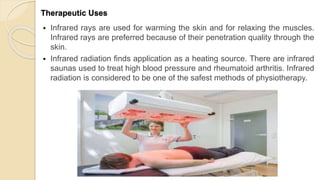
 Infrared rays are used for warming the skin and for relaxing the muscles.
Infrared rays are preferred because of their penetration quality through the
skin.
 Infrared radiation finds application as a heating source. There are infrared
saunas used to treat high blood pressure and rheumatoid arthritis. Infrared
radiation is considered to be one of the safest methods of physiotherapy.
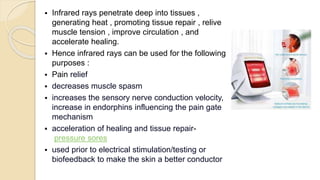
 Infrared rays penetrate deep into tissues ,
generating heat , promoting tissue repair , relive
muscle tension , improve circulation , and
accelerate healing.
 Hence infrared rays can be used for the following
purposes :
 Pain relief
 decreases muscle spasm
 increases the sensory nerve conduction velocity,
increase in endorphins influencing the pain gate
mechanism
 acceleration of healing and tissue repair-
pressure sores
 used prior to electrical stimulation/testing or
biofeedback to make the skin a better conductor
Indications and Contra-indications
 Osteoarthritis
 Rheumatoid arthritis
 Ankylosing spondylitis
 Capsulitis
 Psoriasis
 Joint stiffness
 Odema
 Pain
 Muscle spasm
 eczema
 Tumors
 Tuberculosis
 Photosensitivity
 Mental retardation
 Metal implant
Dangers of Infrared Therapy
 Burns
 Skin irritation
 Eye damage
 Dehydration
 Low BP
 Electric shock
 Headache
 Defective arterial blood flow
Summary
Infrared promotes a wide range of therapeutic benefits in cells or
tissues. It helps to reduce pain and can be used to treat various
conditions. Research suggests it is a safe, effective to manage pain
without medication.
THANK YOU

Infrared Radiation for Physiotherapy.pptx

  • 1.
    Infrared Radiation By :PALAKDESAI First year BPT
  • 2.
    What are infraredrays?  Infrared radiation (IR), sometimes known as infrared light, is electromagnetic radiation (EMR) with wavelengths longer than those of visible light.  It is undetectable by the human eye, although IR have wavelengths up to 1050 nanometers
  • 3.
    Sources and Characteristics Infrared radiations is also referred to as heat or thermal waves or electromagnetic waves. This is because they have a heat-inducing property.  Sometimes infrared rays are classified as near-infrared and far- infrared.  Near-infrared rays are used in electronic applications like TV remote sensors and photography. Their applications can be similar to visible light applications since their wavelength ranges are close.  Far infrared rays are more thermal. Anything generating heat gives out far-infrared radiation.  All heated bodies such as heated iron balls, flame, fire etc. are the sources of infrared radiations. Sun is also a source of infrared radiation.
  • 5.
    Instrument used forTherapy Infrared lamp
  • 6.
    Therapeutic Uses  Infraredrays are used for warming the skin and for relaxing the muscles. Infrared rays are preferred because of their penetration quality through the skin.  Infrared radiation finds application as a heating source. There are infrared saunas used to treat high blood pressure and rheumatoid arthritis. Infrared radiation is considered to be one of the safest methods of physiotherapy.
  • 7.
     Infrared rayspenetrate deep into tissues , generating heat , promoting tissue repair , relive muscle tension , improve circulation , and accelerate healing.  Hence infrared rays can be used for the following purposes :  Pain relief  decreases muscle spasm  increases the sensory nerve conduction velocity, increase in endorphins influencing the pain gate mechanism  acceleration of healing and tissue repair- pressure sores  used prior to electrical stimulation/testing or biofeedback to make the skin a better conductor
  • 8.
    Indications and Contra-indications Osteoarthritis  Rheumatoid arthritis  Ankylosing spondylitis  Capsulitis  Psoriasis  Joint stiffness  Odema  Pain  Muscle spasm  eczema  Tumors  Tuberculosis  Photosensitivity  Mental retardation  Metal implant
  • 9.
    Dangers of InfraredTherapy  Burns  Skin irritation  Eye damage  Dehydration  Low BP  Electric shock  Headache  Defective arterial blood flow
  • 10.
    Summary Infrared promotes awide range of therapeutic benefits in cells or tissues. It helps to reduce pain and can be used to treat various conditions. Research suggests it is a safe, effective to manage pain without medication.
  • 11.