Organic
Food
Informative Speech
Melissa Ramos
Table of Contents
 What is Organic food?
 The Cons
 The Pros
 Tips
 Closing Statement
 References
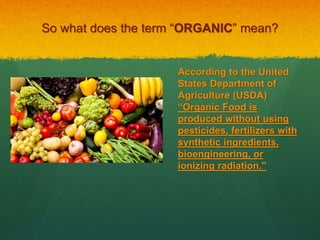
So what does the term “ORGANIC” mean?
According to the United
States Department of
Agriculture (USDA)
“Organic Food is
produced without using
pesticides, fertilizers with
synthetic ingredients,
bioengineering, or
ionizing radiation.''
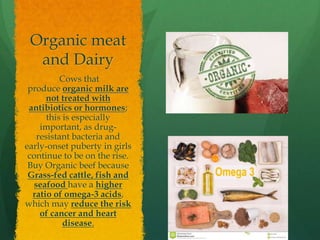
Organic meat
and Dairy
Cows that
produce organic milk are
not treated with
antibiotics or hormones;
this is especially
important, as drug-
resistant bacteria and
early-onset puberty in girls
continue to be on the rise.
Buy Organic beef because
Grass-fed cattle, fish and
seafood have a higher
ratio of omega-3 acids,
which may reduce the risk
of cancer and heart
disease.
The Cons of Organic
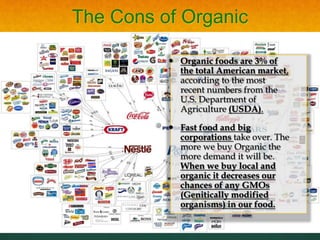
 Organic foods are 3% of
the total American market,
according to the most
recent numbers from the
U.S. Department of
Agriculture (USDA).
 Fast food and big
corporations take over. The
more we buy Organic the
more demand it will be.
When we buy local and
organic it decreases our
chances of any GMOs
(Genitically modified
organisms) in our food.
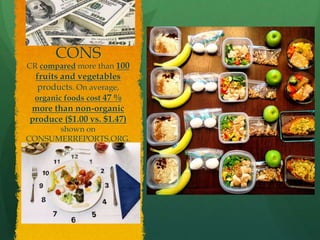
CONS
CR compared more than 100
fruits and vegetables
products. On average,
organic foods cost 47 %
more than non-organic
produce ($1.00 vs. $1.47)
shown on
CONSUMERREPORTS.ORG.
Hard work and discipline.
Meal prep and packing
snacks for on-the-go take
more time.
The Pros of Eating Organic
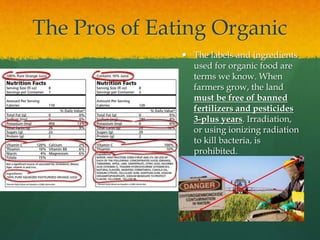
 The labels and ingredients
used for organic food are
terms we know. When
farmers grow, the land
must be free of banned
fertilizers and pesticides
3-plus years. Irradiation,
or using ionizing radiation
to kill bacteria, is
prohibited.
The Pros
 There May Be Weight Benefits
Research in small animals (rats)
found that those fed an all-organic
diet (versus conventional food) had
lower weights, less body fat,
and stronger immune systems.
Plus, the "clean diet" animals were
calmer and slept better. (Article
from Cynthia Sass).
 A brand new analysis of about
100 studies, including more
than 40 published in the past 7
years, found that the average
levels of nearly a dozen
nutrients are 25% higher
in organic produce. (Article
from Cynthia Sass)
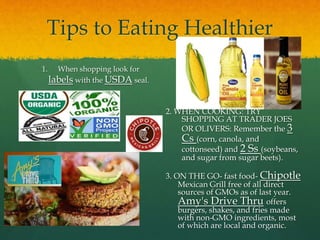
Tips to Eating Healthier
1. When shopping look for
labels with the USDA seal.
2. WHEN COOKING: TRY
SHOPPING AT TRADER JOES
OR OLIVERS: Remember the 3
Cs (corn, canola, and
cottonseed) and 2 Ss (soybeans,
and sugar from sugar beets).
3. ON THE GO- fast food- Chipotle
Mexican Grill free of all direct
sources of GMOs as of last year.
Amy's Drive Thru offers
burgers, shakes, and fries made
with non-GMO ingredients, most
of which are local and organic.
Closing
Statement
“I’m here to plant a
seed today, a seed
that will inspire you
to go forward in your
life with enthusiastic
hearts and a clear
sense of wholeness.
The question is, will
that seed have a
chance to take root or
will I be sued by
Monsanto?”- Jim
Carrey
References
 TWEED,V. (2016). Test Your GMO Knowledge. Better Nutrition, 78(7), 60.
 Sass, C. (2008). HOW TO BE A BUDGET ORGANIC. Prevention, 60(9), 85.
 Smith, M. D. (2015). TIPS TO HELP YOU EAT GMO-FREE. (Cover story). Better
Nutrition, 77(10), 66-68.
 Kluger, J. (2010). What's So Great About Organic Food?. Time, 176(9), 30-40.
 MACDONALD, K. (2015). What Organic Means. Men's Health, 30(4), 53.
 Reports, 2016 C. (2015, March 30). Cost of organic food. Retrieved November 4,
2016, from http://www.consumerreports.org/cro/news/2015/03/cost-of-organic-
food/index.htm

Informative-Organic

  • 1.
  • 2.
    Table of Contents What is Organic food?  The Cons  The Pros  Tips  Closing Statement  References
  • 3.
    So what doesthe term “ORGANIC” mean? According to the United States Department of Agriculture (USDA) “Organic Food is produced without using pesticides, fertilizers with synthetic ingredients, bioengineering, or ionizing radiation.''
  • 4.
    Organic meat and Dairy Cowsthat produce organic milk are not treated with antibiotics or hormones; this is especially important, as drug- resistant bacteria and early-onset puberty in girls continue to be on the rise. Buy Organic beef because Grass-fed cattle, fish and seafood have a higher ratio of omega-3 acids, which may reduce the risk of cancer and heart disease.
  • 5.
    The Cons ofOrganic  Organic foods are 3% of the total American market, according to the most recent numbers from the U.S. Department of Agriculture (USDA).  Fast food and big corporations take over. The more we buy Organic the more demand it will be. When we buy local and organic it decreases our chances of any GMOs (Genitically modified organisms) in our food.
  • 6.
    CONS CR compared morethan 100 fruits and vegetables products. On average, organic foods cost 47 % more than non-organic produce ($1.00 vs. $1.47) shown on CONSUMERREPORTS.ORG. Hard work and discipline. Meal prep and packing snacks for on-the-go take more time.
  • 7.
    The Pros ofEating Organic  The labels and ingredients used for organic food are terms we know. When farmers grow, the land must be free of banned fertilizers and pesticides 3-plus years. Irradiation, or using ionizing radiation to kill bacteria, is prohibited.
  • 8.
    The Pros  ThereMay Be Weight Benefits Research in small animals (rats) found that those fed an all-organic diet (versus conventional food) had lower weights, less body fat, and stronger immune systems. Plus, the "clean diet" animals were calmer and slept better. (Article from Cynthia Sass).  A brand new analysis of about 100 studies, including more than 40 published in the past 7 years, found that the average levels of nearly a dozen nutrients are 25% higher in organic produce. (Article from Cynthia Sass)
  • 9.
    Tips to EatingHealthier 1. When shopping look for labels with the USDA seal. 2. WHEN COOKING: TRY SHOPPING AT TRADER JOES OR OLIVERS: Remember the 3 Cs (corn, canola, and cottonseed) and 2 Ss (soybeans, and sugar from sugar beets). 3. ON THE GO- fast food- Chipotle Mexican Grill free of all direct sources of GMOs as of last year. Amy's Drive Thru offers burgers, shakes, and fries made with non-GMO ingredients, most of which are local and organic.
  • 10.
    Closing Statement “I’m here toplant a seed today, a seed that will inspire you to go forward in your life with enthusiastic hearts and a clear sense of wholeness. The question is, will that seed have a chance to take root or will I be sued by Monsanto?”- Jim Carrey
  • 11.
    References  TWEED,V. (2016).Test Your GMO Knowledge. Better Nutrition, 78(7), 60.  Sass, C. (2008). HOW TO BE A BUDGET ORGANIC. Prevention, 60(9), 85.  Smith, M. D. (2015). TIPS TO HELP YOU EAT GMO-FREE. (Cover story). Better Nutrition, 77(10), 66-68.  Kluger, J. (2010). What's So Great About Organic Food?. Time, 176(9), 30-40.  MACDONALD, K. (2015). What Organic Means. Men's Health, 30(4), 53.  Reports, 2016 C. (2015, March 30). Cost of organic food. Retrieved November 4, 2016, from http://www.consumerreports.org/cro/news/2015/03/cost-of-organic- food/index.htm