INFORMATION FROM
VARIOUS SOURCES
Most Essential Learning Competency:
Use information for everyday life
usage.
Information
Are facts provided or learned about
something or someone. (Oxford
Dictionary)
WHAT IS INFORMATION?
METHODS OF GATHERING INFORMATION
Examples:
 Listening
 Reading
 Interviews
 Questioning
 Questionnaires
 Observation
 Study of existing reports
RELEVANT SOURCES OF INFORMATION
1.News Reports
2.Speeches
3.Informative Talks
4.Panel Discussion
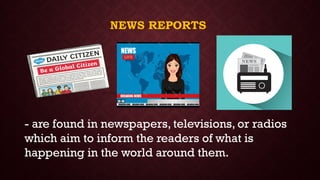
NEWS REPORTS
- are found in newspapers, televisions, or radios
which aim to inform the readers of what is
happening in the world around them.
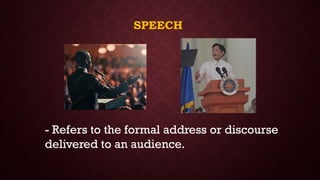
SPEECH
- Refers to the formal address or discourse
delivered to an audience.
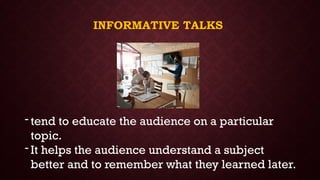
INFORMATIVE TALKS
- tend to educate the audience on a particular
topic.
- It helps the audience understand a subject
better and to remember what they learned later.
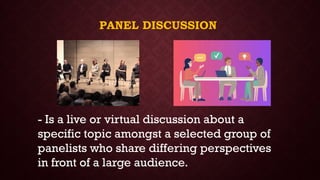
PANEL DISCUSSION
- Is a live or virtual discussion about a
specific topic amongst a selected group of
panelists who share differing perspectives
in front of a large audience.
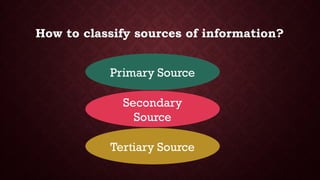
How to classify sources of information?
Primary Source
Secondary
Source
Tertiary Source
Primary Source
• Provides direct or firsthand information about an
event, person, object, or work of art.
• They are original materials which have not been
interpreted, condensed, or evaluated by a
secondary party.
• Materials that were created at the time the event
occurred or by those who experienced the event.
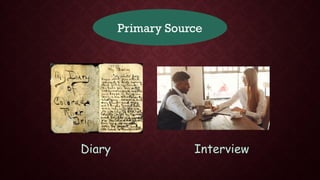
Primary Source
Diary Interview
Secondary
Source
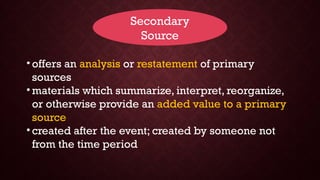
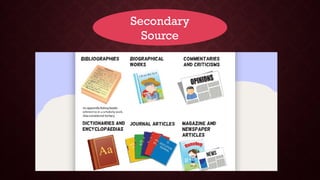
• offers an analysis or restatement of primary
sources
• materials which summarize, interpret, reorganize,
or otherwise provide an added value to a primary
source
• created after the event; created by someone not
from the time period
Secondary
Source
Tertiary Source
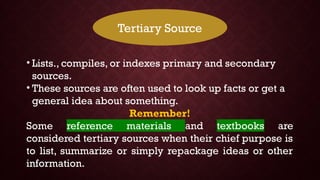
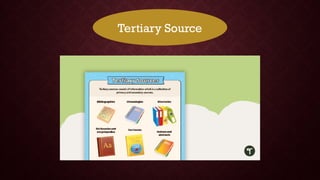
• Lists., compiles, or indexes primary and secondary
sources.
• These sources are often used to look up facts or get a
general idea about something.
Remember!
Some reference materials and textbooks are
considered tertiary sources when their chief purpose is
to list, summarize or simply repackage ideas or other
information.
Tertiary Source

Information from Various Sources G10.pptx

  • 1.
  • 2.
    Most Essential LearningCompetency: Use information for everyday life usage.
  • 3.
    Information Are facts providedor learned about something or someone. (Oxford Dictionary) WHAT IS INFORMATION?
  • 4.
    METHODS OF GATHERINGINFORMATION Examples:  Listening  Reading  Interviews  Questioning  Questionnaires  Observation  Study of existing reports
  • 5.
    RELEVANT SOURCES OFINFORMATION 1.News Reports 2.Speeches 3.Informative Talks 4.Panel Discussion
  • 6.
    NEWS REPORTS - arefound in newspapers, televisions, or radios which aim to inform the readers of what is happening in the world around them.
  • 7.
    SPEECH - Refers tothe formal address or discourse delivered to an audience.
  • 8.
    INFORMATIVE TALKS - tendto educate the audience on a particular topic. - It helps the audience understand a subject better and to remember what they learned later.
  • 9.
    PANEL DISCUSSION - Isa live or virtual discussion about a specific topic amongst a selected group of panelists who share differing perspectives in front of a large audience.
  • 10.
    How to classifysources of information? Primary Source Secondary Source Tertiary Source
  • 11.
    Primary Source • Providesdirect or firsthand information about an event, person, object, or work of art. • They are original materials which have not been interpreted, condensed, or evaluated by a secondary party. • Materials that were created at the time the event occurred or by those who experienced the event.
  • 12.
  • 13.
    Secondary Source • offers ananalysis or restatement of primary sources • materials which summarize, interpret, reorganize, or otherwise provide an added value to a primary source • created after the event; created by someone not from the time period
  • 14.
  • 15.
    Tertiary Source • Lists.,compiles, or indexes primary and secondary sources. • These sources are often used to look up facts or get a general idea about something. Remember! Some reference materials and textbooks are considered tertiary sources when their chief purpose is to list, summarize or simply repackage ideas or other information.
  • 16.