Information Behavior of HBCU
      College Students:

 An Exploratory Case Study

    Alex Gorelik, Anton Bezuglov
         Benedict College
Information Literacy


• Essential
• Personal
• Inadequate
Wilson’s (1994) Model of information behavior
Study objectives:


• Explore the elements of the Wilson’s
  model, focusing on
   o “Needs”
   o Information seeking behaviors
   o Demands on info systems / other sources
• Build an exploratory case study of
  information behavior (at a large HBCU)
Method:


• Scope: Benedict college students from
  HASS and STEM (n=43)
• Information search task
   o Search engine requests intercepted by a
     server, compiled specifically for the study
• Exit Interview
• Recorded observations
Tools

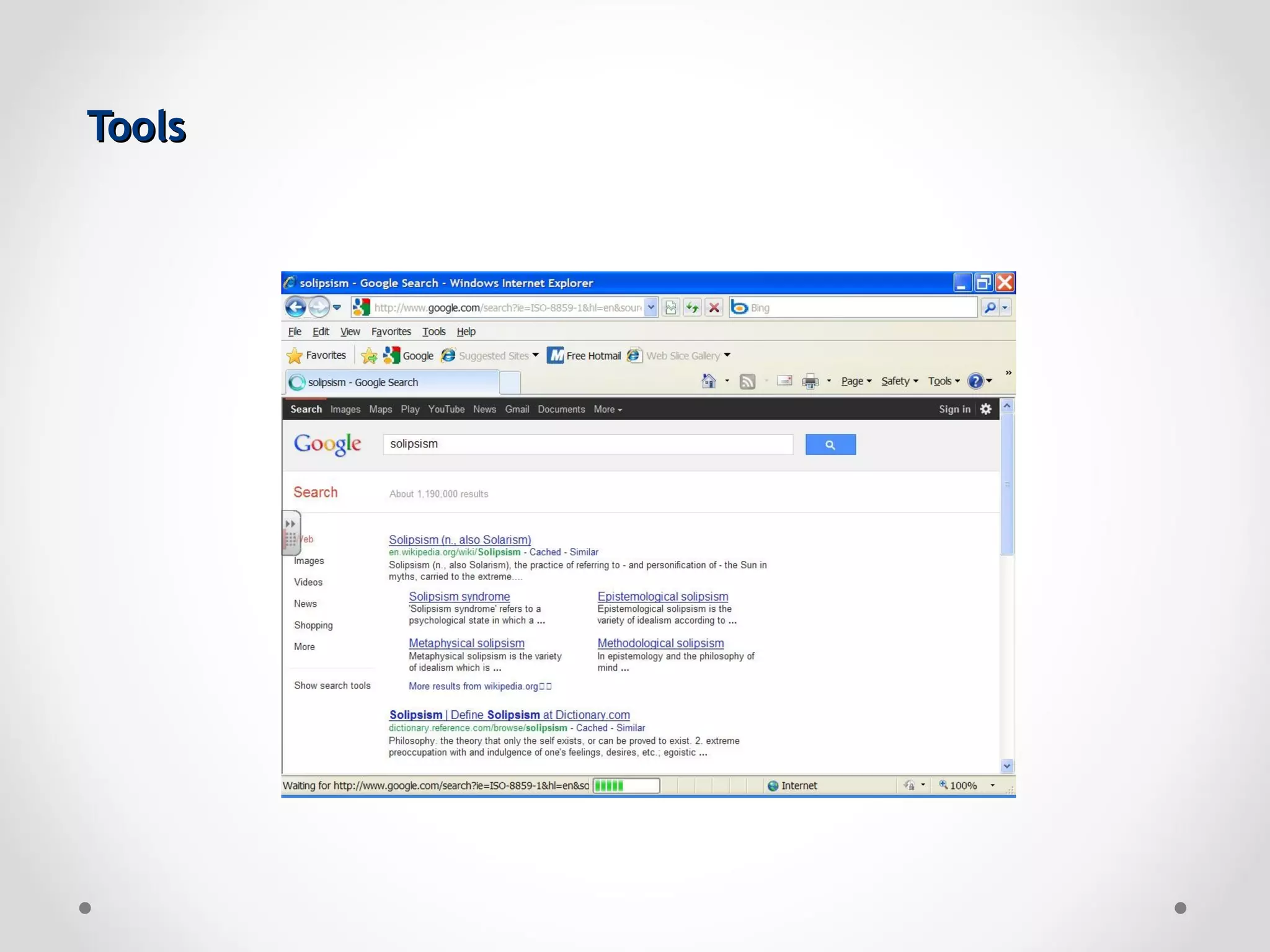
• Proxy server intercepts all traffic from
  the machine to the Web
• If (1) traffic goes to Google Search
    Engine and (2) it contains a keyword, the
    results of HTTP Get are modified;
•   The first search result is changed: For
    instance Solipsism -> Solarism
Tools
Findings

o Reasons for preferring a specific
  resource:
  o   Speed of access (20%)
  o   Reliability / Credibility (17%)
  o   Authoritativeness (17%)
  o   Convenience (15%)
o Stem different from HASS, Seniors
  different from Sophomors / Juniors
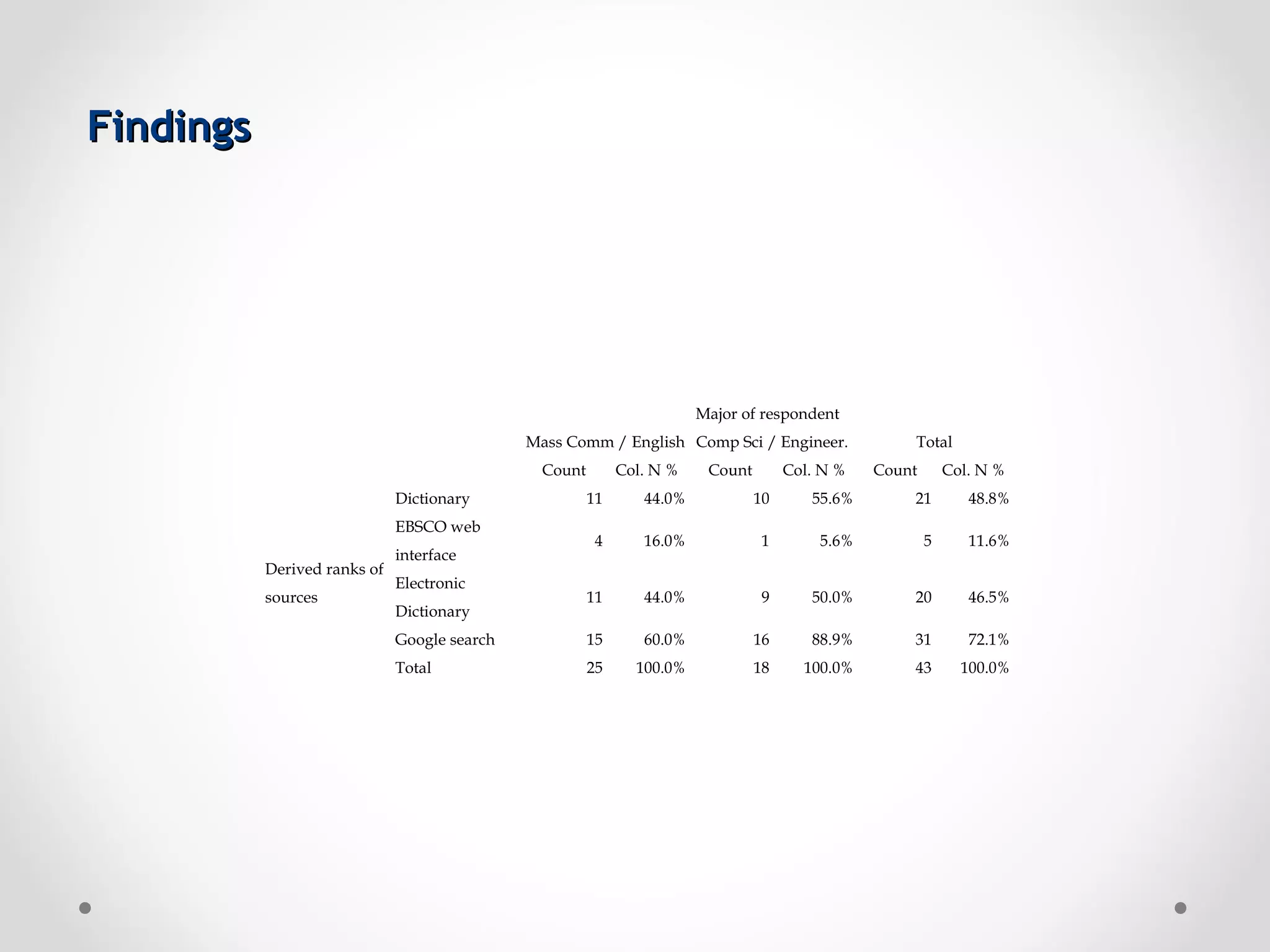
Findings


                                                                        Major of respondent
                                              Mass Comm / English Comp Sci / Engineer.               Total
                                                Count        Col. N %    Count        Col. N %   Count       Col. N %
                              Dictionary                11      44.0%            10      55.6%       21         48.8%
                              EBSCO web
                                                         4      16.0%             1       5.6%           5      11.6%
                              interface
           Derived ranks of
                              Electronic
           sources                                      11      44.0%             9      50.0%       20         46.5%
                              Dictionary
                              Google search             15      60.0%            16      88.9%       31         72.1%
                              Total                     25     100.0%            18     100.0%       43        100.0%
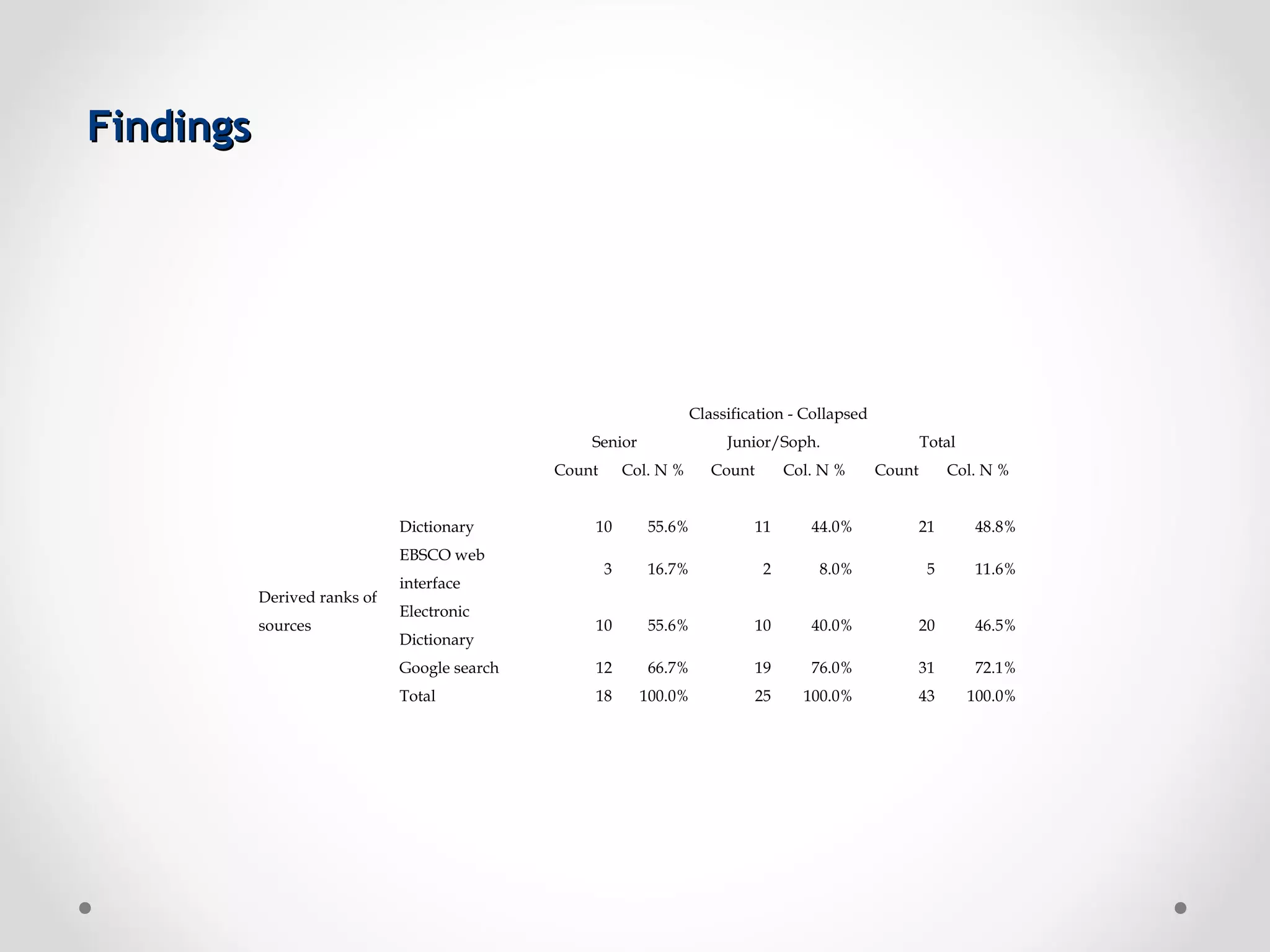
Findings


                                                                     Classification - Collapsed
                                                  Senior                  Junior/Soph.                    Total
                                              Count       Col. N %      Count        Col. N %     Count        Col. N %


                              Dictionary          10         55.6%              11      44.0%             21      48.8%
                              EBSCO web
                                                      3      16.7%               2       8.0%              5      11.6%
                              interface
           Derived ranks of
                              Electronic
           sources                                10         55.6%              10      40.0%             20      46.5%
                              Dictionary
                              Google search       12         66.7%              19      76.0%             31      72.1%
                              Total               18        100.0%              25     100.0%             43      100.0%
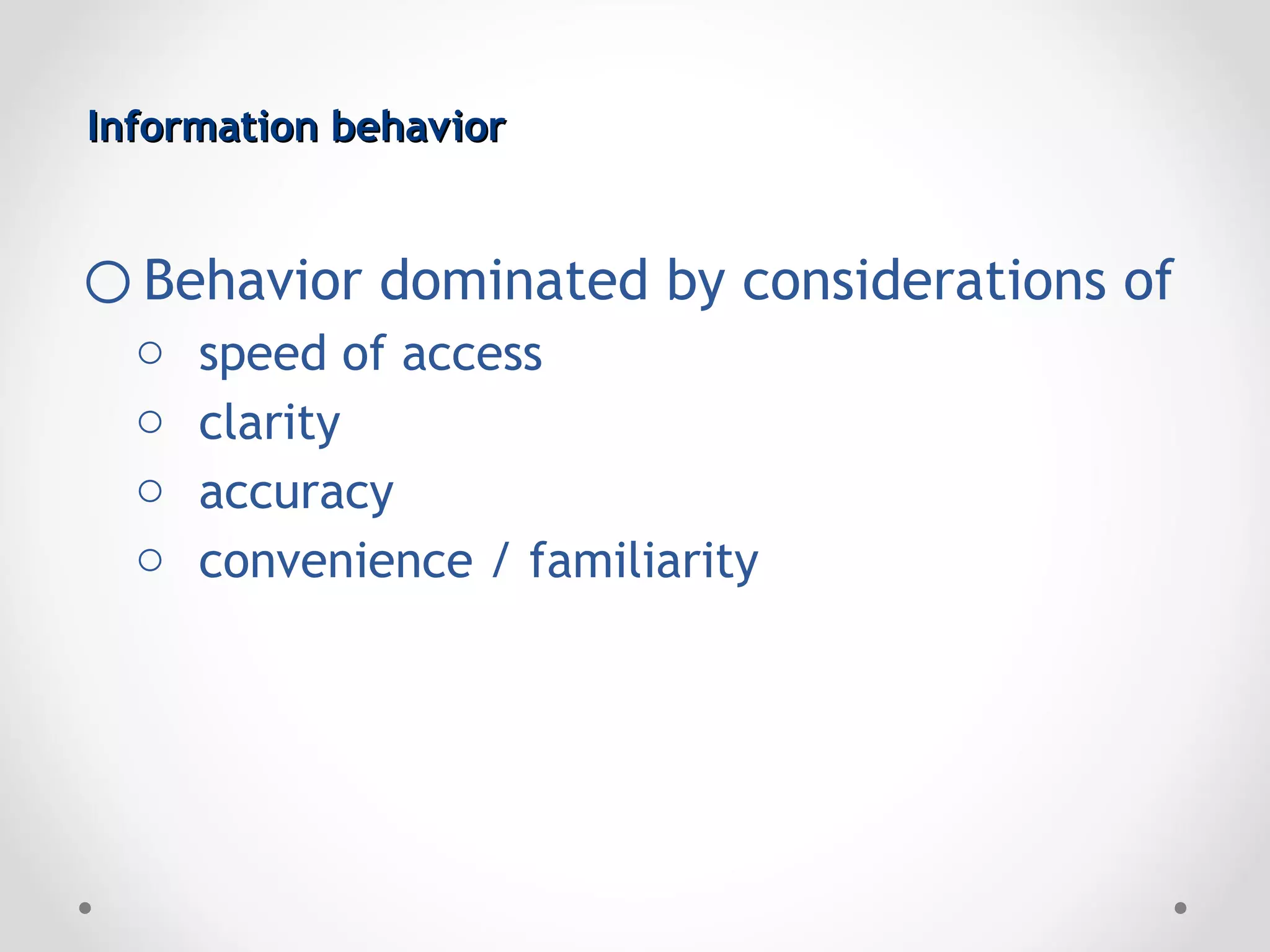
Information behavior


o Behavior dominated by considerations of
  o   speed of access
  o   clarity
  o   accuracy
  o   convenience / familiarity
Information behavior


o Demands on sources:
  o speed
  o straightforward presentation of information
Information behavior


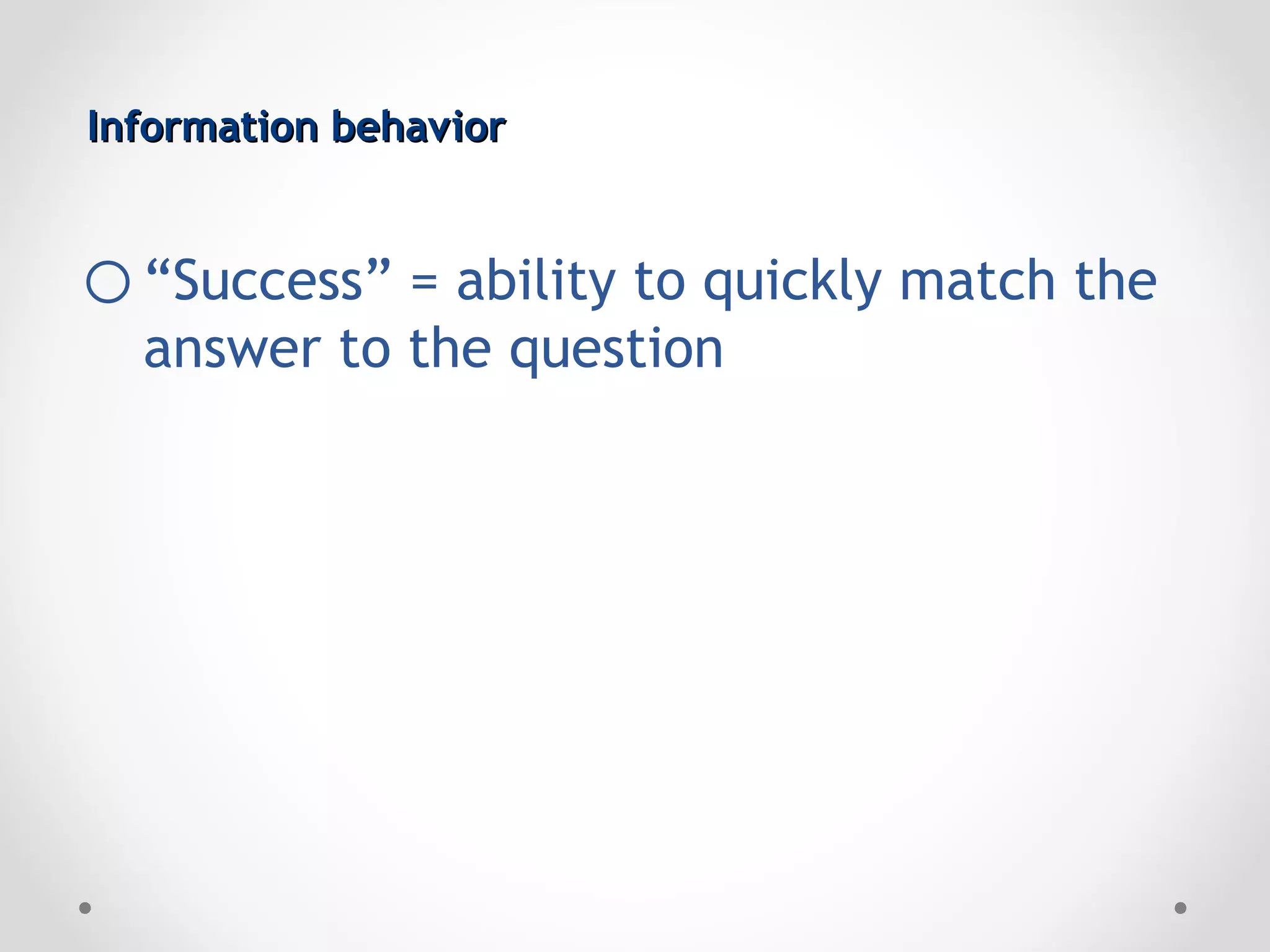
o “Success” = ability to quickly match the
  answer to the question
Information behavior


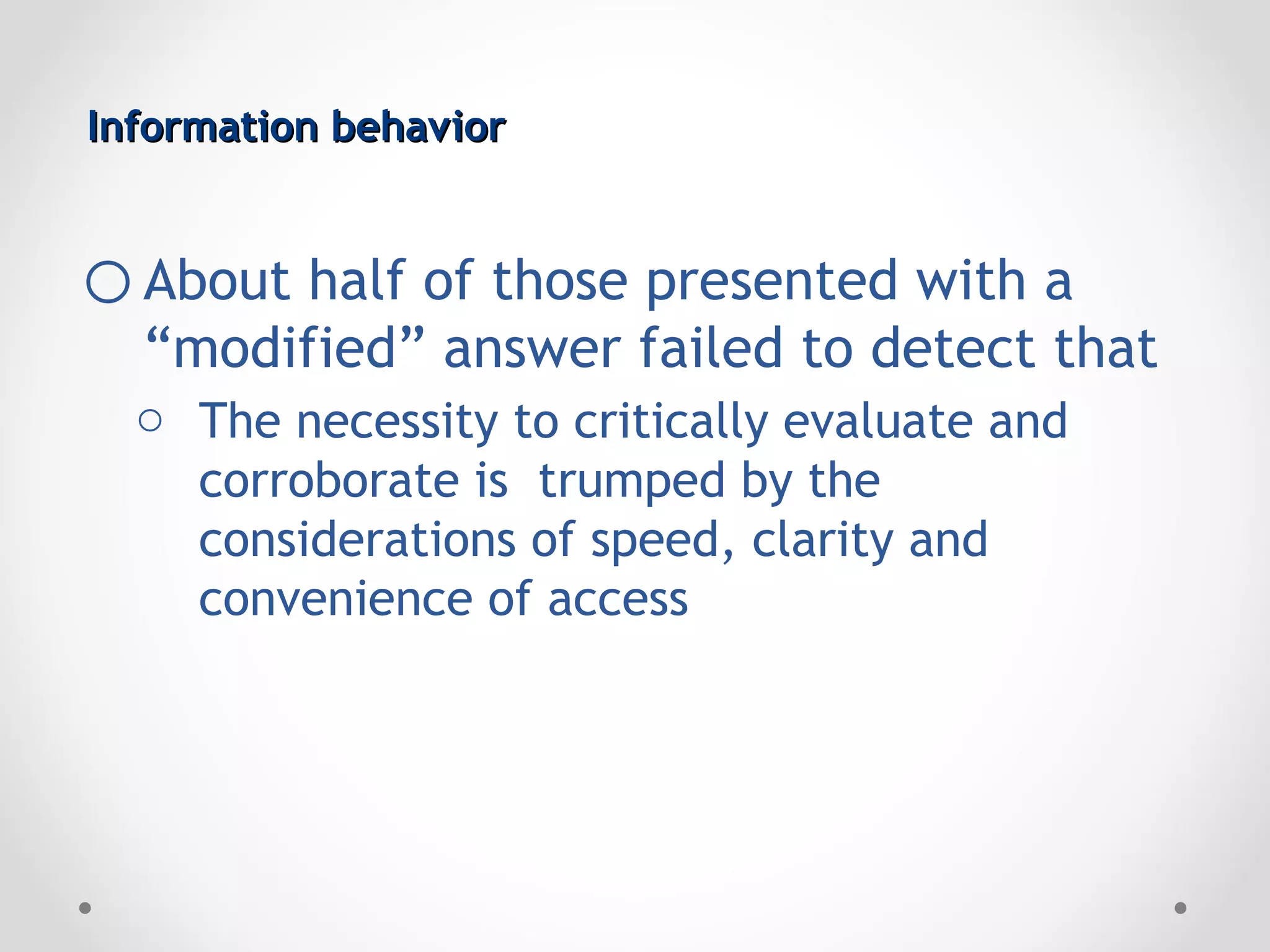
o About half of those presented with a
  “modified” answer failed to detect that
  o The necessity to critically evaluate and
    corroborate is trumped by the
    considerations of speed, clarity and
    convenience of access
Information behavior


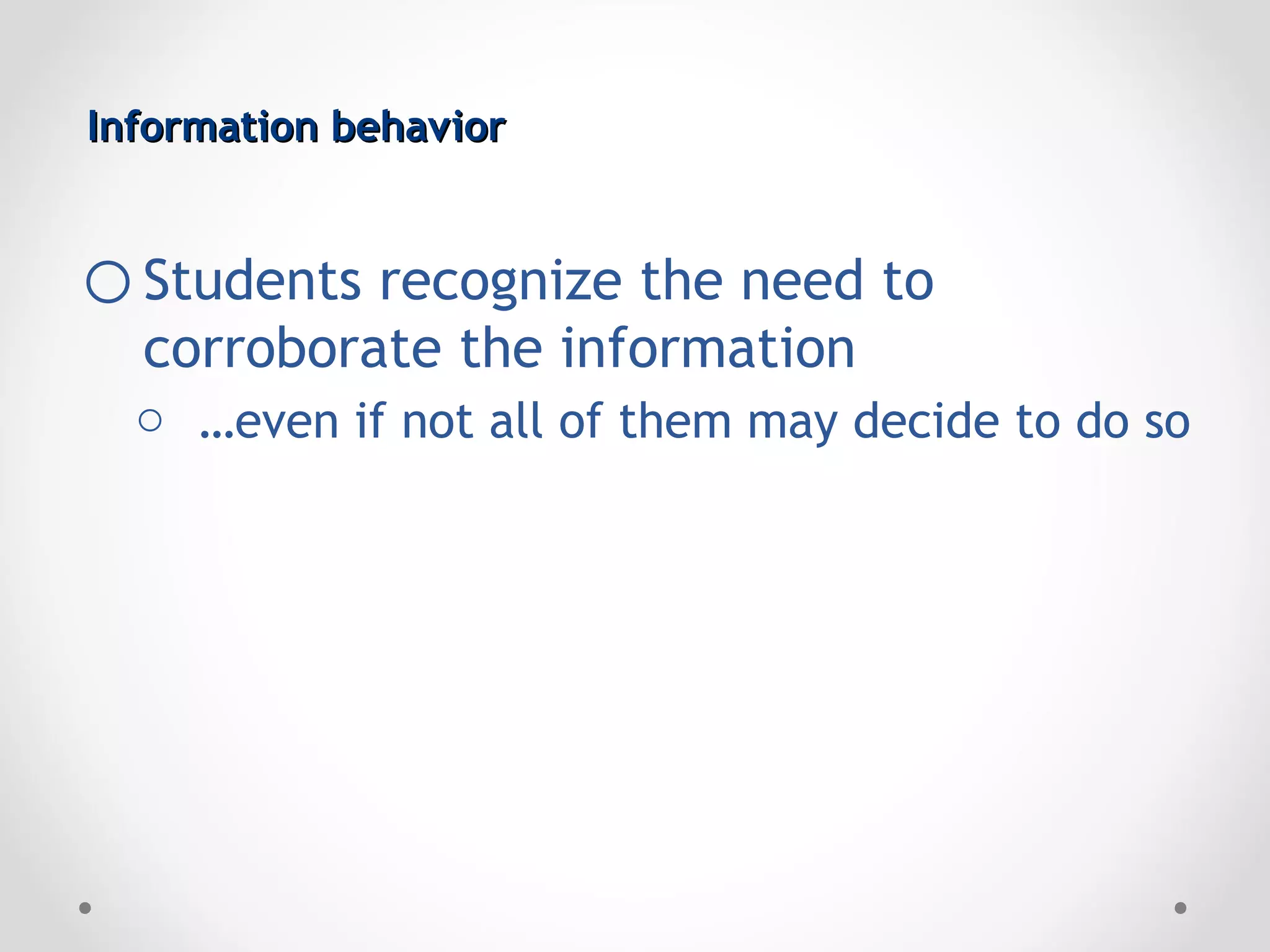
o Students recognize the need to
  corroborate the information
  o …even if not all of them may decide to do so
Information behavior


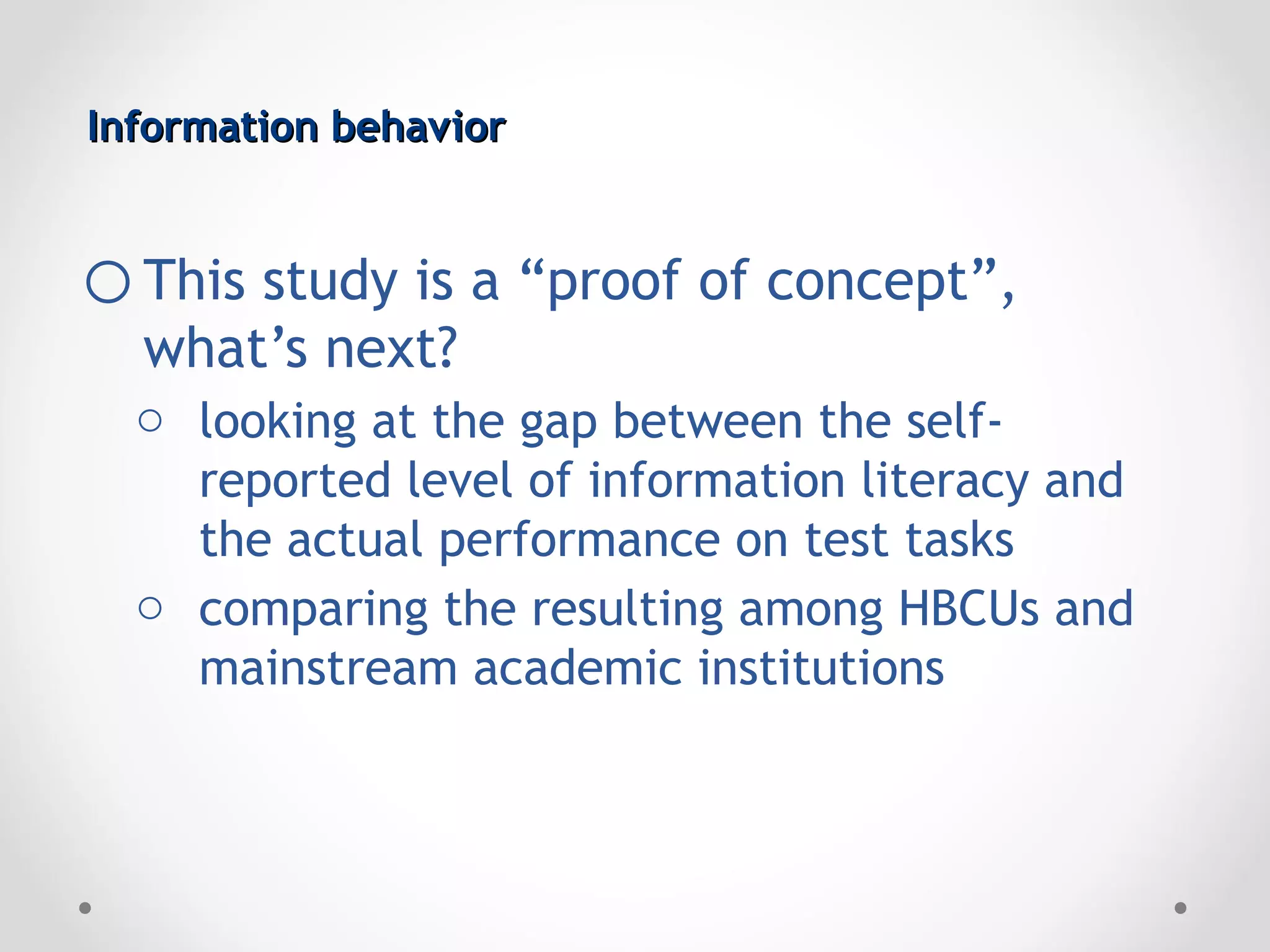
o This study is a “proof of concept”,
  what’s next?
  o looking at the gap between the self-
    reported level of information literacy and
    the actual performance on test tasks
  o comparing the resulting among HBCUs and
    mainstream academic institutions
Questions, please?


                     Q?

Information Behavior Of HBCU Students: A Case Study

  • 1.
    Information Behavior ofHBCU College Students: An Exploratory Case Study Alex Gorelik, Anton Bezuglov Benedict College
  • 2.
  • 3.
    Wilson’s (1994) Modelof information behavior
  • 4.
    Study objectives: • Explorethe elements of the Wilson’s model, focusing on o “Needs” o Information seeking behaviors o Demands on info systems / other sources • Build an exploratory case study of information behavior (at a large HBCU)
  • 5.
    Method: • Scope: Benedictcollege students from HASS and STEM (n=43) • Information search task o Search engine requests intercepted by a server, compiled specifically for the study • Exit Interview • Recorded observations
  • 6.
    Tools • Proxy serverintercepts all traffic from the machine to the Web • If (1) traffic goes to Google Search Engine and (2) it contains a keyword, the results of HTTP Get are modified; • The first search result is changed: For instance Solipsism -> Solarism
  • 7.
  • 8.
    Findings o Reasons forpreferring a specific resource: o Speed of access (20%) o Reliability / Credibility (17%) o Authoritativeness (17%) o Convenience (15%) o Stem different from HASS, Seniors different from Sophomors / Juniors
  • 9.
    Findings   Major of respondent Mass Comm / English Comp Sci / Engineer. Total Count Col. N % Count Col. N % Count Col. N % Dictionary 11 44.0% 10 55.6% 21 48.8% EBSCO web 4 16.0% 1 5.6% 5 11.6% interface Derived ranks of Electronic sources 11 44.0% 9 50.0% 20 46.5% Dictionary Google search 15 60.0% 16 88.9% 31 72.1% Total 25 100.0% 18 100.0% 43 100.0%
  • 10.
    Findings Classification - Collapsed   Senior Junior/Soph. Total Count Col. N % Count Col. N % Count Col. N % Dictionary 10 55.6% 11 44.0% 21 48.8% EBSCO web 3 16.7% 2 8.0% 5 11.6% interface Derived ranks of Electronic sources 10 55.6% 10 40.0% 20 46.5% Dictionary Google search 12 66.7% 19 76.0% 31 72.1% Total 18 100.0% 25 100.0% 43 100.0%
  • 11.
    Information behavior o Behaviordominated by considerations of o speed of access o clarity o accuracy o convenience / familiarity
  • 12.
    Information behavior o Demandson sources: o speed o straightforward presentation of information
  • 13.
    Information behavior o “Success”= ability to quickly match the answer to the question
  • 14.
    Information behavior o Abouthalf of those presented with a “modified” answer failed to detect that o The necessity to critically evaluate and corroborate is trumped by the considerations of speed, clarity and convenience of access
  • 15.
    Information behavior o Studentsrecognize the need to corroborate the information o …even if not all of them may decide to do so
  • 16.
    Information behavior o Thisstudy is a “proof of concept”, what’s next? o looking at the gap between the self- reported level of information literacy and the actual performance on test tasks o comparing the resulting among HBCUs and mainstream academic institutions
  • 17.