Impact as a process: considering the
          reach of resources from the start


                             Eric T. Meyer & Kathryn Eccles
                     Oxford Internet Institute, University of Oxford


                                                                       @etmeyer
                       Digital Humanities@Oxford Summer School         #tidsr
                                                                       #dhoxss
                                      5th July 2012
Slides at: http://www.slideshare.net/etmeyer/tidsrdhoxss2012
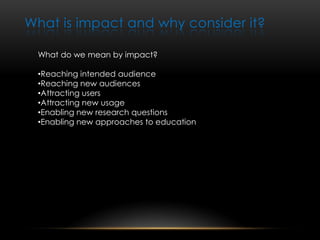
What is impact and why consider it?

 What do we mean by impact?

 •Reaching intended audience
 •Reaching new audiences
 •Attracting users
 •Attracting new usage
 •Enabling new research questions
 •Enabling new approaches to education
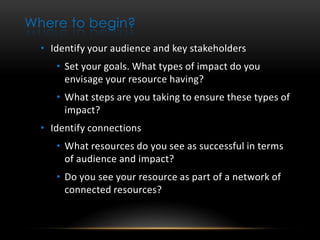
Where to begin?
  • Identify your audience and key stakeholders
     • Set your goals. What types of impact do you
       envisage your resource having?
     • What steps are you taking to ensure these types of
       impact?
  • Identify connections
     • What resources do you see as successful in terms
       of audience and impact?
     • Do you see your resource as part of a network of
       connected resources?
Digitisation and Impact
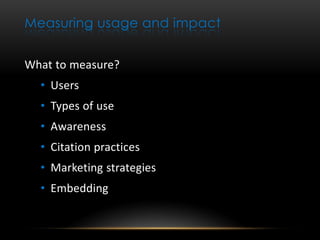
Measuring usage and impact


What to measure?
  • Users
  • Types of use
  • Awareness
  • Citation practices
  • Marketing strategies
  • Embedding
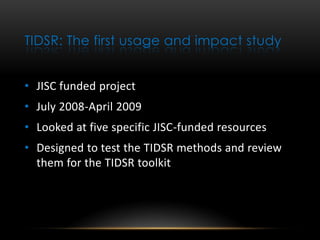
TIDSR: The first usage and impact study


• JISC funded project
• July 2008-April 2009
• Looked at five specific JISC-funded resources
• Designed to test the TIDSR methods and review
  them for the TIDSR toolkit
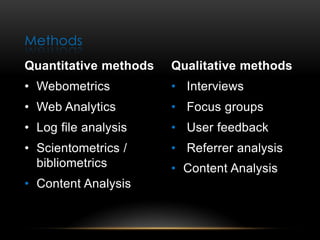
Methods
Quantitative methods   Qualitative methods
• Webometrics          • Interviews
• Web Analytics        • Focus groups
• Log file analysis    • User feedback
• Scientometrics /     • Referrer analysis
  bibliometrics        • Content Analysis
• Content Analysis
100%     2%        2%                   1%            2%
         3%                  7%         7%
                   7%                                 7%
90%      7%                                                      Use it regularly or
                            18%                                  frequently
80%                                                  22%
                  27%                  28%
70%

60%
                                                                 Use it on occasion
                            35%
50%
        88%
40%
                                                     69%         Have seen it, but don't
30%               63%                  63%
                                                                 use it
20%                         39%

10%
                                                                 I haven't heard of it
 0%
       HistPop   BOPCRIS   BL News   BL Sounds   Med Backfiles
100%           96%
                                           90%
90%
                                                          86%
                             84%                                         82%
             79%
80%                                                                    76%
       71%                               72%
                           69%
70%

                                                      60%        61%
60%                                                                             Important to my research
                     51%
                                   49%
50%
                                                                                Important to my teaching
                                                    40%
40%
                       35%                       36%                            Important to field
                                     34%                           33%
         29%
30%
                                                                                Would recommend
20%


10%


 0%

        HistPop      BOPCRIS        BL News      BL Sounds      Med Backfiles
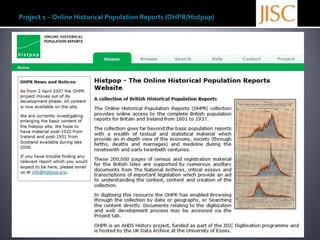
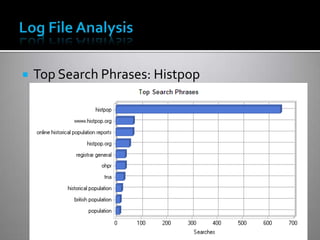
   Top Search Phrases: Histpop
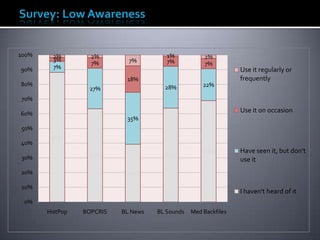
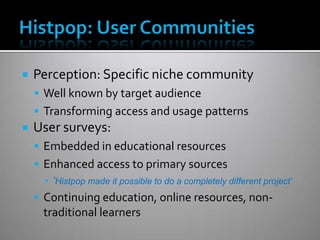
   Perception: Specific niche community
     Well known by target audience
     Transforming access and usage patterns
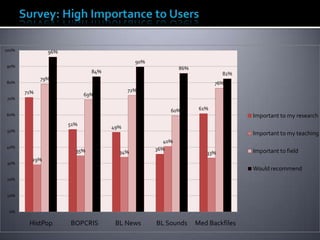
   User surveys:
     Embedded in educational resources
     Enhanced access to primary sources
      ▪ ‘Histpop made it possible to do a completely different project’
     Continuing education, online resources, non-
      traditional learners
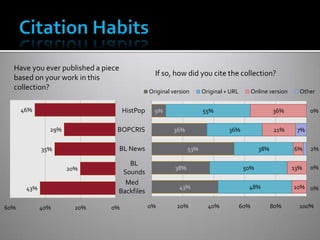
Have you ever published a piece
                                                If so, how did you cite the collection?
  based on your work in this
  collection?                                 Original version      Original + URL         Online version     Other
      46%                           HistPop     9%                  55%                            36%            0%


               29%              BOPCRIS                36%                    36%                  21%       7%


             35%                    BL News                   53%                            38%            6%    2%

                                   BL
                     20%                                38%                           50%                   13%   0%
                                 Sounds
                                  Med
       43%                                                43%                          48%                  10% 0%
                                Backfiles

60%          40%       20%    0%              0%         20%          40%            60%           80%        100%
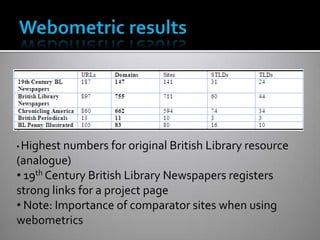
• Highest numbers for original British Library resource
(analogue)
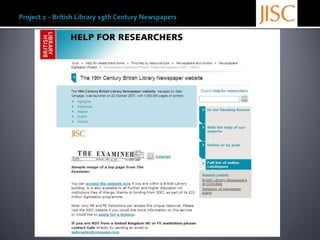
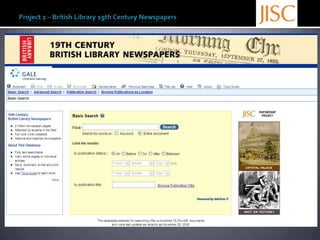
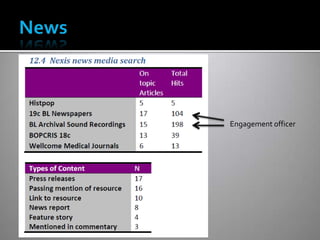
• 19th Century British Library Newspapers registers
strong links for a project page
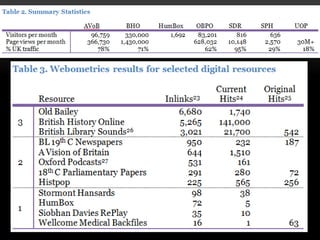
• Note: Importance of comparator sites when using
webometrics
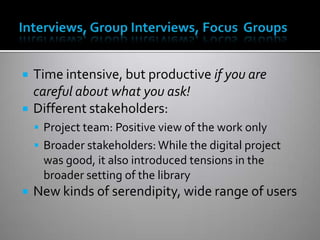
   Time intensive, but productive if you are
    careful about what you ask!
   Different stakeholders:
     Project team: Positive view of the work only
     Broader stakeholders: While the digital project
     was good, it also introduced tensions in the
     broader setting of the library
   New kinds of serendipity, wide range of users
Engagement officer
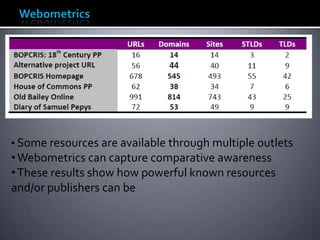
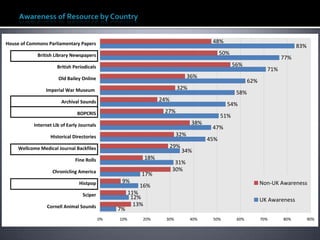
• Some resources are available through multiple outlets
• Webometrics can capture comparative awareness
• These results show how powerful known resources
and/or publishers can be
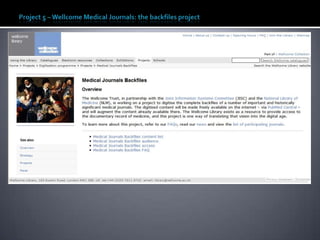
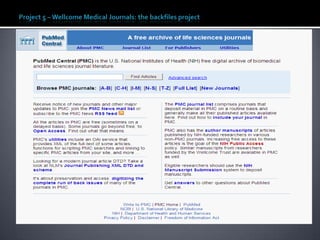
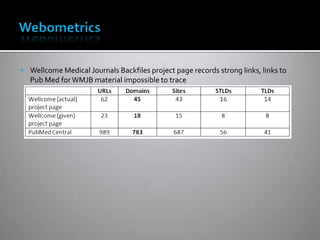
 Wellcome Medical Journals Backfiles project page records strong links, links to
  Pub Med for WMJB material impossible to trace
   Historians? (would be looking at older articles)
     Not typical PubMed users
     Search interface issues / limited search


   Clinicians? (would be looking at newer articles)
     Not typically reading 100 year old articles


   Other users?
     Paths of discovery?
   Majority of downloads targeted more recent
    material – opening up of new resources to
    clinicians
   More thorough and comprehensive searches
     Historians reported more comprehensive search
      results (quantitative results)
     Also reported increased browsing, greater
      serendipity, due to time saved finding articles
House of Commons Parliamentary Papers                                                      48%
                                                                                                                                  83%
             British Library Newspapers                                                         50%
                                                                                                                           77%
                      British Periodicals                                                             56%
                                                                                                                     71%
                      Old Bailey Online                                            36%
                                                                                                             62%
                 Imperial War Museum                                         32%
                                                                                                       58%
                        Archival Sounds                              24%
                                                                                                  54%
                               BOPCRIS                                27%
                                                                                                51%
           Internet Lib of Early Journals                                           38%
                                                                                           47%
                   Historical Directories                                    32%
                                                                                          45%
     Wellcome Medical Journal Backfiles                                    29%
                                                                                 34%
                              Fine Rolls                       18%
                                                                            31%
                   Chronicling America                                     30%
                                                           17%
                                Histpop           9%                                                               Non-UK Awareness
                                                          16%
                                  Sciper               11%
                                                        12%                                                        UK Awareness
                 Cornell Animal Sounds                   13%
                                                 7%
                                            0%   10%       20%         30%         40%     50%         60%         70%     80%          90%
50%
45%
40%   HistPop
35%   BOPCRIS
30%
25%   BL News
20%   BL Sounds
15%   Med Backfiles
10%
 5%
 0%
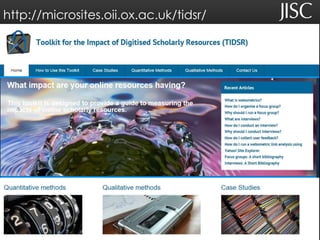
http://microsites.oii.ox.ac.uk/tidsr/
Coming this autumn….


Project page: Impact of Digitised Resources

    http://www.kdcs.kcl.ac.uk/innovation/impact.html

Simon Tanner’s blog post about the project

    http://simon-tanner.blogspot.co.uk/2012/03/new-approach-to-
    measuring-impact-for.html
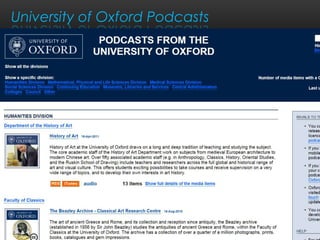
University of Oxford Podcasts
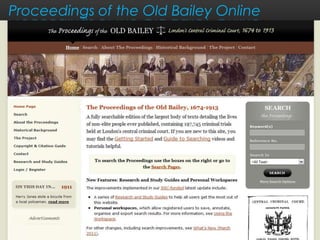
Proceedings of the Old Bailey Online
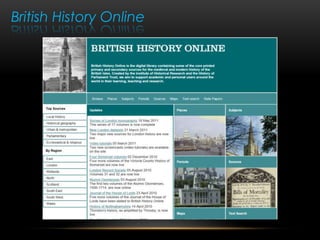
British History Online
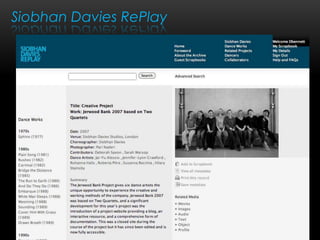
Siobhan Davies RePlay
http://www.rin.ac.uk/humanities-case-studies
Bulger, M., Meyer, E.T., de la Flor, G., Terras, M., Wyatt, S., Jirotka, M., Eccles, K., Madsen, C.
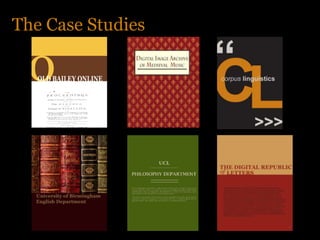
The Case Studies
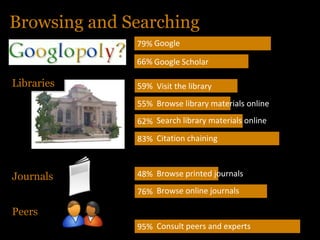
Browsing and Searching
              79% Google

              66% Google Scholar

Libraries     59% Visit the library
              55% Browse library materials online
              62% Search library materials online
              83% Citation chaining


Journals      48% Browse printed journals
              76% Browse online journals

Peers
              95% Consult peers and experts
Reconfiguring Resources
“   Old Bailey Online hasn’t replaced
    anything for me or displaced anything for
    me, but it is part of this general
    transformation of how I do what I do.
“   The amount of time I now spend doing the
    very mechanical, laborious, time-
    consuming work is much smaller. You can
    now do things in 5 seconds which it took
    you 3 months to do a few years ago.
Transformations in Use
“
    It’s a huge change. You can do things much
    more quickly, read much more
    widely, find connections…it’s very, very
    important.
“
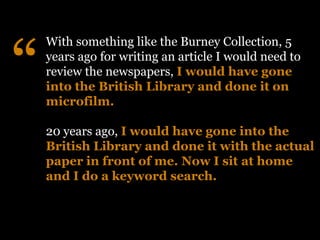
    With something like the Burney Collection, 5
    years ago for writing an article I would need to
    review the newspapers, I would have gone
    into the British Library and done it on
    microfilm.

    20 years ago, I would have gone into the
    British Library and done it with the actual
    paper in front of me. Now I sit at home
    and I do a keyword search.
“   Asking new questions?
“
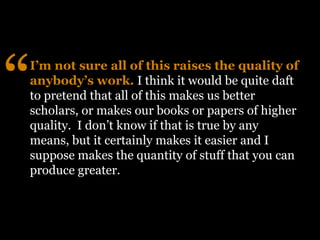
I’m not sure all of this raises the quality of
anybody’s work. I think it would be quite daft
to pretend that all of this makes us better
scholars, or makes our books or papers of higher
quality. I don’t know if that is true by any
means, but it certainly makes it easier and I
suppose makes the quantity of stuff that you can
produce greater.
“
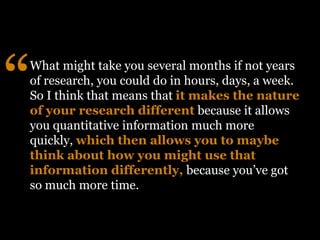
What might take you several months if not years
of research, you could do in hours, days, a week.
So I think that means that it makes the nature
of your research different because it allows
you quantitative information much more
quickly, which then allows you to maybe
think about how you might use that
information differently, because you’ve got
so much more time.
Slides at: http://www.slideshare.net/etmeyer/tidsrdhoxss2012


             Eric T. Meyer                                    Kathryn Eccles
        eric.meyer@oii.ox.ac.uk                          kathryn.eccles@oii.ox.ac.uk
http://www.oii.ox.ac.uk/people/?id=120            http://www.oii.ox.ac.uk/people/?id=138


 Oxford e-Social Science Project

                                   Project work funded by: