Infective Endocarditis
NICKSON MAZUBA
NWUCHAS JULY 2019
Definition
• Infective endocarditis is microbial infection of the
endocardial surface of the heart
• Commonly involves the valves
• Characterised by formation of vegetation that are
composed of:
– Inflammatory cells
– Fibrin
– Platelets
• May be classified as
– Acute or subacute
aetiology
• Staphylococci
– Commonest cause of endocarditis
– S. aureus most common organism in cases of right sided
endocarditis in IV drug users and HIV Positive Pt
– S. epidermidis common in prosthetic valves
• Streptococci
– S. viridans most common
– Enterococci occurring in elderly
• Other causes
– Fungi-in intravenous drug users, immunocompromised
patients
– Gram negative bacilli
– Gonococcal
– Pneumococcal
• HACEK group
– Haemophilus
– Actinobacillus
– Cardiobacterium
– Eikenella
– kingella
Risk factors
• Rheumatic valve disease
• Intravenous drug use
• Bicuspid valves
• Aortic stenosis
• Aortic insufficiency
• Mitral valve prolapse
• Marfan syndrome
• Previous endocarditis
• Pulmonary artery cartherization
Pathophysiology
• normal endothelium is resistant to infection by
most bacteria and to thrombus formation
• Infective endocarditis occurs at sites of pre-
existing endocardial damage
• Organism may directly infect the Intact
endothelium or exposed subendothelial tissue,
• These areas attract fibrin and platelet
aggregation.
• Platelet plugs further attract colonization by
micobial organisms
Pathophysiology cont.d
• Vegetations may grow
• Large vegetations
– may break away as emboli
– May destroy adjacent tissues
– May cause aneurysm
Frequency of cardiac valve
involvement
• mitral>aortic>tricuspid>pulmonary
• 30% of patients have concomitant aortic and
mitral valve involvement
• 5% of patients have simultaneous
involvement of left and right sided heart
valves
Clinical features
• Highly variable
• Can be acute or subacute
• Can be classed as
– Native valve endocarditis
– Prosthetic valve endocarditis
– Endocarditis in intravenous drug users
Features continued
• Fever
– Generally present but may be absent in elderly or
immunosuppressed
– In subacute endocarditis, fever is typically low-
grade and rarely exceeds 39.4C
• Cardiac Manifestations
– Heart murmur
– CCF in 30 to 40%
• Musculoskeletal
– Painless erythematous papule and macules in
the palms and soles
– Painful erythematoue subcutaneous nodules
in the pulp space of the fingers and toes
– Petechiae haemorrhages
– Splinter haemaorrhages
• Splenomegaly
• Flame shaped retinal haemorrhages with
pale centre-ROTH SPOTS
Diagnosis
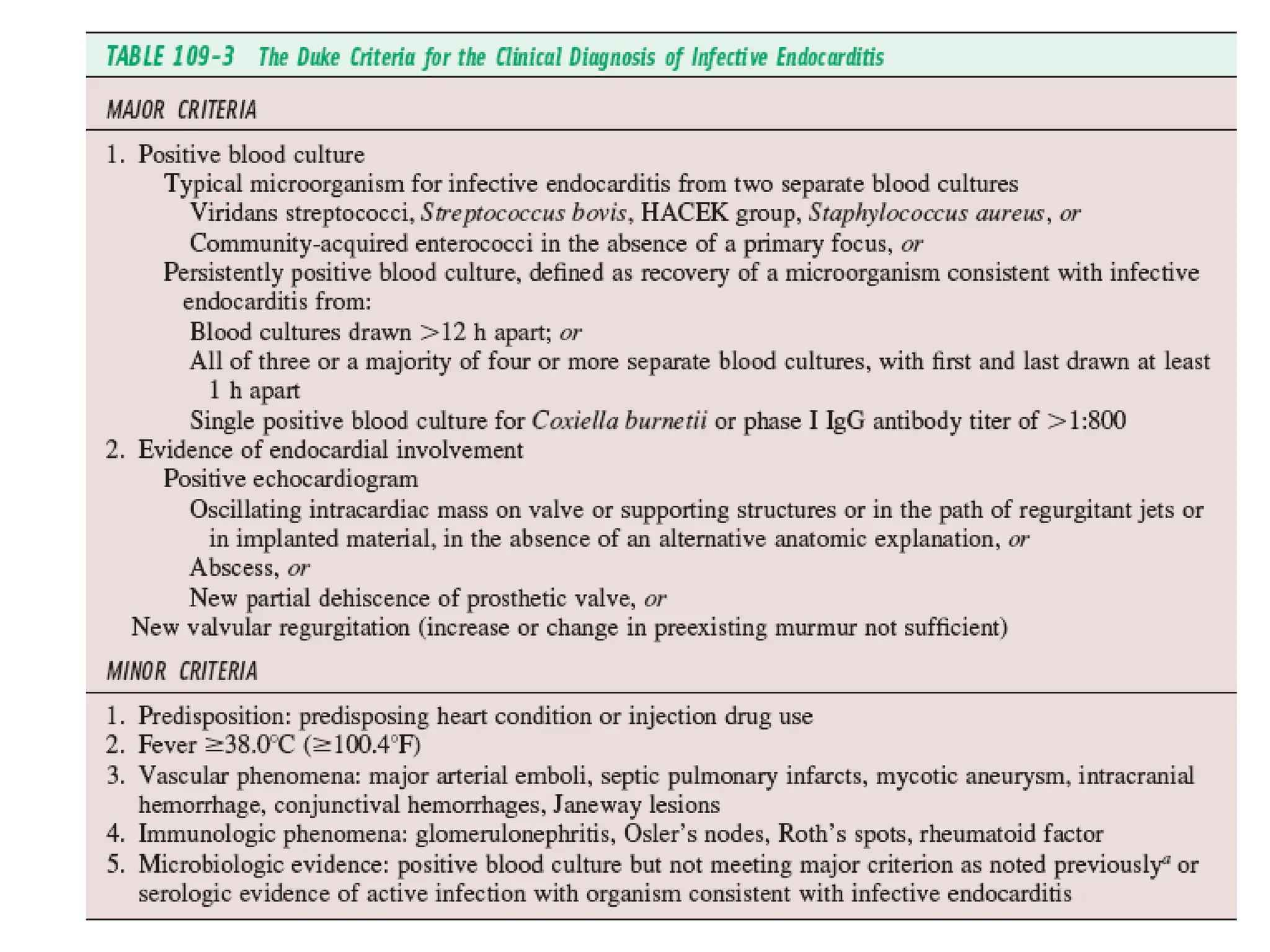
• Diagnosis is made using the duke criteria
investigations
• Blood cultures
– Are positive in 85 to 90% of pt
– Collect up to 6 specimens
• Echocardiogram
– Useful to demonstrate vegetations
– And evaluate valvular damage and ventricular
function
• Other tests
– FBC
– Serum creatinine
– CXR
– ECG
– C-reactive proteins
– ESR
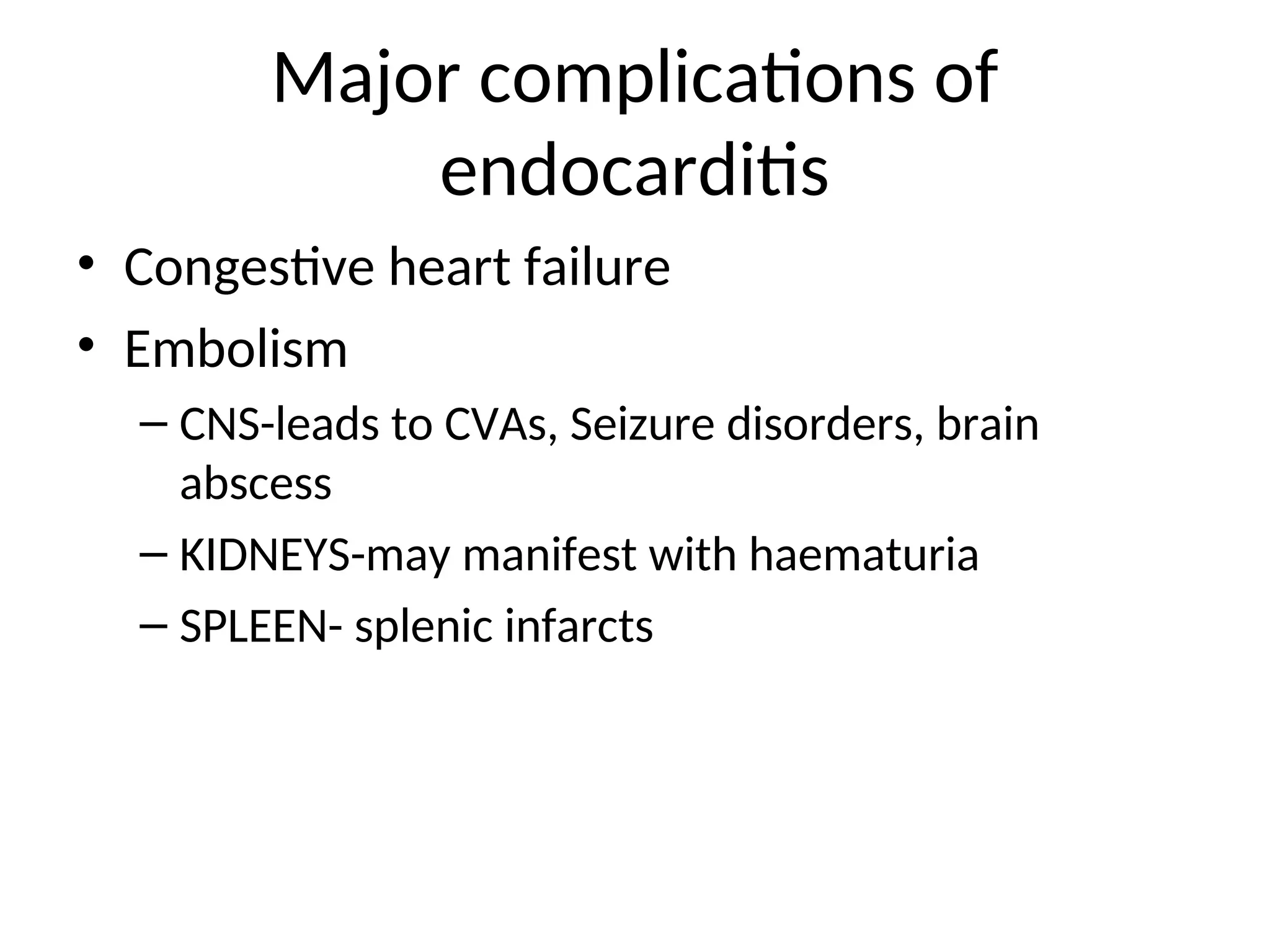
Major complications of
endocarditis
• Congestive heart failure
• Embolism
– CNS-leads to CVAs, Seizure disorders, brain
abscess
– KIDNEYS-may manifest with haematuria
– SPLEEN- splenic infarcts
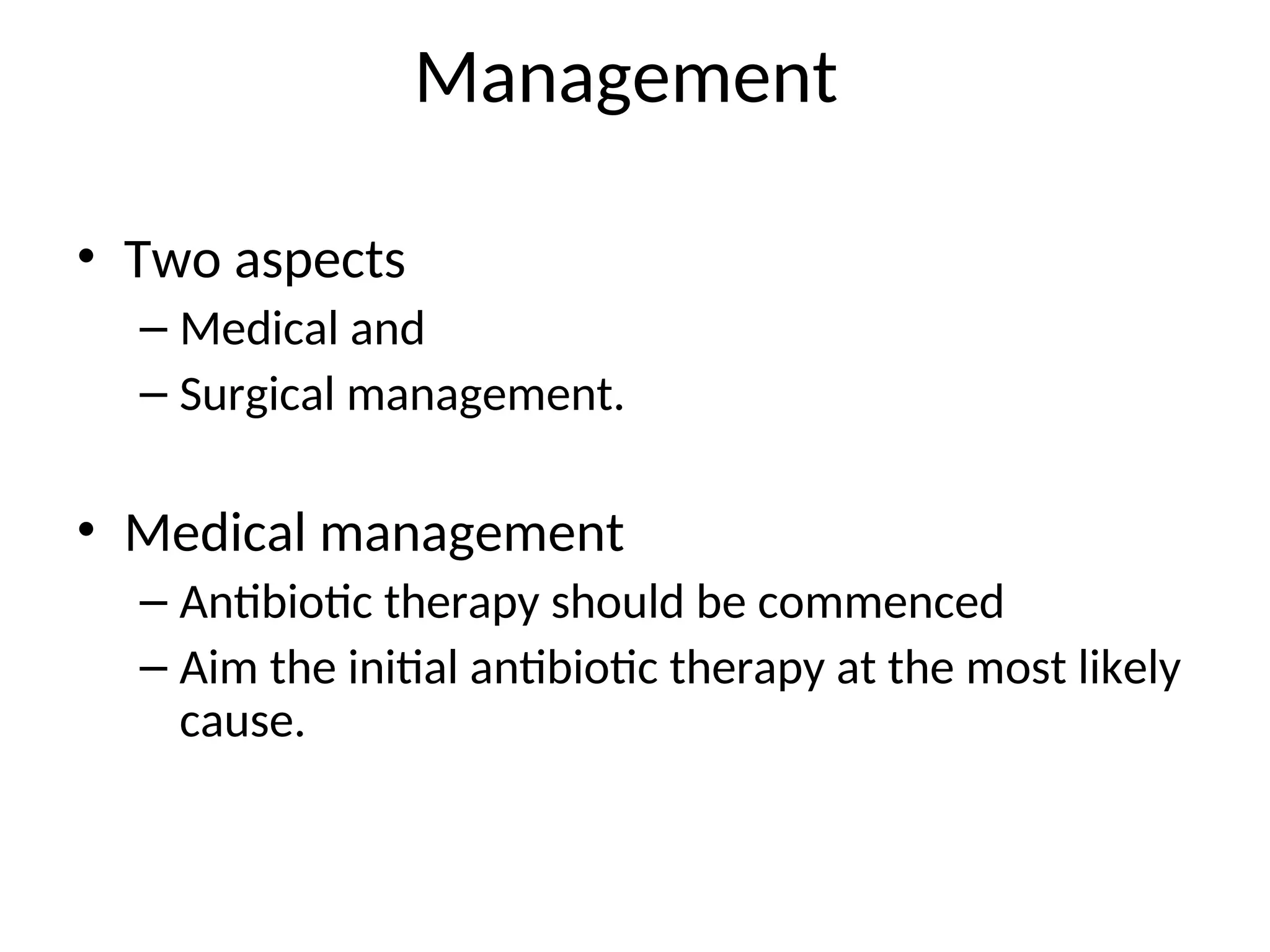
Management
• Two aspects
– Medical and
– Surgical management.
• Medical management
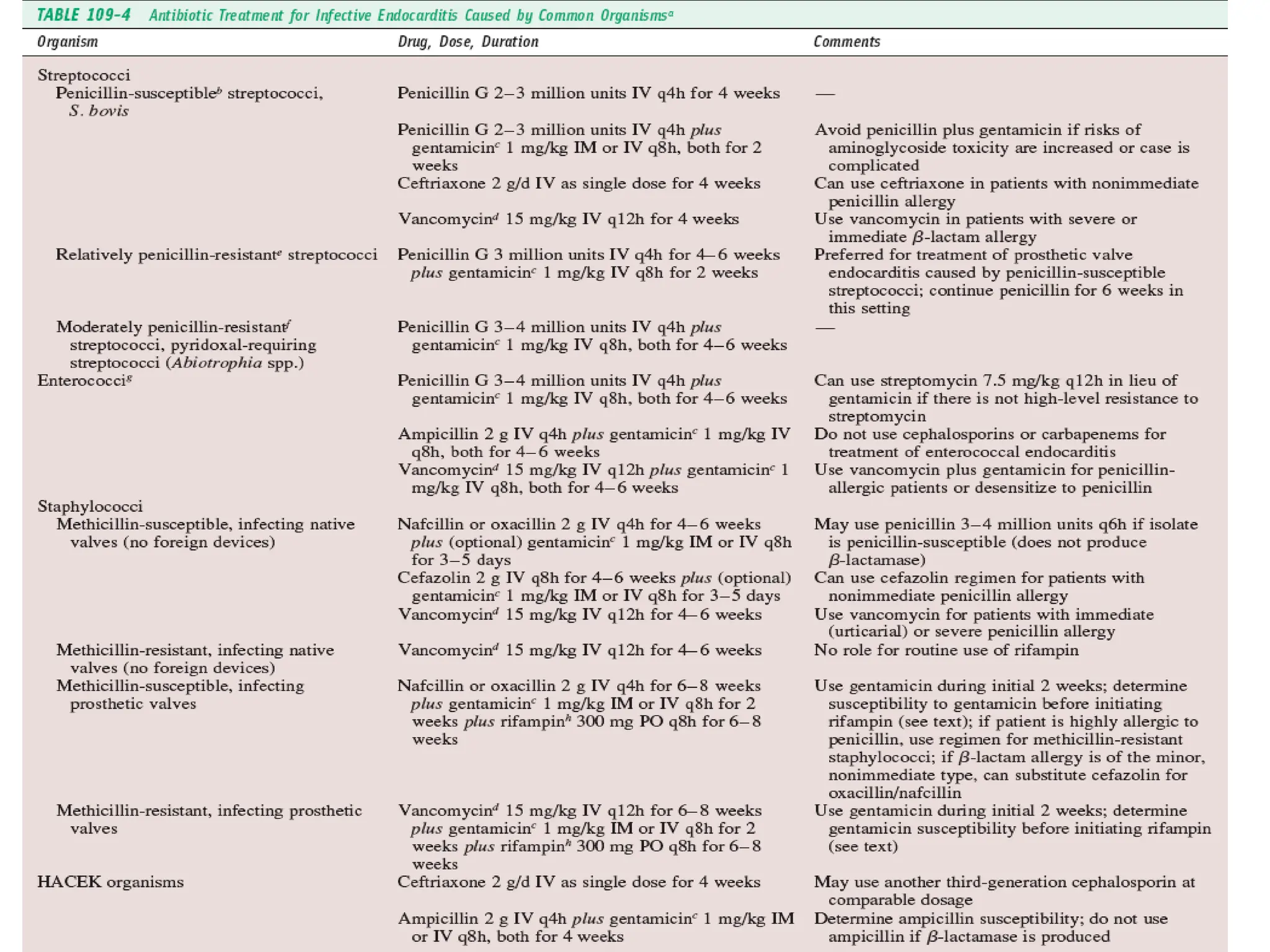
– Antibiotic therapy should be commenced
– Aim the initial antibiotic therapy at the most likely
cause.
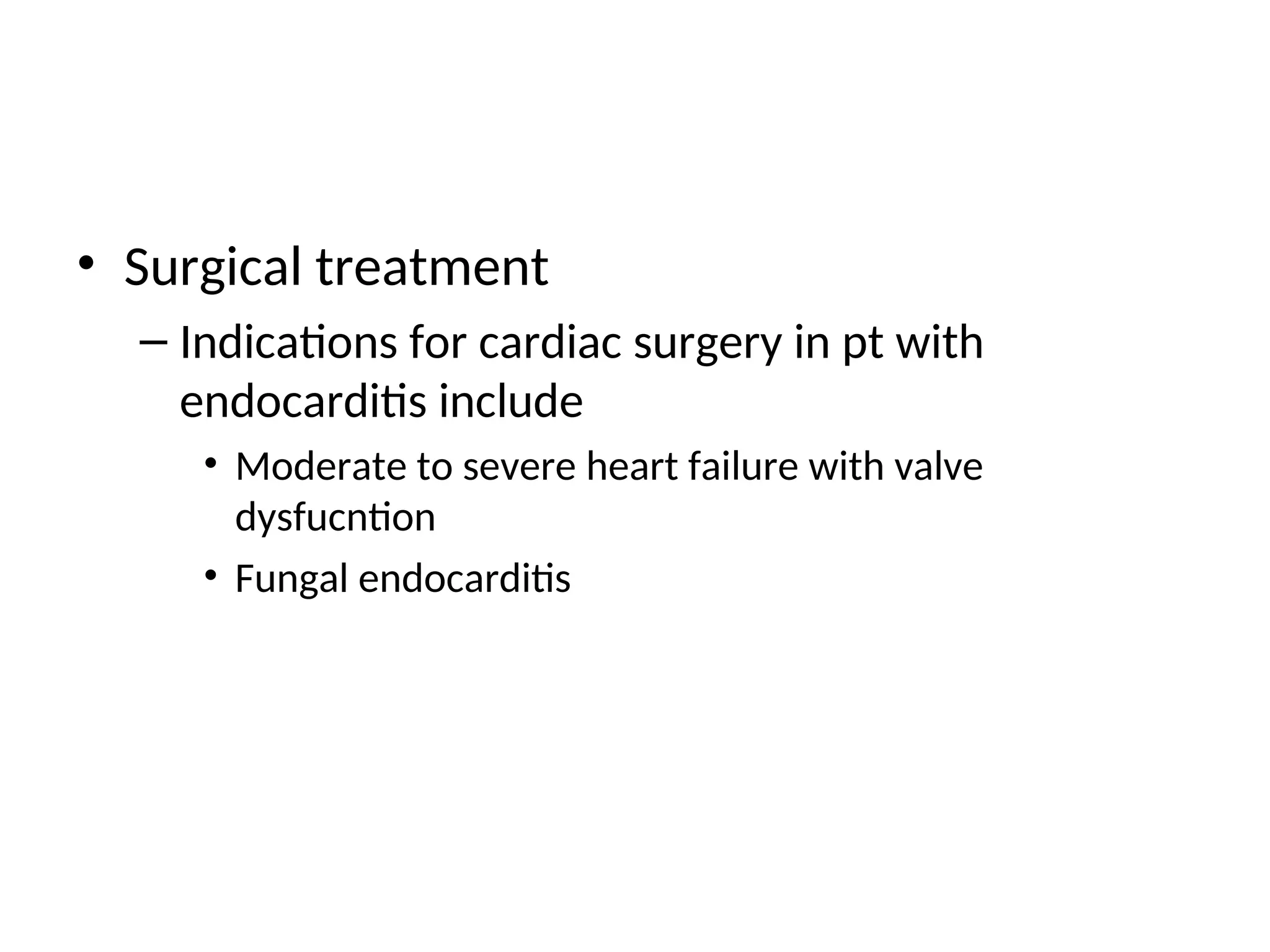
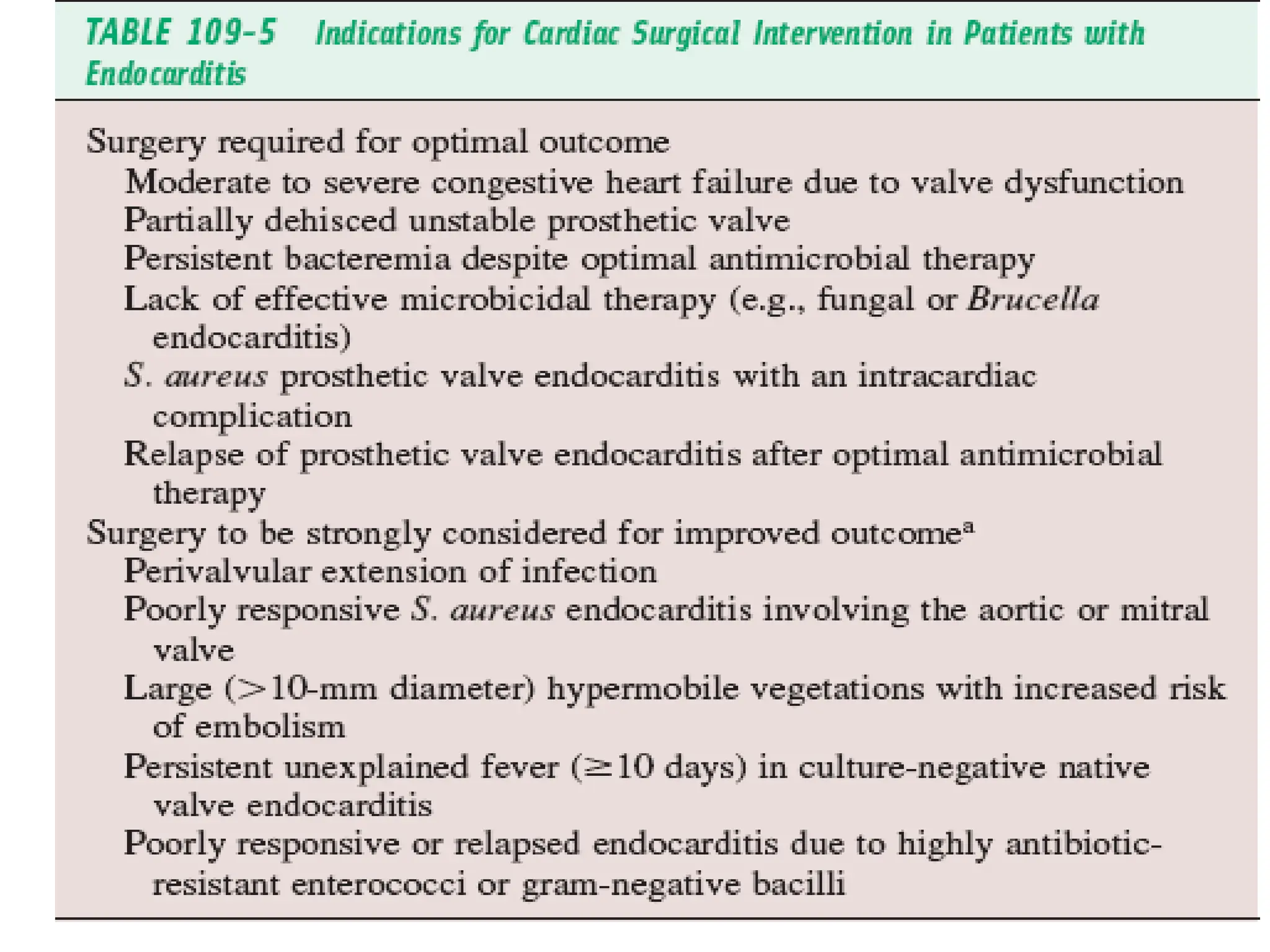
• Surgical treatment
– Indications for cardiac surgery in pt with
endocarditis include
• Moderate to severe heart failure with valve
dysfucntion
• Fungal endocarditis
Prophylaxis
• Cardiac conditions for which prophylaxis is
indicated include
– High risk
– And low risk factors
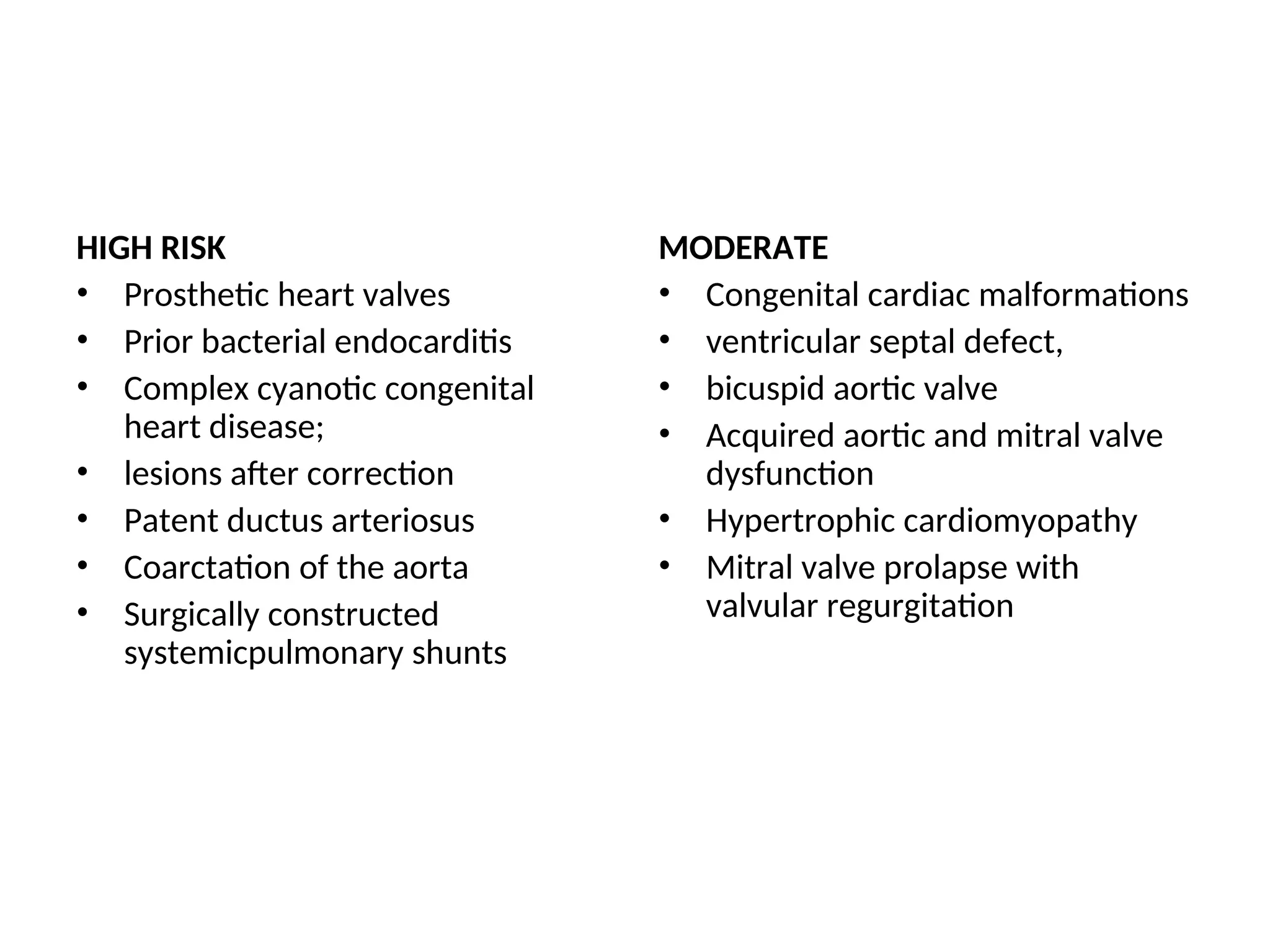
HIGH RISK
• Prosthetic heart valves
• Prior bacterial endocarditis
• Complex cyanotic congenital
heart disease;
• lesions after correction
• Patent ductus arteriosus
• Coarctation of the aorta
• Surgically constructed
systemicpulmonary shunts
MODERATE
• Congenital cardiac malformations
• ventricular septal defect,
• bicuspid aortic valve
• Acquired aortic and mitral valve
dysfunction
• Hypertrophic cardiomyopathy
• Mitral valve prolapse with
valvular regurgitation

Infective Endocarditis presented to cog (2).ppt

  • 1.
  • 2.
    Definition • Infective endocarditisis microbial infection of the endocardial surface of the heart • Commonly involves the valves • Characterised by formation of vegetation that are composed of: – Inflammatory cells – Fibrin – Platelets • May be classified as – Acute or subacute
  • 3.
    aetiology • Staphylococci – Commonestcause of endocarditis – S. aureus most common organism in cases of right sided endocarditis in IV drug users and HIV Positive Pt – S. epidermidis common in prosthetic valves • Streptococci – S. viridans most common – Enterococci occurring in elderly
  • 4.
    • Other causes –Fungi-in intravenous drug users, immunocompromised patients – Gram negative bacilli – Gonococcal – Pneumococcal • HACEK group – Haemophilus – Actinobacillus – Cardiobacterium – Eikenella – kingella
  • 5.
    Risk factors • Rheumaticvalve disease • Intravenous drug use • Bicuspid valves • Aortic stenosis • Aortic insufficiency • Mitral valve prolapse • Marfan syndrome • Previous endocarditis • Pulmonary artery cartherization
  • 6.
    Pathophysiology • normal endotheliumis resistant to infection by most bacteria and to thrombus formation • Infective endocarditis occurs at sites of pre- existing endocardial damage • Organism may directly infect the Intact endothelium or exposed subendothelial tissue, • These areas attract fibrin and platelet aggregation. • Platelet plugs further attract colonization by micobial organisms
  • 7.
    Pathophysiology cont.d • Vegetationsmay grow • Large vegetations – may break away as emboli – May destroy adjacent tissues – May cause aneurysm
  • 8.
    Frequency of cardiacvalve involvement • mitral>aortic>tricuspid>pulmonary • 30% of patients have concomitant aortic and mitral valve involvement • 5% of patients have simultaneous involvement of left and right sided heart valves
  • 9.
    Clinical features • Highlyvariable • Can be acute or subacute • Can be classed as – Native valve endocarditis – Prosthetic valve endocarditis – Endocarditis in intravenous drug users
  • 10.
    Features continued • Fever –Generally present but may be absent in elderly or immunosuppressed – In subacute endocarditis, fever is typically low- grade and rarely exceeds 39.4C • Cardiac Manifestations – Heart murmur – CCF in 30 to 40%
  • 11.
    • Musculoskeletal – Painlesserythematous papule and macules in the palms and soles – Painful erythematoue subcutaneous nodules in the pulp space of the fingers and toes – Petechiae haemorrhages – Splinter haemaorrhages • Splenomegaly • Flame shaped retinal haemorrhages with pale centre-ROTH SPOTS
  • 12.
    Diagnosis • Diagnosis ismade using the duke criteria
  • 13.
    investigations • Blood cultures –Are positive in 85 to 90% of pt – Collect up to 6 specimens • Echocardiogram – Useful to demonstrate vegetations – And evaluate valvular damage and ventricular function
  • 14.
    • Other tests –FBC – Serum creatinine – CXR – ECG – C-reactive proteins – ESR
  • 16.
    Major complications of endocarditis •Congestive heart failure • Embolism – CNS-leads to CVAs, Seizure disorders, brain abscess – KIDNEYS-may manifest with haematuria – SPLEEN- splenic infarcts
  • 17.
    Management • Two aspects –Medical and – Surgical management. • Medical management – Antibiotic therapy should be commenced – Aim the initial antibiotic therapy at the most likely cause.
  • 19.
    • Surgical treatment –Indications for cardiac surgery in pt with endocarditis include • Moderate to severe heart failure with valve dysfucntion • Fungal endocarditis
  • 21.
    Prophylaxis • Cardiac conditionsfor which prophylaxis is indicated include – High risk – And low risk factors
  • 22.
    HIGH RISK • Prostheticheart valves • Prior bacterial endocarditis • Complex cyanotic congenital heart disease; • lesions after correction • Patent ductus arteriosus • Coarctation of the aorta • Surgically constructed systemicpulmonary shunts MODERATE • Congenital cardiac malformations • ventricular septal defect, • bicuspid aortic valve • Acquired aortic and mitral valve dysfunction • Hypertrophic cardiomyopathy • Mitral valve prolapse with valvular regurgitation