INFECTION CONTROL
UNDER THE GUIDANCE:
Prof.Dr.C.S. Saimbi(H.O.D)
Dr.Vikash Kumar(Asst.Prof)
PRESENTED BY –
Dr.SONI BISTA
(1st year PG student)
Periodontology and Oral
Implantology
Infection
Hand hygiene
PPE
vaccination
Sterilization
cleaning
Disinfection
Asepsis
Operatory room procedure
Waste management
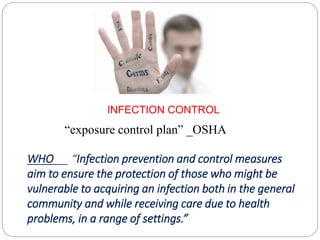
INFECTION CONTROL
“exposure control plan” _OSHA
WHO __ “Infection prevention and control measures
aim to ensure the protection of those who might be
vulnerable to acquiring an infection both in the general
community and while receiving care due to health
problems, in a range of settings.”
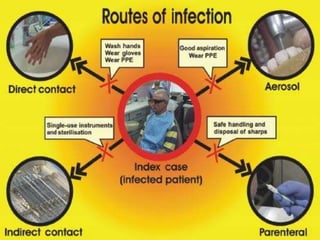
INFECTION OF CONCERN IN DENTISTRY
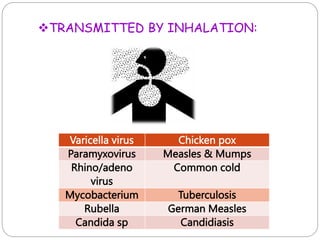
TRANSMITTED BY INHALATION:
Varicella virus Chicken pox
Paramyxovirus Measles & Mumps
Rhino/adeno
virus
Common cold
Mycobacterium Tuberculosis
Rubella German Measles
Candida sp Candidiasis
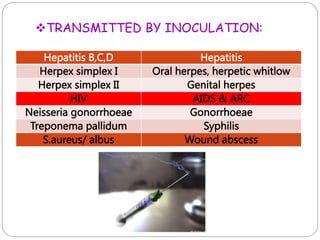
Hepatitis B,C,D Hepatitis
Herpex simplex I Oral herpes, herpetic whitlow
Herpex simplex II Genital herpes
HIV AIDS & ARC
Neisseria gonorrhoeae Gonorrhoeae
Treponema pallidum Syphilis
S.aureus/ albus Wound abscess
TRANSMITTED BY INOCULATION:
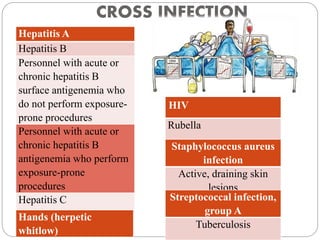
CROSS INFECTION
Hepatitis A
Hepatitis B
Personnel with acute or
chronic hepatitis B
surface antigenemia who
do not perform exposure-
prone procedures
Personnel with acute or
chronic hepatitis B
antigenemia who perform
exposure-prone
procedures
Hepatitis C
Hands (herpetic
whitlow)
HIV
Rubella
Staphylococcus aureus
infection
Active, draining skin
lesions
Streptococcal infection,
group A
Tuberculosis
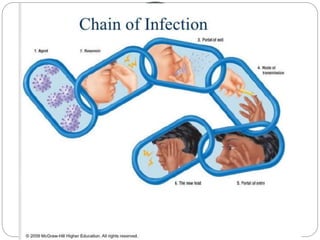
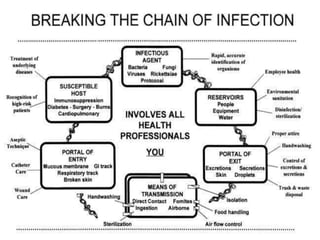
CHAIN OF TRANSMISSION
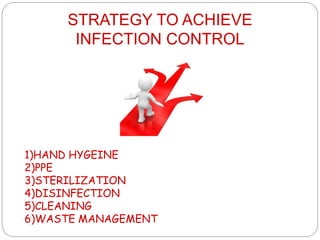
STRATEGY TO ACHIEVE
INFECTION CONTROL
1)HAND HYGEINE
2)PPE
3)STERILIZATION
4)DISINFECTION
5)CLEANING
6)WASTE MANAGEMENT
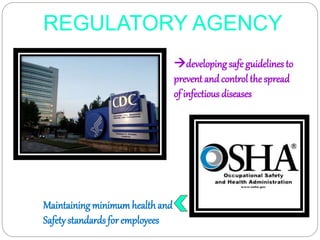
REGULATORY AGENCY
developing safe guidelines to
prevent and control the spread
of infectious diseases
Maintaining minimumhealthand
Safetystandards for employees
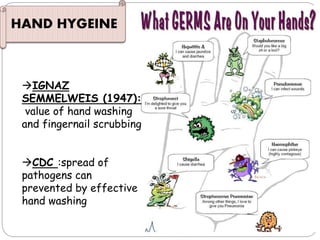
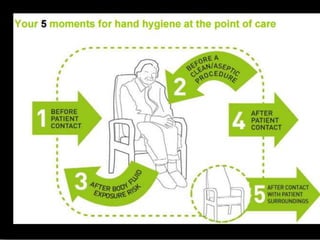
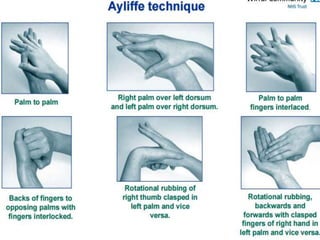
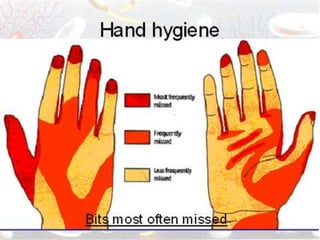
HAND HYGEINE
IGNAZ
SEMMELWEIS (1947):
value of hand washing
and fingernail scrubbing
CDC :spread of
pathogens can
prevented by effective
hand washing
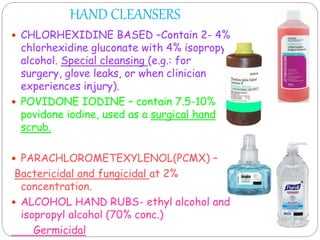
HAND CLEANSERS
 CHLORHEXIDINE BASED –Contain 2- 4%
chlorhexidine gluconate with 4% isopropyl
alcohol. Special cleansing (e.g.: for
surgery, glove leaks, or when clinician
experiences injury).
 POVIDONE IODINE – contain 7.5-10%
povidone iodine, used as a surgical hand
scrub.
 PARACHLOROMETEXYLENOL(PCMX) –
Bactericidal and fungicidal at 2%
concentration.
 ALCOHOL HAND RUBS- ethyl alcohol and
isopropyl alcohol (70% conc.)
Germicidal
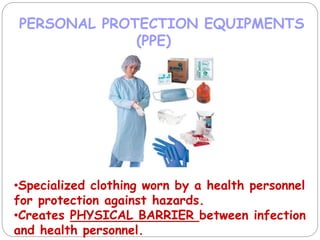
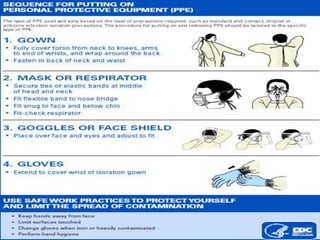
PERSONAL PROTECTION EQUIPMENTS
(PPE)
•Specialized clothing worn by a health personnel
for protection against hazards.
•Creates PHYSICAL BARRIER between infection
and health personnel.
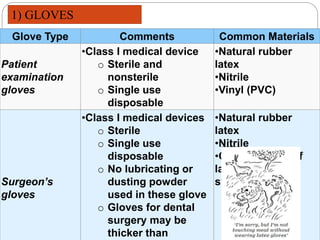
Glove Type Comments Common Materials
Patient
examination
gloves
•Class I medical device
o Sterile and
nonsterile
o Single use
disposable
•Natural rubber
latex
•Nitrile
•Vinyl (PVC)
Surgeon’s
gloves
•Class I medical devices
o Sterile
o Single use
disposable
o No lubricating or
dusting powder
used in these glove
o Gloves for dental
surgery may be
thicker than
•Natural rubber
latex
•Nitrile
•Combinations of
latex and/or
synthetics
1) GLOVES
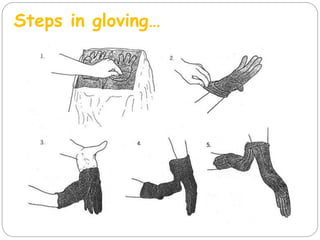
Steps in gloving…
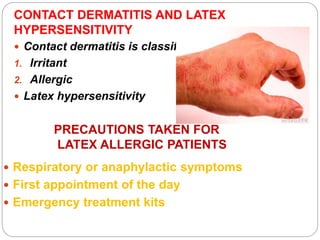
CONTACT DERMATITIS AND LATEX
HYPERSENSITIVITY
 Contact dermatitis is classified as
1. Irritant
2. Allergic
 Latex hypersensitivity
PRECAUTIONS TAKEN FOR
LATEX ALLERGIC PATIENTS
 Respiratory or anaphylactic symptoms
 First appointment of the day
 Emergency treatment kits
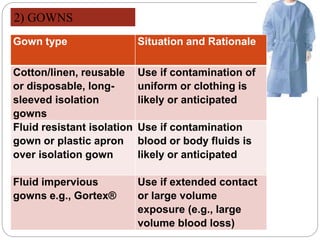
2) GOWNS
Gown type Situation and Rationale
Cotton/linen, reusable
or disposable, long-
sleeved isolation
gowns
Use if contamination of
uniform or clothing is
likely or anticipated
Fluid resistant isolation
gown or plastic apron
over isolation gown
Use if contamination
blood or body fluids is
likely or anticipated
Fluid impervious
gowns e.g., Gortex®
Use if extended contact
or large volume
exposure (e.g., large
volume blood loss)
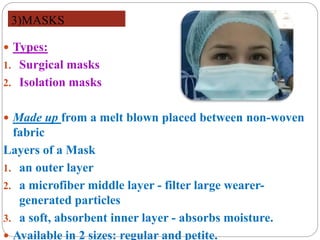
3)MASKS
 Types:
1. Surgical masks
2. Isolation masks
 Made up from a melt blown placed between non-woven
fabric
Layers of a Mask
1. an outer layer
2. a microfiber middle layer - filter large wearer-
generated particles
3. a soft, absorbent inner layer - absorbs moisture.
 Available in 2 sizes: regular and petite.
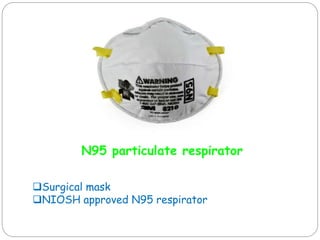
N95 particulate respirator
Surgical mask
NIOSH approved N95 respirator
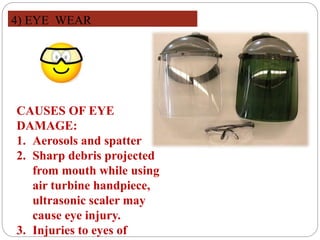
CAUSES OF EYE
DAMAGE:
1. Aerosols and spatter
2. Sharp debris projected
from mouth while using
air turbine handpiece,
ultrasonic scaler may
cause eye injury.
3. Injuries to eyes of
4) EYE WEAR
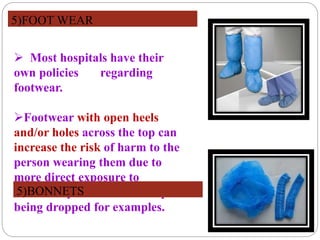
 Most hospitals have their
own policies regarding
footwear.
Footwear with open heels
and/or holes across the top can
increase the risk of harm to the
person wearing them due to
more direct exposure to
blood/body fluids or of sharps
being dropped for examples.
5)FOOT WEAR
5)BONNETS
Wearing PPE is an important component of
Standard and Transmission-based Precautions
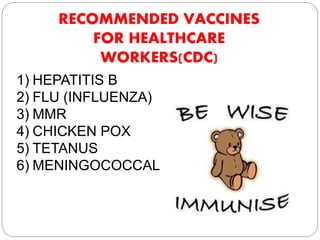
RECOMMENDED VACCINES
FOR HEALTHCARE
WORKERS(CDC)
1) HEPATITIS B
2) FLU (INFLUENZA)
3) MMR
4) CHICKEN POX
5) TETANUS
6) MENINGOCOCCAL
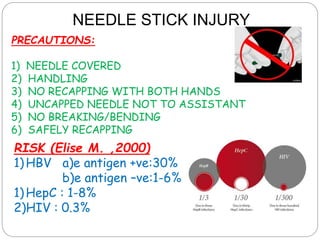
NEEDLE STICK INJURY
PRECAUTIONS:
1) NEEDLE COVERED
2) HANDLING
3) NO RECAPPING WITH BOTH HANDS
4) UNCAPPED NEEDLE NOT TO ASSISTANT
5) NO BREAKING/BENDING
6) SAFELY RECAPPING
RISK (Elise M. ,2000)
1)HBV a)e antigen +ve:30%
b)e antigen –ve:1-6%
1)HepC : 1-8%
2)HIV : 0.3%
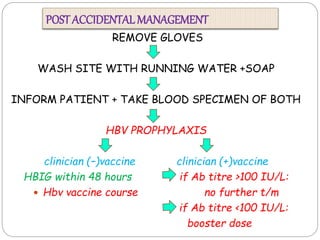
POST ACCIDENTALMANAGEMENT
REMOVE GLOVES
WASH SITE WITH RUNNING WATER +SOAP
INFORM PATIENT + TAKE BLOOD SPECIMEN OF BOTH
HBV PROPHYLAXIS
clinician (–)vaccine clinician (+)vaccine
HBIG within 48 hours if Ab titre >100 IU/L:
 Hbv vaccine course no further t/m
if Ab titre <100 IU/L:
booster dose
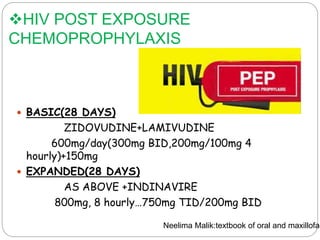
HIV POST EXPOSURE
CHEMOPROPHYLAXIS
 BASIC(28 DAYS)
ZIDOVUDINE+LAMIVUDINE
600mg/day(300mg BID,200mg/100mg 4
hourly)+150mg
 EXPANDED(28 DAYS)
AS ABOVE +INDINAVIRE
800mg, 8 hourly…750mg TID/200mg BID
Neelima Malik:textbook of oral and maxillofac
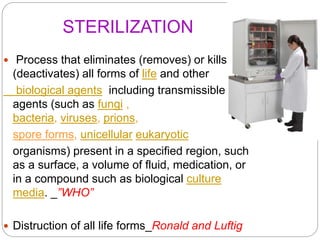
STERILIZATION
 Process that eliminates (removes) or kills
(deactivates) all forms of life and other
biological agents including transmissible
agents (such as fungi ,
bacteria, viruses, prions,
spore forms, unicellular eukaryotic
organisms) present in a specified region, such
as a surface, a volume of fluid, medication, or
in a compound such as biological culture
media. _”WHO”
 Distruction of all life forms_Ronald and Luftig
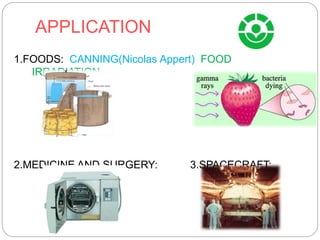
APPLICATION
1.FOODS: CANNING(Nicolas Appert) FOOD
IRRADIATION
2.MEDICINE AND SURGERY: 3.SPACECRAFT:
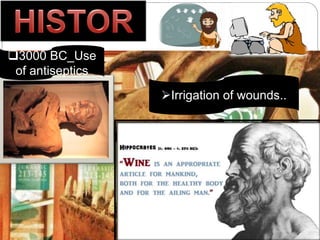
3000 BC_Use
of antiseptics
Irrigation of wounds..
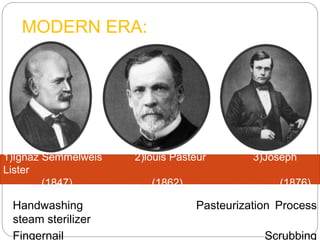
MODERN ERA:
Handwashing Pasteurization Process
steam sterilizer
Fingernail Scrubbing
1)Ignaz Semmelweis 2)louis Pasteur 3)Joseph
Lister
(1847) (1862) (1876)
PRINCIPLES OF STERILIZATION
1. All instruments should be thoroughly cleaned,
blood and debris should be removed before
sterilization
2. Sterilizing agents( heat, steam, gas) should
contact every surface of each item to be sterilized
3. All sterilizing equipments must be regularly
serviced and maintained by qualified engineers.
4. Manufacturers instruction should be strictly
adhered to for its operation and maintenance.
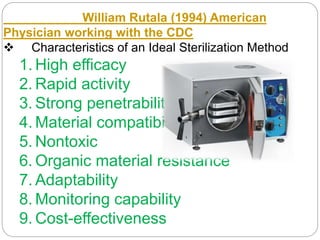
William Rutala (1994) American
Physician working with the CDC
 Characteristics of an Ideal Sterilization Method
1. High efficacy
2. Rapid activity
3. Strong penetrability
4. Material compatibility
5. Nontoxic
6. Organic material resistance
7. Adaptability
8. Monitoring capability
9. Cost-effectiveness
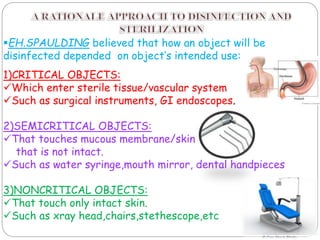
1)CRITICAL OBJECTS:
Which enter sterile tissue/vascular system
Such as surgical instruments, GI endoscopes.
2)SEMICRITICAL OBJECTS:
That touches mucous membrane/skin
that is not intact.
Such as water syringe,mouth mirror, dental handpieces
3)NONCRITICAL OBJECTS:
That touch only intact skin.
Such as xray head,chairs,stethescope,etc
EH.SPAULDING believed that how an object will be
disinfected depended on object’s intended use:
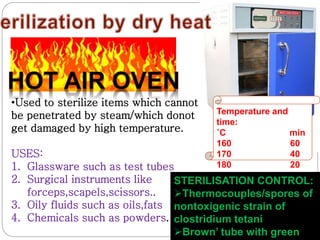
•Used to sterilize items which cannot
be penetrated by steam/which donot
get damaged by high temperature.
USES:
1. Glassware such as test tubes
2. Surgical instruments like
forceps,scapels,scissors..
3. Oily fluids such as oils,fats
4. Chemicals such as powders.
Temperature and
time:
˚C min
160 60
170 40
180 20
STERILISATION CONTROL:
Thermocouples/spores of
nontoxigenic strain of
clostridium tetani
Brown’ tube with green
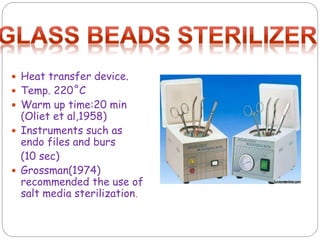
 Heat transfer device.
 Temp. 220˚C
 Warm up time:20 min
(Oliet et al,1958)
 Instruments such as
endo files and burs
(10 sec)
 Grossman(1974)
recommended the use of
salt media sterilization.
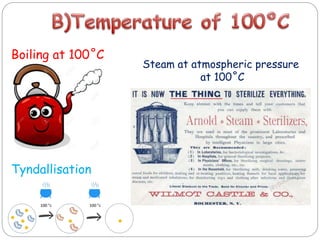
Boiling at 100˚C
Steam at atmospheric pressure
at 100˚C
Tyndallisation
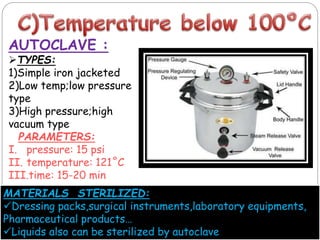
AUTOCLAVE :
TYPES:
1)Simple iron jacketed
2)Low temp;low pressure
type
3)High pressure;high
vacuum type
PARAMETERS:
I. pressure: 15 psi
II. temperature: 121˚C
III.time: 15-20 min
MATERIALS STERILIZED:
Dressing packs,surgical instruments,laboratory equipments,
Pharmaceutical products…
Liquids also can be sterilized by autoclave
AUTOCLAVE ……….
Principles of autoclaving:
1. Saturated steam heats
the article to be
sterilised rapidly
by releasing latent heat
which participates in
bacterial killing.
2. Steam contracts in
volume and enhances
penetration.
Sterilization control:
1)Spores of bacillus
stearothermophilus.
2)Chemical indicators
such as Brown’ steriliser
control tubes.
3)Thermocouple.
4)Autoclave tape.
Advantages
• Rapid and effective
• Effective for sterilizing
cloth
surgical packs and towel
packs
Disadvantages
• Items sensitive to heat
cannot be sterilized
• It tends to corrode
carbon steel burs and
AUTOCLAVE ……….
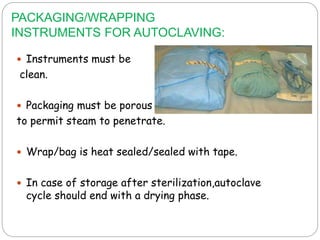
PACKAGING/WRAPPING
INSTRUMENTS FOR AUTOCLAVING:
 Instruments must be
clean.
 Packaging must be porous
to permit steam to penetrate.
 Wrap/bag is heat sealed/sealed with tape.
 In case of storage after sterilization,autoclave
cycle should end with a drying phase.
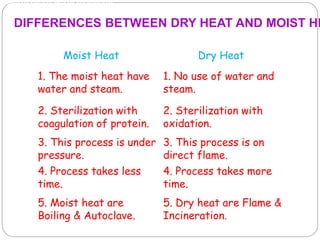
Moist Heat Dry Heat
1. The moist heat have
water and steam.
1. No use of water and
steam.
2. Sterilization with
coagulation of protein.
2. Sterilization with
oxidation.
3. This process is under
pressure.
3. This process is on
direct flame.
4. Process takes less
time.
4. Process takes more
time.
5. Moist heat are
Boiling & Autoclave.
5. Dry heat are Flame &
Incineration.
Differences between dry heat and moist heat
DIFFERENCES BETWEEN DRY HEAT AND MOIST HE
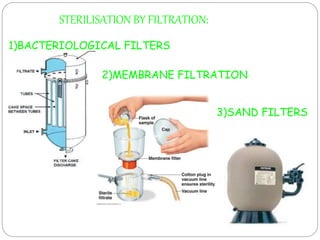
STERILISATION BY FILTRATION:
1)BACTERIOLOGICAL FILTERS
2)MEMBRANE FILTRATION
3)SAND FILTERS
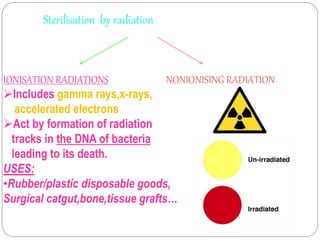
Sterilisation by radiation
IONISATION RADIATIONS
Includes gamma rays,x-rays,
accelerated electrons
Act by formation of radiation
tracks in the DNA of bacteria
leading to its death.
USES:
•Rubber/plastic disposable goods,
Surgical catgut,bone,tissue grafts…
NONIONISING RADIATION
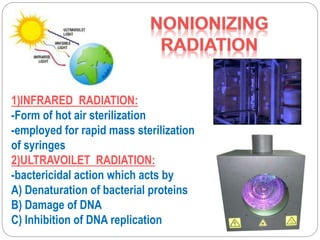
1)INFRARED RADIATION:
-Form of hot air sterilization
-employed for rapid mass sterilization
of syringes
2)ULTRAVOILET RADIATION:
-bactericidal action which acts by
A) Denaturation of bacterial proteins
B) Damage of DNA
C) Inhibition of DNA replication
GAS VAPOUR STERILISATION
1)Ethylene oxide
2) Formaldehyde gas
3) Hydrogen peroxide vapours
4)Others (CHLORINE DIOXIDE,PARACETIC ACID)
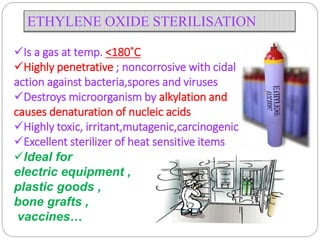
ETHYLENE OXIDE STERILISATION
Is a gas at temp. <180˚C
Highly penetrative ; noncorrosive with cidal
action against bacteria,spores and viruses
Destroys microorganism by alkylation and
causes denaturation of nucleic acids
Highly toxic, irritant,mutagenic,carcinogenic
Excellent sterilizer of heat sensitive items
Ideal for
electric equipment ,
plastic goods ,
bone grafts ,
vaccines…
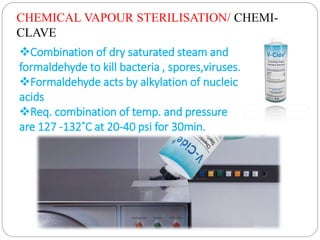
CHEMICAL VAPOUR STERILISATION/ CHEMI-
CLAVE
Combination of dry saturated steam and
formaldehyde to kill bacteria , spores,viruses.
Formaldehyde acts by alkylation of nucleic
acids
Req. combination of temp. and pressure
are 127 -132˚C at 20-40 psi for 30min.
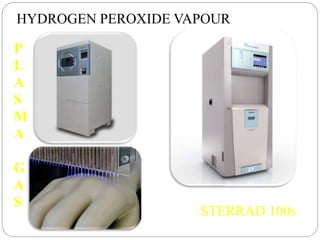
HYDROGEN PEROXIDE VAPOUR
P
L
A
S
M
A
G
A
S
STERRAD 100s
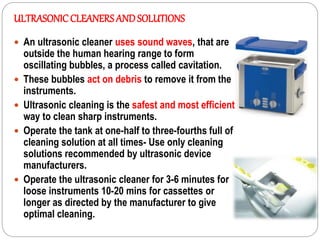
ULTRASONICCLEANERSAND SOLUTIONS
 An ultrasonic cleaner uses sound waves, that are
outside the human hearing range to form
oscillating bubbles, a process called cavitation.
 These bubbles act on debris to remove it from the
instruments.
 Ultrasonic cleaning is the safest and most efficient
way to clean sharp instruments.
 Operate the tank at one-half to three-fourths full of
cleaning solution at all times- Use only cleaning
solutions recommended by ultrasonic device
manufacturers.
 Operate the ultrasonic cleaner for 3-6 minutes for
loose instruments 10-20 mins for cassettes or
longer as directed by the manufacturer to give
optimal cleaning.
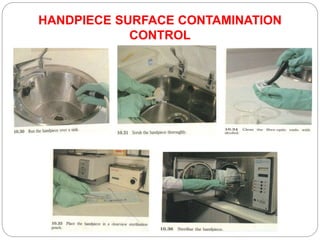
HANDPIECE SURFACE CONTAMINATION
CONTROL
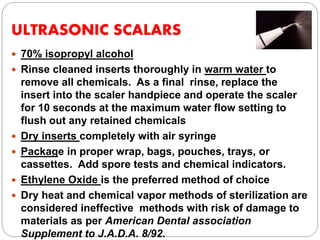
ULTRASONIC SCALARS
 70% isopropyl alcohol
 Rinse cleaned inserts thoroughly in warm water to
remove all chemicals. As a final rinse, replace the
insert into the scaler handpiece and operate the scaler
for 10 seconds at the maximum water flow setting to
flush out any retained chemicals
 Dry inserts completely with air syringe
 Package in proper wrap, bags, pouches, trays, or
cassettes. Add spore tests and chemical indicators.
 Ethylene Oxide is the preferred method of choice
 Dry heat and chemical vapor methods of sterilization are
considered ineffective methods with risk of damage to
materials as per American Dental association
Supplement to J.A.D.A. 8/92.
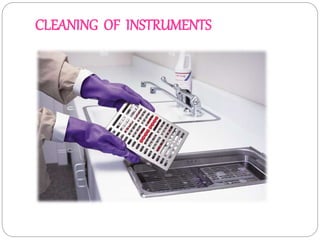
CLEANING OF INSTRUMENTS
CLEANING AGENTS
1)SOAPS :
-Salts of fatty acids.
-effective at pH >9
-Acts by reducing surface tension along the
instrument surface
emulsification of contaminants which are
removed in rinsing phase
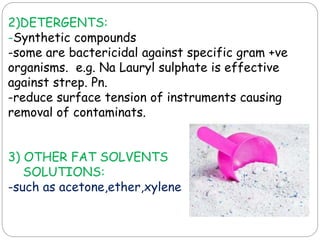
2)DETERGENTS:
-Synthetic compounds
-some are bactericidal against specific gram +ve
organisms. e.g. Na Lauryl sulphate is effective
against strep. Pn.
-reduce surface tension of instruments causing
removal of contaminats.
3) OTHER FAT SOLVENTS
SOLUTIONS:
-such as acetone,ether,xylene
DISINFECTION
Disinfection refers to the destruction
of pathogenic organisms (RonaldB
Luftig)
Destruction of pathogenic and other kinds of
microorganisms by physical or chemical means.
Disinfection is less lethal than sterilization,
because it destroys the majority of recognized
pathogenic microorganisms, but not necessarily
all microbial forms (e.g., bacterial spores).
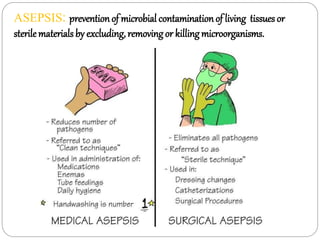
ASEPSIS: preventionof microbial contaminationof living tissues or
sterile materials by excluding, removing or killing microorganisms.
CHARACTERISTICS OF A GOOD CHEMICAL
DISINFECTANT OR ANTISEPTIC:
1. Able to destroy a wide variety of microorganisms
2. Fast-acting  short contact time
3. Not affected by the presence of other
substances such as organic matter
4. Non-toxic to human tissues as well as non-
corrosive and non-destructive to materials for
which it is used
5. Should leave a residual antimicrobial film on the
treated surface
6. Water-soluble and easy to apply
7. Inexpensive and easy to prepare
8. Stable under storage and shipping conditions
9. Odourless
High-level disinfection:
inactivates vegetative bacteria, mycobacteria, fungi, and
viruses but not necessarily high numbers of bacterial
spores.
Intermediate-level disinfection:
inactivates vegetative bacteria, the majority of fungi,
mycobacteria, and the majority of viruses (particularly
enveloped viruses) but not bacterial spores.
Low-level disinfectant: Liquid chemical germicide. OSHA
requires low-level hospital disinfectants.
USE OF DISINFECTANT
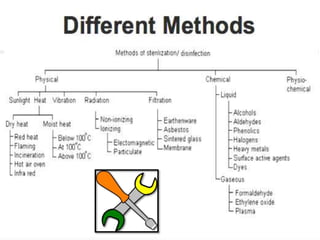
METHODS OF DISINFECTION
DISINFECTION BY CLEANING
DISINFECTION BY HEAT
DISINFECTION BY LOW TEMPERATURE
STEAM
DISINFECTION BY BOILING WATER
DISINFECTION BY CHEMICAL AGENTS
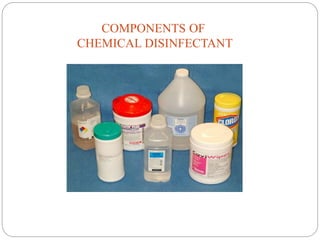
COMPONENTS OF
CHEMICAL DISINFECTANT
DAMAGE CELL MEMBRANE
A. Surface active agents – interact with the lipid in the
cell membrane  disrupt cell membrane
1. Cationic agents
• Quaternary ammonium compounds
• Cationic detergents widely used for skin
antisepsis
• Effective at alkaline pH
• Example: zephiran, benzalkonium chloride
2. Anionic agents
• Remove dirt through the process of
emulsification
• Effective at acidic pH
• Example: soaps and detergents
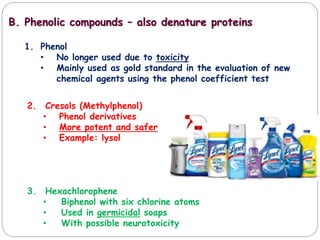
B. Phenolic compounds – also denature proteins
1. Phenol
• No longer used due to toxicity
• Mainly used as gold standard in the evaluation of new
chemical agents using the phenol coefficient test
2. Cresols (Methylphenol)
• Phenol derivatives
• More potent and safer
• Example: lysol
3. Hexachlorophene
• Biphenol with six chlorine atoms
• Used in germicidal soaps
• With possible neurotoxicity
C. Alcohols – also denatures proteins
1. Ethanol
• Bactericidal
• Remove lipid from skin surface
• Widely used to clean the skin before
immunization or venipuncture
2. Isopropyl alcohol
• Greater bactericidal activity than ethanol;
• less volatile
• Side effect: narcosis due to inhalation of
fumes
3. Benzyl alcohol – used as preservative
 DENATURATION OF CELLULAR PROTEINS
1. Acids and alkali
• Strong acids and alkali – bactericidal
• Weak acids (benzoic, propionic, and citric acids)
– used as food preservatives
2. Alcohol and acetone
3. Phenol and cresol
 MODIFY FUNCTIONAL GROUPS OF PROTEINS
AND NUCLEIC ACIDS:
A. Heavy Metals – damage enzyme activity of bacteria
by binding to sulfhydryl groups
1. Mercurials
• Example: thimesoral (merthiolate) & merbromin
(mercurochrome)  skin antiseptics
2. Silver compounds
• Bactericidal
• 1% silver nitrate – ophthalmia neonatorum
(Crede’s prophylaxis)
• Silver sulfadiazine – burn wounds
B. Halogens – oxidizing agents  inactivate enzymes
1. Iodine
• Inactivates sulfhydryl-containing enzymes
• Also binds specifically to tyrosine residues in
proteins
• Best antiseptic sporicidal, bactericidal,
fungicidal, viricidal, amoebicidal
• Used prior to obtaining a blood culture and
installing IV catheters
• Two forms:
a) Tincture of iodine
 2% iodine solution + potassium iodide in ethanol
 Used to prepare skin prior to blood culture
b) Iodophors
 Complexes of iodine with detergents (e.g.
Betadine)
 Used to prepare skin prior to surgery; less
irritating
2. Chlorine
• Kills by cross-linking essential sulfhydryl groups
in enzymes  form inactive disulfide
• For water treatment
• Hypochlorite (HOCl) – sanitize dairy & food
processing equipment; household disinfectant
3. Hydrogen peroxide (H2O2)
• Wound cleansing; surgical devices and soft
plastic contact lenses
• Effectiveness limited by the organism’s ability
to produce catalase
• Attacks sulfhydryl groups
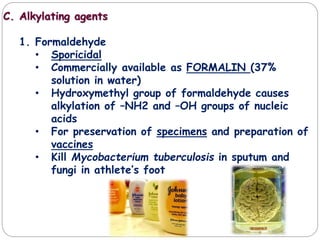
C. Alkylating agents
1. Formaldehyde
• Sporicidal
• Commercially available as FORMALIN (37%
solution in water)
• Hydroxymethyl group of formaldehyde causes
alkylation of –NH2 and –OH groups of nucleic
acids
• For preservation of specimens and preparation of
vaccines
• Kill Mycobacterium tuberculosis in sputum and
fungi in athlete’s foot
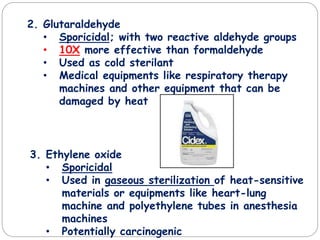
2. Glutaraldehyde
• Sporicidal; with two reactive aldehyde groups
• 10X more effective than formaldehyde
• Used as cold sterilant
• Medical equipments like respiratory therapy
machines and other equipment that can be
damaged by heat
3. Ethylene oxide
• Sporicidal
• Used in gaseous sterilization of heat-sensitive
materials or equipments like heart-lung
machine and polyethylene tubes in anesthesia
machines
• Potentially carcinogenic
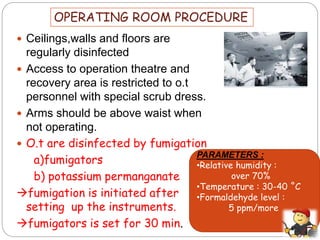
OPERATING ROOM PROCEDURE
 Ceilings,walls and floors are
regularly disinfected
 Access to operation theatre and
recovery area is restricted to o.t
personnel with special scrub dress.
 Arms should be above waist when
not operating.
 O.t are disinfected by fumigation
a)fumigators
b) potassium permanganate
fumigation is initiated after
setting up the instruments.
fumigators is set for 30 min.
PARAMETERS :
•Relative humidity :
over 70%
•Temperature : 30-40 ˚C
•Formaldehyde level :
5 ppm/more
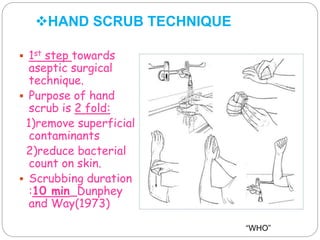
HAND SCRUB TECHNIQUE
 1st step towards
aseptic surgical
technique.
 Purpose of hand
scrub is 2 fold:
1)remove superficial
contaminants
2)reduce bacterial
count on skin.
 Scrubbing duration
:10 min_Dunphey
and Way(1973)
“WHO”
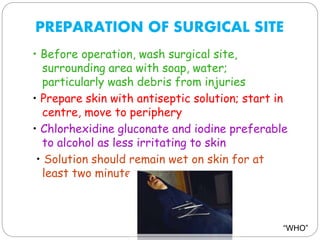
PREPARATION OF SURGICAL SITE
• Before operation, wash surgical site,
surrounding area with soap, water;
particularly wash debris from injuries
• Prepare skin with antiseptic solution; start in
centre, move to periphery
• Chlorhexidine gluconate and iodine preferable
to alcohol as less irritating to skin
• Solution should remain wet on skin for at
least two minutes
“WHO”
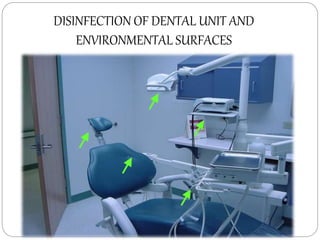
DISINFECTION OF DENTAL UNIT AND
ENVIRONMENTAL SURFACES
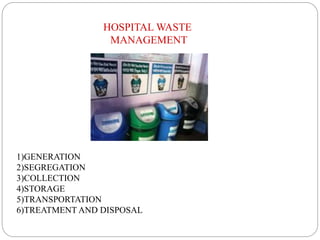
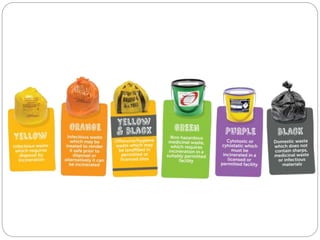
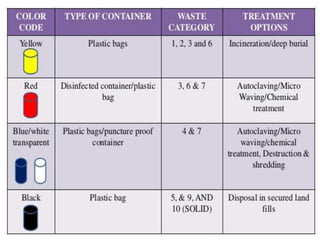
HOSPITAL WASTE
MANAGEMENT
1)GENERATION
2)SEGREGATION
3)COLLECTION
4)STORAGE
5)TRANSPORTATION
6)TREATMENT AND DISPOSAL
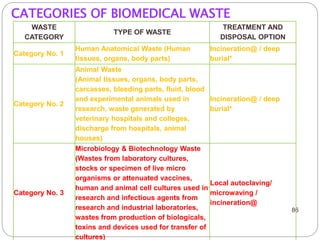
86
WASTE
CATEGORY
TYPE OF WASTE
TREATMENT AND
DISPOSAL OPTION
Category No. 1
Human Anatomical Waste (Human
tissues, organs, body parts)
Incineration@ / deep
burial*
Category No. 2
Animal Waste
(Animal tissues, organs, body parts,
carcasses, bleeding parts, fluid, blood
and experimental animals used in
research, waste generated by
veterinary hospitals and colleges,
discharge from hospitals, animal
houses)
Incineration@ / deep
burial*
Category No. 3
Microbiology & Biotechnology Waste
(Wastes from laboratory cultures,
stocks or specimen of live micro
organisms or attenuated vaccines,
human and animal cell cultures used in
research and infectious agents from
research and industrial laboratories,
wastes from production of biologicals,
toxins and devices used for transfer of
cultures)
Local autoclaving/
microwaving /
incineration@
CATEGORIES OF BIOMEDICAL WASTE
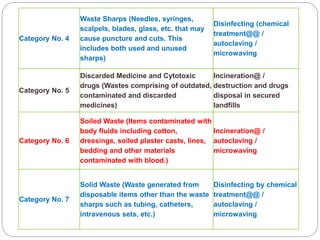
Category No. 4
Waste Sharps (Needles, syringes,
scalpels, blades, glass, etc. that may
cause puncture and cuts. This
includes both used and unused
sharps)
Disinfecting (chemical
treatment@@ /
autoclaving /
microwaving
Category No. 5
Discarded Medicine and Cytotoxic
drugs (Wastes comprising of outdated,
contaminated and discarded
medicines)
Incineration@ /
destruction and drugs
disposal in secured
landfills
Category No. 6
Soiled Waste (Items contaminated with
body fluids including cotton,
dressings, soiled plaster casts, lines,
bedding and other materials
contaminated with blood.)
Incineration@ /
autoclaving /
microwaving
Category No. 7
Solid Waste (Waste generated from
disposable items other than the waste
sharps such as tubing, catheters,
intravenous sets, etc.)
Disinfecting by chemical
treatment@@ /
autoclaving /
microwaving
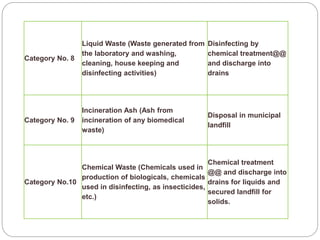
Category No. 8
Liquid Waste (Waste generated from
the laboratory and washing,
cleaning, house keeping and
disinfecting activities)
Disinfecting by
chemical treatment@@
and discharge into
drains
Category No. 9
Incineration Ash (Ash from
incineration of any biomedical
waste)
Disposal in municipal
landfill
Category No.10
Chemical Waste (Chemicals used in
production of biologicals, chemicals
used in disinfecting, as insecticides,
etc.)
Chemical treatment
@@ and discharge into
drains for liquids and
secured landfill for
solids.
Infection control has
helped to allay concerns
of the health care
personnel and instill
confidence and in
providing a safe
REFERENCES
 Ayliffe GAJ et al (1993):chemical disinfection in hospitals
 Block SS(1983):disinfection,sterilisation and preservation
 Medical devices agency (1996):sterilisation,disinfection and cleaning of medical
equipment..
 Neelima Malik ,textbook of oral and maxillofacial surgery,3rd edi.
 Textbook of microbiology by Chakravathy.
 Operative dentistry, infection control, 4th edition, sturdevent.
 Textbook of microbiology, sterilization and disinfection, 7th edition,
Ananthanarayan
 Textbook of clinical periodontology, Newman, Takei, Carranza, 11th edition.
 Sterilization and disinfection of dental instruments by ADA
 Disinfection & sterilization of dental instruments TB MED 266, 1995
 CDC, guidelines for disinfection & sterilization in health care facilities 2008.
 Infection prevention and control, college of respiratory therapists Ontario, june
2011
 Effects of sterilization on periodontal instruments, JOP, vol 53, no:7, 1982.
 New CDC guidelines for selected infection control procedures, chris miller.
 CDC guidelines for infection control in dental health care settings, Dec19,
2003/vol.52.
 Sterilization of ultrasonic inserts.
Infection control

Infection control

  • 2.
    INFECTION CONTROL UNDER THEGUIDANCE: Prof.Dr.C.S. Saimbi(H.O.D) Dr.Vikash Kumar(Asst.Prof) PRESENTED BY – Dr.SONI BISTA (1st year PG student) Periodontology and Oral Implantology
  • 3.
  • 5.
    INFECTION CONTROL “exposure controlplan” _OSHA WHO __ “Infection prevention and control measures aim to ensure the protection of those who might be vulnerable to acquiring an infection both in the general community and while receiving care due to health problems, in a range of settings.”
  • 6.
  • 7.
    TRANSMITTED BY INHALATION: Varicellavirus Chicken pox Paramyxovirus Measles & Mumps Rhino/adeno virus Common cold Mycobacterium Tuberculosis Rubella German Measles Candida sp Candidiasis
  • 8.
    Hepatitis B,C,D Hepatitis Herpexsimplex I Oral herpes, herpetic whitlow Herpex simplex II Genital herpes HIV AIDS & ARC Neisseria gonorrhoeae Gonorrhoeae Treponema pallidum Syphilis S.aureus/ albus Wound abscess TRANSMITTED BY INOCULATION:
  • 9.
    CROSS INFECTION Hepatitis A HepatitisB Personnel with acute or chronic hepatitis B surface antigenemia who do not perform exposure- prone procedures Personnel with acute or chronic hepatitis B antigenemia who perform exposure-prone procedures Hepatitis C Hands (herpetic whitlow) HIV Rubella Staphylococcus aureus infection Active, draining skin lesions Streptococcal infection, group A Tuberculosis
  • 11.
  • 13.
    STRATEGY TO ACHIEVE INFECTIONCONTROL 1)HAND HYGEINE 2)PPE 3)STERILIZATION 4)DISINFECTION 5)CLEANING 6)WASTE MANAGEMENT
  • 14.
    REGULATORY AGENCY developing safeguidelines to prevent and control the spread of infectious diseases Maintaining minimumhealthand Safetystandards for employees
  • 15.
    HAND HYGEINE IGNAZ SEMMELWEIS (1947): valueof hand washing and fingernail scrubbing CDC :spread of pathogens can prevented by effective hand washing
  • 17.
    HAND CLEANSERS  CHLORHEXIDINEBASED –Contain 2- 4% chlorhexidine gluconate with 4% isopropyl alcohol. Special cleansing (e.g.: for surgery, glove leaks, or when clinician experiences injury).  POVIDONE IODINE – contain 7.5-10% povidone iodine, used as a surgical hand scrub.  PARACHLOROMETEXYLENOL(PCMX) – Bactericidal and fungicidal at 2% concentration.  ALCOHOL HAND RUBS- ethyl alcohol and isopropyl alcohol (70% conc.) Germicidal
  • 21.
    PERSONAL PROTECTION EQUIPMENTS (PPE) •Specializedclothing worn by a health personnel for protection against hazards. •Creates PHYSICAL BARRIER between infection and health personnel.
  • 22.
    Glove Type CommentsCommon Materials Patient examination gloves •Class I medical device o Sterile and nonsterile o Single use disposable •Natural rubber latex •Nitrile •Vinyl (PVC) Surgeon’s gloves •Class I medical devices o Sterile o Single use disposable o No lubricating or dusting powder used in these glove o Gloves for dental surgery may be thicker than •Natural rubber latex •Nitrile •Combinations of latex and/or synthetics 1) GLOVES
  • 23.
  • 24.
    CONTACT DERMATITIS ANDLATEX HYPERSENSITIVITY  Contact dermatitis is classified as 1. Irritant 2. Allergic  Latex hypersensitivity PRECAUTIONS TAKEN FOR LATEX ALLERGIC PATIENTS  Respiratory or anaphylactic symptoms  First appointment of the day  Emergency treatment kits
  • 25.
    2) GOWNS Gown typeSituation and Rationale Cotton/linen, reusable or disposable, long- sleeved isolation gowns Use if contamination of uniform or clothing is likely or anticipated Fluid resistant isolation gown or plastic apron over isolation gown Use if contamination blood or body fluids is likely or anticipated Fluid impervious gowns e.g., Gortex® Use if extended contact or large volume exposure (e.g., large volume blood loss)
  • 26.
    3)MASKS  Types: 1. Surgicalmasks 2. Isolation masks  Made up from a melt blown placed between non-woven fabric Layers of a Mask 1. an outer layer 2. a microfiber middle layer - filter large wearer- generated particles 3. a soft, absorbent inner layer - absorbs moisture.  Available in 2 sizes: regular and petite.
  • 27.
    N95 particulate respirator Surgicalmask NIOSH approved N95 respirator
  • 28.
    CAUSES OF EYE DAMAGE: 1.Aerosols and spatter 2. Sharp debris projected from mouth while using air turbine handpiece, ultrasonic scaler may cause eye injury. 3. Injuries to eyes of 4) EYE WEAR
  • 29.
     Most hospitalshave their own policies regarding footwear. Footwear with open heels and/or holes across the top can increase the risk of harm to the person wearing them due to more direct exposure to blood/body fluids or of sharps being dropped for examples. 5)FOOT WEAR 5)BONNETS
  • 31.
    Wearing PPE isan important component of Standard and Transmission-based Precautions
  • 32.
    RECOMMENDED VACCINES FOR HEALTHCARE WORKERS(CDC) 1)HEPATITIS B 2) FLU (INFLUENZA) 3) MMR 4) CHICKEN POX 5) TETANUS 6) MENINGOCOCCAL
  • 33.
    NEEDLE STICK INJURY PRECAUTIONS: 1)NEEDLE COVERED 2) HANDLING 3) NO RECAPPING WITH BOTH HANDS 4) UNCAPPED NEEDLE NOT TO ASSISTANT 5) NO BREAKING/BENDING 6) SAFELY RECAPPING RISK (Elise M. ,2000) 1)HBV a)e antigen +ve:30% b)e antigen –ve:1-6% 1)HepC : 1-8% 2)HIV : 0.3%
  • 34.
    POST ACCIDENTALMANAGEMENT REMOVE GLOVES WASHSITE WITH RUNNING WATER +SOAP INFORM PATIENT + TAKE BLOOD SPECIMEN OF BOTH HBV PROPHYLAXIS clinician (–)vaccine clinician (+)vaccine HBIG within 48 hours if Ab titre >100 IU/L:  Hbv vaccine course no further t/m if Ab titre <100 IU/L: booster dose
  • 35.
    HIV POST EXPOSURE CHEMOPROPHYLAXIS BASIC(28 DAYS) ZIDOVUDINE+LAMIVUDINE 600mg/day(300mg BID,200mg/100mg 4 hourly)+150mg  EXPANDED(28 DAYS) AS ABOVE +INDINAVIRE 800mg, 8 hourly…750mg TID/200mg BID Neelima Malik:textbook of oral and maxillofac
  • 36.
    STERILIZATION  Process thateliminates (removes) or kills (deactivates) all forms of life and other biological agents including transmissible agents (such as fungi , bacteria, viruses, prions, spore forms, unicellular eukaryotic organisms) present in a specified region, such as a surface, a volume of fluid, medication, or in a compound such as biological culture media. _”WHO”  Distruction of all life forms_Ronald and Luftig
  • 37.
    APPLICATION 1.FOODS: CANNING(Nicolas Appert)FOOD IRRADIATION 2.MEDICINE AND SURGERY: 3.SPACECRAFT:
  • 38.
  • 39.
    MODERN ERA: Handwashing PasteurizationProcess steam sterilizer Fingernail Scrubbing 1)Ignaz Semmelweis 2)louis Pasteur 3)Joseph Lister (1847) (1862) (1876)
  • 40.
    PRINCIPLES OF STERILIZATION 1.All instruments should be thoroughly cleaned, blood and debris should be removed before sterilization 2. Sterilizing agents( heat, steam, gas) should contact every surface of each item to be sterilized 3. All sterilizing equipments must be regularly serviced and maintained by qualified engineers. 4. Manufacturers instruction should be strictly adhered to for its operation and maintenance.
  • 41.
    William Rutala (1994)American Physician working with the CDC  Characteristics of an Ideal Sterilization Method 1. High efficacy 2. Rapid activity 3. Strong penetrability 4. Material compatibility 5. Nontoxic 6. Organic material resistance 7. Adaptability 8. Monitoring capability 9. Cost-effectiveness
  • 42.
    1)CRITICAL OBJECTS: Which entersterile tissue/vascular system Such as surgical instruments, GI endoscopes. 2)SEMICRITICAL OBJECTS: That touches mucous membrane/skin that is not intact. Such as water syringe,mouth mirror, dental handpieces 3)NONCRITICAL OBJECTS: That touch only intact skin. Such as xray head,chairs,stethescope,etc EH.SPAULDING believed that how an object will be disinfected depended on object’s intended use:
  • 44.
    •Used to sterilizeitems which cannot be penetrated by steam/which donot get damaged by high temperature. USES: 1. Glassware such as test tubes 2. Surgical instruments like forceps,scapels,scissors.. 3. Oily fluids such as oils,fats 4. Chemicals such as powders. Temperature and time: ˚C min 160 60 170 40 180 20 STERILISATION CONTROL: Thermocouples/spores of nontoxigenic strain of clostridium tetani Brown’ tube with green
  • 45.
     Heat transferdevice.  Temp. 220˚C  Warm up time:20 min (Oliet et al,1958)  Instruments such as endo files and burs (10 sec)  Grossman(1974) recommended the use of salt media sterilization.
  • 47.
    Boiling at 100˚C Steamat atmospheric pressure at 100˚C Tyndallisation
  • 48.
    AUTOCLAVE : TYPES: 1)Simple ironjacketed 2)Low temp;low pressure type 3)High pressure;high vacuum type PARAMETERS: I. pressure: 15 psi II. temperature: 121˚C III.time: 15-20 min MATERIALS STERILIZED: Dressing packs,surgical instruments,laboratory equipments, Pharmaceutical products… Liquids also can be sterilized by autoclave
  • 49.
    AUTOCLAVE ………. Principles ofautoclaving: 1. Saturated steam heats the article to be sterilised rapidly by releasing latent heat which participates in bacterial killing. 2. Steam contracts in volume and enhances penetration. Sterilization control: 1)Spores of bacillus stearothermophilus. 2)Chemical indicators such as Brown’ steriliser control tubes. 3)Thermocouple. 4)Autoclave tape.
  • 50.
    Advantages • Rapid andeffective • Effective for sterilizing cloth surgical packs and towel packs Disadvantages • Items sensitive to heat cannot be sterilized • It tends to corrode carbon steel burs and AUTOCLAVE ……….
  • 51.
    PACKAGING/WRAPPING INSTRUMENTS FOR AUTOCLAVING: Instruments must be clean.  Packaging must be porous to permit steam to penetrate.  Wrap/bag is heat sealed/sealed with tape.  In case of storage after sterilization,autoclave cycle should end with a drying phase.
  • 52.
    Moist Heat DryHeat 1. The moist heat have water and steam. 1. No use of water and steam. 2. Sterilization with coagulation of protein. 2. Sterilization with oxidation. 3. This process is under pressure. 3. This process is on direct flame. 4. Process takes less time. 4. Process takes more time. 5. Moist heat are Boiling & Autoclave. 5. Dry heat are Flame & Incineration. Differences between dry heat and moist heat DIFFERENCES BETWEEN DRY HEAT AND MOIST HE
  • 53.
    STERILISATION BY FILTRATION: 1)BACTERIOLOGICALFILTERS 2)MEMBRANE FILTRATION 3)SAND FILTERS
  • 54.
    Sterilisation by radiation IONISATIONRADIATIONS Includes gamma rays,x-rays, accelerated electrons Act by formation of radiation tracks in the DNA of bacteria leading to its death. USES: •Rubber/plastic disposable goods, Surgical catgut,bone,tissue grafts… NONIONISING RADIATION
  • 55.
    1)INFRARED RADIATION: -Form ofhot air sterilization -employed for rapid mass sterilization of syringes 2)ULTRAVOILET RADIATION: -bactericidal action which acts by A) Denaturation of bacterial proteins B) Damage of DNA C) Inhibition of DNA replication
  • 56.
    GAS VAPOUR STERILISATION 1)Ethyleneoxide 2) Formaldehyde gas 3) Hydrogen peroxide vapours 4)Others (CHLORINE DIOXIDE,PARACETIC ACID)
  • 57.
    ETHYLENE OXIDE STERILISATION Isa gas at temp. <180˚C Highly penetrative ; noncorrosive with cidal action against bacteria,spores and viruses Destroys microorganism by alkylation and causes denaturation of nucleic acids Highly toxic, irritant,mutagenic,carcinogenic Excellent sterilizer of heat sensitive items Ideal for electric equipment , plastic goods , bone grafts , vaccines…
  • 58.
    CHEMICAL VAPOUR STERILISATION/CHEMI- CLAVE Combination of dry saturated steam and formaldehyde to kill bacteria , spores,viruses. Formaldehyde acts by alkylation of nucleic acids Req. combination of temp. and pressure are 127 -132˚C at 20-40 psi for 30min.
  • 59.
  • 60.
    ULTRASONICCLEANERSAND SOLUTIONS  Anultrasonic cleaner uses sound waves, that are outside the human hearing range to form oscillating bubbles, a process called cavitation.  These bubbles act on debris to remove it from the instruments.  Ultrasonic cleaning is the safest and most efficient way to clean sharp instruments.  Operate the tank at one-half to three-fourths full of cleaning solution at all times- Use only cleaning solutions recommended by ultrasonic device manufacturers.  Operate the ultrasonic cleaner for 3-6 minutes for loose instruments 10-20 mins for cassettes or longer as directed by the manufacturer to give optimal cleaning.
  • 61.
  • 62.
    ULTRASONIC SCALARS  70%isopropyl alcohol  Rinse cleaned inserts thoroughly in warm water to remove all chemicals. As a final rinse, replace the insert into the scaler handpiece and operate the scaler for 10 seconds at the maximum water flow setting to flush out any retained chemicals  Dry inserts completely with air syringe  Package in proper wrap, bags, pouches, trays, or cassettes. Add spore tests and chemical indicators.  Ethylene Oxide is the preferred method of choice  Dry heat and chemical vapor methods of sterilization are considered ineffective methods with risk of damage to materials as per American Dental association Supplement to J.A.D.A. 8/92.
  • 63.
  • 64.
    CLEANING AGENTS 1)SOAPS : -Saltsof fatty acids. -effective at pH >9 -Acts by reducing surface tension along the instrument surface emulsification of contaminants which are removed in rinsing phase
  • 65.
    2)DETERGENTS: -Synthetic compounds -some arebactericidal against specific gram +ve organisms. e.g. Na Lauryl sulphate is effective against strep. Pn. -reduce surface tension of instruments causing removal of contaminats. 3) OTHER FAT SOLVENTS SOLUTIONS: -such as acetone,ether,xylene
  • 66.
    DISINFECTION Disinfection refers tothe destruction of pathogenic organisms (RonaldB Luftig) Destruction of pathogenic and other kinds of microorganisms by physical or chemical means. Disinfection is less lethal than sterilization, because it destroys the majority of recognized pathogenic microorganisms, but not necessarily all microbial forms (e.g., bacterial spores).
  • 67.
    ASEPSIS: preventionof microbialcontaminationof living tissues or sterile materials by excluding, removing or killing microorganisms.
  • 68.
    CHARACTERISTICS OF AGOOD CHEMICAL DISINFECTANT OR ANTISEPTIC: 1. Able to destroy a wide variety of microorganisms 2. Fast-acting  short contact time 3. Not affected by the presence of other substances such as organic matter 4. Non-toxic to human tissues as well as non- corrosive and non-destructive to materials for which it is used 5. Should leave a residual antimicrobial film on the treated surface 6. Water-soluble and easy to apply 7. Inexpensive and easy to prepare 8. Stable under storage and shipping conditions 9. Odourless
  • 69.
    High-level disinfection: inactivates vegetativebacteria, mycobacteria, fungi, and viruses but not necessarily high numbers of bacterial spores. Intermediate-level disinfection: inactivates vegetative bacteria, the majority of fungi, mycobacteria, and the majority of viruses (particularly enveloped viruses) but not bacterial spores. Low-level disinfectant: Liquid chemical germicide. OSHA requires low-level hospital disinfectants. USE OF DISINFECTANT
  • 70.
    METHODS OF DISINFECTION DISINFECTIONBY CLEANING DISINFECTION BY HEAT DISINFECTION BY LOW TEMPERATURE STEAM DISINFECTION BY BOILING WATER DISINFECTION BY CHEMICAL AGENTS
  • 71.
  • 72.
    DAMAGE CELL MEMBRANE A.Surface active agents – interact with the lipid in the cell membrane  disrupt cell membrane 1. Cationic agents • Quaternary ammonium compounds • Cationic detergents widely used for skin antisepsis • Effective at alkaline pH • Example: zephiran, benzalkonium chloride 2. Anionic agents • Remove dirt through the process of emulsification • Effective at acidic pH • Example: soaps and detergents
  • 73.
    B. Phenolic compounds– also denature proteins 1. Phenol • No longer used due to toxicity • Mainly used as gold standard in the evaluation of new chemical agents using the phenol coefficient test 2. Cresols (Methylphenol) • Phenol derivatives • More potent and safer • Example: lysol 3. Hexachlorophene • Biphenol with six chlorine atoms • Used in germicidal soaps • With possible neurotoxicity
  • 74.
    C. Alcohols –also denatures proteins 1. Ethanol • Bactericidal • Remove lipid from skin surface • Widely used to clean the skin before immunization or venipuncture 2. Isopropyl alcohol • Greater bactericidal activity than ethanol; • less volatile • Side effect: narcosis due to inhalation of fumes 3. Benzyl alcohol – used as preservative
  • 75.
     DENATURATION OFCELLULAR PROTEINS 1. Acids and alkali • Strong acids and alkali – bactericidal • Weak acids (benzoic, propionic, and citric acids) – used as food preservatives 2. Alcohol and acetone 3. Phenol and cresol
  • 76.
     MODIFY FUNCTIONALGROUPS OF PROTEINS AND NUCLEIC ACIDS: A. Heavy Metals – damage enzyme activity of bacteria by binding to sulfhydryl groups 1. Mercurials • Example: thimesoral (merthiolate) & merbromin (mercurochrome)  skin antiseptics 2. Silver compounds • Bactericidal • 1% silver nitrate – ophthalmia neonatorum (Crede’s prophylaxis) • Silver sulfadiazine – burn wounds
  • 77.
    B. Halogens –oxidizing agents  inactivate enzymes 1. Iodine • Inactivates sulfhydryl-containing enzymes • Also binds specifically to tyrosine residues in proteins • Best antiseptic sporicidal, bactericidal, fungicidal, viricidal, amoebicidal • Used prior to obtaining a blood culture and installing IV catheters • Two forms: a) Tincture of iodine  2% iodine solution + potassium iodide in ethanol  Used to prepare skin prior to blood culture b) Iodophors  Complexes of iodine with detergents (e.g. Betadine)  Used to prepare skin prior to surgery; less irritating
  • 78.
    2. Chlorine • Killsby cross-linking essential sulfhydryl groups in enzymes  form inactive disulfide • For water treatment • Hypochlorite (HOCl) – sanitize dairy & food processing equipment; household disinfectant 3. Hydrogen peroxide (H2O2) • Wound cleansing; surgical devices and soft plastic contact lenses • Effectiveness limited by the organism’s ability to produce catalase • Attacks sulfhydryl groups
  • 79.
    C. Alkylating agents 1.Formaldehyde • Sporicidal • Commercially available as FORMALIN (37% solution in water) • Hydroxymethyl group of formaldehyde causes alkylation of –NH2 and –OH groups of nucleic acids • For preservation of specimens and preparation of vaccines • Kill Mycobacterium tuberculosis in sputum and fungi in athlete’s foot
  • 80.
    2. Glutaraldehyde • Sporicidal;with two reactive aldehyde groups • 10X more effective than formaldehyde • Used as cold sterilant • Medical equipments like respiratory therapy machines and other equipment that can be damaged by heat 3. Ethylene oxide • Sporicidal • Used in gaseous sterilization of heat-sensitive materials or equipments like heart-lung machine and polyethylene tubes in anesthesia machines • Potentially carcinogenic
  • 81.
    OPERATING ROOM PROCEDURE Ceilings,walls and floors are regularly disinfected  Access to operation theatre and recovery area is restricted to o.t personnel with special scrub dress.  Arms should be above waist when not operating.  O.t are disinfected by fumigation a)fumigators b) potassium permanganate fumigation is initiated after setting up the instruments. fumigators is set for 30 min. PARAMETERS : •Relative humidity : over 70% •Temperature : 30-40 ˚C •Formaldehyde level : 5 ppm/more
  • 82.
    HAND SCRUB TECHNIQUE 1st step towards aseptic surgical technique.  Purpose of hand scrub is 2 fold: 1)remove superficial contaminants 2)reduce bacterial count on skin.  Scrubbing duration :10 min_Dunphey and Way(1973) “WHO”
  • 83.
    PREPARATION OF SURGICALSITE • Before operation, wash surgical site, surrounding area with soap, water; particularly wash debris from injuries • Prepare skin with antiseptic solution; start in centre, move to periphery • Chlorhexidine gluconate and iodine preferable to alcohol as less irritating to skin • Solution should remain wet on skin for at least two minutes “WHO”
  • 84.
    DISINFECTION OF DENTALUNIT AND ENVIRONMENTAL SURFACES
  • 85.
  • 86.
    86 WASTE CATEGORY TYPE OF WASTE TREATMENTAND DISPOSAL OPTION Category No. 1 Human Anatomical Waste (Human tissues, organs, body parts) Incineration@ / deep burial* Category No. 2 Animal Waste (Animal tissues, organs, body parts, carcasses, bleeding parts, fluid, blood and experimental animals used in research, waste generated by veterinary hospitals and colleges, discharge from hospitals, animal houses) Incineration@ / deep burial* Category No. 3 Microbiology & Biotechnology Waste (Wastes from laboratory cultures, stocks or specimen of live micro organisms or attenuated vaccines, human and animal cell cultures used in research and infectious agents from research and industrial laboratories, wastes from production of biologicals, toxins and devices used for transfer of cultures) Local autoclaving/ microwaving / incineration@ CATEGORIES OF BIOMEDICAL WASTE
  • 87.
    Category No. 4 WasteSharps (Needles, syringes, scalpels, blades, glass, etc. that may cause puncture and cuts. This includes both used and unused sharps) Disinfecting (chemical treatment@@ / autoclaving / microwaving Category No. 5 Discarded Medicine and Cytotoxic drugs (Wastes comprising of outdated, contaminated and discarded medicines) Incineration@ / destruction and drugs disposal in secured landfills Category No. 6 Soiled Waste (Items contaminated with body fluids including cotton, dressings, soiled plaster casts, lines, bedding and other materials contaminated with blood.) Incineration@ / autoclaving / microwaving Category No. 7 Solid Waste (Waste generated from disposable items other than the waste sharps such as tubing, catheters, intravenous sets, etc.) Disinfecting by chemical treatment@@ / autoclaving / microwaving
  • 88.
    Category No. 8 LiquidWaste (Waste generated from the laboratory and washing, cleaning, house keeping and disinfecting activities) Disinfecting by chemical treatment@@ and discharge into drains Category No. 9 Incineration Ash (Ash from incineration of any biomedical waste) Disposal in municipal landfill Category No.10 Chemical Waste (Chemicals used in production of biologicals, chemicals used in disinfecting, as insecticides, etc.) Chemical treatment @@ and discharge into drains for liquids and secured landfill for solids.
  • 91.
    Infection control has helpedto allay concerns of the health care personnel and instill confidence and in providing a safe
  • 92.
    REFERENCES  Ayliffe GAJet al (1993):chemical disinfection in hospitals  Block SS(1983):disinfection,sterilisation and preservation  Medical devices agency (1996):sterilisation,disinfection and cleaning of medical equipment..  Neelima Malik ,textbook of oral and maxillofacial surgery,3rd edi.  Textbook of microbiology by Chakravathy.  Operative dentistry, infection control, 4th edition, sturdevent.  Textbook of microbiology, sterilization and disinfection, 7th edition, Ananthanarayan  Textbook of clinical periodontology, Newman, Takei, Carranza, 11th edition.  Sterilization and disinfection of dental instruments by ADA  Disinfection & sterilization of dental instruments TB MED 266, 1995  CDC, guidelines for disinfection & sterilization in health care facilities 2008.  Infection prevention and control, college of respiratory therapists Ontario, june 2011  Effects of sterilization on periodontal instruments, JOP, vol 53, no:7, 1982.  New CDC guidelines for selected infection control procedures, chris miller.  CDC guidelines for infection control in dental health care settings, Dec19, 2003/vol.52.  Sterilization of ultrasonic inserts.