Indonesia	
  	
  
(An	
  Emerging	
  Economy)	
  
Indonesia	
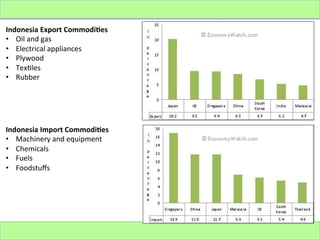
  Export	
  Commodi1es	
  
•  Oil	
  and	
  gas	
  
•  Electrical	
  appliances	
  
•  Plywood	
  
•  Tex;les	
  
•  Rubber	
  

Indonesia	
  Import	
  Commodi1es	
  
•  Machinery	
  and	
  equipment	
  
•  Chemicals	
  
•  Fuels	
  
•  Foodstuffs	
  
Indonesia:	
  
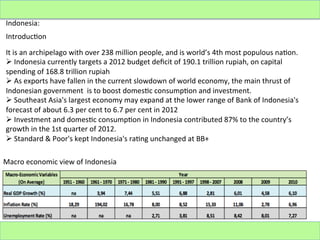
Introduc;on	
  
It	
  is	
  an	
  archipelago	
  with	
  over	
  238	
  million	
  people,	
  and	
  is	
  world’s	
  4th	
  most	
  populous	
  na;on.	
  	
  
Ø 	
  Indonesia	
  currently	
  targets	
  a	
  2012	
  budget	
  deficit	
  of	
  190.1	
  trillion	
  rupiah,	
  on	
  capital	
  
spending	
  of	
  168.8	
  trillion	
  rupiah	
  
Ø 	
  As	
  exports	
  have	
  fallen	
  in	
  the	
  current	
  slowdown	
  of	
  world	
  economy,	
  the	
  main	
  thrust	
  of	
  
Indonesian	
  government	
  	
  is	
  to	
  boost	
  domes;c	
  consump;on	
  and	
  investment.	
  
Ø 	
  Southeast	
  Asia's	
  largest	
  economy	
  may	
  expand	
  at	
  the	
  lower	
  range	
  of	
  Bank	
  of	
  Indonesia's	
  
forecast	
  of	
  about	
  6.3	
  per	
  cent	
  to	
  6.7	
  per	
  cent	
  in	
  2012	
  
Ø 	
  Investment	
  and	
  domes;c	
  consump;on	
  in	
  Indonesia	
  contributed	
  87%	
  to	
  the	
  country’s	
  
growth	
  in	
  the	
  1st	
  quarter	
  of	
  2012.	
  
Ø 	
  Standard	
  &	
  Poor's	
  kept	
  Indonesia's	
  ra;ng	
  unchanged	
  at	
  BB+	


Macro	
  economic	
  view	
  of	
  Indonesia	
  
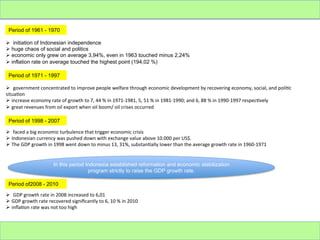
Period of 1961 - 1970
Ø  initiation of Indonesian independence
Ø  huge chaos of social and politics
Ø  economic only grew on average 3,94%, even in 1963 touched minus 2,24%
Ø  inflation rate on average touched the highest point (194,02 %)
Period of 1971 - 1997
Ø  government	
  concentrated	
  to	
  improve	
  people	
  welfare	
  through	
  economic	
  development	
  by	
  recovering	
  economy,	
  social,	
  and	
  poli;c	
  
situa;on	
  
Ø  increase	
  economy	
  rate	
  of	
  growth	
  to	
  7,	
  44	
  %	
  in	
  1971-­‐1981,	
  5,	
  51	
  %	
  in	
  1981-­‐1990;	
  and	
  6,	
  88	
  %	
  in	
  1990-­‐1997	
  respec;vely	
  
Ø  great	
  revenues	
  from	
  oil	
  export	
  when	
  oil	
  boom/	
  oil	
  crises	
  occurred
Period of 1998 - 2007
Ø  faced	
  a	
  big	
  economic	
  turbulence	
  that	
  trigger	
  economic	
  crisis	
  
Ø  Indonesian	
  currency	
  was	
  pushed	
  down	
  with	
  exchange	
  value	
  above	
  10.000	
  per	
  US$.	
  
Ø  The	
  GDP	
  growth	
  in	
  1998	
  went	
  down	
  to	
  minus	
  13,	
  31%,	
  substan;ally	
  lower	
  than	
  the	
  average	
  growth	
  rate	
  in	
  1960-­‐1971	
  

In this period Indonesia established reformation and economic stabilization
program strictly to raise the GDP growth rate.
Period of2008 - 2010
Ø  GDP	
  growth	
  rate	
  in	
  2008	
  increased	
  to	
  6,01	
  
Ø  GDP	
  growth	
  rate	
  recovered	
  significantly	
  to	
  6,	
  10	
  %	
  in	
  2010	
  
Ø  infla;on	
  rate	
  was	
  not	
  too	
  high
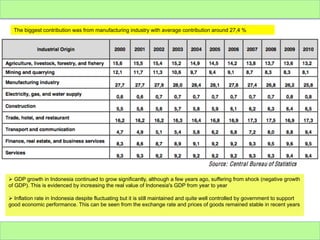
The biggest contribution was from manufacturing industry with average contribution around 27,4 %

Ø  GDP growth in Indonesia continued to grow significantly, although a few years ago, suffering from shock (negative growth
of GDP). This is evidenced by increasing the real value of Indonesia's GDP from year to year
Ø  Inflation rate in Indonesia despite fluctuating but it is still maintained and quite well controlled by government to support
good economic performance. This can be seen from the exchange rate and prices of goods remained stable in recent years
Challenges:	


Ø 	
  Corrup;on.	
  Though	
  figure	
  of	
  Indonesia	
  in	
  the	
  corrup;on	
  percep;on	
  index	
  has	
  
improved	
  from	
  2.8	
  in	
  2010	
  to	
  3.0	
  in	
  2011,	
  much	
  s;ll	
  need	
  to	
  be	
  done.	
  
Ø 	
  Unemployment rate is still quite high, although there is a tendency to decline
in the last 5 years. Work participation rate is still pretty good (above 60%), and
the employment rate has reached above 90% of the total labor force.
Ø  Domestic consumption and exports remains the largest contributor to
Indonesia's GDP and this needs to be improved, particularly for domestic
consumption. As we know, high domestic consumption is quite good in warding
off the economic crisis because national economy is not too dependent on the
influence of foreign markets 	
  
Conclusion	
  
Ø  GDP growth in Indonesia continued to grow significantly, although a few years ago, suffering from shock (negative
growth of GDP). This is evidenced by increasing the real value of Indonesia's GDP from year to year
Ø  Inflation rate in Indonesia despite fluctuating but it is still maintained and quite well controlled by government to
support good economic performance. This can be seen from the exchange rate and prices of goods remained stable
in recent years

Indonessia emerging economy

  • 1.
    Indonesia     (An  Emerging  Economy)  
  • 2.
    Indonesia  Export  Commodi1es   •  Oil  and  gas   •  Electrical  appliances   •  Plywood   •  Tex;les   •  Rubber   Indonesia  Import  Commodi1es   •  Machinery  and  equipment   •  Chemicals   •  Fuels   •  Foodstuffs  
  • 3.
    Indonesia:   Introduc;on   It  is  an  archipelago  with  over  238  million  people,  and  is  world’s  4th  most  populous  na;on.     Ø   Indonesia  currently  targets  a  2012  budget  deficit  of  190.1  trillion  rupiah,  on  capital   spending  of  168.8  trillion  rupiah   Ø   As  exports  have  fallen  in  the  current  slowdown  of  world  economy,  the  main  thrust  of   Indonesian  government    is  to  boost  domes;c  consump;on  and  investment.   Ø   Southeast  Asia's  largest  economy  may  expand  at  the  lower  range  of  Bank  of  Indonesia's   forecast  of  about  6.3  per  cent  to  6.7  per  cent  in  2012   Ø   Investment  and  domes;c  consump;on  in  Indonesia  contributed  87%  to  the  country’s   growth  in  the  1st  quarter  of  2012.   Ø   Standard  &  Poor's  kept  Indonesia's  ra;ng  unchanged  at  BB+     Macro  economic  view  of  Indonesia  
  • 4.
    Period of 1961- 1970 Ø  initiation of Indonesian independence Ø  huge chaos of social and politics Ø  economic only grew on average 3,94%, even in 1963 touched minus 2,24% Ø  inflation rate on average touched the highest point (194,02 %) Period of 1971 - 1997 Ø  government  concentrated  to  improve  people  welfare  through  economic  development  by  recovering  economy,  social,  and  poli;c   situa;on   Ø  increase  economy  rate  of  growth  to  7,  44  %  in  1971-­‐1981,  5,  51  %  in  1981-­‐1990;  and  6,  88  %  in  1990-­‐1997  respec;vely   Ø  great  revenues  from  oil  export  when  oil  boom/  oil  crises  occurred Period of 1998 - 2007 Ø  faced  a  big  economic  turbulence  that  trigger  economic  crisis   Ø  Indonesian  currency  was  pushed  down  with  exchange  value  above  10.000  per  US$.   Ø  The  GDP  growth  in  1998  went  down  to  minus  13,  31%,  substan;ally  lower  than  the  average  growth  rate  in  1960-­‐1971   In this period Indonesia established reformation and economic stabilization program strictly to raise the GDP growth rate. Period of2008 - 2010 Ø  GDP  growth  rate  in  2008  increased  to  6,01   Ø  GDP  growth  rate  recovered  significantly  to  6,  10  %  in  2010   Ø  infla;on  rate  was  not  too  high
  • 5.
    The biggest contributionwas from manufacturing industry with average contribution around 27,4 % Ø  GDP growth in Indonesia continued to grow significantly, although a few years ago, suffering from shock (negative growth of GDP). This is evidenced by increasing the real value of Indonesia's GDP from year to year Ø  Inflation rate in Indonesia despite fluctuating but it is still maintained and quite well controlled by government to support good economic performance. This can be seen from the exchange rate and prices of goods remained stable in recent years
  • 6.
    Challenges:       Ø   Corrup;on.  Though  figure  of  Indonesia  in  the  corrup;on  percep;on  index  has   improved  from  2.8  in  2010  to  3.0  in  2011,  much  s;ll  need  to  be  done.   Ø   Unemployment rate is still quite high, although there is a tendency to decline in the last 5 years. Work participation rate is still pretty good (above 60%), and the employment rate has reached above 90% of the total labor force. Ø  Domestic consumption and exports remains the largest contributor to Indonesia's GDP and this needs to be improved, particularly for domestic consumption. As we know, high domestic consumption is quite good in warding off the economic crisis because national economy is not too dependent on the influence of foreign markets  
  • 7.
    Conclusion   Ø  GDPgrowth in Indonesia continued to grow significantly, although a few years ago, suffering from shock (negative growth of GDP). This is evidenced by increasing the real value of Indonesia's GDP from year to year Ø  Inflation rate in Indonesia despite fluctuating but it is still maintained and quite well controlled by government to support good economic performance. This can be seen from the exchange rate and prices of goods remained stable in recent years