WHAT IS INDIA’S SOCIAL CHALLENGE
TODAY AND HOW CAN THE INDIAN
YOUTH CONTRIBUTE TOWARDS
SOLVING IT?
1
CONTENTS
2
 Overpopulation.
 Economic Issues.
 Sanitation.
 Education.
 Poverty.
 Corruption.
 Violence.
 Role Of Youth in Developing Nation.
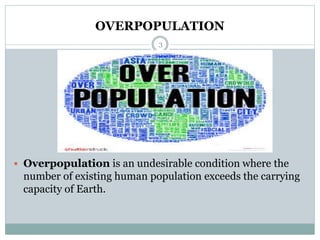
OVERPOPULATION
3
 Overpopulation is an undesirable condition where the
number of existing human population exceeds the carrying
capacity of Earth.
CAUSES
4
 Decline in death rate.
 Better medical facilities.
 More hands to overcome poverty.
 Immigration.
 Lack of family planning.
EFFECTS
5
 Depletion of natural resources.
 Degradation of environment.
 Conflicts and wars.
 Rise in unemployment.
 High cost of living.
SOLUTIONS
6
 Better education.
 Making people aware of family planning.
ECONOMIC ISSUES
7
 The Economy of India is the fifth-largest in the world
by nominal GDP and the third-largest by purchasing power
parity(PPP).
PROBLEMS
8
 Inflation.
 Poor education standards.
 Poor infrastructure.
 High levels of private debt.
 Inequality has risen rather than decreased.
 Rigid labour laws.
SANITATION
9
 Conditions relating to public health, especially the
provision of clean drinking water and adequate sewage
disposal.
SANITATION
10
 Sanitation is the hygiene means of promoting health
through prevention of human contact with hazards of
wastes.
 Inadequate sanitation, hygiene or access to water increases
the incidence of diarrheal diseases as well as death.
 Every year 1.5 million children die due to diarrheal caused
by the combined effects of inadequate sanitation, unsafe
water supply and poor personal hygiene.
EDUCATION
11
 Education in India is provided by the public sector as
well as the private sector, with control and funding coming
from three levels: central, state, and local.
CAUSES
12
 More than 80% of schools in India are managed by
the government.
 Most of the villages in India do not have proper
schools.
 The biggest challenge that lies within the education
system in India is the quality of education that is
been delivered to the students.
 The colleges in India lack funds.
13
 Infrastructure facilities at schools and colleges across rural
areas dispense very poor quality of education.
 • It is the mentality of the Indian families that more and
more people of the family should earn, little kids are send
out to earn their daily bread.
CAUSES
CAUSES
14
 Most of the parents in India are not willing to send their
children to schools to attain basic education, as they are
illiterate so they don’t know the value of education.
POVERTY
15
POVERTY
16
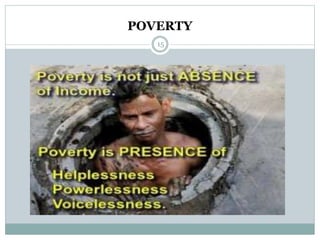
 A state or condition in which a person or community lacks
the financial resources and essentials to enjoy a minimum
standard of life and well-being that's considered acceptable
in society.
 India suffers from substantial poverty.
 In 2012, the Indian government stated 21.9% of its
population is below its official poverty limit.
CORRUPTION
17
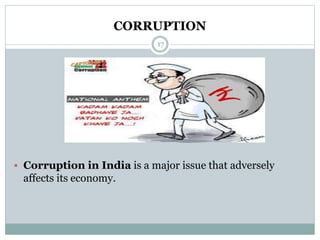
 Corruption in India is a major issue that adversely
affects its economy.
CORRUPTION
18
 Corruption in the Indian society has prevailed from time
immemorial in one form or the other.
 The basic inception of corruption started with our
opportunistic leaders who have already done greater
damage to our nation.
CORRUPTION
19
 People who work on right principles are unrecognized and
considered to be foolish in the modern society.
 Corruption in India is a result of the connection between
bureaucrats, politicians and criminals.
MEASURES TO CONTROL CORRUPTION
20
 Strong and stringent laws need to be enacted which gives
no room for the guilty to escape.
 Establishment of special courts for speedy justice can be a
huge positive aspect.
MEASURES TO CONTROL CORRUPTION
21
 Much time should not elapse between the registration of a
case and the delivery of judgment.
 Some people are of the opinion that the wages paid are
insufficient to feed their families. If they are paid better,
they would not be forced to accept bribe.
VIOLENCE
22
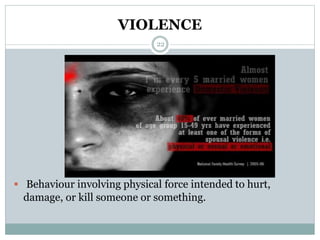
 Behaviour involving physical force intended to hurt,
damage, or kill someone or something.
VIOLENCE
23
 Violence is defined by the World Health Organization as
"the intentional use of physical force or power, threatened
or actual, against oneself, another person, or against a
group or community.
 Globally, violence resulted in the death of 1.28 million
people in 2013 up from 1.13 million in 1990.
ROLE OF YOUTH IN DEVELOPING
NATION
24
ROLES
25
 The youth would need to Aspire for entrepreneurship
rather than conventional employment.
 The hopes of young people can be fulfilled only in
conditions of peace, only in a civilized and cooperative
world order.
ROLES
26
 Young people are full of vibrant ideas. When properly
motivated and sufficiently guided they want in their life.
 Young people have energy to try out things and the patience
to learn from mistakes.
ROLES
27
 The youth can play a vital role in the implementation of
elimination of terrorism.
 The youth will have to compete with sporting spirit.
28
THANK YOU…
29

India's social challenge

  • 1.
    WHAT IS INDIA’SSOCIAL CHALLENGE TODAY AND HOW CAN THE INDIAN YOUTH CONTRIBUTE TOWARDS SOLVING IT? 1
  • 2.
    CONTENTS 2  Overpopulation.  EconomicIssues.  Sanitation.  Education.  Poverty.  Corruption.  Violence.  Role Of Youth in Developing Nation.
  • 3.
    OVERPOPULATION 3  Overpopulation isan undesirable condition where the number of existing human population exceeds the carrying capacity of Earth.
  • 4.
    CAUSES 4  Decline indeath rate.  Better medical facilities.  More hands to overcome poverty.  Immigration.  Lack of family planning.
  • 5.
    EFFECTS 5  Depletion ofnatural resources.  Degradation of environment.  Conflicts and wars.  Rise in unemployment.  High cost of living.
  • 6.
    SOLUTIONS 6  Better education. Making people aware of family planning.
  • 7.
    ECONOMIC ISSUES 7  TheEconomy of India is the fifth-largest in the world by nominal GDP and the third-largest by purchasing power parity(PPP).
  • 8.
    PROBLEMS 8  Inflation.  Pooreducation standards.  Poor infrastructure.  High levels of private debt.  Inequality has risen rather than decreased.  Rigid labour laws.
  • 9.
    SANITATION 9  Conditions relatingto public health, especially the provision of clean drinking water and adequate sewage disposal.
  • 10.
    SANITATION 10  Sanitation isthe hygiene means of promoting health through prevention of human contact with hazards of wastes.  Inadequate sanitation, hygiene or access to water increases the incidence of diarrheal diseases as well as death.  Every year 1.5 million children die due to diarrheal caused by the combined effects of inadequate sanitation, unsafe water supply and poor personal hygiene.
  • 11.
    EDUCATION 11  Education inIndia is provided by the public sector as well as the private sector, with control and funding coming from three levels: central, state, and local.
  • 12.
    CAUSES 12  More than80% of schools in India are managed by the government.  Most of the villages in India do not have proper schools.  The biggest challenge that lies within the education system in India is the quality of education that is been delivered to the students.  The colleges in India lack funds.
  • 13.
    13  Infrastructure facilitiesat schools and colleges across rural areas dispense very poor quality of education.  • It is the mentality of the Indian families that more and more people of the family should earn, little kids are send out to earn their daily bread. CAUSES
  • 14.
    CAUSES 14  Most ofthe parents in India are not willing to send their children to schools to attain basic education, as they are illiterate so they don’t know the value of education.
  • 15.
  • 16.
    POVERTY 16  A stateor condition in which a person or community lacks the financial resources and essentials to enjoy a minimum standard of life and well-being that's considered acceptable in society.  India suffers from substantial poverty.  In 2012, the Indian government stated 21.9% of its population is below its official poverty limit.
  • 17.
    CORRUPTION 17  Corruption inIndia is a major issue that adversely affects its economy.
  • 18.
    CORRUPTION 18  Corruption inthe Indian society has prevailed from time immemorial in one form or the other.  The basic inception of corruption started with our opportunistic leaders who have already done greater damage to our nation.
  • 19.
    CORRUPTION 19  People whowork on right principles are unrecognized and considered to be foolish in the modern society.  Corruption in India is a result of the connection between bureaucrats, politicians and criminals.
  • 20.
    MEASURES TO CONTROLCORRUPTION 20  Strong and stringent laws need to be enacted which gives no room for the guilty to escape.  Establishment of special courts for speedy justice can be a huge positive aspect.
  • 21.
    MEASURES TO CONTROLCORRUPTION 21  Much time should not elapse between the registration of a case and the delivery of judgment.  Some people are of the opinion that the wages paid are insufficient to feed their families. If they are paid better, they would not be forced to accept bribe.
  • 22.
    VIOLENCE 22  Behaviour involvingphysical force intended to hurt, damage, or kill someone or something.
  • 23.
    VIOLENCE 23  Violence isdefined by the World Health Organization as "the intentional use of physical force or power, threatened or actual, against oneself, another person, or against a group or community.  Globally, violence resulted in the death of 1.28 million people in 2013 up from 1.13 million in 1990.
  • 24.
    ROLE OF YOUTHIN DEVELOPING NATION 24
  • 25.
    ROLES 25  The youthwould need to Aspire for entrepreneurship rather than conventional employment.  The hopes of young people can be fulfilled only in conditions of peace, only in a civilized and cooperative world order.
  • 26.
    ROLES 26  Young peopleare full of vibrant ideas. When properly motivated and sufficiently guided they want in their life.  Young people have energy to try out things and the patience to learn from mistakes.
  • 27.
    ROLES 27  The youthcan play a vital role in the implementation of elimination of terrorism.  The youth will have to compete with sporting spirit.
  • 28.
  • 29.