What style of
music is this?
http://www.youtube.com/
watch?v=Xb_SaMg7zwE
Indian Classical Music
 History  can be traced back over 3000
  years to about 1700bc
 It has developed into a strong tradition
  that is still prominent today
 Usually contains:
     A single melody line (based on a raga)
     A rhythmic pattern (known as tala)
     A drone.
Raga
   A scale of notes used to create a melody.
   There are over 200 different rags, some of
    which are associated with different days and
    seasons
   Ragas are memorised and passed on as part
    of an oral tradition
   Some notes within a raga are more important
    than others so will receive more emphasis –
    they may be repeated more frequently and
    decorated.
Raga
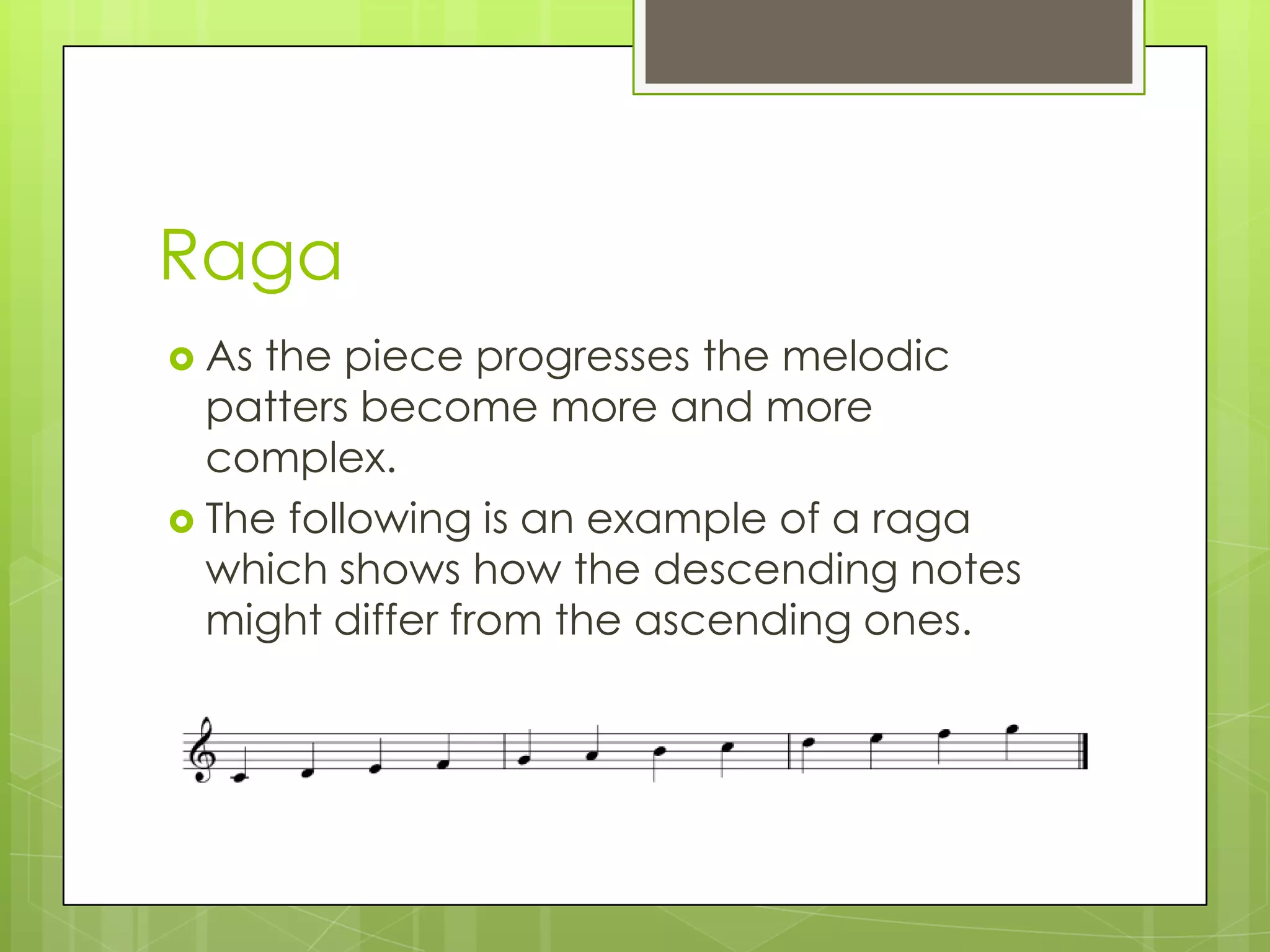
 As the piece progresses the melodic
  patters become more and more
  complex.
 The following is an example of a raga
  which shows how the descending notes
  might differ from the ascending ones.
Tala
A   tala is a cycle of beats that forms the
  rhythmic basis of a piece of music. There
  are hundreds of different tala patterns in
  Indian classical music.
 The first beat of the tala – called the sam –
  is the most important one.
 However complex the rhythms are in the
  tala, all the performers usually come
  together on the sam.
Tala
 Otherbeats within the tala are weaker or
 even silent.
Drone

 Is
   a repeated note (or number of notes)
  heard constantly throughout the music.

 InIndian classical music, the dorne usually
  emphasises the most important note(s) in
  the raga.
Structure


  A typical performance usually has four
                 sections.
Opening
 The  opening scale is introduced on a
  melody instrument.
 This is followed by some simple
  improvisation.
 There is no percussion in this section as to
  give the melody instrument free rhythm.
 The tempo is slow and has no regular
  beat.
 This would be accompanied by a drone.
Middle Sections


 The pace increases and there us a
  greater sense of meter.
 There is more elaborate improvisation and
  ornamentation of the raga
Final Section
 The  percussion enter giving a rhythmic
  structure to the music.
 Towards the end the music becomes very
  fast, with complex rhythmic and melodic
  ideas
 Usually contains a call and response
  section, including some imitation.
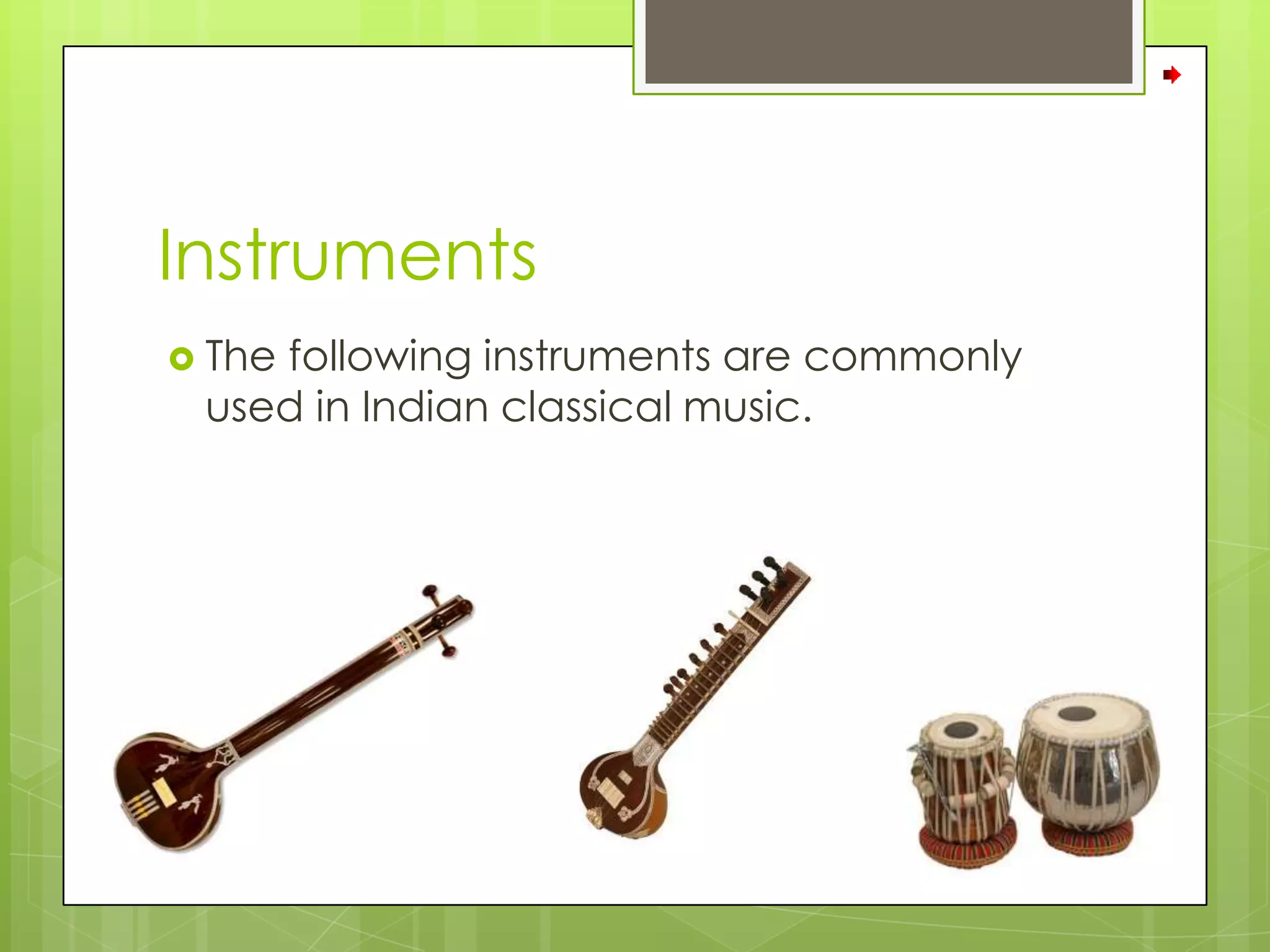
Instruments
 The
    following instruments are commonly
 used in Indian classical music.
A    pair of single
          headed drums, one
Tabla     slightly larger than
          the other
         Played with fingers
          and palm of the
          hand
         The drums has a
          black circle in the
          centre of the skin
          from a paste of iron
          filings. This allows the
          player to produce a
          wide variety of
          sounds
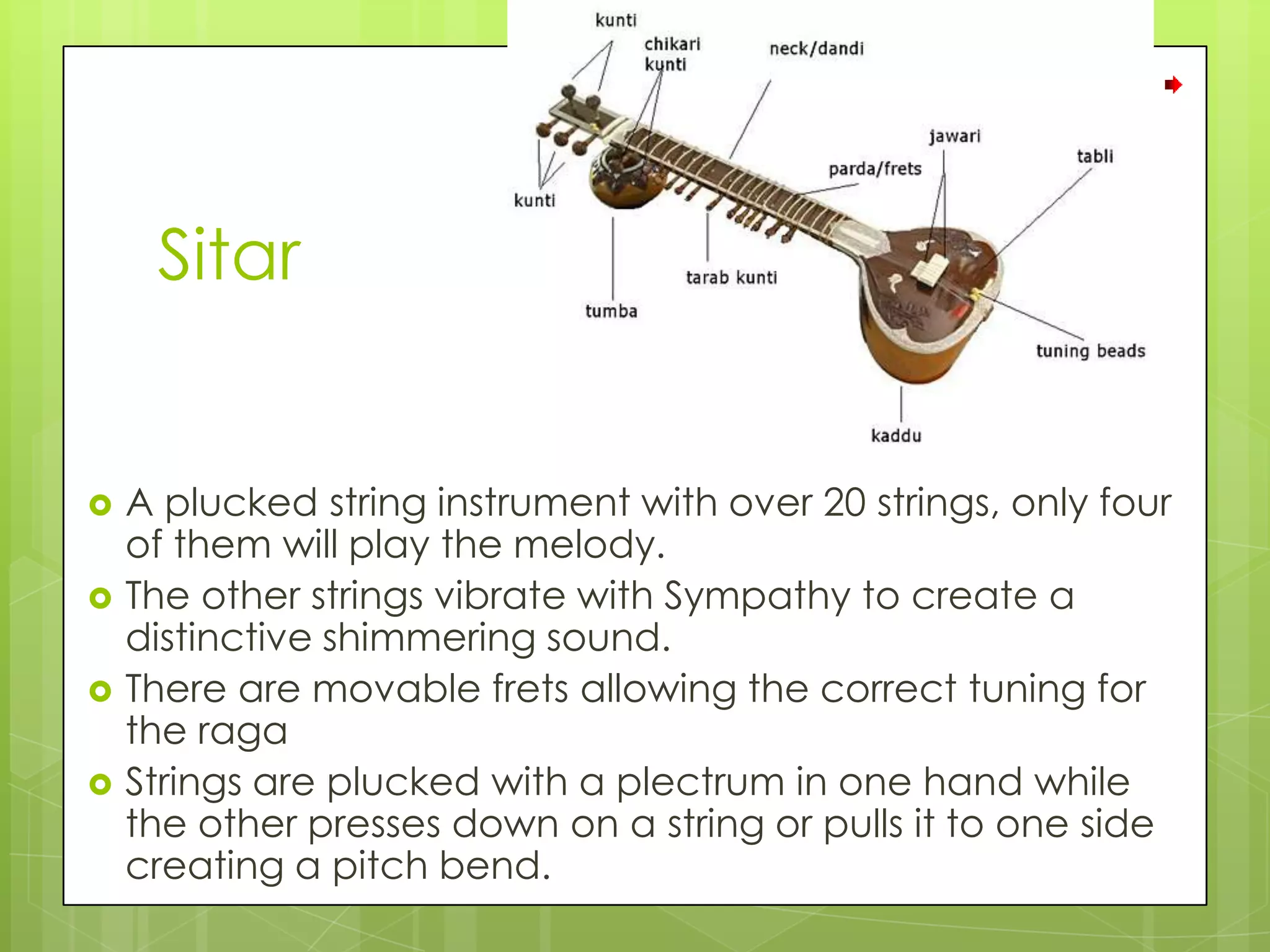
Sitar


   A plucked string instrument with over 20 strings, only four
    of them will play the melody.
   The other strings vibrate with Sympathy to create a
    distinctive shimmering sound.
   There are movable frets allowing the correct tuning for
    the raga
   Strings are plucked with a plectrum in one hand while
    the other presses down on a string or pulls it to one side
    creating a pitch bend.
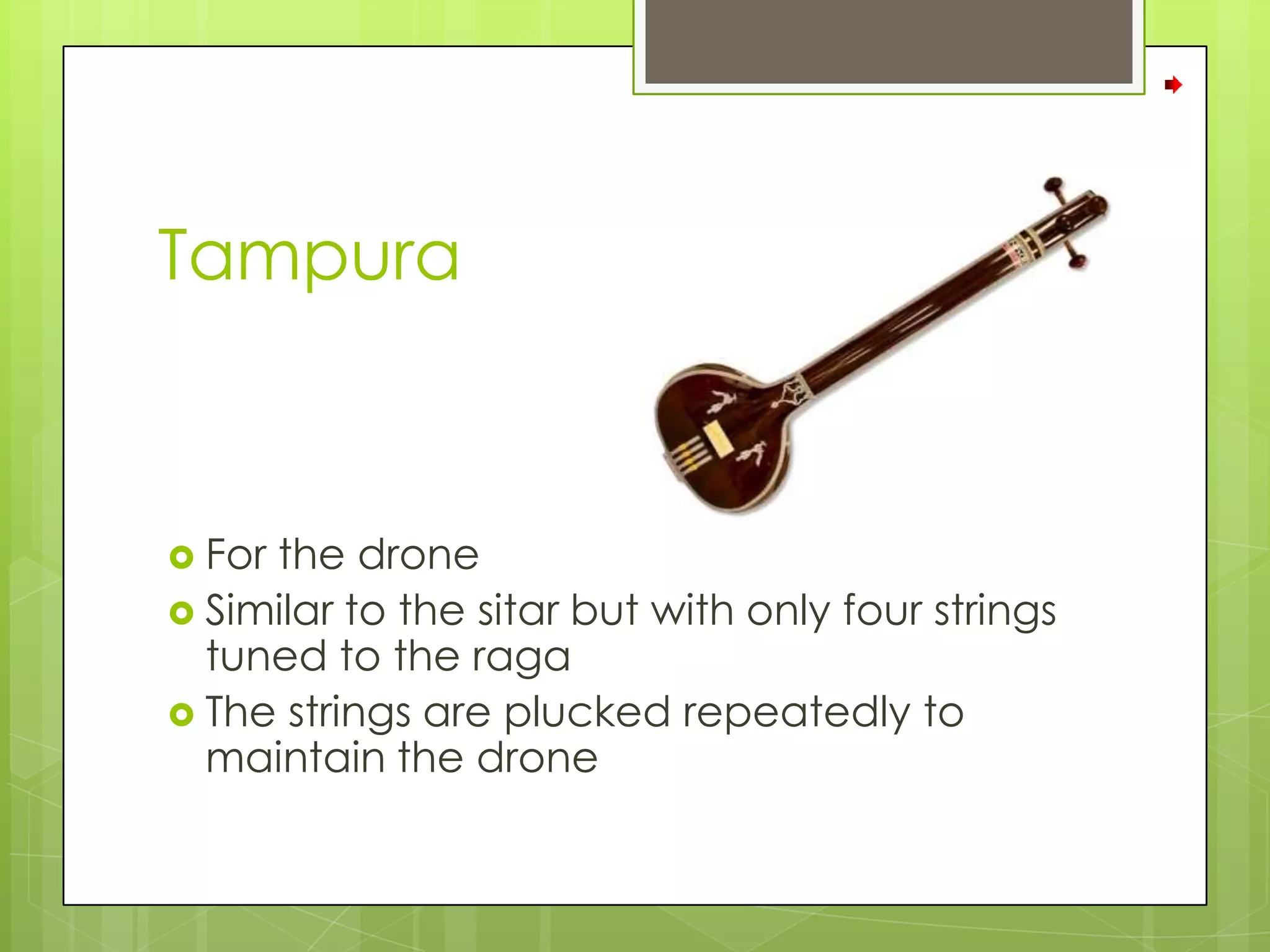
Tampura


 Forthe drone
 Similar to the sitar but with only four strings
  tuned to the raga
 The strings are plucked repeatedly to
  maintain the drone
Performers
   The two most famous international performers
    of Indian classical music are:
       Ravi Shankar – a sitar player who influenced
        many different performers including George
        Harrison from the Beatles.
       Alla Rakha – a tabla player whose technique
        amazed famous American drummer Buddy Rich
   Ravi and Alla often perform together. The fact
    they were from different religions made their
    music more significant.
 http://www.youtube.com/watch?v=t79aI-
 I6ucA

Indian classical music

  • 1.
    What style of musicis this? http://www.youtube.com/ watch?v=Xb_SaMg7zwE
  • 2.
    Indian Classical Music History can be traced back over 3000 years to about 1700bc  It has developed into a strong tradition that is still prominent today  Usually contains:  A single melody line (based on a raga)  A rhythmic pattern (known as tala)  A drone.
  • 3.
    Raga  A scale of notes used to create a melody.  There are over 200 different rags, some of which are associated with different days and seasons  Ragas are memorised and passed on as part of an oral tradition  Some notes within a raga are more important than others so will receive more emphasis – they may be repeated more frequently and decorated.
  • 4.
    Raga  As thepiece progresses the melodic patters become more and more complex.  The following is an example of a raga which shows how the descending notes might differ from the ascending ones.
  • 5.
    Tala A tala is a cycle of beats that forms the rhythmic basis of a piece of music. There are hundreds of different tala patterns in Indian classical music.  The first beat of the tala – called the sam – is the most important one.  However complex the rhythms are in the tala, all the performers usually come together on the sam.
  • 6.
    Tala  Otherbeats withinthe tala are weaker or even silent.
  • 7.
    Drone  Is a repeated note (or number of notes) heard constantly throughout the music.  InIndian classical music, the dorne usually emphasises the most important note(s) in the raga.
  • 8.
    Structure Atypical performance usually has four sections.
  • 9.
    Opening  The opening scale is introduced on a melody instrument.  This is followed by some simple improvisation.  There is no percussion in this section as to give the melody instrument free rhythm.  The tempo is slow and has no regular beat.  This would be accompanied by a drone.
  • 10.
    Middle Sections  Thepace increases and there us a greater sense of meter.  There is more elaborate improvisation and ornamentation of the raga
  • 11.
    Final Section  The percussion enter giving a rhythmic structure to the music.  Towards the end the music becomes very fast, with complex rhythmic and melodic ideas  Usually contains a call and response section, including some imitation.
  • 12.
    Instruments  The following instruments are commonly used in Indian classical music.
  • 13.
    A pair of single headed drums, one Tabla slightly larger than the other  Played with fingers and palm of the hand  The drums has a black circle in the centre of the skin from a paste of iron filings. This allows the player to produce a wide variety of sounds
  • 14.
    Sitar  A plucked string instrument with over 20 strings, only four of them will play the melody.  The other strings vibrate with Sympathy to create a distinctive shimmering sound.  There are movable frets allowing the correct tuning for the raga  Strings are plucked with a plectrum in one hand while the other presses down on a string or pulls it to one side creating a pitch bend.
  • 15.
    Tampura  Forthe drone Similar to the sitar but with only four strings tuned to the raga  The strings are plucked repeatedly to maintain the drone
  • 16.
    Performers  The two most famous international performers of Indian classical music are:  Ravi Shankar – a sitar player who influenced many different performers including George Harrison from the Beatles.  Alla Rakha – a tabla player whose technique amazed famous American drummer Buddy Rich  Ravi and Alla often perform together. The fact they were from different religions made their music more significant.
  • 17.