INDIAN GEOGRAPHY AND ITS REALM
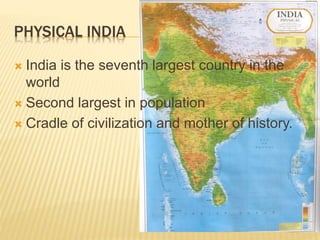
PHYSICAL INDIA
 India is the seventh largest country in the
world
 Second largest in population
 Cradle of civilization and mother of history.
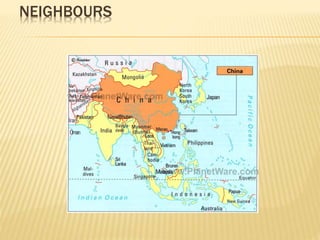
NEIGHBOURS
GEOGRAPHICAL EXTREMES
 Bikaner
 Dras in ladakh
 Mawsynram
 K2
 Ganga
 Majuli
 Thar
 Deccan
 Jog
 Gujarath
 Marina
 Chilika
 Kharbude tunnel
 Indira gandhi
 Bhakra
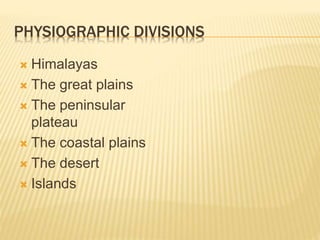
PHYSIOGRAPHIC DIVISIONS
 Himalayas
 The great plains
 The peninsular
plateau
 The coastal plains
 The desert
 Islands
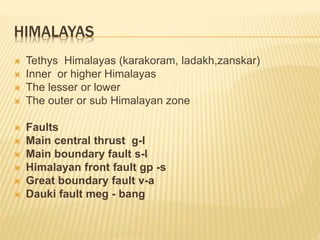
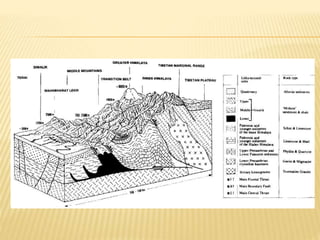
HIMALAYAS
 Tethys Himalayas (karakoram, ladakh,zanskar)
 Inner or higher Himalayas
 The lesser or lower
 The outer or sub Himalayan zone
 Faults
 Main central thrust g-l
 Main boundary fault s-l
 Himalayan front fault gp -s
 Great boundary fault v-a
 Dauki fault meg - bang
INDIAN DRAINAGE SYSTEM
 Drainage :The flow of water through well-defined channels is
known as ‘drainage’
 Drainage system :The network of well defined channels through
which water flows is called a ‘drainage system’.
 Catchment area : A river drains the water collected from a
specific area, is called its ‘catchment area’
 Drainage Basin : An area drained by a river and its tributaries is
called a drainage basin
 Water divide : . The boundary line separating one drainage basin
from the other is known as the water divide
 River basins and Water shed : . The catchments of large rivers
are called river basins while those of small rivulets and rills are
often referred to as watersheds.
 Watersheds are small in area while the basins cover larger areas.
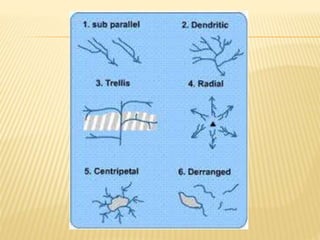
 The drainage pattern resembling the branches of a
tree is known as “dendritic” the examples of
which are the rivers of northern plain.
 When the rivers originate from a hill and flow in all
directions, the drainage pattern is known
as ‘radial’. The rivers originating from the
Amarkantak range present a good example of it.
 When the primary tributaries of rivers flow parallel
to each other and secondary tributaries
 join them at right angles, the pattern is known as
‘trellis’.
 When the rivers discharge their waters from all
directions in a lake or depression, the pattern is
known as ‘centripetal’.
Himalayan or perennial rivers and Peninsular
rivers
 These are fed both by melting of snow and
precipitation.
 They are perennial.
 These rivers pass through the giant gorges carved
out by the erosion activity carried on
simultaneously with the uplift of the Himalayas.
 Besides deep gorges, these rivers also form V-
shaped valleys, rapids and waterfalls in their
mountainous course.
 In the plains, they form depositional features like
flat valleys, ox-bow lakes, flood plains,
braided channels, and deltas near the river
mouth.
 They also display a strong meandering tendency
and shift their courses frequently.
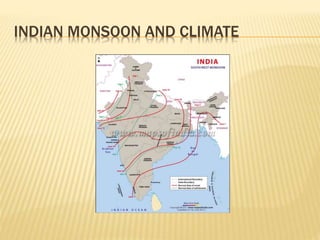
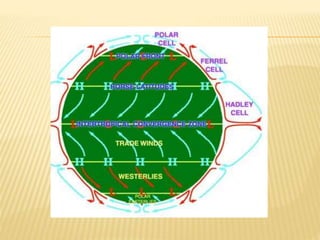
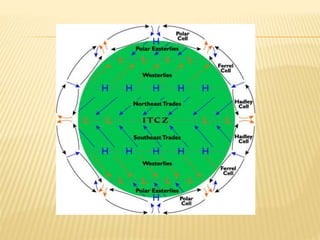
INDIAN MONSOON AND CLIMATE
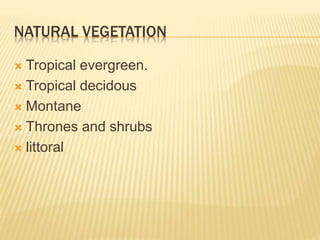
NATURAL VEGETATION
 Tropical evergreen.
 Tropical decidous
 Montane
 Thrones and shrubs
 littoral
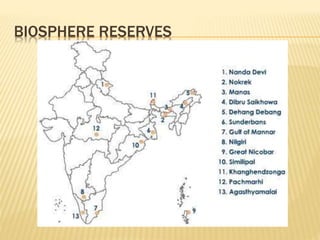
BIOSPHERE RESERVES
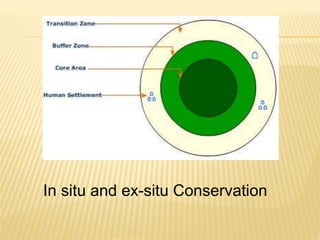
In situ and ex-situ Conservation
GEOGRAPHY HAS MADE US NEIGHBORS.
HISTORY HAS MADE US FRIENDS.
ECONOMICS HAS MADE US PARTNERS, AND
NECESSITY HAS MADE US ALLIES. THOSE
WHOM GOD HAS SO JOINED TOGETHER, LET
NO MAN PUT ASUNDER.
JOHN F. KENNEDY

Indian geography and its realm

  • 1.
  • 2.
    PHYSICAL INDIA  Indiais the seventh largest country in the world  Second largest in population  Cradle of civilization and mother of history.
  • 3.
  • 4.
    GEOGRAPHICAL EXTREMES  Bikaner Dras in ladakh  Mawsynram  K2  Ganga  Majuli  Thar  Deccan  Jog  Gujarath  Marina  Chilika  Kharbude tunnel  Indira gandhi  Bhakra
  • 5.
    PHYSIOGRAPHIC DIVISIONS  Himalayas The great plains  The peninsular plateau  The coastal plains  The desert  Islands
  • 6.
    HIMALAYAS  Tethys Himalayas(karakoram, ladakh,zanskar)  Inner or higher Himalayas  The lesser or lower  The outer or sub Himalayan zone  Faults  Main central thrust g-l  Main boundary fault s-l  Himalayan front fault gp -s  Great boundary fault v-a  Dauki fault meg - bang
  • 9.
    INDIAN DRAINAGE SYSTEM Drainage :The flow of water through well-defined channels is known as ‘drainage’  Drainage system :The network of well defined channels through which water flows is called a ‘drainage system’.  Catchment area : A river drains the water collected from a specific area, is called its ‘catchment area’  Drainage Basin : An area drained by a river and its tributaries is called a drainage basin  Water divide : . The boundary line separating one drainage basin from the other is known as the water divide  River basins and Water shed : . The catchments of large rivers are called river basins while those of small rivulets and rills are often referred to as watersheds.  Watersheds are small in area while the basins cover larger areas.
  • 10.
     The drainagepattern resembling the branches of a tree is known as “dendritic” the examples of which are the rivers of northern plain.  When the rivers originate from a hill and flow in all directions, the drainage pattern is known as ‘radial’. The rivers originating from the Amarkantak range present a good example of it.  When the primary tributaries of rivers flow parallel to each other and secondary tributaries  join them at right angles, the pattern is known as ‘trellis’.  When the rivers discharge their waters from all directions in a lake or depression, the pattern is known as ‘centripetal’.
  • 12.
    Himalayan or perennialrivers and Peninsular rivers  These are fed both by melting of snow and precipitation.  They are perennial.  These rivers pass through the giant gorges carved out by the erosion activity carried on simultaneously with the uplift of the Himalayas.  Besides deep gorges, these rivers also form V- shaped valleys, rapids and waterfalls in their mountainous course.  In the plains, they form depositional features like flat valleys, ox-bow lakes, flood plains, braided channels, and deltas near the river mouth.  They also display a strong meandering tendency and shift their courses frequently.
  • 13.
  • 16.
    NATURAL VEGETATION  Tropicalevergreen.  Tropical decidous  Montane  Thrones and shrubs  littoral
  • 17.
  • 18.
    In situ andex-situ Conservation
  • 19.
    GEOGRAPHY HAS MADEUS NEIGHBORS. HISTORY HAS MADE US FRIENDS. ECONOMICS HAS MADE US PARTNERS, AND NECESSITY HAS MADE US ALLIES. THOSE WHOM GOD HAS SO JOINED TOGETHER, LET NO MAN PUT ASUNDER. JOHN F. KENNEDY