INDIAN FOREIGN
POLICY
AIM
To Acquaint the Audience
with the Foreign Policy of
India.
• Part-I : Intro
• Part-II : Various Amdts in Policy
• Part-III : Relation with Neighboring
Countries
• Part-IV : Conclusion
INTRO
• Definition- “Strategies to safeguard National Interests and to
achieve goals”
• Obj of Foreign Policy
 To Promote and protect the Nation’s Interests
 Minimize adverse effects
 Change or Regulate Behaviour of other states
 Coop / Co-existence
Factors affecting the
Foreign Policy
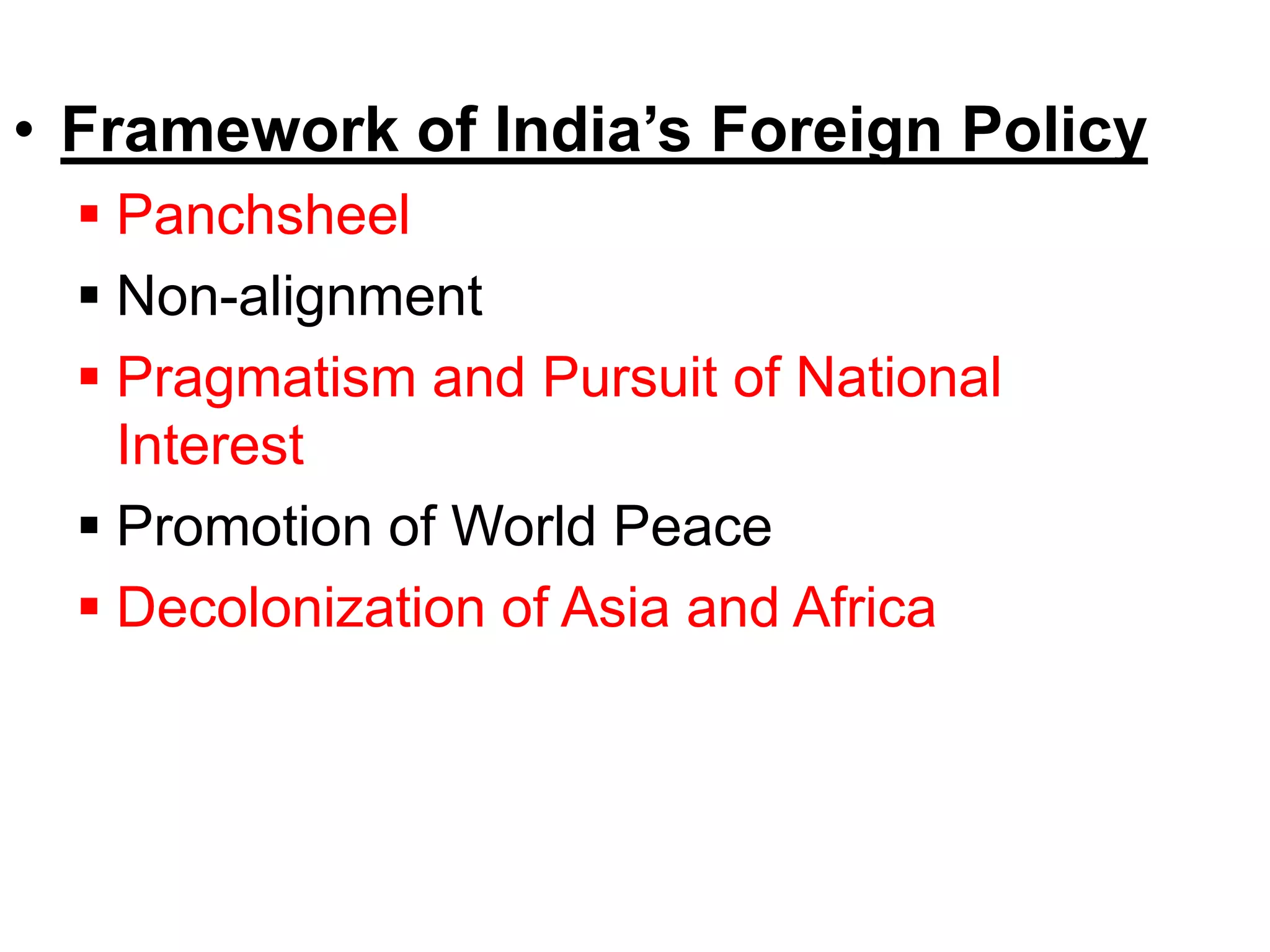
• Framework of India’s Foreign Policy
 Panchsheel
 Non-alignment
 Pragmatism and Pursuit of National
Interest
 Promotion of World Peace
 Decolonization of Asia and Africa
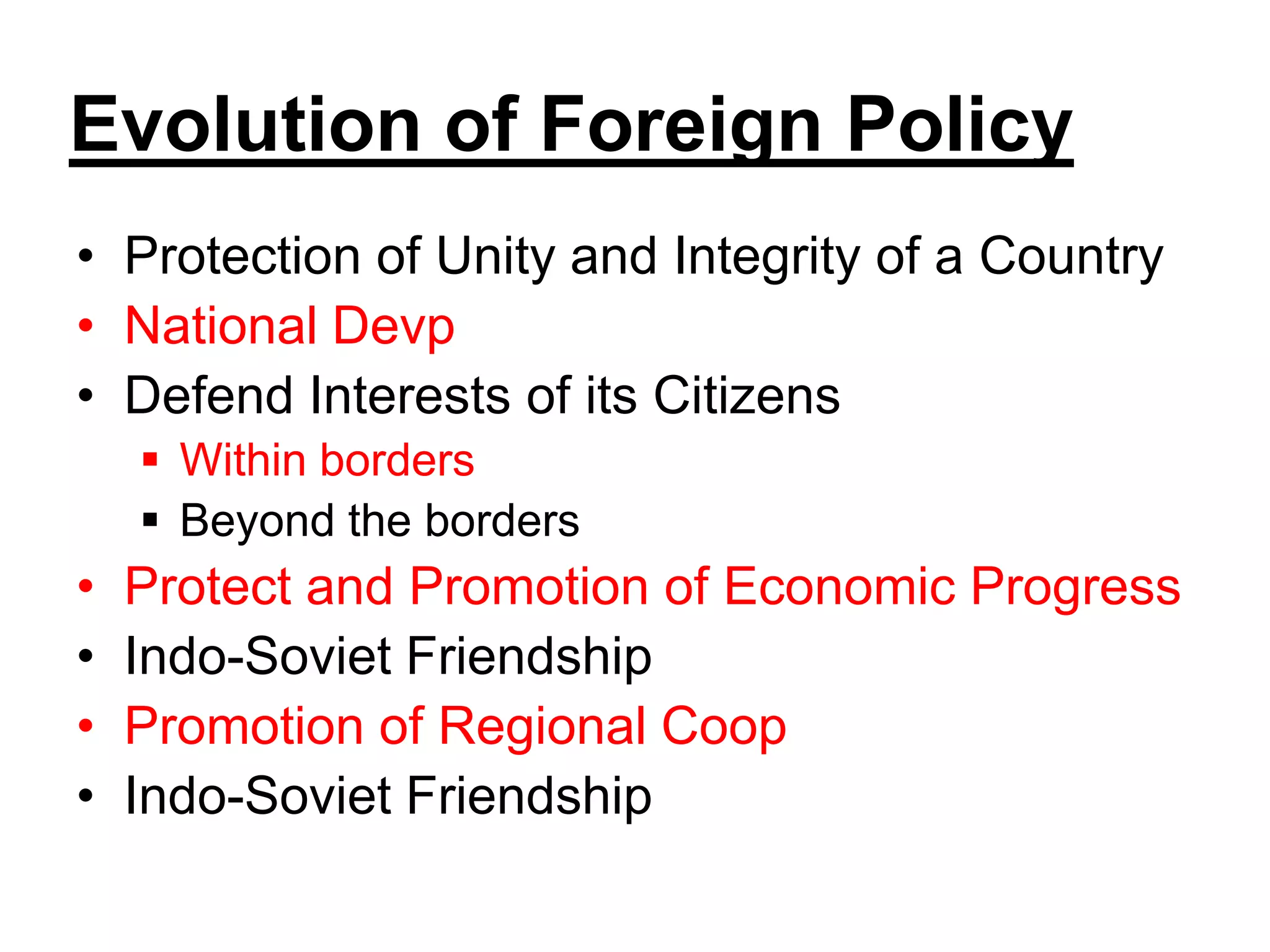
Evolution of Foreign Policy
• Protection of Unity and Integrity of a Country
• National Devp
• Defend Interests of its Citizens
 Within borders
 Beyond the borders
• Protect and Promotion of Economic Progress
• Indo-Soviet Friendship
• Promotion of Regional Coop
• Indo-Soviet Friendship
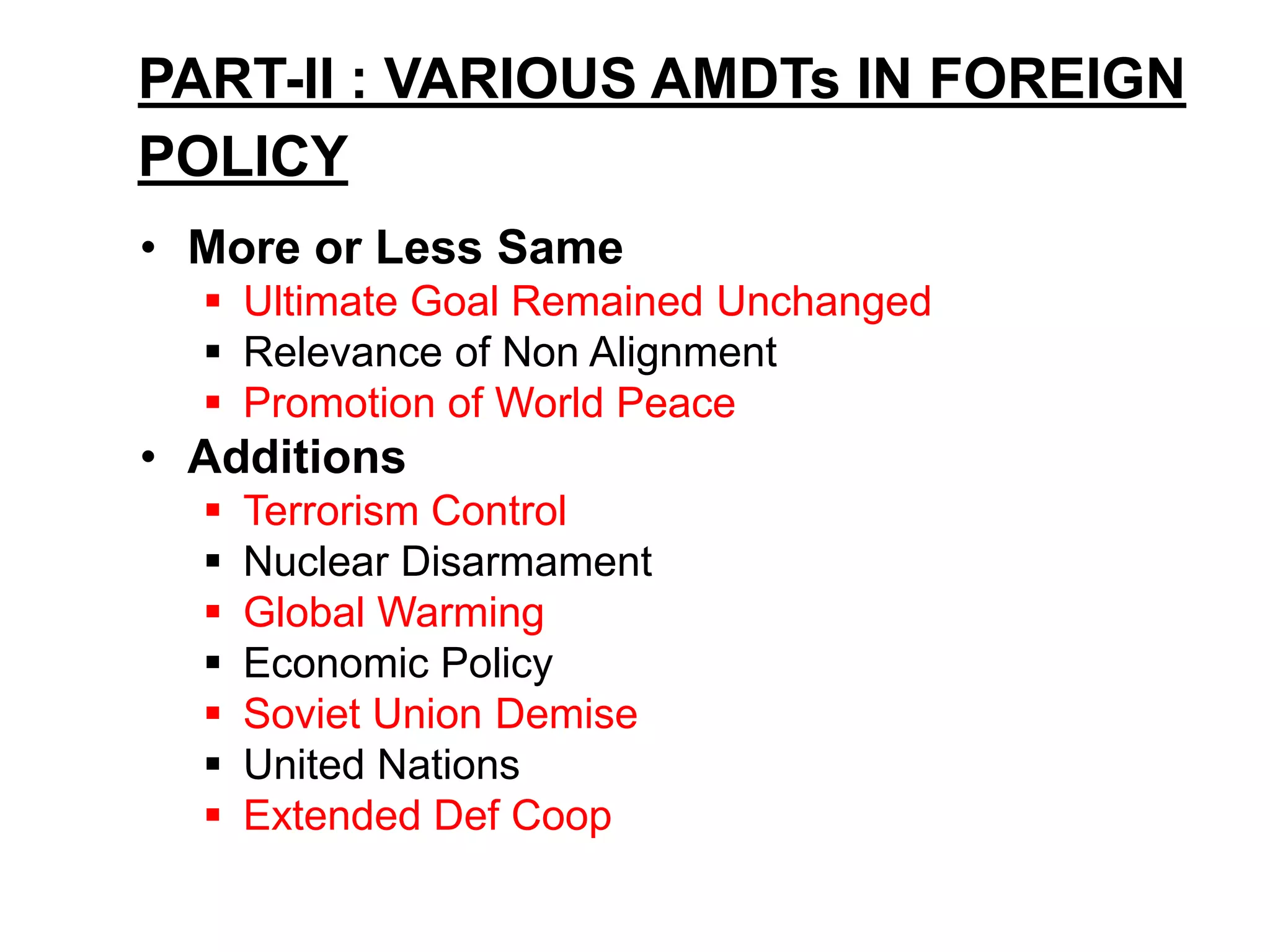
PART-II : VARIOUS AMDTs IN FOREIGN
POLICY
• More or Less Same
 Ultimate Goal Remained Unchanged
 Relevance of Non Alignment
 Promotion of World Peace
• Additions
 Terrorism Control
 Nuclear Disarmament
 Global Warming
 Economic Policy
 Soviet Union Demise
 United Nations
 Extended Def Coop
PART-III : RELATION WITH
NEIGHBORING COUNTRIES
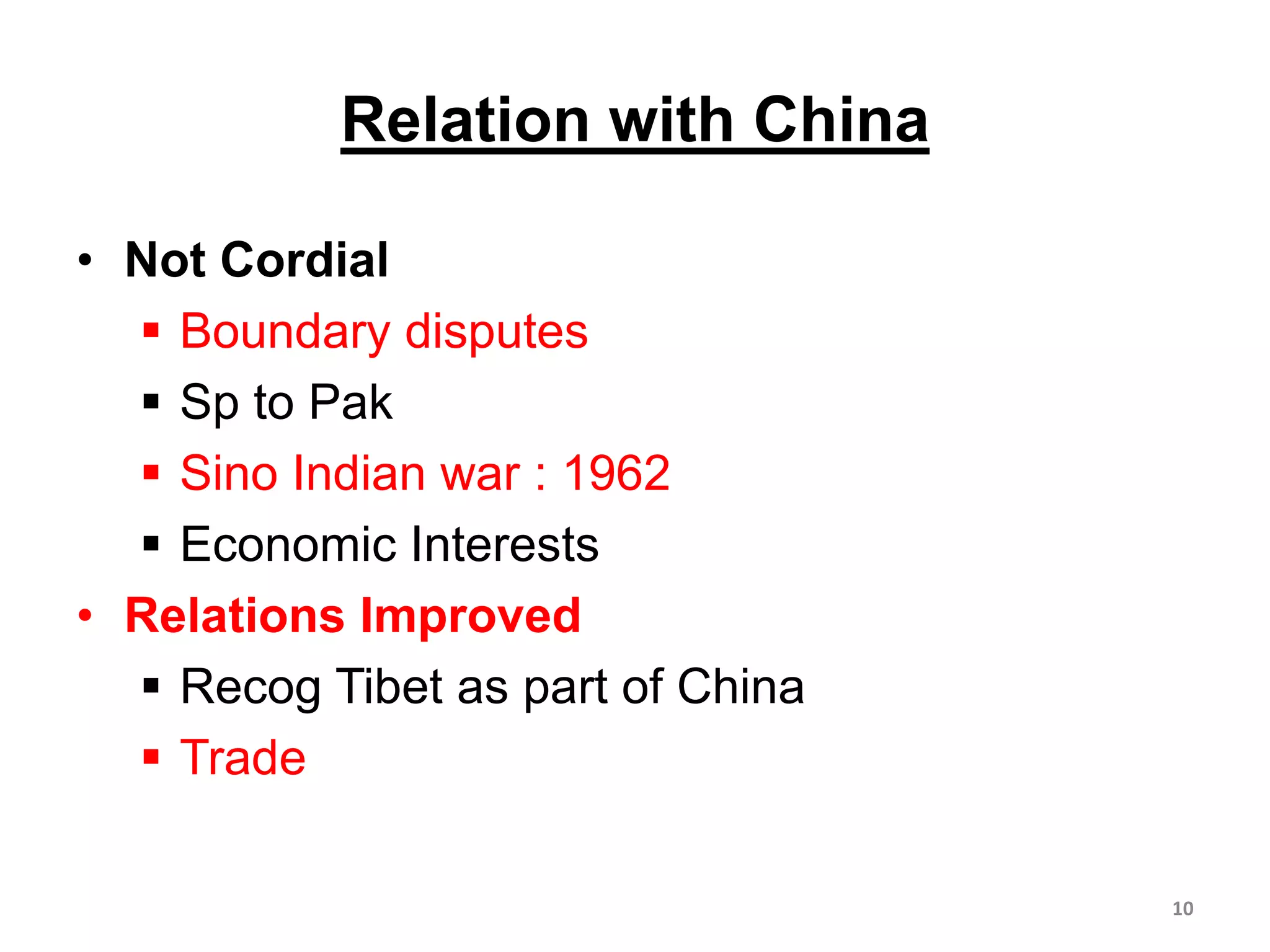
Relation with China
• Not Cordial
 Boundary disputes
 Sp to Pak
 Sino Indian war : 1962
 Economic Interests
• Relations Improved
 Recog Tibet as part of China
 Trade
10
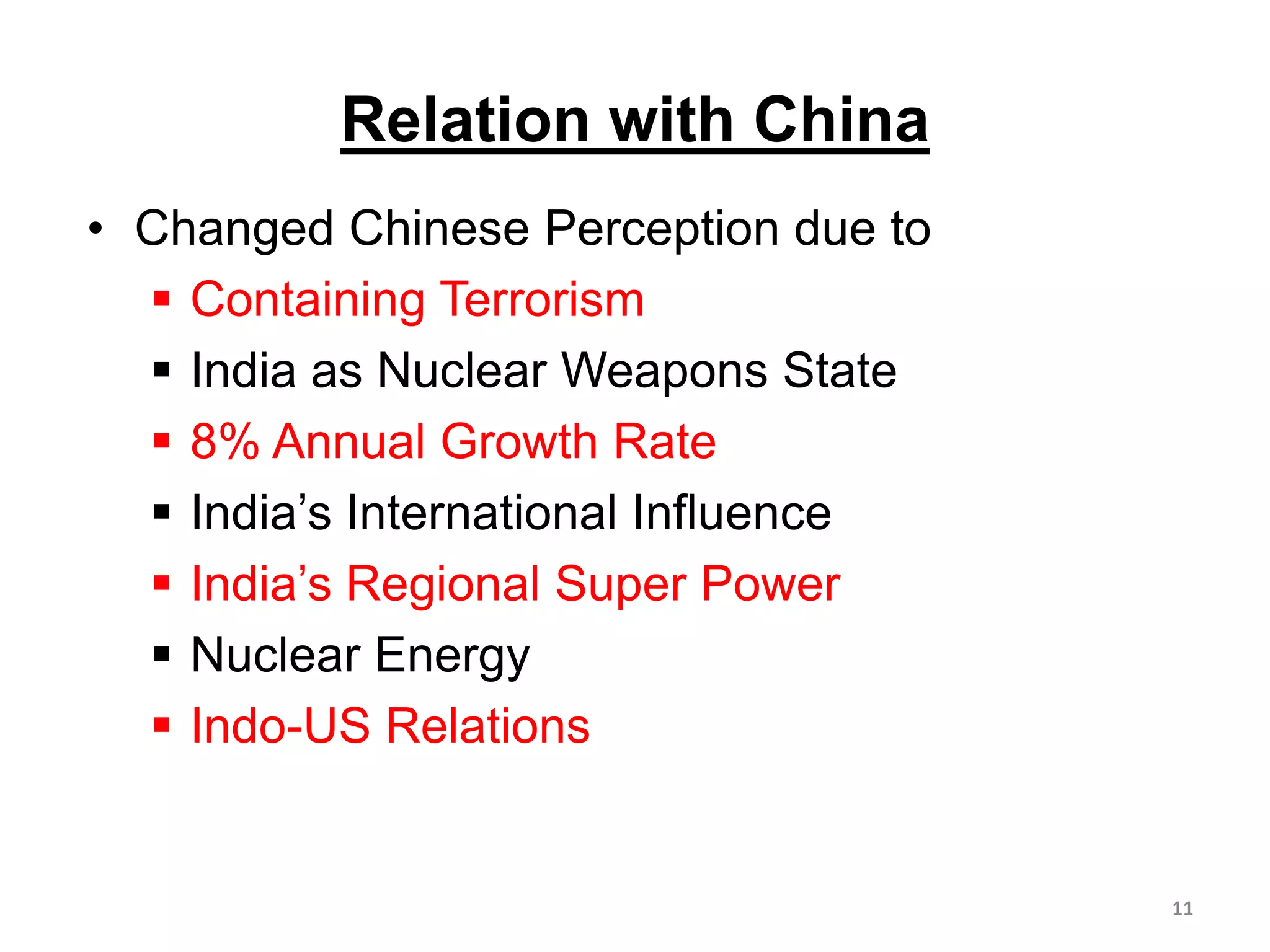
Relation with China
• Changed Chinese Perception due to
 Containing Terrorism
 India as Nuclear Weapons State
 8% Annual Growth Rate
 India’s International Influence
 India’s Regional Super Power
 Nuclear Energy
 Indo-US Relations
11
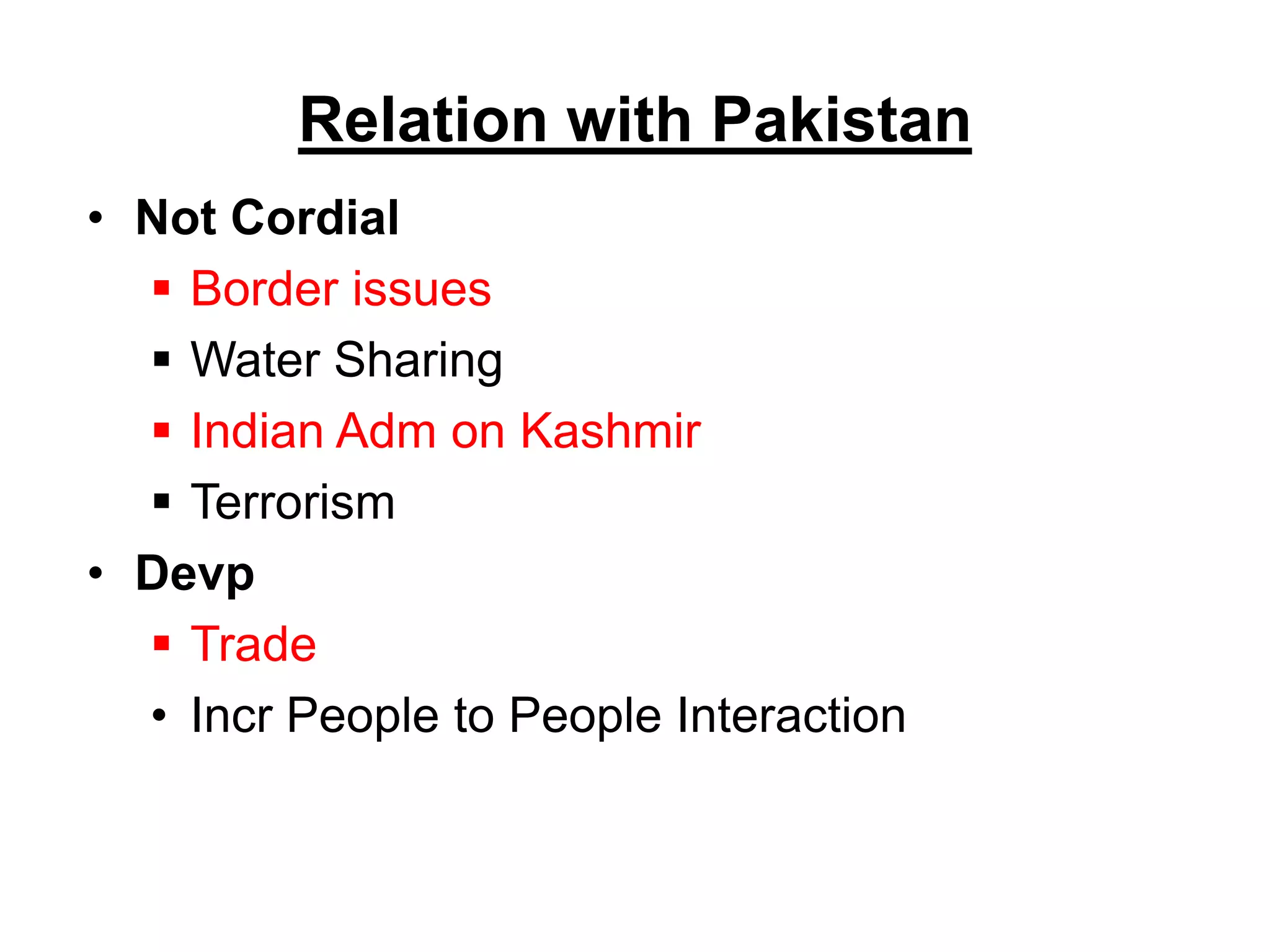
Relation with Pakistan
• Not Cordial
 Border issues
 Water Sharing
 Indian Adm on Kashmir
 Terrorism
• Devp
 Trade
• Incr People to People Interaction
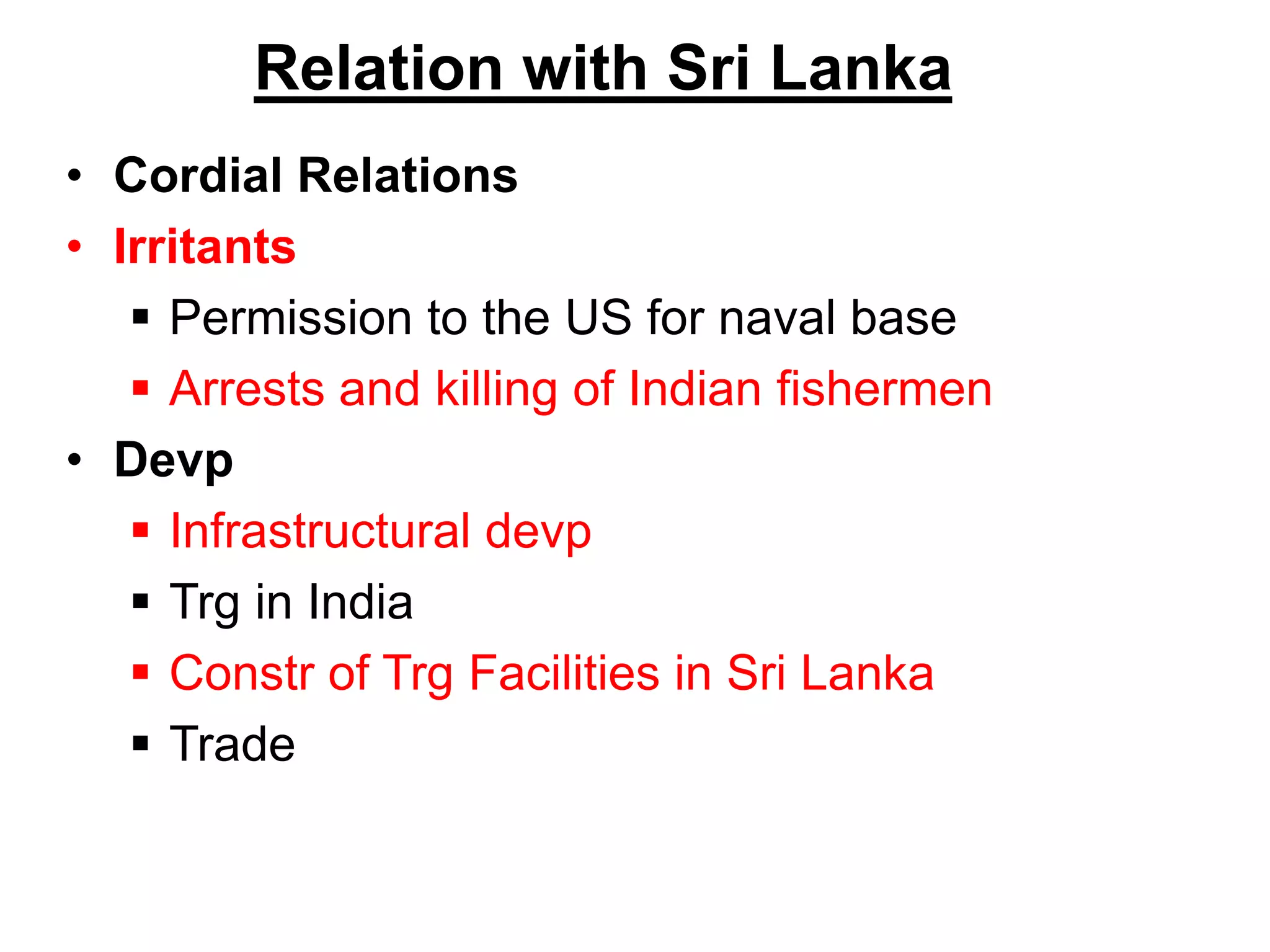
Relation with Sri Lanka
• Cordial Relations
• Irritants
 Permission to the US for naval base
 Arrests and killing of Indian fishermen
• Devp
 Infrastructural devp
 Trg in India
 Constr of Trg Facilities in Sri Lanka
 Trade
Relation with Bangladesh
• On different footing
 Infilt
 Distr of Water
 Constr of Barbed wire on the fence
 Refugees Problem
 Jurisdiction over the sea waters
• Devp
• Trade
• Aid
Relation with Nepal
• Friendly with minor Irritants
 Infilt from the Border
 Cross-border Migration of People
 Smuggling, illicit Trade of Drugs
 Arms Trade and mov of Trts
 Encroachment by Indian Farmers
 Annexation of Tibet by China
• Devp
 Trade
 Constr of highways, rds and dams
 Edn Scolarships
 Aid
CONCLUSION
• New challenges forced India to adjust to new
realities.
• Even then, basic framework of its foreign
policy remained more or less the same.
Question ?

Indian foreign policy presentation.

  • 1.
  • 2.
    AIM To Acquaint theAudience with the Foreign Policy of India.
  • 3.
    • Part-I :Intro • Part-II : Various Amdts in Policy • Part-III : Relation with Neighboring Countries • Part-IV : Conclusion
  • 4.
    INTRO • Definition- “Strategiesto safeguard National Interests and to achieve goals” • Obj of Foreign Policy  To Promote and protect the Nation’s Interests  Minimize adverse effects  Change or Regulate Behaviour of other states  Coop / Co-existence
  • 5.
  • 6.
    • Framework ofIndia’s Foreign Policy  Panchsheel  Non-alignment  Pragmatism and Pursuit of National Interest  Promotion of World Peace  Decolonization of Asia and Africa
  • 7.
    Evolution of ForeignPolicy • Protection of Unity and Integrity of a Country • National Devp • Defend Interests of its Citizens  Within borders  Beyond the borders • Protect and Promotion of Economic Progress • Indo-Soviet Friendship • Promotion of Regional Coop • Indo-Soviet Friendship
  • 8.
    PART-II : VARIOUSAMDTs IN FOREIGN POLICY • More or Less Same  Ultimate Goal Remained Unchanged  Relevance of Non Alignment  Promotion of World Peace • Additions  Terrorism Control  Nuclear Disarmament  Global Warming  Economic Policy  Soviet Union Demise  United Nations  Extended Def Coop
  • 9.
    PART-III : RELATIONWITH NEIGHBORING COUNTRIES
  • 10.
    Relation with China •Not Cordial  Boundary disputes  Sp to Pak  Sino Indian war : 1962  Economic Interests • Relations Improved  Recog Tibet as part of China  Trade 10
  • 11.
    Relation with China •Changed Chinese Perception due to  Containing Terrorism  India as Nuclear Weapons State  8% Annual Growth Rate  India’s International Influence  India’s Regional Super Power  Nuclear Energy  Indo-US Relations 11
  • 12.
    Relation with Pakistan •Not Cordial  Border issues  Water Sharing  Indian Adm on Kashmir  Terrorism • Devp  Trade • Incr People to People Interaction
  • 13.
    Relation with SriLanka • Cordial Relations • Irritants  Permission to the US for naval base  Arrests and killing of Indian fishermen • Devp  Infrastructural devp  Trg in India  Constr of Trg Facilities in Sri Lanka  Trade
  • 14.
    Relation with Bangladesh •On different footing  Infilt  Distr of Water  Constr of Barbed wire on the fence  Refugees Problem  Jurisdiction over the sea waters • Devp • Trade • Aid
  • 15.
    Relation with Nepal •Friendly with minor Irritants  Infilt from the Border  Cross-border Migration of People  Smuggling, illicit Trade of Drugs  Arms Trade and mov of Trts  Encroachment by Indian Farmers  Annexation of Tibet by China • Devp  Trade  Constr of highways, rds and dams  Edn Scolarships  Aid
  • 16.
    CONCLUSION • New challengesforced India to adjust to new realities. • Even then, basic framework of its foreign policy remained more or less the same.
  • 17.

Editor's Notes

  • #2 Foreign relations of India: Foreign relations of India India has formal diplomatic relations with most nations India's Foreign Policy have been founded on Panchsheel, pragmatism and pursuit of national interest 20 million people of Indian origin live and work abroad so India's foreign policy has been to ensure their welfare and well being within the framework of the laws of the country where they live 11/6/2012 201285056 4
  • #3 Foreign relations of India: Foreign relations of India India has formal diplomatic relations with most nations India's Foreign Policy have been founded on Panchsheel, pragmatism and pursuit of national interest 20 million people of Indian origin live and work abroad so India's foreign policy has been to ensure their welfare and well being within the framework of the laws of the country where they live 11/6/2012 201285056 4
  • #4 Foreign relations of India: Foreign relations of India India has formal diplomatic relations with most nations India's Foreign Policy have been founded on Panchsheel, pragmatism and pursuit of national interest 20 million people of Indian origin live and work abroad so India's foreign policy has been to ensure their welfare and well being within the framework of the laws of the country where they live 11/6/2012 201285056 4
  • #5 Foreign relations of India: Foreign relations of India India has formal diplomatic relations with most nations India's Foreign Policy have been founded on Panchsheel, pragmatism and pursuit of national interest 20 million people of Indian origin live and work abroad so India's foreign policy has been to ensure their welfare and well being within the framework of the laws of the country where they liveVital or Core Interests defence against aggressionKashmir IssueGoalsNon Vital or Secondary Objectives Specific General developing higher standard of living seeking rightful place at international organizations such as United Nations. threats to security Sp from Foreign countries on the internal issues and external issues
  • #7 Foreign relations of India India has formal diplomatic relations with most nations.India's Foreign Policy have been founded on Panchsheel, pragmatism and pursuit of national interest 20 million people of Indian origin live and work abroad so India's foreign policy has been to ensure their welfare and well being within the framework of the laws of the country where they live