Gamelan I
• Almost every where in Yogya, Solo, Semarang
  and other cities in Central Java you should
  hear the magical melodious percussion music

• Markets, villages, hotel lobby's are some of
  the many place you will hear the gamelan
  Javanese orchestra.
Gamelan II

• A gamelan will have between 5 - 50
  players, usually there are around 10 – 20.
• All instruments in the gamelan are of equal
  importance
• Gamelan music is carefully organised and the
  texture is heterophonic
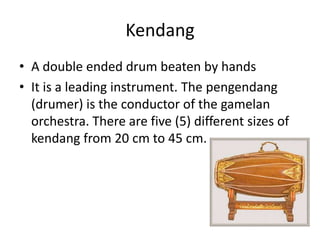
Kendang
• A double ended drum beaten by hands
• It is a leading instrument. The pengendang
  (drumer) is the conductor of the gamelan
  orchestra. There are five (5) different sizes of
  kendang from 20 cm to 45 cm.
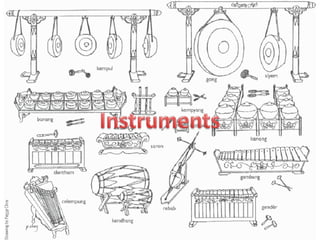
Saron
• A glockenspiel with bronze bar struck with
  wooden mallet. There are three kinds; Saron
  Barung, Saron Peking, Saron Demung.
Gong
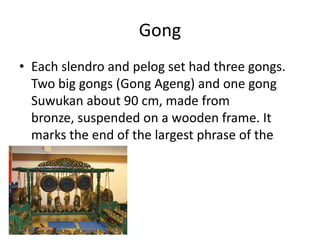
• Each slendro and pelog set had three gongs.
  Two big gongs (Gong Ageng) and one gong
  Suwukan about 90 cm, made from
  bronze, suspended on a wooden frame. It
  marks the end of the largest phrase of the
  melody.
Bonang
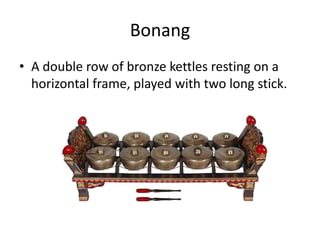
• A double row of bronze kettles resting on a
  horizontal frame, played with two long stick.
Melody

• A Short phrase is repeated on the mid-range
  metalaphones, at a medium tempo

• The same melody is taken up by other
  players, but the way in which each of them
  plays it will be different
Structure
• Gamelan music is repeated in cycles. The
  structure of the music is defined by large gongs.
• The last beat of each phrase is the most
  important and often accented by all of the
  players.
• The overall structure varies form one piece to
  another. If the music is accompanying a religious
  ceremony , dance or drama then the structure is
  determined by visual actions.
Mood
• Sometimes the music is low and
  quiet, creating a relaxed and meditative
  mood. Sometimes the music is extremely loud
  and fast.
• Players must enter one at a time, or they may
  all burst in together which will demonstrate a
  dramatic change.

Gamelan

  • 1.
    Gamelan I • Almostevery where in Yogya, Solo, Semarang and other cities in Central Java you should hear the magical melodious percussion music • Markets, villages, hotel lobby's are some of the many place you will hear the gamelan Javanese orchestra.
  • 2.
    Gamelan II • Agamelan will have between 5 - 50 players, usually there are around 10 – 20. • All instruments in the gamelan are of equal importance • Gamelan music is carefully organised and the texture is heterophonic
  • 4.
    Kendang • A doubleended drum beaten by hands • It is a leading instrument. The pengendang (drumer) is the conductor of the gamelan orchestra. There are five (5) different sizes of kendang from 20 cm to 45 cm.
  • 5.
    Saron • A glockenspielwith bronze bar struck with wooden mallet. There are three kinds; Saron Barung, Saron Peking, Saron Demung.
  • 6.
    Gong • Each slendroand pelog set had three gongs. Two big gongs (Gong Ageng) and one gong Suwukan about 90 cm, made from bronze, suspended on a wooden frame. It marks the end of the largest phrase of the melody.
  • 7.
    Bonang • A doublerow of bronze kettles resting on a horizontal frame, played with two long stick.
  • 8.
    Melody • A Shortphrase is repeated on the mid-range metalaphones, at a medium tempo • The same melody is taken up by other players, but the way in which each of them plays it will be different
  • 9.
    Structure • Gamelan musicis repeated in cycles. The structure of the music is defined by large gongs. • The last beat of each phrase is the most important and often accented by all of the players. • The overall structure varies form one piece to another. If the music is accompanying a religious ceremony , dance or drama then the structure is determined by visual actions.
  • 10.
    Mood • Sometimes themusic is low and quiet, creating a relaxed and meditative mood. Sometimes the music is extremely loud and fast. • Players must enter one at a time, or they may all burst in together which will demonstrate a dramatic change.