Disaster Management
          & Climate Change Adaptation:
                      Where the Gap Lies?


                      Research Team

                 Global Change Programme
                Jadavpur University, Kolkata
                         Presented by
                     Shyamasree Dasgupta

                             In
National workshop on Climate Smart disaster Risk Management


                  New Delhi, April 7, 2010
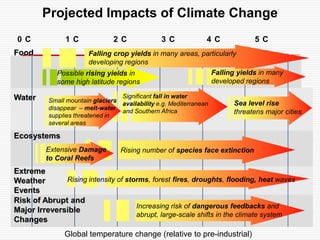
Projected Impacts of Climate Change
 0 C           1 C              2 C             3 C             4 C          5 C
Food                   Falling crop yields in many areas, particularly
                       developing regions
             Possible rising yields in                       Falling yields in many
             some high latitude regions                      developed regions

Water                             Significant fall in water
          Small mountain glaciers                                     Sea level rise
                                  availability e.g. Mediterranean
          disappear – melt-water
                                  and Southern Africa                 threatens major cities
          supplies threatened in
          several areas

Ecosystems
         Extensive Damage         Rising number of species face extinction
         to Coral Reefs
Extreme
Weather       Rising intensity of storms, forest fires, droughts, flooding, heat waves
Events
Risk of Abrupt and
                                     Increasing risk of dangerous feedbacks and
Major Irreversible
                                     abrupt, large-scale shifts in the climate system
Changes
               Global temperature change (relative to pre-industrial)
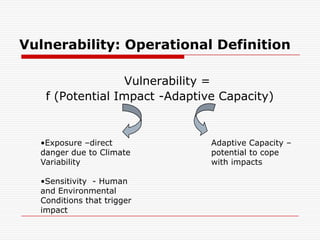
Vulnerability: Operational Definition

                 Vulnerability =
   f (Potential Impact -Adaptive Capacity)


  •Exposure –direct            Adaptive Capacity –
  danger due to Climate        potential to cope
  Variability                  with impacts

  •Sensitivity - Human
  and Environmental
  Conditions that trigger
  impact
Disaster
management                         Adaptation
Perception                     Perception:
   Disasters are Irregular       Disasters will be increasing
   Highly Random Events          Randomness remains: but
   Mostly Unpredictable           some predictions possible

Philosophy : Low probability   Philosophy: reduction in
    of Disaster
                                   randomness of disaster
    Disaster Management
        emerged as Ad hoc,     Adaptation gives scope for pro-
        Reactive Financial        active strategy
        Support policy aimed      development to generate
        at Impact Damage          safeguard against climate
        Repair                    vulnerability
Case Studies:
Coastal Inundation in Sagar Block
of Indian Sundarban
Damage Cost

Asset Lost               Physical Damage   Damage Cost
                                               (Rs)
Land                       1355 acres       328540000
Livestock                   3826 nos.       4304800
Food (paddy) stock         129775 kgs       1946625

Fishing Nets                703 nos.        1054500
Boats                        46 nos.         920000
Solar Lighting Systems        1 no.          15000

Savings in liquid cash     Rs 163200         163200
Total                                      336944125
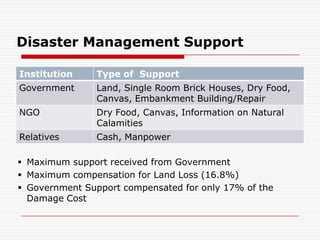
Disaster Management Support

Institution     Type of Support
Government      Land, Single Room Brick Houses, Dry Food,
                Canvas, Embankment Building/Repair
NGO             Dry Food, Canvas, Information on Natural
                Calamities
Relatives       Cash, Manpower

 Maximum support received from Government
 Maximum compensation for Land Loss (16.8%)
 Government Support compensated for only 17% of the
  Damage Cost
Proposed Adaptation Framework

Capital Investment in Resilience Building
 Infrastructure (Cyclone resistant houses,
 embankment)

Maintenance Investment in Resilience Building
 Infrastructure

Long term Adaptive Capacity Creation in lieu of
 Recurring Ad hoc Disaster Relief Expenditure
Disaster Management vs.
Adaptation

Compensation per household (in Rs Lakhs)                  1.9

Investment required per household (in Rs Lakhs) for :
a) Cyclone resistant houses & saline embankment         0.83 (44%)
b) Cyclone resistant houses & concrete embankment       3.2 (167%)


•Mainstreaming of Adaptation Strategy as against Recurring & Ad
hoc Disaster Relief Expenditure

•Initial investment – High

•Long term benefits – Financial, Resilience Capacity Generation
and Sustainable Development
Drought Prone River Basins:
Sabarmati, Mahanadi & Alakananda
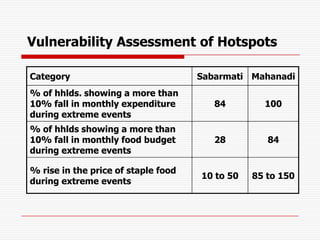
Vulnerability Assessment of Hotspots

Category                             Sabarmati Mahanadi
% of hhlds. showing a more than
10% fall in monthly expenditure         84        100
during extreme events
% of hhlds showing a more than
10% fall in monthly food budget         28         84
during extreme events

% rise in the price of staple food
                                     10 to 50   85 to 150
during extreme events
% of house holds


               0
                   10
                        20
                             30
                                  40
                                       50
                                            60
                                                 70
                                                      80
    Dissav e

     Borrow
     money
  Mortgage
  property
      Sell
    property
  Lease out
   property
       Sell
   liv estock

    Sell log


   Migration

 Work in
Gov t project

Sav e f odder


 Buy f odder
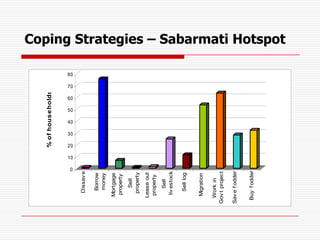
                                                           Coping Strategies – Sabarmati Hotspot
% of households


              0
                    10
                         20
                              30
                                   40
                                        50
                                             60


    Store dry
f ood,medicines

  Labour w ork

        Protect
      livestock

Flood resistant
    houses

  Contingency
     f unds

Buy polythene


          Pray
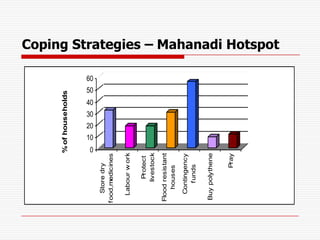
                                                  Coping Strategies – Mahanadi Hotspot
No. of hhlds.


                                                                                         10
                                                                                         20
                                                                                         30
                                                                                         40
                                                                                         50
                                                                                         60


                                                                                          0
                                                                         Safe drinking
                                                                            water


                                                                        House damage
                                                                        compensation


                                                                           Easy loans


                                                                         Crop damage
                                                                        compensation


                                                                             Health
                                                                            Facilities
                                                                                                         Need Curve - Mahanadi Hotspot
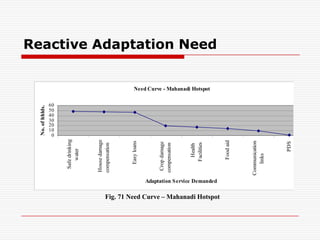
                                                                                                                                         Reactive Adaptation Need


                                        Adaptation S ervice Demanded

Fig. 71 Need Curve – Mahanadi Hotspot


                                                                             Food aid


                                                                       Communication
                                                                          links


                                                                                 PDS
Possible Policies


 Agricultural Insurance

 Infrastructure Development by Stakeholders

 R&D into Alternative Farming Technology

           - Inter-Cropping

           - Crop substitution
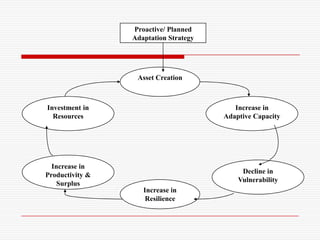
Derived Conceptual Framework
Proactive/ Planned
                 Adaptation Strategy


                  Asset Creation


Investment in                             Increase in
  Resources                            Adaptive Capacity


  Increase in
                                            Decline in
Productivity &
                                           Vulnerability
    Surplus
                    Increase in
                     Resilience
THANK YOU

India - Where the gap lies - Jadavpur University presentation

  • 1.
    Disaster Management & Climate Change Adaptation: Where the Gap Lies? Research Team Global Change Programme Jadavpur University, Kolkata Presented by Shyamasree Dasgupta In National workshop on Climate Smart disaster Risk Management New Delhi, April 7, 2010
  • 2.
    Projected Impacts ofClimate Change 0 C 1 C 2 C 3 C 4 C 5 C Food Falling crop yields in many areas, particularly developing regions Possible rising yields in Falling yields in many some high latitude regions developed regions Water Significant fall in water Small mountain glaciers Sea level rise availability e.g. Mediterranean disappear – melt-water and Southern Africa threatens major cities supplies threatened in several areas Ecosystems Extensive Damage Rising number of species face extinction to Coral Reefs Extreme Weather Rising intensity of storms, forest fires, droughts, flooding, heat waves Events Risk of Abrupt and Increasing risk of dangerous feedbacks and Major Irreversible abrupt, large-scale shifts in the climate system Changes Global temperature change (relative to pre-industrial)
  • 3.
    Vulnerability: Operational Definition Vulnerability = f (Potential Impact -Adaptive Capacity) •Exposure –direct Adaptive Capacity – danger due to Climate potential to cope Variability with impacts •Sensitivity - Human and Environmental Conditions that trigger impact
  • 4.
    Disaster management Adaptation Perception Perception:  Disasters are Irregular  Disasters will be increasing  Highly Random Events  Randomness remains: but  Mostly Unpredictable some predictions possible Philosophy : Low probability Philosophy: reduction in of Disaster randomness of disaster Disaster Management emerged as Ad hoc, Adaptation gives scope for pro- Reactive Financial active strategy Support policy aimed development to generate at Impact Damage safeguard against climate Repair vulnerability
  • 5.
  • 6.
    Coastal Inundation inSagar Block of Indian Sundarban
  • 7.
    Damage Cost Asset Lost Physical Damage Damage Cost (Rs) Land 1355 acres 328540000 Livestock 3826 nos. 4304800 Food (paddy) stock 129775 kgs 1946625 Fishing Nets 703 nos. 1054500 Boats 46 nos. 920000 Solar Lighting Systems 1 no. 15000 Savings in liquid cash Rs 163200 163200 Total 336944125
  • 8.
    Disaster Management Support Institution Type of Support Government Land, Single Room Brick Houses, Dry Food, Canvas, Embankment Building/Repair NGO Dry Food, Canvas, Information on Natural Calamities Relatives Cash, Manpower  Maximum support received from Government  Maximum compensation for Land Loss (16.8%)  Government Support compensated for only 17% of the Damage Cost
  • 9.
    Proposed Adaptation Framework CapitalInvestment in Resilience Building Infrastructure (Cyclone resistant houses, embankment) Maintenance Investment in Resilience Building Infrastructure Long term Adaptive Capacity Creation in lieu of Recurring Ad hoc Disaster Relief Expenditure
  • 10.
    Disaster Management vs. Adaptation Compensationper household (in Rs Lakhs) 1.9 Investment required per household (in Rs Lakhs) for : a) Cyclone resistant houses & saline embankment 0.83 (44%) b) Cyclone resistant houses & concrete embankment 3.2 (167%) •Mainstreaming of Adaptation Strategy as against Recurring & Ad hoc Disaster Relief Expenditure •Initial investment – High •Long term benefits – Financial, Resilience Capacity Generation and Sustainable Development
  • 11.
    Drought Prone RiverBasins: Sabarmati, Mahanadi & Alakananda
  • 12.
    Vulnerability Assessment ofHotspots Category Sabarmati Mahanadi % of hhlds. showing a more than 10% fall in monthly expenditure 84 100 during extreme events % of hhlds showing a more than 10% fall in monthly food budget 28 84 during extreme events % rise in the price of staple food 10 to 50 85 to 150 during extreme events
  • 13.
    % of households 0 10 20 30 40 50 60 70 80 Dissav e Borrow money Mortgage property Sell property Lease out property Sell liv estock Sell log Migration Work in Gov t project Sav e f odder Buy f odder Coping Strategies – Sabarmati Hotspot
  • 14.
    % of households 0 10 20 30 40 50 60 Store dry f ood,medicines Labour w ork Protect livestock Flood resistant houses Contingency f unds Buy polythene Pray Coping Strategies – Mahanadi Hotspot
  • 15.
    No. of hhlds. 10 20 30 40 50 60 0 Safe drinking water House damage compensation Easy loans Crop damage compensation Health Facilities Need Curve - Mahanadi Hotspot Reactive Adaptation Need Adaptation S ervice Demanded Fig. 71 Need Curve – Mahanadi Hotspot Food aid Communication links PDS
  • 16.
    Possible Policies  AgriculturalInsurance  Infrastructure Development by Stakeholders  R&D into Alternative Farming Technology - Inter-Cropping - Crop substitution
  • 17.
  • 18.
    Proactive/ Planned Adaptation Strategy Asset Creation Investment in Increase in Resources Adaptive Capacity Increase in Decline in Productivity & Vulnerability Surplus Increase in Resilience
  • 19.