INCREASING EMPOWERMENT, DEVELOPING REPORTS’ CAPABILITY


Teleos Consulting
311 Westside Drive
Chapel Hill, NC 27516
919-740-8872
919-929-2298 (Fax)
www.teleosconsulting.com
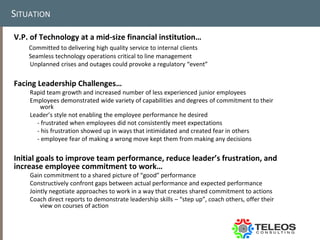
SITUATION

V.P. of Technology at a mid-size financial institution…
    Committed to delivering high quality service to internal clients
    Seamless technology operations critical to line management
    Unplanned crises and outages could provoke a regulatory “event”

Facing Leadership Challenges…
    Rapid team growth and increased number of less experienced junior employees
    Employees demonstrated wide variety of capabilities and degrees of commitment to their
       work
    Leader’s style not enabling the employee performance he desired
      - frustrated when employees did not consistently meet expectations
      - his frustration showed up in ways that intimidated and created fear in others
      - employee fear of making a wrong move kept them from making any decisions

Initial goals to improve team performance, reduce leader’s frustration, and
increase employee commitment to work…
    Gain commitment to a shared picture of “good” performance
    Constructively confront gaps between actual performance and expected performance
    Jointly negotiate approaches to work in a way that creates shared commitment to actions
    Coach direct reports to demonstrate leadership skills – “step up”, coach others, offer their
        view on courses of action
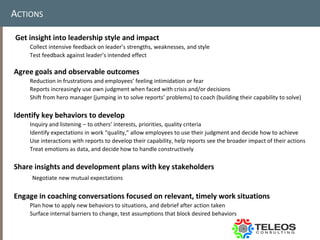
ACTIONS

Get insight into leadership style and impact
    Collect intensive feedback on leader’s strengths, weaknesses, and style
    Test feedback against leader’s intended effect

Agree goals and observable outcomes
    Reduction in frustrations and employees’ feeling intimidation or fear
    Reports increasingly use own judgment when faced with crisis and/or decisions
    Shift from hero manager (jumping in to solve reports’ problems) to coach (building their capability to solve)

Identify key behaviors to develop
    Inquiry and listening – to others’ interests, priorities, quality criteria
    Identify expectations in work “quality,” allow employees to use their judgment and decide how to achieve
    Use interactions with reports to develop their capability, help reports see the broader impact of their actions
    Treat emotions as data, and decide how to handle constructively

Share insights and development plans with key stakeholders
     Negotiate new mutual expectations


Engage in coaching conversations focused on relevant, timely work situations
    Plan how to apply new behaviors to situations, and debrief after action taken
    Surface internal barriers to change, test assumptions that block desired behaviors
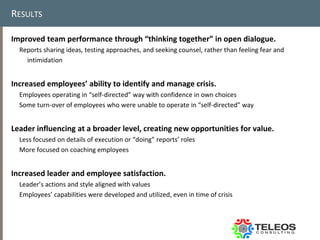
RESULTS

Improved team performance through “thinking together” in open dialogue.
  Reports sharing ideas, testing approaches, and seeking counsel, rather than feeling fear and
    intimidation


Increased employees’ ability to identify and manage crisis.
  Employees operating in “self-directed” way with confidence in own choices
  Some turn-over of employees who were unable to operate in “self-directed” way


Leader influencing at a broader level, creating new opportunities for value.
  Less focused on details of execution or “doing” reports’ roles
  More focused on coaching employees


Increased leader and employee satisfaction.
  Leader’s actions and style aligned with values
  Employees’ capabilities were developed and utilized, even in time of crisis

Increasing Empowerment, Developing Reports’ Capability

  • 1.
    INCREASING EMPOWERMENT, DEVELOPINGREPORTS’ CAPABILITY Teleos Consulting 311 Westside Drive Chapel Hill, NC 27516 919-740-8872 919-929-2298 (Fax) www.teleosconsulting.com
  • 2.
    SITUATION V.P. of Technologyat a mid-size financial institution… Committed to delivering high quality service to internal clients Seamless technology operations critical to line management Unplanned crises and outages could provoke a regulatory “event” Facing Leadership Challenges… Rapid team growth and increased number of less experienced junior employees Employees demonstrated wide variety of capabilities and degrees of commitment to their work Leader’s style not enabling the employee performance he desired - frustrated when employees did not consistently meet expectations - his frustration showed up in ways that intimidated and created fear in others - employee fear of making a wrong move kept them from making any decisions Initial goals to improve team performance, reduce leader’s frustration, and increase employee commitment to work… Gain commitment to a shared picture of “good” performance Constructively confront gaps between actual performance and expected performance Jointly negotiate approaches to work in a way that creates shared commitment to actions Coach direct reports to demonstrate leadership skills – “step up”, coach others, offer their view on courses of action
  • 3.
    ACTIONS Get insight intoleadership style and impact Collect intensive feedback on leader’s strengths, weaknesses, and style Test feedback against leader’s intended effect Agree goals and observable outcomes Reduction in frustrations and employees’ feeling intimidation or fear Reports increasingly use own judgment when faced with crisis and/or decisions Shift from hero manager (jumping in to solve reports’ problems) to coach (building their capability to solve) Identify key behaviors to develop Inquiry and listening – to others’ interests, priorities, quality criteria Identify expectations in work “quality,” allow employees to use their judgment and decide how to achieve Use interactions with reports to develop their capability, help reports see the broader impact of their actions Treat emotions as data, and decide how to handle constructively Share insights and development plans with key stakeholders Negotiate new mutual expectations Engage in coaching conversations focused on relevant, timely work situations Plan how to apply new behaviors to situations, and debrief after action taken Surface internal barriers to change, test assumptions that block desired behaviors
  • 4.
    RESULTS Improved team performancethrough “thinking together” in open dialogue. Reports sharing ideas, testing approaches, and seeking counsel, rather than feeling fear and intimidation Increased employees’ ability to identify and manage crisis. Employees operating in “self-directed” way with confidence in own choices Some turn-over of employees who were unable to operate in “self-directed” way Leader influencing at a broader level, creating new opportunities for value. Less focused on details of execution or “doing” reports’ roles More focused on coaching employees Increased leader and employee satisfaction. Leader’s actions and style aligned with values Employees’ capabilities were developed and utilized, even in time of crisis