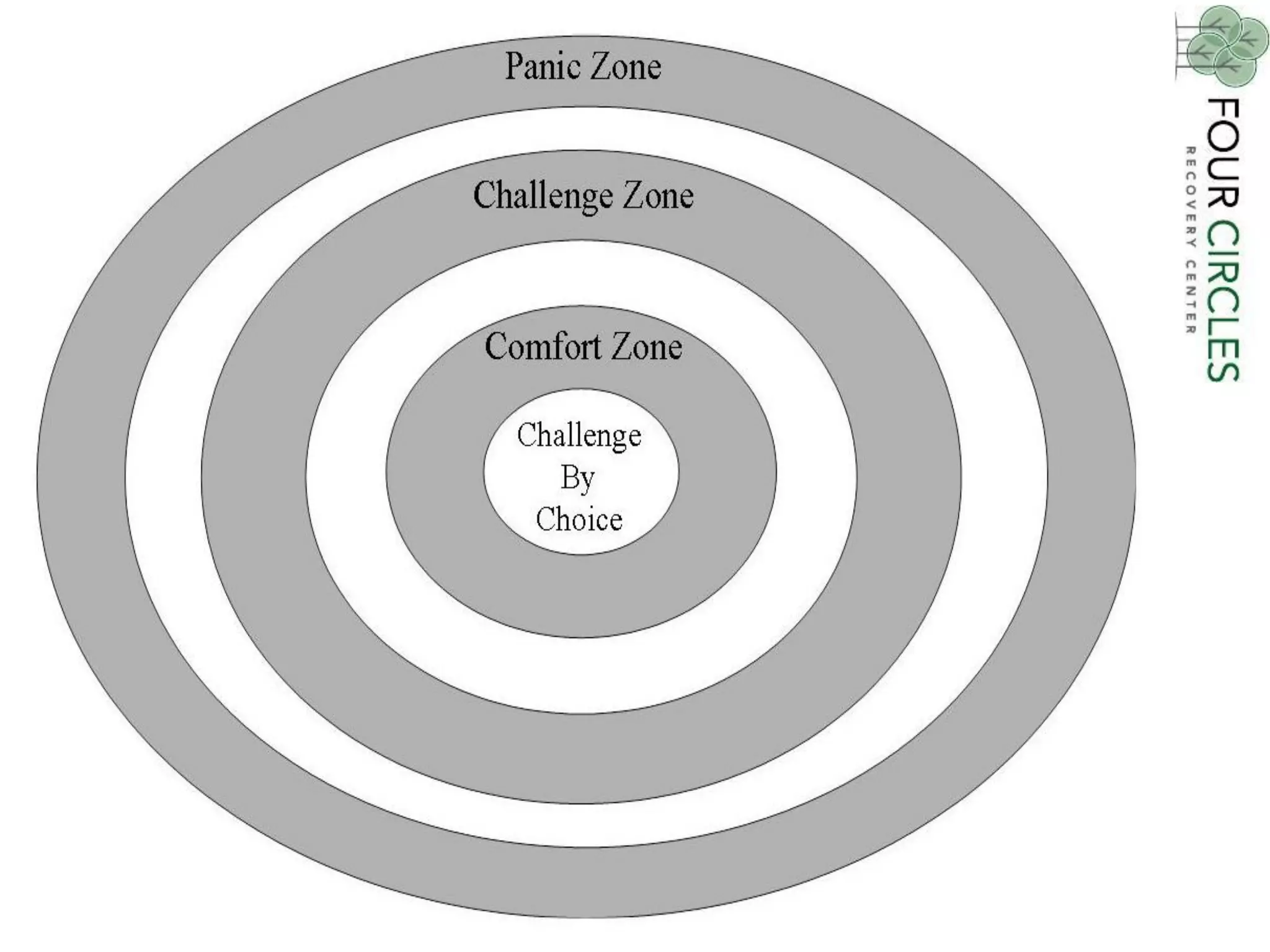
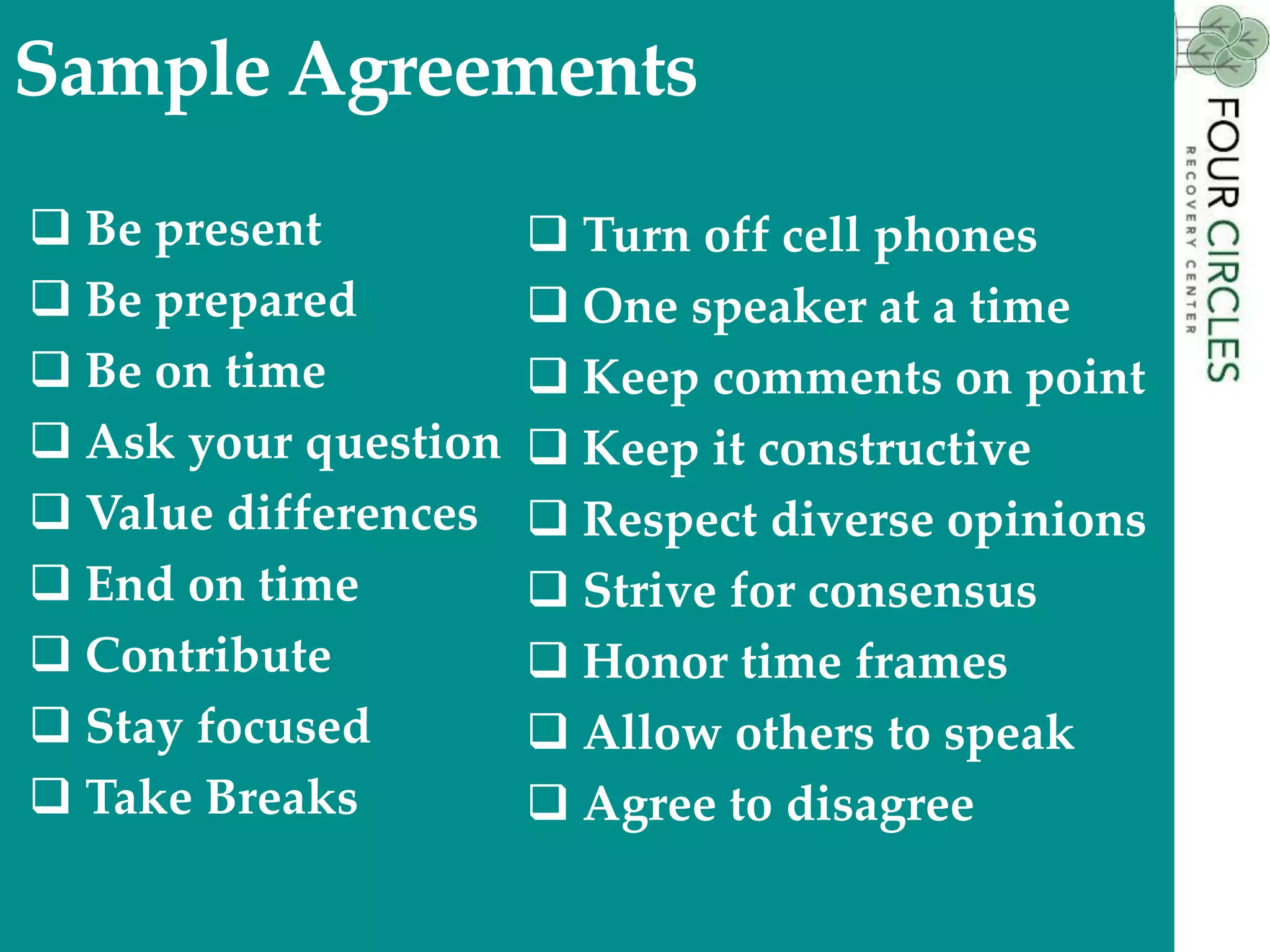
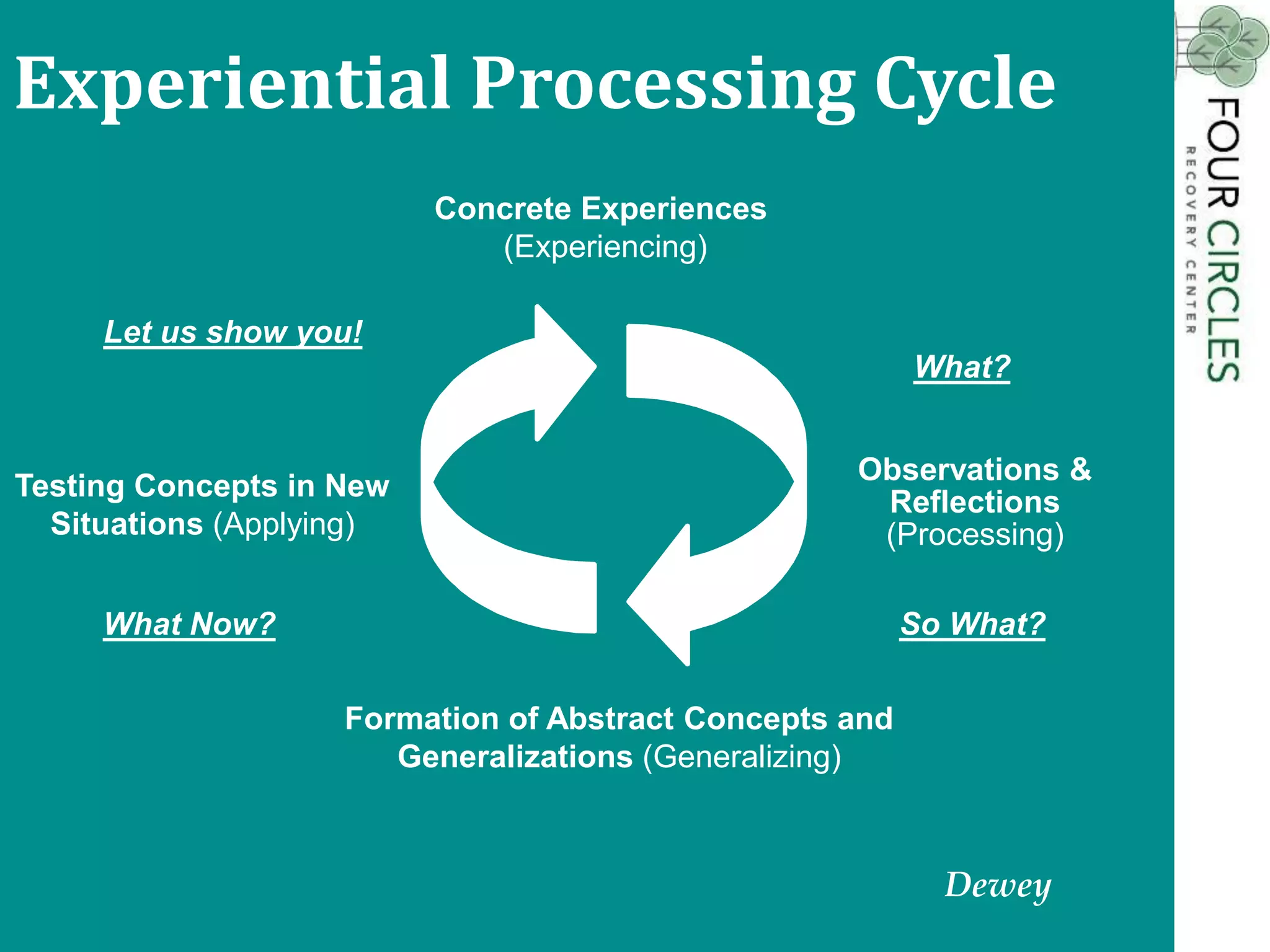
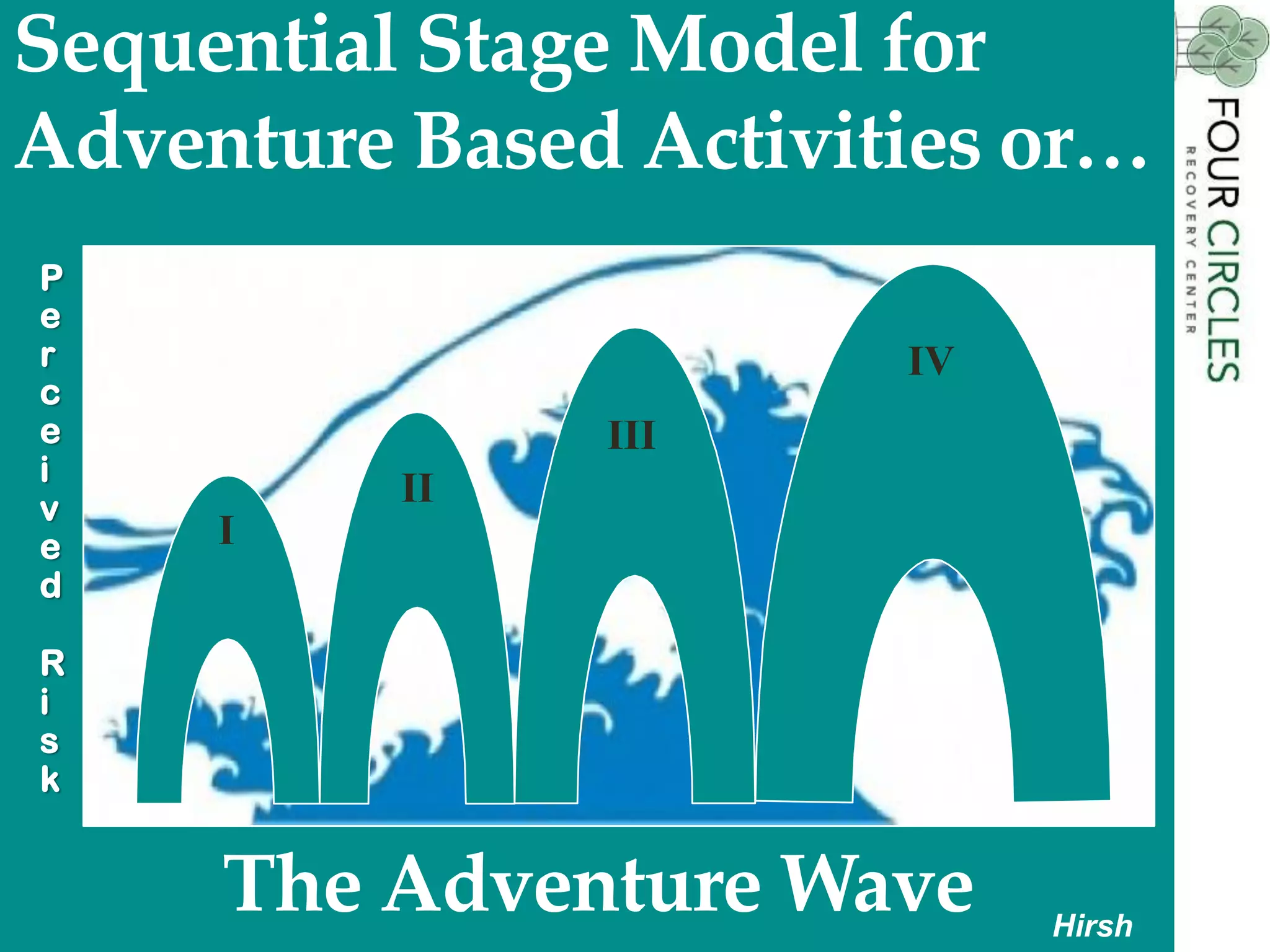
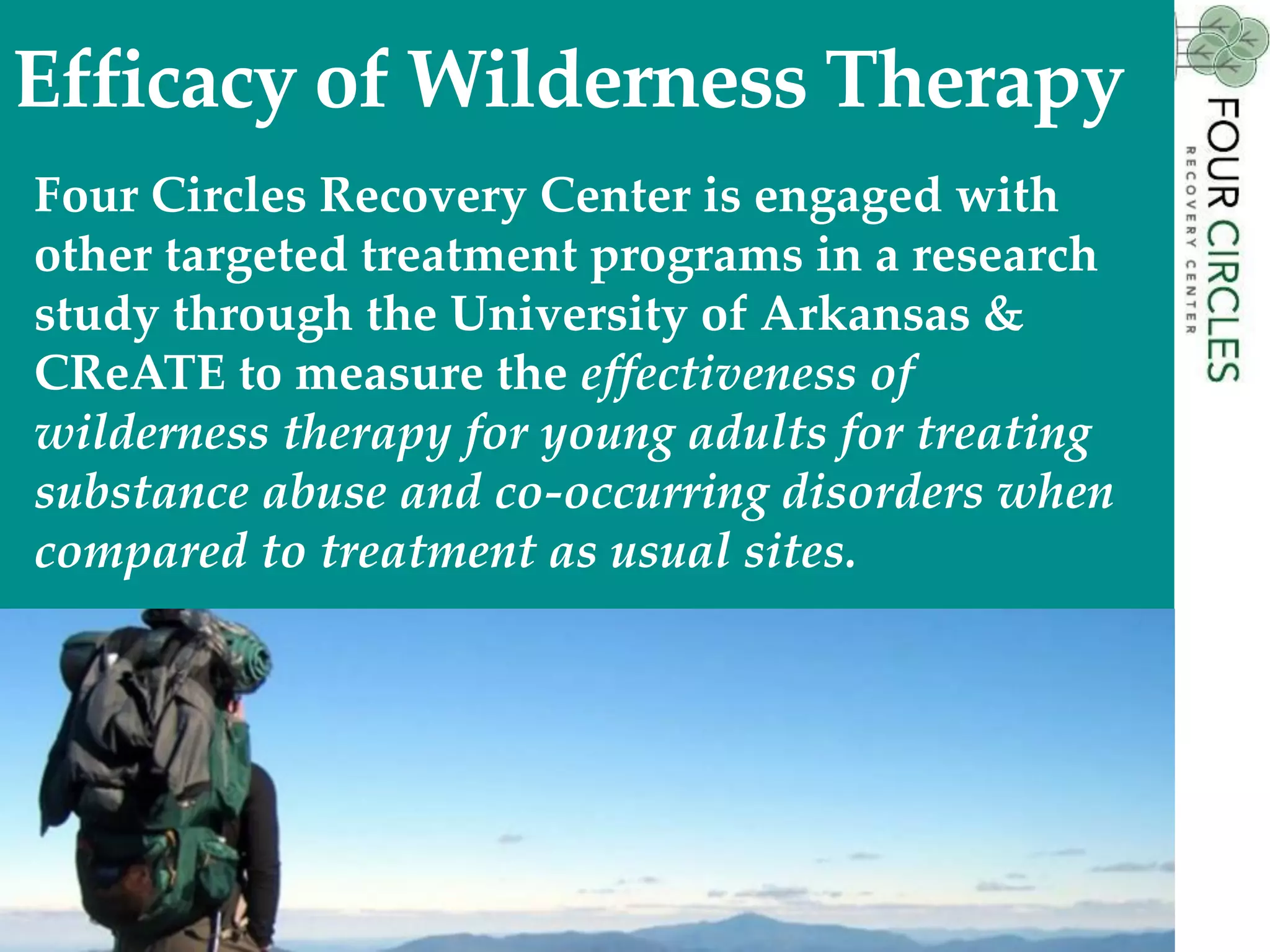
This document discusses incorporating experiential education into therapeutic programs. It defines experiential education as engaging learners in direct experiences and focused reflection to increase knowledge and skills. Experiential methods are used in therapy because people learn through experience, being outside their comfort zone enhances learning, and reflection is important. Adventure-based counseling is discussed as an experiential methodology using perceived risk and meaning-making to facilitate change. The document provides examples of experiential techniques like frontloading activities and developing group agreements. Outcomes data on a wilderness therapy program show most participants maintained treatment gains at 3 and 12 months post-treatment.