NMM 
1 
Track 
Educational Innovation 
Clara Viegas1, Natércia Lima1, Gustavo Alves1, Ingvar Gustavsson2 
1 Polytechnic Institute of Porto, School of Engineering, Porto, Portugal 
2 Blekinge Institute of Technology, School of Engineering, Karlskrona, Sweden
NMM 
2 
• Introduction 
• Implementation Design 
• Curricular Design 
• Assessment methodology 
• Research Design and Data Collection 
• Data Analysis and Discussion 
• Class attending and test results 
• Students learning perception on students’ results 
• Teacher perception 
• Conclusion
3 
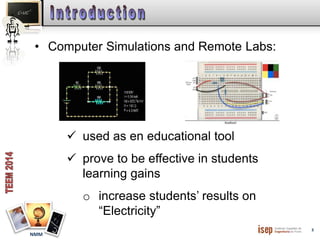
• Computer Simulations and Remote Labs: 
NMM 
 used as en educational tool 
 prove to be effective in students 
learning gains 
o increase students’ results on 
“Electricity”
4 
NMM 
 each method allows developing different 
competences 
 teachers to reach more students due to 
their different learning styles. 
 However, these gains are still understudied 
in literature…
5 
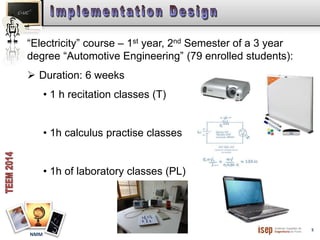
“Electricity” course – 1st year, 2nd Semester of a 3 year 
degree “Automotive Engineering” (79 enrolled students): 
 Duration: 6 weeks 
NMM 
• 1 h recitation classes (T) 
• 1h calculus practise classes 
• 1h of laboratory classes (PL)
6 
NMM 
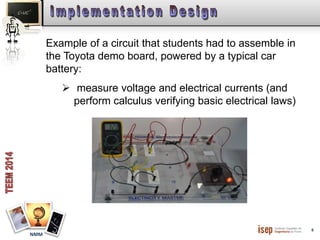
Example of a circuit that students had to assemble in 
the Toyota demo board, powered by a typical car 
battery: 
 measure voltage and electrical currents (and 
perform calculus verifying basic electrical laws)
7 
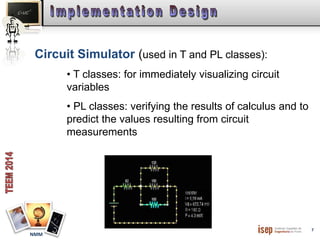
Circuit Simulator (used in T and PL classes): 
NMM 
• T classes: for immediately visualizing circuit 
variables 
• PL classes: verifying the results of calculus and to 
predict the values resulting from circuit 
measurements
8 
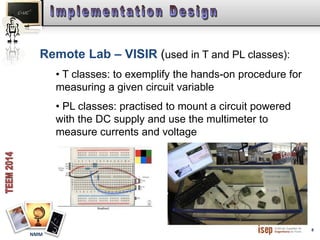
Remote Lab – VISIR (used in T and PL classes): 
NMM 
• T classes: to exemplify the hands-on procedure for 
measuring a given circuit variable 
• PL classes: practised to mount a circuit powered 
with the DC supply and use the multimeter to 
measure currents and voltage
9 
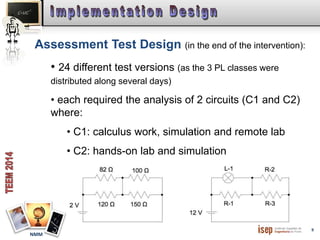
Assessment Test Design (in the end of the intervention): 
NMM 
• 24 different test versions (as the 3 PL classes were 
distributed along several days) 
• each required the analysis of 2 circuits (C1 and C2) 
where: 
• C1: calculus work, simulation and remote lab 
• C2: hands-on lab and simulation
10 
NMM 
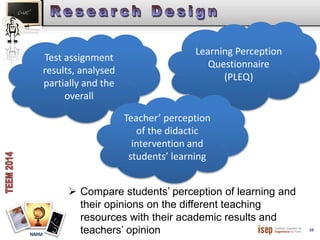
Test assignment 
results, analysed 
partially and the 
overall 
Learning Perception 
Questionnaire 
(PLEQ) 
Teacher’ perception 
of the didactic 
intervention and 
students’ learning 
 Compare students’ perception of learning and 
their opinions on the different teaching 
resources with their academic results and 
teachers’ opinion
11 
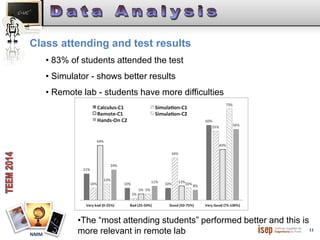
Class attending and test results 
NMM 
• 83% of students attended the test 
• Simulator - shows better results 
• Remote lab - students have more difficulties 
•The “most attending students” performed better and this is 
more relevant in remote lab
12 
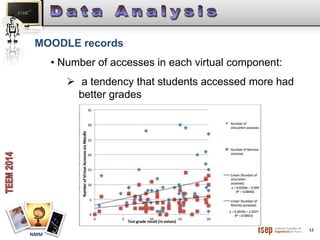
MOODLE records 
NMM 
• Number of accesses in each virtual component: 
 a tendency that students accessed more had 
better grades
13 
Learning Perception Questionnaire results 
NMM 
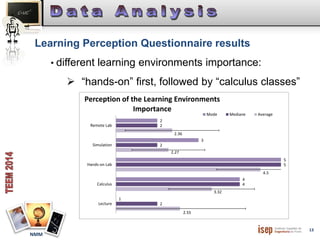
• different learning environments importance: 
 “hands-on” first, followed by “calculus classes” 
Perception of the Learning Environments 
2.55 
3.32 
4.5 
2.36 
2.27 
2 
2 
4 
5 
2 
1 
4 
5 
3 
2 
Remote Lab 
Simulation 
Hands-on Lab 
Calculus 
Lecture 
Importance 
Mode Mediane Average
14 
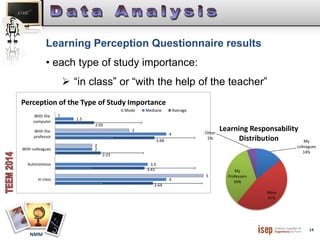
Perception of the Type of Study Importance 
With the 
computer 
With the 
professor 
With colleagues 
Autonomous 
NMM 
Learning Perception Questionnaire results 
• each type of study importance: 
 “in class” or “with the help of the teacher” 
3.41 
3.64 
2.23 
3.68 
2.05 
4 
3.5 
2 
4 
1.5 
5 
2 
3 
1 
In class 
Mode Mediane Average 
My 
colleagues 
14% 
Mine 
47% 
My 
Professors 
34% 
Other 
5% 
Learning Responsability 
Distribution
15 
40 
30 
20 
10 
NMM 
Learning Perception Questionnaire results 
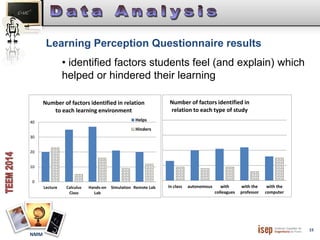
• identified factors students feel (and explain) which 
helped or hindered their learning 
0 
Number of factors identified in relation 
to each learning environment 
Lecture Calculus 
Class 
Hands-on 
Lab 
Helps 
Hinders 
Simulation Remote Lab 
in class autonomous with 
colleagues 
with the 
professor 
with the 
computer 
Number of factors identified in 
relation to each type of study
16 
NMM 
Teacher Perception * 
• about the didactic approach: 
 the usage of various tools is important – helps 
students adaptation to the complexity of practical 
problems in the future 
 Remote lab is of most value to compensate the 
large number of students per class and little lab 
time. 
• about students’ learning: 
 helps students develop basic knowledge and 
competences about electricity 
* teacher with 20 years experience in this course
17 
NMM 
 “Hands-on” and “Calculus” classes are the 
preferred learning environments; still they were 
not the environments were they performed better 
 More at ease with simulation environment 
 Remote lab is the one where they had more 
difficulties – VISIR was felt as an extra obstacle 
they would have to endure (requires effort to 
overcome initial difficulties…) 
 Students’ distribution of the learning 
responsibilities shows that students are still very 
dependent on what their teacher does.
18 
NMM 
 Students, in general, are more involved and 
participative in the proposed tasks 
 Students achieved better school results 
 Improve course design: 
 Less time in calculus classes 
 Less time spent in introducing the simulator 
 “Hands-on” – better and more material available, 
smaller groups, computers in the branches, more 
time in class 
The key to increase students’ scholar results and 
competences is finding the right balance between 
these components!
Many 
thanks 
for your 
attention! 
19 
NMM

Improving Students Experimental Competences Using Simultaneous Methods in Class and in Assessments

  • 1.
    NMM 1 Track Educational Innovation Clara Viegas1, Natércia Lima1, Gustavo Alves1, Ingvar Gustavsson2 1 Polytechnic Institute of Porto, School of Engineering, Porto, Portugal 2 Blekinge Institute of Technology, School of Engineering, Karlskrona, Sweden
  • 2.
    NMM 2 •Introduction • Implementation Design • Curricular Design • Assessment methodology • Research Design and Data Collection • Data Analysis and Discussion • Class attending and test results • Students learning perception on students’ results • Teacher perception • Conclusion
  • 3.
    3 • ComputerSimulations and Remote Labs: NMM  used as en educational tool  prove to be effective in students learning gains o increase students’ results on “Electricity”
  • 4.
    4 NMM each method allows developing different competences  teachers to reach more students due to their different learning styles.  However, these gains are still understudied in literature…
  • 5.
    5 “Electricity” course– 1st year, 2nd Semester of a 3 year degree “Automotive Engineering” (79 enrolled students):  Duration: 6 weeks NMM • 1 h recitation classes (T) • 1h calculus practise classes • 1h of laboratory classes (PL)
  • 6.
    6 NMM Exampleof a circuit that students had to assemble in the Toyota demo board, powered by a typical car battery:  measure voltage and electrical currents (and perform calculus verifying basic electrical laws)
  • 7.
    7 Circuit Simulator(used in T and PL classes): NMM • T classes: for immediately visualizing circuit variables • PL classes: verifying the results of calculus and to predict the values resulting from circuit measurements
  • 8.
    8 Remote Lab– VISIR (used in T and PL classes): NMM • T classes: to exemplify the hands-on procedure for measuring a given circuit variable • PL classes: practised to mount a circuit powered with the DC supply and use the multimeter to measure currents and voltage
  • 9.
    9 Assessment TestDesign (in the end of the intervention): NMM • 24 different test versions (as the 3 PL classes were distributed along several days) • each required the analysis of 2 circuits (C1 and C2) where: • C1: calculus work, simulation and remote lab • C2: hands-on lab and simulation
  • 10.
    10 NMM Testassignment results, analysed partially and the overall Learning Perception Questionnaire (PLEQ) Teacher’ perception of the didactic intervention and students’ learning  Compare students’ perception of learning and their opinions on the different teaching resources with their academic results and teachers’ opinion
  • 11.
    11 Class attendingand test results NMM • 83% of students attended the test • Simulator - shows better results • Remote lab - students have more difficulties •The “most attending students” performed better and this is more relevant in remote lab
  • 12.
    12 MOODLE records NMM • Number of accesses in each virtual component:  a tendency that students accessed more had better grades
  • 13.
    13 Learning PerceptionQuestionnaire results NMM • different learning environments importance:  “hands-on” first, followed by “calculus classes” Perception of the Learning Environments 2.55 3.32 4.5 2.36 2.27 2 2 4 5 2 1 4 5 3 2 Remote Lab Simulation Hands-on Lab Calculus Lecture Importance Mode Mediane Average
  • 14.
    14 Perception ofthe Type of Study Importance With the computer With the professor With colleagues Autonomous NMM Learning Perception Questionnaire results • each type of study importance:  “in class” or “with the help of the teacher” 3.41 3.64 2.23 3.68 2.05 4 3.5 2 4 1.5 5 2 3 1 In class Mode Mediane Average My colleagues 14% Mine 47% My Professors 34% Other 5% Learning Responsability Distribution
  • 15.
    15 40 30 20 10 NMM Learning Perception Questionnaire results • identified factors students feel (and explain) which helped or hindered their learning 0 Number of factors identified in relation to each learning environment Lecture Calculus Class Hands-on Lab Helps Hinders Simulation Remote Lab in class autonomous with colleagues with the professor with the computer Number of factors identified in relation to each type of study
  • 16.
    16 NMM TeacherPerception * • about the didactic approach:  the usage of various tools is important – helps students adaptation to the complexity of practical problems in the future  Remote lab is of most value to compensate the large number of students per class and little lab time. • about students’ learning:  helps students develop basic knowledge and competences about electricity * teacher with 20 years experience in this course
  • 17.
    17 NMM “Hands-on” and “Calculus” classes are the preferred learning environments; still they were not the environments were they performed better  More at ease with simulation environment  Remote lab is the one where they had more difficulties – VISIR was felt as an extra obstacle they would have to endure (requires effort to overcome initial difficulties…)  Students’ distribution of the learning responsibilities shows that students are still very dependent on what their teacher does.
  • 18.
    18 NMM Students, in general, are more involved and participative in the proposed tasks  Students achieved better school results  Improve course design:  Less time in calculus classes  Less time spent in introducing the simulator  “Hands-on” – better and more material available, smaller groups, computers in the branches, more time in class The key to increase students’ scholar results and competences is finding the right balance between these components!
  • 19.
    Many thanks foryour attention! 19 NMM