
Improving Energy Efficiency in Traditional Buildings  Moses Jenkins Technical Conservation Group
Improving energy efficiency in traditional buildings Ventilation Building elements: tests and improvements Windows Walls Roofs floors
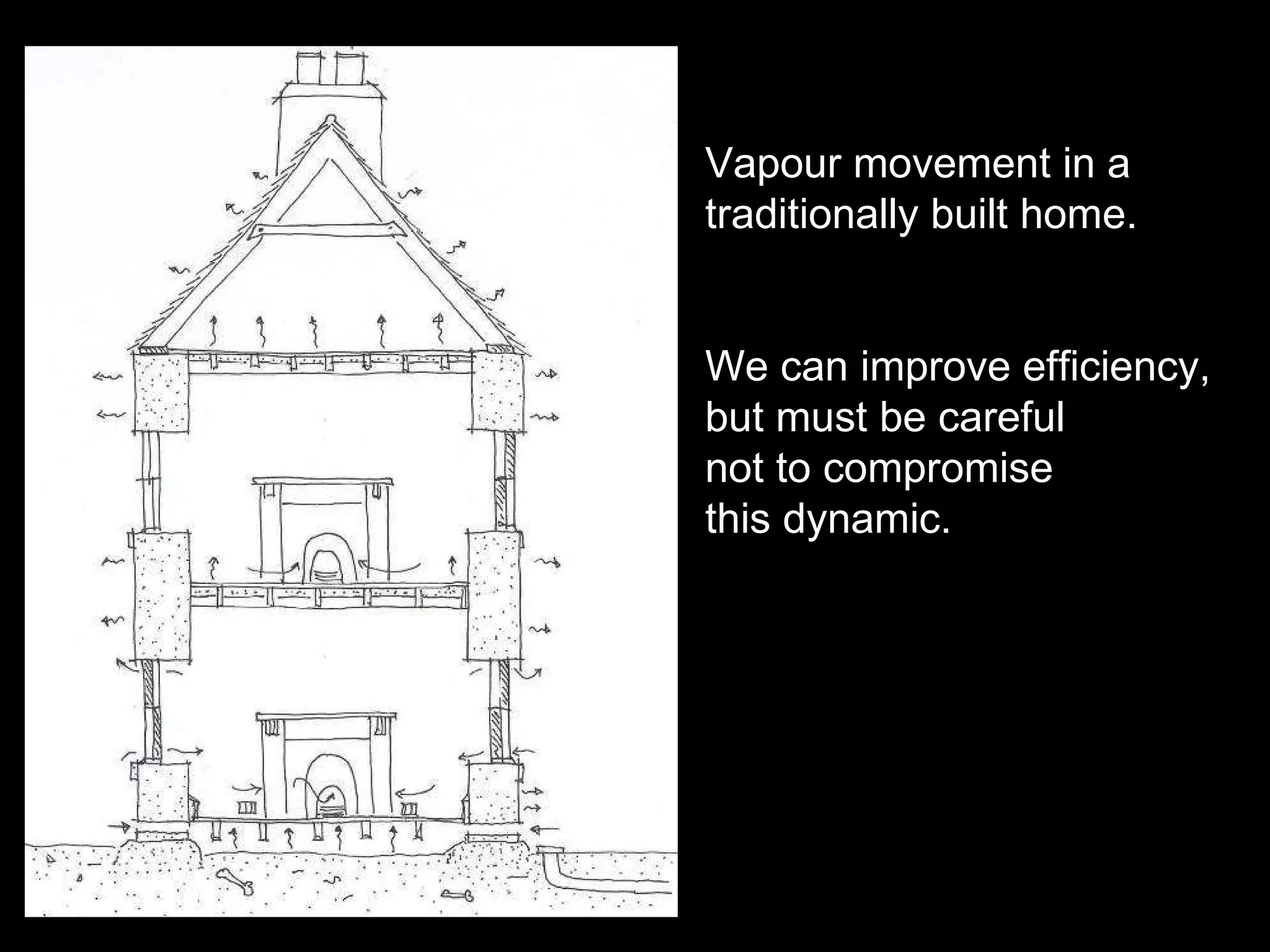
Vapour movement in a  traditionally built home. We can improve efficiency,  but must be careful  not to compromise this dynamic.
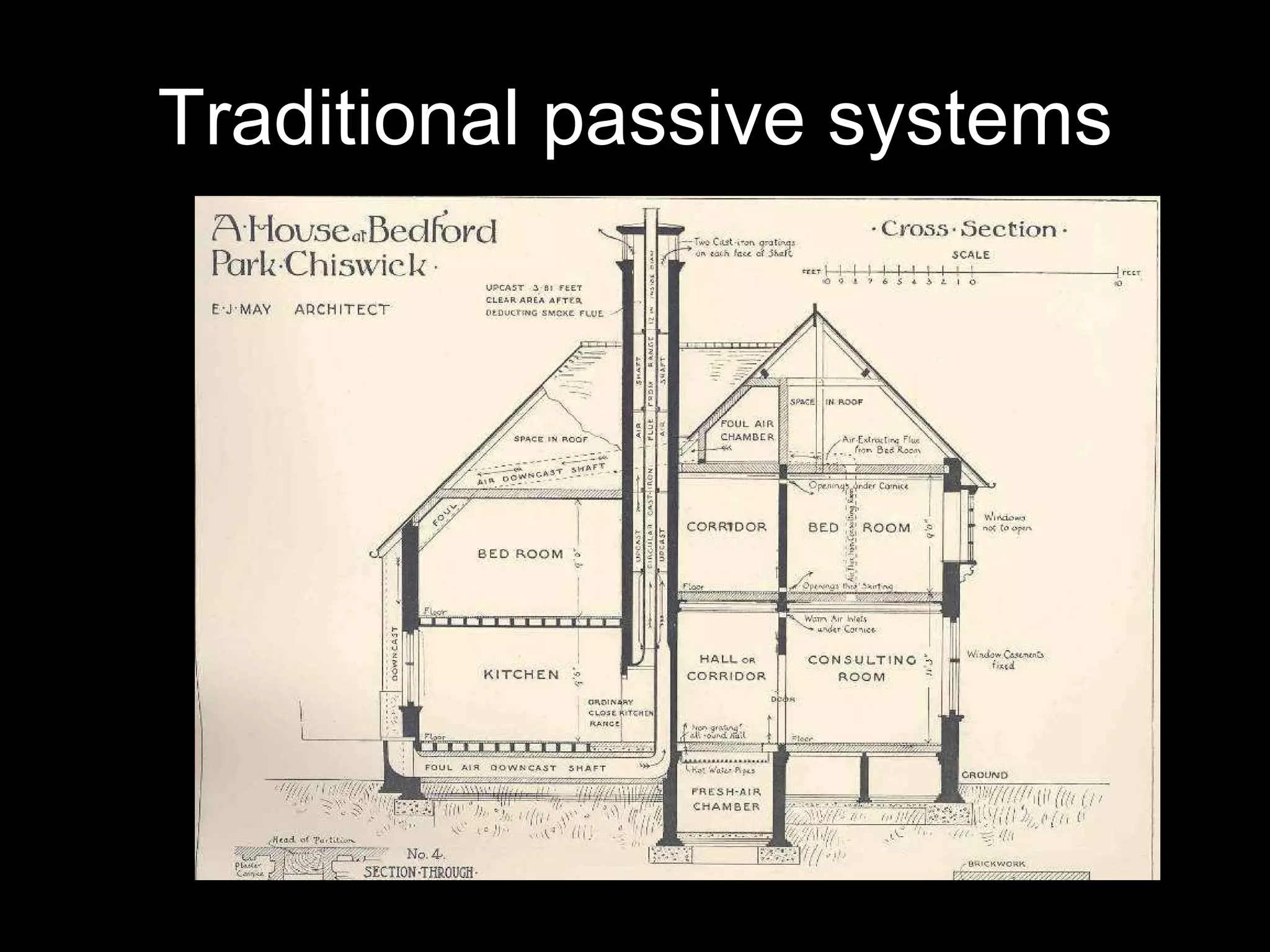
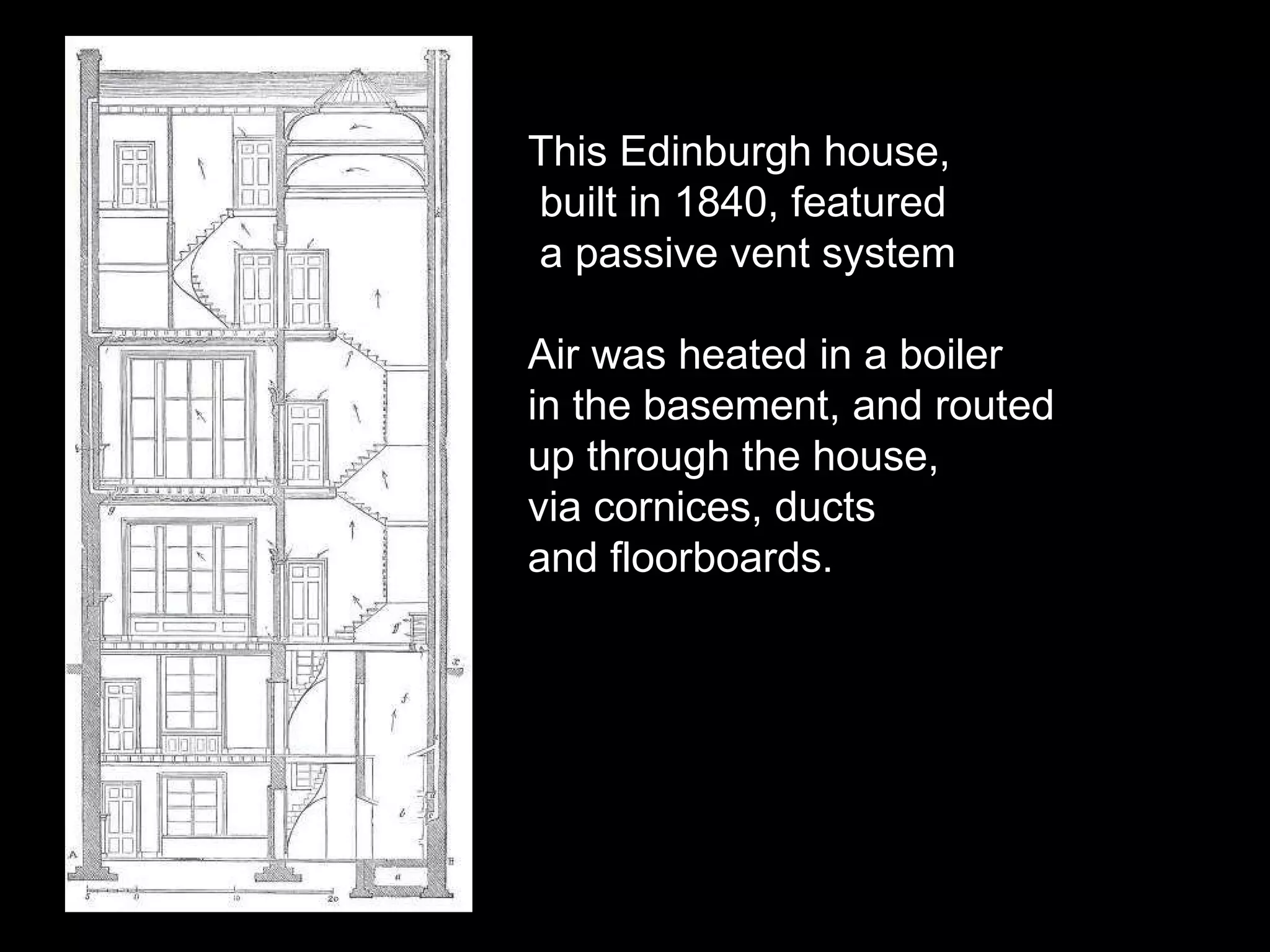
Traditional passive systems
This Edinburgh house, built in 1840, featured a passive vent system Air was heated in a boiler  in the basement, and routed up through the house, via cornices, ducts and floorboards.
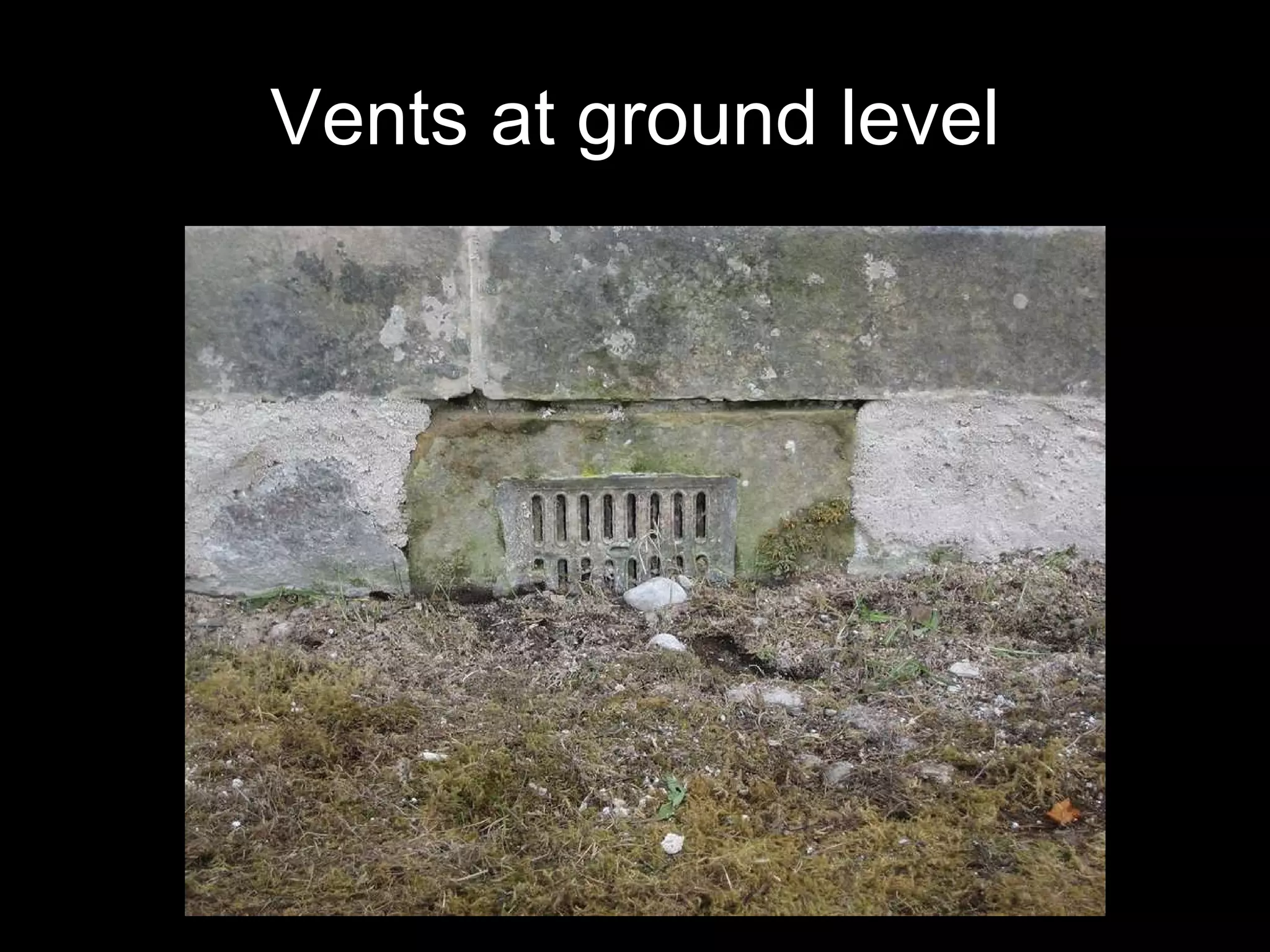
Vents at ground level
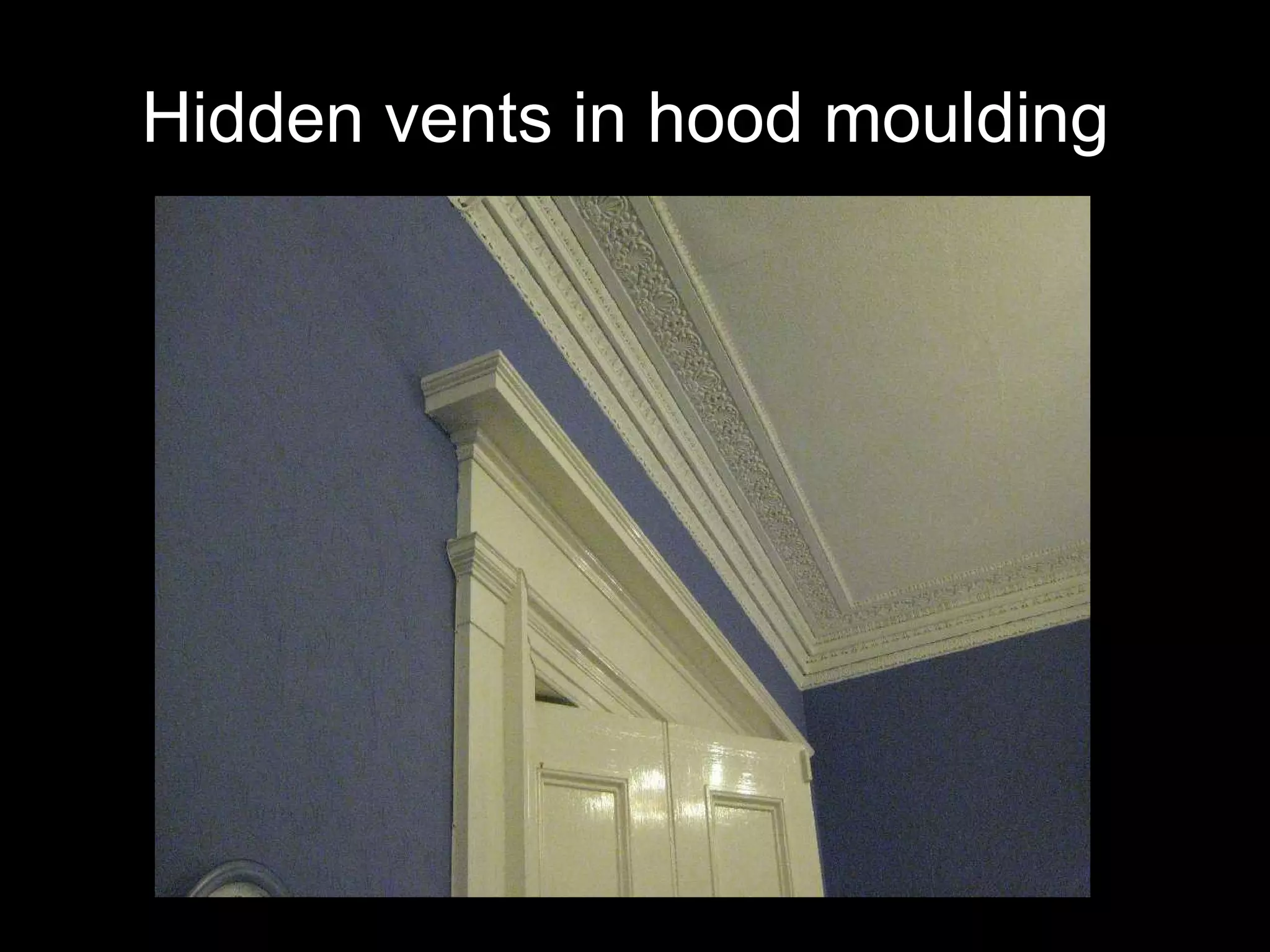
Hidden vents in hood moulding
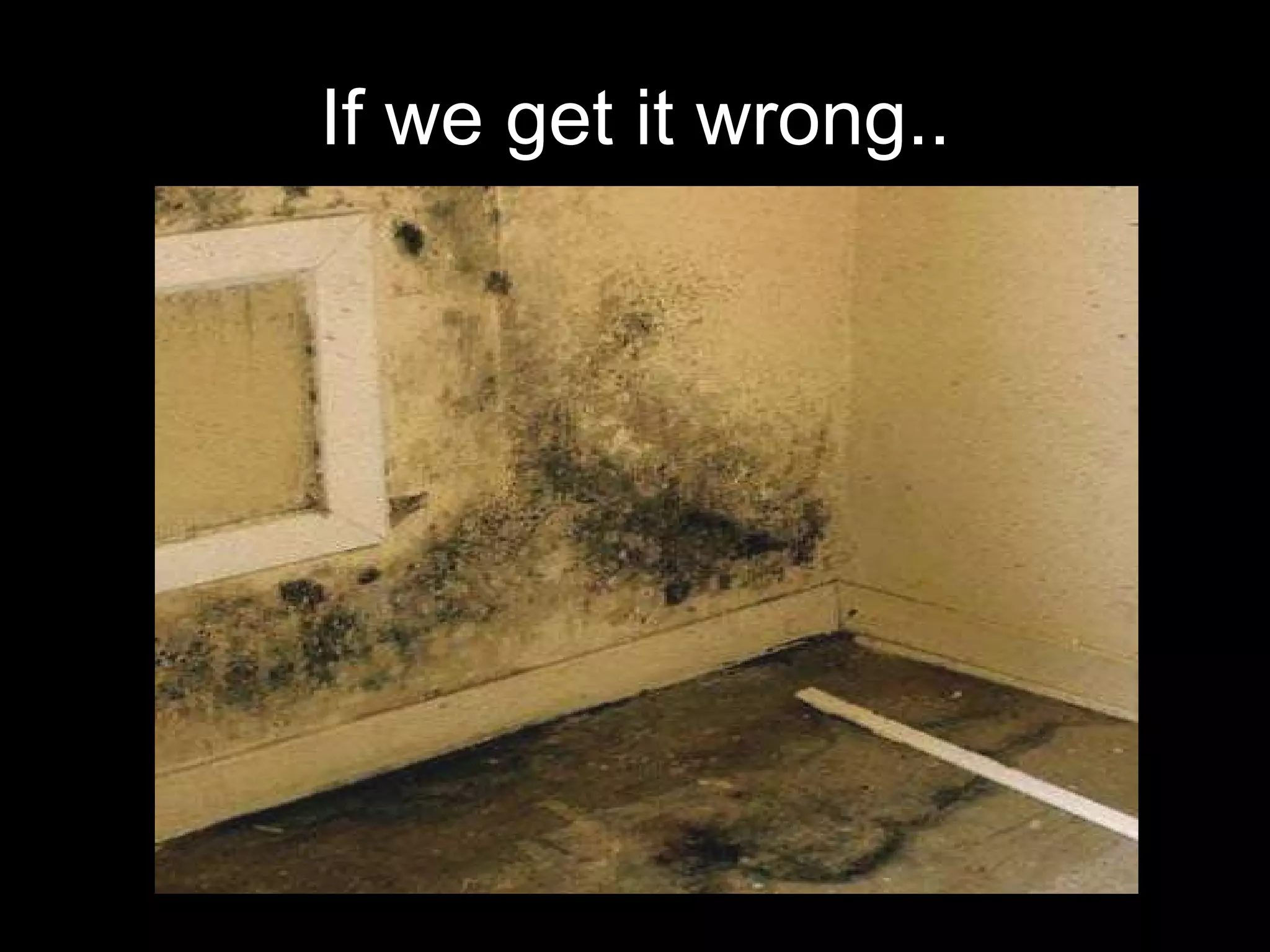
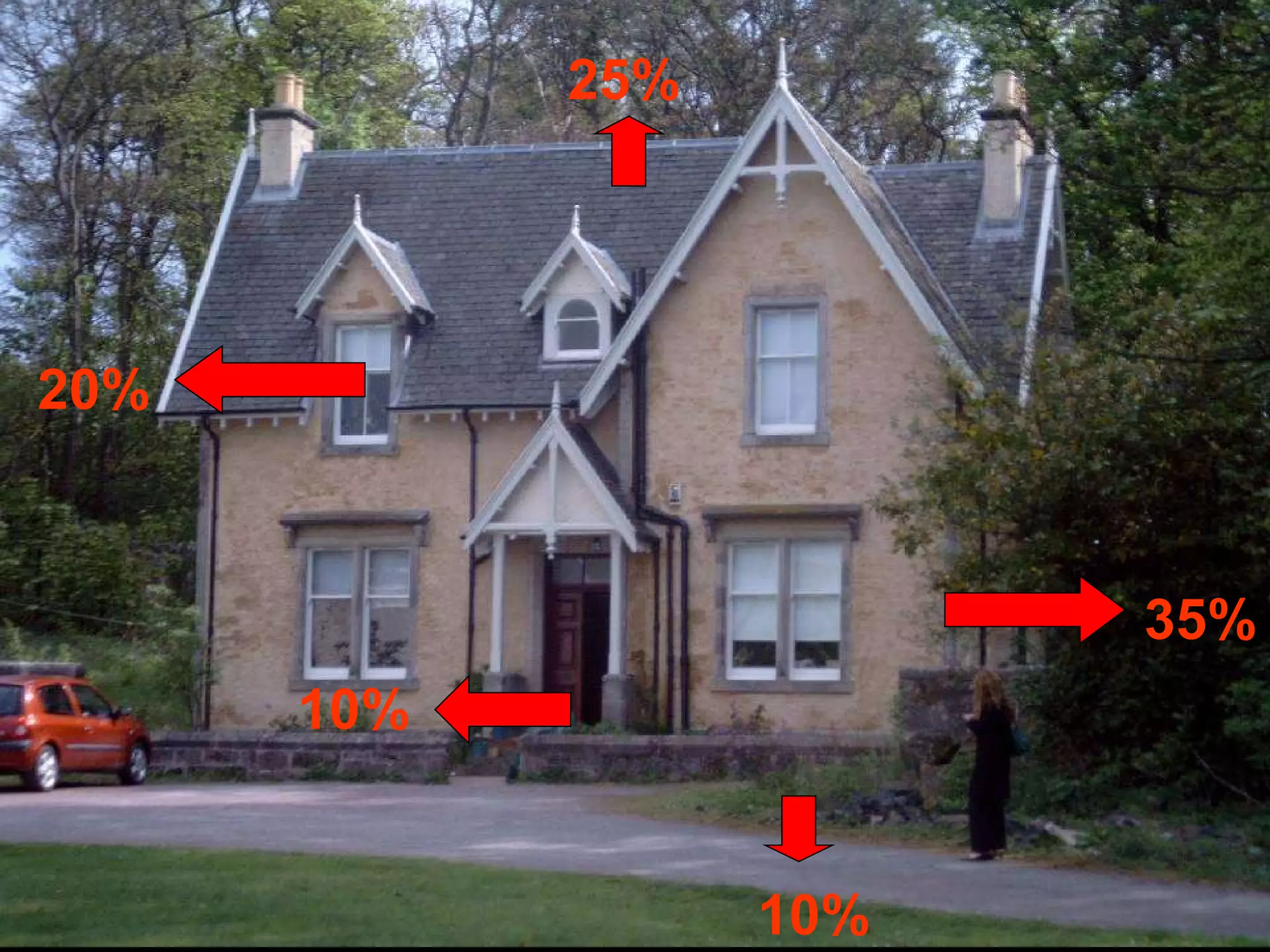
If we get it wrong..
25% 35% 10% 20% 10%
 
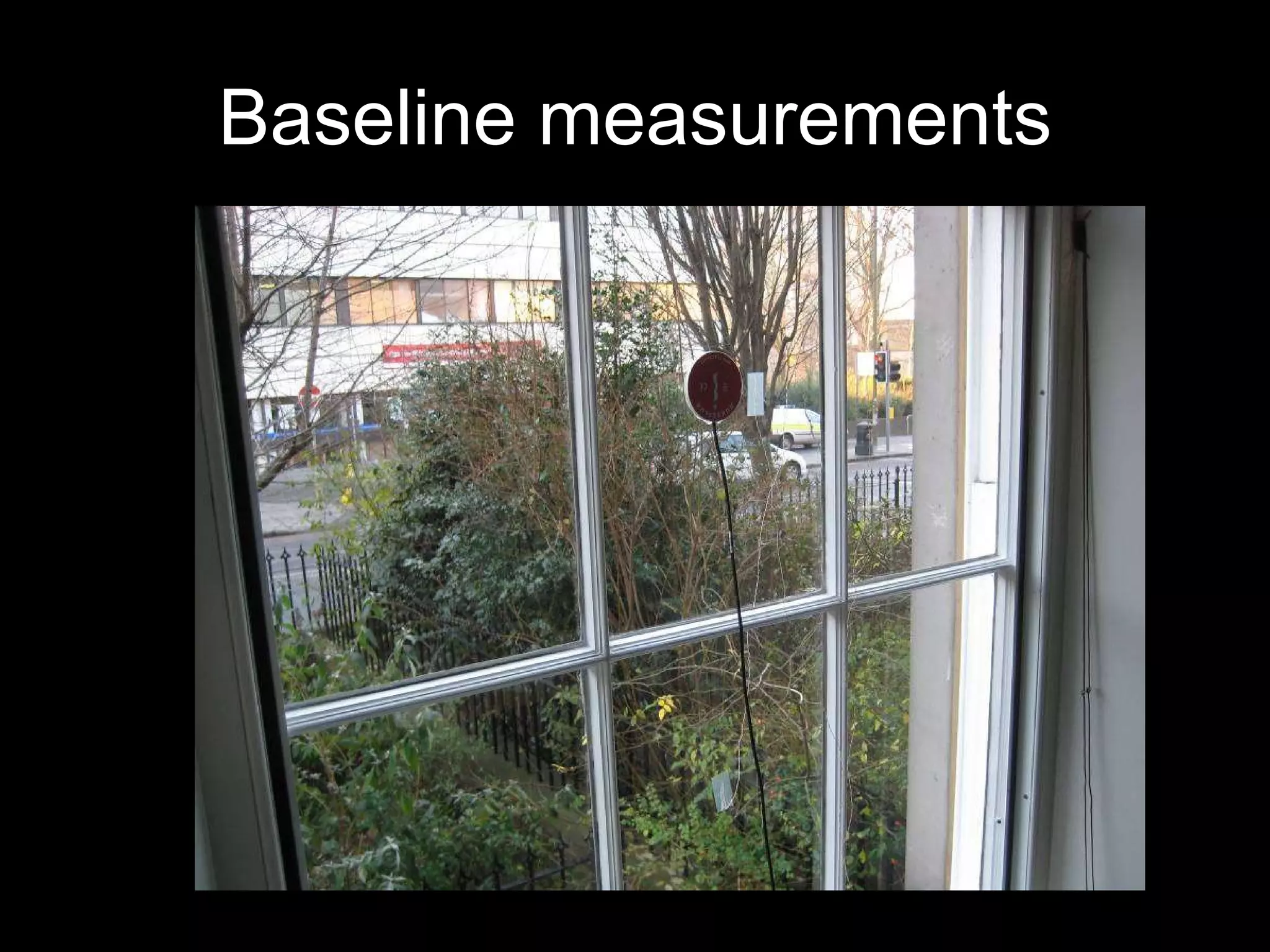
Baseline measurements
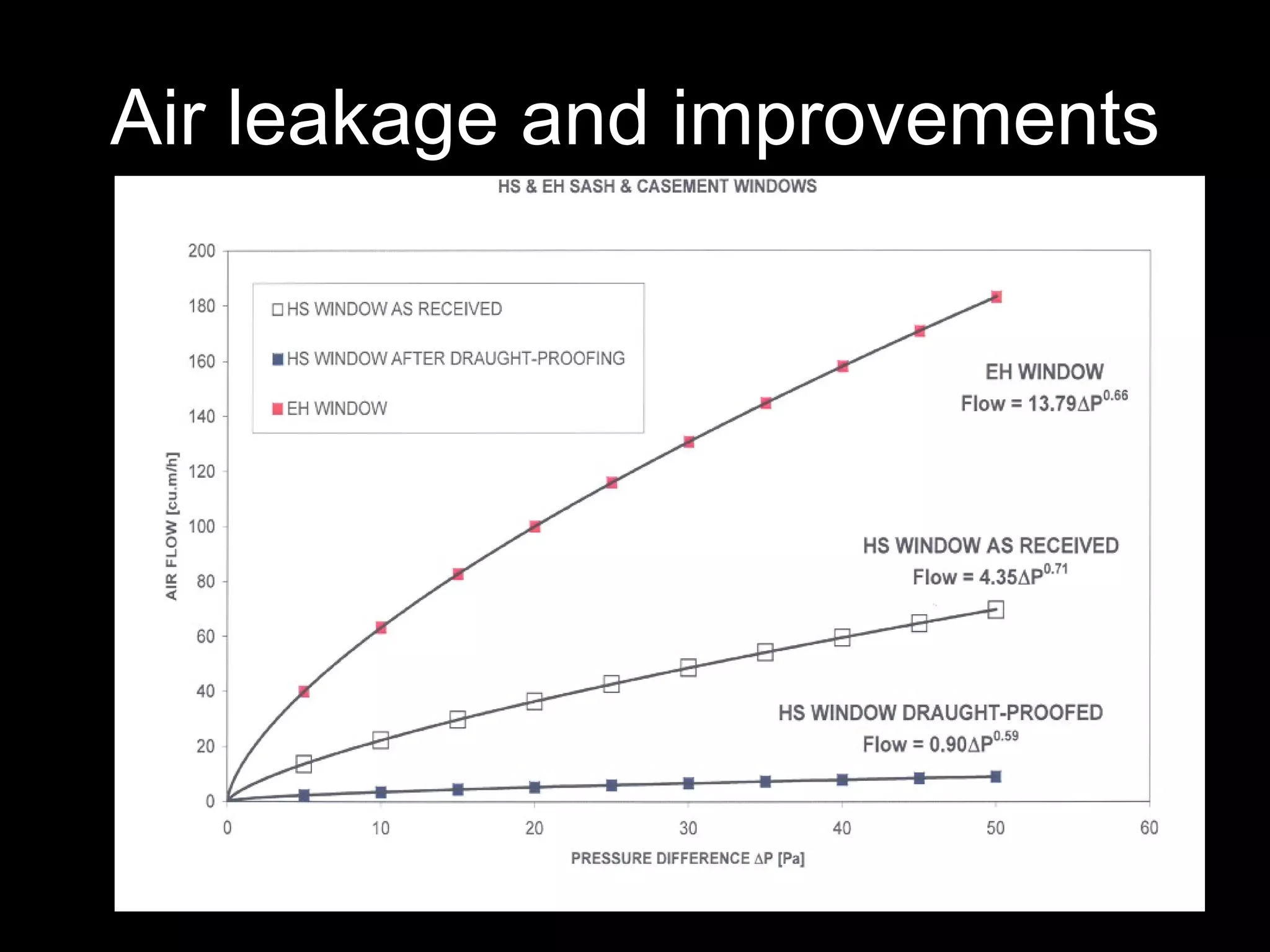
Air leakage and improvements
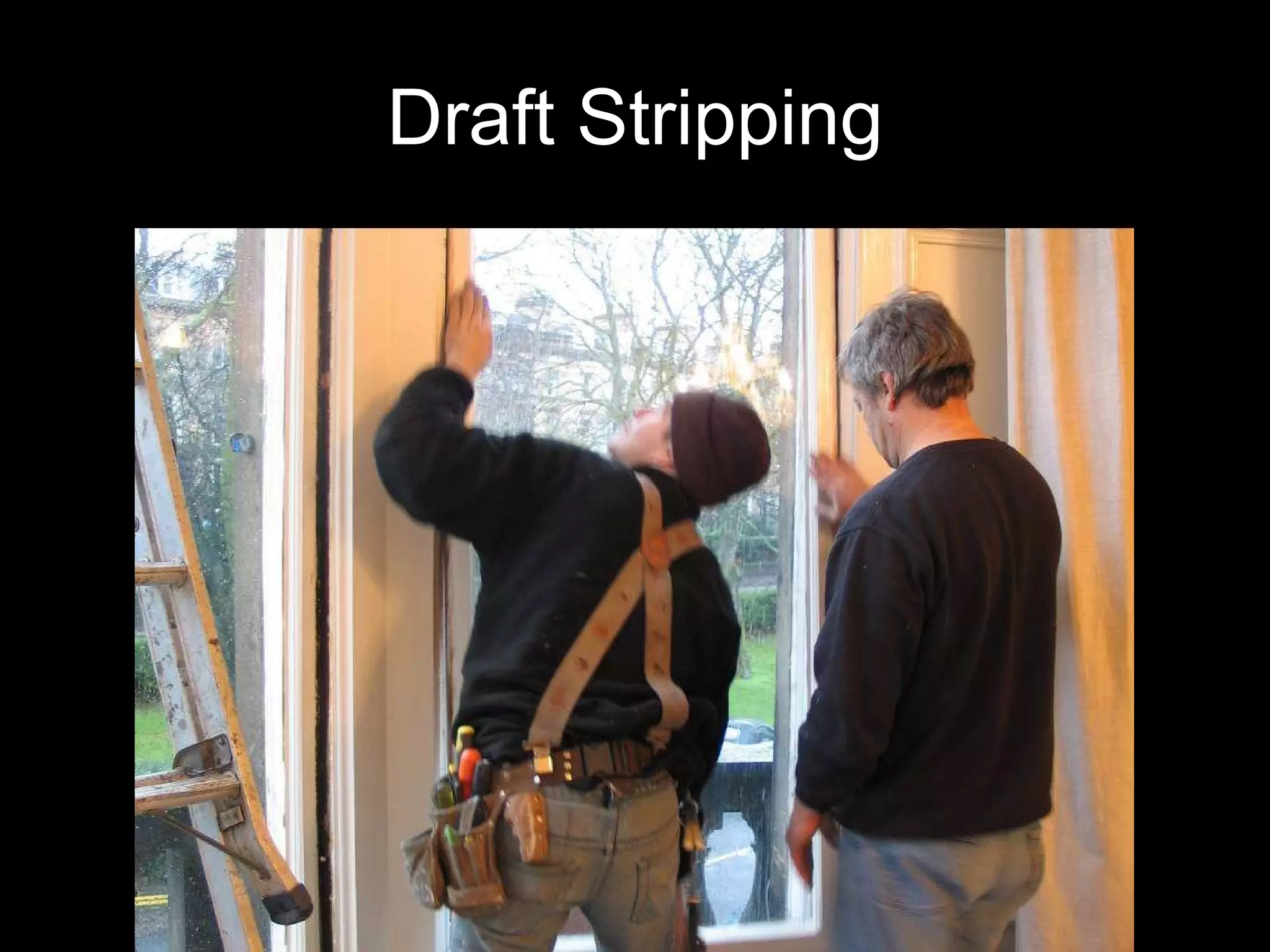
Draft Stripping
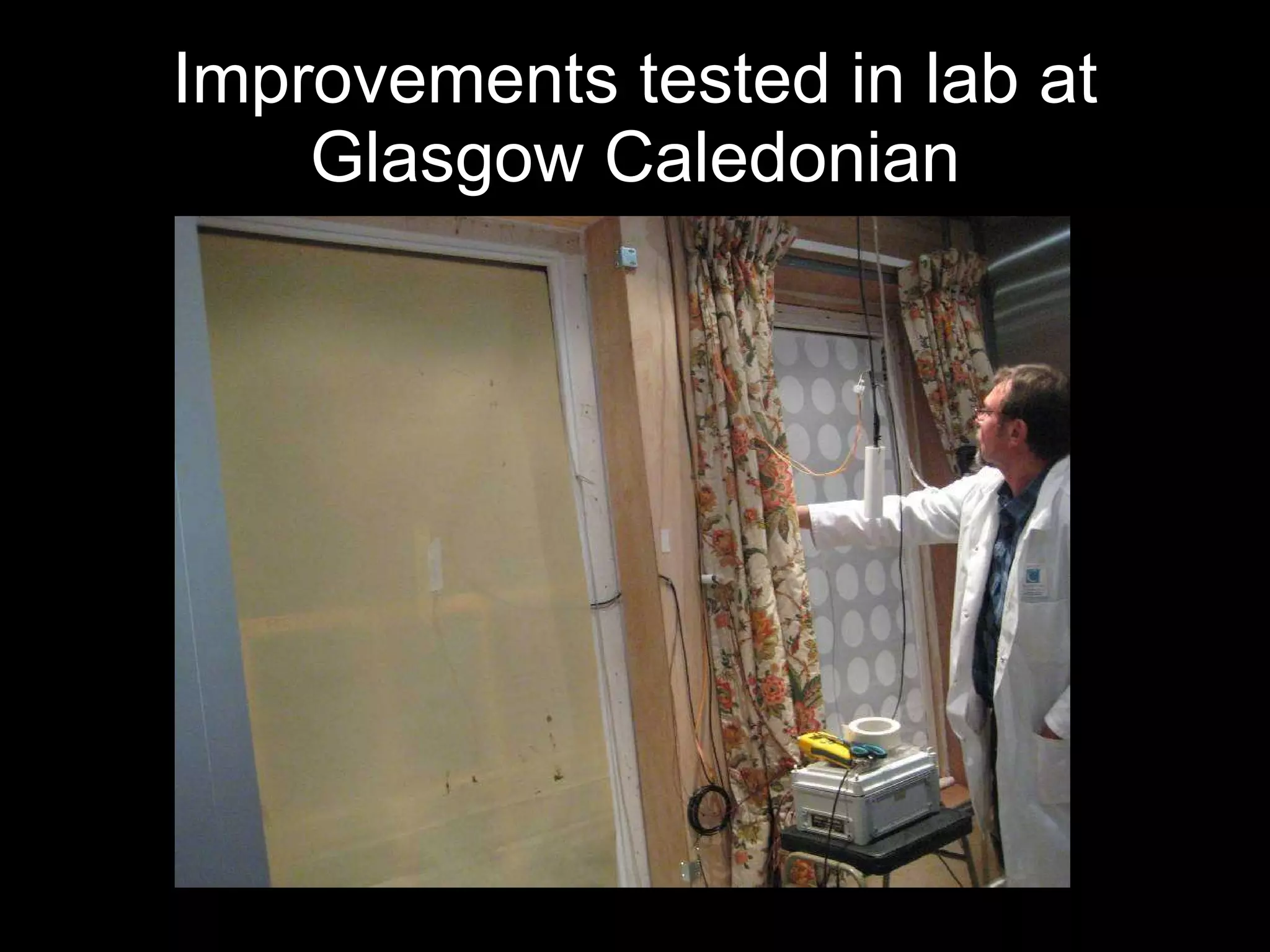
Improvements tested in lab at Glasgow Caledonian
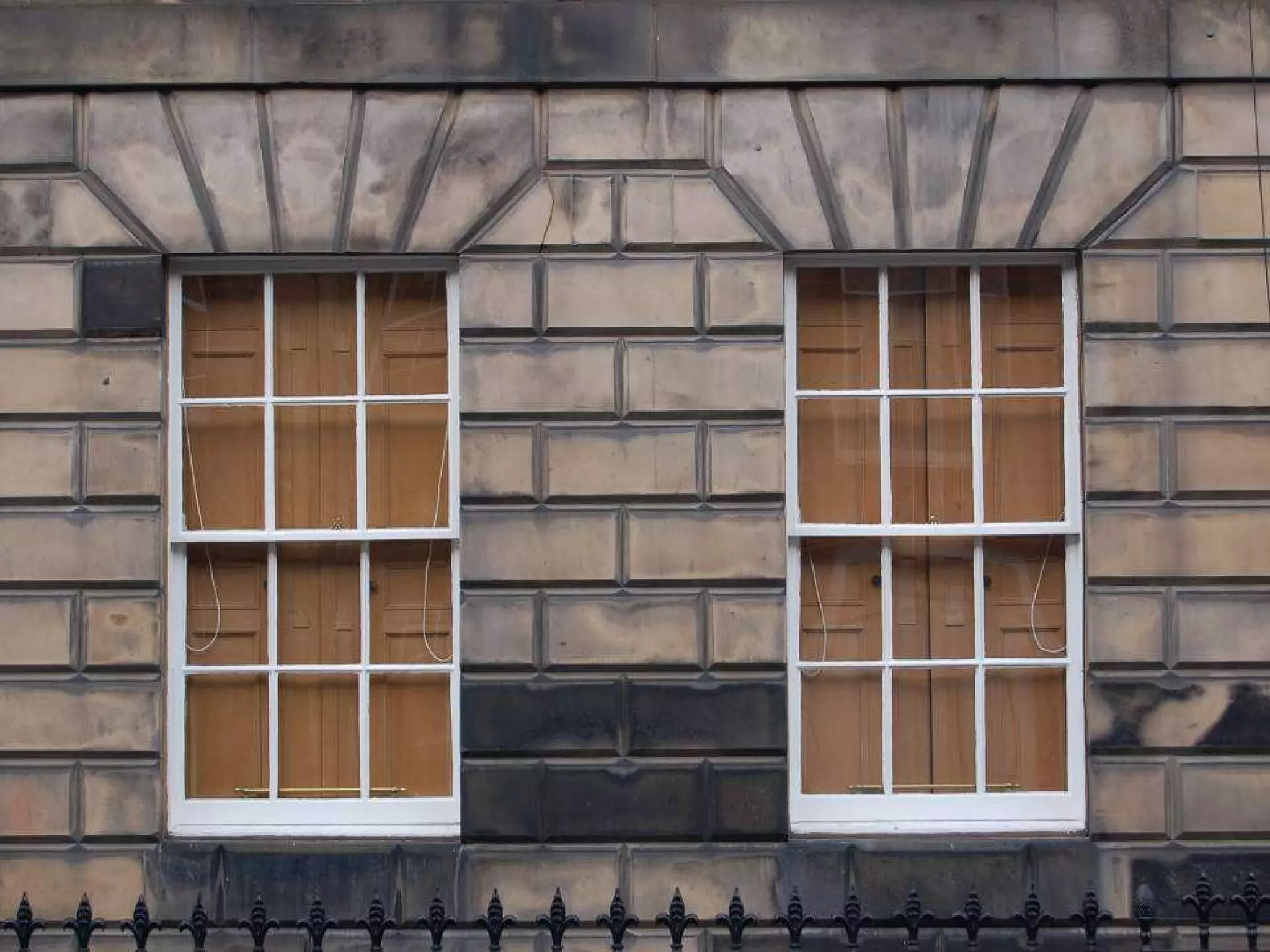
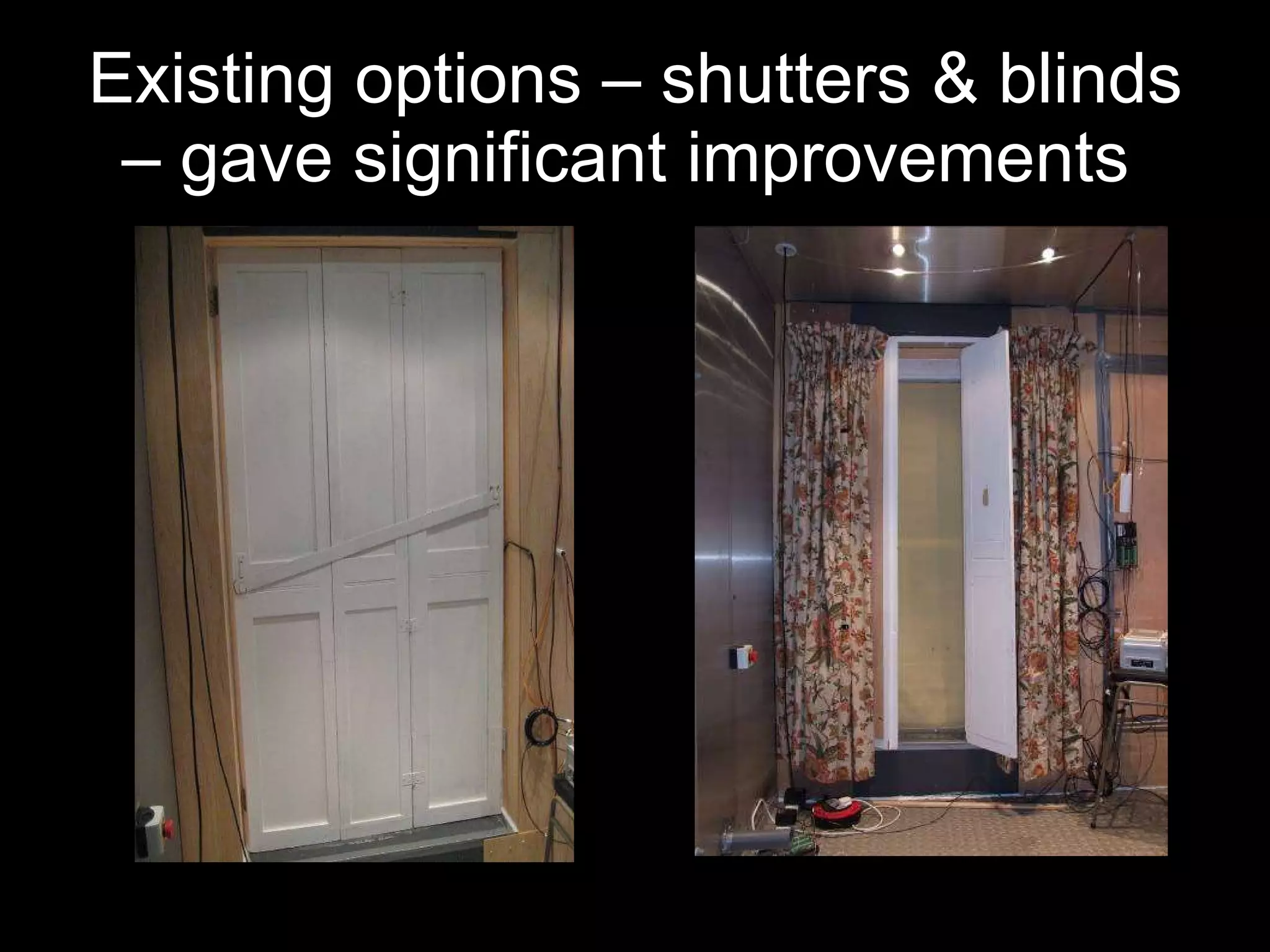
Existing options – shutters & blinds – gave significant improvements
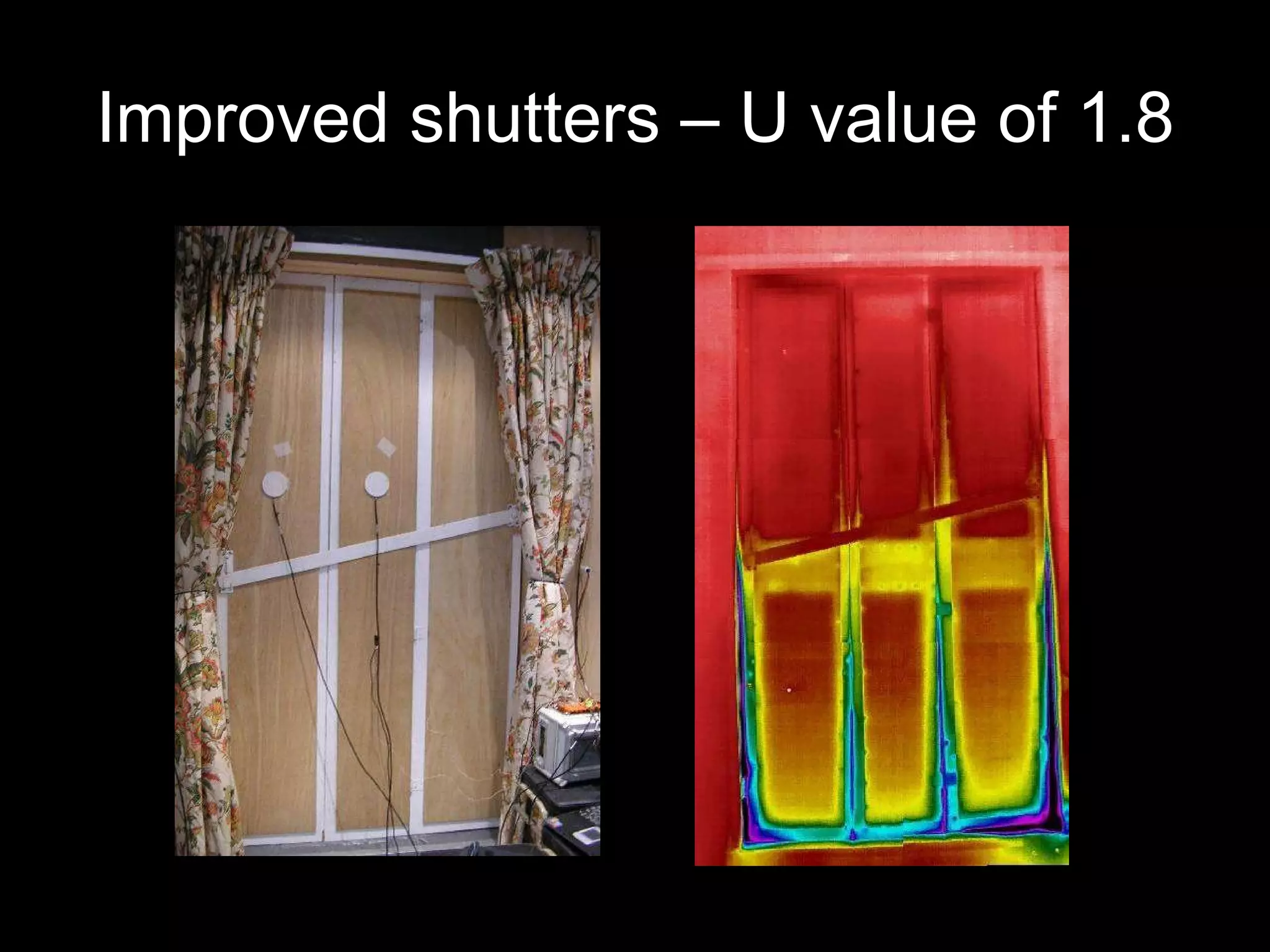
Improved shutters – U value of 1.8
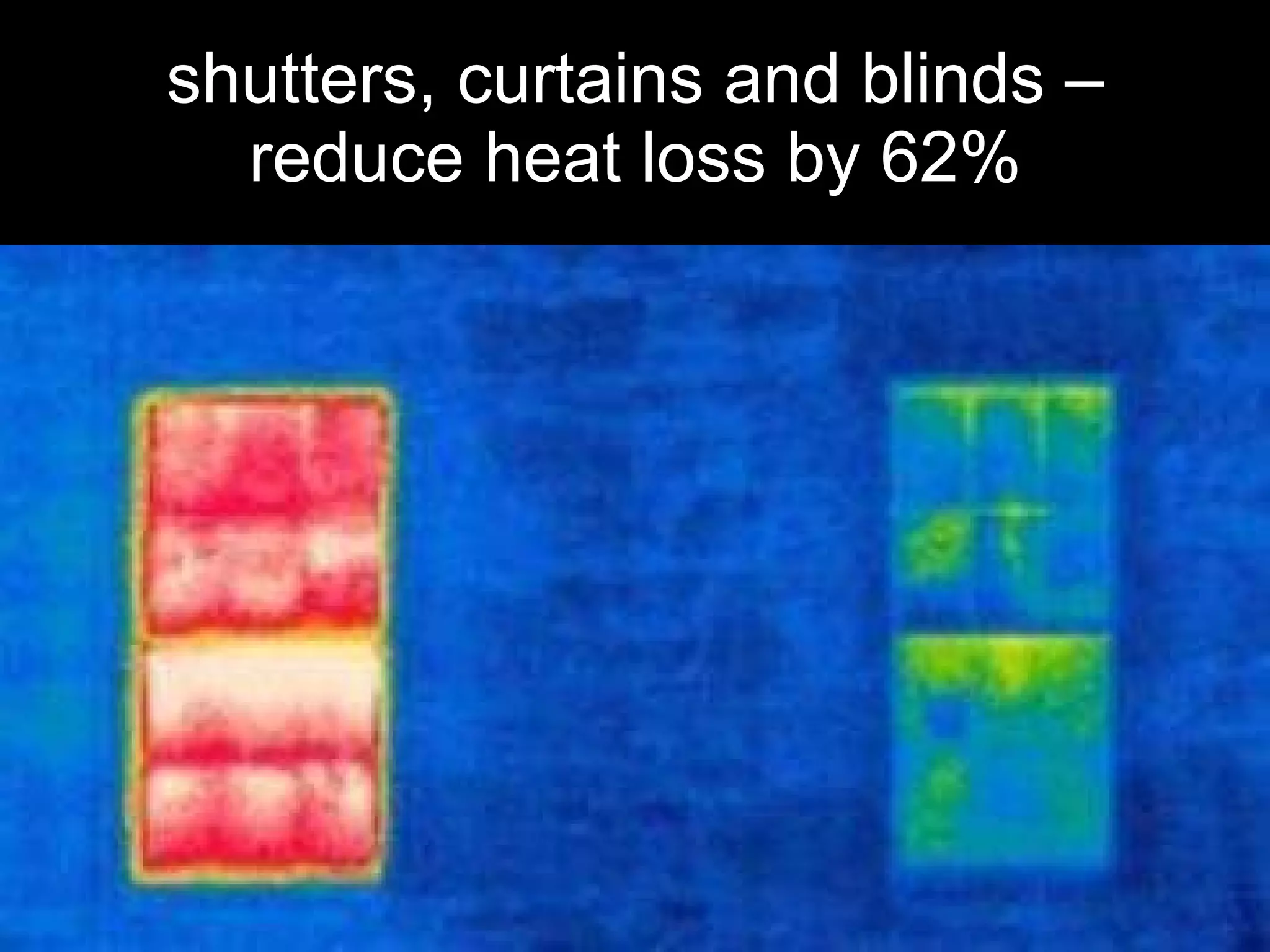
shutters, curtains and blinds – reduce heat loss by 62%
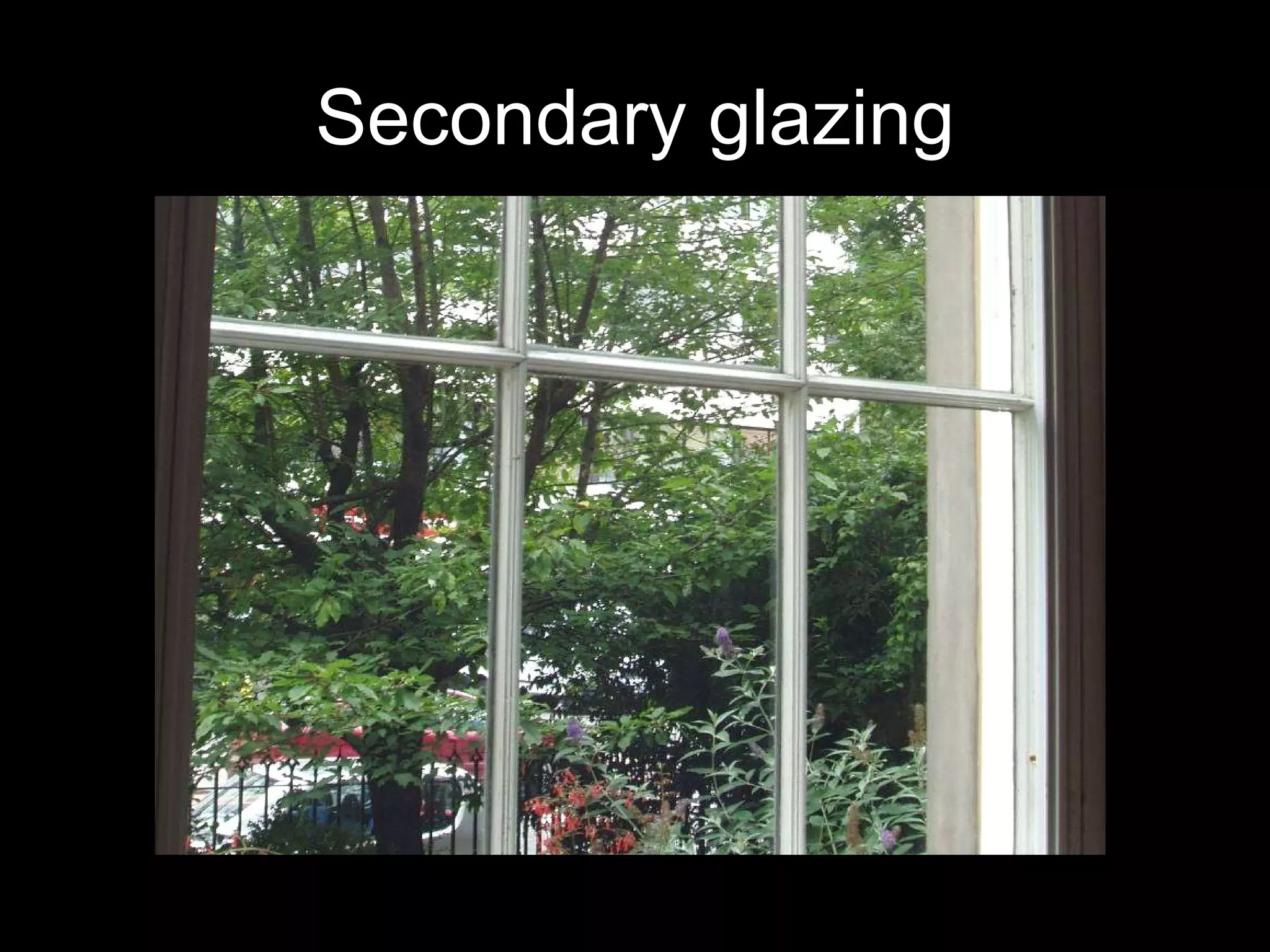
Secondary glazing
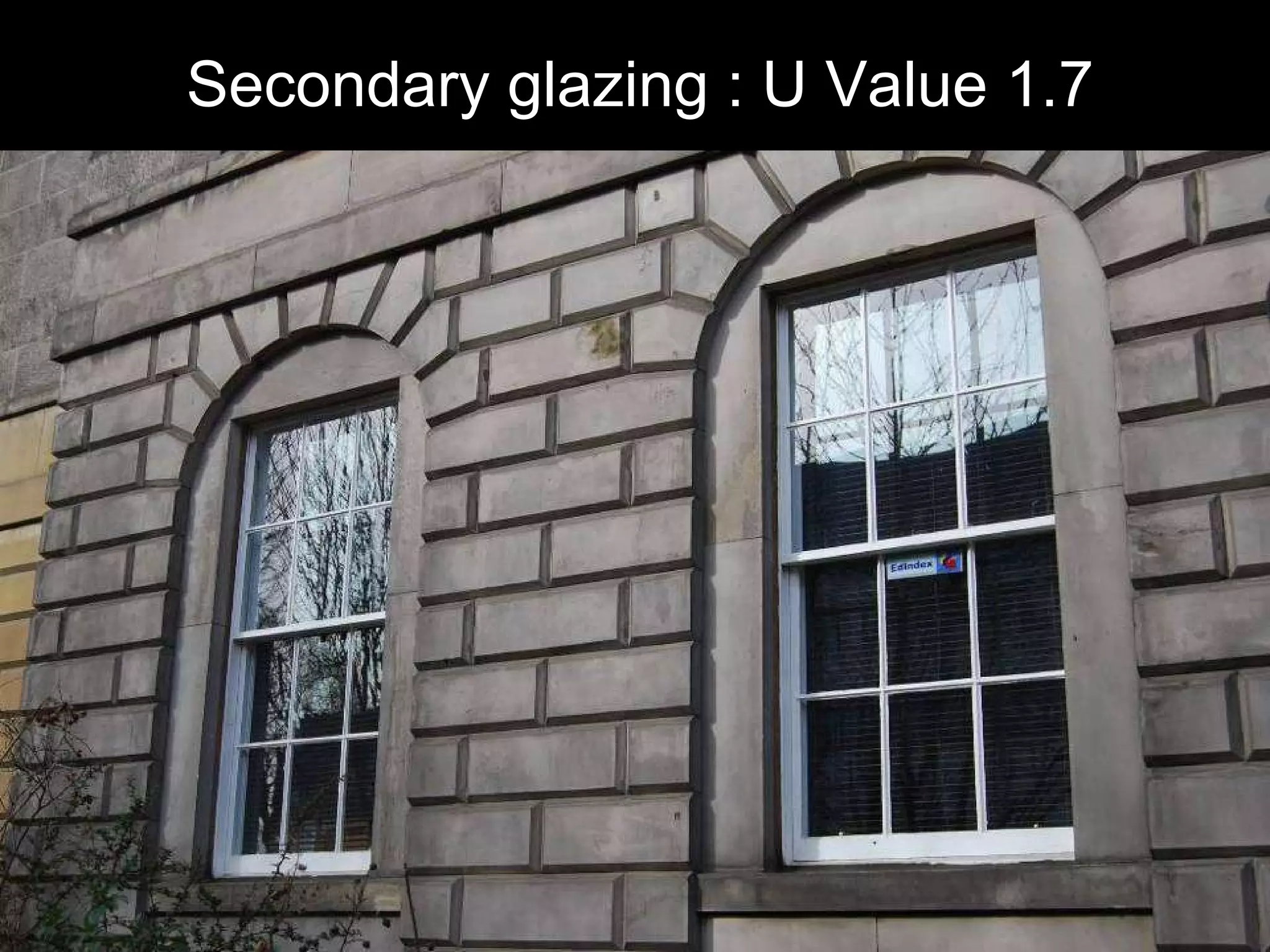
Secondary glazing : U Value 1.7
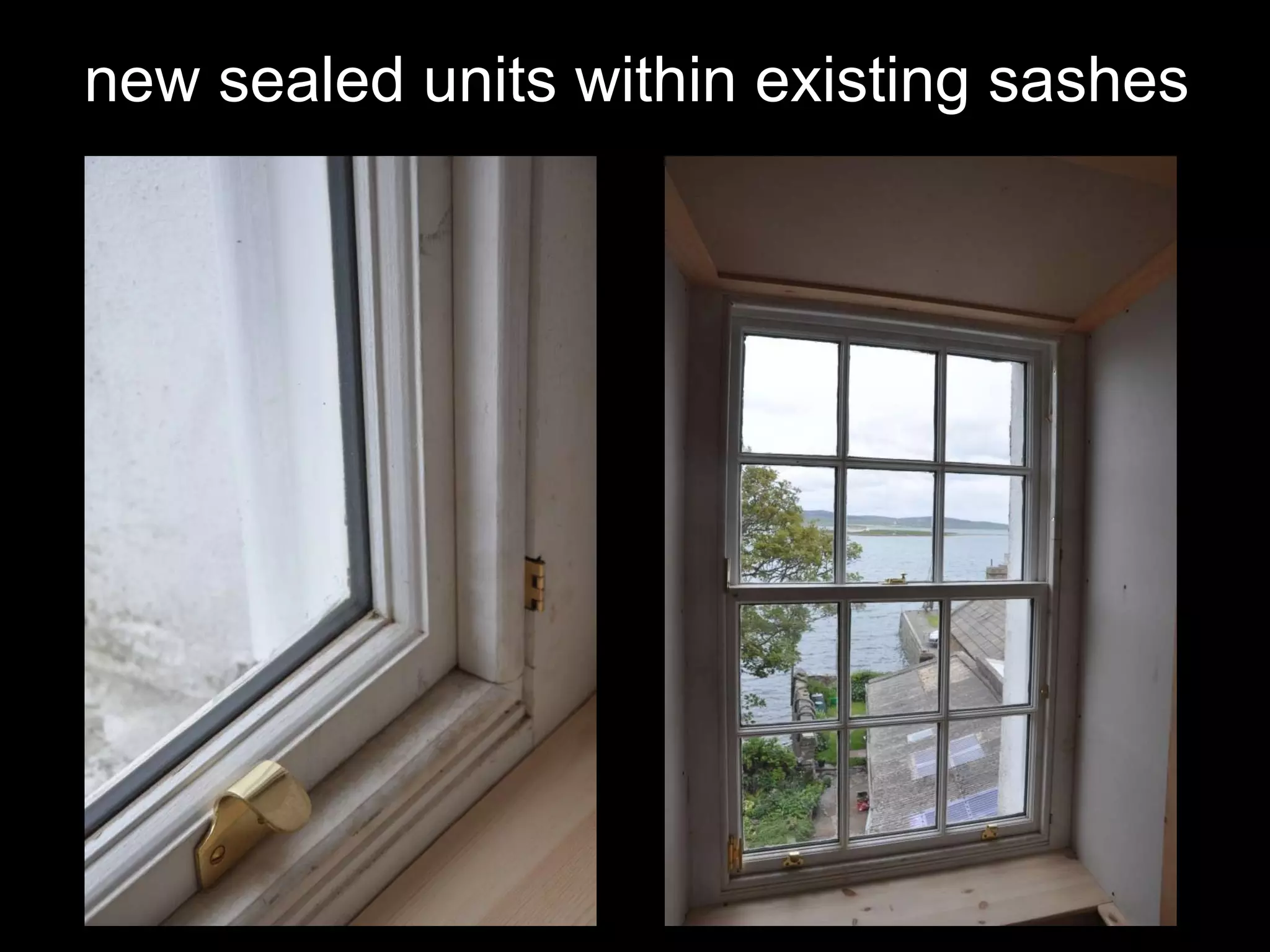
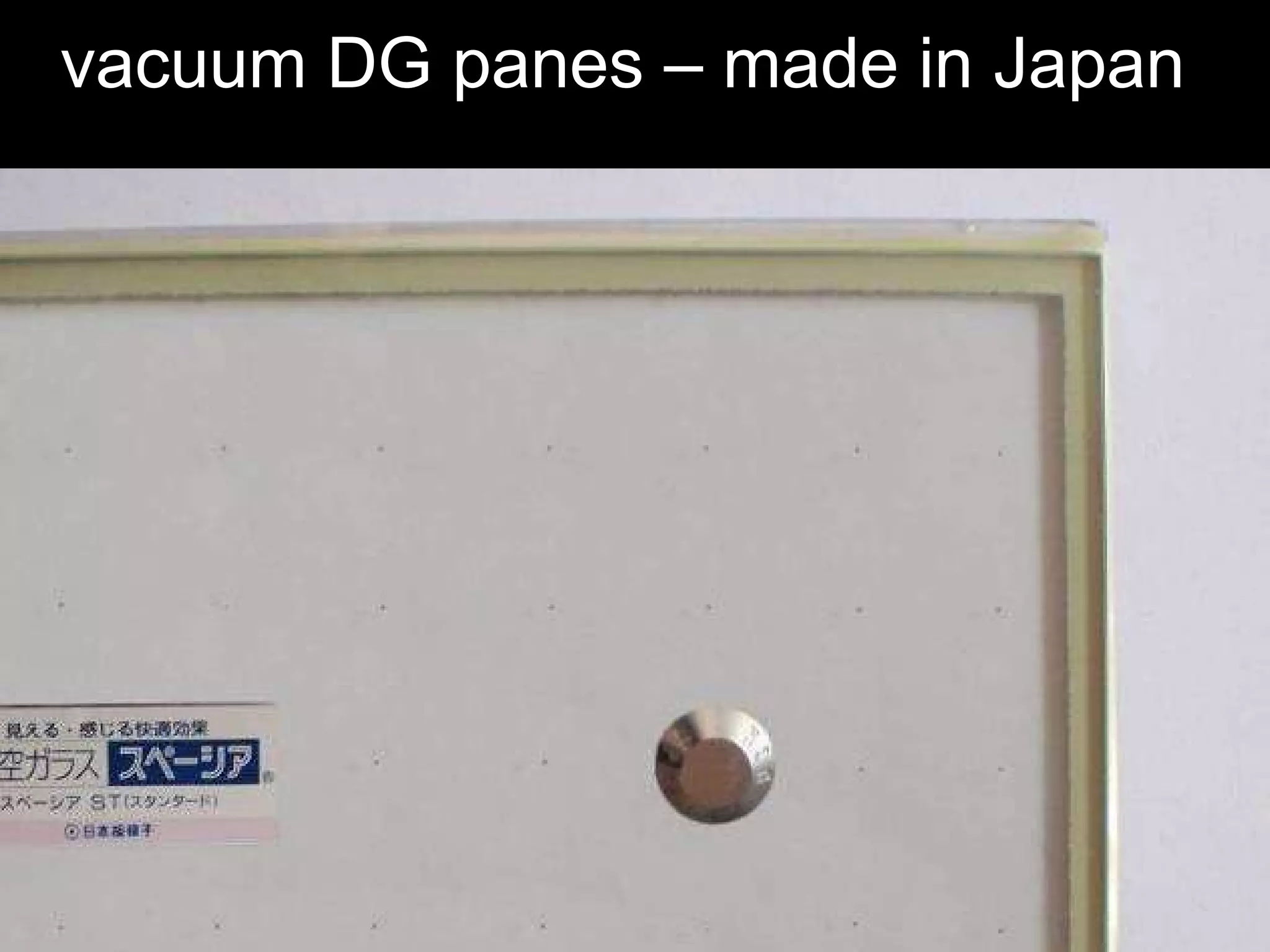
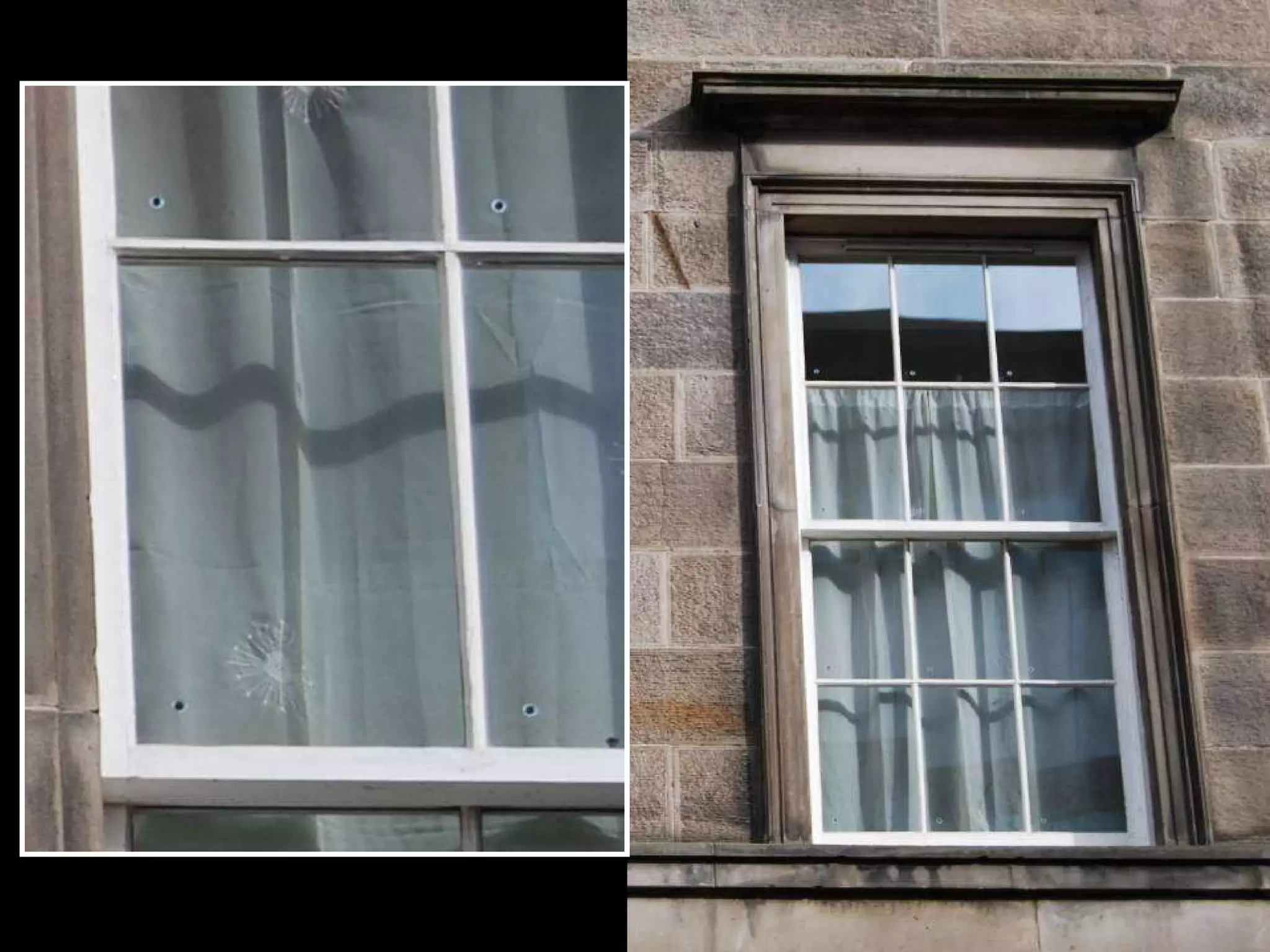
new sealed units within existing sashes
vacuum DG panes – made in Japan
 
Energy efficient but looks and performs well
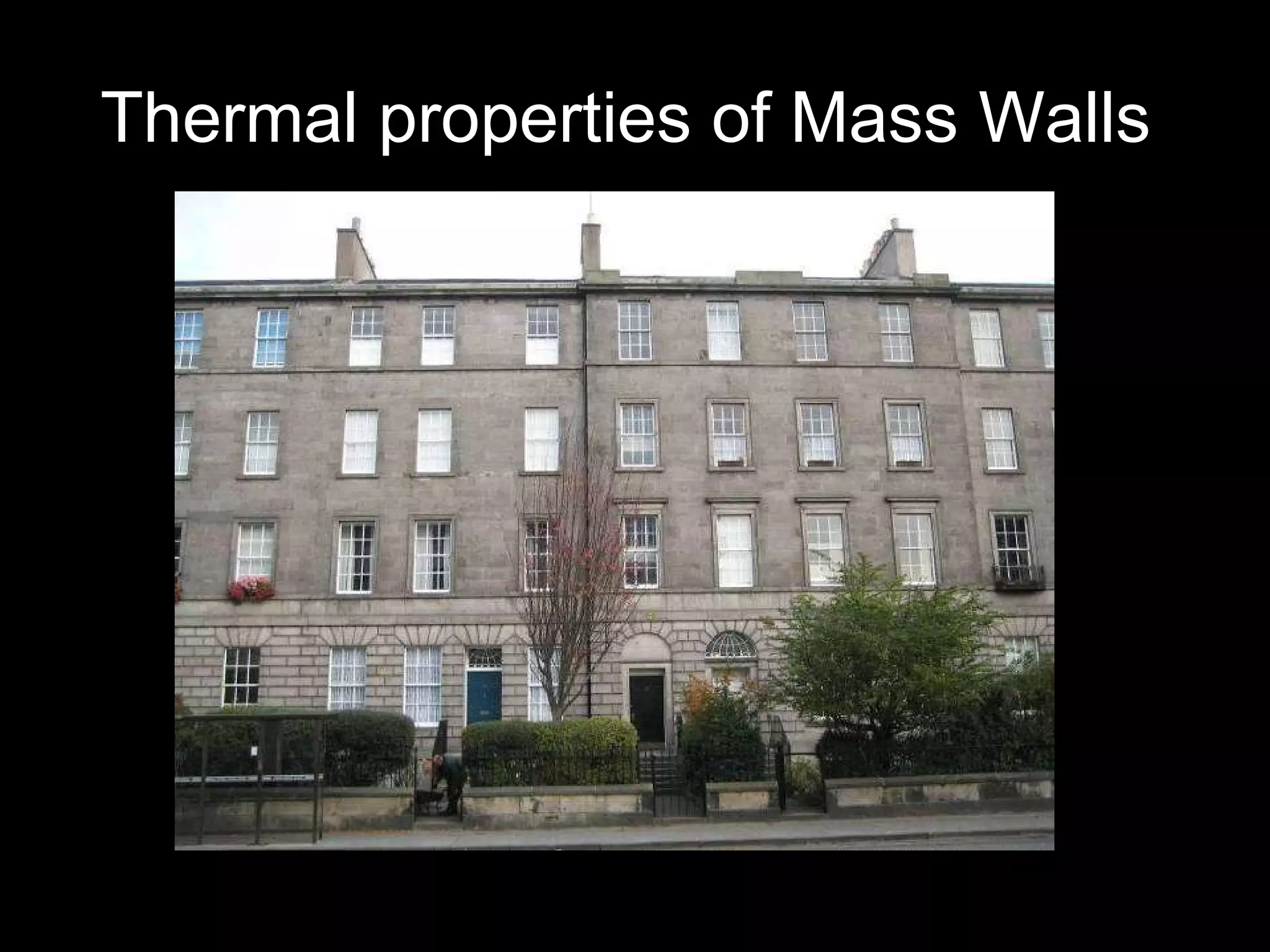
Thermal properties of Mass Walls
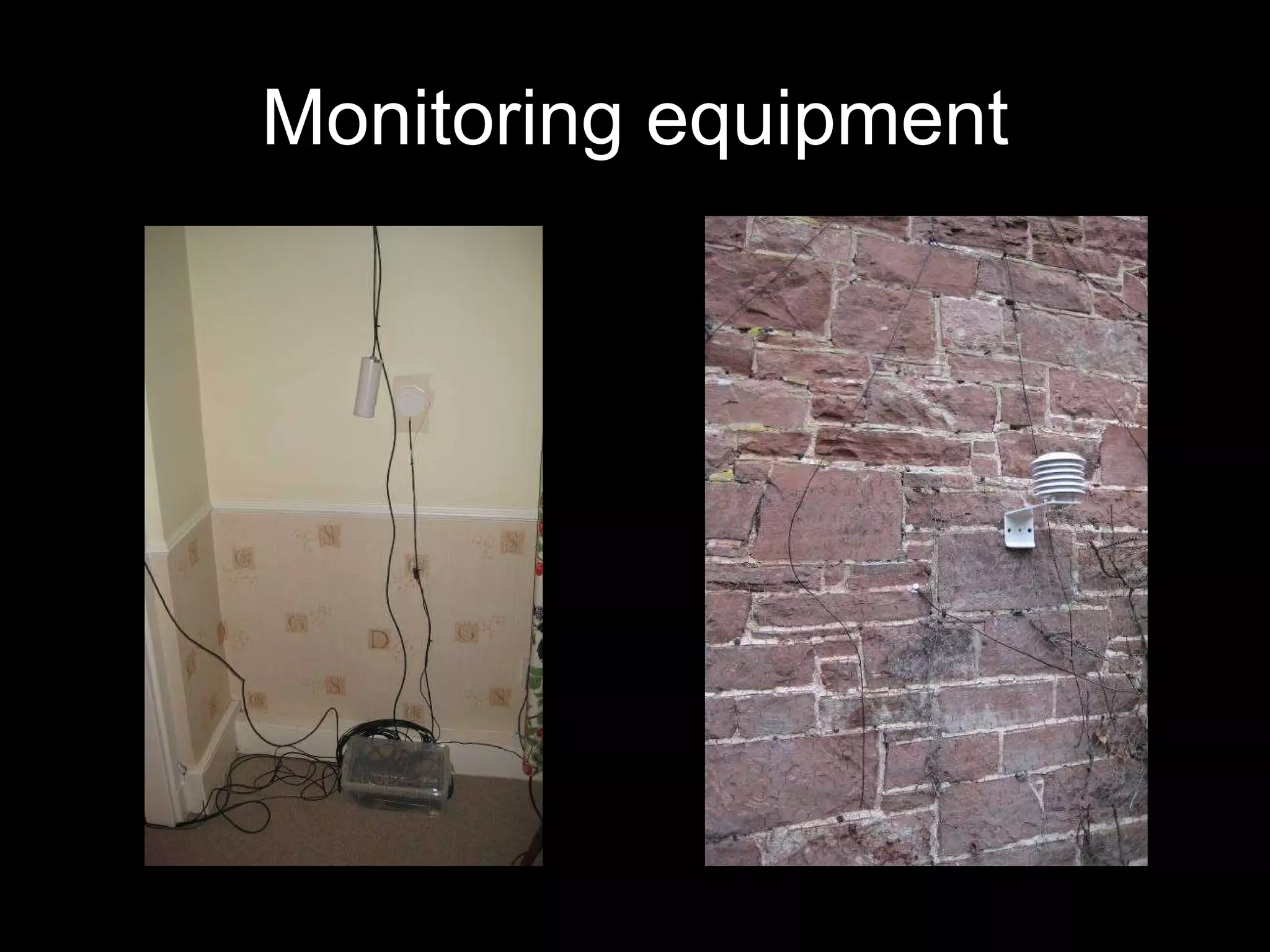
Monitoring equipment
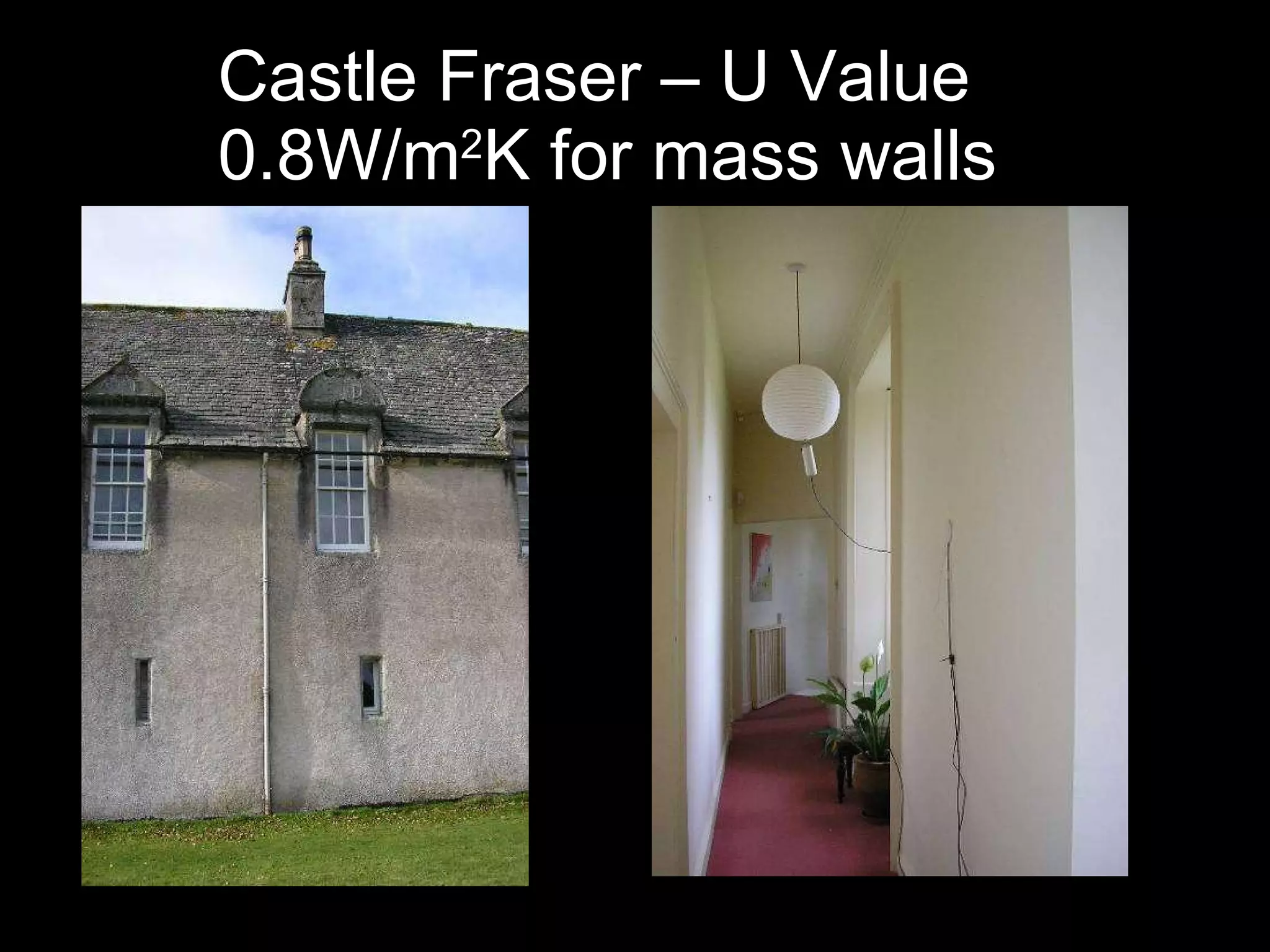
Castle Fraser – U Value 0.8W/m 2 K for mass walls
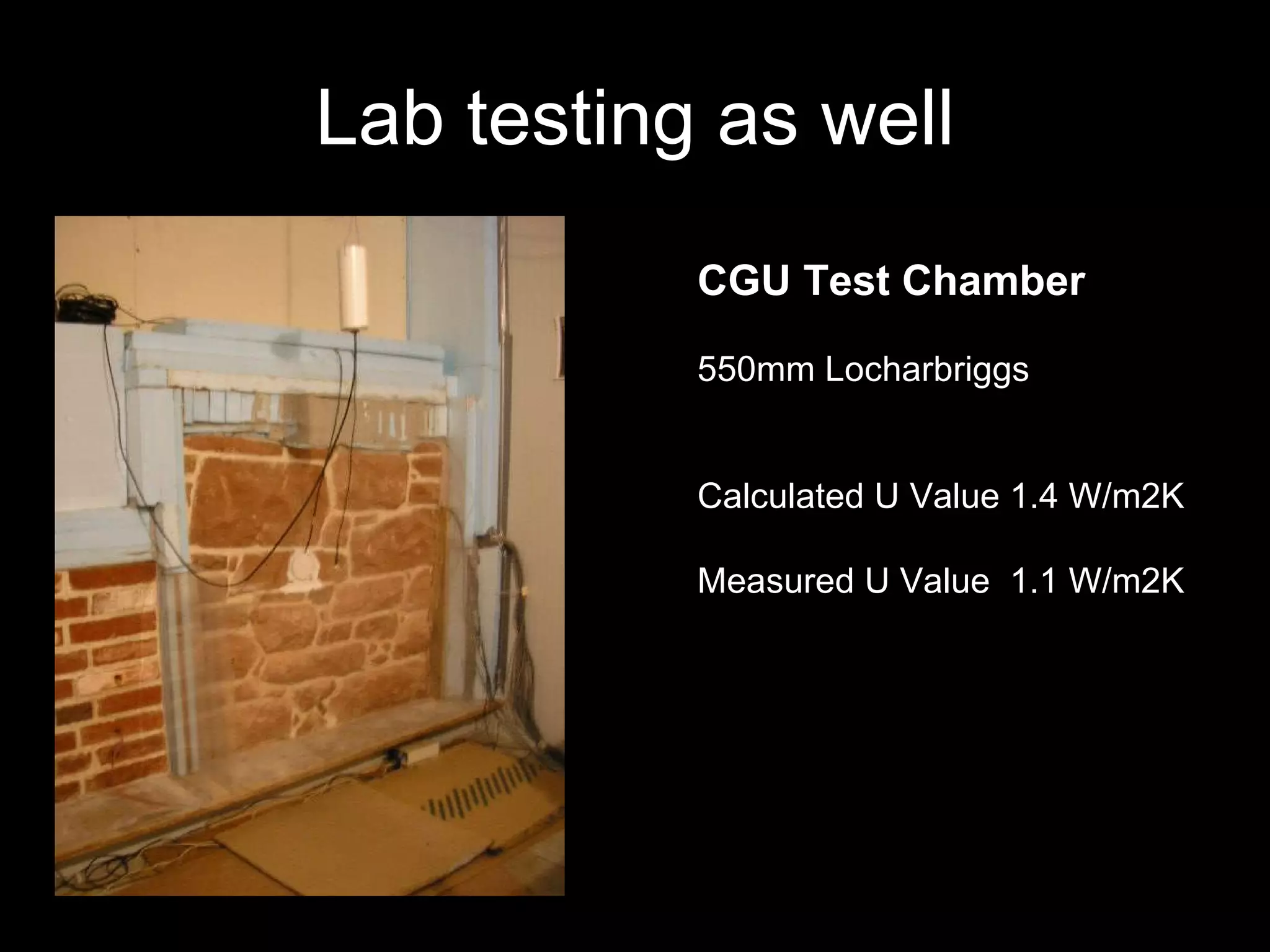
Lab testing as well CGU Test Chamber 550mm Locharbriggs Calculated U Value 1.4 W/m2K Measured U Value  1.1 W/m2K
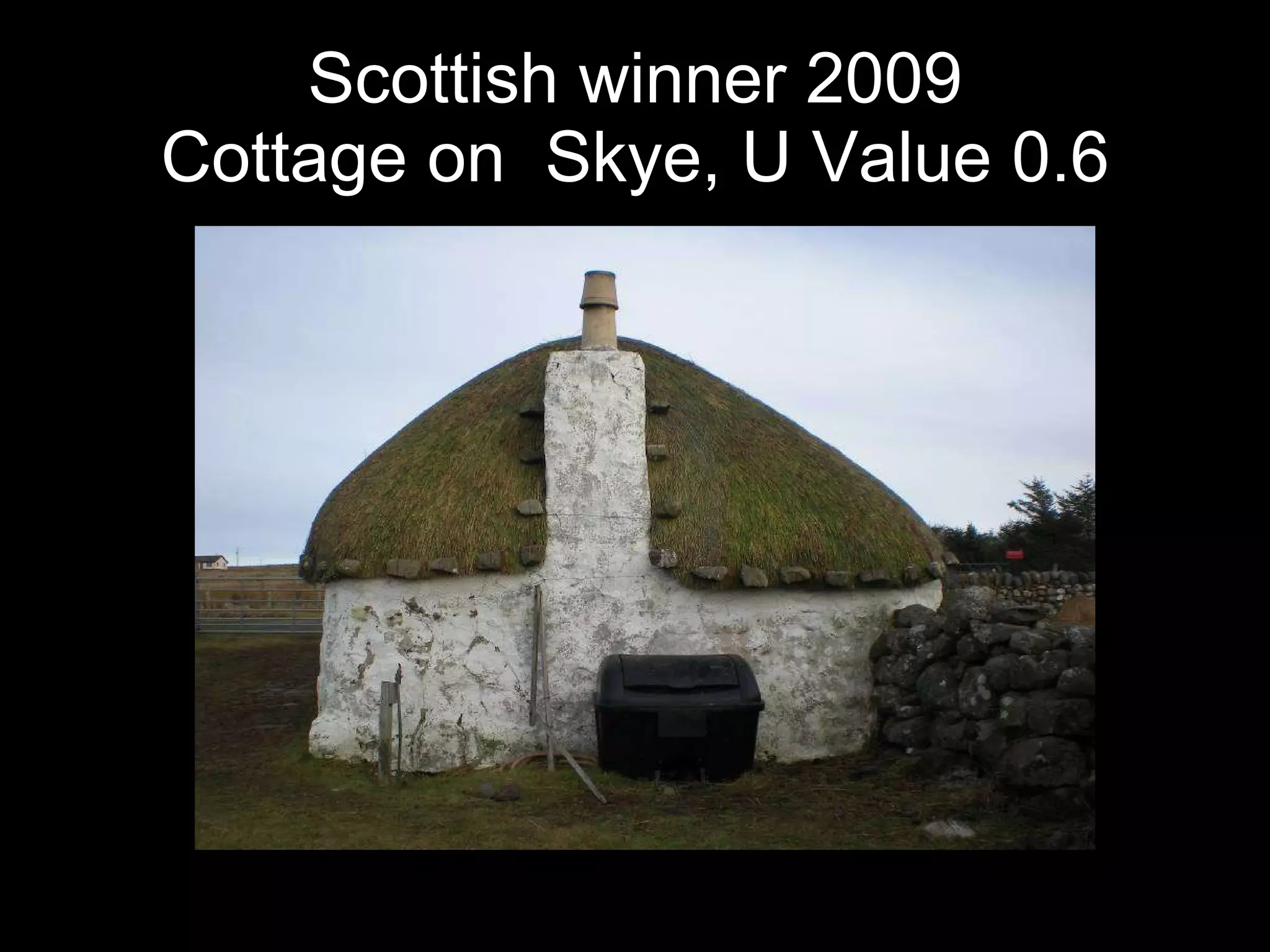
Scottish winner 2009 Cottage on  Skye, U Value 0.6
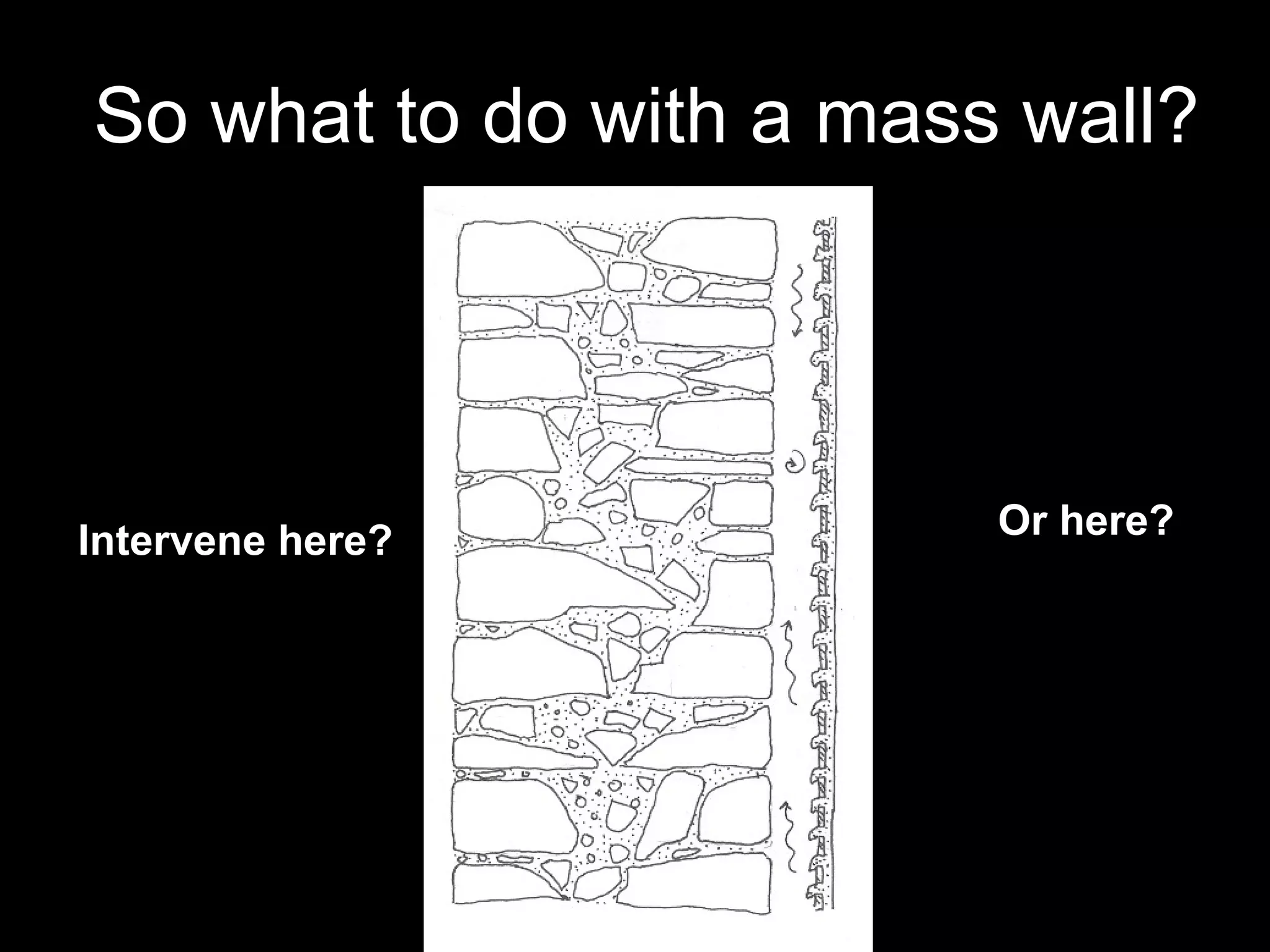
So what to do with a mass wall? Intervene here? Or here?
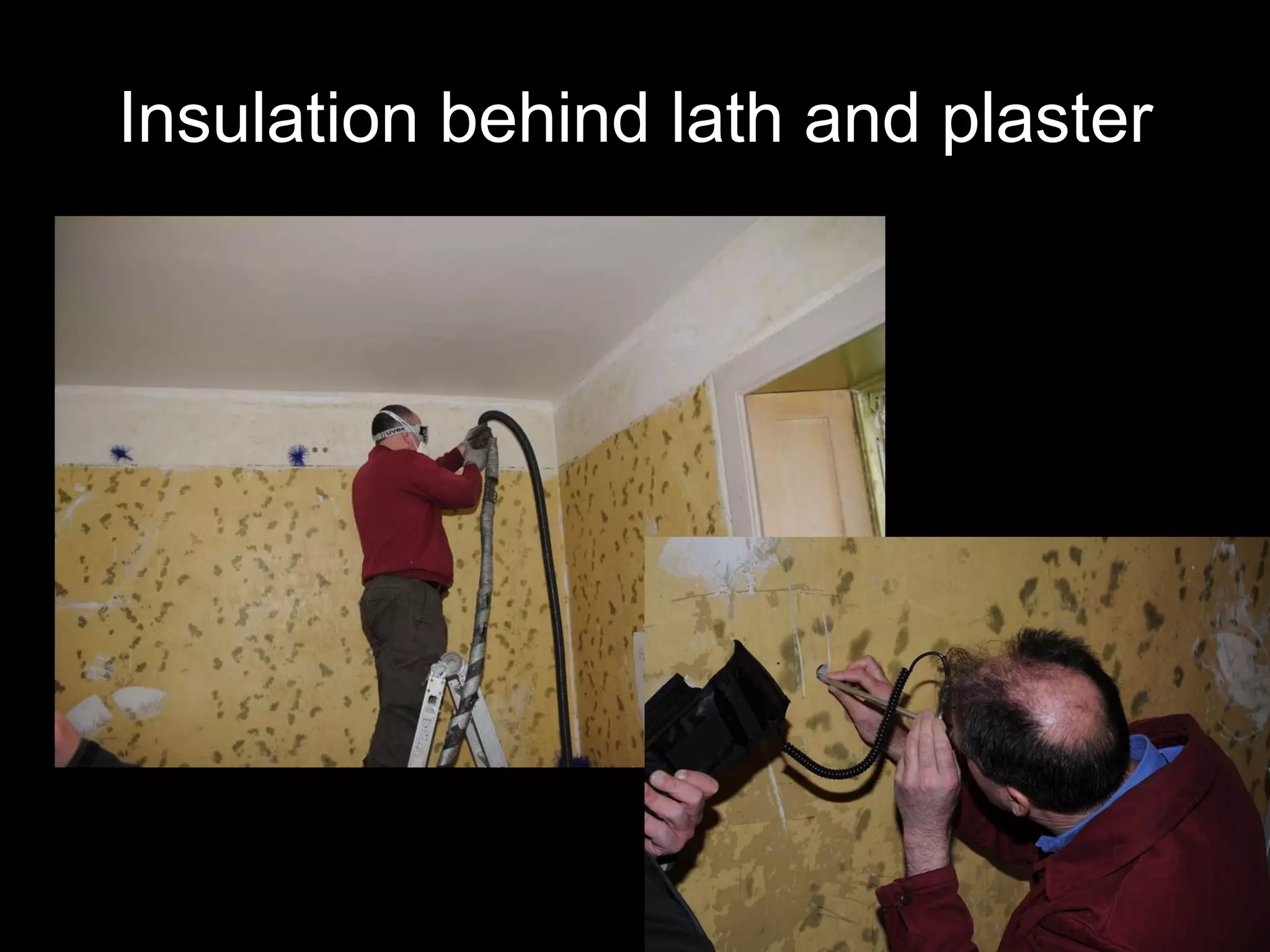
Insulation behind lath and plaster
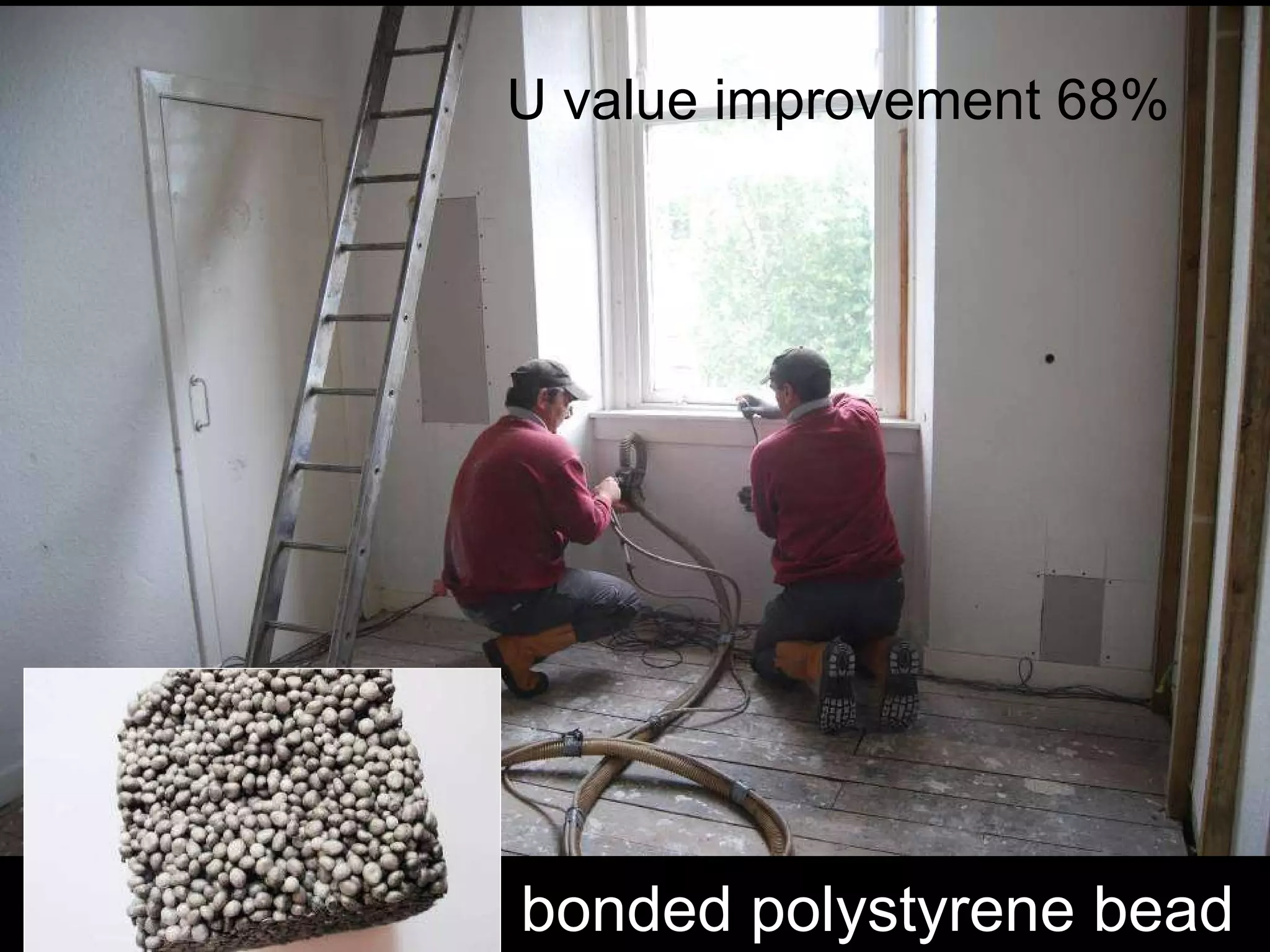
bonded polystyrene bead U value improvement 68%
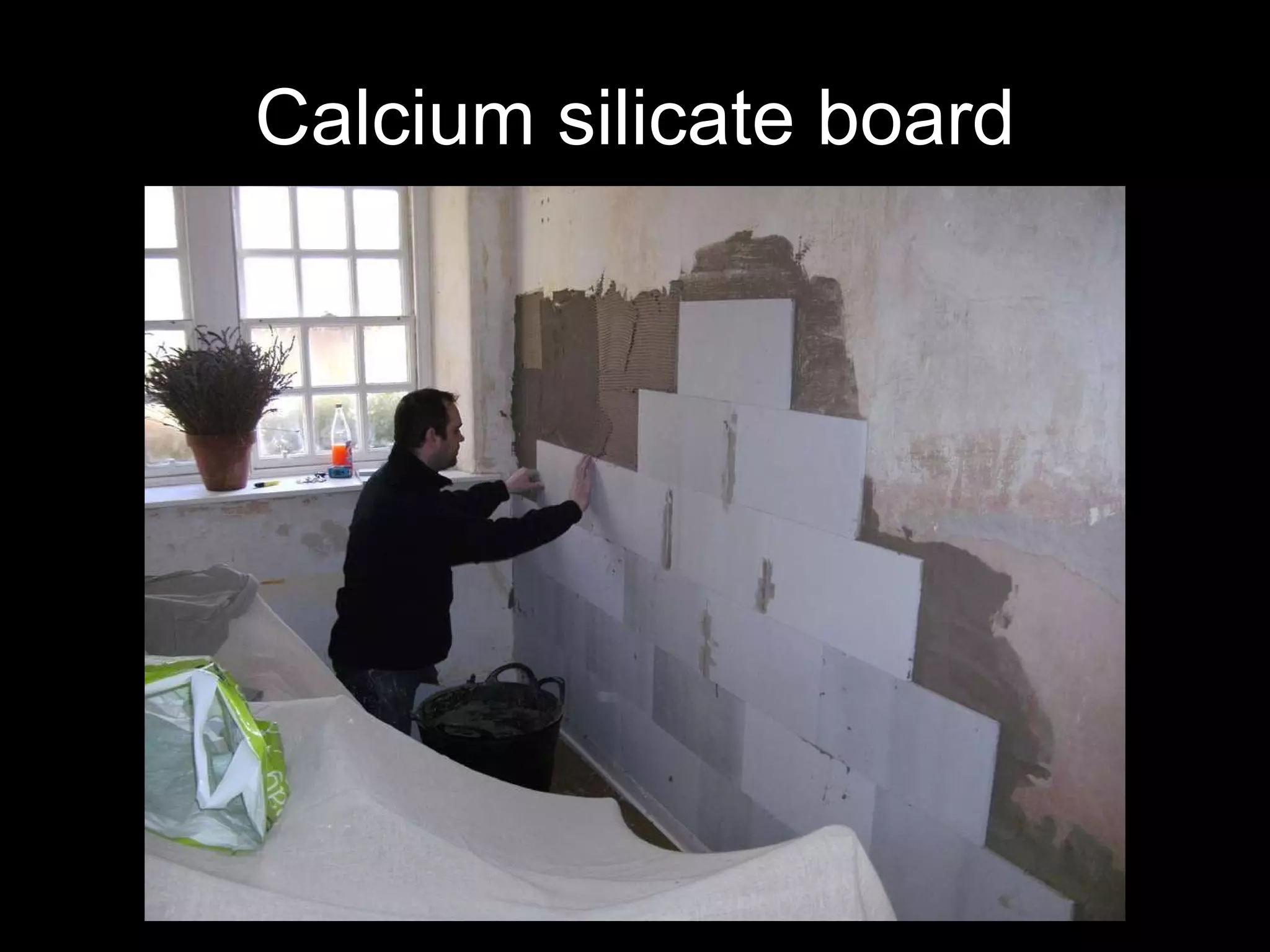
Calcium silicate board
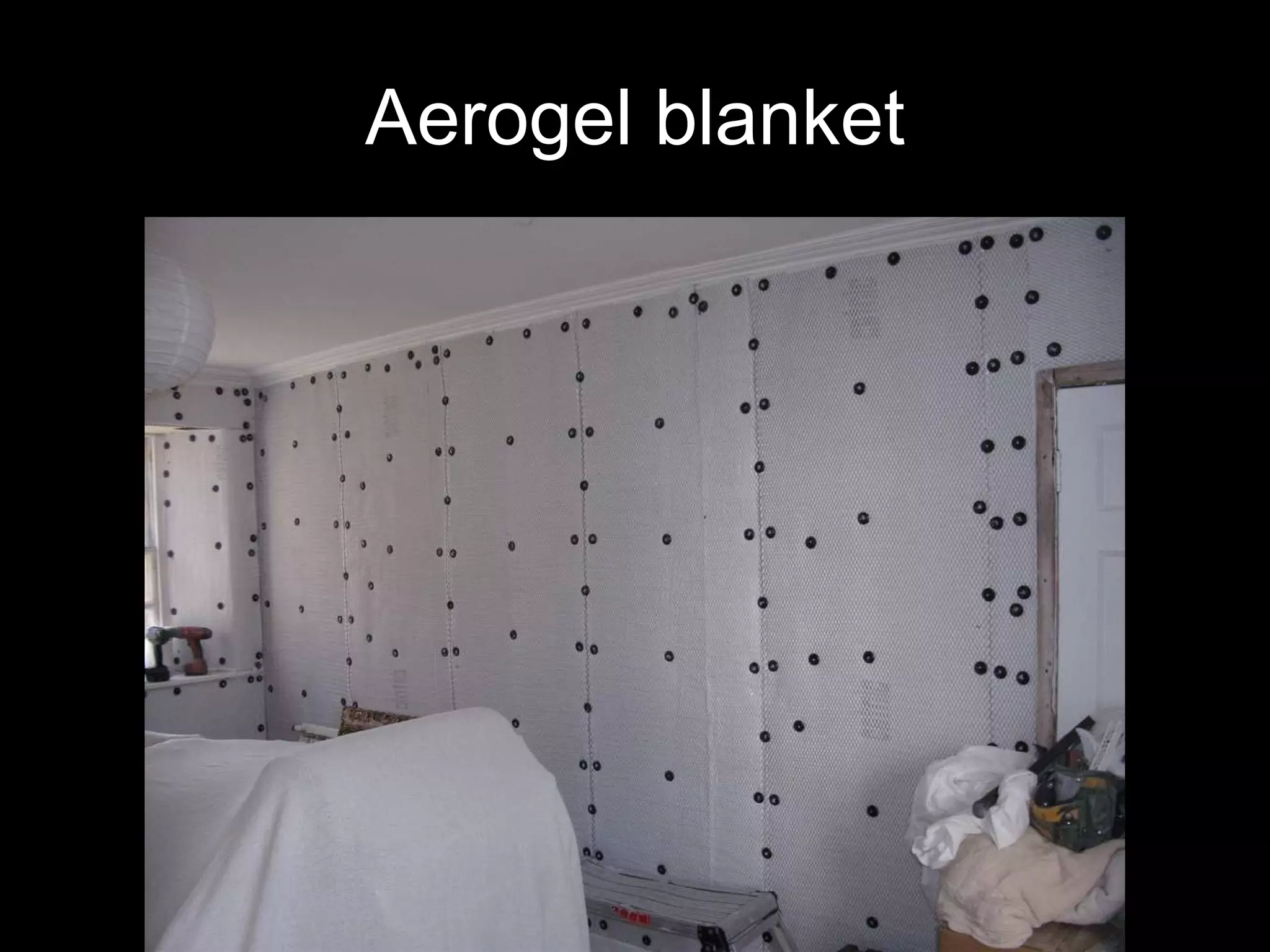
Aerogel blanket
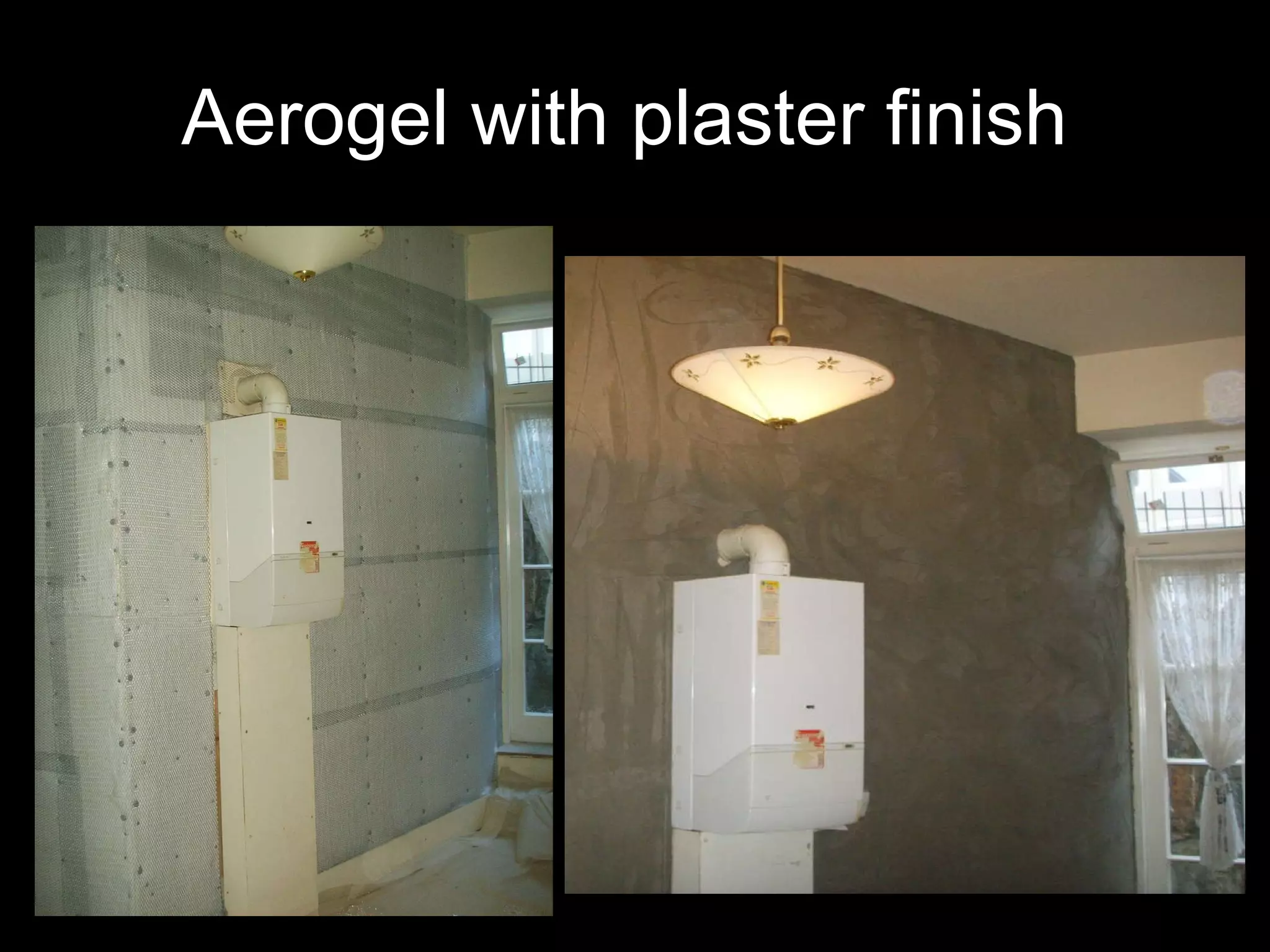
Aerogel with plaster finish
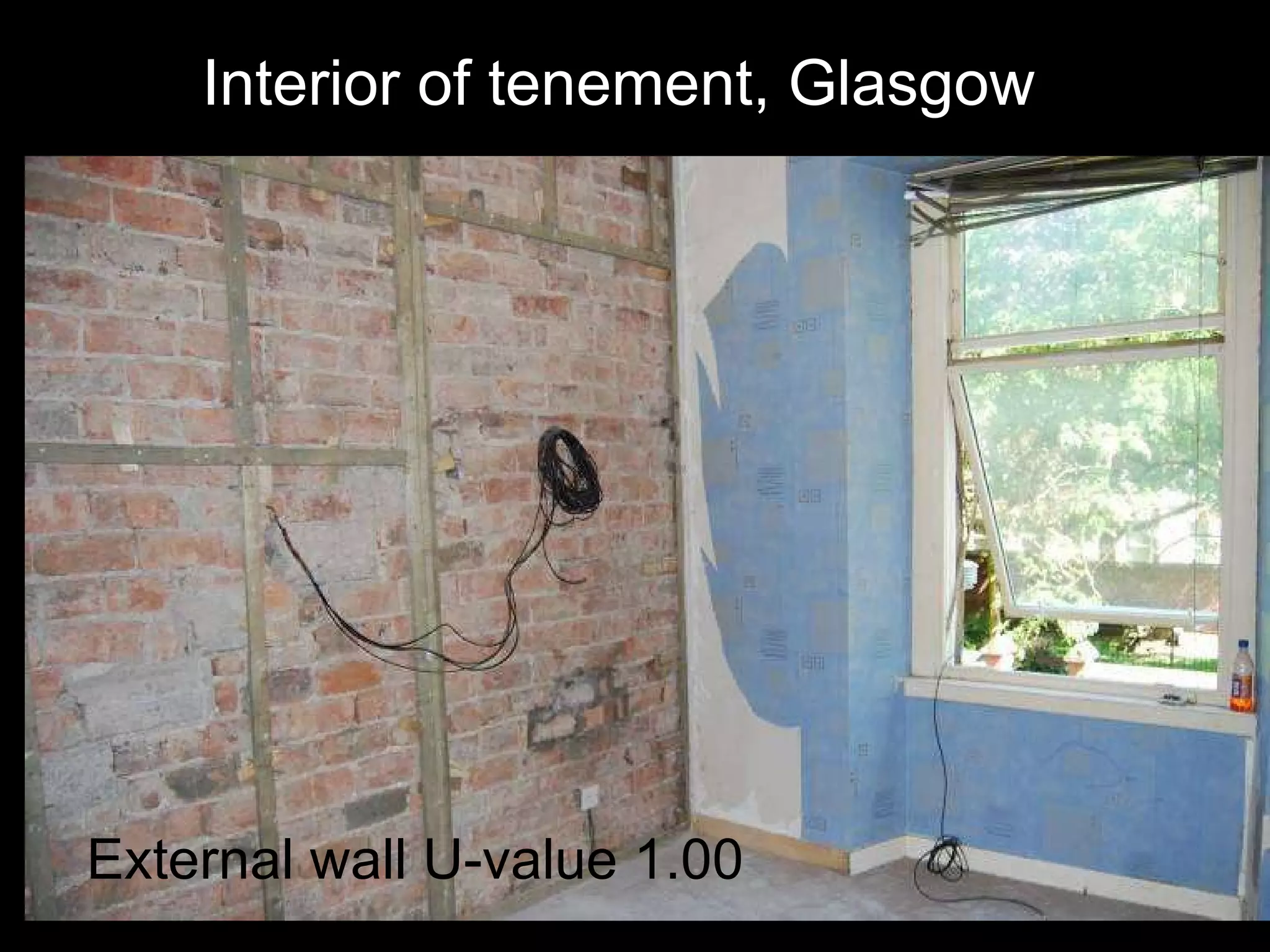
Interior of tenement, Glasgow External wall U-value 1.00
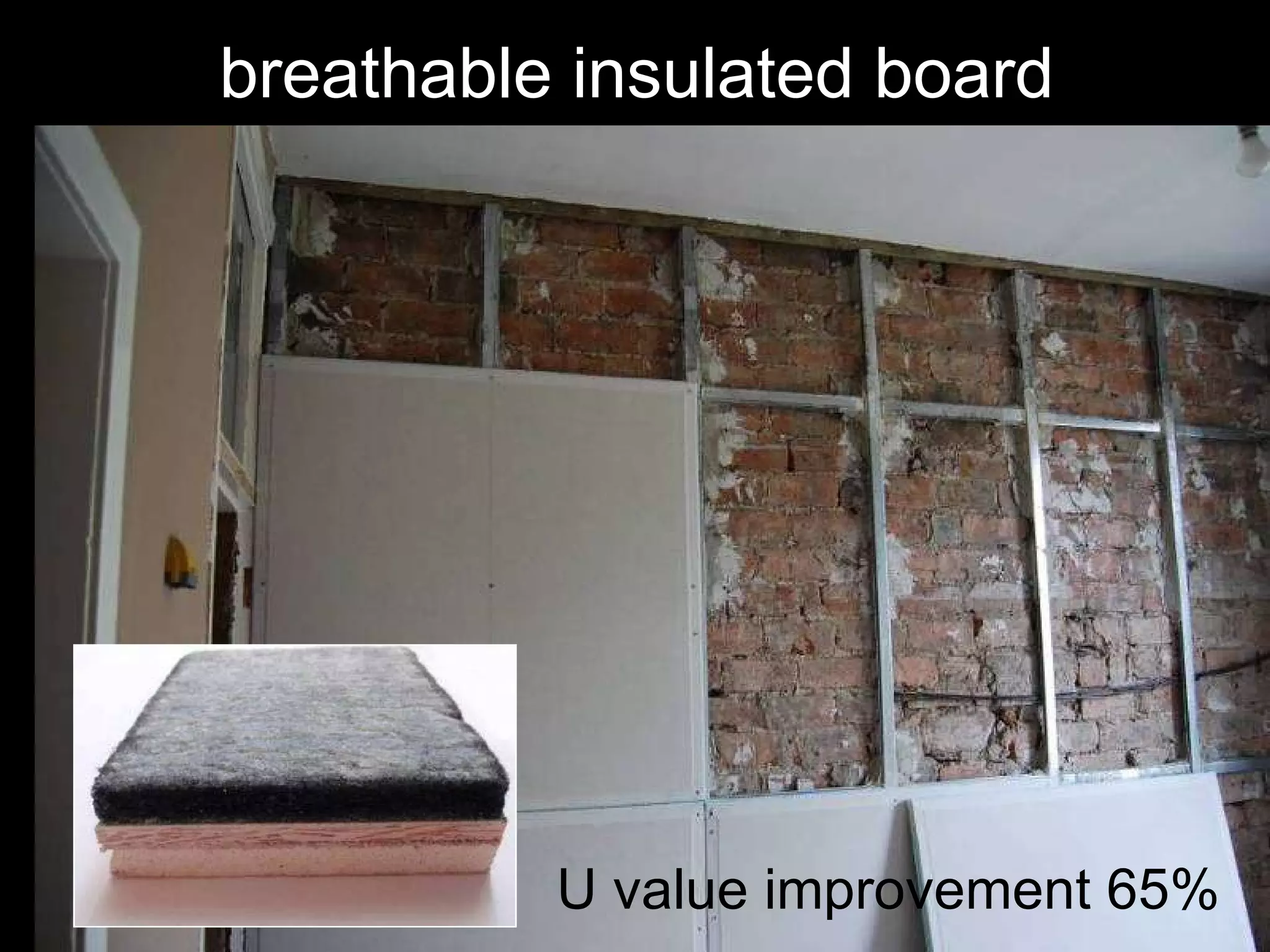
breathable insulated board U value improvement 65%
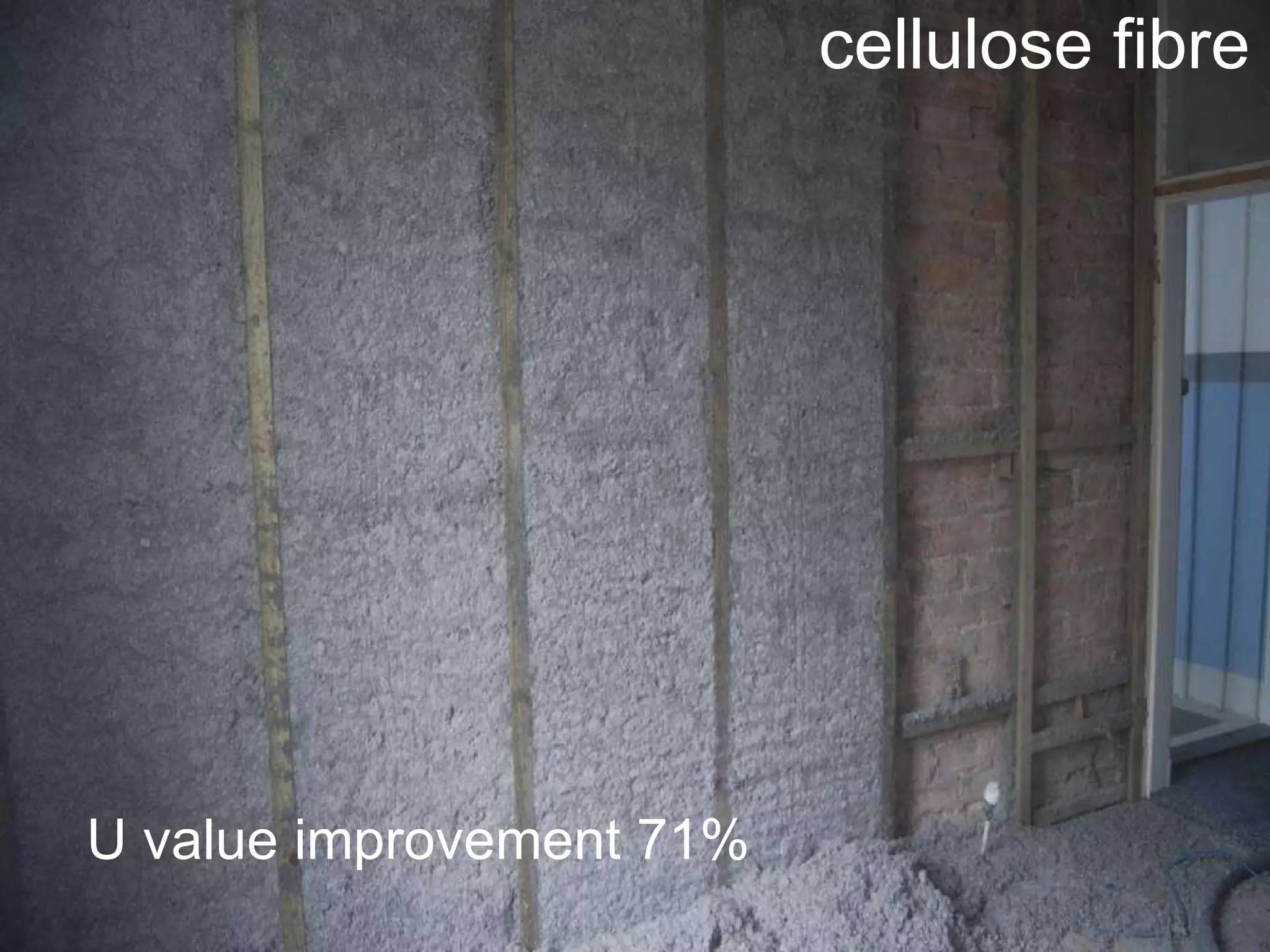
cellulose fibre U value improvement 71%
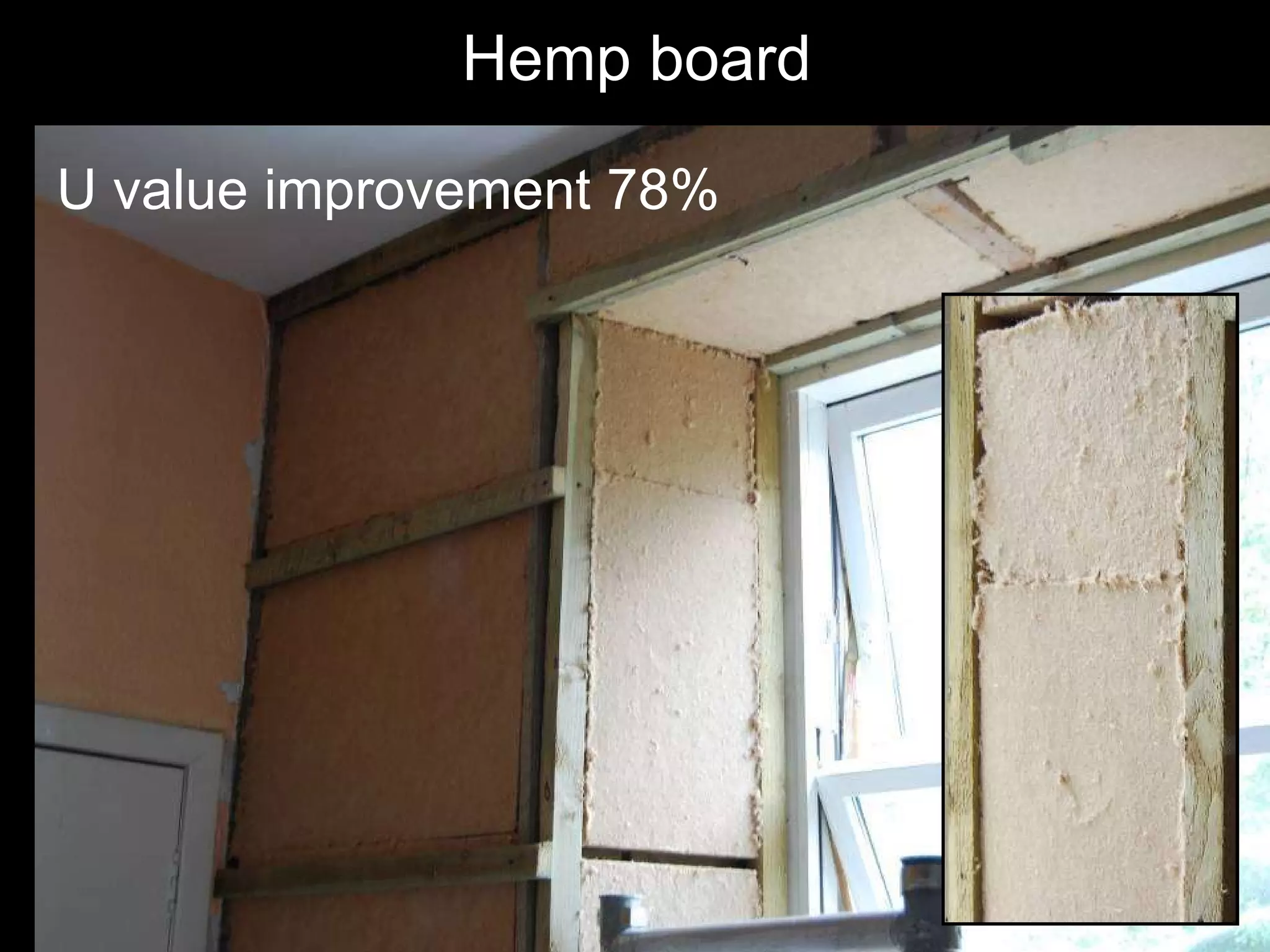
Hemp board U value improvement 78%
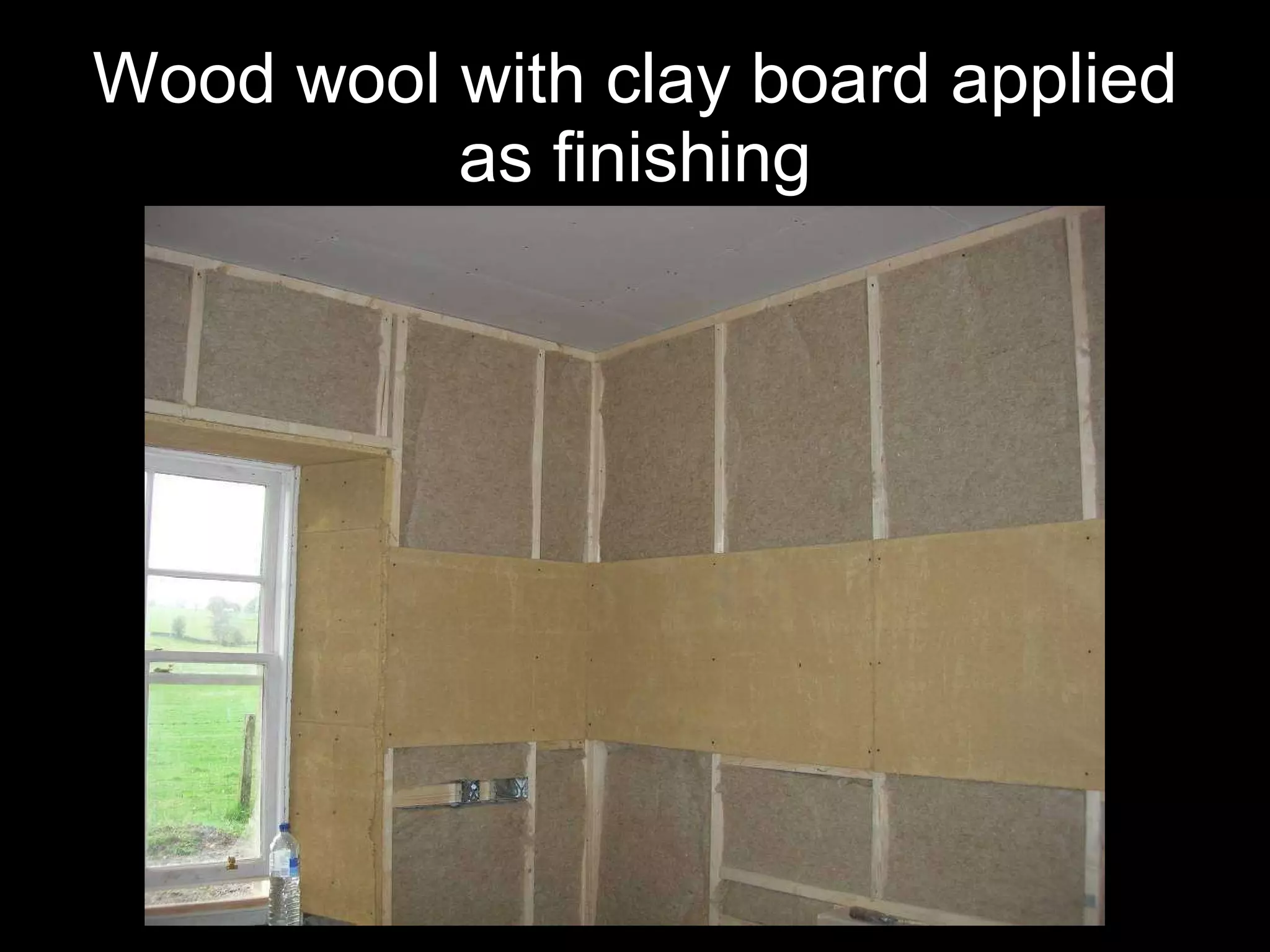
Wood wool with clay board applied as finishing
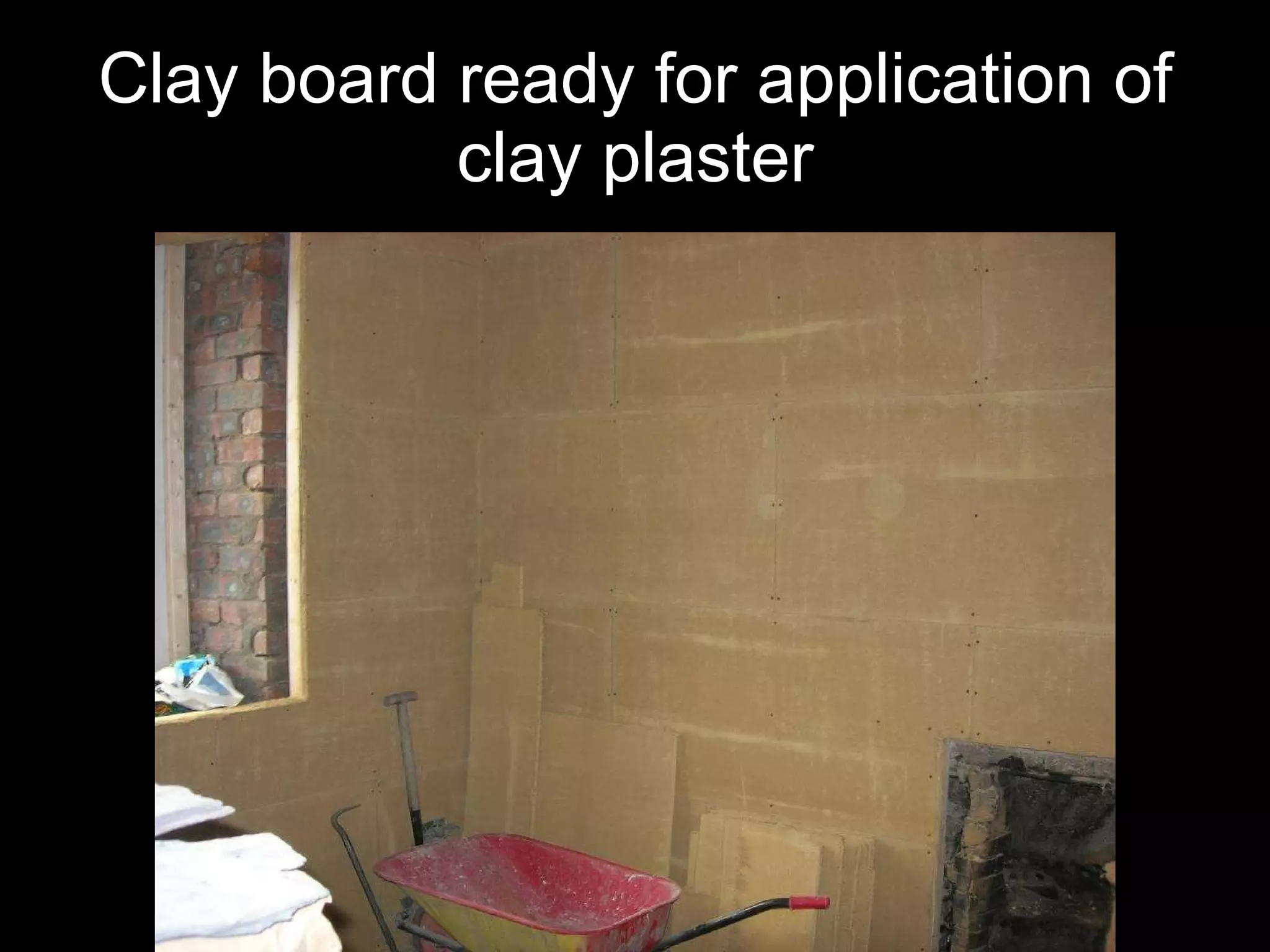
Clay board ready for application of clay plaster
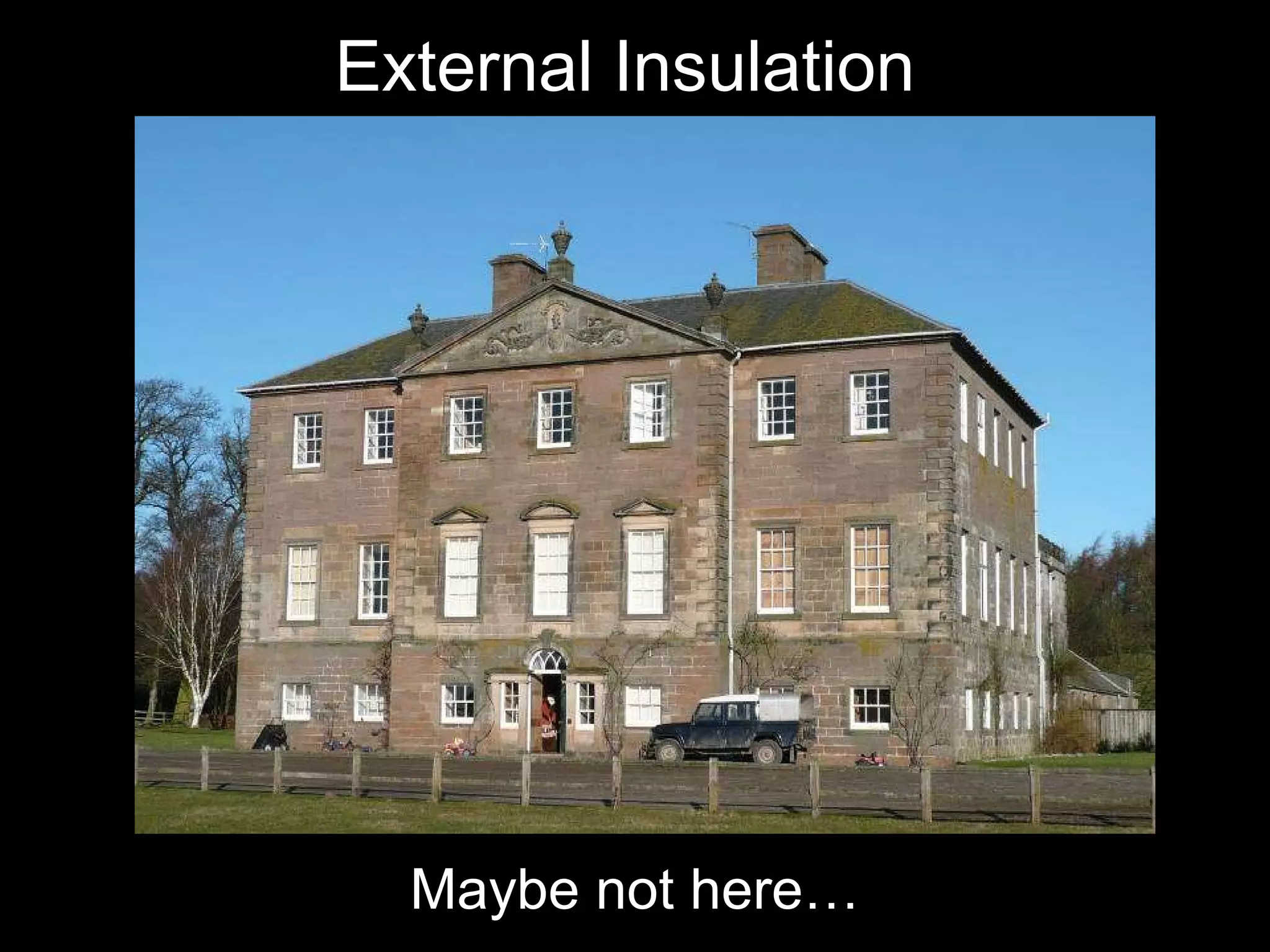
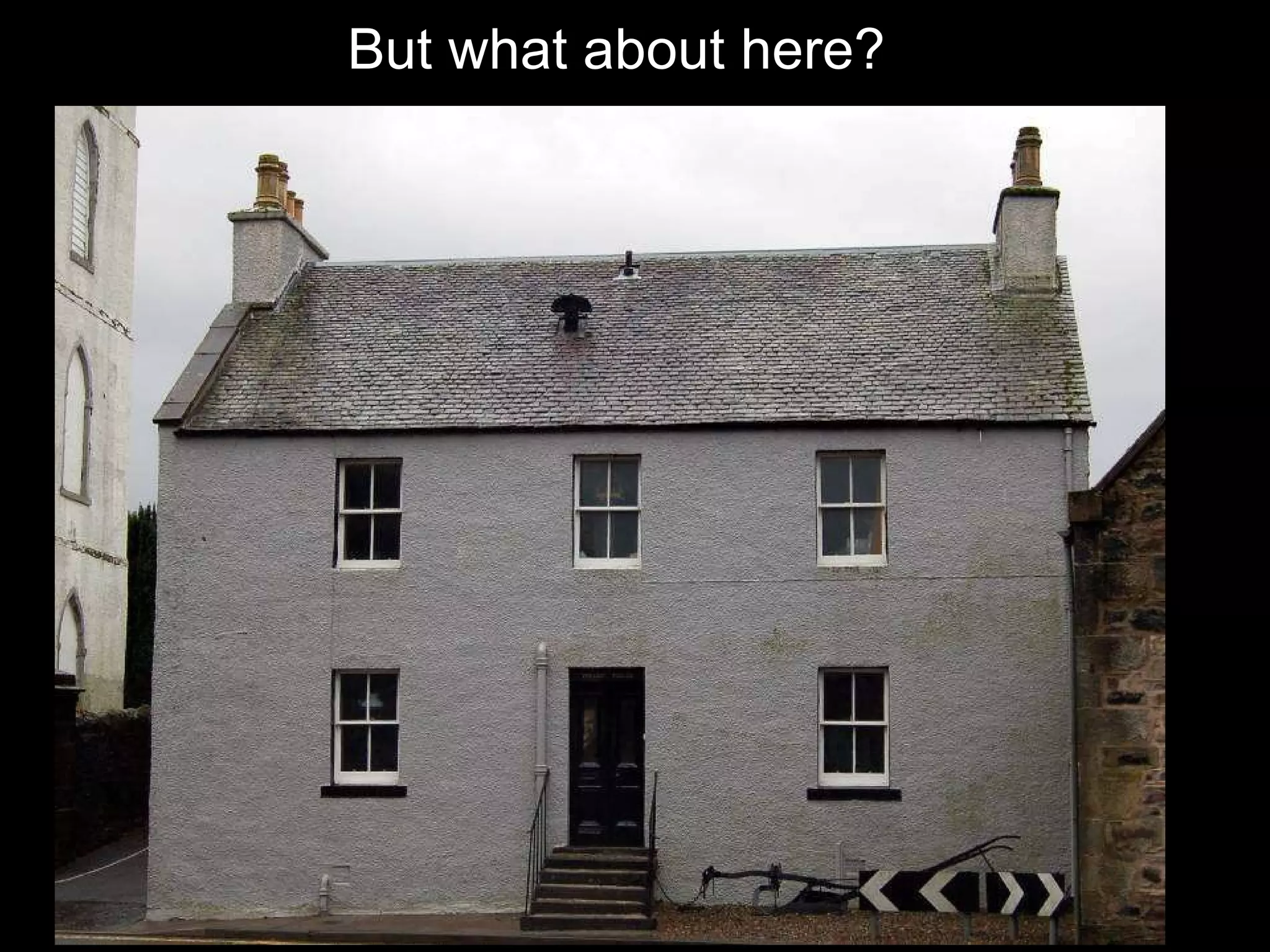
External Insulation Maybe not here…
But what about here?
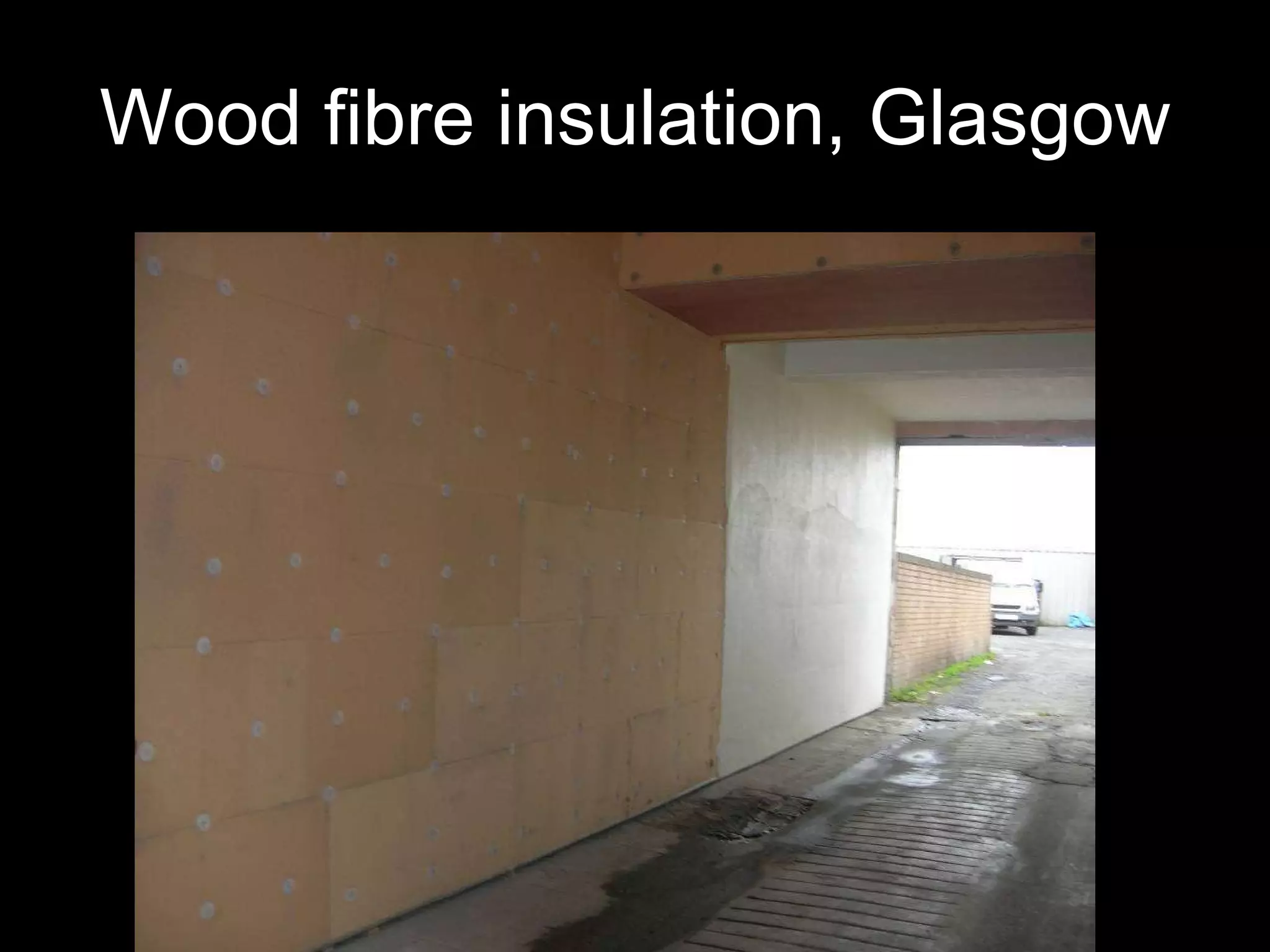
Wood fibre insulation, Glasgow
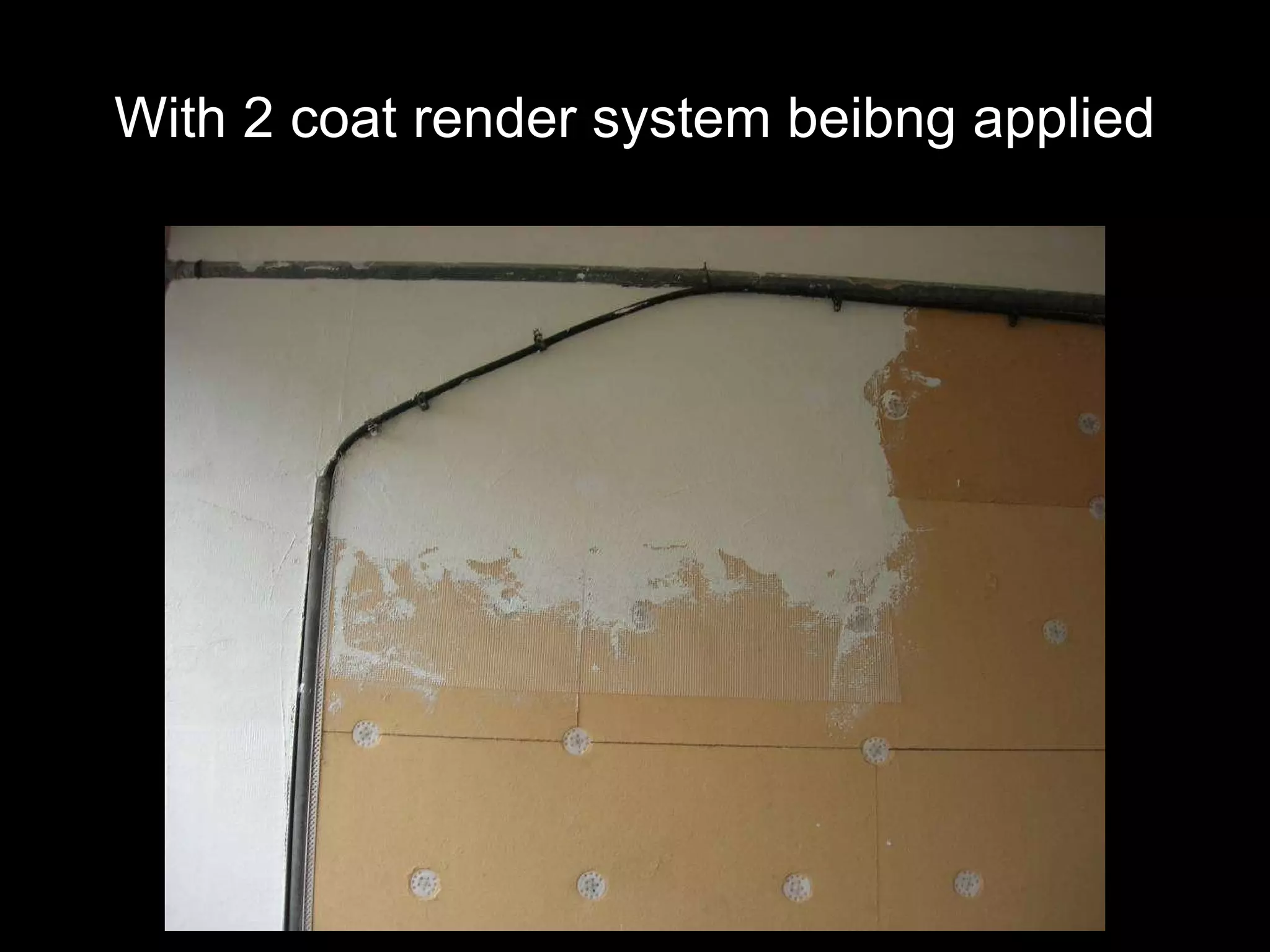
With 2 coat render system beibng applied
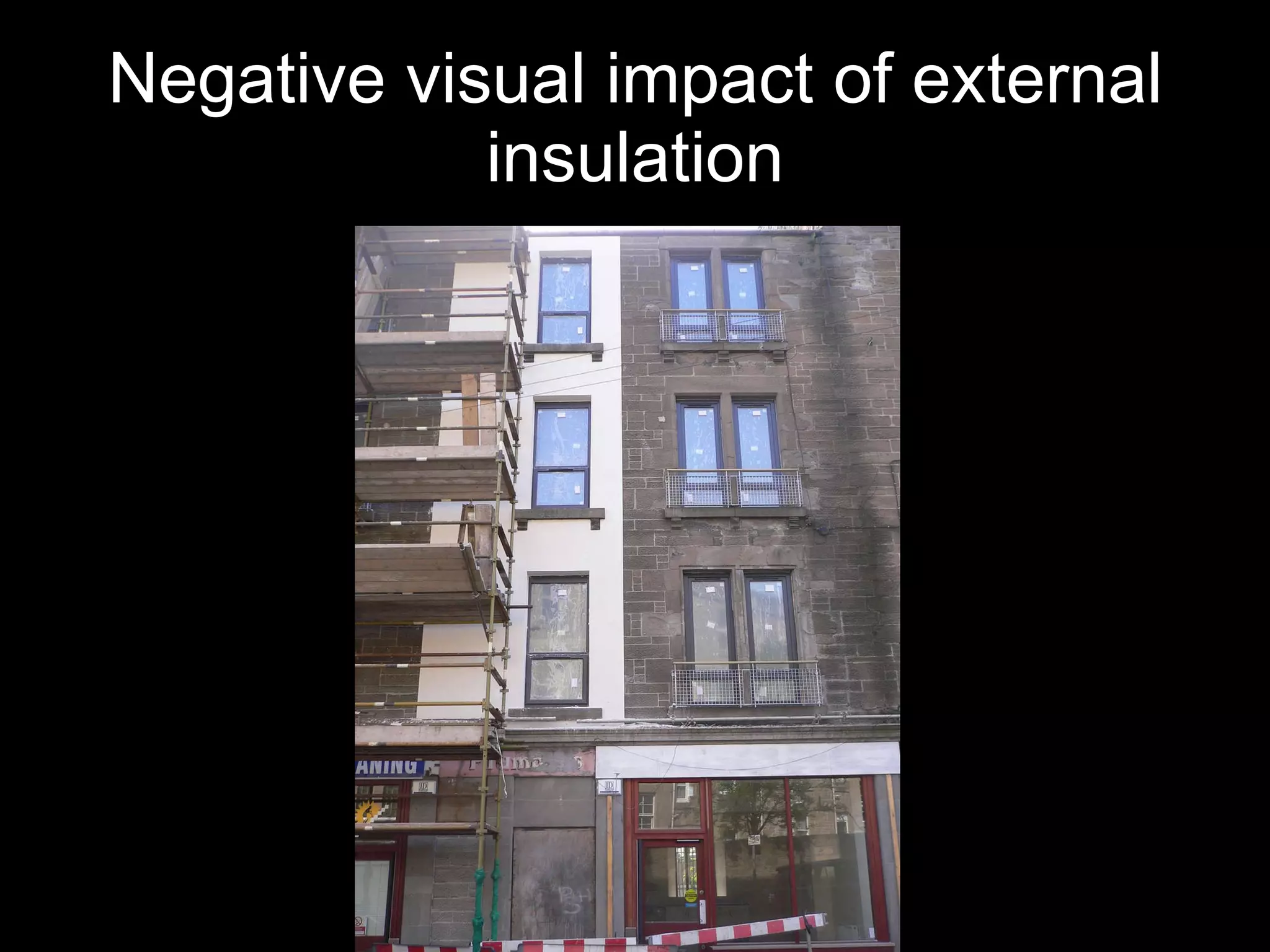
Negative visual impact of external insulation
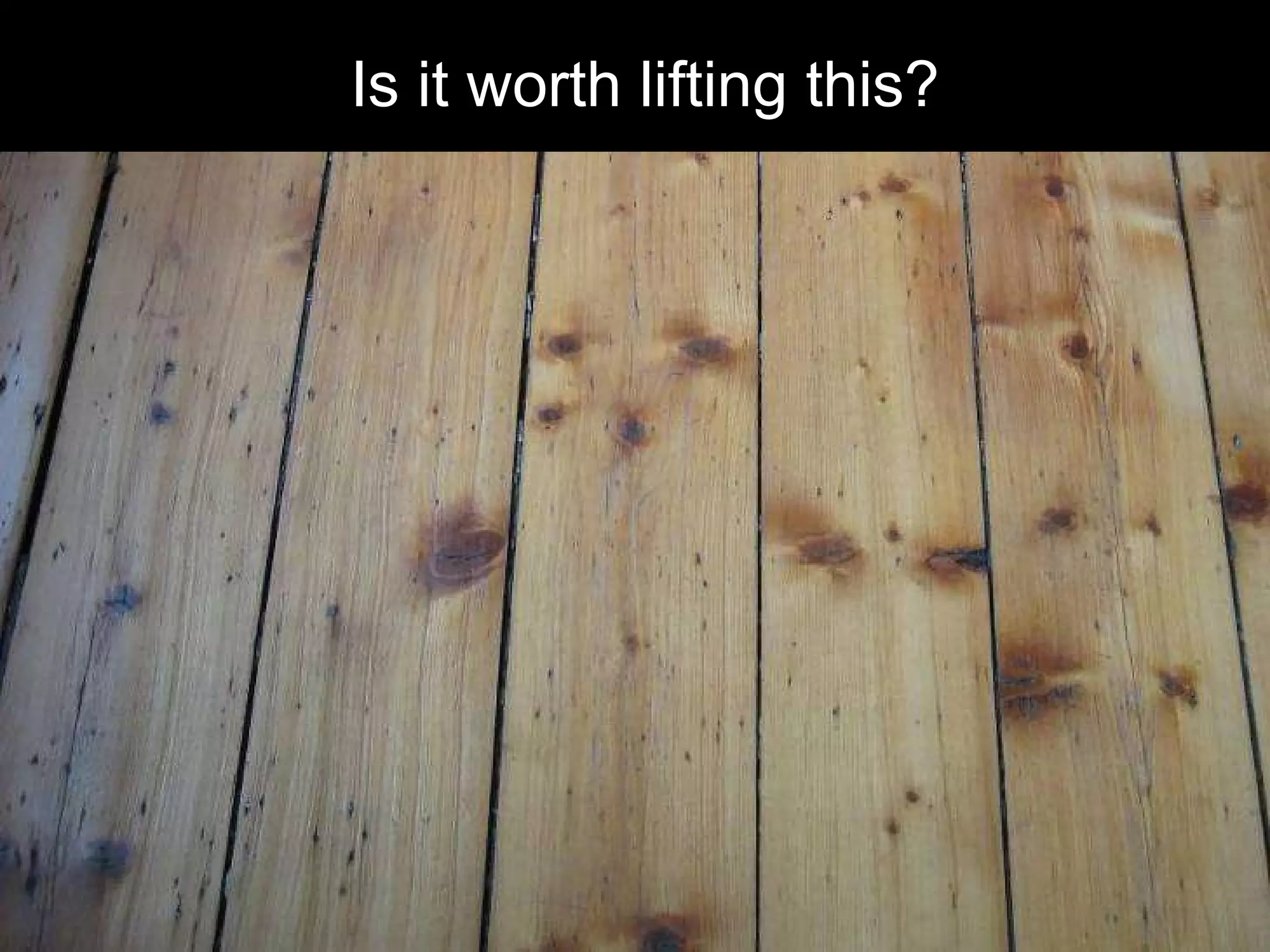
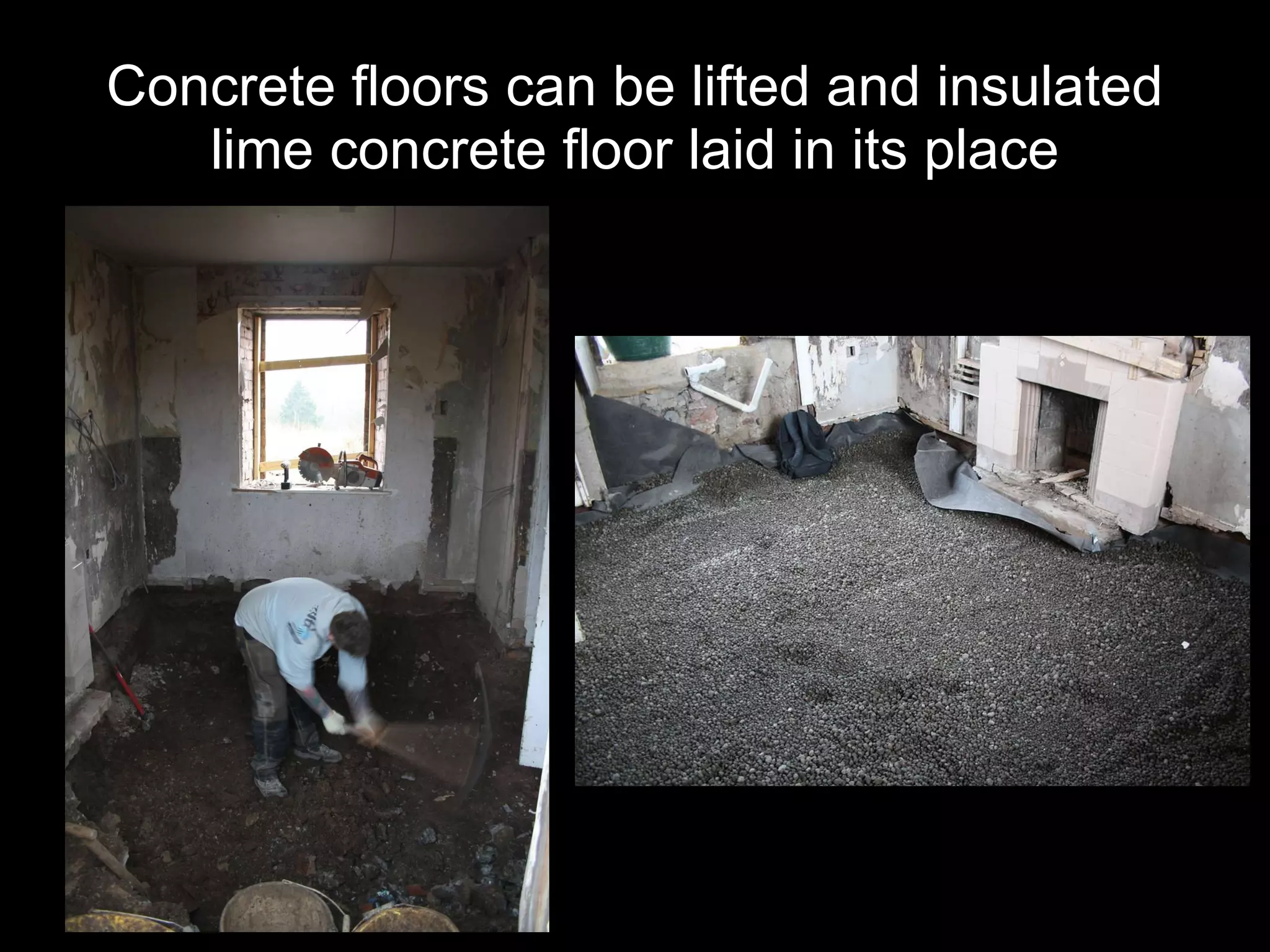
Is it worth lifting this?
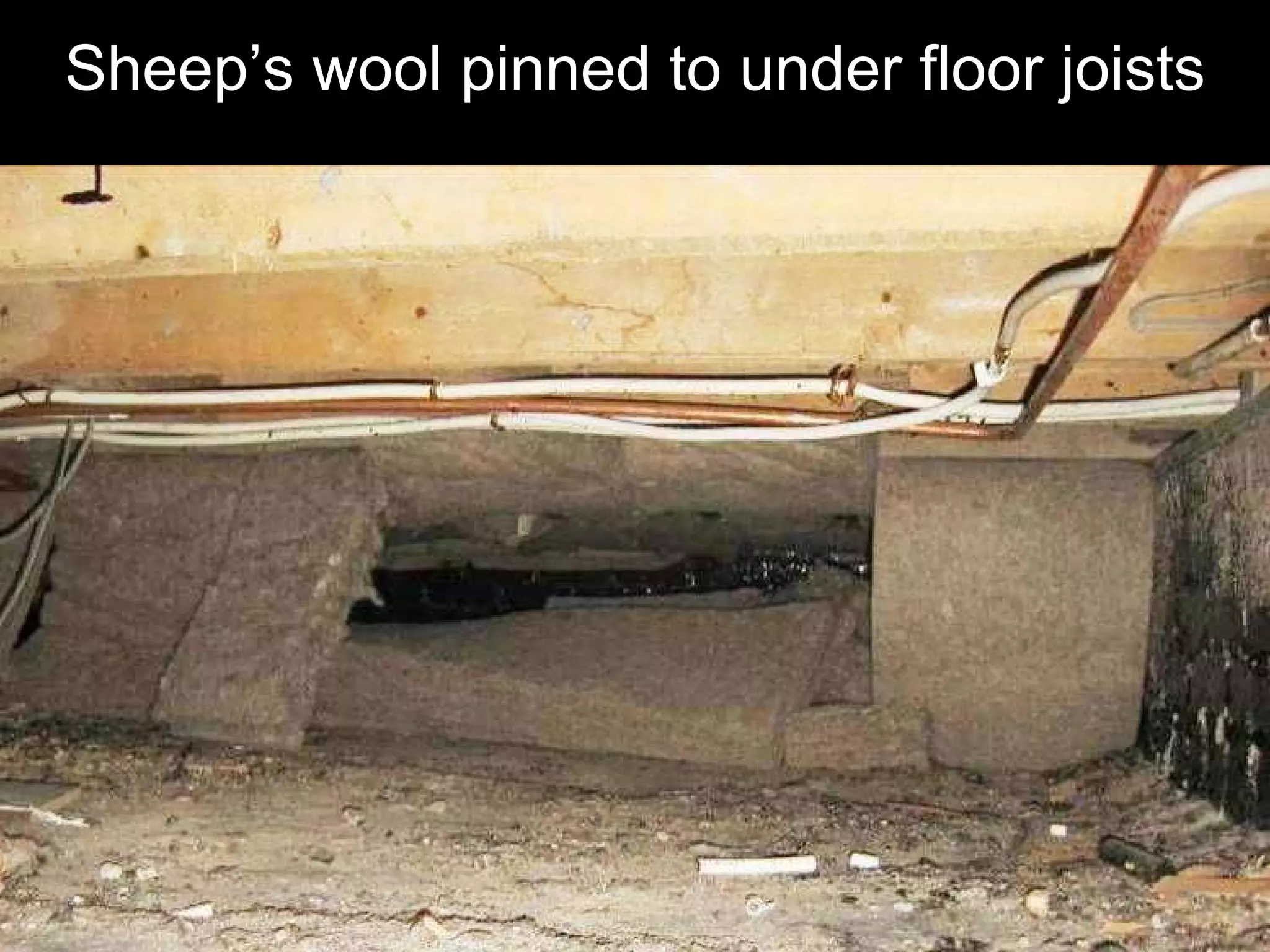
Sheep’s wool pinned to under floor joists
Hemp board between joists held in place with timber runners
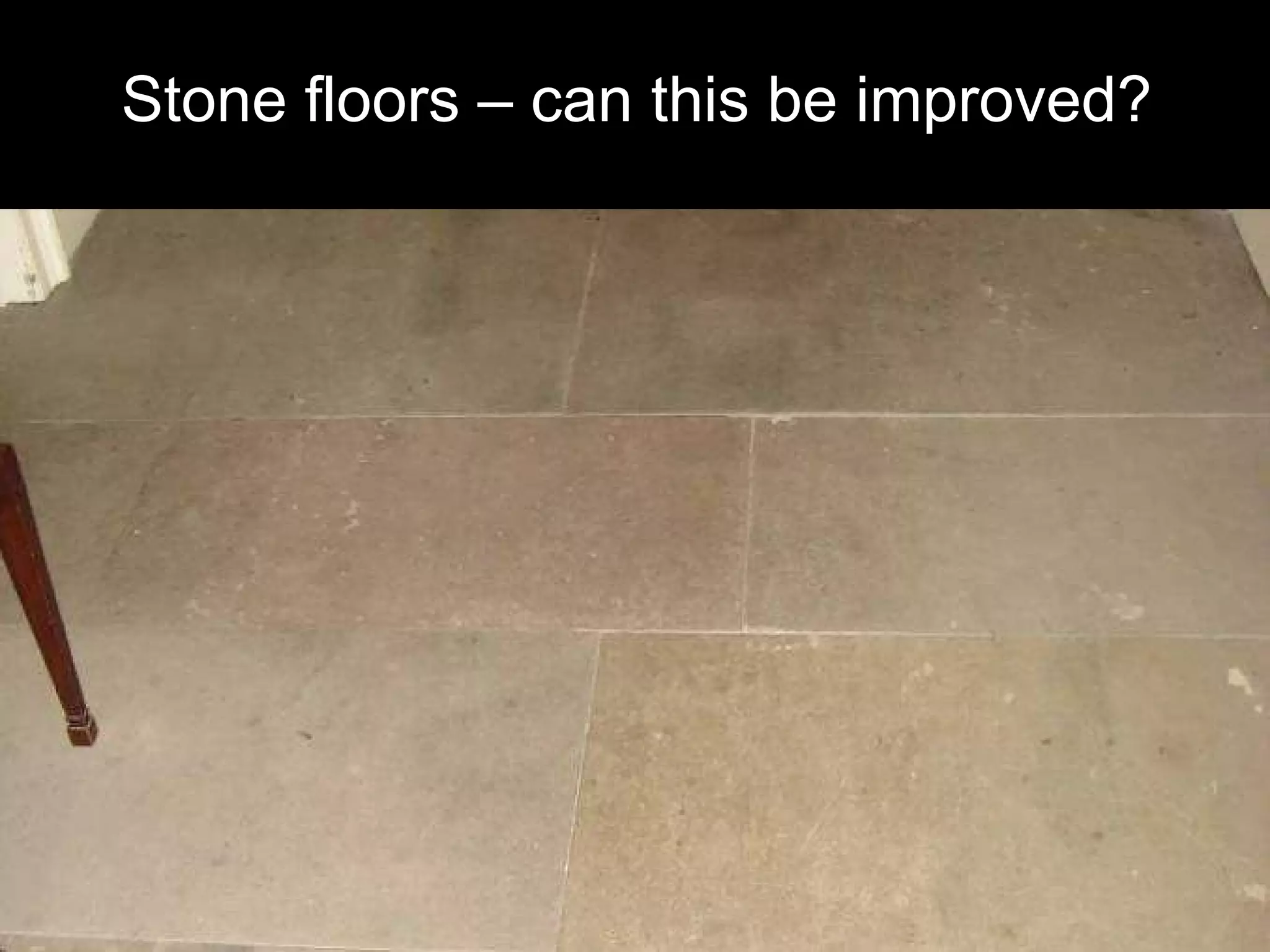
Stone floors – can this be improved?
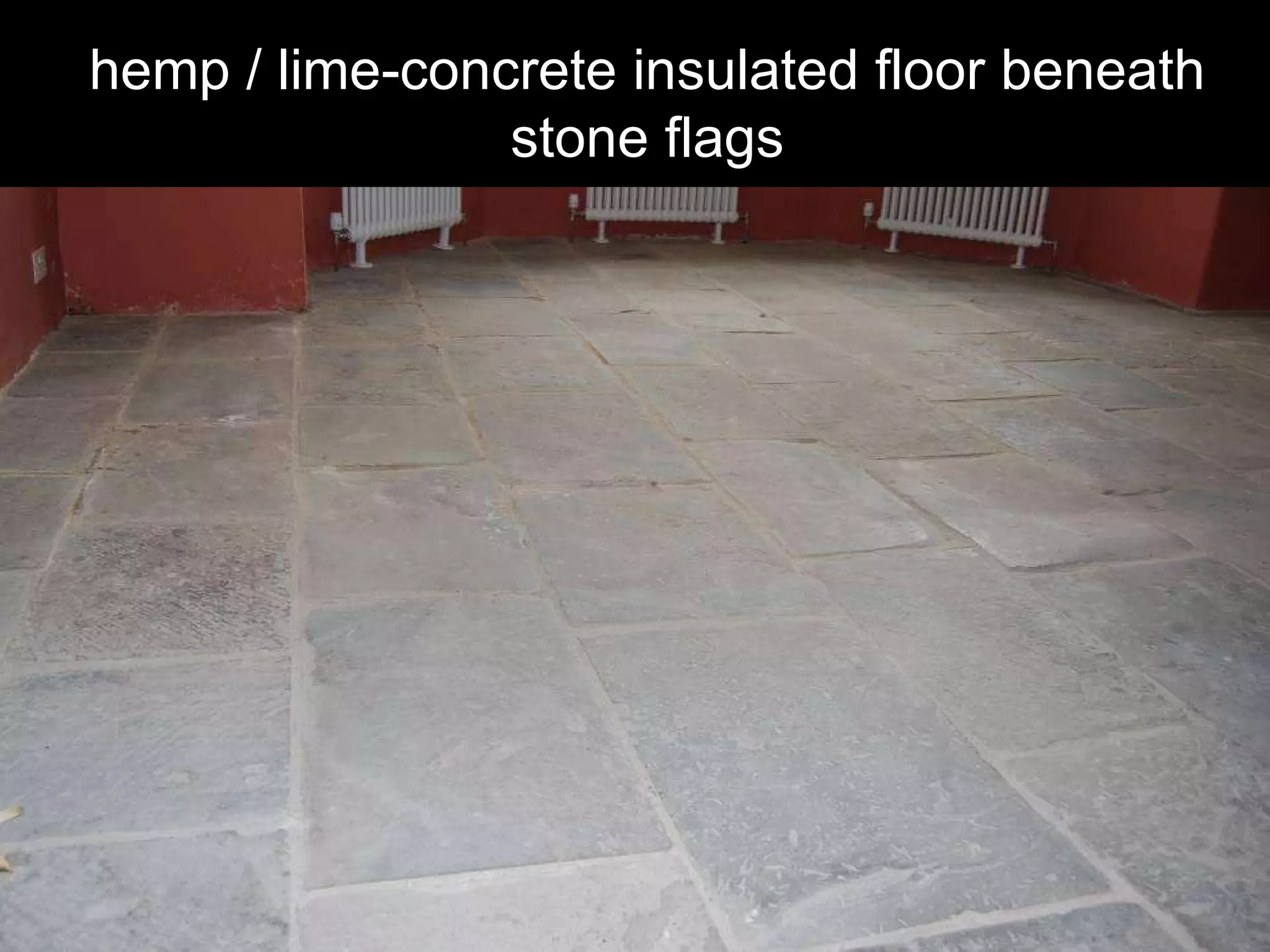
hemp / lime-concrete insulated floor beneath stone flags
Concrete floors can be lifted and insulated lime concrete floor laid in its place
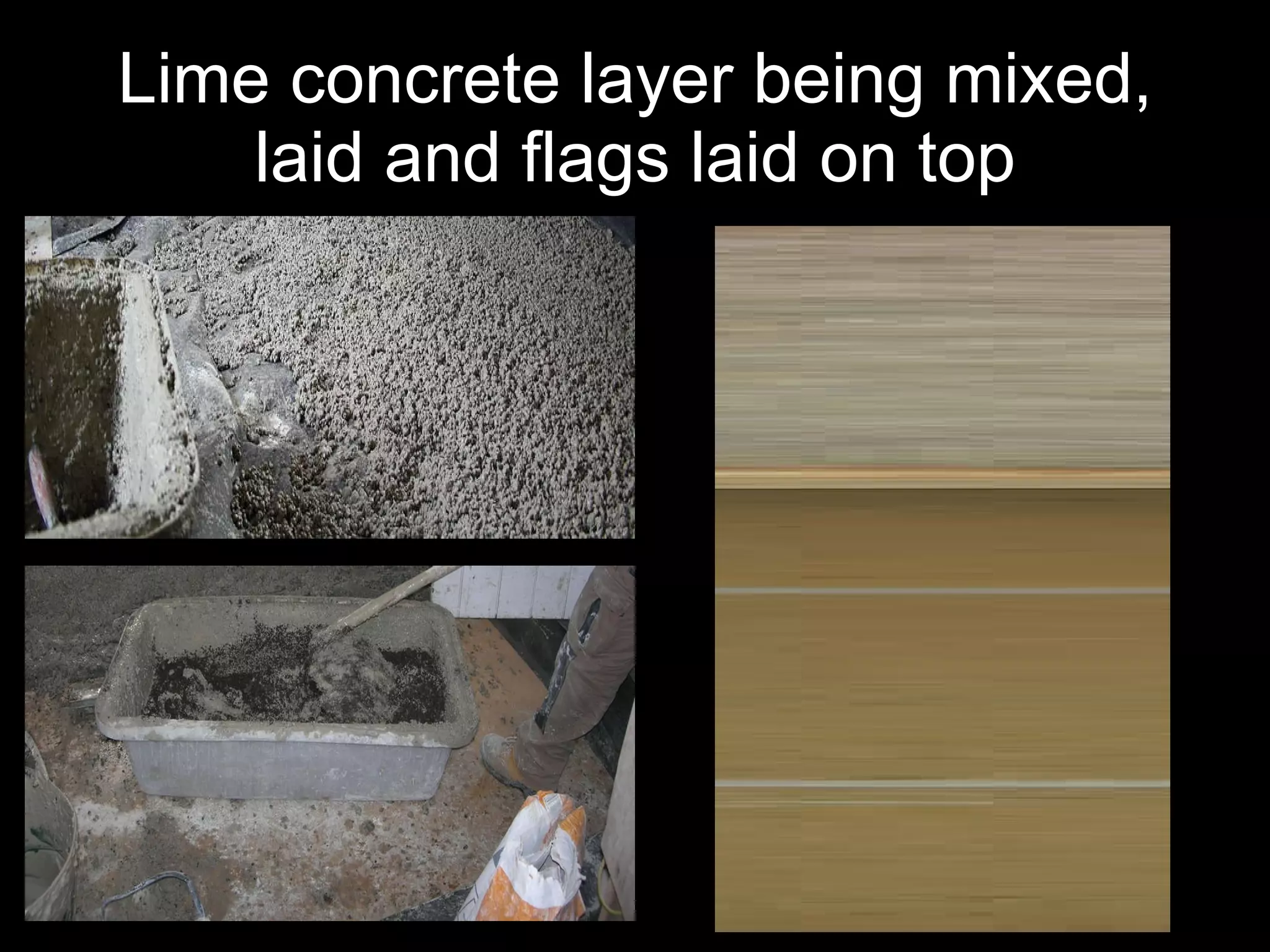
Lime concrete layer being mixed, laid and flags laid on top
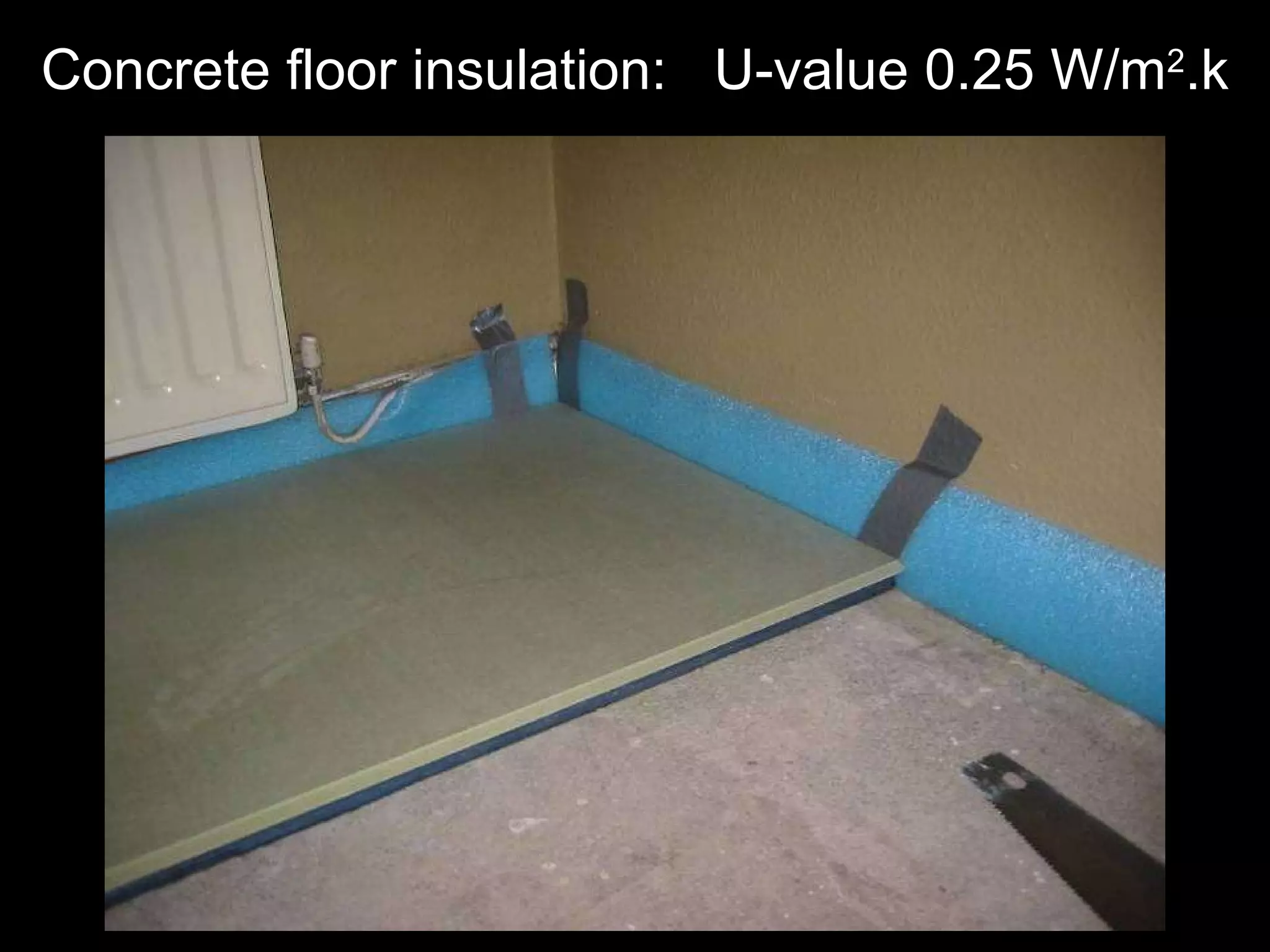
Concrete floor insulation:  U-value 0.25 W/m 2 .k
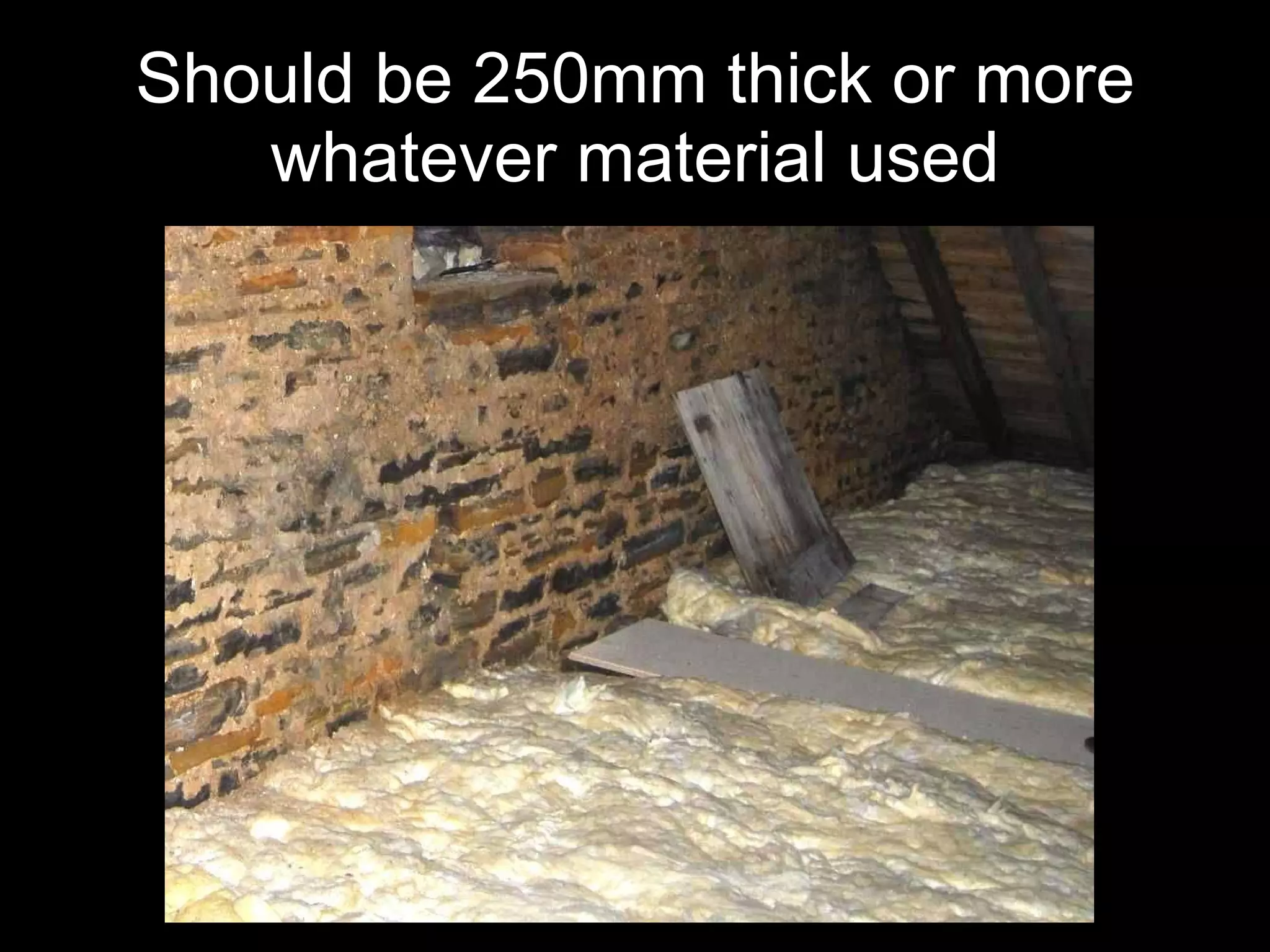
Should be 250mm thick or more whatever material used
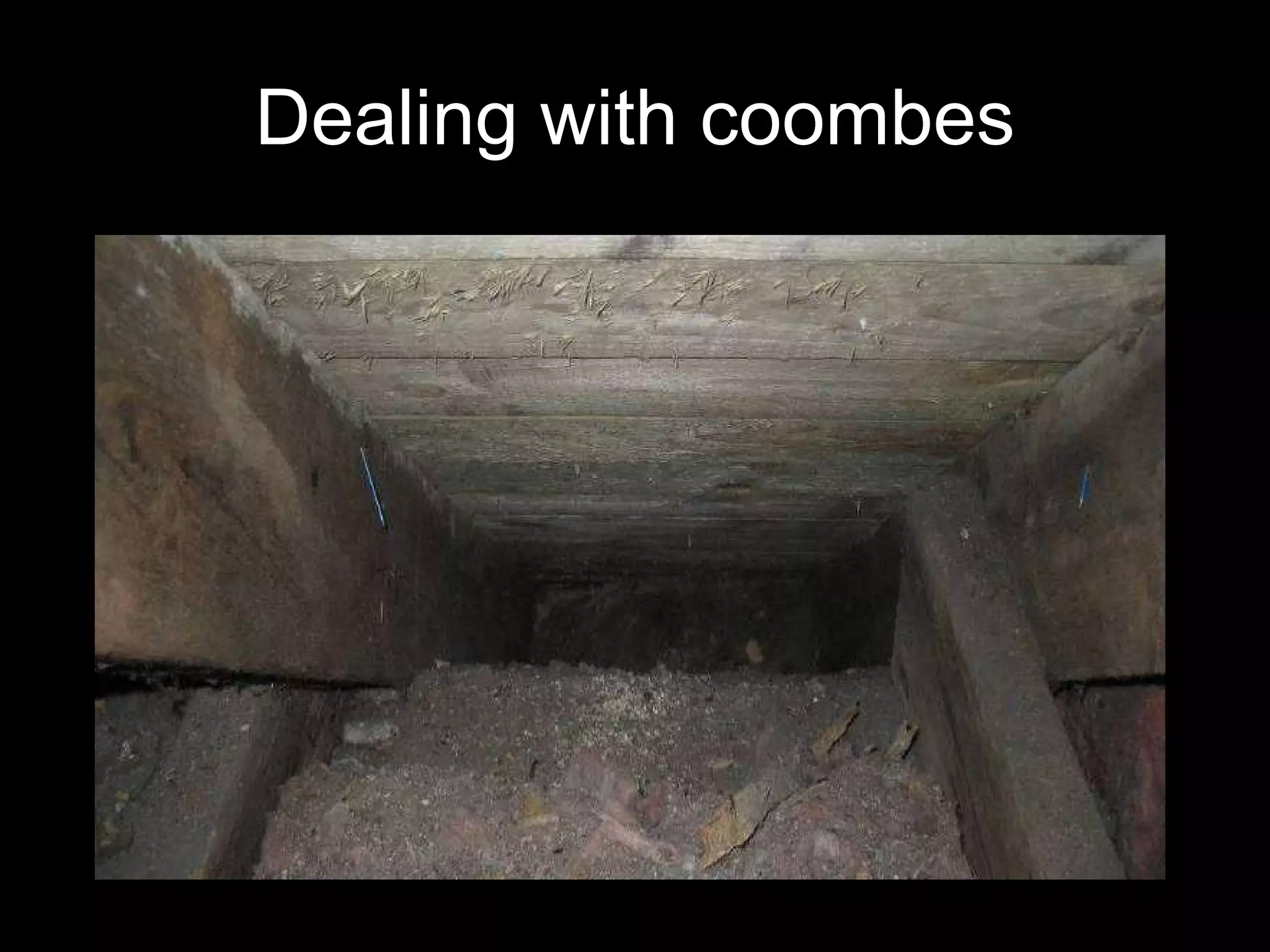
Dealing with coombes
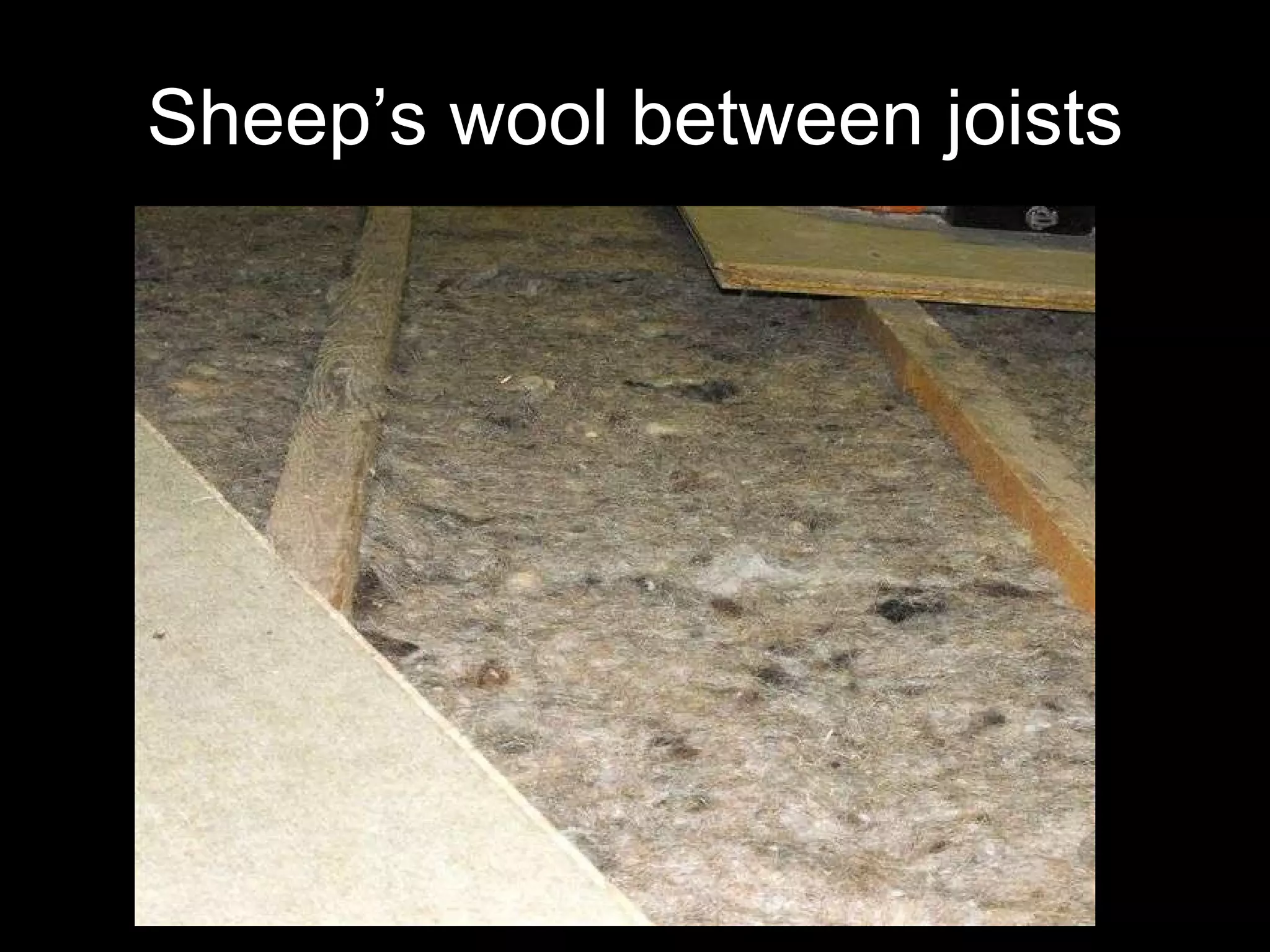
Sheep’s wool between joists
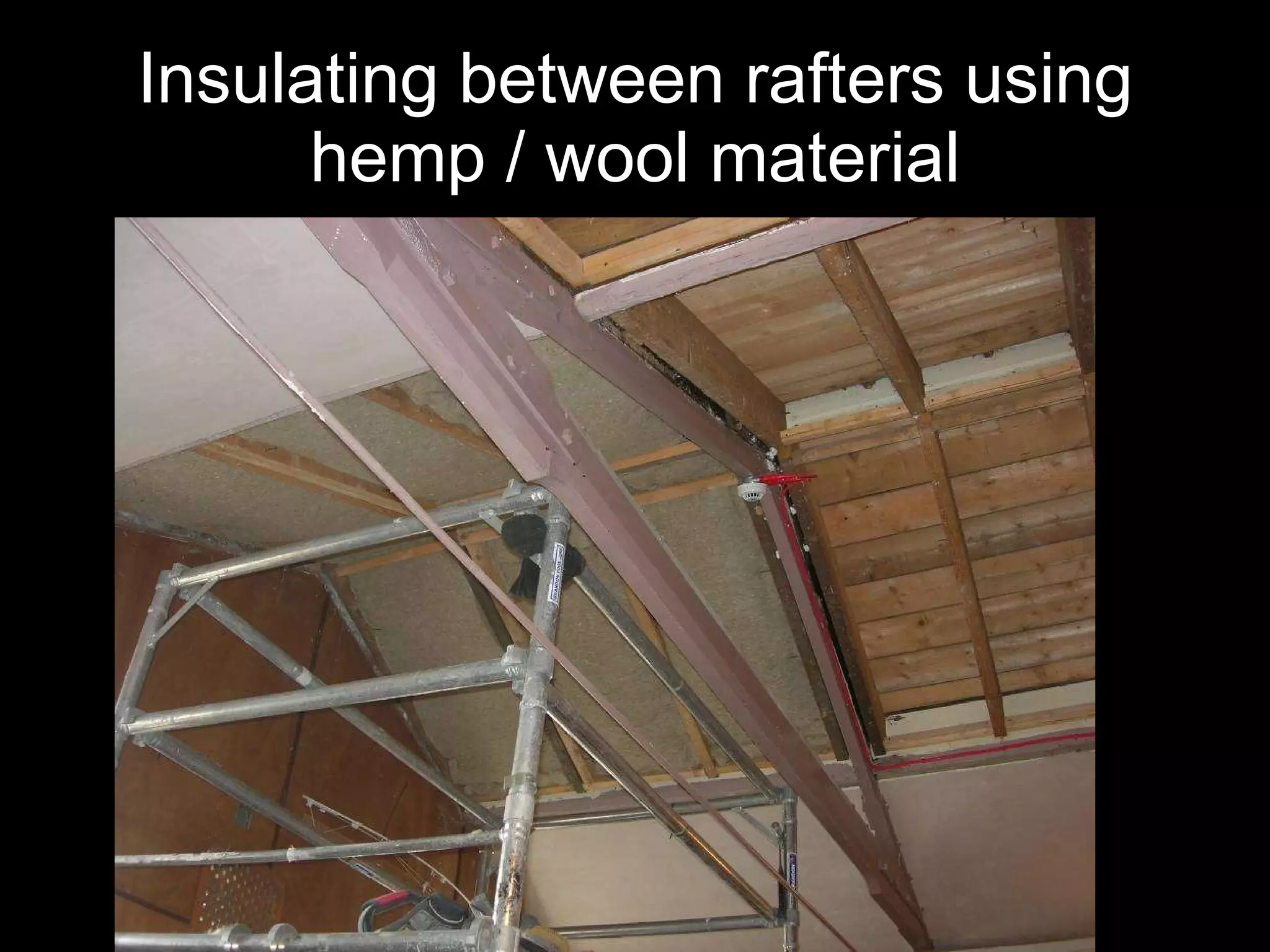
Insulating between rafters using hemp / wool material
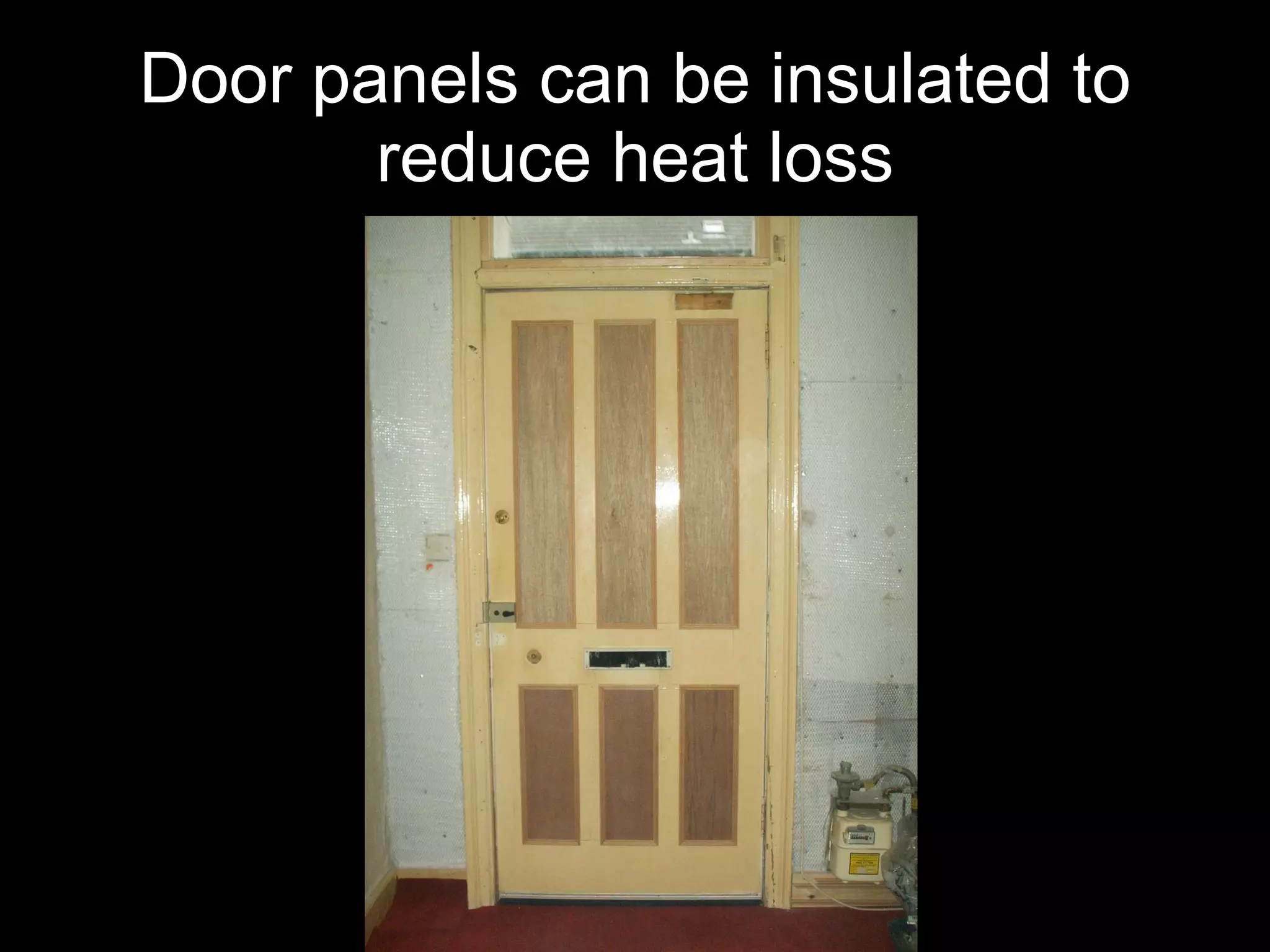
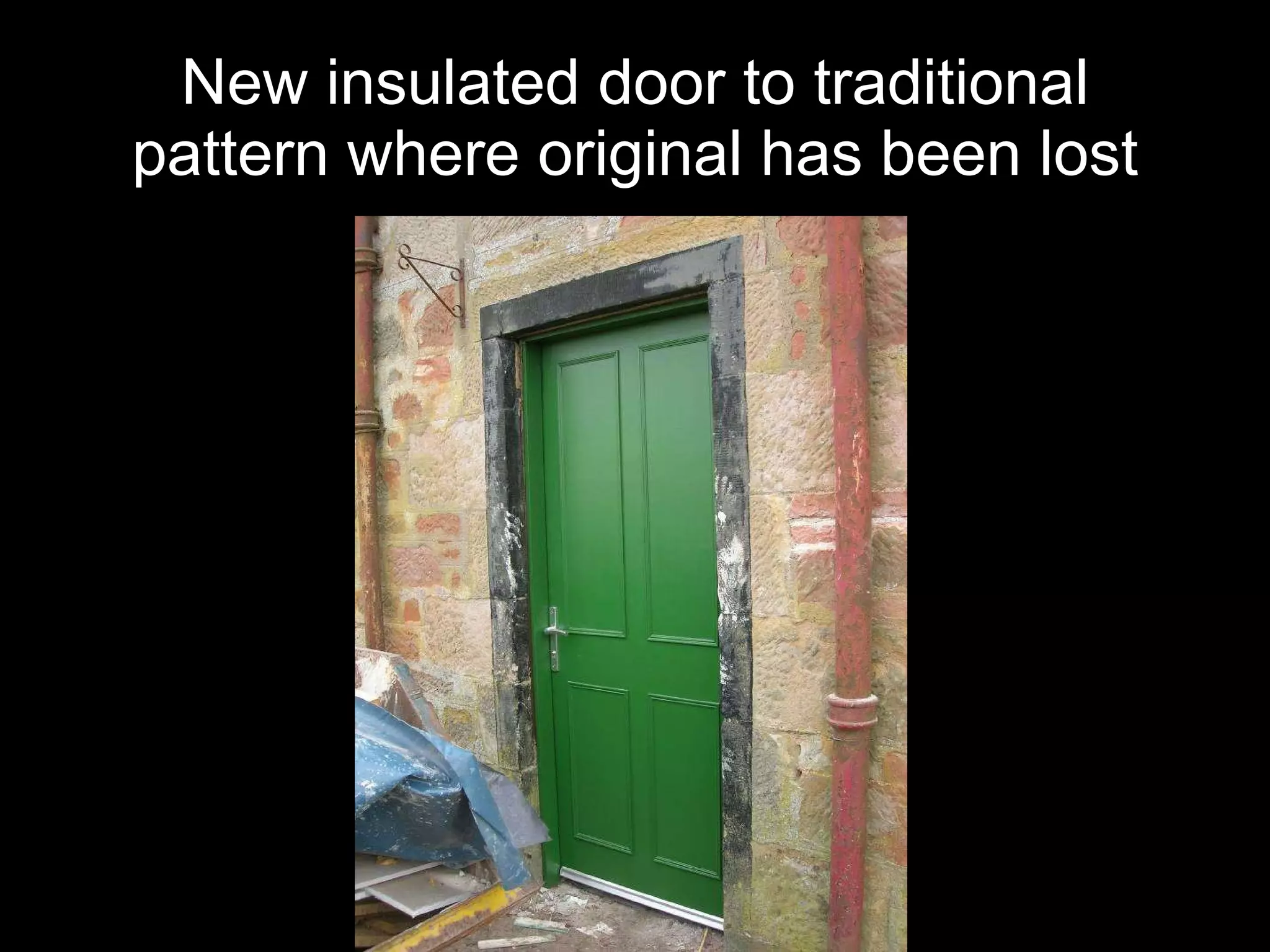
Door panels can be insulated to reduce heat loss
New insulated door to traditional pattern where original has been lost
 
Should you have any enquiries about this lecture, please do not hesitate to contact us by: Email –  [email_address]   Phone – 0131 668 8668 Website – www.historic-scotland.gov.uk

Improving Energy Efficiency on Traditional Buildings