OBJECTIVES

                 DEVELOPMENT of the STRATEGY


               IMPLIMENTATION


            MONITORING


     DELIVERY METHODS


  ONGOING IMPROVEMENTS


KEY PERFORMANCE INDICATORS
To develop public awareness and serve patients
and carers - assess where we are now and make
                 improvements


To improve the response of health care providers-
ask doctors, nurses, allied health
professionals, Trusts and Universities UK wide to
self assess against standards and feed back
Transforming attitudes to be proactive rather than
reactive. (patients, nurses, doctors and healthcare
professionals)


Development of the strategy to be project managed
taking into account changes in the NHS and
commissioning
Summarise and evaluate this information and
decide how education activity could be used to
improve clinical skills, communication
skills, teaching, facilitation and public awareness
(mapped against and in support of ongoing
marketing and media campaigns), use existing or
new courses to deliver the standards
Establishing an education campaign dealing with a variety
 of stakeholders (including societies, royal
 colleges, medical schools, nursing
 colleges, nurses, clinicians, the media, the public and
 private health care sectors, as well as the pharmaceutical
 industry and research council UK) to support your
 patients
SHORT TERM (Activity VS Outcomes)

Public response such as compliance with screening
programs

Effectiveness of Health Charity Training programmes

Incidence of early cancer detection in the community

Primary and secondary care set up before and after the
program
Improvement of research funds and activities dealing
with early detection and treatment of prostate cancer

Improved sharing of information within and between
primary and secondary providers

Feedback from faculty and ambassadors

Feedback from patients

Feedback from clinicians, nurses and healthcare
workers
LONG TERM (Outcomes)

     Improvement of patient outcomes
Delivery methods

 Blended Learning
 Train the Trainers
 Classroom Teaching
 Road shows
 Accredited CPD and Workshops
 Teleconferencing
 Action Learning Sets
 Coaching and Mentoring
 Online Learning
Source of funds?
Facilities?
Ambassadors?
Faculty?
Train the trainers?
Previous similar project in the
UK and common
challenges, successes and
outcomes?
If the same project was done
abroad and its outcomes?
Current audience?
How may this participation be
widened?
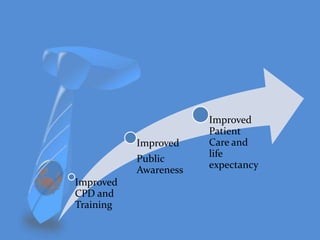
Improved
                       Patient
           Improved    Care and
                       life
           Public
           Awareness   expectancy
Improved
CPD and
Training
Summary and Questions

Improved patient outcomes

  • 2.
    OBJECTIVES DEVELOPMENT of the STRATEGY IMPLIMENTATION MONITORING DELIVERY METHODS ONGOING IMPROVEMENTS KEY PERFORMANCE INDICATORS
  • 4.
    To develop publicawareness and serve patients and carers - assess where we are now and make improvements To improve the response of health care providers- ask doctors, nurses, allied health professionals, Trusts and Universities UK wide to self assess against standards and feed back
  • 5.
    Transforming attitudes tobe proactive rather than reactive. (patients, nurses, doctors and healthcare professionals) Development of the strategy to be project managed taking into account changes in the NHS and commissioning
  • 6.
    Summarise and evaluatethis information and decide how education activity could be used to improve clinical skills, communication skills, teaching, facilitation and public awareness (mapped against and in support of ongoing marketing and media campaigns), use existing or new courses to deliver the standards
  • 8.
    Establishing an educationcampaign dealing with a variety of stakeholders (including societies, royal colleges, medical schools, nursing colleges, nurses, clinicians, the media, the public and private health care sectors, as well as the pharmaceutical industry and research council UK) to support your patients
  • 10.
    SHORT TERM (ActivityVS Outcomes) Public response such as compliance with screening programs Effectiveness of Health Charity Training programmes Incidence of early cancer detection in the community Primary and secondary care set up before and after the program
  • 11.
    Improvement of researchfunds and activities dealing with early detection and treatment of prostate cancer Improved sharing of information within and between primary and secondary providers Feedback from faculty and ambassadors Feedback from patients Feedback from clinicians, nurses and healthcare workers
  • 12.
    LONG TERM (Outcomes) Improvement of patient outcomes
  • 13.
    Delivery methods  BlendedLearning  Train the Trainers  Classroom Teaching  Road shows  Accredited CPD and Workshops  Teleconferencing  Action Learning Sets  Coaching and Mentoring  Online Learning
  • 15.
    Source of funds? Facilities? Ambassadors? Faculty? Trainthe trainers? Previous similar project in the UK and common challenges, successes and outcomes? If the same project was done abroad and its outcomes? Current audience? How may this participation be widened?
  • 17.
    Improved Patient Improved Care and life Public Awareness expectancy Improved CPD and Training
  • 18.