Magnetic Particle Inspection
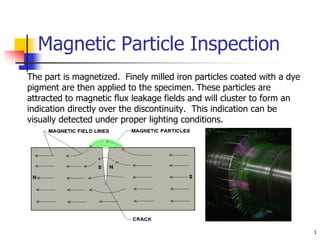
The part is magnetized. Finely milled iron particles coated with a dye
pigment are then applied to the specimen. These particles are
attracted to magnetic flux leakage fields and will cluster to form an
indication directly over the discontinuity. This indication can be
visually detected under proper lighting conditions.
1
Magnetic Particle
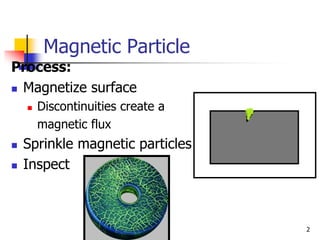
Process:
 Magnetize surface
 Discontinuities create a
magnetic flux
 Sprinkle magnetic particles
 Inspect
2
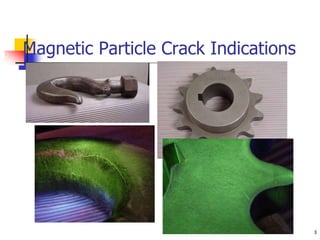
Magnetic Particle Crack Indications
3
MAGNETIC PARTICLE
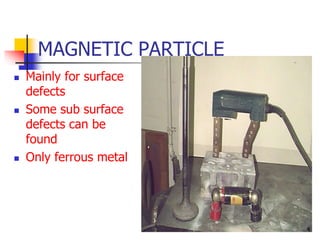
 Mainly for surface
defects
 Some sub surface
defects can be
found
 Only ferrous metal
4
5
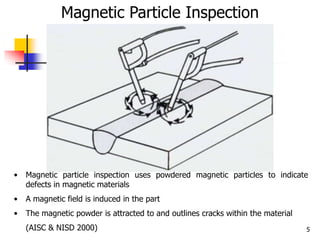
• Magnetic particle inspection uses powdered magnetic particles to indicate
defects in magnetic materials
• A magnetic field is induced in the part
• The magnetic powder is attracted to and outlines cracks within the material
(AISC & NISD 2000)
Magnetic Particle Inspection
Radiography
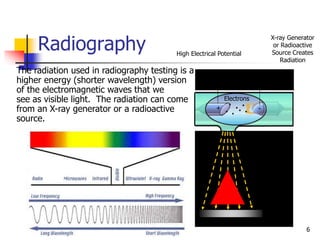
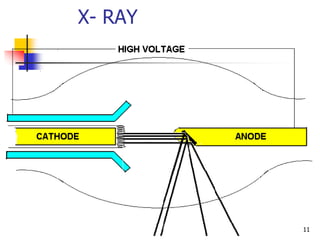
The radiation used in radiography testing is a
higher energy (shorter wavelength) version
of the electromagnetic waves that we
see as visible light. The radiation can come
from an X-ray generator or a radioactive
source.
High Electrical Potential
Electrons
-
+
X-ray Generator
or Radioactive
Source Creates
Radiation
Exposure Recording Device
Radiation
Penetrate
the Sample
6
Film Radiography
Top view of developed film
X-ray film
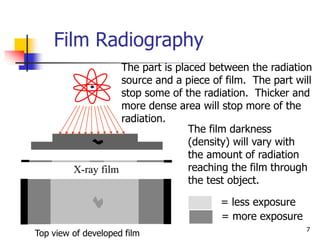
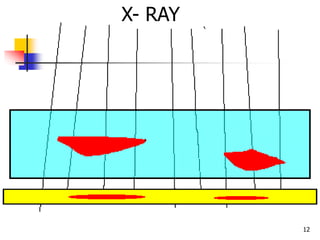
The part is placed between the radiation
source and a piece of film. The part will
stop some of the radiation. Thicker and
more dense area will stop more of the
radiation.
= more exposure
= less exposure
The film darkness
(density) will vary with
the amount of radiation
reaching the film through
the test object.
7
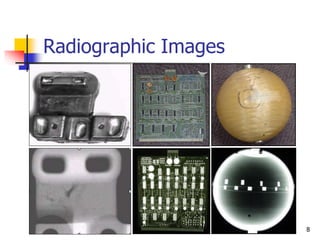
Radiographic Images
8
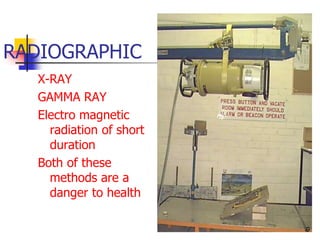
RADIOGRAPHIC
X-RAY
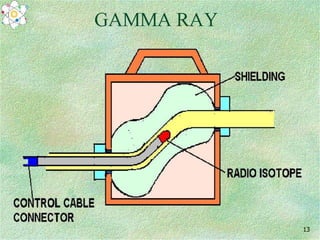
GAMMA RAY
Electro magnetic
radiation of short
duration
Both of these
methods are a
danger to health
9
10
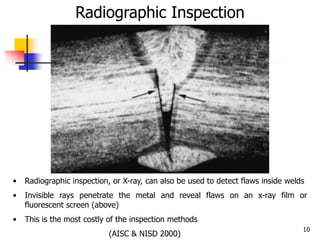
• Radiographic inspection, or X-ray, can also be used to detect flaws inside welds
• Invisible rays penetrate the metal and reveal flaws on an x-ray film or
fluorescent screen (above)
• This is the most costly of the inspection methods
(AISC & NISD 2000)
Radiographic Inspection
X- RAY
11
12
X- RAY
13

important Non destructive testing methods

  • 1.
    Magnetic Particle Inspection Thepart is magnetized. Finely milled iron particles coated with a dye pigment are then applied to the specimen. These particles are attracted to magnetic flux leakage fields and will cluster to form an indication directly over the discontinuity. This indication can be visually detected under proper lighting conditions. 1
  • 2.
    Magnetic Particle Process:  Magnetizesurface  Discontinuities create a magnetic flux  Sprinkle magnetic particles  Inspect 2
  • 3.
  • 4.
    MAGNETIC PARTICLE  Mainlyfor surface defects  Some sub surface defects can be found  Only ferrous metal 4
  • 5.
    5 • Magnetic particleinspection uses powdered magnetic particles to indicate defects in magnetic materials • A magnetic field is induced in the part • The magnetic powder is attracted to and outlines cracks within the material (AISC & NISD 2000) Magnetic Particle Inspection
  • 6.
    Radiography The radiation usedin radiography testing is a higher energy (shorter wavelength) version of the electromagnetic waves that we see as visible light. The radiation can come from an X-ray generator or a radioactive source. High Electrical Potential Electrons - + X-ray Generator or Radioactive Source Creates Radiation Exposure Recording Device Radiation Penetrate the Sample 6
  • 7.
    Film Radiography Top viewof developed film X-ray film The part is placed between the radiation source and a piece of film. The part will stop some of the radiation. Thicker and more dense area will stop more of the radiation. = more exposure = less exposure The film darkness (density) will vary with the amount of radiation reaching the film through the test object. 7
  • 8.
  • 9.
    RADIOGRAPHIC X-RAY GAMMA RAY Electro magnetic radiationof short duration Both of these methods are a danger to health 9
  • 10.
    10 • Radiographic inspection,or X-ray, can also be used to detect flaws inside welds • Invisible rays penetrate the metal and reveal flaws on an x-ray film or fluorescent screen (above) • This is the most costly of the inspection methods (AISC & NISD 2000) Radiographic Inspection
  • 11.
  • 12.
  • 13.