1
Presented By
Sidra Naz-003
 Computing is the process of using computer
technology to complete a given goal-oriented
task.
C-COMMON
O-OPERATING
M-MACHINE
P-PARTICULARLY
U-USED FOR
T-TRAINING
E-EDUCATION &
R-RESEARCH
2
 Until early 1990s computers were rarely seen within
home. The were generally very expensive and slow.
 By late 1990s dial up internet was available in most
houses and by 2004 broadband and fiber internet
was freely available.
 By 2014 smart phones and tablets became popular
and 4g internet became accessible and has faster
speeds.
 This means a lot more people are now connected to
internet meaning businesses have access to a much
wider market.
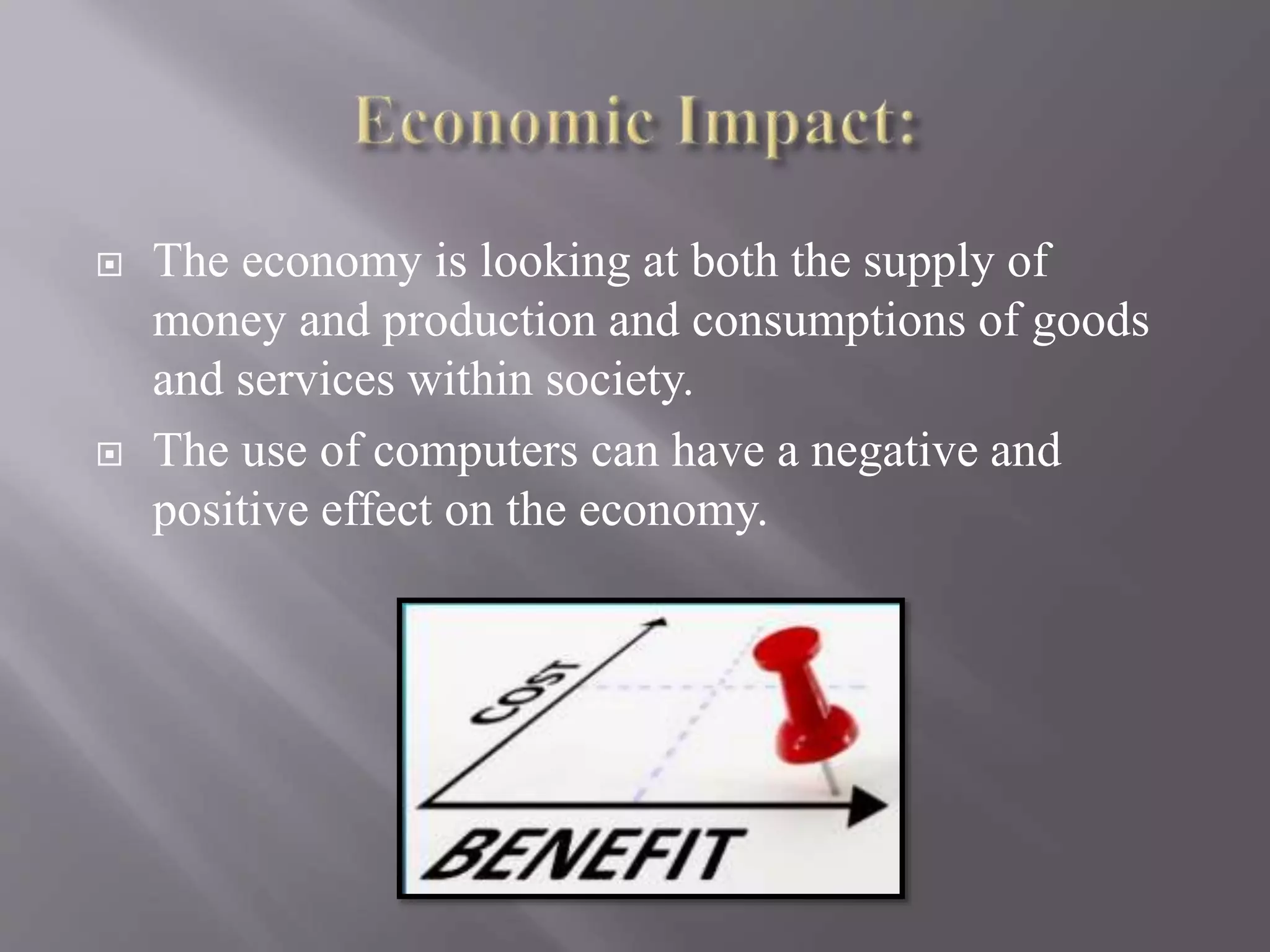
 The economy is looking at both the supply of
money and production and consumptions of goods
and services within society.
 The use of computers can have a negative and
positive effect on the economy.
 E-Commerce is buying and selling of goods on
internet.
 The internet has changed the way we buy and sell
goods. As well as this a consumer can compare
prices on the internet to ensure they are given the
best deal.
 It is estimated that 40% of shops will close in next
five years and more people and buying their projects
online.
 The advantages of using E-Commerce websites over
traditional shops are:
1. No rental or buying costs of high street shops and no
costs for furniture and staff.
2. Costs of goods can be reduced, since there is no
overheads. Therefore prices can be competitive.
3. Electronic Funds Transfer reduces security problems
in handling cash.
4. Can be accessed from anywhere.
8
9
 Change the way we work
 Smarter education
 Machines teaching themselves
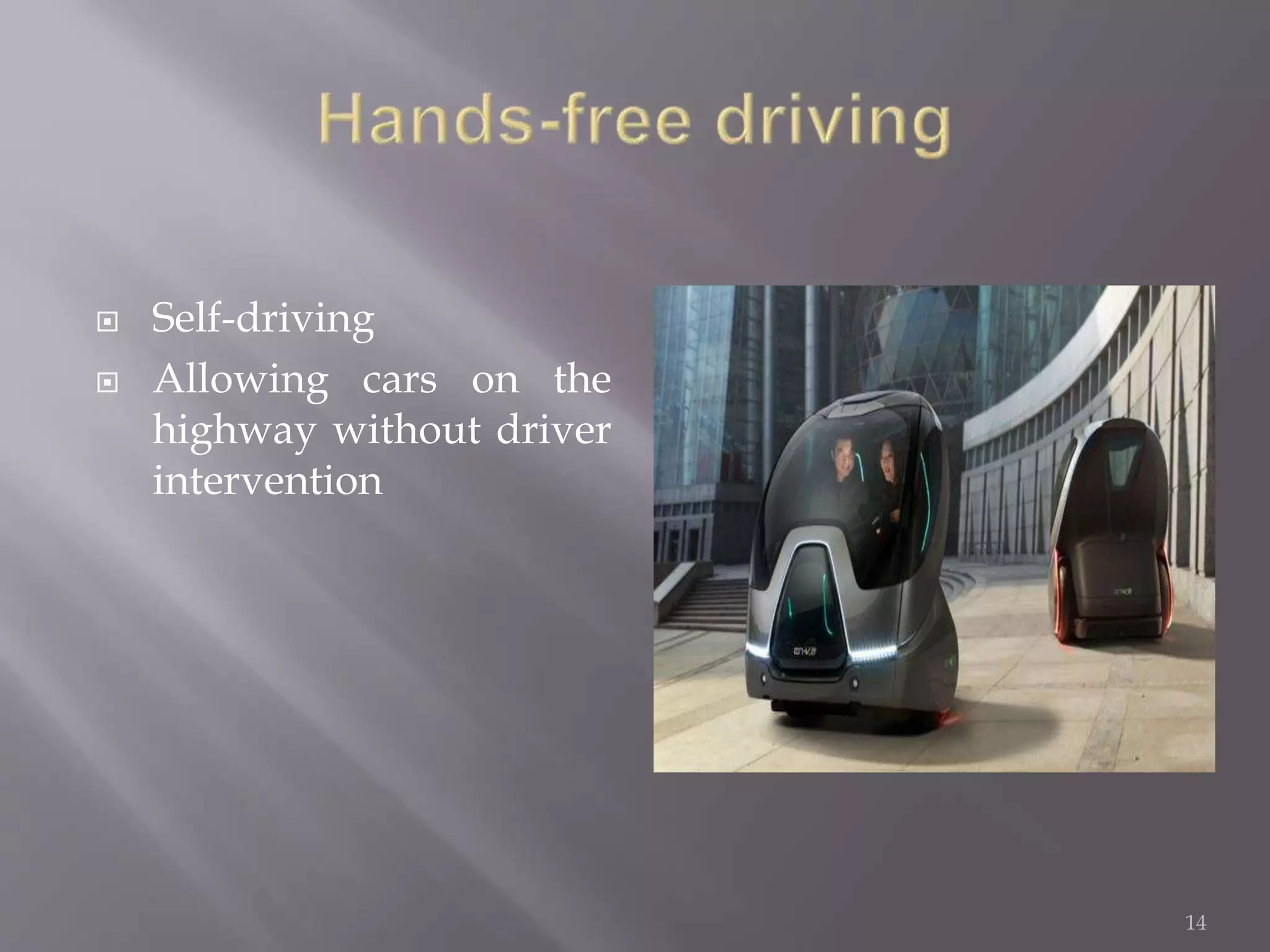
 Hands free driving
10
 With the development of new technology,
automation might happen, work done a lot
faster than before.
 Human workers will be replaced by robots.
11
 Although computer science is already widely
used in education.
 Schmidt envisions a new way of using
computers to make education smarter.
 Recognizing that everyone learns differently,
he suggests using computers to monitor the
different ways students learn.
12
 The past five years have been the years of the
mobile
 The next generation is machine learning
 The use of machine intelligence to make the
mobile smarter.
 Robots teaches each other.
13
 Self-driving
 Allowing cars on the
highway without driver
intervention
14
15
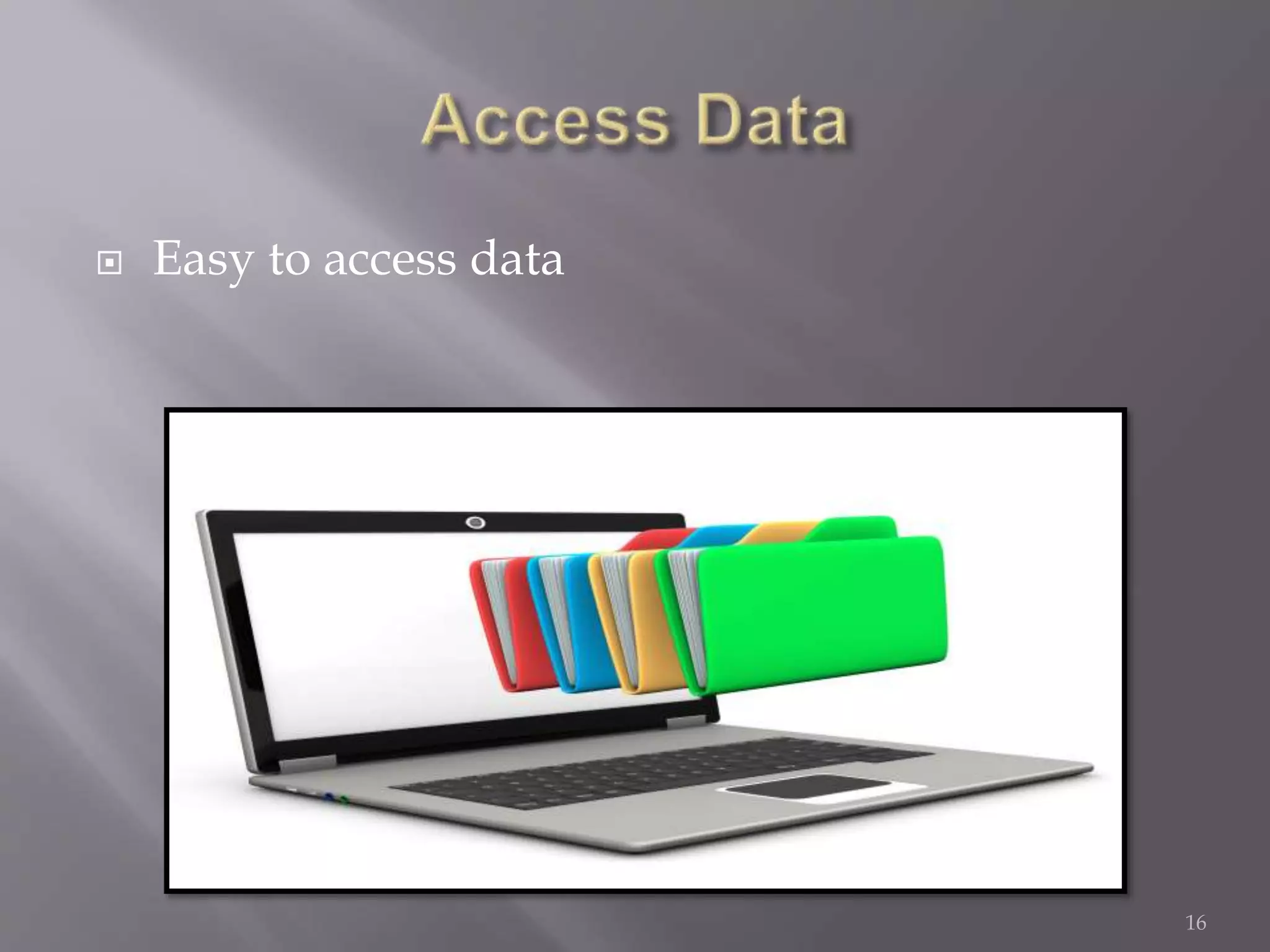
 Easy to access data
16
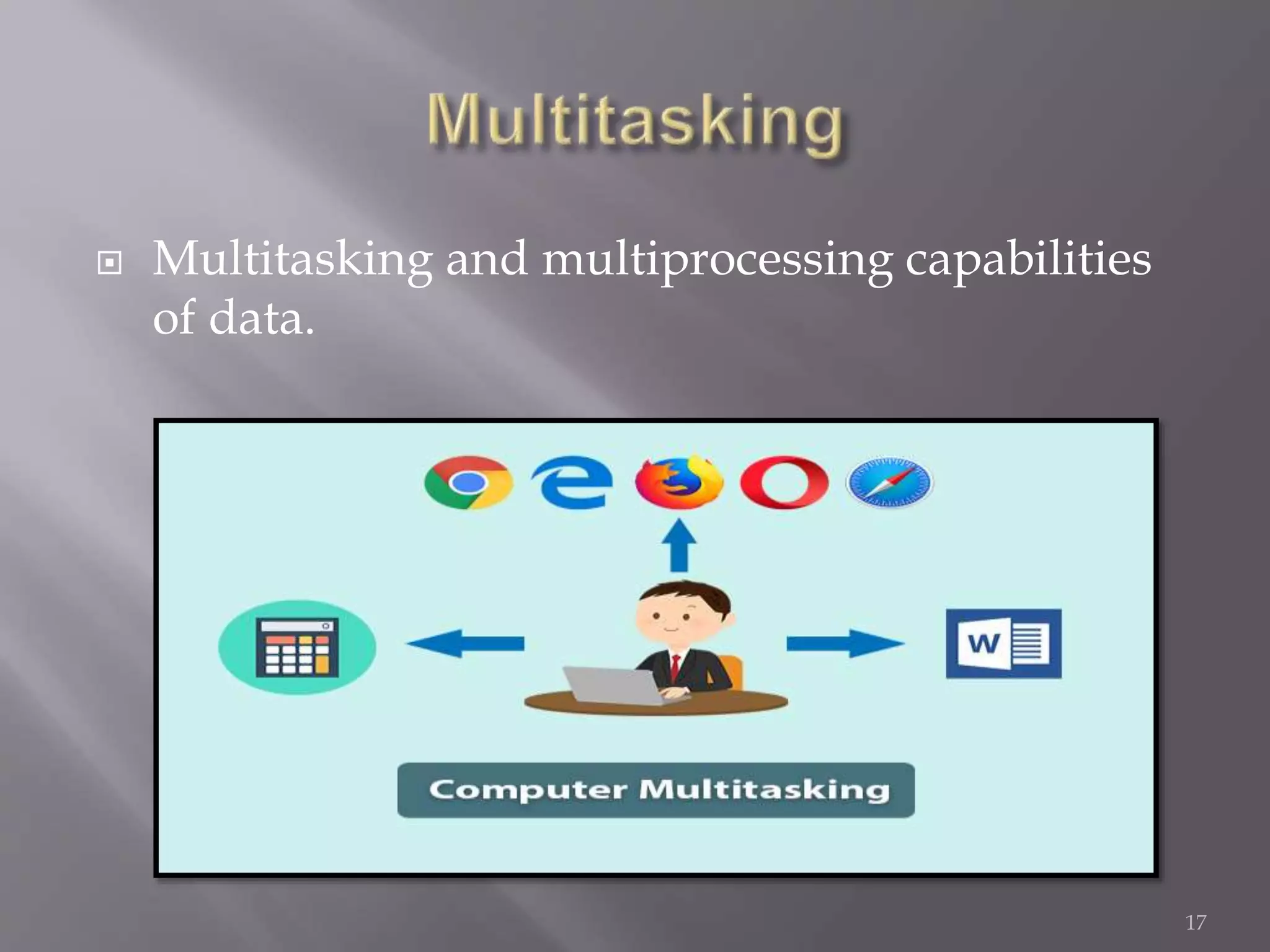
 Multitasking and multiprocessing capabilities
of data.
17
 Allow peoples across the world to
communicate with each other ,by using E-mail.
18
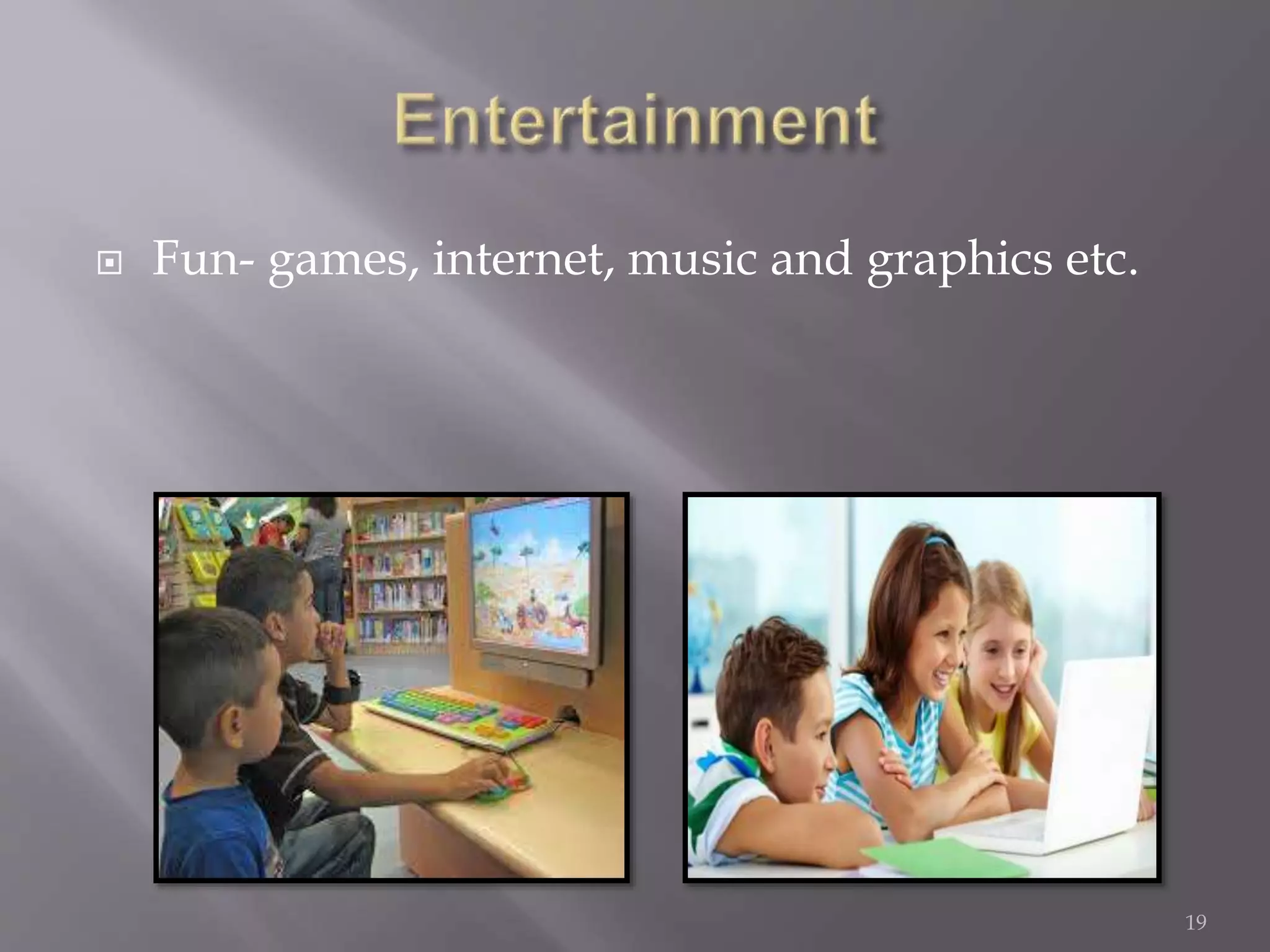
 Fun- games, internet, music and graphics etc.
19
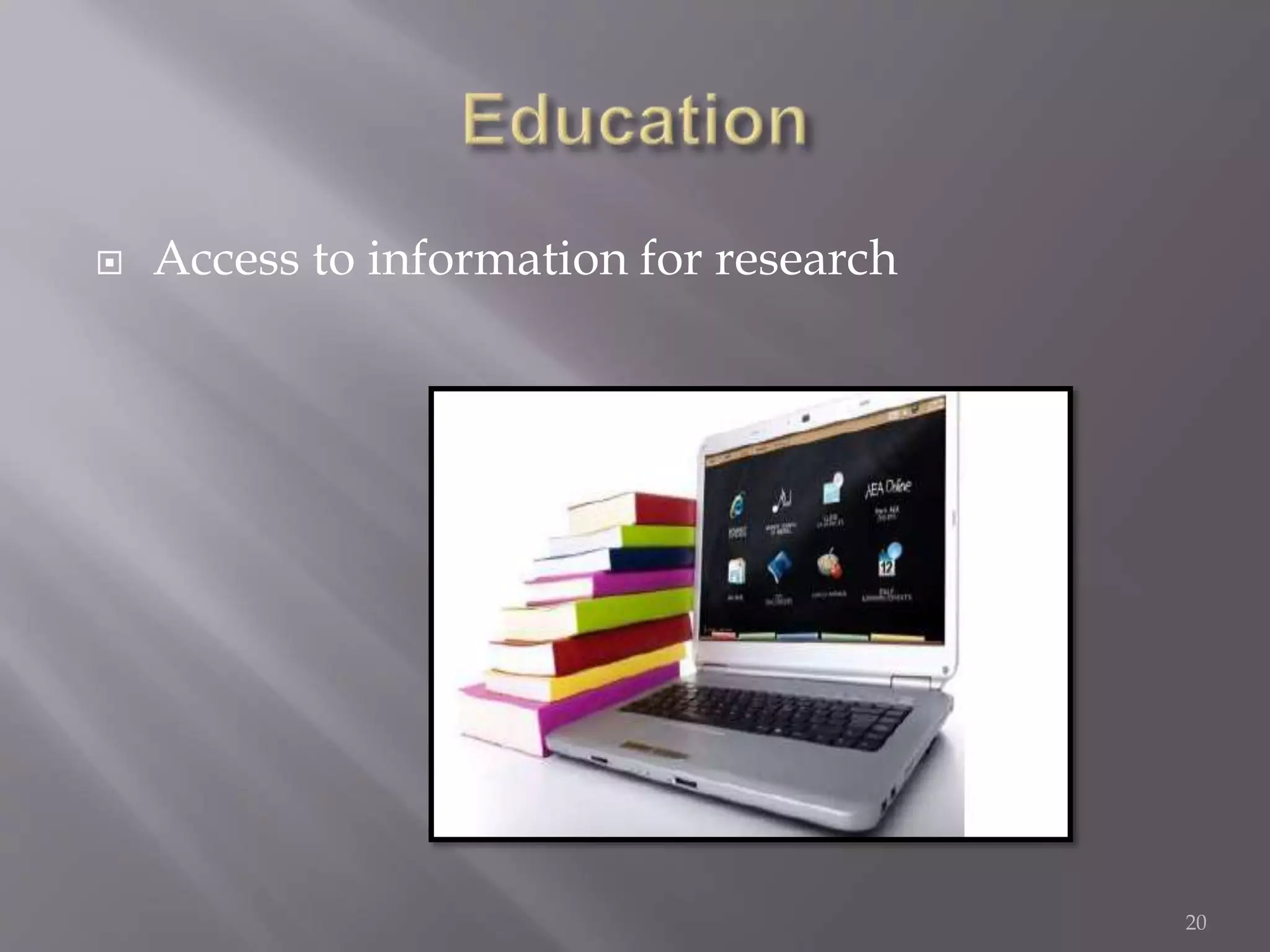
 Access to information for research
20
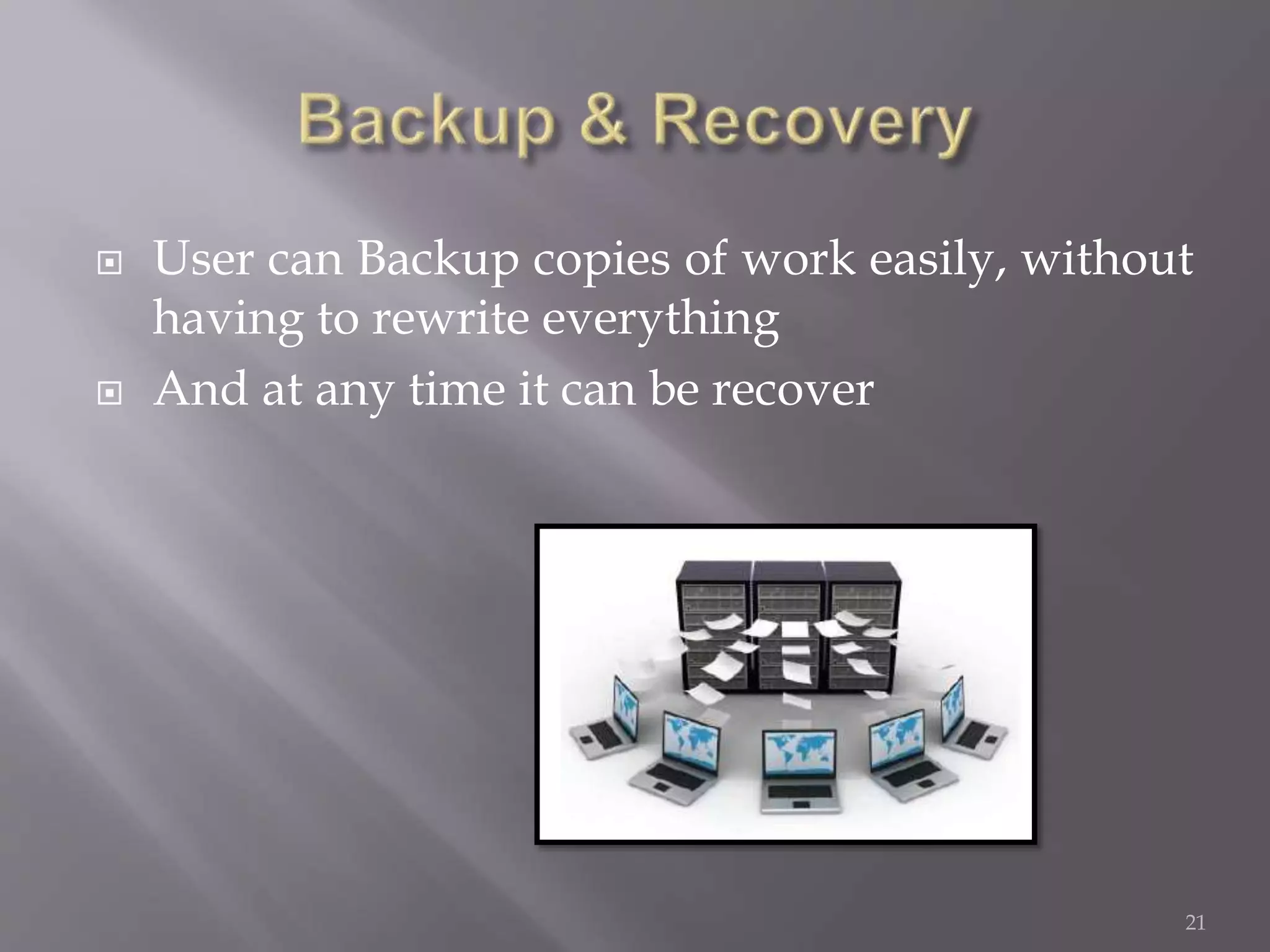
 User can Backup copies of work easily, without
having to rewrite everything
 And at any time it can be recover
21
22
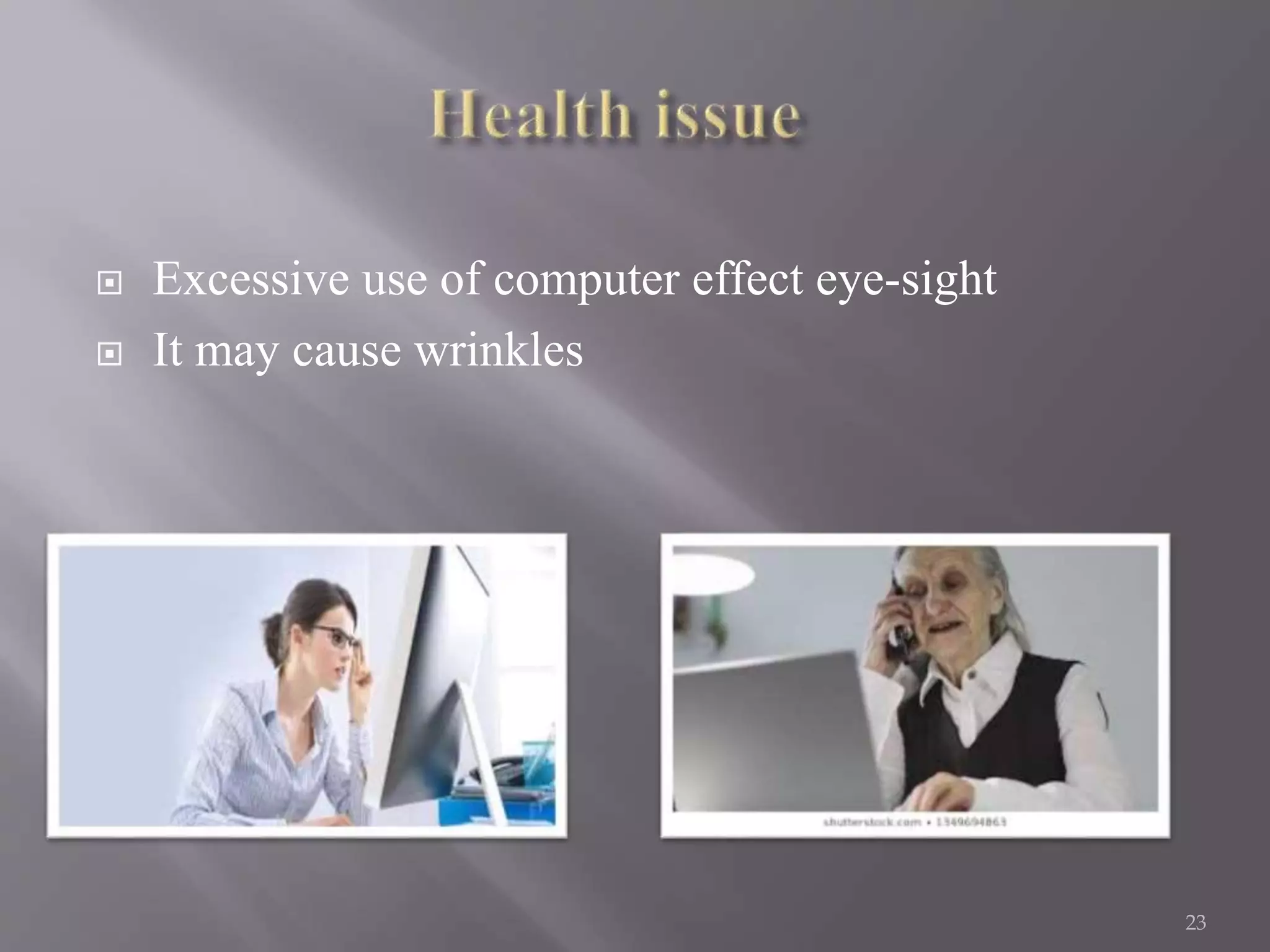
 Excessive use of computer effect eye-sight
 It may cause wrinkles
23
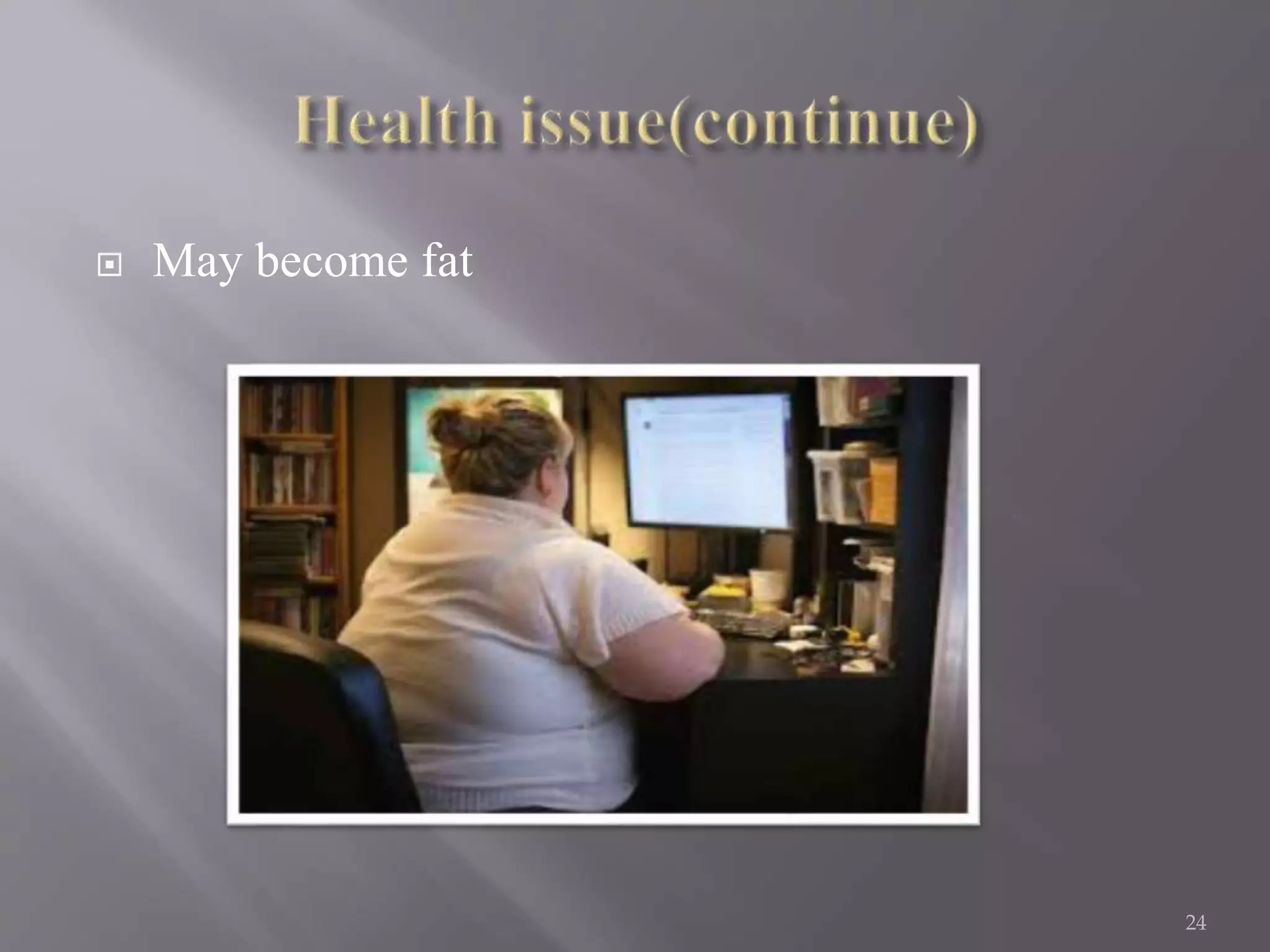
 May become fat
24
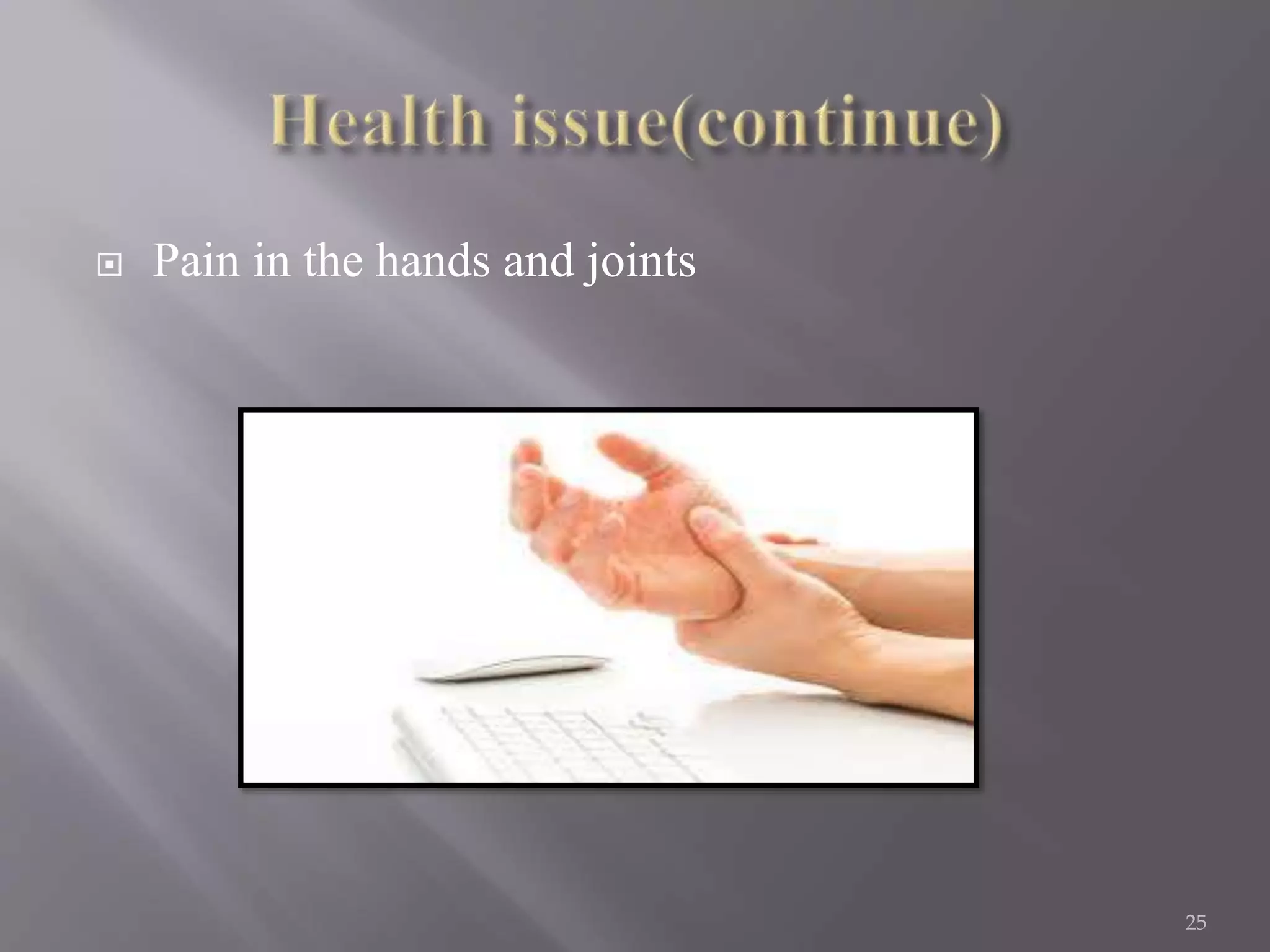
 Pain in the hands and joints
25
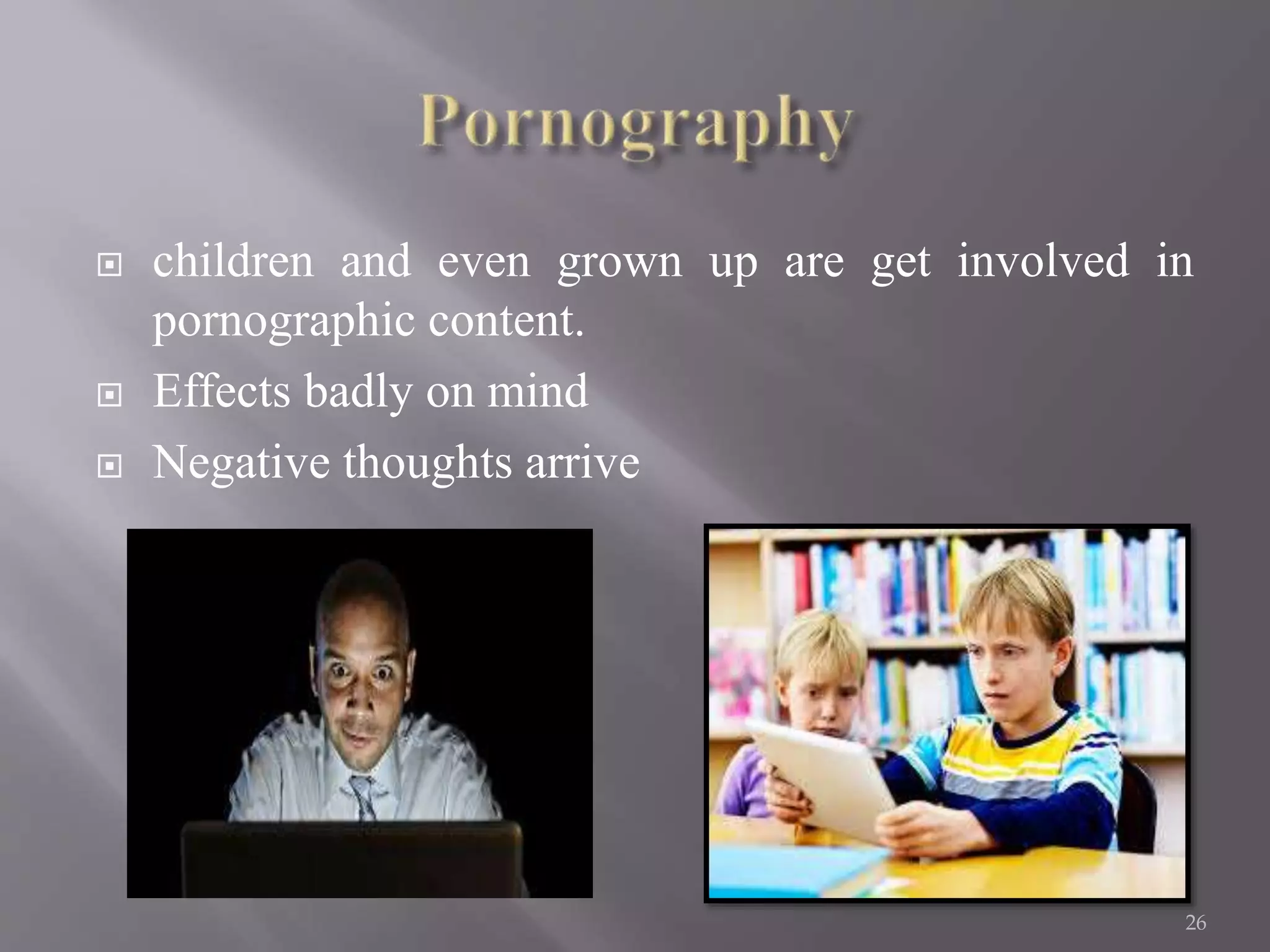
 children and even grown up are get involved in
pornographic content.
 Effects badly on mind
 Negative thoughts arrive
26
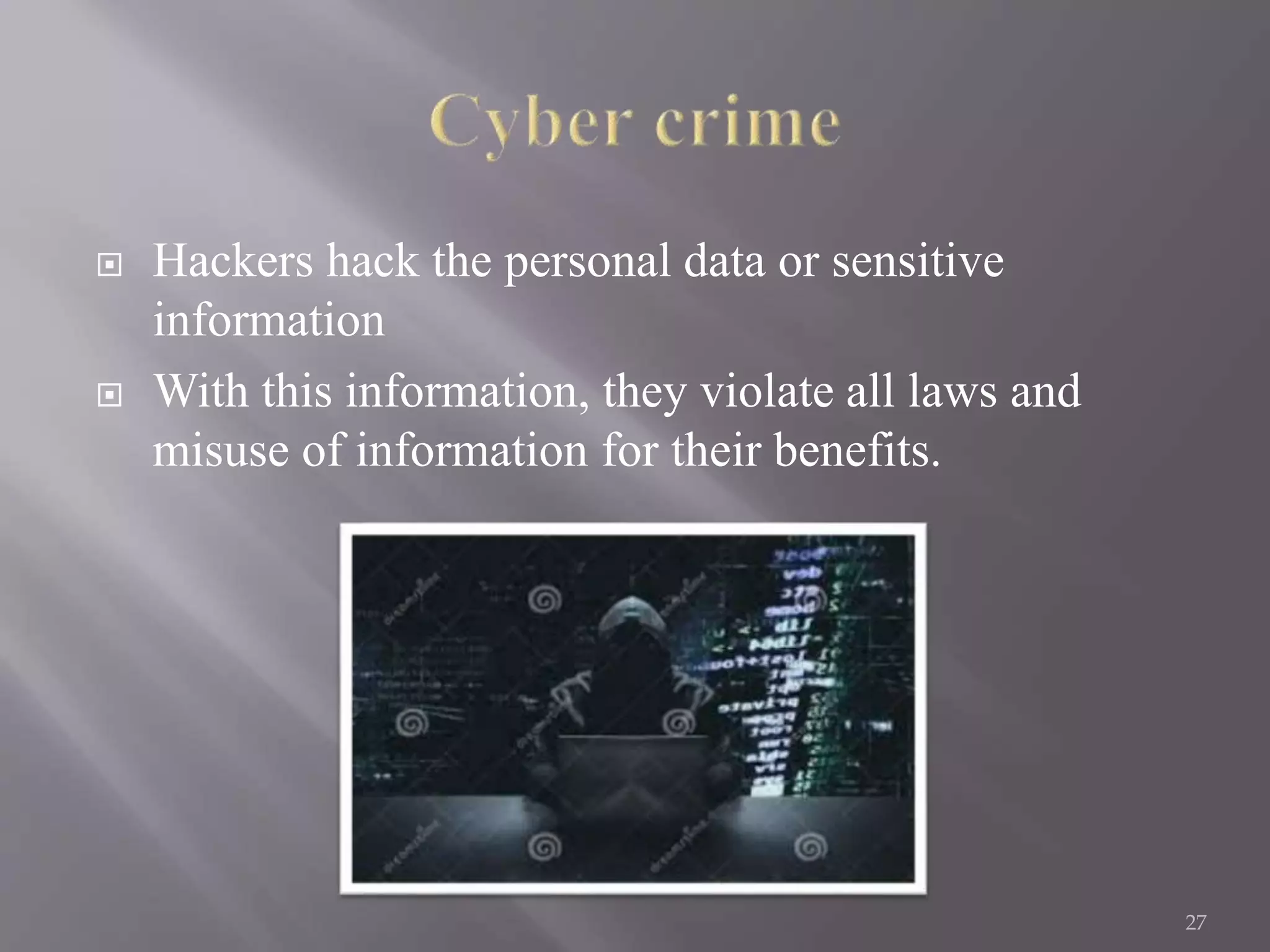
 Hackers hack the personal data or sensitive
information
 With this information, they violate all laws and
misuse of information for their benefits.
27
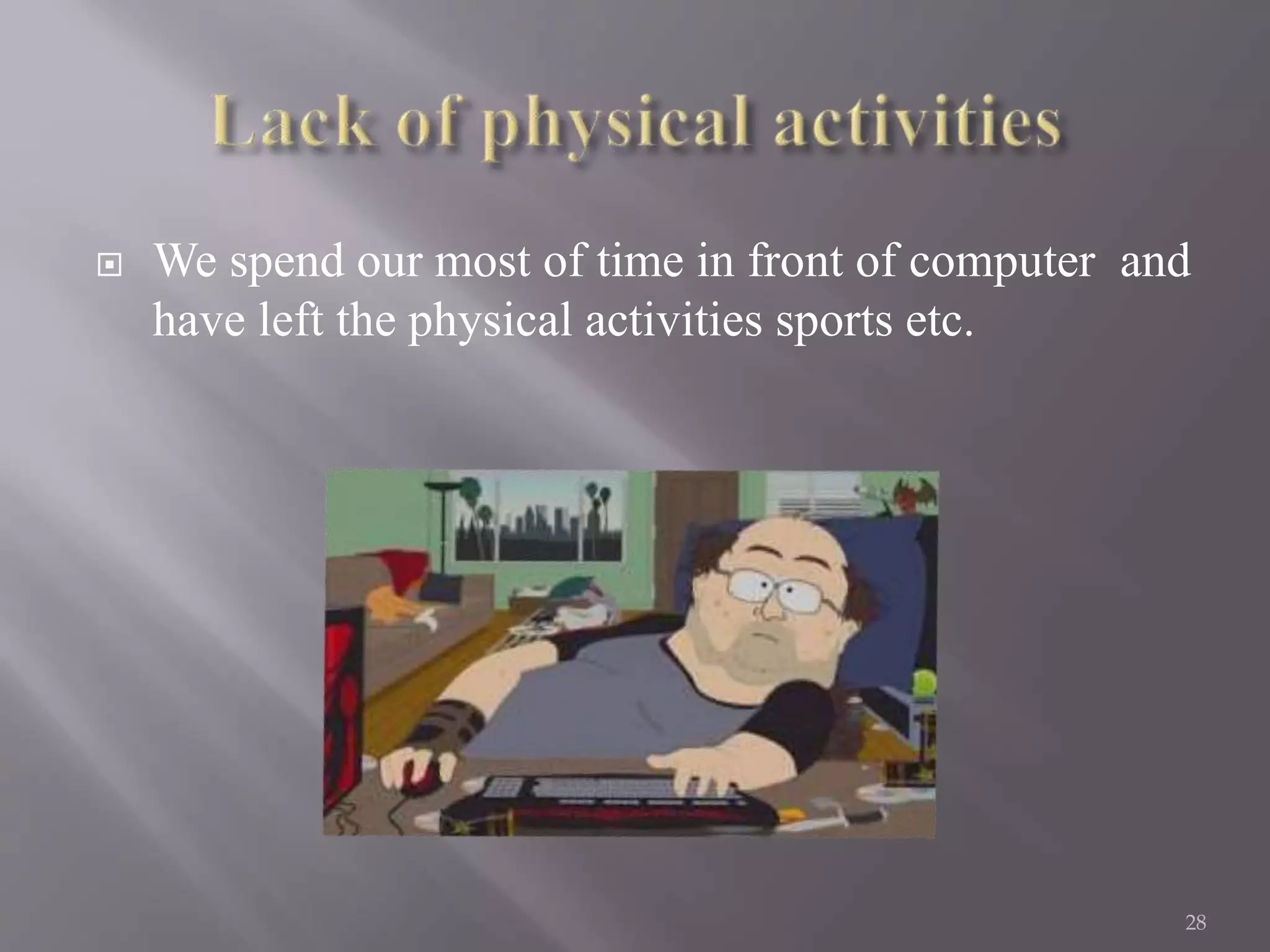
 We spend our most of time in front of computer and
have left the physical activities sports etc.
28
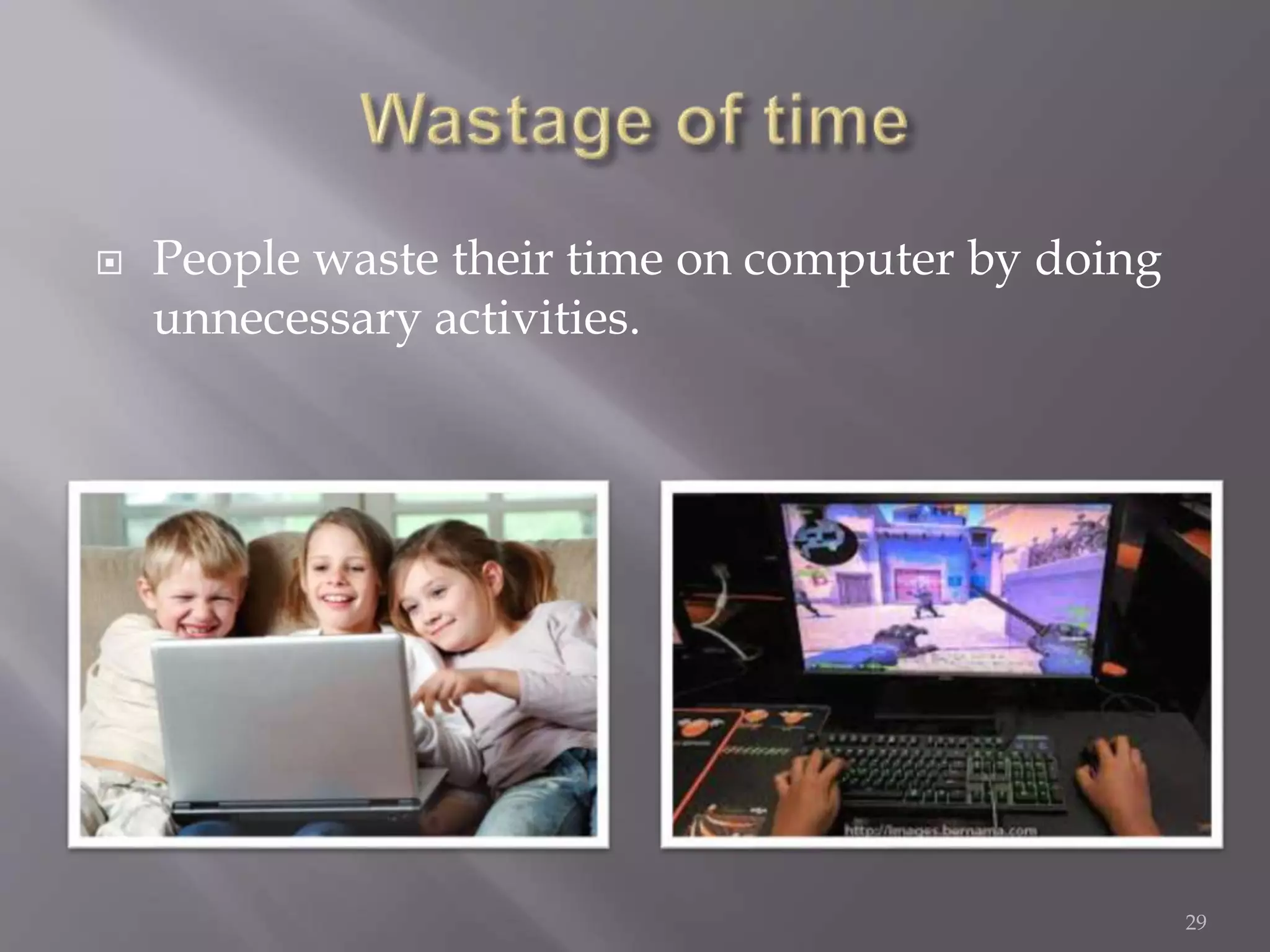
 People waste their time on computer by doing
unnecessary activities.
29

Impact of computing

  • 1.
  • 2.
     Computing isthe process of using computer technology to complete a given goal-oriented task. C-COMMON O-OPERATING M-MACHINE P-PARTICULARLY U-USED FOR T-TRAINING E-EDUCATION & R-RESEARCH 2
  • 4.
     Until early1990s computers were rarely seen within home. The were generally very expensive and slow.  By late 1990s dial up internet was available in most houses and by 2004 broadband and fiber internet was freely available.  By 2014 smart phones and tablets became popular and 4g internet became accessible and has faster speeds.  This means a lot more people are now connected to internet meaning businesses have access to a much wider market.
  • 5.
     The economyis looking at both the supply of money and production and consumptions of goods and services within society.  The use of computers can have a negative and positive effect on the economy.
  • 6.
     E-Commerce isbuying and selling of goods on internet.  The internet has changed the way we buy and sell goods. As well as this a consumer can compare prices on the internet to ensure they are given the best deal.  It is estimated that 40% of shops will close in next five years and more people and buying their projects online.
  • 7.
     The advantagesof using E-Commerce websites over traditional shops are: 1. No rental or buying costs of high street shops and no costs for furniture and staff. 2. Costs of goods can be reduced, since there is no overheads. Therefore prices can be competitive. 3. Electronic Funds Transfer reduces security problems in handling cash. 4. Can be accessed from anywhere.
  • 8.
  • 9.
  • 10.
     Change theway we work  Smarter education  Machines teaching themselves  Hands free driving 10
  • 11.
     With thedevelopment of new technology, automation might happen, work done a lot faster than before.  Human workers will be replaced by robots. 11
  • 12.
     Although computerscience is already widely used in education.  Schmidt envisions a new way of using computers to make education smarter.  Recognizing that everyone learns differently, he suggests using computers to monitor the different ways students learn. 12
  • 13.
     The pastfive years have been the years of the mobile  The next generation is machine learning  The use of machine intelligence to make the mobile smarter.  Robots teaches each other. 13
  • 14.
     Self-driving  Allowingcars on the highway without driver intervention 14
  • 15.
  • 16.
     Easy toaccess data 16
  • 17.
     Multitasking andmultiprocessing capabilities of data. 17
  • 18.
     Allow peoplesacross the world to communicate with each other ,by using E-mail. 18
  • 19.
     Fun- games,internet, music and graphics etc. 19
  • 20.
     Access toinformation for research 20
  • 21.
     User canBackup copies of work easily, without having to rewrite everything  And at any time it can be recover 21
  • 22.
  • 23.
     Excessive useof computer effect eye-sight  It may cause wrinkles 23
  • 24.
  • 25.
     Pain inthe hands and joints 25
  • 26.
     children andeven grown up are get involved in pornographic content.  Effects badly on mind  Negative thoughts arrive 26
  • 27.
     Hackers hackthe personal data or sensitive information  With this information, they violate all laws and misuse of information for their benefits. 27
  • 28.
     We spendour most of time in front of computer and have left the physical activities sports etc. 28
  • 29.
     People wastetheir time on computer by doing unnecessary activities. 29

Editor's Notes

  • #12 with the development of new technology, automation might happen a lot faster than before. Automation is reshaping workplaces and will in years to come bring fundamental changes to almost every industry. 
  • #13 Recognising that everyone learns differently, he suggests using computers to monitor the different ways students learn. This will give teachers the ability to identify the most successful teaching models and augment their teaching to make education more effective.
  • #14 The past five years have been the years of the mobile, yet according to Schmidt the next generation is machine learning – i.e., the use of machine intelligence to make the mobile smarter. Instead of programming a computer, you teach a computer to learn something and it does what you want. Making the devices smarter is key, as their role in society is becoming increasingly important. He illustrated this by pointing out that smartphones are an increasingly important tool in all professions, even for nurses in the NHS.
  • #15 The automobile in 2050 will be self-driving. Companies are working on concepts allowing cars to cruise along on the highway without driver intervention, many of which are likely to be seen on our roads.