Company
LOGO
Implantable Medical Devices
BY CHIRAG
IMD
Implant:
Man-made
Medical
Devices
Carmel J Caruana Medical Physics IHC Univ of Malta
3
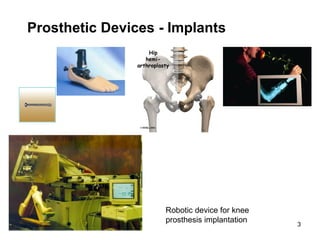
Prosthetic Devices - Implants
Robotic device for knee
prosthesis implantation
Carmel J Caruana Medical Physics IHC Univ of Malta
4
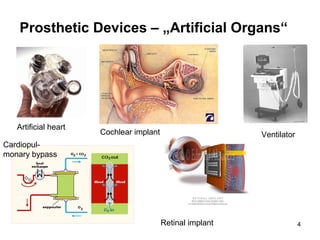
Prosthetic Devices – „Artificial Organs“
Artificial heart
Cochlear implant
Retinal implant
Ventilator
Cardiopul-
monary bypass
IMD
Medical Device Definition
An instrument, apparatus, implement, machine, contrivance,
implant, in vitro reagent, or other similar or related article, including
a component part, or accessory which is:
-Intended for use in the diagnosis of disease or
other conditions
-Intended to affect the structure or any function
of the body of man or other animals
IMD
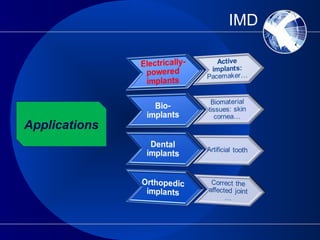
Applications
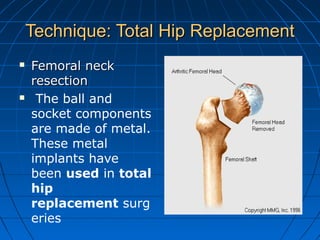
Technique: Total Hip ReplacementTechnique: Total Hip Replacement
 Femoral neckFemoral neck
resectionresection
 The ball and
socket components
are made of metal.
These metal
implants have
been used in total
hip
replacement surg
eries
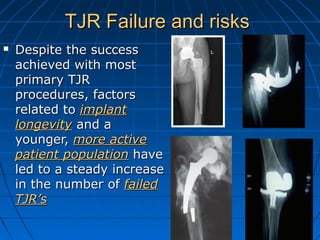
TJR Failure and risksTJR Failure and risks
 Despite the successDespite the success
achieved with mostachieved with most
primary TJRprimary TJR
procedures, factorsprocedures, factors
related torelated to implantimplant
longevitylongevity and aand a
younger,younger, more activemore active
patient populationpatient population havehave
led to a steady increaseled to a steady increase
in the number ofin the number of failedfailed
TJR’sTJR’s
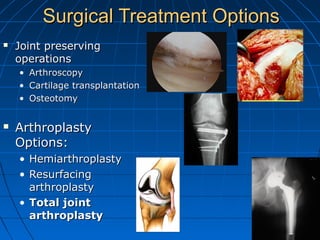
Surgical Treatment OptionsSurgical Treatment Options
 Joint preservingJoint preserving
operationsoperations
• ArthroscopyArthroscopy
• Cartilage transplantationCartilage transplantation
• OsteotomyOsteotomy
 ArthroplastyArthroplasty
Options:Options:
• HemiarthroplastyHemiarthroplasty
• ResurfacingResurfacing
arthroplastyarthroplasty
• Total jointTotal joint
arthroplastyarthroplasty
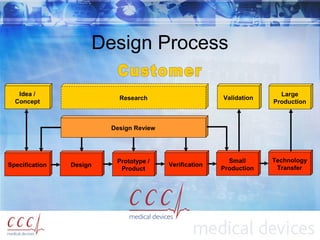
Design Process
Specification
Idea /
Concept
Design
Prototype /
Product
Verification
Small
Production
Validation
Design Review
Technology
Transfer
Large
Production
Research
Active implantable medical devices
Types
•Implantable cardiac pacemakers
•Implantable defibrillators
•Cochlear implants
•Implantable nerve stimulators (FES)
•Limb function stimulation
•Bladder stimulators
•Diaphragm stimulator
•Implantable infusion pumps
•Implantable active monitoring devices
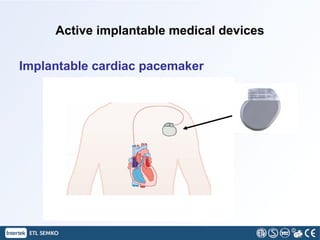
Active implantable medical devices
Implantable cardiac pacemaker
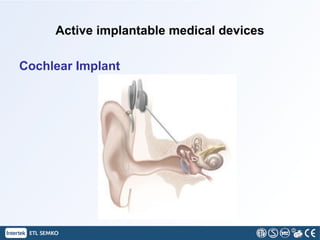
Active implantable medical devices
Cochlear Implant
Application Fields
• Heart Failure
• Obesity
• Diabetes
• Blood pressure control
• Foot drop correction
• Urinary incontinence
• Patient monitoring
LATEST ADVANCEMENT
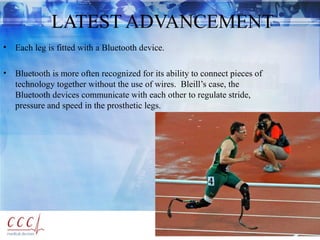
• Each leg is fitted with a Bluetooth device.
• Bluetooth is more often recognized for its ability to connect pieces of
technology together without the use of wires. Bleill’s case, the
Bluetooth devices communicate with each other to regulate stride,
pressure and speed in the prosthetic legs.
LATEST ADVANCEMENT
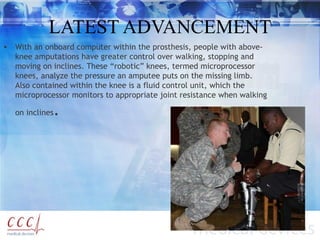
• With an onboard computer within the prosthesis, people with above-
knee amputations have greater control over walking, stopping and
moving on inclines. These “robotic” knees, termed microprocessor
knees, analyze the pressure an amputee puts on the missing limb.
Also contained within the knee is a fluid control unit, which the
microprocessor monitors to appropriate joint resistance when walking
on inclines.
References
[1] Roland Gubisch, Intertek ETL SEMKO,
EMC for active implantable medical devices
[2]http://en.wikipedia.org/wiki/Implant_(medici
ne)
[3] http://en.wikipedia.org/wiki/Medical_device
[4] http://en.wikipedia.org/wiki/VeriChip

Implantable medical devices

  • 1.
  • 2.
  • 3.
    Carmel J CaruanaMedical Physics IHC Univ of Malta 3 Prosthetic Devices - Implants Robotic device for knee prosthesis implantation
  • 4.
    Carmel J CaruanaMedical Physics IHC Univ of Malta 4 Prosthetic Devices – „Artificial Organs“ Artificial heart Cochlear implant Retinal implant Ventilator Cardiopul- monary bypass
  • 5.
    IMD Medical Device Definition Aninstrument, apparatus, implement, machine, contrivance, implant, in vitro reagent, or other similar or related article, including a component part, or accessory which is: -Intended for use in the diagnosis of disease or other conditions -Intended to affect the structure or any function of the body of man or other animals
  • 6.
  • 7.
    Technique: Total HipReplacementTechnique: Total Hip Replacement  Femoral neckFemoral neck resectionresection  The ball and socket components are made of metal. These metal implants have been used in total hip replacement surg eries
  • 8.
    TJR Failure andrisksTJR Failure and risks  Despite the successDespite the success achieved with mostachieved with most primary TJRprimary TJR procedures, factorsprocedures, factors related torelated to implantimplant longevitylongevity and aand a younger,younger, more activemore active patient populationpatient population havehave led to a steady increaseled to a steady increase in the number ofin the number of failedfailed TJR’sTJR’s
  • 9.
    Surgical Treatment OptionsSurgicalTreatment Options  Joint preservingJoint preserving operationsoperations • ArthroscopyArthroscopy • Cartilage transplantationCartilage transplantation • OsteotomyOsteotomy  ArthroplastyArthroplasty Options:Options: • HemiarthroplastyHemiarthroplasty • ResurfacingResurfacing arthroplastyarthroplasty • Total jointTotal joint arthroplastyarthroplasty
  • 10.
    Design Process Specification Idea / Concept Design Prototype/ Product Verification Small Production Validation Design Review Technology Transfer Large Production Research
  • 11.
    Active implantable medicaldevices Types •Implantable cardiac pacemakers •Implantable defibrillators •Cochlear implants •Implantable nerve stimulators (FES) •Limb function stimulation •Bladder stimulators •Diaphragm stimulator •Implantable infusion pumps •Implantable active monitoring devices
  • 12.
    Active implantable medicaldevices Implantable cardiac pacemaker
  • 13.
    Active implantable medicaldevices Cochlear Implant
  • 14.
    Application Fields • HeartFailure • Obesity • Diabetes • Blood pressure control • Foot drop correction • Urinary incontinence • Patient monitoring
  • 15.
    LATEST ADVANCEMENT • Eachleg is fitted with a Bluetooth device. • Bluetooth is more often recognized for its ability to connect pieces of technology together without the use of wires. Bleill’s case, the Bluetooth devices communicate with each other to regulate stride, pressure and speed in the prosthetic legs.
  • 16.
    LATEST ADVANCEMENT • Withan onboard computer within the prosthesis, people with above- knee amputations have greater control over walking, stopping and moving on inclines. These “robotic” knees, termed microprocessor knees, analyze the pressure an amputee puts on the missing limb. Also contained within the knee is a fluid control unit, which the microprocessor monitors to appropriate joint resistance when walking on inclines.
  • 17.
    References [1] Roland Gubisch,Intertek ETL SEMKO, EMC for active implantable medical devices [2]http://en.wikipedia.org/wiki/Implant_(medici ne) [3] http://en.wikipedia.org/wiki/Medical_device [4] http://en.wikipedia.org/wiki/VeriChip