IMAGERY


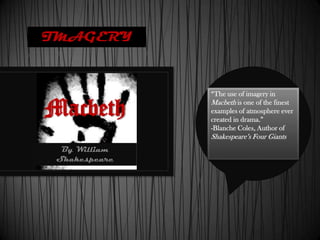
               “The use of imagery in

Macbeth        Macbeth is one of the finest
               examples of atmosphere ever
               created in drama.”
               -Blanche Coles, Author of
               Shakespeare‟s Four Giants
  By William
 Shakespeare
• Creates an atmosphere of horror and
  violence.
• Bleeding sergeant recounts tale of battle.
• Described in gory detail.
• Macbeth - brutal, but heroic.
• Bloody images establish the violence that
  is to dominate the play.
• Efforts to wash hands after murder.
• Banquo‟s ghost.
• Wading through a river of blood.
• Carries burden of all Macbeth‟s crimes.
• Sleepwalking.
• Compulsive washing of hands.
• Attempts to escape stench of blood.
• Conversation between Malcolm and
  Macduff.
• Communicates the breakdown of
  order in Scotland.
• Represents the evil, corrupt rule of Macbeth.
• Introduced at a late stage, but is used
  extensively in the play.
• Macbeth is seen as Scotland‟s disease, which
  can only be cured by the coronation of the
  rightful king.
• Scotland is blighted by disease and
  infertility.
• Macbeth’s rule is described as
  ‘distempered’.
• Macbeth asks the doctor to cure
  Scotland’s disease, but ironically, he is
  this disease.
• Malcolm and the forces of good are
  seen as the antidote to the disease
• Lady Macbeth is described as
  having an ‘infected mind’ and
  talking to her pillow.
• Her sleepwalking and compulsive
  actions suggest an illness, rooted
  in remorse.
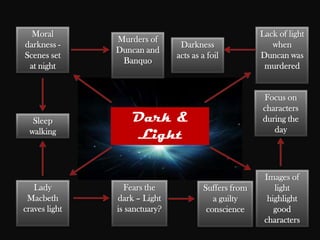
Moral                                               Lack of light
               Murders of
darkness -                      Darkness                 when
               Duncan and
Scenes set                     acts as a foil         Duncan was
                Banquo
 at night                                              murdered


                                                      Focus on
                                                      characters
  Sleep            Dark &                             during the
                                                         day
 walking
                   Light

                                                       Images of
   Lady          Fears the             Suffers from       light
 Macbeth       dark – Light               a guilty      highlight
craves light   is sanctuary?            conscience        good
                                                       characters
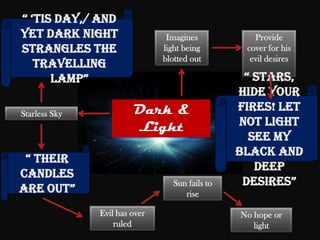
“ „tis day,/ and
yet dark night                  Imagines            Provide
strangles the                  light being        cover for his
                               blotted out         evil desires
   travelling
      lamp”                                       “ stars,
                                                 hide your
Starless Sky            Dark &                   fires! Let
                        Light                    not light
                                                   see my
                                                 black and
 “ their
                                                    deep
candles
                                  Sun fails to    desires”
are out”                             rise

               Evil has over                     No hope or
                   ruled                            light
• The motif of sleep ties together the
  relationship between conscience, action and
  consequence.
• The punishment for cruel deeds is the
  inability to sleep.
• Macbeth, Lady Macbeth and Banquo have
  issues with sleeplessness.
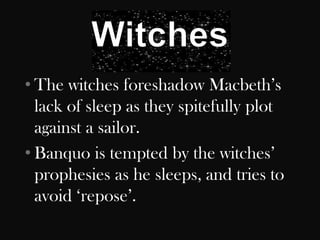
• The witches foreshadow Macbeth‟s
  lack of sleep as they spitefully plot
  against a sailor.
• Banquo is tempted by the witches‟
  prophesies as he sleeps, and tries to
  avoid „repose‟.
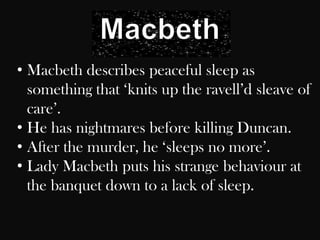
• Macbeth describes peaceful sleep as
  something that „knits up the ravell‟d sleave of
  care‟.
• He has nightmares before killing Duncan.
• After the murder, he „sleeps no more‟.
• Lady Macbeth puts his strange behaviour at
  the banquet down to a lack of sleep.
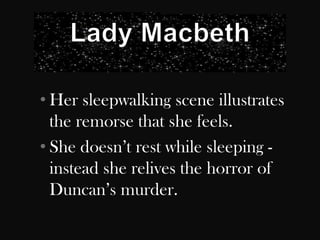
• Her sleepwalking scene illustrates
  the remorse that she feels.
• She doesn‟t rest while sleeping -
  instead she relives the horror of
  Duncan‟s murder.
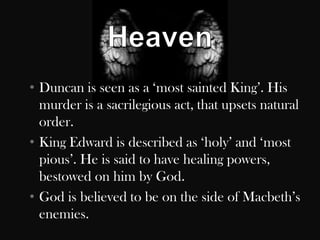
• Duncan is seen as a „most sainted King‟. His
  murder is a sacrilegious act, that upsets natural
  order.
• King Edward is described as „holy‟ and „most
  pious‟. He is said to have healing powers,
  bestowed on him by God.
• God is believed to be on the side of Macbeth‟s
  enemies.
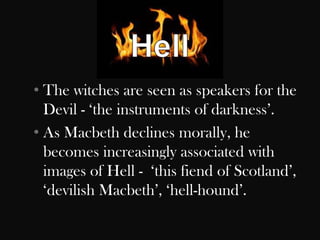
• The witches are seen as speakers for the
  Devil - „the instruments of darkness‟.
• As Macbeth declines morally, he
  becomes increasingly associated with
  images of Hell - „this fiend of Scotland‟,
  „devilish Macbeth‟, „hell-hound‟.
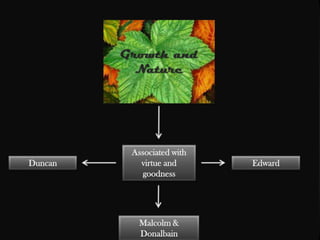
Growth and
           Nature


          Associated with
Duncan      virtue and      Edward
             goodness


            Malcolm &
            Donalbain
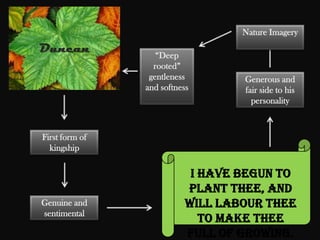
Nature Imagery
Duncan
                   “Deep
                  rooted”
                 gentleness       Generous and
                and softness      fair side to his
                                    personality


First form of
  kingship


                           I have begun to
                          plant thee, and
Genuine and               will labour thee
sentimental
                             to make thee
                          full of growing.
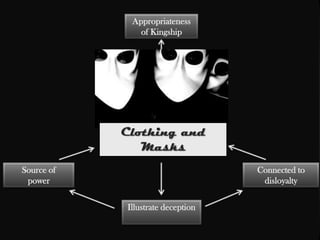
Appropriateness
               of Kingship


            Clothing and
               Masks
Source of                          Connected to
 power                              disloyalty

            Illustrate deception
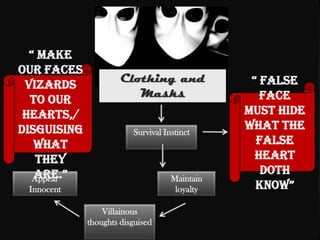
“ make
our faces
                      Clothing and              “ false
 vizards
                         Masks                    face
  to our
 hearts,/                                      must hide
Disguising               Survival Instinct
                                               what the
   what                                          false
    they                                         heart
   are.”                                          doth
   Appear                           Maintain
 Innocent                            loyalty     know”

                 Villainous
             thoughts disguised
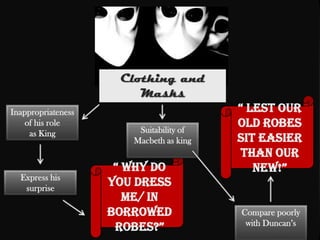
Clothing and
                        Masks
Inappropriateness                        “ lest our
    of his role
                        Suitability of
                                         old robes
     as King
                       Macbeth as king   sit easier
                                         than our
                     “ why do               new!”
  Express his
   surprise
                    you dress
                       me/ In
                    borrowed             Compare poorly
                                          with Duncan‟s
                     robes?”
Brónagh Galvin
Sorcha Lavelle Walsh
 Katherine Murphy

Imagery in Macbeth

  • 1.
    IMAGERY “The use of imagery in Macbeth Macbeth is one of the finest examples of atmosphere ever created in drama.” -Blanche Coles, Author of Shakespeare‟s Four Giants By William Shakespeare
  • 2.
    • Creates anatmosphere of horror and violence. • Bleeding sergeant recounts tale of battle. • Described in gory detail. • Macbeth - brutal, but heroic. • Bloody images establish the violence that is to dominate the play.
  • 3.
    • Efforts towash hands after murder. • Banquo‟s ghost. • Wading through a river of blood.
  • 4.
    • Carries burdenof all Macbeth‟s crimes. • Sleepwalking. • Compulsive washing of hands. • Attempts to escape stench of blood.
  • 5.
    • Conversation betweenMalcolm and Macduff. • Communicates the breakdown of order in Scotland.
  • 6.
    • Represents theevil, corrupt rule of Macbeth. • Introduced at a late stage, but is used extensively in the play. • Macbeth is seen as Scotland‟s disease, which can only be cured by the coronation of the rightful king.
  • 7.
    • Scotland isblighted by disease and infertility. • Macbeth’s rule is described as ‘distempered’. • Macbeth asks the doctor to cure Scotland’s disease, but ironically, he is this disease. • Malcolm and the forces of good are seen as the antidote to the disease
  • 8.
    • Lady Macbethis described as having an ‘infected mind’ and talking to her pillow. • Her sleepwalking and compulsive actions suggest an illness, rooted in remorse.
  • 9.
    Moral Lack of light Murders of darkness - Darkness when Duncan and Scenes set acts as a foil Duncan was Banquo at night murdered Focus on characters Sleep Dark & during the day walking Light Images of Lady Fears the Suffers from light Macbeth dark – Light a guilty highlight craves light is sanctuary? conscience good characters
  • 10.
    “ „tis day,/and yet dark night Imagines Provide strangles the light being cover for his blotted out evil desires travelling lamp” “ stars, hide your Starless Sky Dark & fires! Let Light not light see my black and “ their deep candles Sun fails to desires” are out” rise Evil has over No hope or ruled light
  • 11.
    • The motifof sleep ties together the relationship between conscience, action and consequence. • The punishment for cruel deeds is the inability to sleep. • Macbeth, Lady Macbeth and Banquo have issues with sleeplessness.
  • 12.
    • The witchesforeshadow Macbeth‟s lack of sleep as they spitefully plot against a sailor. • Banquo is tempted by the witches‟ prophesies as he sleeps, and tries to avoid „repose‟.
  • 13.
    • Macbeth describespeaceful sleep as something that „knits up the ravell‟d sleave of care‟. • He has nightmares before killing Duncan. • After the murder, he „sleeps no more‟. • Lady Macbeth puts his strange behaviour at the banquet down to a lack of sleep.
  • 14.
    • Her sleepwalkingscene illustrates the remorse that she feels. • She doesn‟t rest while sleeping - instead she relives the horror of Duncan‟s murder.
  • 15.
    • Duncan isseen as a „most sainted King‟. His murder is a sacrilegious act, that upsets natural order. • King Edward is described as „holy‟ and „most pious‟. He is said to have healing powers, bestowed on him by God. • God is believed to be on the side of Macbeth‟s enemies.
  • 16.
    • The witchesare seen as speakers for the Devil - „the instruments of darkness‟. • As Macbeth declines morally, he becomes increasingly associated with images of Hell - „this fiend of Scotland‟, „devilish Macbeth‟, „hell-hound‟.
  • 17.
    Growth and Nature Associated with Duncan virtue and Edward goodness Malcolm & Donalbain
  • 18.
    Nature Imagery Duncan “Deep rooted” gentleness Generous and and softness fair side to his personality First form of kingship I have begun to plant thee, and Genuine and will labour thee sentimental to make thee full of growing.
  • 19.
    Appropriateness of Kingship Clothing and Masks Source of Connected to power disloyalty Illustrate deception
  • 20.
    “ make our faces Clothing and “ false vizards Masks face to our hearts,/ must hide Disguising Survival Instinct what the what false they heart are.” doth Appear Maintain Innocent loyalty know” Villainous thoughts disguised
  • 21.
    Clothing and Masks Inappropriateness “ lest our of his role Suitability of old robes as King Macbeth as king sit easier than our “ why do new!” Express his surprise you dress me/ In borrowed Compare poorly with Duncan‟s robes?”
  • 22.
    Brónagh Galvin Sorcha LavelleWalsh Katherine Murphy