Use of Images (and Other Media)Copy-right and Copy-wrong
Copy-wrong: Everybody’s doing it!Go to Google ImagesSearch for a termUse first image that appearsPlop in powerpoint or websiteCite using only Google web address (i.e. http://www.google.com/imgres?imgurl=http://static.travelblog.org/Wallpaper/pix/tb_fiji_sunset.jpg&imgrefurl=http://www.travelblog.org/Wallpaper/tb_fiji_sunset.html&usg=__fjxLDfQRbi4gn_iDn1W8Oypco3E=&h=864&w=1152&sz=114&hl=en&start=0&zoom=1&tbnid=NFp6ArqlsUpEtM:&tbnh=114&tbnw=144&prev=/520%26gbv%3D2%26tbs%3Disch:1&itbs=1&iact=rc&dur=255&ty=49)
Today. . . TheoreticalPracticalCopyrightFair UseThe Balancing Act for EducatorsStudent OptionsFinding Copyright-free ImagesCiting Images
Why is copy-wrong so very very wrong?Violating creators’ rights to their own images
Encouraging lack of awareness about intellectual property
Often citing google images, not original site of publication
Citing images incompletely and inaccuratelyCopyright is. . . “A legal device that provides the creator of a work of art or literature, or a work that conveys information or ideas, the right to control how the work is used." Stephen Fishman, Esq. The Copyright Handbook, 1996.“Your work is under copyright protection the moment it is created and fixed in a tangible form that it is perceptible either directly or with the aid of a machine or device.” U.S. Copyright Office, 2006.
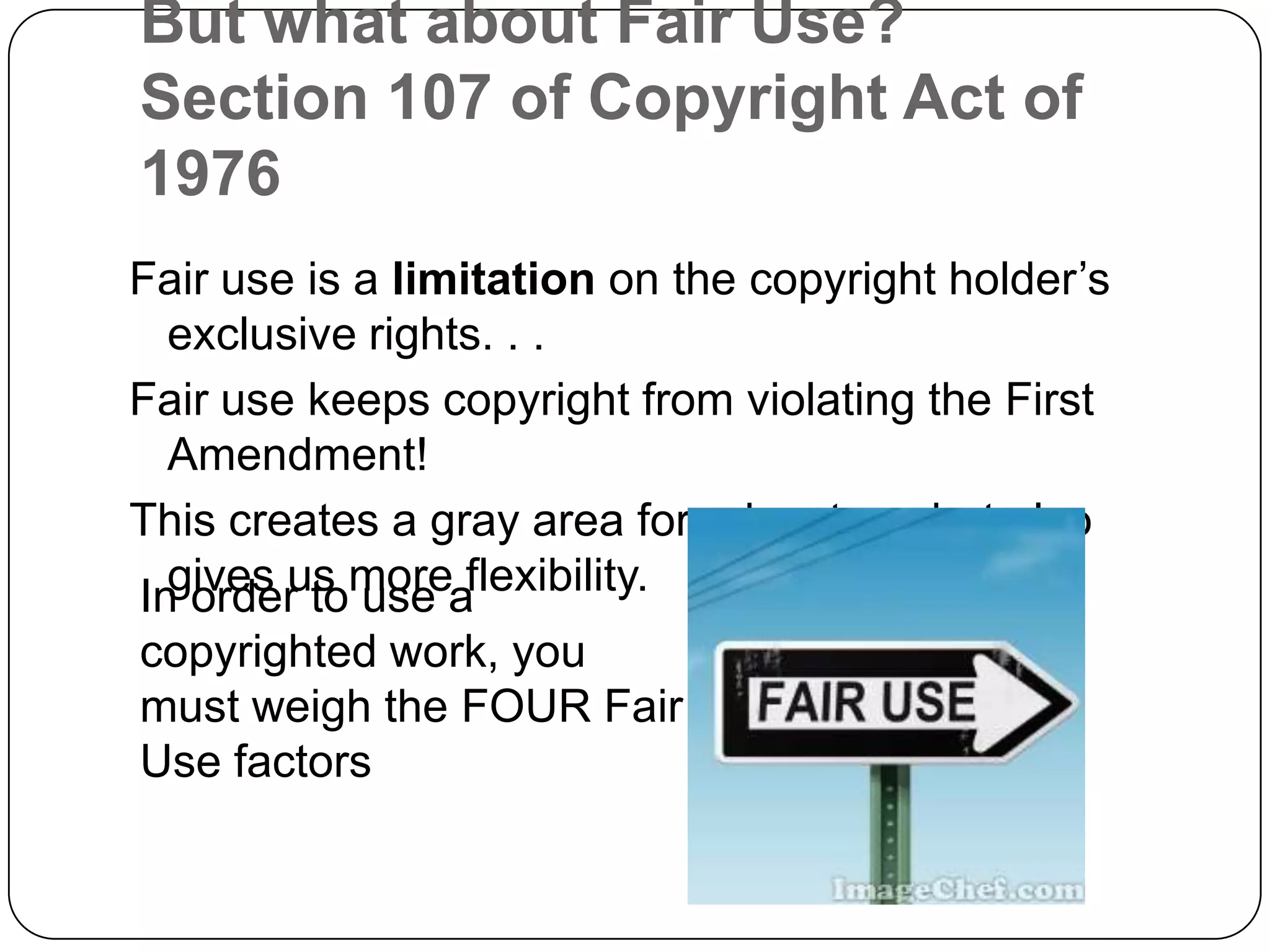
But what about Fair Use?Section 107 of Copyright Act of 1976 Fair use is a limitation on the copyright holder’s exclusive rights. . . Fair use keeps copyright from violating the First Amendment!This creates a gray area for educators, but also gives us more flexibility.In order to use a copyrighted work, you must weigh the FOUR Fair Use factors
4 Factors of Fair UseThe purpose and character of the use (Educational? Nonprofit?)
The nature of the copyrighted work (Out of print? Artistic? Factual?)
The amount and substantiality of the portion used in relation to the copyrighted work as a whole (How much?)
The effect of the use upon the potential market for, or value of, the copyrighted work (Appeal to same audience? Transformative or just a copy?)An Essential Document The Code of Best Practices in Fair Use for Media Literacy Education
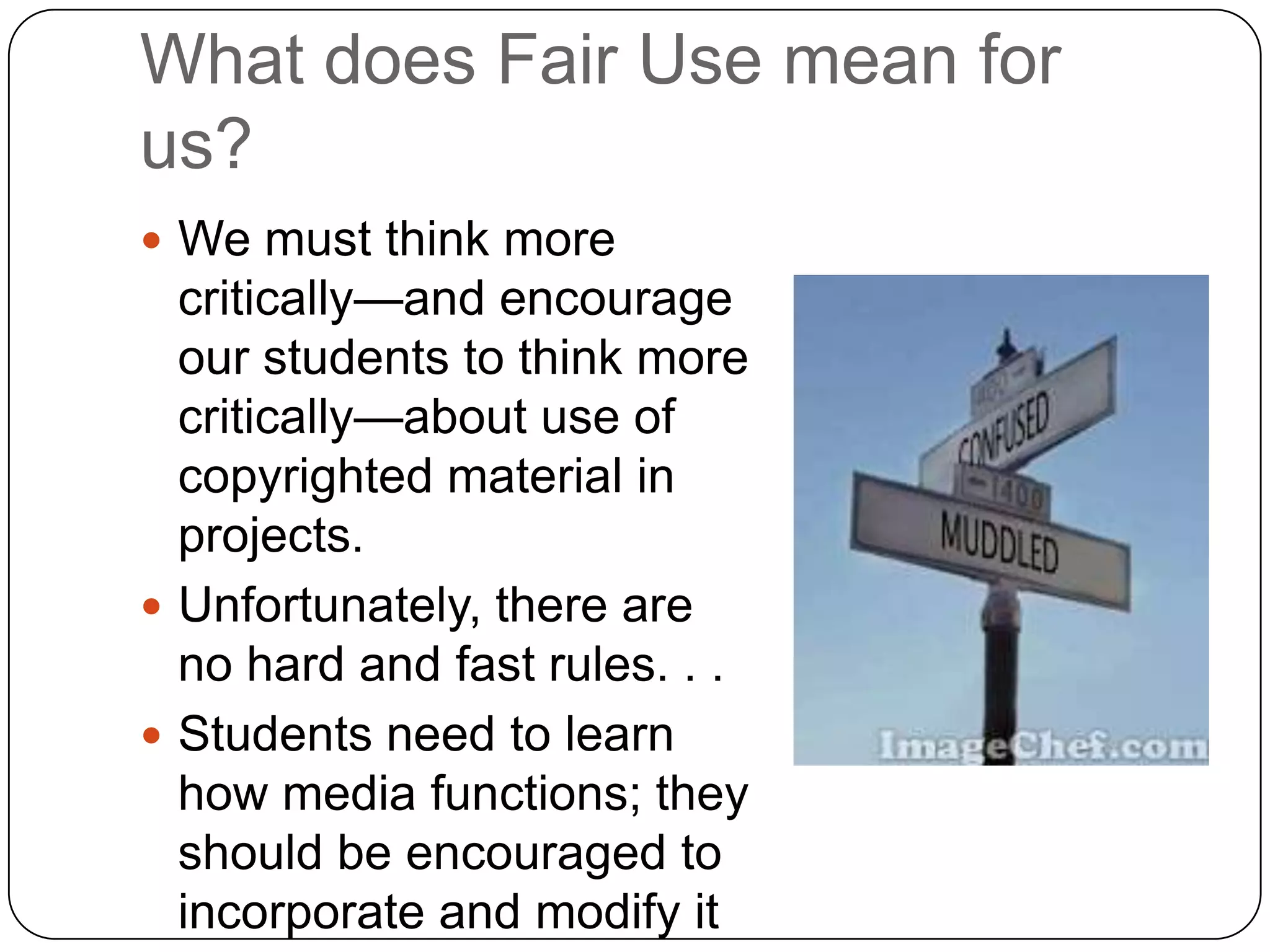
What does Fair Use mean for us?We must think more critically—and encourage our students to think more critically—about use of copyrighted material in projects.Unfortunately, there are no hard and fast rules. . . Students need to learn how media functions; they should be encouraged to incorporate and modify it in their work!
The Limitations. . .Students’ use of copyrighted material should not be a substitute for creative effortTheir use of a copyrighted work should repurpose or transform the original, reflecting critical use of the mediaEncourage students to find and use media that has a creative commons license or media that is in the public domainNo matter what, students must cite the media they are using to give credit where it is due!For more information, check out the Code of Best Practices in Fair Use for Media Literacy Education—a thought-provoking document

Use of Images: Copyright and Copywrong

  • 1.
    Use of Images(and Other Media)Copy-right and Copy-wrong
  • 2.
    Copy-wrong: Everybody’s doingit!Go to Google ImagesSearch for a termUse first image that appearsPlop in powerpoint or websiteCite using only Google web address (i.e. http://www.google.com/imgres?imgurl=http://static.travelblog.org/Wallpaper/pix/tb_fiji_sunset.jpg&imgrefurl=http://www.travelblog.org/Wallpaper/tb_fiji_sunset.html&usg=__fjxLDfQRbi4gn_iDn1W8Oypco3E=&h=864&w=1152&sz=114&hl=en&start=0&zoom=1&tbnid=NFp6ArqlsUpEtM:&tbnh=114&tbnw=144&prev=/520%26gbv%3D2%26tbs%3Disch:1&itbs=1&iact=rc&dur=255&ty=49)
  • 3.
    Today. . .TheoreticalPracticalCopyrightFair UseThe Balancing Act for EducatorsStudent OptionsFinding Copyright-free ImagesCiting Images
  • 4.
    Why is copy-wrongso very very wrong?Violating creators’ rights to their own images
  • 5.
    Encouraging lack ofawareness about intellectual property
  • 6.
    Often citing googleimages, not original site of publication
  • 7.
    Citing images incompletelyand inaccuratelyCopyright is. . . “A legal device that provides the creator of a work of art or literature, or a work that conveys information or ideas, the right to control how the work is used." Stephen Fishman, Esq. The Copyright Handbook, 1996.“Your work is under copyright protection the moment it is created and fixed in a tangible form that it is perceptible either directly or with the aid of a machine or device.” U.S. Copyright Office, 2006.
  • 8.
    But what aboutFair Use?Section 107 of Copyright Act of 1976 Fair use is a limitation on the copyright holder’s exclusive rights. . . Fair use keeps copyright from violating the First Amendment!This creates a gray area for educators, but also gives us more flexibility.In order to use a copyrighted work, you must weigh the FOUR Fair Use factors
  • 9.
    4 Factors ofFair UseThe purpose and character of the use (Educational? Nonprofit?)
  • 10.
    The nature ofthe copyrighted work (Out of print? Artistic? Factual?)
  • 11.
    The amount andsubstantiality of the portion used in relation to the copyrighted work as a whole (How much?)
  • 12.
    The effect ofthe use upon the potential market for, or value of, the copyrighted work (Appeal to same audience? Transformative or just a copy?)An Essential Document The Code of Best Practices in Fair Use for Media Literacy Education
  • 13.
    What does FairUse mean for us?We must think more critically—and encourage our students to think more critically—about use of copyrighted material in projects.Unfortunately, there are no hard and fast rules. . . Students need to learn how media functions; they should be encouraged to incorporate and modify it in their work!
  • 14.
    The Limitations. ..Students’ use of copyrighted material should not be a substitute for creative effortTheir use of a copyrighted work should repurpose or transform the original, reflecting critical use of the mediaEncourage students to find and use media that has a creative commons license or media that is in the public domainNo matter what, students must cite the media they are using to give credit where it is due!For more information, check out the Code of Best Practices in Fair Use for Media Literacy Education—a thought-provoking document
  • 15.
    How to copy-rightModelproper use of images in your own presentations to studentsHelp your students understand what kind of license an image holdsRequire that students use copyright-free images in their own presentations or projects ORUse the Fair Use Reasoning Process Tool in every project using copyrighted materialMake sure you and your students give proper credit to the creator of the imageTalk to your librarians when you have questions; we’re trying our best to understand all of the issues
  • 16.
    Options for copyright-freeimageshttp://micdsstudents.wikispaces.com/Finding+ImagesTop picks:Make your own imagesUse Image ChefUse Creative Commons search
  • 17.
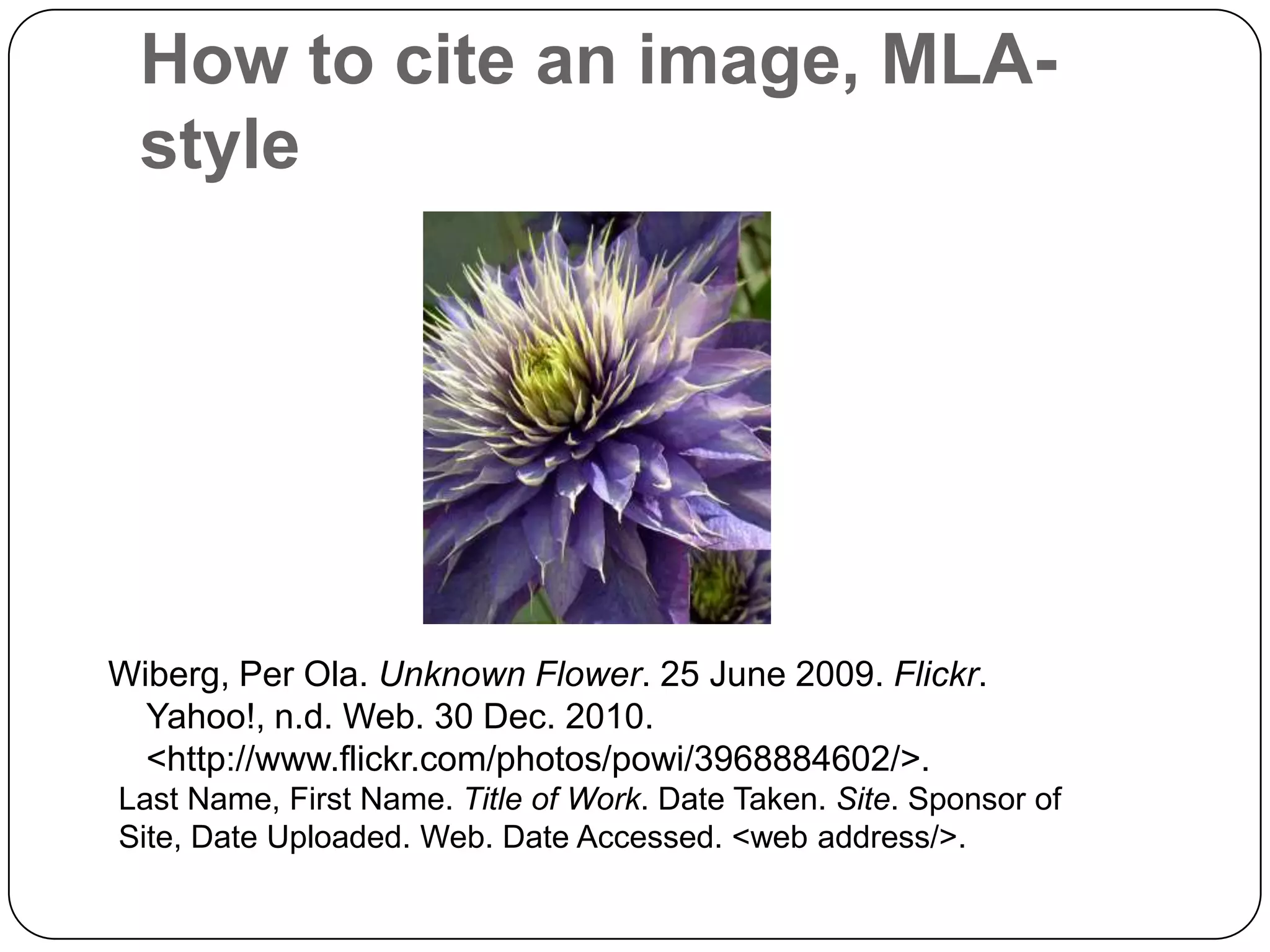
    How to citean image, MLA-styleWiberg, Per Ola. Unknown Flower. 25 June 2009. Flickr. Yahoo!, n.d. Web. 30 Dec. 2010. <http://www.flickr.com/photos/powi/3968884602/>. Last Name, First Name. Title of Work. Date Taken. Site. Sponsor of Site, Date Uploaded. Web. Date Accessed. <web address/>.
  • 18.
    Resources for YOUhttp://micdsteachers.wikispaces.com/Copyright+ResourcesBooksin the library for specific situations:Copyright Catechism, by Carol SimpsonCopyright for Schools, by Carol SimpsonYour librarians!