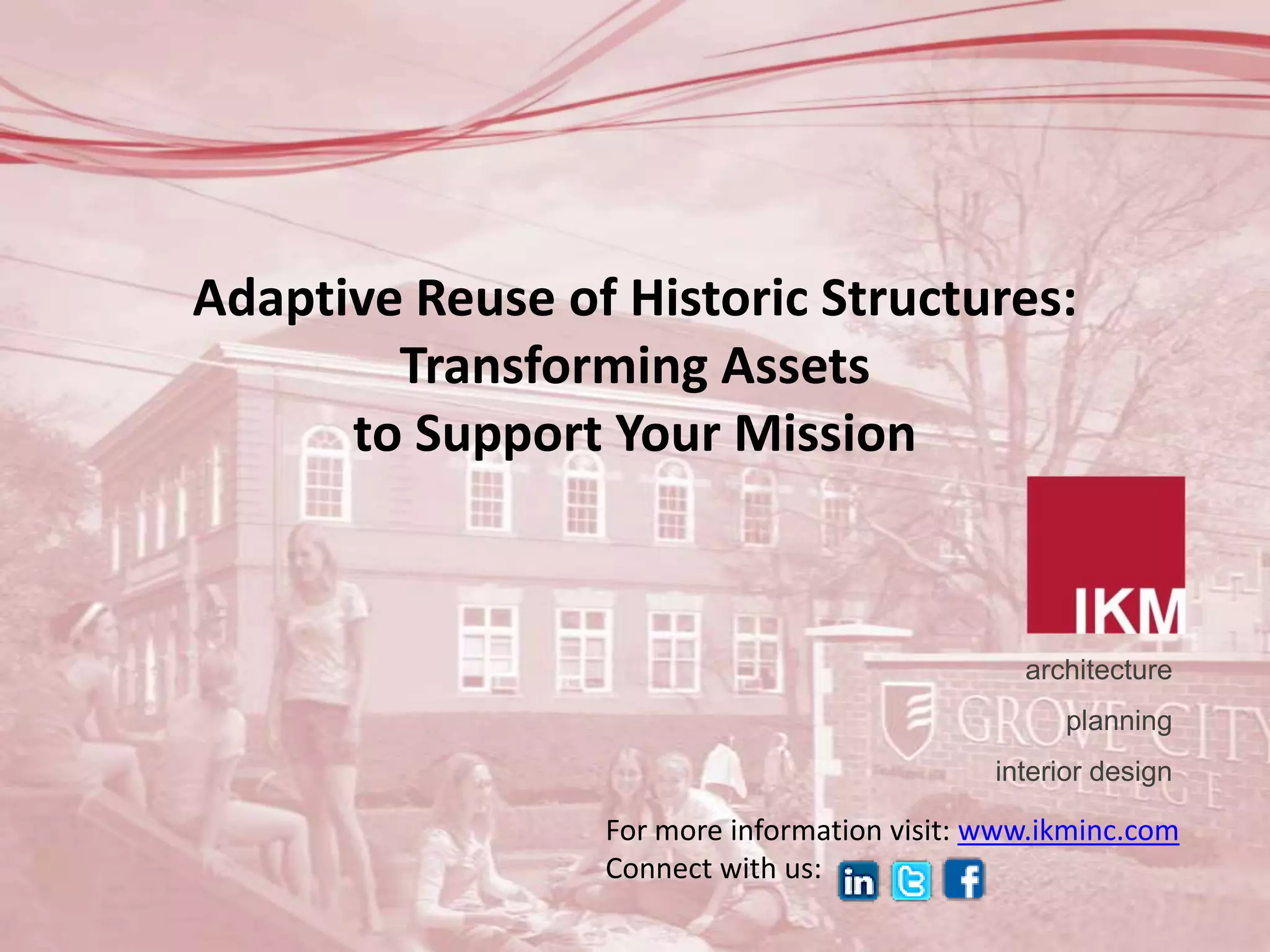
Adaptive Reuse of Historic Structures:
        Transforming Assets
      to Support Your Mission


                                               architecture
                                                  planning
                                             interior design

                 For more information visit: www.ikminc.com
                 Connect with us:
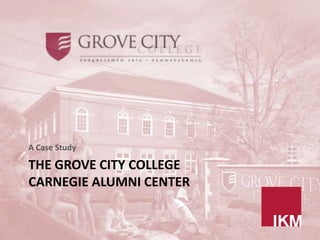
A Case Study

THE GROVE CITY COLLEGE
CARNEGIE ALUMNI CENTER
Presenters

• John Schrott, AIA
  IKM Incorporated Architects


• Michael McDonnell, AIA
  IKM Incorporated Architects


• Thomas Gregg
  Grove City College, Vice President Operations
Presentation Objectives
• Explore the significance of historic buildings to a
  campus
• Explore some typical challenges/opportunities
  facing reusing or upgrading an historic building
• Explore a process of transformation
• Explore the outcomes of the process
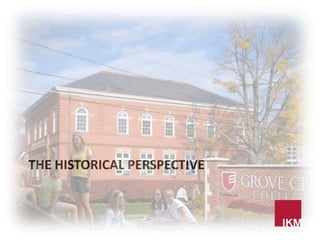
THE HISTORICAL PERSPECTIVE
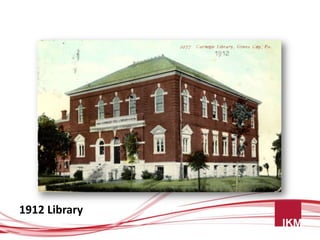
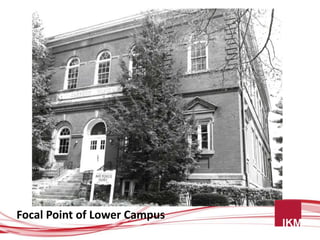
1912 Library
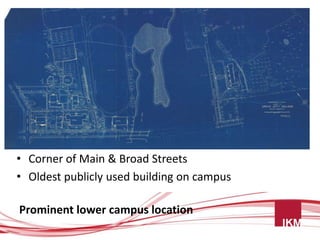
• Corner of Main & Broad Streets
• Oldest publicly used building on campus

Prominent lower campus location
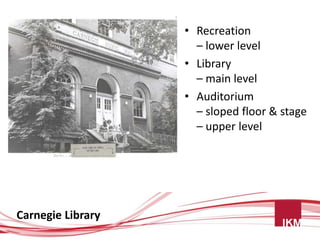
• Recreation
                     – lower level
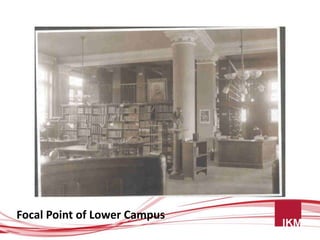
                   • Library
                     – main level
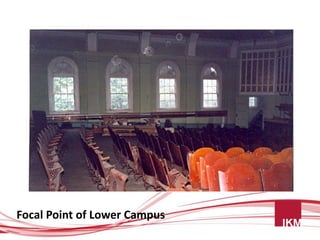
                   • Auditorium
                     – sloped floor & stage
                     – upper level


Carnegie Library
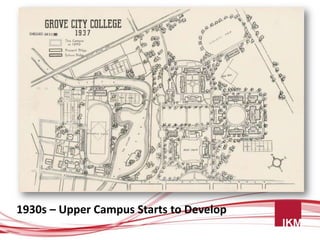
1930s – Upper Campus Starts to Develop
Focal Point of Lower Campus
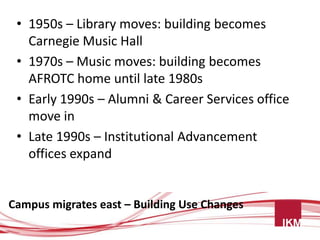
• 1950s – Library moves: building becomes
   Carnegie Music Hall
 • 1970s – Music moves: building becomes
   AFROTC home until late 1980s
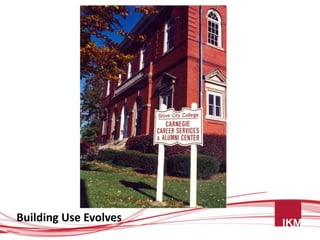
 • Early 1990s – Alumni & Career Services office
   move in
 • Late 1990s – Institutional Advancement
   offices expand


Campus migrates east – Building Use Changes
Building Use Evolves
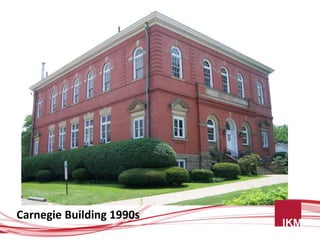
Carnegie Building 1990s
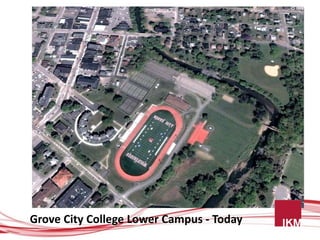
Grove City College Lower Campus - Today
• Appropriate venue for alumni needed
• Alumni & Institutional Advancement Offices
  identify with location plus no other space
  available for relocation
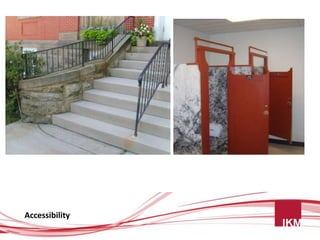
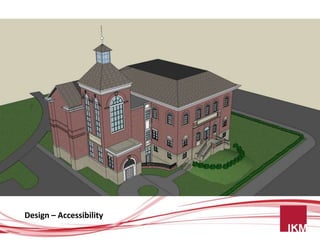
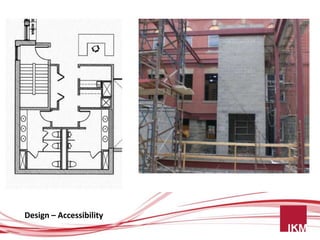
• Need to address building accessibility &
  restroom capacity problems


Lower Campus Vacated – Opportunities for Site
Development Exist
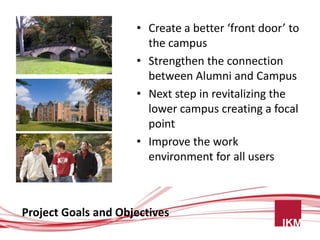
• Create a better ‘front door’ to
                       the campus
                     • Strengthen the connection
                       between Alumni and Campus
                     • Next step in revitalizing the
                       lower campus creating a focal
                       point
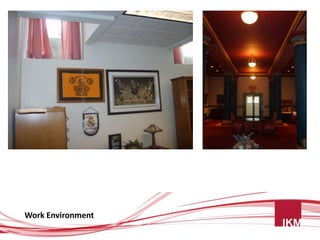
                     • Improve the work
                       environment for all users


Project Goals and Objectives
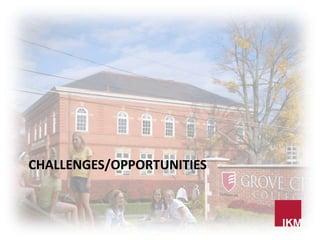
CHALLENGES/OPPORTUNITIES
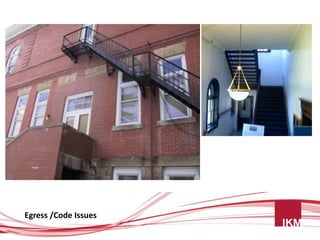
Egress /Code Issues
Accessibility
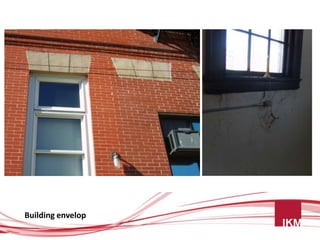
Building envelop
Work Environment
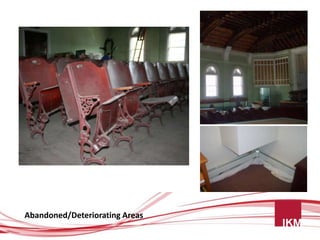
Abandoned/Deteriorating Areas
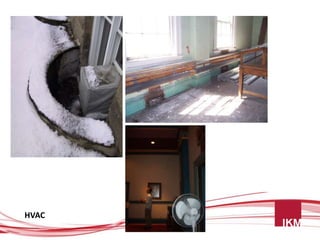
HVAC
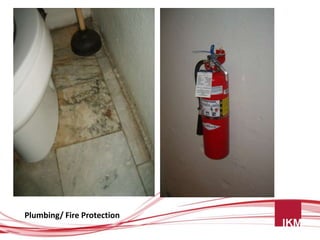
Plumbing/ Fire Protection
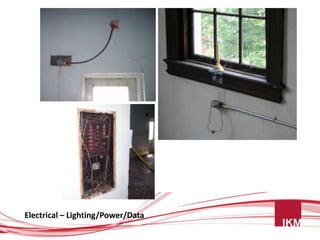
Electrical – Lighting/Power/Data
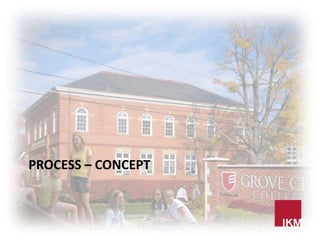
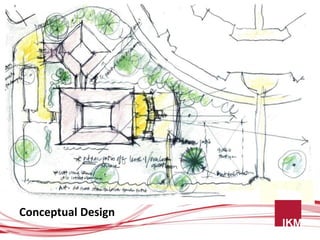
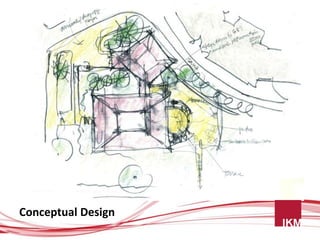
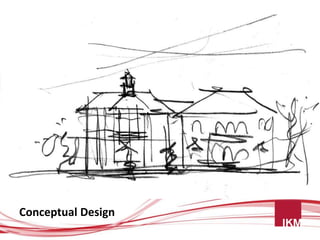
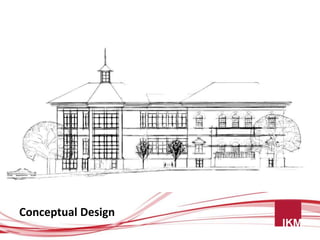
PROCESS – CONCEPT
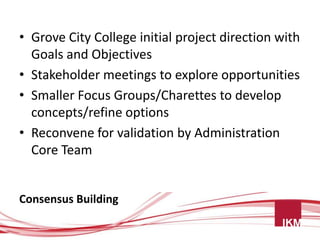
• Grove City College initial project direction with
  Goals and Objectives
• Stakeholder meetings to explore opportunities
• Smaller Focus Groups/Charettes to develop
  concepts/refine options
• Reconvene for validation by Administration
  Core Team


Consensus Building
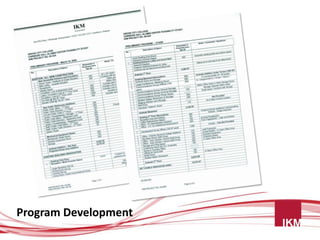
Program Development
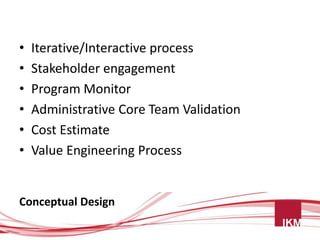
•   Iterative/Interactive process
•   Stakeholder engagement
•   Program Monitor
•   Administrative Core Team Validation
•   Cost Estimate
•   Value Engineering Process


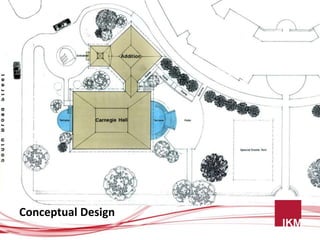
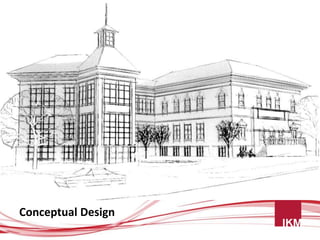
Conceptual Design
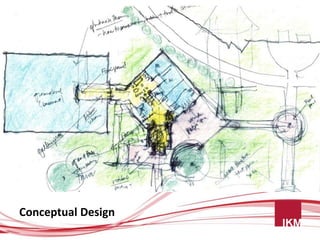
Conceptual Design
Conceptual Design
Conceptual Design
Conceptual Design
Conceptual Design
Conceptual Design
Conceptual Design
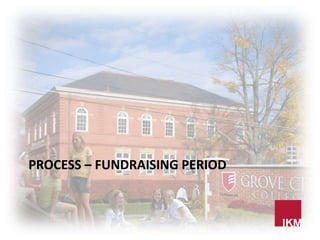
PROCESS – FUNDRAISING PERIOD
• Need to complete fundraising for Change and
  Commitment Campaign
• Original program called for $8-$10 million
  building
  – Campaign & alumni do not support this amount
  – Scope & resultant cost reductions needed
  – Work with IKM & Construction Manager (Tedco)
    to achieve reductions
  – Final Project Cost $7.3 million


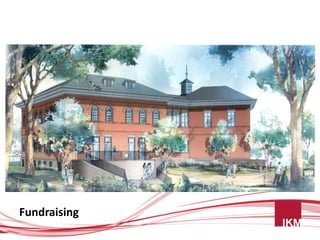
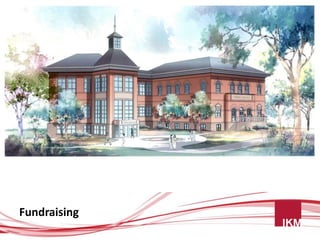
Fundraising
Fundraising
Fundraising
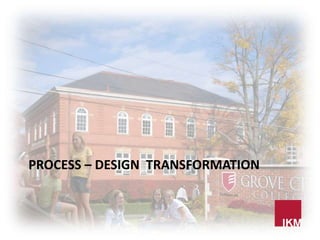
PROCESS – DESIGN TRANSFORMATION
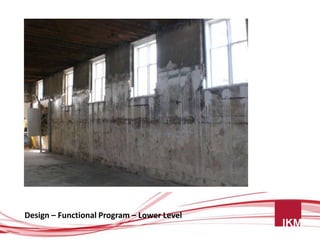
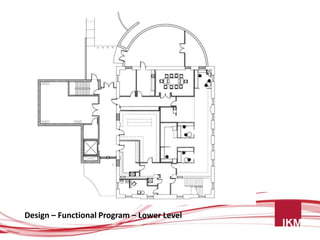
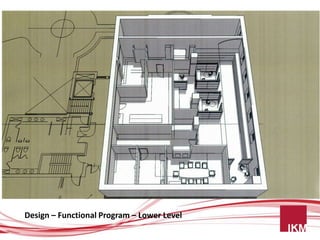
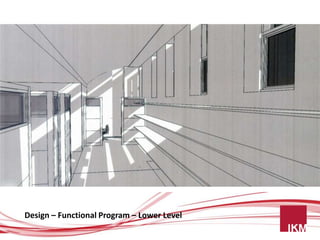
Design – Functional Program – Lower Level
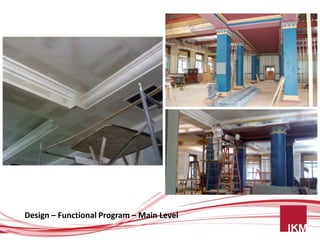
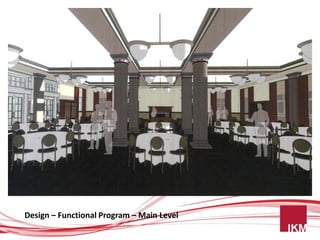
Design – Functional Program – Main Level
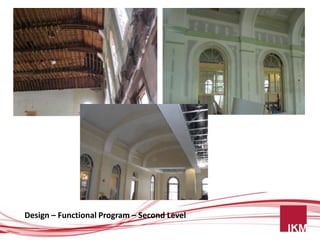
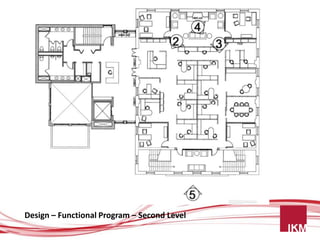
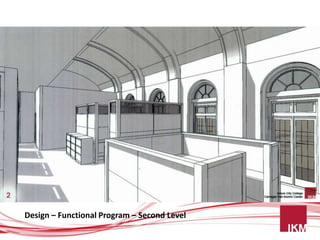
Design – Functional Program – Second Level
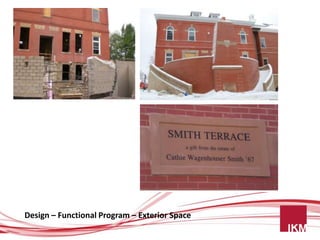
Design – Functional Program – Exterior Space
Design – Accessibility
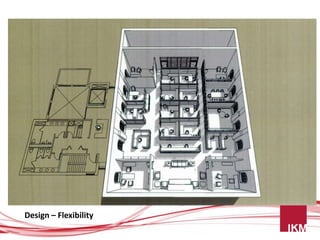
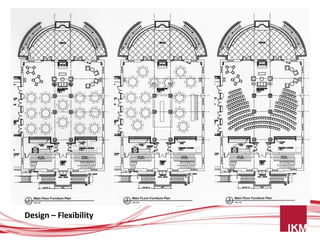
Design – Flexibility
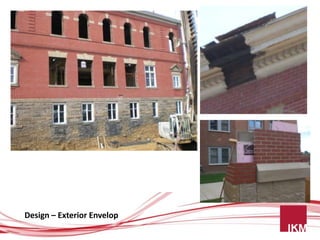
Design – Exterior Envelop
•    Bring systems up to code
•    Energy efficiency
•    Minimize impact to architecture
•    Provide sophisticated A/V
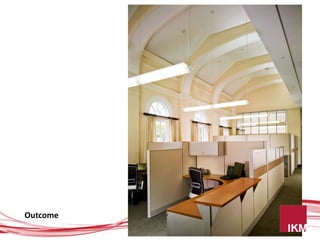
•    Support an efficient work environment


    Design – MEP Imperatives
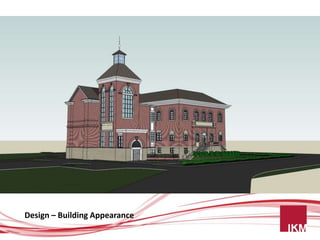
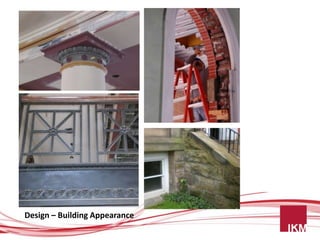
Design – Building Appearance
•   Early Estimate
•   Value Modifications
•   CM analyses throughout design
•   Consistent teamwork to identify opportunities


Design Cost Controls
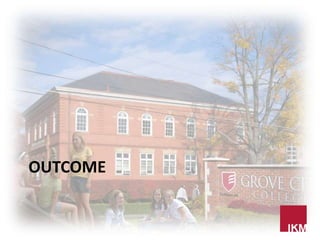
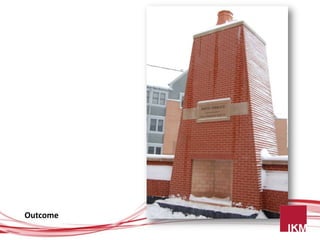
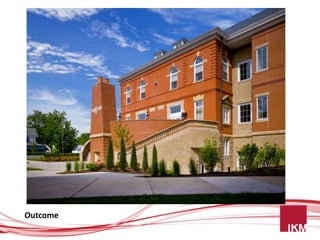
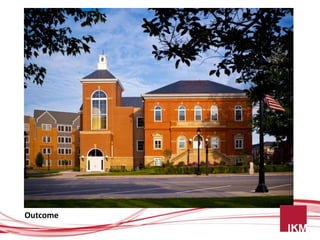
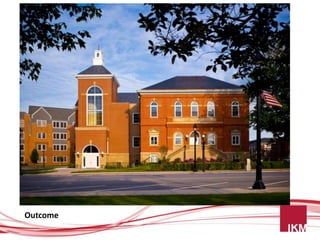
OUTCOME
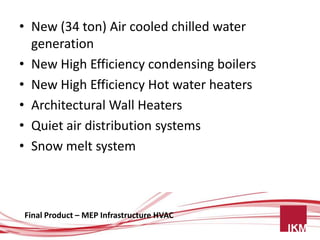
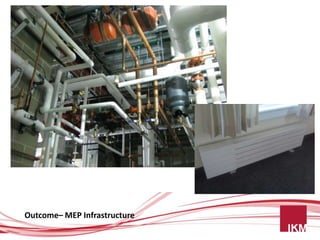
• New (34 ton) Air cooled chilled water
  generation
• New High Efficiency condensing boilers
• New High Efficiency Hot water heaters
• Architectural Wall Heaters
• Quiet air distribution systems
• Snow melt system


Final Product – MEP Infrastructure HVAC
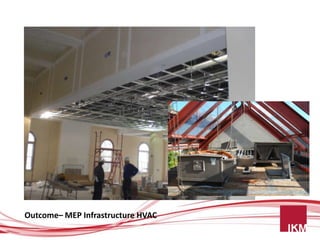
Outcome– MEP Infrastructure HVAC
Outcome– MEP Infrastructure
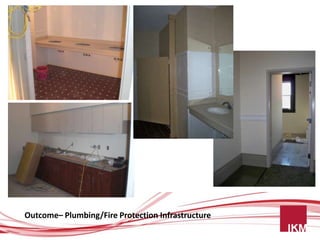
• New toilet rooms
• Kitchen/Food preparation area
• All new sprinkler system


Outcome – Plumbing/Fire Protection Infrastructure
Outcome– Plumbing/Fire Protection Infrastructure
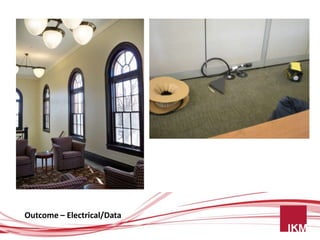
•    New Electrical Service
•    Efficient lighting for offices
•    Specialty lights for Ballroom
•    New telephone system
•    Cable for Data/Voice and specialty requirements
•    Transformer and generator housed in adjacent
     student housing and were sized to support
     Carnegie Renovation/Addition


    Outcome – Electrical/Data
Outcome – Electrical/Data
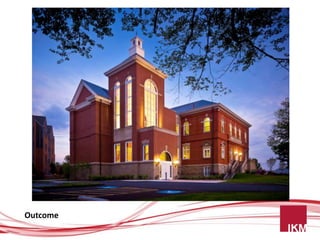
Outcome
Outcome
Outcome
Outcome
Outcome
Outcome
Outcome
Outcome
Outcome
Outcome
Outcome
Outcome
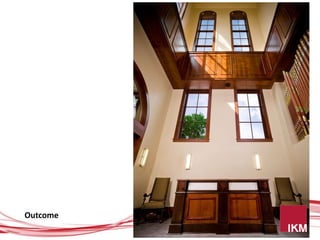
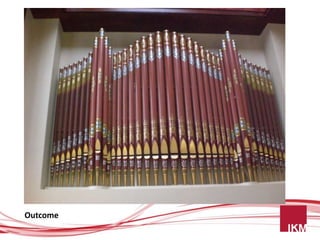
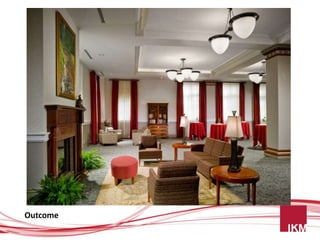
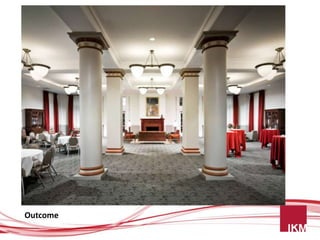
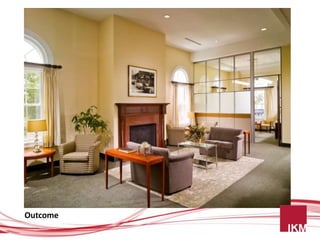
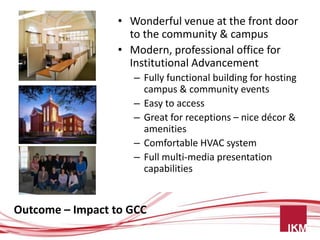
• Wonderful venue at the front door
                    to the community & campus
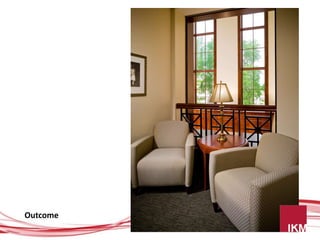
                  • Modern, professional office for
                    Institutional Advancement
                     – Fully functional building for hosting
                       campus & community events
                     – Easy to access
                     – Great for receptions – nice décor &
                       amenities
                     – Comfortable HVAC system
                     – Full multi-media presentation
                       capabilities


Outcome – Impact to GCC
• Historical Buildings are a valuable asset to any
   institution
 • Transformation can be achieved through clear,
   direct goals and objectives
 • Cost effective solutions are available
 • Adaptive Reuse can be a tool to leverage the
   asset to new and better purpose.


Summary
QUESTIONS
architecture
                       planning
                  interior design

For more information visit: www.ikminc.com
Connect with us:

IKM Architects: Case Study Higher Education Renovation-2012