
Dr Janine Bycroft, Gayl Humphrey, Dr Celia PALMER, Kate Healey, Dr Mazin GhafelAuckland DHB, Planning & Funding TeamImproving Chronic Care - a NZ experience using a breakthrough series collaborative methodology within primary care
Outline of presentation The challengeWhat is a collaborative?International experienceEquipped - the LTC Collaborative in AucklandLessons and next steps
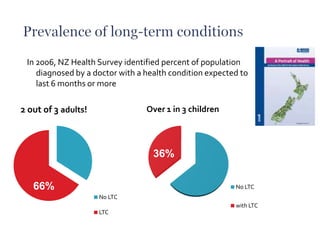
Prevalence of long-term conditionsIn 2006, NZ Health Survey identified percent of population diagnosed by a doctor with a health condition expected to last 6 months or more
What is a Collaborative?A Collaborative is a specific method of quality improvement used to distribute and adapt existing knowledge to multiple groups to achieve a common aimIt promotes rapid change, allowing participants to experience the benefits and create results in a short time-frame
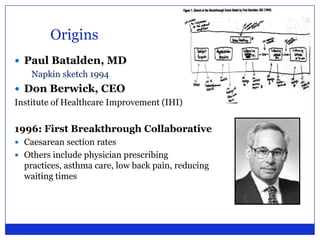
OriginsPaul Batalden, MD- Napkin sketch 1994Don Berwick, CEOInstitute of Healthcare Improvement (IHI)1996: First Breakthrough CollaborativeCaesarean section ratesOthers include physician prescribing practices, asthma care, low back pain, reducing waiting times
Quality is never an accident; it is always the result of high intention, sincere effort, intelligent direction and skilful execution; it represents the wise choice of many alternatives.William A Foster
Key Features of a CollaborativeProven improvement model for rapid & sustainable improvement Expert Advisory Panel – subject & QI expertsUse of information & measurement to guide improvement workClinical leadershipProtected time Practical support from QI facilitators Encourages individuals to change
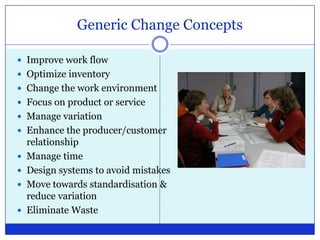
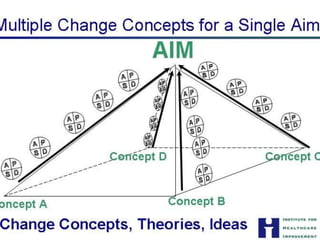
Generic Change Concepts Improve work flowOptimize inventoryChange the work environmentFocus on product or serviceManage variationEnhance the producer/customer relationshipManage timeDesign systems to avoid mistakesMove towards standardisation & reduce variation  Eliminate Waste
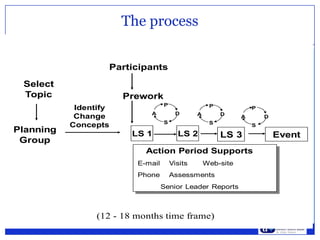
The process
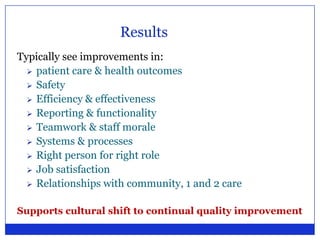
ResultsTypically see improvements in:patient care & health outcomes
Safety
Efficiency & effectiveness
Reporting & functionality
Teamwork & staff morale
Systems & processes
Right person for right role
Job satisfaction
Relationships with community, 1 and 2 care Supports cultural shift to continual quality improvement
What others have saidNational Primary Care Collaborativeis the most positive initiative I have seen in over 20 years in general practice !Alan Leeb, Australia
Long-Term Conditions CollaborativeMaking it easier to do the right thing
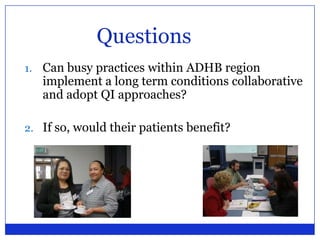
QuestionsCan busy practices within ADHB region implement a long term conditions collaborative and adopt QI approaches?If so, would their patients benefit?
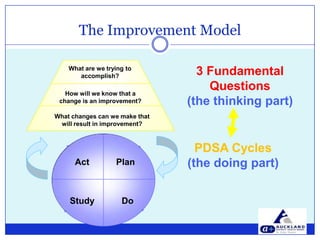
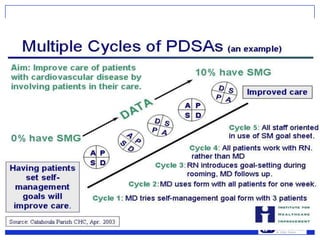
The Improvement Model3 Fundamental Questions(the thinking part) PDSA Cycles(the doing part)What are we trying to accomplish?How will we know that a change is an improvement?What changes can we make thatwill result in improvement?PlanActDoStudy
Our three topics and areas of focusSystem RedesignOptimising Clinical Management of Long-term Conditions: Cardiovascular Disease and DiabetesSelf Management Support
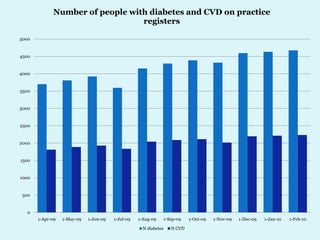
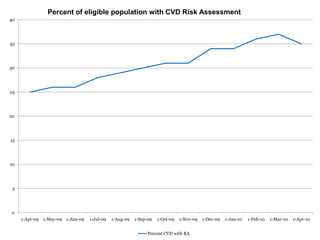
Measures System RedesignUnmet demandThe number of patients who Do Not Attend a scheduled appointmentThe number of invitations issued for planned CVD or diabetes visits Diabetes and Cardiovascular Disease:The number of the enrolled population with known disease% of enrolled population with CVD prescribed a statin & antiplatelet% of people with CVD or diabetes with BP equal to or less than 130/80% enrolled eligible population who have had a CVDRA recorded HB A1C levels %  of enrolled population < 7.0mmol/l.,  7-8,  8 -9,  > 9mmol/l Self Management Support% of people with CVD or diabetes who have an annual care plan review
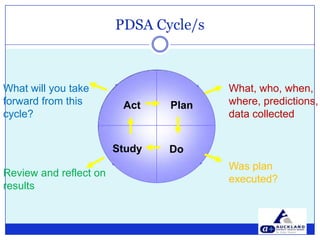
PDSA Cycle/sWhat, who, when, where, predictions, data collectedWhat will you take forward from this cycle? PlanActStudyDoWas plan executed? Review and reflect on results
PDSA (Plan – Cycle 1)Plan: What: Run a search of database for patients prescribed a CVD medication who are not coded with a CVD diagnosis.  Give GP a copy of the list to confirm diagnosis and code appropriatelyWho: Kathy When: Friday 21st AugustWhere: At the practicePrediction:  That a number of patients not coded will be identified Data to be collected: List of patients to be checked and correctly coded with a diagnosis of CVD
PDSA (Do, Study, Act – Cycle 1)Do: Plan was completed.Study: 15 patients were identified as having been prescribed a statin but were not coded as having CVD. Act: GPs  to correctly code patients with CVD diagnosis where appropriate.
Title of Presentation
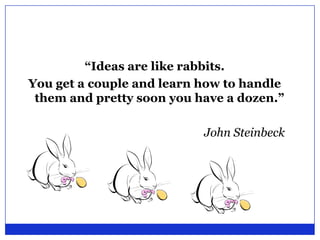
“Ideas are like rabbits. You get a couple and learn how to handle them and pretty soon you have a dozen.”John Steinbeck
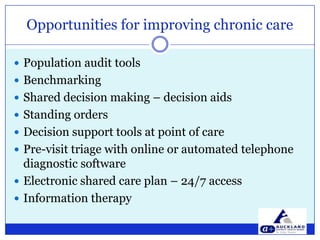
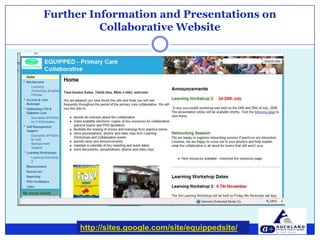
Key Components 15 participating practices (most high needs) All 5 PHOs represented5 PHO facilitators 3 Learning Workshops over 9 months Resources and skills developed and refined over timePopulation tools used by 13/15 Workbook developed Supported by a website & regular newsletters
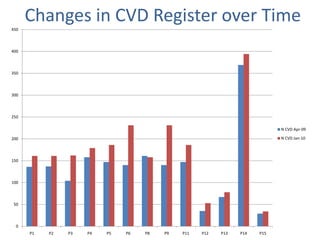
Changes in CVD Register over Time
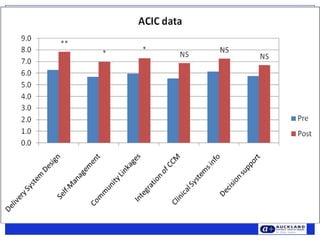
ACIC & PACIC

Improving Chronic Care - a NZ experience using a breakthrough series collaborative methodology within primary care

  • 1.
    Dr Janine Bycroft,Gayl Humphrey, Dr Celia PALMER, Kate Healey, Dr Mazin GhafelAuckland DHB, Planning & Funding TeamImproving Chronic Care - a NZ experience using a breakthrough series collaborative methodology within primary care
  • 2.
    Outline of presentationThe challengeWhat is a collaborative?International experienceEquipped - the LTC Collaborative in AucklandLessons and next steps
  • 3.
    Prevalence of long-termconditionsIn 2006, NZ Health Survey identified percent of population diagnosed by a doctor with a health condition expected to last 6 months or more
  • 4.
    What is aCollaborative?A Collaborative is a specific method of quality improvement used to distribute and adapt existing knowledge to multiple groups to achieve a common aimIt promotes rapid change, allowing participants to experience the benefits and create results in a short time-frame
  • 5.
    OriginsPaul Batalden, MD-Napkin sketch 1994Don Berwick, CEOInstitute of Healthcare Improvement (IHI)1996: First Breakthrough CollaborativeCaesarean section ratesOthers include physician prescribing practices, asthma care, low back pain, reducing waiting times
  • 6.
    Quality is neveran accident; it is always the result of high intention, sincere effort, intelligent direction and skilful execution; it represents the wise choice of many alternatives.William A Foster
  • 7.
    Key Features ofa CollaborativeProven improvement model for rapid & sustainable improvement Expert Advisory Panel – subject & QI expertsUse of information & measurement to guide improvement workClinical leadershipProtected time Practical support from QI facilitators Encourages individuals to change
  • 8.
    Generic Change ConceptsImprove work flowOptimize inventoryChange the work environmentFocus on product or serviceManage variationEnhance the producer/customer relationshipManage timeDesign systems to avoid mistakesMove towards standardisation & reduce variation Eliminate Waste
  • 9.
  • 10.
    ResultsTypically see improvementsin:patient care & health outcomes
  • 11.
  • 12.
  • 13.
  • 14.
  • 15.
  • 16.
  • 17.
  • 18.
    Relationships with community,1 and 2 care Supports cultural shift to continual quality improvement
  • 20.
    What others havesaidNational Primary Care Collaborativeis the most positive initiative I have seen in over 20 years in general practice !Alan Leeb, Australia
  • 21.
    Long-Term Conditions CollaborativeMakingit easier to do the right thing
  • 22.
    QuestionsCan busy practiceswithin ADHB region implement a long term conditions collaborative and adopt QI approaches?If so, would their patients benefit?
  • 23.
    The Improvement Model3Fundamental Questions(the thinking part) PDSA Cycles(the doing part)What are we trying to accomplish?How will we know that a change is an improvement?What changes can we make thatwill result in improvement?PlanActDoStudy
  • 24.
    Our three topicsand areas of focusSystem RedesignOptimising Clinical Management of Long-term Conditions: Cardiovascular Disease and DiabetesSelf Management Support
  • 25.
    Measures System RedesignUnmetdemandThe number of patients who Do Not Attend a scheduled appointmentThe number of invitations issued for planned CVD or diabetes visits Diabetes and Cardiovascular Disease:The number of the enrolled population with known disease% of enrolled population with CVD prescribed a statin & antiplatelet% of people with CVD or diabetes with BP equal to or less than 130/80% enrolled eligible population who have had a CVDRA recorded HB A1C levels % of enrolled population < 7.0mmol/l., 7-8, 8 -9, > 9mmol/l Self Management Support% of people with CVD or diabetes who have an annual care plan review
  • 26.
    PDSA Cycle/sWhat, who,when, where, predictions, data collectedWhat will you take forward from this cycle? PlanActStudyDoWas plan executed? Review and reflect on results
  • 27.
    PDSA (Plan –Cycle 1)Plan: What: Run a search of database for patients prescribed a CVD medication who are not coded with a CVD diagnosis. Give GP a copy of the list to confirm diagnosis and code appropriatelyWho: Kathy When: Friday 21st AugustWhere: At the practicePrediction: That a number of patients not coded will be identified Data to be collected: List of patients to be checked and correctly coded with a diagnosis of CVD
  • 28.
    PDSA (Do, Study,Act – Cycle 1)Do: Plan was completed.Study: 15 patients were identified as having been prescribed a statin but were not coded as having CVD. Act: GPs to correctly code patients with CVD diagnosis where appropriate.
  • 29.
  • 31.
    “Ideas are likerabbits. You get a couple and learn how to handle them and pretty soon you have a dozen.”John Steinbeck
  • 32.
    Key Components 15participating practices (most high needs) All 5 PHOs represented5 PHO facilitators 3 Learning Workshops over 9 months Resources and skills developed and refined over timePopulation tools used by 13/15 Workbook developed Supported by a website & regular newsletters
  • 33.
    Changes in CVDRegister over Time
  • 36.

Editor's Notes

  • #3 West Coast WairarapaAuckland Waitemata