Dr Kiran Durgad
IHCI Consultant, WCO India, New Delhi
Strengthening hypertension services
and performance measures using
Simple App in India
What gets measured gets done
India Hypertension Control Initiative (IHCI)
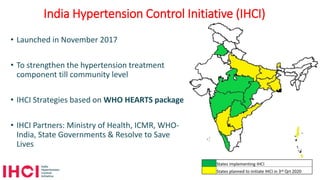
• Launched in November 2017
• To strengthen the hypertension treatment
component till community level
• IHCI Strategies based on WHO HEARTS package
• IHCI Partners: Ministry of Health, ICMR, WHO-
India, State Governments & Resolve to Save
Lives
States implementing IHCI
States planned to initiate IHCI in 3rd Qrt 2020
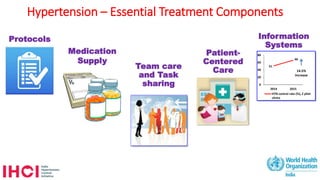
Hypertension – Essential Treatment Components
Protocols
Team care
and Task
sharing
Medication
Supply
Patient-
Centered
Care
Information
Systems
51
66
0
20
40
60
80
2014 2015
HTN control rate (%), 2 pilot
clinics
14.5%
increase
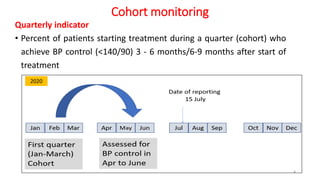
Cohort monitoring
Quarterly indicator
• Percent of patients starting treatment during a quarter (cohort) who
achieve BP control (<140/90) 3 - 6 months/6-9 months after start of
treatment
4
2020
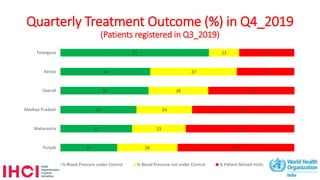
Quarterly Treatment Outcome (%) in Q4_2019
(Patients registered in Q3_2019)
24
31
33
38
38
63
26
23
24
26
37
13
50
46
44
37
25
24
Punjab
Maharastra
Madhya Pradesh
Overall
Kerala
Telangana
% Blood Pressure under Control % Blood Pressure not under Control % Patient Missed Visits
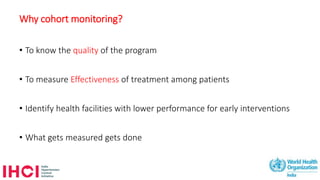
Why cohort monitoring?
• To know the quality of the program
• To measure Effectiveness of treatment among patients
• Identify health facilities with lower performance for early interventions
• What gets measured gets done
6
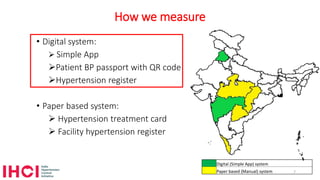
How we measure
• Digital system:
 Simple App
Patient BP passport with QR code
Hypertension register
• Paper based system:
 Hypertension treatment card
 Facility hypertension register
7
Digital (Simple App) system
Paper based (Manual) system
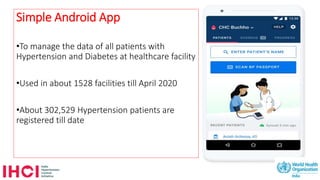
Simple Android App
•To manage the data of all patients with
Hypertension and Diabetes at healthcare facility
•Used in about 1528 facilities till April 2020
•About 302,529 Hypertension patients are
registered till date
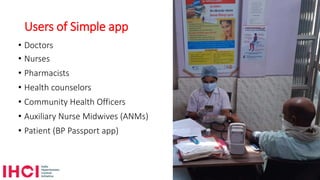
Users of Simple app
• Doctors
• Nurses
• Pharmacists
• Health counselors
• Community Health Officers
• Auxiliary Nurse Midwives (ANMs)
• Patient (BP Passport app)
How Simple app helps?
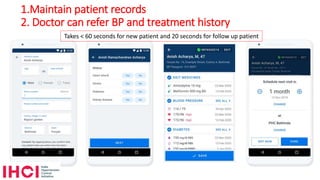
1.Maintain patient records
2. Doctor can refer BP and treatment history
Takes < 60 seconds for new patient and 20 seconds for follow up patient
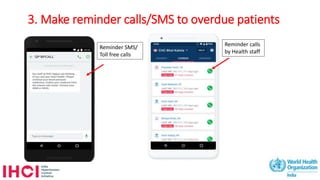
3. Make reminder calls/SMS to overdue patients
Reminder calls
by Health staff
Reminder SMS/
Toll free calls
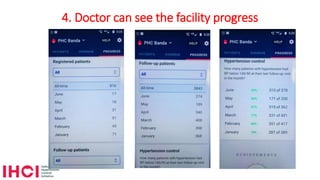
4. Doctor can see the facility progress
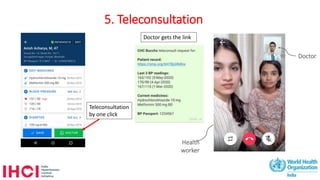
5. Teleconsultation
Teleconsultation
by one click
Health
worker
Doctor
Doctor gets the link
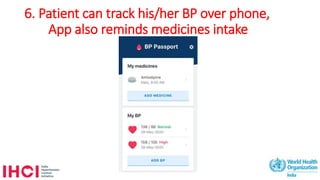
6. Patient can track his/her BP over phone,
App also reminds medicines intake
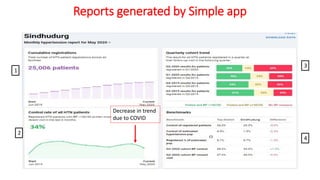
Reports generated by Simple app
Decrease in trend
due to COVID
1
4
3
2
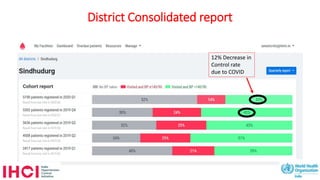
District Consolidated report
12% Decrease in
Control rate
due to COVID
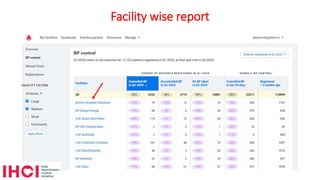
Facility wise report
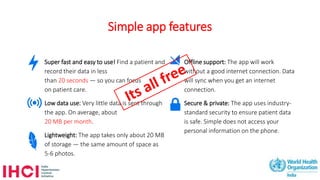
Simple app features
Super fast and easy to use! Find a patient and
record their data in less
than 20 seconds — so you can focus
on patient care.
Low data use: Very little data is sent through
the app. On average, about
20 MB per month.
Lightweight: The app takes only about 20 MB
of storage — the same amount of space as
5-6 photos.
Offline support: The app will work
without a good internet connection. Data
will sync when you get an internet
connection.
Secure & private: The app uses industry-
standard security to ensure patient data
is safe. Simple does not access your
personal information on the phone.
Thank You

ihci-simple-app---or.pptx

  • 1.
    Dr Kiran Durgad IHCIConsultant, WCO India, New Delhi Strengthening hypertension services and performance measures using Simple App in India What gets measured gets done
  • 2.
    India Hypertension ControlInitiative (IHCI) • Launched in November 2017 • To strengthen the hypertension treatment component till community level • IHCI Strategies based on WHO HEARTS package • IHCI Partners: Ministry of Health, ICMR, WHO- India, State Governments & Resolve to Save Lives States implementing IHCI States planned to initiate IHCI in 3rd Qrt 2020
  • 3.
    Hypertension – EssentialTreatment Components Protocols Team care and Task sharing Medication Supply Patient- Centered Care Information Systems 51 66 0 20 40 60 80 2014 2015 HTN control rate (%), 2 pilot clinics 14.5% increase
  • 4.
    Cohort monitoring Quarterly indicator •Percent of patients starting treatment during a quarter (cohort) who achieve BP control (<140/90) 3 - 6 months/6-9 months after start of treatment 4 2020
  • 5.
    Quarterly Treatment Outcome(%) in Q4_2019 (Patients registered in Q3_2019) 24 31 33 38 38 63 26 23 24 26 37 13 50 46 44 37 25 24 Punjab Maharastra Madhya Pradesh Overall Kerala Telangana % Blood Pressure under Control % Blood Pressure not under Control % Patient Missed Visits
  • 6.
    Why cohort monitoring? •To know the quality of the program • To measure Effectiveness of treatment among patients • Identify health facilities with lower performance for early interventions • What gets measured gets done 6
  • 7.
    How we measure •Digital system:  Simple App Patient BP passport with QR code Hypertension register • Paper based system:  Hypertension treatment card  Facility hypertension register 7 Digital (Simple App) system Paper based (Manual) system
  • 8.
    Simple Android App •Tomanage the data of all patients with Hypertension and Diabetes at healthcare facility •Used in about 1528 facilities till April 2020 •About 302,529 Hypertension patients are registered till date
  • 9.
    Users of Simpleapp • Doctors • Nurses • Pharmacists • Health counselors • Community Health Officers • Auxiliary Nurse Midwives (ANMs) • Patient (BP Passport app)
  • 10.
  • 11.
    1.Maintain patient records 2.Doctor can refer BP and treatment history Takes < 60 seconds for new patient and 20 seconds for follow up patient
  • 12.
    3. Make remindercalls/SMS to overdue patients Reminder calls by Health staff Reminder SMS/ Toll free calls
  • 13.
    4. Doctor cansee the facility progress
  • 14.
    5. Teleconsultation Teleconsultation by oneclick Health worker Doctor Doctor gets the link
  • 15.
    6. Patient cantrack his/her BP over phone, App also reminds medicines intake
  • 16.
    Reports generated bySimple app Decrease in trend due to COVID 1 4 3 2
  • 17.
    District Consolidated report 12%Decrease in Control rate due to COVID
  • 18.
  • 19.
    Simple app features Superfast and easy to use! Find a patient and record their data in less than 20 seconds — so you can focus on patient care. Low data use: Very little data is sent through the app. On average, about 20 MB per month. Lightweight: The app takes only about 20 MB of storage — the same amount of space as 5-6 photos. Offline support: The app will work without a good internet connection. Data will sync when you get an internet connection. Secure & private: The app uses industry- standard security to ensure patient data is safe. Simple does not access your personal information on the phone.
  • 20.

Editor's Notes

  • #4 Essential components of scalable treatment of hypertension •Simple, detailed protocols including specific medication dosage and schedule for titration or addition of medications if blood pressure not controlled to establish standard treatment of patients •Legal and operational procedures in place to enable task sharing so health workers who are accessible to patients can provide and, following physician orders and/or protocols, adjust and intensify medication regimens •Regular and uninterrupted supply of quality assured medications •Patient-centered services that reduce the barriers to adherence, including: reduction (preferably elimination) of costs for medications and medical visits increasing patient convenience of medical visits and medication refills (e.g. every quarter or every 6 months for stable patients) use of once-daily treatment regimens use of fewer tablets, including through combination medications improving access to blood pressure monitoring including in public places public education to increase awareness of the importance of control of blood pressure •An information system which allows real-time feedback on adherence and blood pressure control of individual patients and of different treatment systems to facilitate continuous program improvement For treatment to succeed the following measures are needed: Detailed algorithms to ensure quality and titrate-specific medicines Empower nurses and lay health workers to start and adjust medications Track patients and get them back if they lapse Ensure an uninterrupted, affordable, simple medication supply so drugs never run out Make it easy for patients by generating demand and making care free and convenient (e.g., 3-month prescription refills, once-daily dosing, community BP check stations)