In	
  the	
  traditional	
  world	
  of	
  media,	
  brands	
  would	
  buy	
  ads	
  to	
  connect	
  with	
  consumers.	
  
Tv channels,	
  magazines,	
  newspapers	
  they’re	
  the	
  curators	
  to	
  reach	
  thousands	
  or	
  
millions	
  of	
  people	
  at	
  a	
  time,	
   and	
  brands	
  would	
  support	
  them	
  and	
  come	
  along	
  for	
  the	
  
ride.	
  
1
The	
  internet	
  and	
  social	
  media	
  has	
  disrupted	
  that,	
  individuals	
  can	
  skip	
  the	
  ads	
  and	
  
connect	
  with	
  one	
  another	
  for	
  information	
  or	
  entertainment.	
  Bloggers,	
  youtubestars,	
  
they’ve	
  taught	
  themselves	
  how	
  to	
  make	
  content	
  that	
  attracts	
  and	
  engages	
  fans.	
  
2
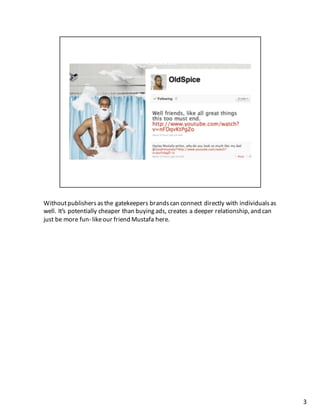
Without	
  publishers	
  as	
  the	
  gatekeepers	
  brands	
  can	
  connect	
  directly	
  with	
  individuals	
  as	
  
well.	
  It’s	
  potentially	
  cheaper	
  than	
  buying	
  ads,	
  creates	
  a	
  deeper	
  relationship,	
  and	
  can	
  
just	
  be	
  more	
  fun-­‐ like	
  our	
  friend	
  Mustafa	
  here.
3
This	
  means	
  the	
  old	
  way	
  of	
  reaching	
  consumers,	
  paid	
  media,	
  is	
  being	
  replaced	
  by	
  
direct	
  connection-­‐ also	
  known	
  as	
  owned	
  and	
  earned	
  media,	
  which	
  basically	
  just	
  
means	
  making	
  content,	
  and	
  getting	
  it	
  out	
  via	
  social.	
  
4
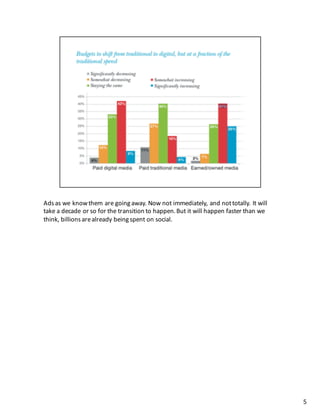
Ads	
  as	
  we	
  know	
  them	
  are	
  going	
  away.	
  Now	
  not	
  immediately,	
  and	
  not	
  totally.	
  It	
  will	
  
take	
  a	
  decade	
  or	
  so	
  for	
  the	
  transition	
  to	
  happen.	
  But	
  it	
  will	
  happen	
  faster	
  than	
  we	
  
think,	
  billions	
  are	
  already	
  being	
  spent	
  on	
  social.
5
But	
  so	
  far	
  it’s	
  mostly	
  spent	
  on	
  gathering	
  followers.	
  Far	
  less	
  is	
  spent	
  making	
  content	
  to	
  
keep	
  those	
  followers	
  engaged.	
  This	
  is	
  like	
  to	
  spending	
  money	
  on	
  nice	
  invitations	
  to	
  a	
  
party,	
  and	
  then	
  nothing	
  on	
  the	
  food	
  and	
  drink	
  when	
  people	
  get	
  there.
6
This	
  is	
  because	
  brands	
  are	
  stuck	
  on	
  the	
  methods	
  that	
  have	
  worked	
  for	
  the	
  past	
  40	
  
years,	
  writing	
  a	
  big	
  check	
  to	
  the	
  experts	
  on	
  Madison	
  Avenue	
  to	
  create	
  ads	
  and	
  buy	
  
placement	
  for	
  them	
  as	
  they	
  deem	
  appropriate.	
  It’s	
  much	
  easier.
7
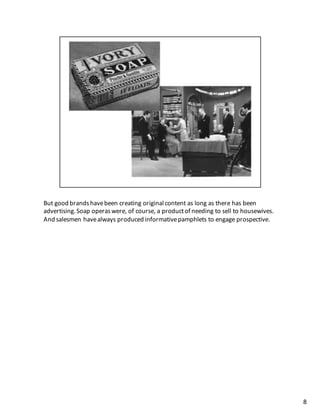
But	
  good	
  brands	
  have	
  been	
  creating	
  original	
  content	
  as	
  long	
  as	
  there	
  has	
  been	
  
advertising.	
  Soap	
  operas	
  were,	
  of	
  course,	
  a	
  product	
  of	
  needing	
  to	
  sell	
  to	
  housewives.	
  
And	
  salesmen	
  have	
  always	
  produced	
  informative	
  pamphlets	
  to	
  engage	
  prospective.	
  
8
Now	
  companies	
  are	
  realizing	
  they	
  need	
  to	
  produce,	
  a	
  ton	
  of	
  content,	
  to	
  feed	
  an	
  
increasing	
  array	
  of	
  sites,	
  social	
  channels,	
  and	
  apps.	
  The	
  more	
  they	
  get	
  into	
  this	
  
process	
  the	
  more	
  they	
  begin	
  to	
  look,	
  suspiciously,	
  just	
  like	
  publishers.	
  
9
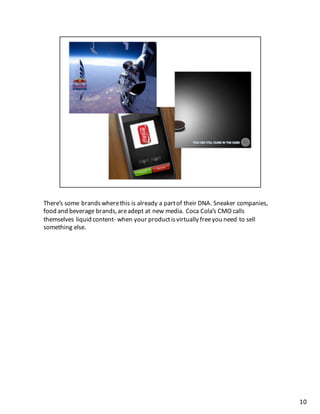
There’s	
  some	
  brands	
  where	
  this	
  is	
  already	
  a	
  part	
  of	
  their	
  DNA.	
  Sneaker	
  companies,	
  
food	
  and	
  beverage	
  brands,	
  are	
  adept	
  at	
  new	
  media.	
  Coca	
  Cola’s	
  CMO	
  calls	
  
themselves	
  liquid	
  content-­‐ when	
  your	
  product	
  is	
  virtually	
  free	
  you	
  need	
  to	
  sell	
  
something	
  else.	
  
10
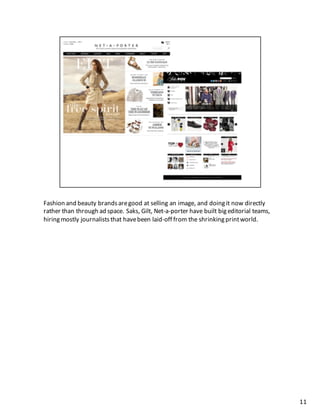
Fashion	
  and	
  beauty	
  brands	
  are	
  good	
  at	
  selling	
  an	
  image,	
  and	
  doing	
  it	
  now	
  directly	
  
rather	
  than	
  through	
  ad	
  space.	
  Saks,	
  Gilt,	
  Net-­‐a-­‐porter	
  have	
  built	
  big	
  editorial	
  teams,	
  
hiring	
  mostly	
  journalists	
  that	
  have	
  been	
  laid-­‐off	
  from	
  the	
  shrinking	
  print	
  world.	
  
11
Gap	
  is	
  instead	
  outsourcing	
  the	
  job	
  of	
  creation;	
  they	
  pay	
  bloggers	
  thousands	
  to	
  style	
  
and	
  shoot	
  for	
  their	
  online	
  magazine	
  sites.	
  This	
  is	
  just	
  the	
  tip	
  of	
  the	
  iceberg	
  as	
  more	
  
money	
  is	
  spent	
  on	
  content	
  creation	
  and	
  management.	
  
12
This	
  is	
  a	
  business	
  that	
  has	
  the	
  potential	
  to	
  dwarf	
  even	
  Google.	
  And	
  everyone	
  wants	
  to	
  
get	
  into	
  this	
  changing	
  spend.	
  Both	
  old	
  and	
  new	
  marketing	
  companies	
  are	
  trying	
  to	
  
make	
  creation	
  more	
  efficient,	
  automated,	
  scalable	
  and	
  measurable.	
  
13
Ad	
  agencies,	
  PR	
  agencies	
  are	
  repackaging	
  themselves	
  as	
  content	
  experts,	
  working	
  to	
  
grow	
  their	
  in-­‐house	
  teams.	
  Traditional	
  publishers	
  are	
  creating	
  custom	
  content	
  or	
  
reselling	
  their	
  high-­‐quality	
  articles	
  and	
  videos	
  to	
  brands.	
  
14
With	
  endless	
  social	
  channels	
  to	
  fill	
  companies	
  are	
  giving	
  tools	
  to	
  community	
  
managers,	
  often	
  just	
  out	
  of	
  college,	
  to	
  enable	
  them	
  to	
  keep	
  the	
  hungry	
  beast	
  of	
  social	
  
media	
  fed.	
  But	
  handing	
  the	
  car	
  keys	
  off	
  can	
  sometimes	
   backfire.	
  
15
Hiring	
  journalists	
  is	
  a	
  safer	
  bet,	
  but	
  building	
  a	
  whole	
  editorial	
  team	
  usually	
  isn't	
  within	
  
a	
  brand’s	
  core	
  competency.	
  Ask	
  any	
  publisher	
  how	
  difficult	
  it	
  is	
  to	
  keep	
  fickle	
  
consumers	
  engaged	
  long-­‐term.	
  
16
Outreach	
  to	
  influencer	
  networks	
  enlists	
  bloggers	
  or	
  Youtube celebs	
  to	
  get	
  them	
  
involved	
  with	
  making	
  beautiful	
  posts	
  for	
  their	
  readers,	
  as	
  well	
  involving	
  them	
  in	
  
marketing,	
  events,	
  contests	
  and	
  other	
  promotions	
  brands	
  are	
  already	
  doing.	
  
17
My	
  company	
  tries	
  to	
  straddle	
  the	
  worlds	
  of	
  old	
  media	
  and	
  new.	
  We	
  connect	
  brands	
  
with	
  individual	
  bloggers	
  and	
  creators,	
  but	
  in	
  cooperation	
  with	
  publisher	
  partners	
  who	
  
have	
  expertise	
  to	
  help	
  manage	
  the	
  process.	
  
18
This	
  hybrid	
  model	
  brings	
  curated,	
  original	
  content	
  from	
  thousands	
  of	
  passionate	
  
individual	
  experts.	
  I	
  think	
  direct	
  connection	
  and	
  support	
  of	
  individuals	
  where	
  will	
  be	
  
dollars	
  previously	
  devoted	
  to	
  ad	
  are	
  going	
  to	
  be	
  spent.
19
It’s	
  still	
  early	
  in	
  this	
  transition.	
  But	
  we	
  may	
  live	
  to	
  see	
  a	
  world	
  without	
  advertising,	
  at	
  
least	
  not	
  in	
  the	
  way	
  we	
  currently	
  know	
  it	
  and	
  I	
  think	
  many	
  people	
  agree	
  this	
  is	
  a	
  
world	
  they'd	
  like	
  to	
  live	
  in.	
  
20

Ignite advertising

  • 1.
    In  the  traditional  world  of  media,  brands  would  buy  ads  to  connect  with  consumers.   Tv channels,  magazines,  newspapers  they’re  the  curators  to  reach  thousands  or   millions  of  people  at  a  time,   and  brands  would  support  them  and  come  along  for  the   ride.   1
  • 2.
    The  internet  and  social  media  has  disrupted  that,  individuals  can  skip  the  ads  and   connect  with  one  another  for  information  or  entertainment.  Bloggers,  youtubestars,   they’ve  taught  themselves  how  to  make  content  that  attracts  and  engages  fans.   2
  • 3.
    Without  publishers  as  the  gatekeepers  brands  can  connect  directly  with  individuals  as   well.  It’s  potentially  cheaper  than  buying  ads,  creates  a  deeper  relationship,  and  can   just  be  more  fun-­‐ like  our  friend  Mustafa  here. 3
  • 4.
    This  means  the  old  way  of  reaching  consumers,  paid  media,  is  being  replaced  by   direct  connection-­‐ also  known  as  owned  and  earned  media,  which  basically  just   means  making  content,  and  getting  it  out  via  social.   4
  • 5.
    Ads  as  we  know  them  are  going  away.  Now  not  immediately,  and  not  totally.  It  will   take  a  decade  or  so  for  the  transition  to  happen.  But  it  will  happen  faster  than  we   think,  billions  are  already  being  spent  on  social. 5
  • 6.
    But  so  far  it’s  mostly  spent  on  gathering  followers.  Far  less  is  spent  making  content  to   keep  those  followers  engaged.  This  is  like  to  spending  money  on  nice  invitations  to  a   party,  and  then  nothing  on  the  food  and  drink  when  people  get  there. 6
  • 7.
    This  is  because  brands  are  stuck  on  the  methods  that  have  worked  for  the  past  40   years,  writing  a  big  check  to  the  experts  on  Madison  Avenue  to  create  ads  and  buy   placement  for  them  as  they  deem  appropriate.  It’s  much  easier. 7
  • 8.
    But  good  brands  have  been  creating  original  content  as  long  as  there  has  been   advertising.  Soap  operas  were,  of  course,  a  product  of  needing  to  sell  to  housewives.   And  salesmen  have  always  produced  informative  pamphlets  to  engage  prospective.   8
  • 9.
    Now  companies  are  realizing  they  need  to  produce,  a  ton  of  content,  to  feed  an   increasing  array  of  sites,  social  channels,  and  apps.  The  more  they  get  into  this   process  the  more  they  begin  to  look,  suspiciously,  just  like  publishers.   9
  • 10.
    There’s  some  brands  where  this  is  already  a  part  of  their  DNA.  Sneaker  companies,   food  and  beverage  brands,  are  adept  at  new  media.  Coca  Cola’s  CMO  calls   themselves  liquid  content-­‐ when  your  product  is  virtually  free  you  need  to  sell   something  else.   10
  • 11.
    Fashion  and  beauty  brands  are  good  at  selling  an  image,  and  doing  it  now  directly   rather  than  through  ad  space.  Saks,  Gilt,  Net-­‐a-­‐porter  have  built  big  editorial  teams,   hiring  mostly  journalists  that  have  been  laid-­‐off  from  the  shrinking  print  world.   11
  • 12.
    Gap  is  instead  outsourcing  the  job  of  creation;  they  pay  bloggers  thousands  to  style   and  shoot  for  their  online  magazine  sites.  This  is  just  the  tip  of  the  iceberg  as  more   money  is  spent  on  content  creation  and  management.   12
  • 13.
    This  is  a  business  that  has  the  potential  to  dwarf  even  Google.  And  everyone  wants  to   get  into  this  changing  spend.  Both  old  and  new  marketing  companies  are  trying  to   make  creation  more  efficient,  automated,  scalable  and  measurable.   13
  • 14.
    Ad  agencies,  PR  agencies  are  repackaging  themselves  as  content  experts,  working  to   grow  their  in-­‐house  teams.  Traditional  publishers  are  creating  custom  content  or   reselling  their  high-­‐quality  articles  and  videos  to  brands.   14
  • 15.
    With  endless  social  channels  to  fill  companies  are  giving  tools  to  community   managers,  often  just  out  of  college,  to  enable  them  to  keep  the  hungry  beast  of  social   media  fed.  But  handing  the  car  keys  off  can  sometimes   backfire.   15
  • 16.
    Hiring  journalists  is  a  safer  bet,  but  building  a  whole  editorial  team  usually  isn't  within   a  brand’s  core  competency.  Ask  any  publisher  how  difficult  it  is  to  keep  fickle   consumers  engaged  long-­‐term.   16
  • 17.
    Outreach  to  influencer  networks  enlists  bloggers  or  Youtube celebs  to  get  them   involved  with  making  beautiful  posts  for  their  readers,  as  well  involving  them  in   marketing,  events,  contests  and  other  promotions  brands  are  already  doing.   17
  • 18.
    My  company  tries  to  straddle  the  worlds  of  old  media  and  new.  We  connect  brands   with  individual  bloggers  and  creators,  but  in  cooperation  with  publisher  partners  who   have  expertise  to  help  manage  the  process.   18
  • 19.
    This  hybrid  model  brings  curated,  original  content  from  thousands  of  passionate   individual  experts.  I  think  direct  connection  and  support  of  individuals  where  will  be   dollars  previously  devoted  to  ad  are  going  to  be  spent. 19
  • 20.
    It’s  still  early  in  this  transition.  But  we  may  live  to  see  a  world  without  advertising,  at   least  not  in  the  way  we  currently  know  it  and  I  think  many  people  agree  this  is  a   world  they'd  like  to  live  in.   20