Comparisons: IFRS vs GAAP


    Michael Kosinski, CPA
    Principal, Assurance Services
    mkosinski@ larsonallen.com
    (239) 280-3517


                                     ©2011 LarsonAllen LLP
                                    ©2011 LarsonAllen LLP
1
Objectives
    • Become familiar with the reasons and theories
      behind IFRS and convergence.
    • Compare differences between financial reporting
      presentation under IFRS and GAAP.
    • To compare the differences between IFRS and
      GAAP for significant accounting issues.


                                                        ©2011 LarsonAllen LLP
2
Why is there a need to converge?
    • Corporations are becoming increasingly
      multinational
    • Direct foreign investment
    • Interdependence
    • Global financing markets


                                               ©2011 LarsonAllen LLP
3
What are the conceptual differences?
    • IFRS is driven by economics vs. historical cost
    • More focus on fair value
      – Agriculture
      – Investments
      – Others optional
    • Principals based: more reliance on judgment
    • Volume
      – 2,500 vs 25,000 pages of standards
    • Standards for SME’s


                                                        ©2011 LarsonAllen LLP
4
Why do you need to know?
    • Legal documents may need modified (leases
      and loans)
    • Timing differences for taxes will change (CAM)
    • Greater support for and rationale behind
      positions
    • Compensation methods may need modified
    • Training and learning requirements
    • Software issues


                                                       ©2011 LarsonAllen LLP
5
Implementation considerations
    • Initial year presentation requires three
      comparative years due to requirements for
      comparative financial statements
    • Parallel reporting for historical information


                                                      ©2011 LarsonAllen LLP
6
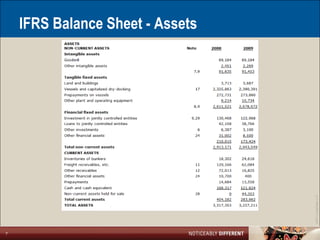
IFRS Balance Sheet - Assets


                                  ©2011 LarsonAllen LLP
7
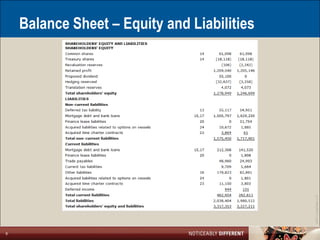
Balance Sheet – Equity and Liabilities


                                             ©2011 LarsonAllen LLP
8
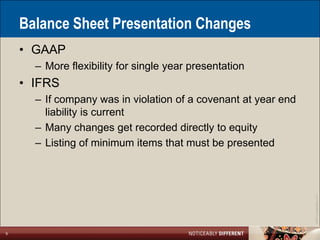
Balance Sheet Presentation Changes
    • GAAP
      – More flexibility for single year presentation
    • IFRS
      – If company was in violation of a covenant at year end
        liability is current
      – Many changes get recorded directly to equity
      – Listing of minimum items that must be presented


                                                                ©2011 LarsonAllen LLP
9
10
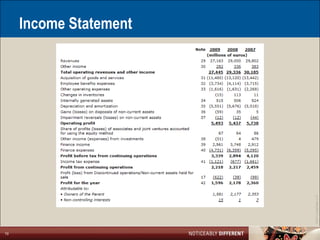
                             Income Statement


     ©2011 LarsonAllen LLP
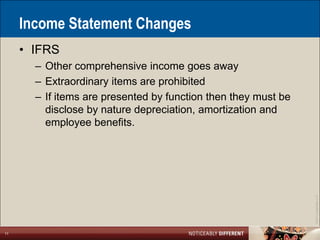
Income Statement Changes
     • IFRS
       – Other comprehensive income goes away
       – Extraordinary items are prohibited
       – If items are presented by function then they must be
         disclose by nature depreciation, amortization and
         employee benefits.


                                                                ©2011 LarsonAllen LLP
11
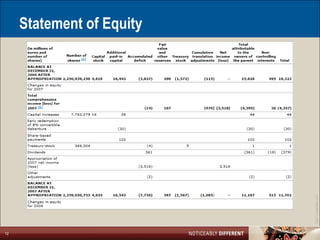
Statement of Equity


                           ©2011 LarsonAllen LLP
12
Statement of Equity
     • Other comprehensive income disappears
     • More equity classifications
     • For all categories of equity a reconciliation must
       be presented for changes


                                                            ©2011 LarsonAllen LLP
13
Statement of Cash Flows Changes
     • SOCF Categories–
       – Interest paid/received
       – Taxes paid
       – Dividends
     • Short term investments of three months of less
       from acquisition are cash and equivalents
     • Bank overdrafts may be cash equivalent if it is
       repayable on demand vs financing
     • Items for GAAP are presented by the
       predominant category and IFRS allocates


                                                         ©2011 LarsonAllen LLP
14
Revaluations
     • Concept in IFRS
     • GAAP write down = new cost
     • Mechanics
        –   Write up – goes to equity
        –   Then written down – reduces equity then P&L
        –   Write down – goes to P&L
        –   Then write up – goes to P&L then to equity
     • Increased volatility


                                                          ©2011 LarsonAllen LLP
15
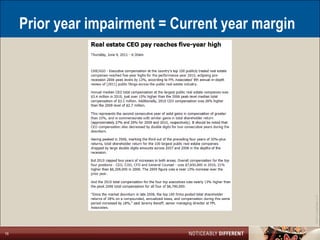
Prior year impairment = Current year margin


                                                   ©2011 LarsonAllen LLP
16
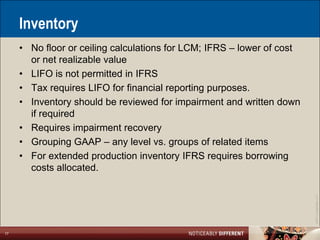
Inventory
     • No floor or ceiling calculations for LCM; IFRS – lower of cost
       or net realizable value
     • LIFO is not permitted in IFRS
     • Tax requires LIFO for financial reporting purposes.
     • Inventory should be reviewed for impairment and written down
       if required
     • Requires impairment recovery
     • Grouping GAAP – any level vs. groups of related items
     • For extended production inventory IFRS requires borrowing
       costs allocated.


                                                                        ©2011 LarsonAllen LLP
17
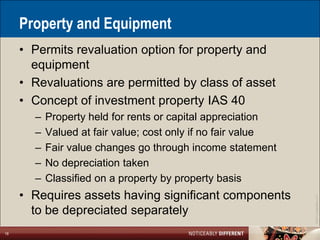
Property and Equipment
     • Permits revaluation option for property and
       equipment
     • Revaluations are permitted by class of asset
     • Concept of investment property IAS 40
       –   Property held for rents or capital appreciation
       –   Valued at fair value; cost only if no fair value
       –   Fair value changes go through income statement
       –   No depreciation taken
       –   Classified on a property by property basis
     • Requires assets having significant components


                                                              ©2011 LarsonAllen LLP
       to be depreciated separately
18
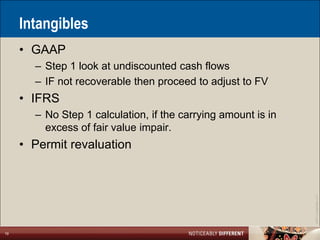
Intangibles
     • GAAP
       – Step 1 look at undiscounted cash flows
       – IF not recoverable then proceed to adjust to FV
     • IFRS
       – No Step 1 calculation, if the carrying amount is in
         excess of fair value impair.
     • Permit revaluation


                                                               ©2011 LarsonAllen LLP
19
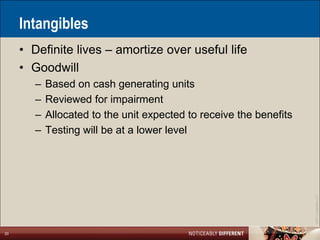
Intangibles
     • Definite lives – amortize over useful life
     • Goodwill
        –   Based on cash generating units
        –   Reviewed for impairment
        –   Allocated to the unit expected to receive the benefits
        –   Testing will be at a lower level


                                                                     ©2011 LarsonAllen LLP
20
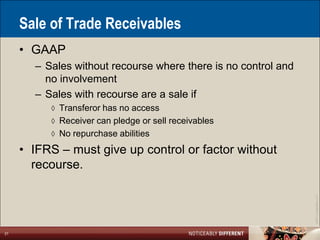
Sale of Trade Receivables
     • GAAP
       – Sales without recourse where there is no control and
         no involvement
       – Sales with recourse are a sale if
          ◊ Transferor has no access
          ◊ Receiver can pledge or sell receivables
          ◊ No repurchase abilities

     • IFRS – must give up control or factor without
       recourse.


                                                                ©2011 LarsonAllen LLP
21
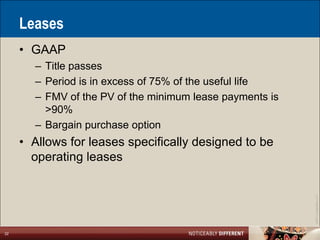
Leases
     • GAAP
       – Title passes
       – Period is in excess of 75% of the useful life
       – FMV of the PV of the minimum lease payments is
         >90%
       – Bargain purchase option
     • Allows for leases specifically designed to be
       operating leases


                                                          ©2011 LarsonAllen LLP
22
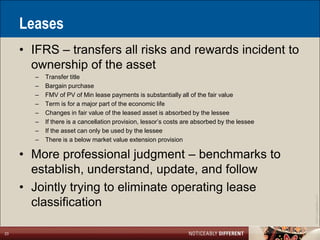
Leases
     • IFRS – transfers all risks and rewards incident to
       ownership of the asset
       –   Transfer title
       –   Bargain purchase
       –   FMV of PV of Min lease payments is substantially all of the fair value
       –   Term is for a major part of the economic life
       –   Changes in fair value of the leased asset is absorbed by the lessee
       –   If there is a cancellation provision, lessor’s costs are absorbed by the lessee
       –   If the asset can only be used by the lessee
       –   There is a below market value extension provision

     • More professional judgment – benchmarks to
       establish, understand, update, and follow
     • Jointly trying to eliminate operating lease


                                                                                             ©2011 LarsonAllen LLP
       classification

23
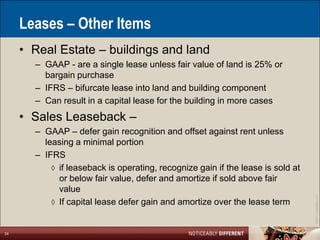
Leases – Other Items
     • Real Estate – buildings and land
       – GAAP - are a single lease unless fair value of land is 25% or
         bargain purchase
       – IFRS – bifurcate lease into land and building component
       – Can result in a capital lease for the building in more cases
     • Sales Leaseback –
       – GAAP – defer gain recognition and offset against rent unless
         leasing a minimal portion
       – IFRS
           ◊ if leaseback is operating, recognize gain if the lease is sold at
             or below fair value, defer and amortize if sold above fair
             value


                                                                                 ©2011 LarsonAllen LLP
           ◊ If capital lease defer gain and amortize over the lease term


24
Impairment
     • GAAP –
       – Reversals are not permitted
       – Requires changes in allowance account adjustments
         to run through income statement
       – Review for impairment when the loss appears
         permanent and not just a market fluctuation
     • IFRS
       – Permits recovery of impairment if there are changes
         in the asset or market value
       – Review for impairment if there is a loss event


                                                               ©2011 LarsonAllen LLP
25
Impact of Impairment
     • Inventory
     • Marketable securities (Available for sale and
       held to maturity)
     • Real estate
     • Property and equipment
     • Investment property (under GAAP)


                                                       ©2011 LarsonAllen LLP
26
Contingent Losses
     • Both scenarios, if there is a most likely result
       accrue that amount
     • Range of equal possibilities
        – US GAAP – accrue low range
        – IFRS – accrue middle
     • Present value discounting
        – US GAAP – not measured
        – IFRS – discount if material


                                                          ©2011 LarsonAllen LLP
27
Research and Development
     • GAAP – Expense unless it was part of the
       purchase of a target company
     • IFRS
       – Research – expense
          ◊ Formulation of a new item
       – Development - capitalize
          ◊ Feasible, can complete development, intend to
            complete, ability to use or sell
          ◊ Building prototype


                                                            ©2011 LarsonAllen LLP
28
Convertible Debt and Other Debt/Equity
     • Convertible bonds, redemption
       requirements, etc.
     • US GAAP – record liability unless convertible
       portion is split (detachable)
     • IFRS
       – Record liability at fair value and balance is equity.
       – Interest expense is recorded on income statement


                                                                 ©2011 LarsonAllen LLP
29
Deferred Taxes
     • GAAP
       – Effective rate = enacted rate
       – Asset or liability giving rise to the difference is the
         basis for classification
       – Assets recorded with valuation allowance using 50%
         chance


                                                                   ©2011 LarsonAllen LLP
30
Deferred Taxes
     • IFRS
       – Effective rate = the rate in effect or substantially in
         effect when the reversal will occur
       – All non current
       – Record net only if it is probable it will occur
       – Disclose the gross amount


     • Fin 48 – No IFRS equivalent = no roadmap to
       your tax return


                                                                   ©2011 LarsonAllen LLP
31
Service Based Revenue
     • IFRS
       – When the results of the services can be reliably
         estimated – use percentage of completion
          ◊ Amount of revenue can be measured
          ◊ It is probable the economic benefit will flow to the provider
          ◊ Stage can be reasonably estimated
          ◊ Costs incurred and costs to complete can be reliably
            measured
       – Review of work performed, services as a %, and cost
         as a %.
     • GAAP – when service is completed


                                                                            ©2011 LarsonAllen LLP
32
Other Revenue
     • GAAP
       – Generally goods must be delivered for passing of
         risks and rewards
       – If right of return without estimates of returns revenue
         can not be recognized
     • IFRS
       – Can be recognized prior to delivery
       – Revenue can be recognized despite right of return
       – Real estate sales are not dependant upon adequacy
         of buyers initial investment


                                                                   ©2011 LarsonAllen LLP
33
Consolidations
     •   Pooling of interest method is not allowed
     •   Purchase method – IFRS
     •   Acquisition method – GAAP
     •   GAAP
         – Do you have a controlling interest?
         – Is the company underfunded aside from your
           investment?
         – Based on the outcome will you absorb the profits or
           losses?


                                                                 ©2011 LarsonAllen LLP
34
Consolidations
     • IFRS
       – One company’s ability to control the others
     • Governance and economics considered
       – Voting rights, ability to appoint, modify bylaws
       – Dividends, guarantees, rights to future benefits
     • When economic and governance indicators exist
       consolidate unless there is a proven reason not
       to.


                                                            ©2011 LarsonAllen LLP
35
Business Combinations
     • GAAP
       – FV of shares at closing date
       – Revalue everything to fair value
       – Attribute value to goodwill
     • IFRS
       – Revalue of the majority interest
     • Will cause variations in the amount of goodwill
       allocations


                                                         ©2011 LarsonAllen LLP
36
Pension Plans
     • GAAP
       – Changes in past service costs – amortized over the
         remaining service period
     • IFRS
       – Changes in past service costs – recognized
         immediately


                                                              ©2011 LarsonAllen LLP
37
Stock Options
     • Increased complexity with graded vesting and
       installments
     • May need to establish different systems to
       account for the changes
     • Differences for cash and equity settlements
       – Cash – remeasure at each balance sheet date
       – Equity – measure FV at grant date and allocate over
         vesting period


                                                               ©2011 LarsonAllen LLP
38
Long term contracts
     • GAAP –
       – Grouping of contracts is optional
       – Completed contract method is acceptable under
         certain circumstances
     • IFRS
       – Requires groups of contracts to be accounted for as a
         single contract
       – Uses zero profit recognition in cases that lack
         estimates


                                                                 ©2011 LarsonAllen LLP
39
Questions?


                  Thank You!!!


                                 ©2011 LarsonAllen LLP
40

IFRS vs. GAAP

  • 1.
    Comparisons: IFRS vsGAAP Michael Kosinski, CPA Principal, Assurance Services mkosinski@ larsonallen.com (239) 280-3517 ©2011 LarsonAllen LLP ©2011 LarsonAllen LLP 1
  • 2.
    Objectives • Become familiar with the reasons and theories behind IFRS and convergence. • Compare differences between financial reporting presentation under IFRS and GAAP. • To compare the differences between IFRS and GAAP for significant accounting issues. ©2011 LarsonAllen LLP 2
  • 3.
    Why is therea need to converge? • Corporations are becoming increasingly multinational • Direct foreign investment • Interdependence • Global financing markets ©2011 LarsonAllen LLP 3
  • 4.
    What are theconceptual differences? • IFRS is driven by economics vs. historical cost • More focus on fair value – Agriculture – Investments – Others optional • Principals based: more reliance on judgment • Volume – 2,500 vs 25,000 pages of standards • Standards for SME’s ©2011 LarsonAllen LLP 4
  • 5.
    Why do youneed to know? • Legal documents may need modified (leases and loans) • Timing differences for taxes will change (CAM) • Greater support for and rationale behind positions • Compensation methods may need modified • Training and learning requirements • Software issues ©2011 LarsonAllen LLP 5
  • 6.
    Implementation considerations • Initial year presentation requires three comparative years due to requirements for comparative financial statements • Parallel reporting for historical information ©2011 LarsonAllen LLP 6
  • 7.
    IFRS Balance Sheet- Assets ©2011 LarsonAllen LLP 7
  • 8.
    Balance Sheet –Equity and Liabilities ©2011 LarsonAllen LLP 8
  • 9.
    Balance Sheet PresentationChanges • GAAP – More flexibility for single year presentation • IFRS – If company was in violation of a covenant at year end liability is current – Many changes get recorded directly to equity – Listing of minimum items that must be presented ©2011 LarsonAllen LLP 9
  • 10.
    10 Income Statement ©2011 LarsonAllen LLP
  • 11.
    Income Statement Changes • IFRS – Other comprehensive income goes away – Extraordinary items are prohibited – If items are presented by function then they must be disclose by nature depreciation, amortization and employee benefits. ©2011 LarsonAllen LLP 11
  • 12.
    Statement of Equity ©2011 LarsonAllen LLP 12
  • 13.
    Statement of Equity • Other comprehensive income disappears • More equity classifications • For all categories of equity a reconciliation must be presented for changes ©2011 LarsonAllen LLP 13
  • 14.
    Statement of CashFlows Changes • SOCF Categories– – Interest paid/received – Taxes paid – Dividends • Short term investments of three months of less from acquisition are cash and equivalents • Bank overdrafts may be cash equivalent if it is repayable on demand vs financing • Items for GAAP are presented by the predominant category and IFRS allocates ©2011 LarsonAllen LLP 14
  • 15.
    Revaluations • Concept in IFRS • GAAP write down = new cost • Mechanics – Write up – goes to equity – Then written down – reduces equity then P&L – Write down – goes to P&L – Then write up – goes to P&L then to equity • Increased volatility ©2011 LarsonAllen LLP 15
  • 16.
    Prior year impairment= Current year margin ©2011 LarsonAllen LLP 16
  • 17.
    Inventory • No floor or ceiling calculations for LCM; IFRS – lower of cost or net realizable value • LIFO is not permitted in IFRS • Tax requires LIFO for financial reporting purposes. • Inventory should be reviewed for impairment and written down if required • Requires impairment recovery • Grouping GAAP – any level vs. groups of related items • For extended production inventory IFRS requires borrowing costs allocated. ©2011 LarsonAllen LLP 17
  • 18.
    Property and Equipment • Permits revaluation option for property and equipment • Revaluations are permitted by class of asset • Concept of investment property IAS 40 – Property held for rents or capital appreciation – Valued at fair value; cost only if no fair value – Fair value changes go through income statement – No depreciation taken – Classified on a property by property basis • Requires assets having significant components ©2011 LarsonAllen LLP to be depreciated separately 18
  • 19.
    Intangibles • GAAP – Step 1 look at undiscounted cash flows – IF not recoverable then proceed to adjust to FV • IFRS – No Step 1 calculation, if the carrying amount is in excess of fair value impair. • Permit revaluation ©2011 LarsonAllen LLP 19
  • 20.
    Intangibles • Definite lives – amortize over useful life • Goodwill – Based on cash generating units – Reviewed for impairment – Allocated to the unit expected to receive the benefits – Testing will be at a lower level ©2011 LarsonAllen LLP 20
  • 21.
    Sale of TradeReceivables • GAAP – Sales without recourse where there is no control and no involvement – Sales with recourse are a sale if ◊ Transferor has no access ◊ Receiver can pledge or sell receivables ◊ No repurchase abilities • IFRS – must give up control or factor without recourse. ©2011 LarsonAllen LLP 21
  • 22.
    Leases • GAAP – Title passes – Period is in excess of 75% of the useful life – FMV of the PV of the minimum lease payments is >90% – Bargain purchase option • Allows for leases specifically designed to be operating leases ©2011 LarsonAllen LLP 22
  • 23.
    Leases • IFRS – transfers all risks and rewards incident to ownership of the asset – Transfer title – Bargain purchase – FMV of PV of Min lease payments is substantially all of the fair value – Term is for a major part of the economic life – Changes in fair value of the leased asset is absorbed by the lessee – If there is a cancellation provision, lessor’s costs are absorbed by the lessee – If the asset can only be used by the lessee – There is a below market value extension provision • More professional judgment – benchmarks to establish, understand, update, and follow • Jointly trying to eliminate operating lease ©2011 LarsonAllen LLP classification 23
  • 24.
    Leases – OtherItems • Real Estate – buildings and land – GAAP - are a single lease unless fair value of land is 25% or bargain purchase – IFRS – bifurcate lease into land and building component – Can result in a capital lease for the building in more cases • Sales Leaseback – – GAAP – defer gain recognition and offset against rent unless leasing a minimal portion – IFRS ◊ if leaseback is operating, recognize gain if the lease is sold at or below fair value, defer and amortize if sold above fair value ©2011 LarsonAllen LLP ◊ If capital lease defer gain and amortize over the lease term 24
  • 25.
    Impairment • GAAP – – Reversals are not permitted – Requires changes in allowance account adjustments to run through income statement – Review for impairment when the loss appears permanent and not just a market fluctuation • IFRS – Permits recovery of impairment if there are changes in the asset or market value – Review for impairment if there is a loss event ©2011 LarsonAllen LLP 25
  • 26.
    Impact of Impairment • Inventory • Marketable securities (Available for sale and held to maturity) • Real estate • Property and equipment • Investment property (under GAAP) ©2011 LarsonAllen LLP 26
  • 27.
    Contingent Losses • Both scenarios, if there is a most likely result accrue that amount • Range of equal possibilities – US GAAP – accrue low range – IFRS – accrue middle • Present value discounting – US GAAP – not measured – IFRS – discount if material ©2011 LarsonAllen LLP 27
  • 28.
    Research and Development • GAAP – Expense unless it was part of the purchase of a target company • IFRS – Research – expense ◊ Formulation of a new item – Development - capitalize ◊ Feasible, can complete development, intend to complete, ability to use or sell ◊ Building prototype ©2011 LarsonAllen LLP 28
  • 29.
    Convertible Debt andOther Debt/Equity • Convertible bonds, redemption requirements, etc. • US GAAP – record liability unless convertible portion is split (detachable) • IFRS – Record liability at fair value and balance is equity. – Interest expense is recorded on income statement ©2011 LarsonAllen LLP 29
  • 30.
    Deferred Taxes • GAAP – Effective rate = enacted rate – Asset or liability giving rise to the difference is the basis for classification – Assets recorded with valuation allowance using 50% chance ©2011 LarsonAllen LLP 30
  • 31.
    Deferred Taxes • IFRS – Effective rate = the rate in effect or substantially in effect when the reversal will occur – All non current – Record net only if it is probable it will occur – Disclose the gross amount • Fin 48 – No IFRS equivalent = no roadmap to your tax return ©2011 LarsonAllen LLP 31
  • 32.
    Service Based Revenue • IFRS – When the results of the services can be reliably estimated – use percentage of completion ◊ Amount of revenue can be measured ◊ It is probable the economic benefit will flow to the provider ◊ Stage can be reasonably estimated ◊ Costs incurred and costs to complete can be reliably measured – Review of work performed, services as a %, and cost as a %. • GAAP – when service is completed ©2011 LarsonAllen LLP 32
  • 33.
    Other Revenue • GAAP – Generally goods must be delivered for passing of risks and rewards – If right of return without estimates of returns revenue can not be recognized • IFRS – Can be recognized prior to delivery – Revenue can be recognized despite right of return – Real estate sales are not dependant upon adequacy of buyers initial investment ©2011 LarsonAllen LLP 33
  • 34.
    Consolidations • Pooling of interest method is not allowed • Purchase method – IFRS • Acquisition method – GAAP • GAAP – Do you have a controlling interest? – Is the company underfunded aside from your investment? – Based on the outcome will you absorb the profits or losses? ©2011 LarsonAllen LLP 34
  • 35.
    Consolidations • IFRS – One company’s ability to control the others • Governance and economics considered – Voting rights, ability to appoint, modify bylaws – Dividends, guarantees, rights to future benefits • When economic and governance indicators exist consolidate unless there is a proven reason not to. ©2011 LarsonAllen LLP 35
  • 36.
    Business Combinations • GAAP – FV of shares at closing date – Revalue everything to fair value – Attribute value to goodwill • IFRS – Revalue of the majority interest • Will cause variations in the amount of goodwill allocations ©2011 LarsonAllen LLP 36
  • 37.
    Pension Plans • GAAP – Changes in past service costs – amortized over the remaining service period • IFRS – Changes in past service costs – recognized immediately ©2011 LarsonAllen LLP 37
  • 38.
    Stock Options • Increased complexity with graded vesting and installments • May need to establish different systems to account for the changes • Differences for cash and equity settlements – Cash – remeasure at each balance sheet date – Equity – measure FV at grant date and allocate over vesting period ©2011 LarsonAllen LLP 38
  • 39.
    Long term contracts • GAAP – – Grouping of contracts is optional – Completed contract method is acceptable under certain circumstances • IFRS – Requires groups of contracts to be accounted for as a single contract – Uses zero profit recognition in cases that lack estimates ©2011 LarsonAllen LLP 39
  • 40.
    Questions? Thank You!!! ©2011 LarsonAllen LLP 40