If – clauses Conditionals type I and II There are three types of CONDITIONALS. Each type consists of two parts: the  if-clause  (hypothesis) which begins with the word  If , and the  main clause , which shows the result of the hypothesis. LONDON  EYE BIG  BEN © Luís68elt
If-clause  main clause   (hypothesis)  (result)   If   you  are  late  ,  you  will miss  the bus. When the if clause comes before the main clause, they are separated with a comma. When the main clause comes before the if-clause, then they are not separated by a comma. e.g.  If  Peter  has  time ,  he  will come  to visit us. Peter  will come  to visit us  if  he  has  time. TYPE I  CONDITIONALS  EXPRESS A  REAL  OR  VERY PROBABLE SITUATION  IN THE  PRESENT  OR  FUTURE . They are formed as follows: Houses of   Parliament © Luís68elt
If-clause  ,   main clause   A.   If +  Present Simple   Future Simple   Present Simple   Imperative   can / must / may, etc    +    bare infinitive   main clause  (no comma)   if-clause     B.   Future Simple  If +  Present Simple   A.  If you  go  to London, you  will see  the Big Ben. A.1.   If the temperature  falls  below 0º C, water  turns  into ice. A.2.  If you  don’t understand ,  look  at the example. A.3.  If you  go  to Paris, you  can see  the Eiffel Tower. B.  Mary  will be  a good student if she  studies  hard. NEGATIVES:  DON’T= DO NOT  DOESN’T= DOES NOT  /  WILL NOT = WON’T EXERCISES Complete with the 1st Conditional (A) and (B) 1. If Jane ___________ (have) money, she _______________ (go)to the Algarve. 2. If you ___________ (go) to bed late, you _______________ (be) tired in the morning. 3. If we _____________ (not / buy) it now, we ______________ (have) to get it later. 4. I ________________(give) you a hand if I ______________ (finish) work early. 5. Gary _____________ (not / pay) his rent  if Sheila ____________ (not/return) the money   she owes him. © Luís68elt
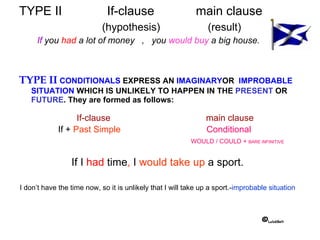
TYPE II  If-clause  main clause   (hypothesis)  (result)   If  you  had  a lot of money  ,  you  would buy  a big house . TYPE II  CONDITIONALS  EXPRESS AN  IMAGINARY OR  IMPROBABLE SITUATION  WHICH IS UNLIKELY TO HAPPEN IN THE  PRESENT  OR  FUTURE . They are formed as follows: If-clause  main clause   If +  Past Simple  Conditional WOULD / COULD +  BARE iNFINITIVE If I   had   time ,  I  would take up  a sport.   I don’t have the time now, so it is unlikely that I will take up a sport.- improbable situation   © Luís68elt
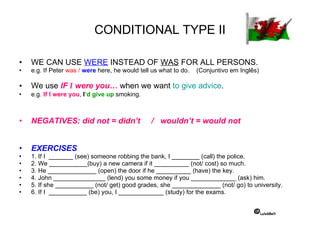
CONDITIONAL TYPE II WE CAN USE  WERE  INSTEAD OF  WAS  FOR ALL PERSONS. e.g. If Peter  was /  were  here, he would tell us what to do.  (Conjuntivo em Inglês) We use  IF  I  were you…  when we want  to give advice . e.g.  If I were you ,  I ’d give up  smoking. NEGATIVES: did not = didn’t  /  wouldn’t = would not  EXERCISES 1. If I  _______ (see) someone robbing the bank, I ________ (call) the police. 2. We ___________(buy) a new camera if it __________ (not/ cost) so much. 3. He ______________ (open) the door if he __________ (have) the key. 4. John _______________ (lend) you some money if you _____________ (ask) him. 5. If she ___________ (not/ get) good grades, she ______________ (not/ go) to university. 6. If I  ___________ (be) you, I _____________ (study) for the exams. © Luís68elt

Ifclauses i ii 8th form

  • 1.
    If – clausesConditionals type I and II There are three types of CONDITIONALS. Each type consists of two parts: the if-clause (hypothesis) which begins with the word If , and the main clause , which shows the result of the hypothesis. LONDON EYE BIG BEN © Luís68elt
  • 2.
    If-clause mainclause (hypothesis) (result) If you are late , you will miss the bus. When the if clause comes before the main clause, they are separated with a comma. When the main clause comes before the if-clause, then they are not separated by a comma. e.g. If Peter has time , he will come to visit us. Peter will come to visit us if he has time. TYPE I CONDITIONALS EXPRESS A REAL OR VERY PROBABLE SITUATION IN THE PRESENT OR FUTURE . They are formed as follows: Houses of Parliament © Luís68elt
  • 3.
    If-clause , main clause A. If + Present Simple Future Simple Present Simple Imperative can / must / may, etc + bare infinitive main clause (no comma) if-clause B. Future Simple If + Present Simple A. If you go to London, you will see the Big Ben. A.1. If the temperature falls below 0º C, water turns into ice. A.2. If you don’t understand , look at the example. A.3. If you go to Paris, you can see the Eiffel Tower. B. Mary will be a good student if she studies hard. NEGATIVES: DON’T= DO NOT DOESN’T= DOES NOT / WILL NOT = WON’T EXERCISES Complete with the 1st Conditional (A) and (B) 1. If Jane ___________ (have) money, she _______________ (go)to the Algarve. 2. If you ___________ (go) to bed late, you _______________ (be) tired in the morning. 3. If we _____________ (not / buy) it now, we ______________ (have) to get it later. 4. I ________________(give) you a hand if I ______________ (finish) work early. 5. Gary _____________ (not / pay) his rent if Sheila ____________ (not/return) the money she owes him. © Luís68elt
  • 4.
    TYPE II If-clause main clause (hypothesis) (result) If you had a lot of money , you would buy a big house . TYPE II CONDITIONALS EXPRESS AN IMAGINARY OR IMPROBABLE SITUATION WHICH IS UNLIKELY TO HAPPEN IN THE PRESENT OR FUTURE . They are formed as follows: If-clause main clause If + Past Simple Conditional WOULD / COULD + BARE iNFINITIVE If I had time , I would take up a sport. I don’t have the time now, so it is unlikely that I will take up a sport.- improbable situation © Luís68elt
  • 5.
    CONDITIONAL TYPE IIWE CAN USE WERE INSTEAD OF WAS FOR ALL PERSONS. e.g. If Peter was / were here, he would tell us what to do. (Conjuntivo em Inglês) We use IF I were you… when we want to give advice . e.g. If I were you , I ’d give up smoking. NEGATIVES: did not = didn’t / wouldn’t = would not EXERCISES 1. If I _______ (see) someone robbing the bank, I ________ (call) the police. 2. We ___________(buy) a new camera if it __________ (not/ cost) so much. 3. He ______________ (open) the door if he __________ (have) the key. 4. John _______________ (lend) you some money if you _____________ (ask) him. 5. If she ___________ (not/ get) good grades, she ______________ (not/ go) to university. 6. If I ___________ (be) you, I _____________ (study) for the exams. © Luís68elt