Objectives
1. Identifying the main features of a surface
profilometer.
2. Determining the arithmetic mean average (Ra) for
different depth of cut.
3. Understanding surface roughness standards.
All surfaces around us have their own characteristics, such as
surface texture, surface finish, and surface roughness.
The importance of studying surfaces and its characteristics comes
from Aesthetic reasons, safety issues since surfaces affect safety,
also friction and wear depend on surface characteristics, also
smooth surfaces make better electrical contacts, and finally
surfaces affect mechanical and physical properties.
There are special terms, ratings, symbols that used to describe
surfaces and permit designers, skilled mechanics, and other
workers to communicate.
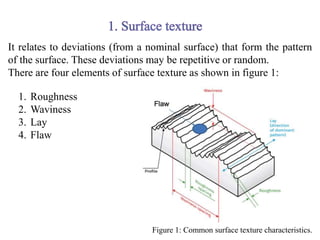
It relates to deviations (from a nominal surface) that form the pattern
of the surface. These deviations may be repetitive or random.
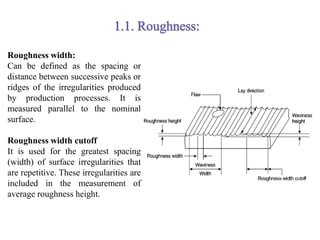
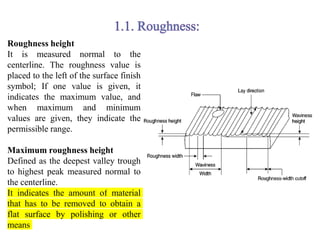
There are four elements of surface texture as shown in figure 1:
Figure 1: Common surface texture characteristics.
1. Roughness
2. Waviness
3. Lay
4. Flaw
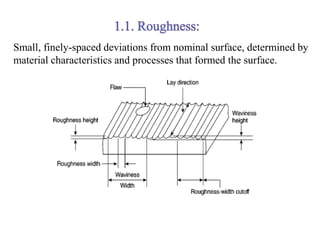
Small, finely-spaced deviations from nominal surface, determined by
material characteristics and processes that formed the surface.
Roughness width:
Can be defined as the spacing or
distance between successive peaks or
ridges of the irregularities produced
by production processes. It is
measured parallel to the nominal
surface.
Roughness width cutoff
It is used for the greatest spacing
(width) of surface irregularities that
are repetitive. These irregularities are
included in the measurement of
average roughness height.
Roughness height
It is measured normal to the
centerline. The roughness value is
placed to the left of the surface finish
symbol; If one value is given, it
indicates the maximum value, and
when maximum and minimum
values are given, they indicate the
permissible range.
Maximum roughness height
Defined as the deepest valley trough
to highest peak measured normal to
the centerline.
It indicates the amount of material
that has to be removed to obtain a
flat surface by polishing or other
means
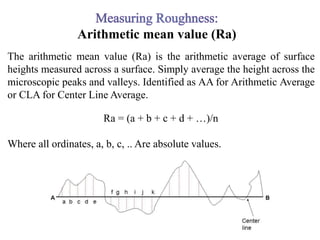
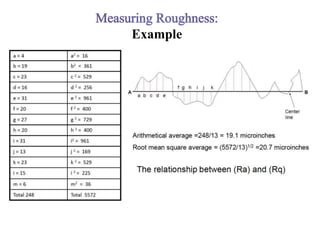
Arithmetic mean value (Ra)
The arithmetic mean value (Ra) is the arithmetic average of surface
heights measured across a surface. Simply average the height across the
microscopic peaks and valleys. Identified as AA for Arithmetic Average
or CLA for Center Line Average.
Ra = (a + b + c + d + …)/n
Where all ordinates, a, b, c, .. Are absolute values.
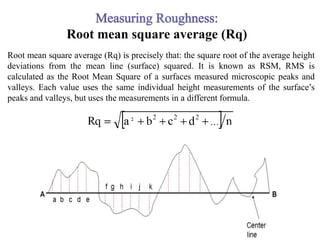
Root mean square average (Rq)
Root mean square average (Rq) is precisely that: the square root of the average height
deviations from the mean line (surface) squared. It is known as RSM, RMS is
calculated as the Root Mean Square of a surfaces measured microscopic peaks and
valleys. Each value uses the same individual height measurements of the surface’s
peaks and valleys, but uses the measurements in a different formula.
Example
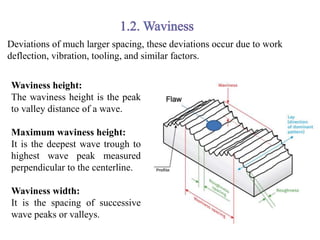
Deviations of much larger spacing, these deviations occur due to work
deflection, vibration, tooling, and similar factors.
Waviness height:
The waviness height is the peak
to valley distance of a wave.
Maximum waviness height:
It is the deepest wave trough to
highest wave peak measured
perpendicular to the centerline.
Waviness width:
It is the spacing of successive
wave peaks or valleys.
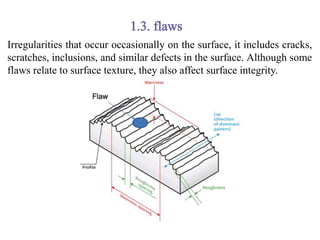
Irregularities that occur occasionally on the surface, it includes cracks,
scratches, inclusions, and similar defects in the surface. Although some
flaws relate to surface texture, they also affect surface integrity.
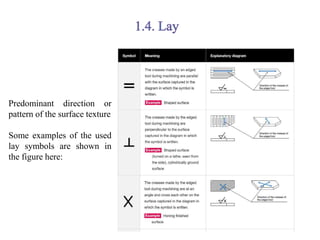
Predominant direction or
pattern of the surface texture
Some examples of the used
lay symbols are shown in
the figure here:
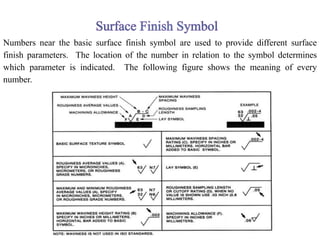
Numbers near the basic surface finish symbol are used to provide different surface
finish parameters. The location of the number in relation to the symbol determines
which parameter is indicated. The following figure shows the meaning of every
number.
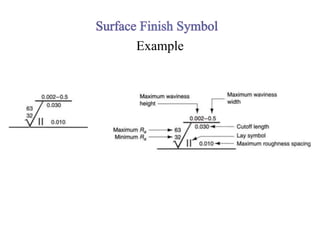
Example
1. Surface profilometer:
A variety of instruments are available for measuring surface
roughness and surface profiles. Most of these devices employ a
diamond stylus which is moved at a constant rate across the
surface, perpendicular to the lay pattern.
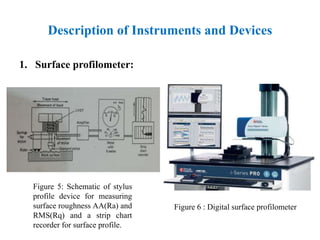
The rise and fall of the stylus is detected electronically, Figure 5,
amplified and recorded on a strip chart or processed
electronically to give the values of Ra or Rq on a scale by a
pointer or by digits for direct readings, Figure 6.
Description of Instruments and Devices
1. Surface profilometer:
Description of Instruments and Devices
Figure 5: Schematic of stylus
profile device for measuring
surface roughness AA(Ra) and
RMS(Rq) and a strip chart
recorder for surface profile.
Figure 6 : Digital surface profilometer
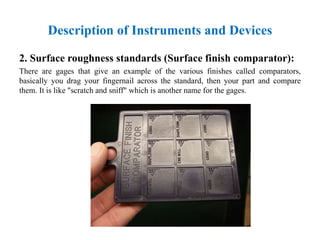
2. Surface roughness standards (Surface finish comparator):
There are gages that give an example of the various finishes called comparators,
basically you drag your fingernail across the standard, then your part and compare
them. It is like "scratch and sniff" which is another name for the gages.
Description of Instruments and Devices
Surface roughness
Extra notes
• Ra and Rq values alone cannot adequately describe the surface
because these values are averages. A few deep troughs, for
example, affect the roughness values.
• Two surfaces may have the same roughness value, but their
actual topography may be quite different.
• The difference in the surface profile can be significant in terms
of fatigue, friction, and the wear characteristics of a
manufactured products.
Surface roughness
Extra notes
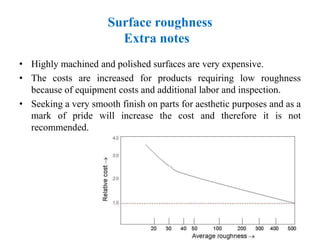
• Highly machined and polished surfaces are very expensive.
• The costs are increased for products requiring low roughness
because of equipment costs and additional labor and inspection.
• Seeking a very smooth finish on parts for aesthetic purposes and as a
mark of pride will increase the cost and therefore it is not
recommended.

IE 335 Experiment No.7.pptx

  • 2.
    Objectives 1. Identifying themain features of a surface profilometer. 2. Determining the arithmetic mean average (Ra) for different depth of cut. 3. Understanding surface roughness standards.
  • 3.
    All surfaces aroundus have their own characteristics, such as surface texture, surface finish, and surface roughness. The importance of studying surfaces and its characteristics comes from Aesthetic reasons, safety issues since surfaces affect safety, also friction and wear depend on surface characteristics, also smooth surfaces make better electrical contacts, and finally surfaces affect mechanical and physical properties. There are special terms, ratings, symbols that used to describe surfaces and permit designers, skilled mechanics, and other workers to communicate.
  • 4.
    It relates todeviations (from a nominal surface) that form the pattern of the surface. These deviations may be repetitive or random. There are four elements of surface texture as shown in figure 1: Figure 1: Common surface texture characteristics. 1. Roughness 2. Waviness 3. Lay 4. Flaw
  • 5.
    Small, finely-spaced deviationsfrom nominal surface, determined by material characteristics and processes that formed the surface.
  • 6.
    Roughness width: Can bedefined as the spacing or distance between successive peaks or ridges of the irregularities produced by production processes. It is measured parallel to the nominal surface. Roughness width cutoff It is used for the greatest spacing (width) of surface irregularities that are repetitive. These irregularities are included in the measurement of average roughness height.
  • 7.
    Roughness height It ismeasured normal to the centerline. The roughness value is placed to the left of the surface finish symbol; If one value is given, it indicates the maximum value, and when maximum and minimum values are given, they indicate the permissible range. Maximum roughness height Defined as the deepest valley trough to highest peak measured normal to the centerline. It indicates the amount of material that has to be removed to obtain a flat surface by polishing or other means
  • 8.
    Arithmetic mean value(Ra) The arithmetic mean value (Ra) is the arithmetic average of surface heights measured across a surface. Simply average the height across the microscopic peaks and valleys. Identified as AA for Arithmetic Average or CLA for Center Line Average. Ra = (a + b + c + d + …)/n Where all ordinates, a, b, c, .. Are absolute values.
  • 9.
    Root mean squareaverage (Rq) Root mean square average (Rq) is precisely that: the square root of the average height deviations from the mean line (surface) squared. It is known as RSM, RMS is calculated as the Root Mean Square of a surfaces measured microscopic peaks and valleys. Each value uses the same individual height measurements of the surface’s peaks and valleys, but uses the measurements in a different formula.
  • 10.
  • 11.
    Deviations of muchlarger spacing, these deviations occur due to work deflection, vibration, tooling, and similar factors. Waviness height: The waviness height is the peak to valley distance of a wave. Maximum waviness height: It is the deepest wave trough to highest wave peak measured perpendicular to the centerline. Waviness width: It is the spacing of successive wave peaks or valleys.
  • 12.
    Irregularities that occuroccasionally on the surface, it includes cracks, scratches, inclusions, and similar defects in the surface. Although some flaws relate to surface texture, they also affect surface integrity.
  • 13.
    Predominant direction or patternof the surface texture Some examples of the used lay symbols are shown in the figure here:
  • 14.
    Numbers near thebasic surface finish symbol are used to provide different surface finish parameters. The location of the number in relation to the symbol determines which parameter is indicated. The following figure shows the meaning of every number.
  • 15.
  • 16.
    1. Surface profilometer: Avariety of instruments are available for measuring surface roughness and surface profiles. Most of these devices employ a diamond stylus which is moved at a constant rate across the surface, perpendicular to the lay pattern. The rise and fall of the stylus is detected electronically, Figure 5, amplified and recorded on a strip chart or processed electronically to give the values of Ra or Rq on a scale by a pointer or by digits for direct readings, Figure 6. Description of Instruments and Devices
  • 17.
    1. Surface profilometer: Descriptionof Instruments and Devices Figure 5: Schematic of stylus profile device for measuring surface roughness AA(Ra) and RMS(Rq) and a strip chart recorder for surface profile. Figure 6 : Digital surface profilometer
  • 18.
    2. Surface roughnessstandards (Surface finish comparator): There are gages that give an example of the various finishes called comparators, basically you drag your fingernail across the standard, then your part and compare them. It is like "scratch and sniff" which is another name for the gages. Description of Instruments and Devices
  • 19.
    Surface roughness Extra notes •Ra and Rq values alone cannot adequately describe the surface because these values are averages. A few deep troughs, for example, affect the roughness values. • Two surfaces may have the same roughness value, but their actual topography may be quite different. • The difference in the surface profile can be significant in terms of fatigue, friction, and the wear characteristics of a manufactured products.
  • 20.
    Surface roughness Extra notes •Highly machined and polished surfaces are very expensive. • The costs are increased for products requiring low roughness because of equipment costs and additional labor and inspection. • Seeking a very smooth finish on parts for aesthetic purposes and as a mark of pride will increase the cost and therefore it is not recommended.