Coordination: Purpose, Actors
and Administrative Challenges

                  15 September 2011
               trESS Irish seminar, Dublin
      Pr. J.-Ph. Lhernould, TRESS visiting expert
Impact of national rules on migrants

• Migration patterns
  – EU citizen having his professional career in at least two Member
    States (MS) and claiming retirement pension(s)
  – EU citizen residing in one MS and working in another one
  – EU citizen working in one MS and family residing in another MS
  – EU citizen staying in another MS for holidays or for a short work
    mission
  – EU citizen having his professional career in one or more MS and
    retiring in another MS
  – EU citizen losing job in one MS and seeking job in another MS
  – EU non-active person moving to another MS
  – etc.
Impact of national rules on migrants

• National schemes are based on the principle of
  territoriality
• Cross-border situations may therefore create
  problems for migrants
   •   No affiliation or double affiliation
   •   No entitlement to benefits
   •   Fragmented contribution record
   •   Loss of benefits if move to another country
Impact of national rules on migrants

• Coordination rules aim at facilitating international
  careers and mobility within the EU
   – Coordination rules are intended to prevent the migrant
     worker, as a result of his migration from one MS to
     another, from losing the benefit of his periods of
     employment and thus being placed at a disadvantage in
     relation to the position in which he would have been if he
     had completed his entire career in only one MS
   – Coordination rules facilitate mobility of non-active persons
     (pensioners, students, tourists, etc.) by ensuring that their
     mobility will not affect their right to be insured or to be
     entitled to social security benefits
Free movement of workers and citizens

• Coordination of social security introduced in 1958

• To remove obstacles to freedom of movement of
  workers between Member States

• In support of objectives of the Treaty of Rome
  (internal market)
Harmonisation versus coordination

• Drafters of Treaty of Rome considered two
  approaches to solving the problems of social security
  for people exercising their right of free movement
  within the Community:
   -   One to harmonise the different social security systems of
       the member countries
   -   The other to coordinate them

• Opted for coordination – coordination links social
  security systems in such a way that national
  competence is preserved
The Treaty, Art.48
• The European Parliament and the Council shall (…) adopt
  such measures in the field of social security as necessary
  to provide freedom of movement for workers; to this
  end, they shall make arrangements to secure for
  employed and self- employed migrant workers and their
  dependants:
   – (a) aggregation, for the purpose of acquiring and retaining the
     right to benefit and of calculating the amount of benefit, of all
     periods taken into account under the laws of the several
     countries;
   – (b) payment of benefits to persons resident in the territories of
     Member States.
II. Actors
The EU social security legislation
•Co-decision procedure:
   •   Council: social security ministries of 27
   •   European Parliament
   •   On equal footing: 2 readings + conciliation committee
   •   + Opinion of national Parliaments: eight-week period
       shall elapse between a draft legislative act being made
       available to national Parliaments and the date when it is
       placed on a provisional agenda for the Council for its
       adoption of a position under a legislative procedure
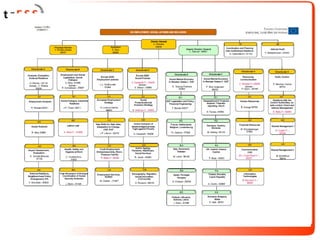
European Commission
• Put forward legislative proposals
– Internal resources: DG Employment, Social Affairs and Inclusion, unit B4
  (free movement of workers Coordination of social security schemes)…but
  other DGs’ interested in social security
– External resources: reports by independent experts

• Establishes institutional links:
– between Council and Parliament
– With the Administrative Commission (AC)

• Guardian of the Treaties: ensures Regulations
  are implemented
Administrative Commission
• The AC for the Coordination of Social Security
  Systems (art. 77 of 883/2004):
   – composed of a government representative of each of the MS,
     assisted, where necessary, by expert advisers.
   – Representatives of the EC attend the meetings in an advisory capacity.
   – Secretariat provided by the EC.
• Deals with administrative questions and questions of
  interpretation arising from the coordination
  regulation.
• Facilitates the uniform application of regulations, in
  particular by promoting exchange of experience and
  best administrative practices
Administrative Commission
• Helps to reach agreements on questions of principle
  which have arisen between the MS
• Decides on the technical and procedural details for
  exchanging information between MS’ institutions,
  which is necessary for awarding/paying benefits or
  for determining the legislation applicable
• Need for amendments and changes to the
  coordination regulation can be discussed
• Makes interpretative decisions and
  recommendations
Advisory Committee
• Composition:
  – one government representative / MS
  – one representative from the trade unions / MS
  – one representative from the employers' organisations /
    MS
• Powers and functions:
  – to examine general questions or questions of principle and
    problems arising from the implementation of the
    regulations
  – to formulate opinions on such matters for the
    Administrative Commission and proposals for any revisions
    of the said provisions
III. Administrative challenges
• Principle of good administration
  • Authorities and institutions of the Member States shall lend one
    another their good offices and act as though implementing their own
    legislation
  • Authorities and institutions of the Member States may communicate
    directly with one another and with the persons involved or their
    representatives
  • Institutions and persons shall have a duty of mutual information and
    cooperation to ensure the correct implementation of this Regulation
  • The institutions, in accordance with the principle of good
    administration, shall respond to all queries within a reasonable
    period of time and shall in this connection provide the persons
    concerned with any information required for exercising the rights
    conferred on them by this Regulation (Art, 76 BR)
Good administration


• Persons concerned must inform the institutions of the competent
  Member State and of the Member State of residence as soon as
  possible of any change in their personal or family situation which
  affects their right to benefits under this Regulation

• Authorities, institutions and tribunals of one Member State may not
  reject applications or other documents submitted to them on the
  grounds that they are written in an official language of another
  Member State (Art, 76 BR)
Good administration
• Backed up by electronic exchange of data (EESSI)
   •   to exchange social security information only by electronic means
   •   a communication system allowing national social security institutions
       to exchange social security information in a secure manner concerning
       persons covered by the regulation. Information is exchanged via
       structured electronic documents (SED), replacing the paper E-forms
       used under old regulation.
– EESSI consists of 3 parts:
   •   a central unit (CN) to be hosted in the Commission Data Centre and
       including the EESSI Directory Services
   •   the international parts of the access points of the Member States (up
       to 5 for each Member State) which are connected via a safe network
       with the CN and through which all electronic data have to be
       exchanged between Member States;
   •   an application to be deployed in the national administrations.
Administrative challenges: national level

Organisational questions
   • more intense collaboration with other MS
   • bad organisation can be more harmful than bad
     legislation: need for modernising local, regional and
     central administration.
   • bad national coordination also has an impact on
     international coordination: lot of administration is
     required (eg. sickness benefits) so administration needs
     to be prepared (data exchange) with indication of
     competent institutions (who delivers certificates ?
     centralised or decentralised ? )
Administrative challenges : national level

Staff requirement
   • increase of people involved
   • workload and involvement in several fields (see eg. Adm.
     Com, Audit board, Consultative Committee, Technical
     Committee, Social working Party council, relation with
     bilateral countries
   • follow-up of ECJ case law and EU political agenda
     (increasing soft law = non binding legislation)
Administrative challenges : national level

• Administration needs to be prepared to handle
  international files, sent information, language
  aspects, arrange financial matters

• All other fields of social security (equal
  treatment, supplementary pensions, SPC,
  Missoc, impact internal market) ... closely related
  to Regulations, so internal structure might reflect
  that and not artificial split
Where to find practical information?

• DG EMPL:
  http://ec.europa.eu/social/main.jsp?langId=en&catId=849
• TRESS:
  – http://www.tress-network.org/
• Brochure: “The EU provisions on social
  security - Your rights when moving within the
  European Union - Update 2010”
  – http://ec.europa.eu/social/main.jsp?catId=738&langId=en&pub

2011 - Coordination: Purpose, Actors and Administrative Challenges

  • 1.
    Coordination: Purpose, Actors andAdministrative Challenges 15 September 2011 trESS Irish seminar, Dublin Pr. J.-Ph. Lhernould, TRESS visiting expert
  • 2.
    Impact of nationalrules on migrants • Migration patterns – EU citizen having his professional career in at least two Member States (MS) and claiming retirement pension(s) – EU citizen residing in one MS and working in another one – EU citizen working in one MS and family residing in another MS – EU citizen staying in another MS for holidays or for a short work mission – EU citizen having his professional career in one or more MS and retiring in another MS – EU citizen losing job in one MS and seeking job in another MS – EU non-active person moving to another MS – etc.
  • 3.
    Impact of nationalrules on migrants • National schemes are based on the principle of territoriality • Cross-border situations may therefore create problems for migrants • No affiliation or double affiliation • No entitlement to benefits • Fragmented contribution record • Loss of benefits if move to another country
  • 4.
    Impact of nationalrules on migrants • Coordination rules aim at facilitating international careers and mobility within the EU – Coordination rules are intended to prevent the migrant worker, as a result of his migration from one MS to another, from losing the benefit of his periods of employment and thus being placed at a disadvantage in relation to the position in which he would have been if he had completed his entire career in only one MS – Coordination rules facilitate mobility of non-active persons (pensioners, students, tourists, etc.) by ensuring that their mobility will not affect their right to be insured or to be entitled to social security benefits
  • 5.
    Free movement ofworkers and citizens • Coordination of social security introduced in 1958 • To remove obstacles to freedom of movement of workers between Member States • In support of objectives of the Treaty of Rome (internal market)
  • 6.
    Harmonisation versus coordination •Drafters of Treaty of Rome considered two approaches to solving the problems of social security for people exercising their right of free movement within the Community: - One to harmonise the different social security systems of the member countries - The other to coordinate them • Opted for coordination – coordination links social security systems in such a way that national competence is preserved
  • 7.
    The Treaty, Art.48 •The European Parliament and the Council shall (…) adopt such measures in the field of social security as necessary to provide freedom of movement for workers; to this end, they shall make arrangements to secure for employed and self- employed migrant workers and their dependants: – (a) aggregation, for the purpose of acquiring and retaining the right to benefit and of calculating the amount of benefit, of all periods taken into account under the laws of the several countries; – (b) payment of benefits to persons resident in the territories of Member States.
  • 8.
    II. Actors The EUsocial security legislation •Co-decision procedure: • Council: social security ministries of 27 • European Parliament • On equal footing: 2 readings + conciliation committee • + Opinion of national Parliaments: eight-week period shall elapse between a draft legislative act being made available to national Parliaments and the date when it is placed on a provisional agenda for the Council for its adoption of a position under a legislative procedure
  • 9.
    European Commission • Putforward legislative proposals – Internal resources: DG Employment, Social Affairs and Inclusion, unit B4 (free movement of workers Coordination of social security schemes)…but other DGs’ interested in social security – External resources: reports by independent experts • Establishes institutional links: – between Council and Parliament – With the Administrative Commission (AC) • Guardian of the Treaties: ensures Regulations are implemented
  • 11.
    Administrative Commission • TheAC for the Coordination of Social Security Systems (art. 77 of 883/2004): – composed of a government representative of each of the MS, assisted, where necessary, by expert advisers. – Representatives of the EC attend the meetings in an advisory capacity. – Secretariat provided by the EC. • Deals with administrative questions and questions of interpretation arising from the coordination regulation. • Facilitates the uniform application of regulations, in particular by promoting exchange of experience and best administrative practices
  • 12.
    Administrative Commission • Helpsto reach agreements on questions of principle which have arisen between the MS • Decides on the technical and procedural details for exchanging information between MS’ institutions, which is necessary for awarding/paying benefits or for determining the legislation applicable • Need for amendments and changes to the coordination regulation can be discussed • Makes interpretative decisions and recommendations
  • 13.
    Advisory Committee • Composition: – one government representative / MS – one representative from the trade unions / MS – one representative from the employers' organisations / MS • Powers and functions: – to examine general questions or questions of principle and problems arising from the implementation of the regulations – to formulate opinions on such matters for the Administrative Commission and proposals for any revisions of the said provisions
  • 14.
    III. Administrative challenges •Principle of good administration • Authorities and institutions of the Member States shall lend one another their good offices and act as though implementing their own legislation • Authorities and institutions of the Member States may communicate directly with one another and with the persons involved or their representatives • Institutions and persons shall have a duty of mutual information and cooperation to ensure the correct implementation of this Regulation • The institutions, in accordance with the principle of good administration, shall respond to all queries within a reasonable period of time and shall in this connection provide the persons concerned with any information required for exercising the rights conferred on them by this Regulation (Art, 76 BR)
  • 15.
    Good administration • Personsconcerned must inform the institutions of the competent Member State and of the Member State of residence as soon as possible of any change in their personal or family situation which affects their right to benefits under this Regulation • Authorities, institutions and tribunals of one Member State may not reject applications or other documents submitted to them on the grounds that they are written in an official language of another Member State (Art, 76 BR)
  • 16.
    Good administration • Backedup by electronic exchange of data (EESSI) • to exchange social security information only by electronic means • a communication system allowing national social security institutions to exchange social security information in a secure manner concerning persons covered by the regulation. Information is exchanged via structured electronic documents (SED), replacing the paper E-forms used under old regulation. – EESSI consists of 3 parts: • a central unit (CN) to be hosted in the Commission Data Centre and including the EESSI Directory Services • the international parts of the access points of the Member States (up to 5 for each Member State) which are connected via a safe network with the CN and through which all electronic data have to be exchanged between Member States; • an application to be deployed in the national administrations.
  • 17.
    Administrative challenges: nationallevel Organisational questions • more intense collaboration with other MS • bad organisation can be more harmful than bad legislation: need for modernising local, regional and central administration. • bad national coordination also has an impact on international coordination: lot of administration is required (eg. sickness benefits) so administration needs to be prepared (data exchange) with indication of competent institutions (who delivers certificates ? centralised or decentralised ? )
  • 18.
    Administrative challenges :national level Staff requirement • increase of people involved • workload and involvement in several fields (see eg. Adm. Com, Audit board, Consultative Committee, Technical Committee, Social working Party council, relation with bilateral countries • follow-up of ECJ case law and EU political agenda (increasing soft law = non binding legislation)
  • 19.
    Administrative challenges :national level • Administration needs to be prepared to handle international files, sent information, language aspects, arrange financial matters • All other fields of social security (equal treatment, supplementary pensions, SPC, Missoc, impact internal market) ... closely related to Regulations, so internal structure might reflect that and not artificial split
  • 20.
    Where to findpractical information? • DG EMPL: http://ec.europa.eu/social/main.jsp?langId=en&catId=849 • TRESS: – http://www.tress-network.org/ • Brochure: “The EU provisions on social security - Your rights when moving within the European Union - Update 2010” – http://ec.europa.eu/social/main.jsp?catId=738&langId=en&pub