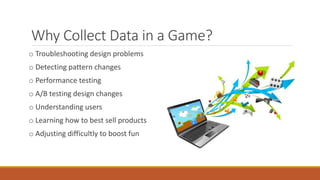
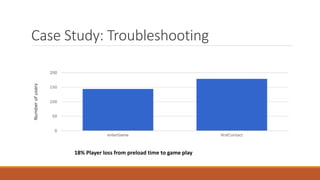
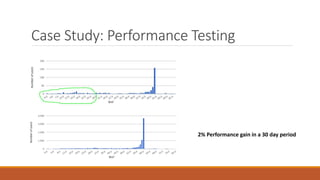
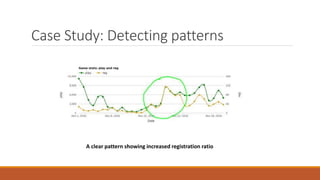
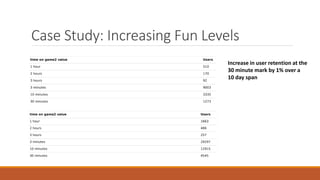
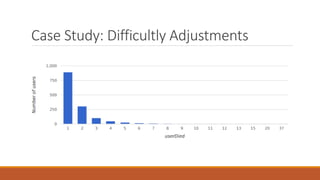
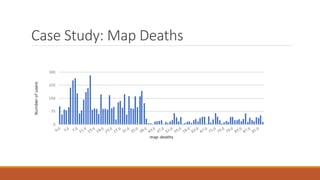
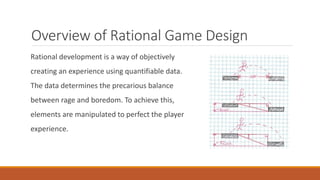
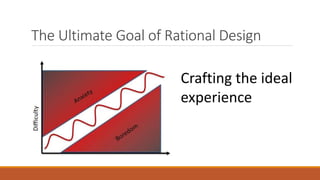
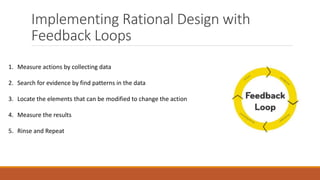
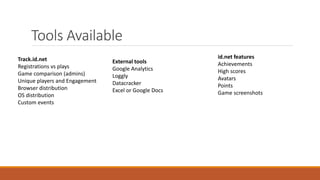
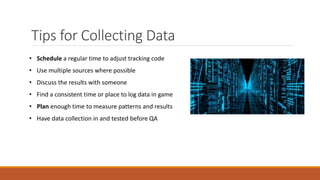
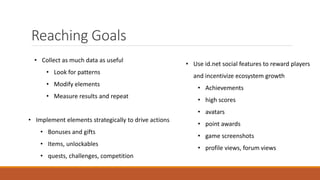
This document discusses how game developers can use data collection tools to improve their games. It provides examples of how data collection can help with troubleshooting design problems, performance testing, detecting usage patterns, and adjusting difficulty levels. The document also outlines the key elements of rational game design, which uses quantifiable data to balance challenge and fun. It recommends collecting a variety of usage data, looking for patterns, modifying game elements, and repeating the process in an ongoing feedback loop to craft the ideal player experience. Finally, it promotes the tools on id.net for tracking user registrations, engagement, and implementing achievements/leaderboards to further incentivize player participation.





![[Pandora 22] Boosting Game Design with Analytics - Nikola Vasiljevic](https://cdn.slidesharecdn.com/ss_thumbnails/nikolavasiljevic-boostinggamedeswithanalytics-221129222239-b407c260-thumbnail.jpg?width=640&height=640&fit=bounds)


