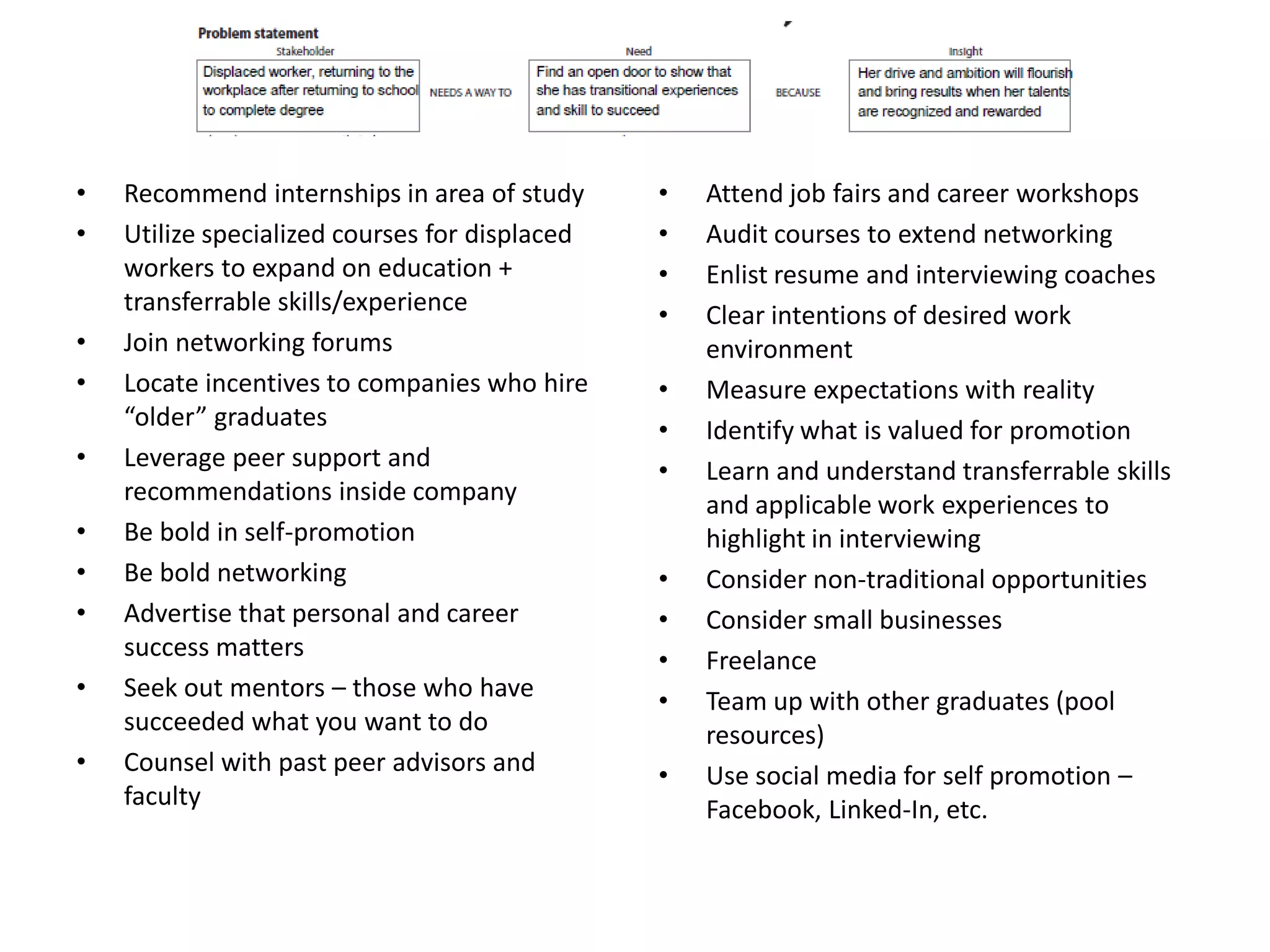
• Recommend internships in area of study
• Utilize specialized courses for displaced
workers to expand on education +
transferrable skills/experience
• Join networking forums
• Locate incentives to companies who hire
“older” graduates
• Leverage peer support and
recommendations inside company
• Be bold in self-promotion
• Be bold networking
• Advertise that personal and career
success matters
• Seek out mentors – those who have
succeeded what you want to do
• Counsel with past peer advisors and
faculty
• Attend job fairs and career workshops
• Audit courses to extend networking
• Enlist resume and interviewing coaches
• Clear intentions of desired work
environment
• Measure expectations with reality
• Identify what is valued for promotion
• Learn and understand transferrable skills
and applicable work experiences to
highlight in interviewing
• Consider non-traditional opportunities
• Consider small businesses
• Freelance
• Team up with other graduates (pool
resources)
• Use social media for self promotion –
Facebook, Linked-In, etc.
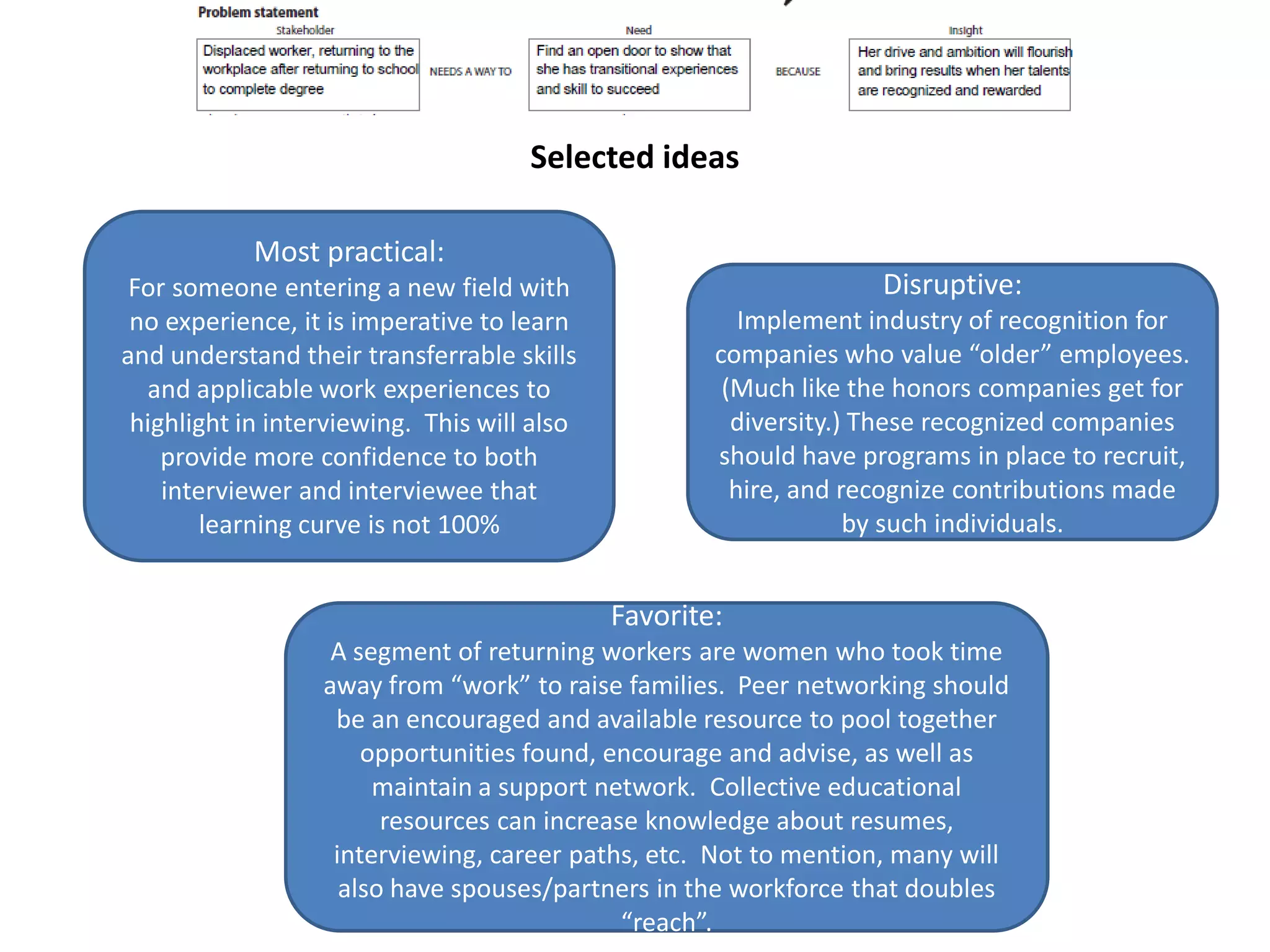
Most practical:
For someone entering a new field with
no experience, it is imperative to learn
and understand their transferrable skills
and applicable work experiences to
highlight in interviewing. This will also
provide more confidence to both
interviewer and interviewee that
learning curve is not 100%
Disruptive:
Implement industry of recognition for
companies who value “older” employees.
(Much like the honors companies get for
diversity.) These recognized companies
should have programs in place to recruit,
hire, and recognize contributions made
by such individuals.
Favorite:
A segment of returning workers are women who took time
away from “work” to raise families. Peer networking should
be an encouraged and available resource to pool together
opportunities found, encourage and advise, as well as
maintain a support network. Collective educational
resources can increase knowledge about resumes,
interviewing, career paths, etc. Not to mention, many will
also have spouses/partners in the workforce that doubles
“reach”.
Selected ideas

Ideate design thinking

  • 1.
    • Recommend internshipsin area of study • Utilize specialized courses for displaced workers to expand on education + transferrable skills/experience • Join networking forums • Locate incentives to companies who hire “older” graduates • Leverage peer support and recommendations inside company • Be bold in self-promotion • Be bold networking • Advertise that personal and career success matters • Seek out mentors – those who have succeeded what you want to do • Counsel with past peer advisors and faculty • Attend job fairs and career workshops • Audit courses to extend networking • Enlist resume and interviewing coaches • Clear intentions of desired work environment • Measure expectations with reality • Identify what is valued for promotion • Learn and understand transferrable skills and applicable work experiences to highlight in interviewing • Consider non-traditional opportunities • Consider small businesses • Freelance • Team up with other graduates (pool resources) • Use social media for self promotion – Facebook, Linked-In, etc.
  • 2.
    Most practical: For someoneentering a new field with no experience, it is imperative to learn and understand their transferrable skills and applicable work experiences to highlight in interviewing. This will also provide more confidence to both interviewer and interviewee that learning curve is not 100% Disruptive: Implement industry of recognition for companies who value “older” employees. (Much like the honors companies get for diversity.) These recognized companies should have programs in place to recruit, hire, and recognize contributions made by such individuals. Favorite: A segment of returning workers are women who took time away from “work” to raise families. Peer networking should be an encouraged and available resource to pool together opportunities found, encourage and advise, as well as maintain a support network. Collective educational resources can increase knowledge about resumes, interviewing, career paths, etc. Not to mention, many will also have spouses/partners in the workforce that doubles “reach”. Selected ideas