Globalization: Introduction and Overview
What is Globalization? Globalization: A move toward a more  integrated  and  interdependent  economy Facets of Globalization: Markets and Production
Facets of Globalization Globalization of Markets : the merging of historically distinct and separate national markets into one huge global marketplace Globalization of Production : Sourcing of goods and services from locations around the globe to take advantage of national differences in the cost and quality of factors of production
Drivers of Globalization Declining Trade and Investment barriers Technological Change
Declining barriers GATT  WTO Trade barriers eliminated over time.  This has resulted in a remarkable increase in world trade.
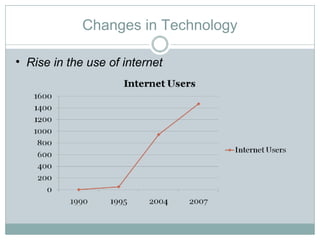
Changes in Technology Rise in the use of internet
Changing Demographics of Global Economy 4 Facts from the 1960’s that changed: US dominance in World Economy US Dominance in World FDI Dominance of large US Multinational firms Communist national markets off limits
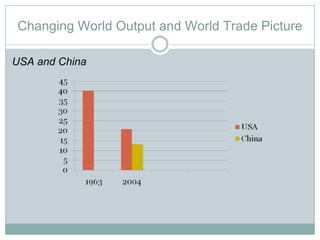
Changing World Output and World Trade Picture USA and China
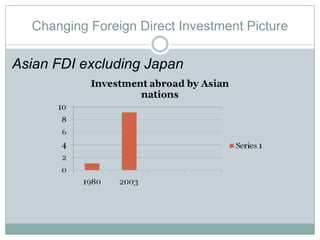
Changing Foreign Direct Investment Picture Asian FDI excluding Japan
Changing Nature of Multinational Enterprise Multinational companies emerging from countries other than USA/Europe/Japan Smaller firms engaging in multinational operations due to lowered costs through internet
Evolution of Commercial Institutions Economic activity is the basis for social relationships. - - True or false? Discuss. Past basis for societies:  Hunting and Gathering Agriculture Industrialization
Evolution of Commercial Institutions 3 notable institutions of Agri era: Agricultural landlords/barons Military Religious class
Changing World Order
Global Economy of the 21 st  Century Increasing volume of cross-border trade Adoption of liberal economic policies Deregulation Lowering of trade barriers Acceptance of market economy by communist and socialist nations
Globalization Debate Is globalization (shift toward a more integrated and interdependent economy) a good thing?
Anti-Globalization Protests Reasons for anti-globalization protests: That wages are pushed lower Jobs ‘exported’ to other countries Detrimental impacts on the environment Globalization promotes ‘colonization’ by other means
Globalization, Jobs and Income Does Globalization increase jobs and income or is it the reverse? PLUS - Cheaper goods free up resources for use to purchase other goods MINUS – Real wages, adjusted for inflation, for the average lowest-income families fell by 6% between 1980 - 2000
Globalization, Labor Policies and the Environment Criticism of Globalization: Manufacturers move to places where they have fewer environmental restrictions.  Pollution rates increase  Misuse and abuse of labor Carpet industry workers in Pakistan Counter is: As per capita income increases, emission levels decrease
Globalization and the world’s poor Gap between rich and poor increasing: In 1870 average IPC in 17 richest was 2.4 times of others In 1990 the same group was 4.5 times as rich as rest
Managing the Global Marketplace Challenges faced by an international business (any firm that engages in international trade or investment).  Challenges in: Use of Currencies Cultural understanding Legal and political understanding Historical understanding

IBM Lecture 1

  • 1.
  • 2.
    What is Globalization?Globalization: A move toward a more integrated and interdependent economy Facets of Globalization: Markets and Production
  • 3.
    Facets of GlobalizationGlobalization of Markets : the merging of historically distinct and separate national markets into one huge global marketplace Globalization of Production : Sourcing of goods and services from locations around the globe to take advantage of national differences in the cost and quality of factors of production
  • 4.
    Drivers of GlobalizationDeclining Trade and Investment barriers Technological Change
  • 5.
    Declining barriers GATT WTO Trade barriers eliminated over time. This has resulted in a remarkable increase in world trade.
  • 6.
    Changes in TechnologyRise in the use of internet
  • 7.
    Changing Demographics ofGlobal Economy 4 Facts from the 1960’s that changed: US dominance in World Economy US Dominance in World FDI Dominance of large US Multinational firms Communist national markets off limits
  • 8.
    Changing World Outputand World Trade Picture USA and China
  • 9.
    Changing Foreign DirectInvestment Picture Asian FDI excluding Japan
  • 10.
    Changing Nature ofMultinational Enterprise Multinational companies emerging from countries other than USA/Europe/Japan Smaller firms engaging in multinational operations due to lowered costs through internet
  • 11.
    Evolution of CommercialInstitutions Economic activity is the basis for social relationships. - - True or false? Discuss. Past basis for societies: Hunting and Gathering Agriculture Industrialization
  • 12.
    Evolution of CommercialInstitutions 3 notable institutions of Agri era: Agricultural landlords/barons Military Religious class
  • 13.
  • 14.
    Global Economy ofthe 21 st Century Increasing volume of cross-border trade Adoption of liberal economic policies Deregulation Lowering of trade barriers Acceptance of market economy by communist and socialist nations
  • 15.
    Globalization Debate Isglobalization (shift toward a more integrated and interdependent economy) a good thing?
  • 16.
    Anti-Globalization Protests Reasonsfor anti-globalization protests: That wages are pushed lower Jobs ‘exported’ to other countries Detrimental impacts on the environment Globalization promotes ‘colonization’ by other means
  • 17.
    Globalization, Jobs andIncome Does Globalization increase jobs and income or is it the reverse? PLUS - Cheaper goods free up resources for use to purchase other goods MINUS – Real wages, adjusted for inflation, for the average lowest-income families fell by 6% between 1980 - 2000
  • 18.
    Globalization, Labor Policiesand the Environment Criticism of Globalization: Manufacturers move to places where they have fewer environmental restrictions. Pollution rates increase Misuse and abuse of labor Carpet industry workers in Pakistan Counter is: As per capita income increases, emission levels decrease
  • 19.
    Globalization and theworld’s poor Gap between rich and poor increasing: In 1870 average IPC in 17 richest was 2.4 times of others In 1990 the same group was 4.5 times as rich as rest
  • 20.
    Managing the GlobalMarketplace Challenges faced by an international business (any firm that engages in international trade or investment). Challenges in: Use of Currencies Cultural understanding Legal and political understanding Historical understanding