Lecture II: Country Factors
Political Systems: Collectivism Collectivisim: refers to a political system that stresses the primacy of collective goals over individual goals. Socialism: State owns means of production so that it can fully compensate workers for their labor Communists vs. Social Democrats Communists: socialism can be achieved only through violent revolution and totalitarian dictatorship Social democrats: socialism can be achieved by democratic means
Political Systems: Individualism Individualism: Philosophy that an individual should have freedom in his or her economic and political pursuits Tenets of individualism: Guaranteed individual freedom and self-expression Welfare of society is best served by letting people pursue their own economic self interest
Democracy and Totalitarianism Democracy : a political system in which government is by the people, exercised either directly or through elected representatives Totalitarianism:  form of government in which one person or political party exercises absolute control over all spheres of human life and prohibits opposing political parties
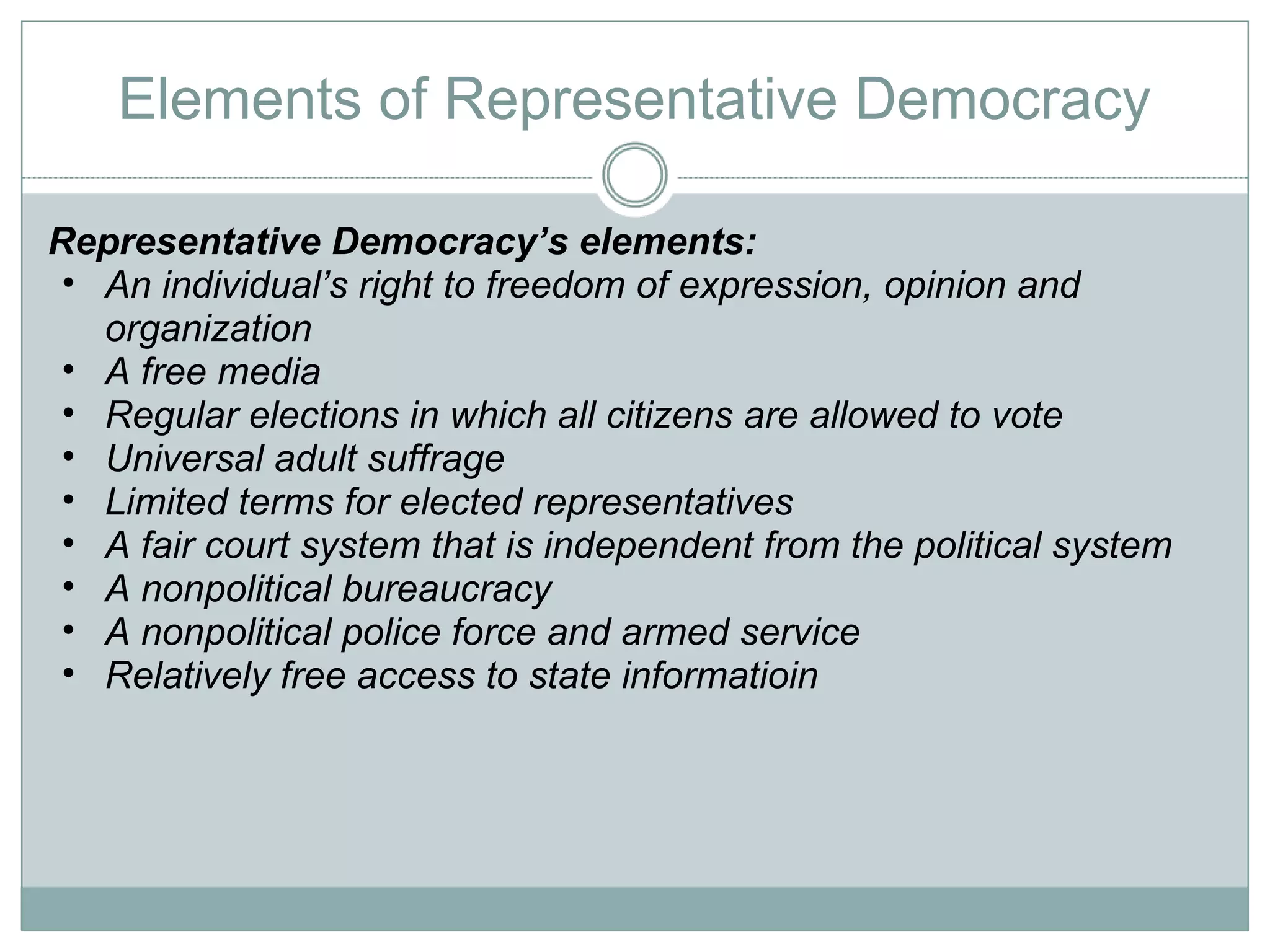
Elements of Representative Democracy Representative Democracy’s elements: An individual’s right to freedom of expression, opinion and organization A free media Regular elections in which all citizens are allowed to vote Universal adult suffrage Limited terms for elected representatives A fair court system that is independent from the political system A nonpolitical bureaucracy A nonpolitical police force and armed service Relatively free access to state informatioin
4 forms of Totalitarianism Communist Totalitarianism Theocratic Totalitarianism Tribal Totalitarianism Right-wing Totalitarianism
Economic Systems Comparison:  Market, Command, Mixed Market Economy :  All productive activities are privately owned, as opposed to being owned by the state.  Goods and services produced by the country are not planned by anyone Production is determined by the interaction of supply and demand
Economic Systems Comparison:  Market, Command, Mixed Command Economy :  The goods and services, their quantity and prices are all planned by the government Objective of the command economy: to allocate resources for ‘the good of society’.
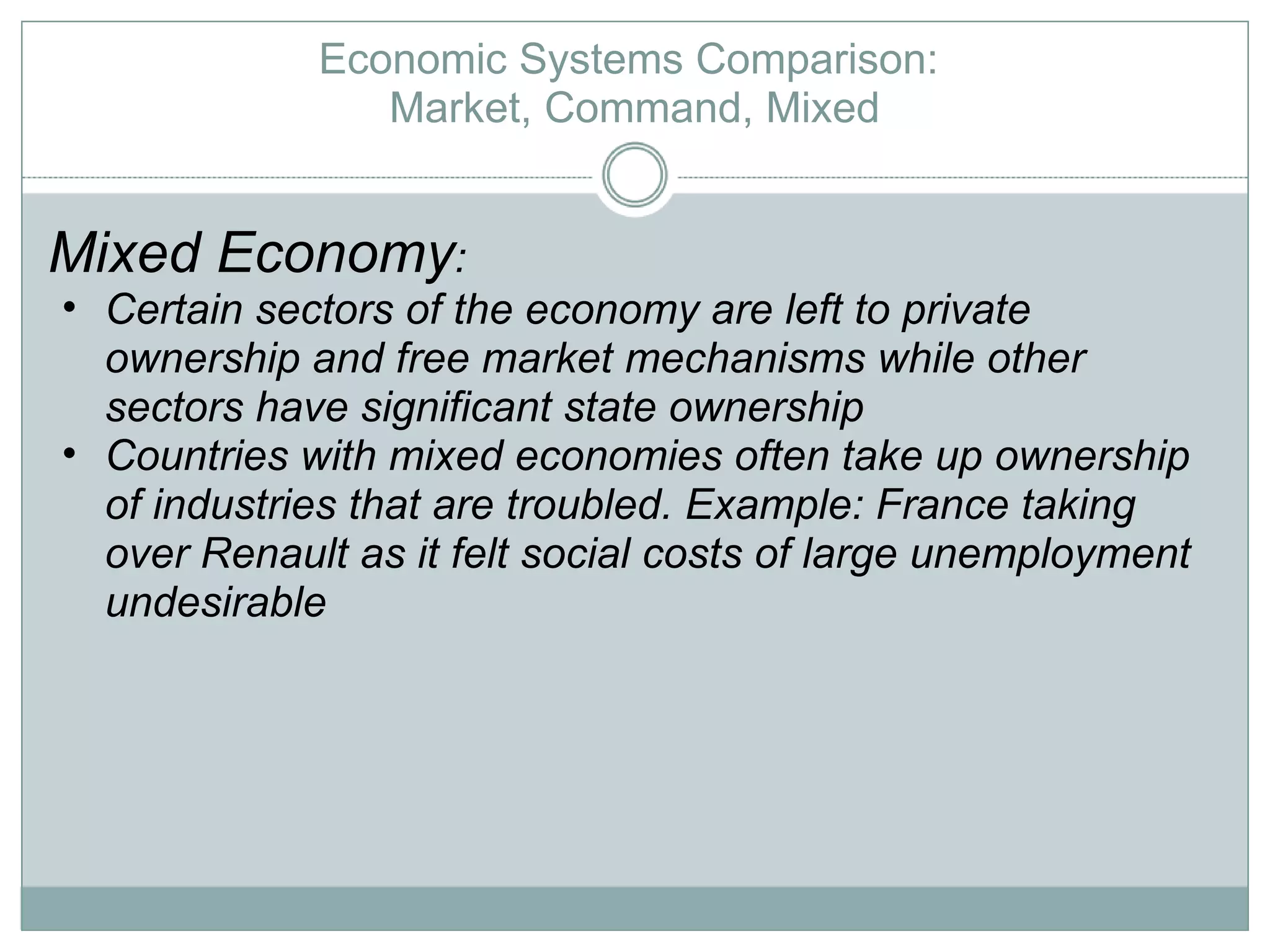
Economic Systems Comparison:  Market, Command, Mixed Mixed Economy :  Certain sectors of the economy are left to private ownership and free market mechanisms while other sectors have significant state ownership Countries with mixed economies often take up ownership of industries that are troubled. Example: France taking over Renault as it felt social costs of large unemployment undesirable
Legal Systems: Property Rights Legal System : refers to the  rules , or laws, that regulate behavior along with the  processes  by which the laws are enforced and through which redress for grievances is obtained
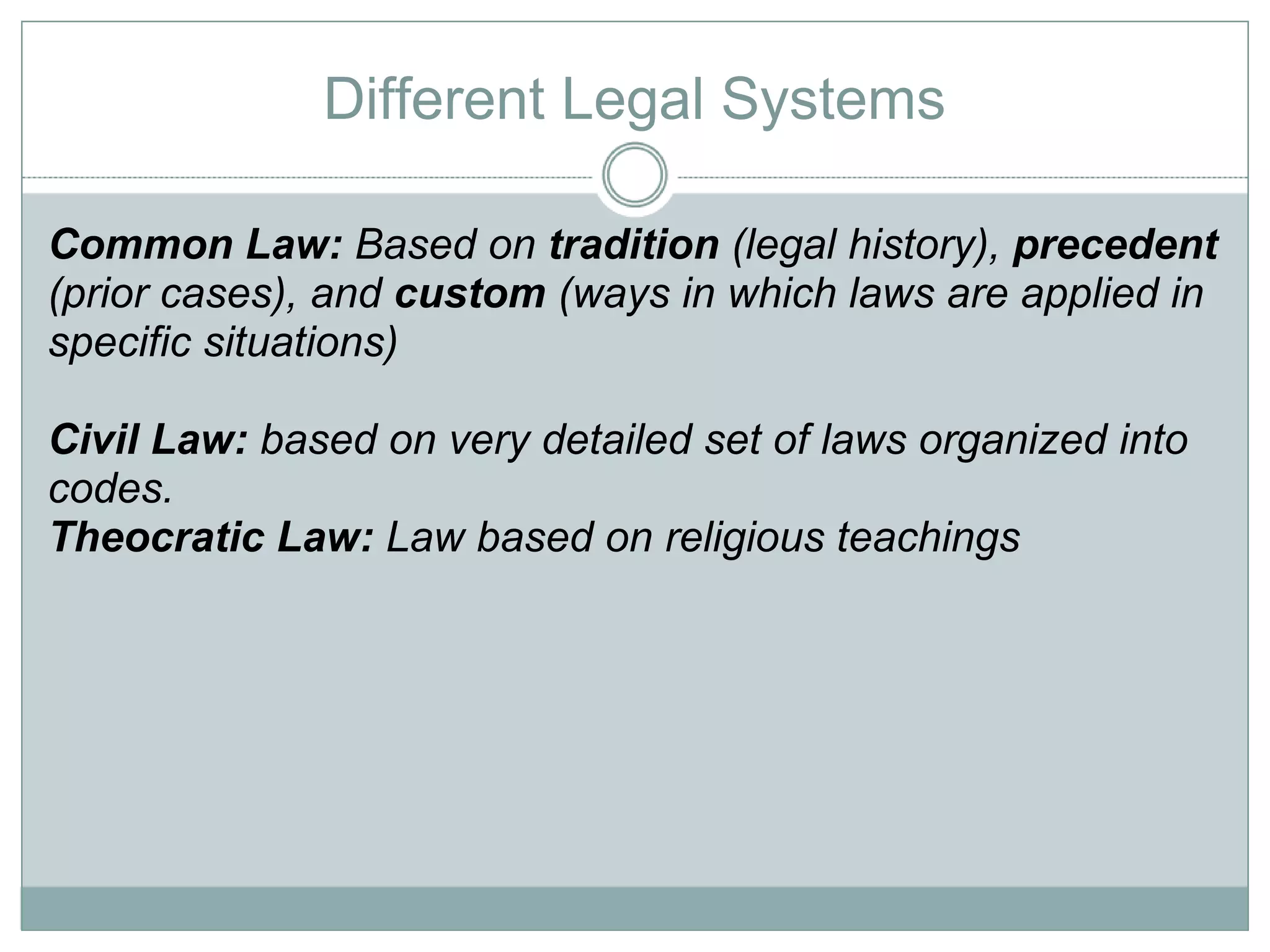
Different Legal Systems Common Law:  Based on  tradition  (legal history),  precedent  (prior cases), and  custom  (ways in which laws are applied in specific situations) Civil Law:  based on very detailed set of laws organized into codes.  Theocratic Law:  Law based on religious teachings
Country Focus: 40 Years of Corruption in Nigeria Despite tremendous oil reserves, people are poor.  300 billion in 30 years from oil $30 billion debt Life expectancy 50 years
Contract law Contract law : body of law that governs contract enforcements Property rights : refer to the bundle of legal rights over the use to which a resource is put and over the use made of any income that may be derived from that resource
Lecture II: Determinants of Economic Development
Differences in Economic Development GNP vs. PPP (Purchasing power parity) GNP: measures total annual income received by residents in a country PPP: allows for a more direct comparison in living standards between countries depending on whether the cost of living is lower or higher as compared to the USA
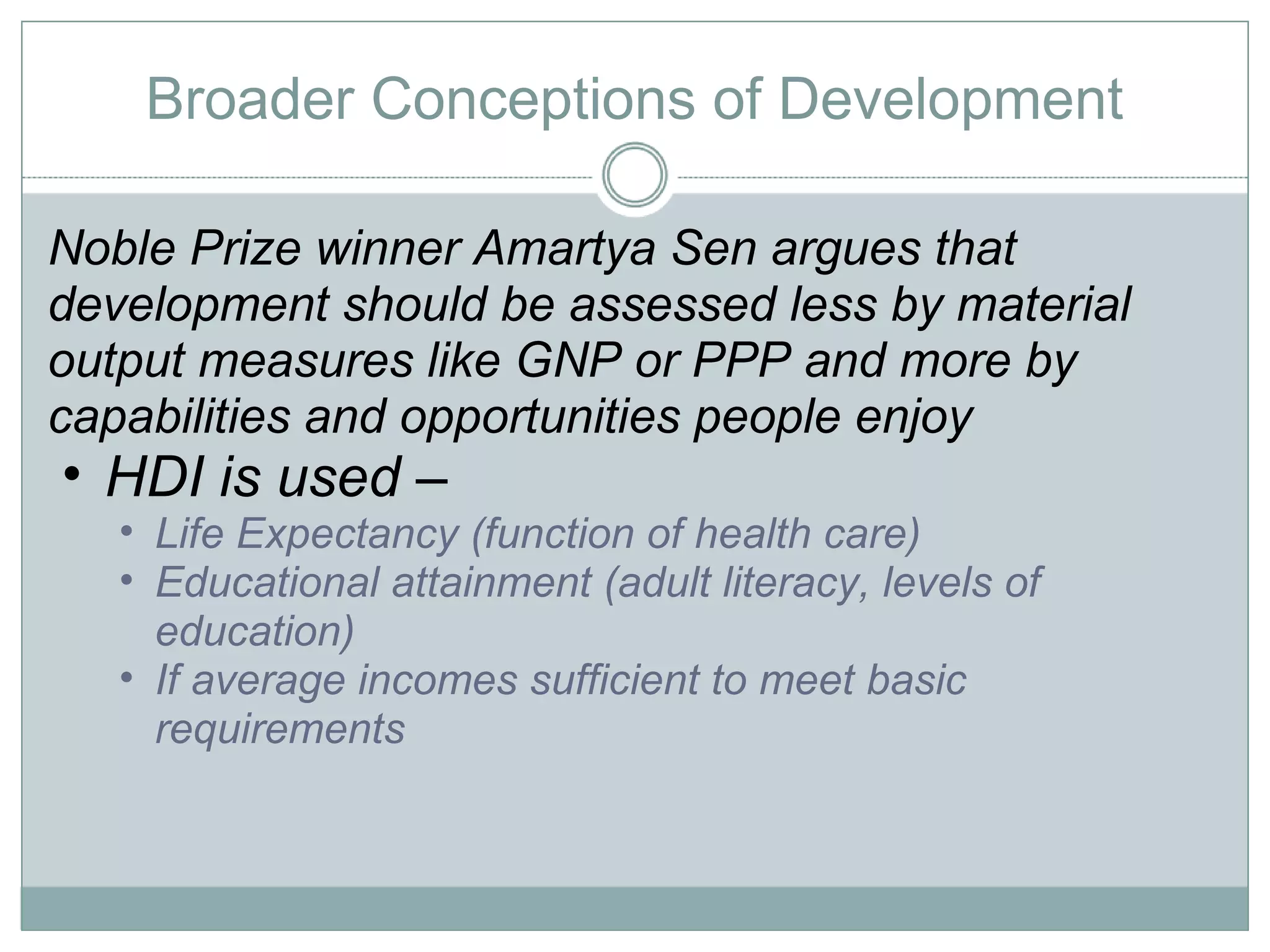
Broader Conceptions of Development Noble Prize winner Amartya Sen argues that development should be assessed less by material output measures like GNP or PPP and more by capabilities and opportunities people enjoy HDI is used –  Life Expectancy (function of health care) Educational attainment (adult literacy, levels of education) If average incomes sufficient to meet basic requirements
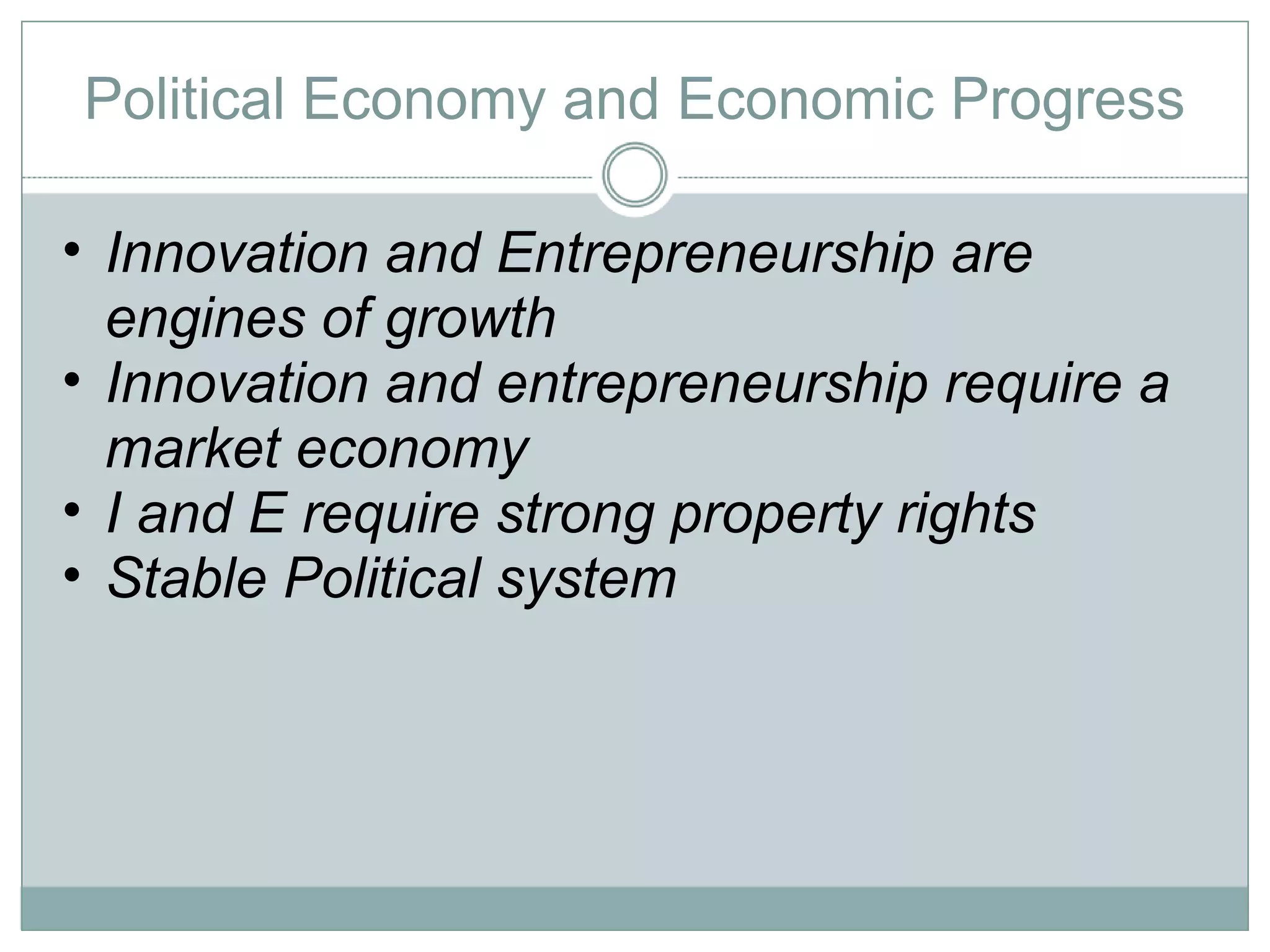
Political Economy and Economic Progress Innovation and Entrepreneurship are engines of growth  Innovation and entrepreneurship require a market economy I and E require strong property rights Stable Political system
States in Transition Spread of democracy
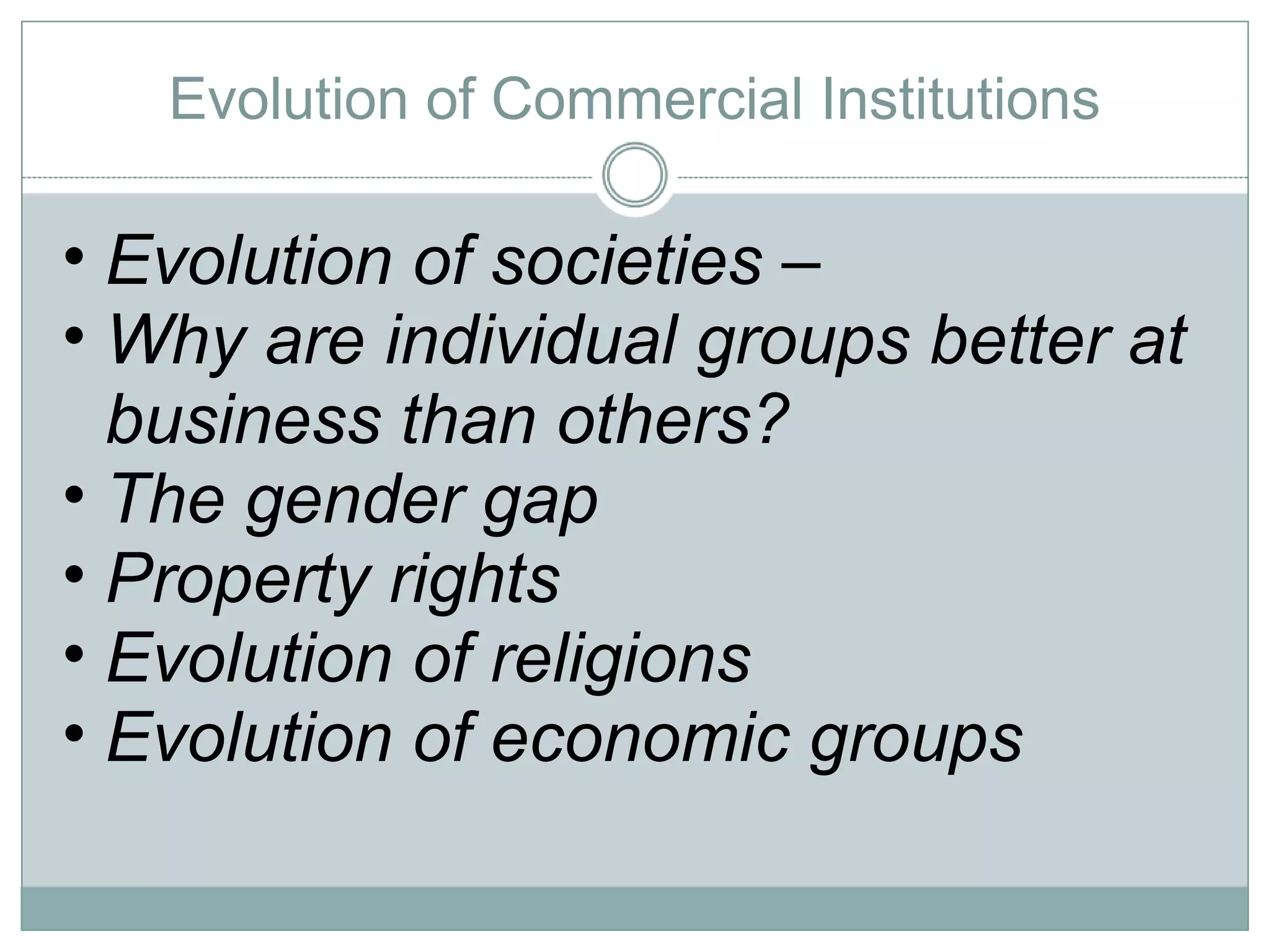
Evolution of Commercial Institutions Evolution of societies –  Why are individual groups better at business than others? The gender gap Property rights Evolution of religions Evolution of economic groups
The New World Order Huntington’s thesis vs. Fukayama’s ideas
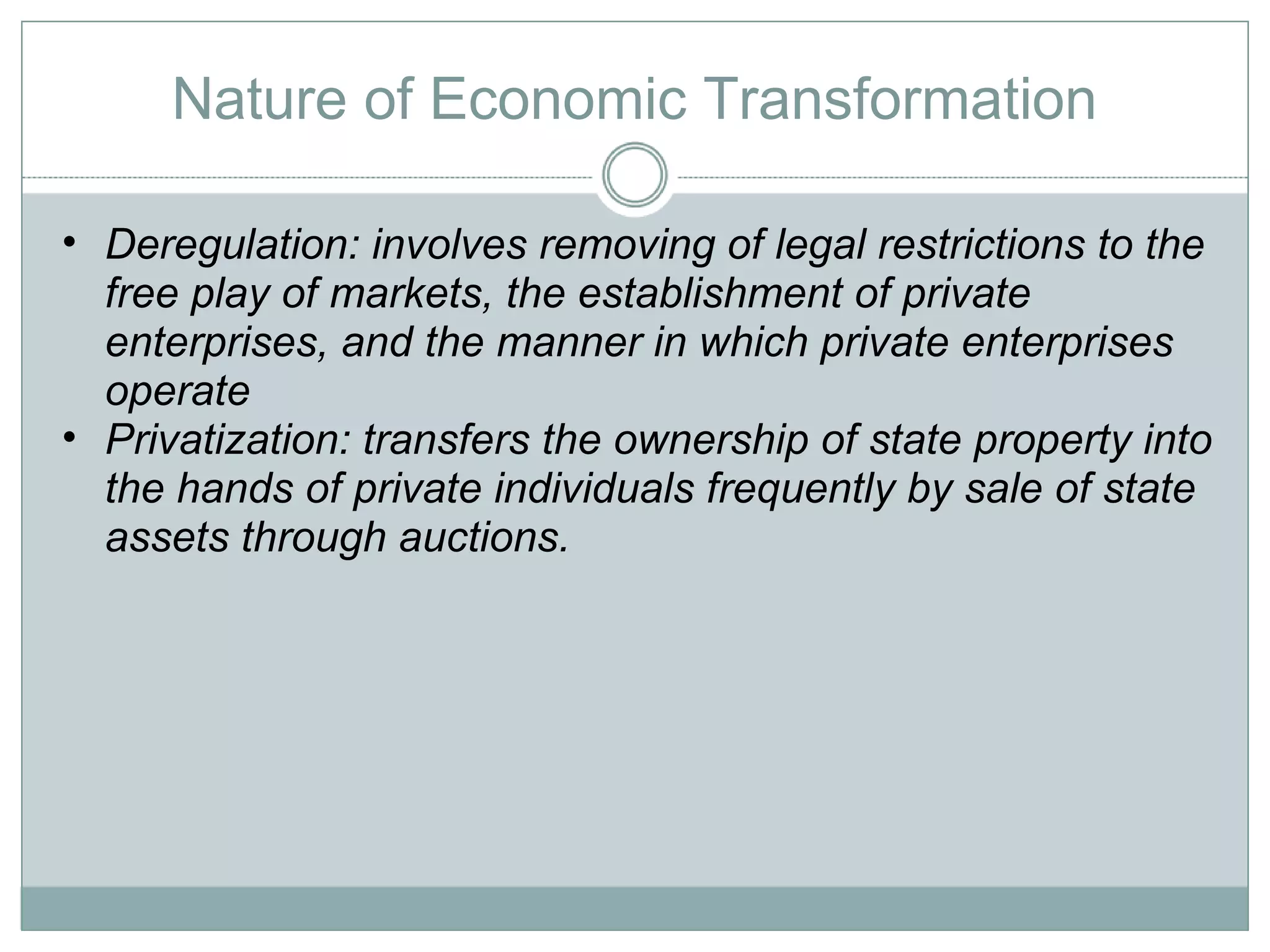
Nature of Economic Transformation Deregulation: involves removing of legal restrictions to the free play of markets, the establishment of private enterprises, and the manner in which private enterprises operate Privatization: transfers the ownership of state property into the hands of private individuals frequently by sale of state assets through auctions.
Article Review Return of Economic Nationalism: What is economic nationalism? How does trade benefit? (see next slide) What fear does the article raise? Why would raising tariffs result in greater chaos? Why does the article say that “Buy American” label be erased? What are the three principles it suggests Obama should follow?
Spread of Market-Based Systems Why is trade a good thing?  Trade encourages specialisation, which brings prosperity;  global capital markets, for all their problems, allocate money more efficiently than local ones;  economic co-operation encourages confidence and enhances security.
Article Review Anatomy of an Idea: What does the word ‘liberal’ mean in Europe? What does it mean in America?

IBM Lecture 2

  • 1.
  • 2.
    Political Systems: CollectivismCollectivisim: refers to a political system that stresses the primacy of collective goals over individual goals. Socialism: State owns means of production so that it can fully compensate workers for their labor Communists vs. Social Democrats Communists: socialism can be achieved only through violent revolution and totalitarian dictatorship Social democrats: socialism can be achieved by democratic means
  • 3.
    Political Systems: IndividualismIndividualism: Philosophy that an individual should have freedom in his or her economic and political pursuits Tenets of individualism: Guaranteed individual freedom and self-expression Welfare of society is best served by letting people pursue their own economic self interest
  • 4.
    Democracy and TotalitarianismDemocracy : a political system in which government is by the people, exercised either directly or through elected representatives Totalitarianism: form of government in which one person or political party exercises absolute control over all spheres of human life and prohibits opposing political parties
  • 5.
    Elements of RepresentativeDemocracy Representative Democracy’s elements: An individual’s right to freedom of expression, opinion and organization A free media Regular elections in which all citizens are allowed to vote Universal adult suffrage Limited terms for elected representatives A fair court system that is independent from the political system A nonpolitical bureaucracy A nonpolitical police force and armed service Relatively free access to state informatioin
  • 6.
    4 forms ofTotalitarianism Communist Totalitarianism Theocratic Totalitarianism Tribal Totalitarianism Right-wing Totalitarianism
  • 7.
    Economic Systems Comparison: Market, Command, Mixed Market Economy : All productive activities are privately owned, as opposed to being owned by the state. Goods and services produced by the country are not planned by anyone Production is determined by the interaction of supply and demand
  • 8.
    Economic Systems Comparison: Market, Command, Mixed Command Economy : The goods and services, their quantity and prices are all planned by the government Objective of the command economy: to allocate resources for ‘the good of society’.
  • 9.
    Economic Systems Comparison: Market, Command, Mixed Mixed Economy : Certain sectors of the economy are left to private ownership and free market mechanisms while other sectors have significant state ownership Countries with mixed economies often take up ownership of industries that are troubled. Example: France taking over Renault as it felt social costs of large unemployment undesirable
  • 10.
    Legal Systems: PropertyRights Legal System : refers to the rules , or laws, that regulate behavior along with the processes by which the laws are enforced and through which redress for grievances is obtained
  • 11.
    Different Legal SystemsCommon Law: Based on tradition (legal history), precedent (prior cases), and custom (ways in which laws are applied in specific situations) Civil Law: based on very detailed set of laws organized into codes. Theocratic Law: Law based on religious teachings
  • 12.
    Country Focus: 40Years of Corruption in Nigeria Despite tremendous oil reserves, people are poor. 300 billion in 30 years from oil $30 billion debt Life expectancy 50 years
  • 13.
    Contract law Contractlaw : body of law that governs contract enforcements Property rights : refer to the bundle of legal rights over the use to which a resource is put and over the use made of any income that may be derived from that resource
  • 14.
    Lecture II: Determinantsof Economic Development
  • 15.
    Differences in EconomicDevelopment GNP vs. PPP (Purchasing power parity) GNP: measures total annual income received by residents in a country PPP: allows for a more direct comparison in living standards between countries depending on whether the cost of living is lower or higher as compared to the USA
  • 16.
    Broader Conceptions ofDevelopment Noble Prize winner Amartya Sen argues that development should be assessed less by material output measures like GNP or PPP and more by capabilities and opportunities people enjoy HDI is used – Life Expectancy (function of health care) Educational attainment (adult literacy, levels of education) If average incomes sufficient to meet basic requirements
  • 17.
    Political Economy andEconomic Progress Innovation and Entrepreneurship are engines of growth Innovation and entrepreneurship require a market economy I and E require strong property rights Stable Political system
  • 18.
    States in TransitionSpread of democracy
  • 19.
    Evolution of CommercialInstitutions Evolution of societies – Why are individual groups better at business than others? The gender gap Property rights Evolution of religions Evolution of economic groups
  • 20.
    The New WorldOrder Huntington’s thesis vs. Fukayama’s ideas
  • 21.
    Nature of EconomicTransformation Deregulation: involves removing of legal restrictions to the free play of markets, the establishment of private enterprises, and the manner in which private enterprises operate Privatization: transfers the ownership of state property into the hands of private individuals frequently by sale of state assets through auctions.
  • 22.
    Article Review Returnof Economic Nationalism: What is economic nationalism? How does trade benefit? (see next slide) What fear does the article raise? Why would raising tariffs result in greater chaos? Why does the article say that “Buy American” label be erased? What are the three principles it suggests Obama should follow?
  • 23.
    Spread of Market-BasedSystems Why is trade a good thing? Trade encourages specialisation, which brings prosperity; global capital markets, for all their problems, allocate money more efficiently than local ones;  economic co-operation encourages confidence and enhances security.
  • 24.
    Article Review Anatomyof an Idea: What does the word ‘liberal’ mean in Europe? What does it mean in America?