“Waste to energy”
Horst Unterlechner
August 2016
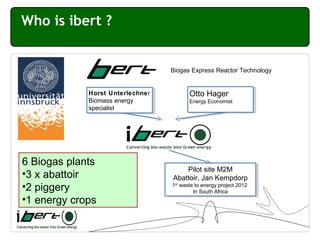
Who is ibert ?
Otto Hager
Energy Economist
Otto Hager
Energy Economist
Horst Unterlechner
Biomass energy
specialist
Horst Unterlechner
Biomass energy
specialist
Pilot site M2M
Abattoir, Jan Kempdorp
1st
waste to energy project 2012
In South Africa
Pilot site M2M
Abattoir, Jan Kempdorp
1st
waste to energy project 2012
In South Africa
6 Biogas plants
•3 x abattoir
•2 piggery
•1 energy crops
Biogas Express Reactor Technology
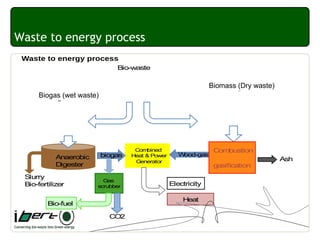
Waste to energy process
Bio-waste
Non-organic
Organic
Anaerobic
Digester
Bio-fuel
Combined
Heat & Power
Generator
Electricity
Heat
biogas Wood-gas
Ash
Gas
scrubber
Combustion
gasi cafi tion
Slurry
Bio-fertilizer
CO2
Waste to energy process
Biogas (wet waste)
Biomass (Dry waste)
What is bio-gas ?
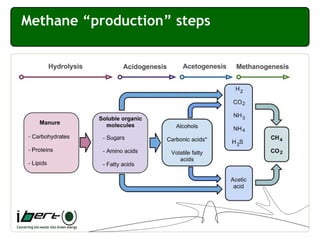
“Product” of natural process of decomposing
of organic material in the absence of O2
Biological process that convers
carbohydrates, fats, proteins into methane
CH4 and CO2
via Anaerobic Digestion (AD)
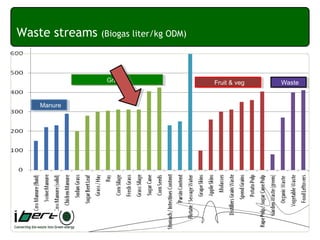
Waste streams (Biogas liter/kg ODM)
Manure
Grasses Fruit & veg Waste
Methane “production” steps
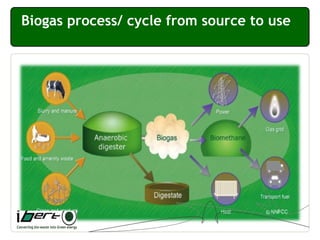
Biogas process/ cycle from source to use
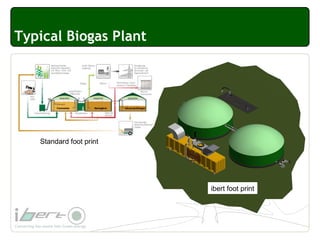
Typical Biogas Plant
Standard foot print
ibert foot print
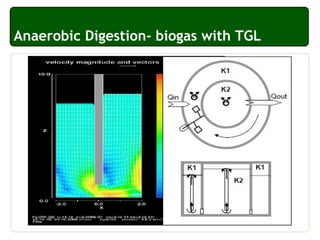
Anaerobic Digestion- biogas with TGL
Ibert USP
• Process organic & non-organic waste
• Small waste quantities from 5tons/day, on-site
• Plant has small footprint (25 / 30 m)
• Production of biogas
• Modular integrated system
• Output from >12 kW(el) >20 kW(therm)
• Imbedded self-usage less then 8% of total power
production
• Utilization of “waste product”
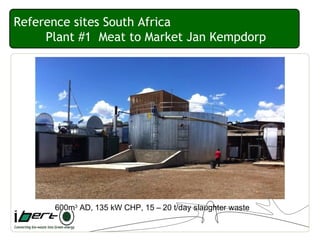
Reference sites South Africa
Plant #1 Meat to Market Jan Kempdorp
600m3
AD, 135 kW CHP, 15 – 20 t/day slaughter waste
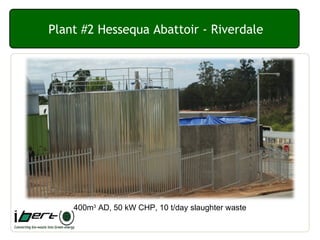
Plant #2 Hessequa Abattoir - Riverdale
400m3
AD, 50 kW CHP, 10 t/day slaughter waste
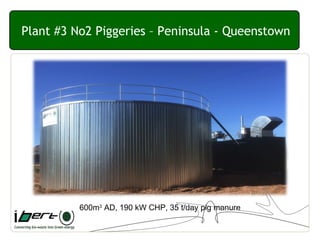
Plant #3 No2 Piggeries – Peninsula - Queenstown
600m3
AD, 190 kW CHP, 35 t/day pig manure
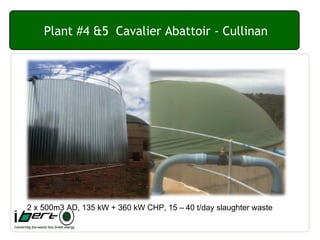
Plant #4 &5 Cavalier Abattoir - Cullinan
2 x 500m3 AD, 135 kW + 360 kW CHP, 15 – 40 t/day slaughter waste
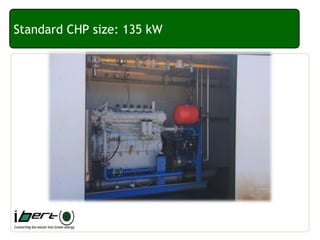
Standard CHP size: 135 kW
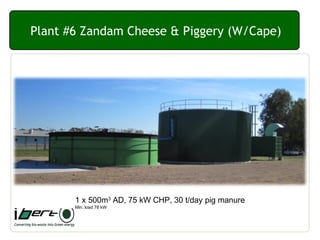
Plant #6 Zandam Cheese & Piggery (W/Cape)
1 x 500m3
AD, 75 kW CHP, 30 t/day pig manure
Min. load 78 kW
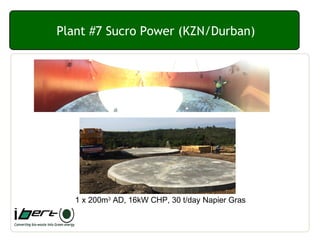
Plant #7 Sucro Power (KZN/Durban)
1 x 200m3
AD, 16kW CHP, 30 t/day Napier Gras
Project realisation - Next steps
• Conduct a on-site ‘waste to energy audit”
• Qualify & Quantify ‘WTE” potential and best
technology to be used
• Develop a pre-feasibility report of current energy
usage cost and risks
• Present go / no-go and preferred business model
• Conclude contracts
• Start process
• Design, build, commission
• Operate via M&OM agreement
Thank you!

ibert presentation piggery

  • 1.
    “Waste to energy” HorstUnterlechner August 2016
  • 2.
    Who is ibert? Otto Hager Energy Economist Otto Hager Energy Economist Horst Unterlechner Biomass energy specialist Horst Unterlechner Biomass energy specialist Pilot site M2M Abattoir, Jan Kempdorp 1st waste to energy project 2012 In South Africa Pilot site M2M Abattoir, Jan Kempdorp 1st waste to energy project 2012 In South Africa 6 Biogas plants •3 x abattoir •2 piggery •1 energy crops Biogas Express Reactor Technology
  • 3.
    Waste to energyprocess Bio-waste Non-organic Organic Anaerobic Digester Bio-fuel Combined Heat & Power Generator Electricity Heat biogas Wood-gas Ash Gas scrubber Combustion gasi cafi tion Slurry Bio-fertilizer CO2 Waste to energy process Biogas (wet waste) Biomass (Dry waste)
  • 4.
    What is bio-gas? “Product” of natural process of decomposing of organic material in the absence of O2 Biological process that convers carbohydrates, fats, proteins into methane CH4 and CO2 via Anaerobic Digestion (AD)
  • 5.
    Waste streams (Biogasliter/kg ODM) Manure Grasses Fruit & veg Waste
  • 6.
  • 7.
    Biogas process/ cyclefrom source to use
  • 8.
    Typical Biogas Plant Standardfoot print ibert foot print
  • 9.
  • 10.
    Ibert USP • Processorganic & non-organic waste • Small waste quantities from 5tons/day, on-site • Plant has small footprint (25 / 30 m) • Production of biogas • Modular integrated system • Output from >12 kW(el) >20 kW(therm) • Imbedded self-usage less then 8% of total power production • Utilization of “waste product”
  • 11.
    Reference sites SouthAfrica Plant #1 Meat to Market Jan Kempdorp 600m3 AD, 135 kW CHP, 15 – 20 t/day slaughter waste
  • 12.
    Plant #2 HessequaAbattoir - Riverdale 400m3 AD, 50 kW CHP, 10 t/day slaughter waste
  • 13.
    Plant #3 No2Piggeries – Peninsula - Queenstown 600m3 AD, 190 kW CHP, 35 t/day pig manure
  • 14.
    Plant #4 &5Cavalier Abattoir - Cullinan 2 x 500m3 AD, 135 kW + 360 kW CHP, 15 – 40 t/day slaughter waste
  • 15.
  • 16.
    Plant #6 ZandamCheese & Piggery (W/Cape) 1 x 500m3 AD, 75 kW CHP, 30 t/day pig manure Min. load 78 kW
  • 17.
    Plant #7 SucroPower (KZN/Durban) 1 x 200m3 AD, 16kW CHP, 30 t/day Napier Gras
  • 18.
    Project realisation -Next steps • Conduct a on-site ‘waste to energy audit” • Qualify & Quantify ‘WTE” potential and best technology to be used • Develop a pre-feasibility report of current energy usage cost and risks • Present go / no-go and preferred business model • Conclude contracts • Start process • Design, build, commission • Operate via M&OM agreement
  • 19.