Implementing IATI
“Van Forming naar Storming”
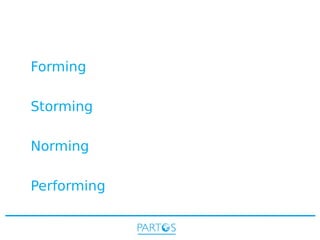
Forming
Storming
Norming
Performing
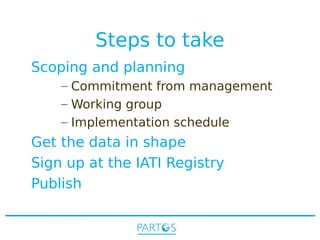
Steps to take
Scoping and planning
– Commitment from management
– Working group
– Implementation schedule

Get the data in shape
Sign up at the IATI Registry
Publish
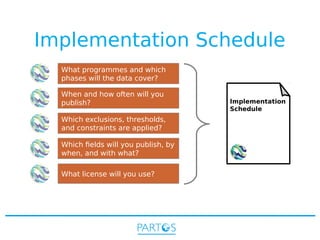
Implementation Schedule
What programmes and which
phases will the data cover?
When and how often will you
publish?
Which exclusions, thresholds,
and constraints are applied?
Which fields will you publish, by
when, and with what?
What license will you use?

Implementation
Schedule
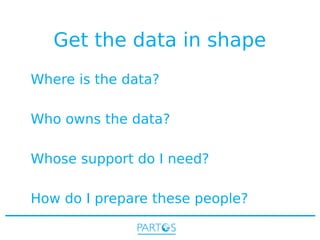
Get the data in shape
Where is the data?
Who owns the data?
Whose support do I need?
How do I prepare these people?
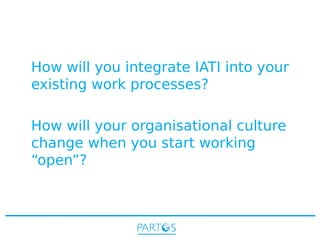
How will you integrate IATI into your
existing work processes?
How will your organisational culture
change when you start working
“open”?
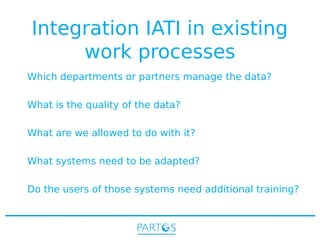
Integration IATI in existing
work processes
Which departments or partners manage the data?
What is the quality of the data?
What are we allowed to do with it?
What systems need to be adapted?
Do the users of those systems need additional training?
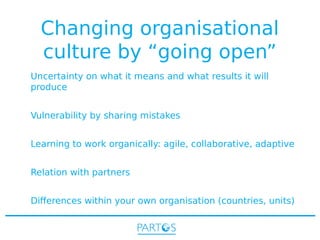
Changing organisational
culture by “going open”
Uncertainty on what it means and what results it will
produce
Vulnerability by sharing mistakes
Learning to work organically: agile, collaborative, adaptive
Relation with partners
Differences within your own organisation (countries, units)
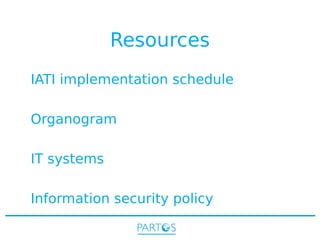
Resources
IATI implementation schedule
Organogram
IT systems
Information security policy
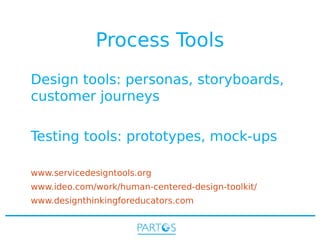
Process Tools
Design tools: personas, storyboards,
customer journeys
Testing tools: prototypes, mock-ups
www.servicedesigntools.org
www.ideo.com/work/human-centered-design-toolkit/
www.designthinkingforeducators.com
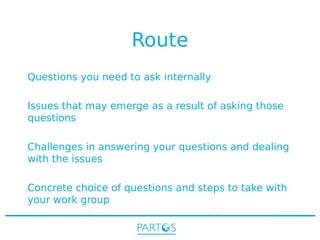
Route
Questions you need to ask internally
Issues that may emerge as a result of asking those
questions
Challenges in answering your questions and dealing
with the issues
Concrete choice of questions and steps to take with
your work group
Brainstorm
WHY?
– Make a list of “why”s you could use
within your organisation
– What do you need or is missing to
support that “why”

Groups of three
Plan
Which questions are you going to answer for your
organisation?
What challenges do you foresee and how do you plan
to deal with them?
What concrete steps do you want to take?
How can others in this group help you? How can you
help others?
Iati From Forming to Storming by Rolf Kleef

Iati From Forming to Storming by Rolf Kleef

  • 1.
  • 2.
  • 4.
    Steps to take Scopingand planning – Commitment from management – Working group – Implementation schedule Get the data in shape Sign up at the IATI Registry Publish
  • 5.
    Implementation Schedule What programmesand which phases will the data cover? When and how often will you publish? Which exclusions, thresholds, and constraints are applied? Which fields will you publish, by when, and with what? What license will you use? Implementation Schedule
  • 6.
    Get the datain shape Where is the data? Who owns the data? Whose support do I need? How do I prepare these people?
  • 7.
    How will youintegrate IATI into your existing work processes? How will your organisational culture change when you start working “open”?
  • 9.
    Integration IATI inexisting work processes Which departments or partners manage the data? What is the quality of the data? What are we allowed to do with it? What systems need to be adapted? Do the users of those systems need additional training?
  • 11.
    Changing organisational culture by“going open” Uncertainty on what it means and what results it will produce Vulnerability by sharing mistakes Learning to work organically: agile, collaborative, adaptive Relation with partners Differences within your own organisation (countries, units)
  • 13.
    Resources IATI implementation schedule Organogram ITsystems Information security policy
  • 14.
    Process Tools Design tools:personas, storyboards, customer journeys Testing tools: prototypes, mock-ups www.servicedesigntools.org www.ideo.com/work/human-centered-design-toolkit/ www.designthinkingforeducators.com
  • 15.
    Route Questions you needto ask internally Issues that may emerge as a result of asking those questions Challenges in answering your questions and dealing with the issues Concrete choice of questions and steps to take with your work group
  • 17.
    Brainstorm WHY? – Make alist of “why”s you could use within your organisation – What do you need or is missing to support that “why” Groups of three
  • 19.
    Plan Which questions areyou going to answer for your organisation? What challenges do you foresee and how do you plan to deal with them? What concrete steps do you want to take? How can others in this group help you? How can you help others?