Card-Sorting Basics
First Rule of UCD


Thou are not thy USER!
What is card-sorting?

 Card sorting is a common technique within user-
  centred design (UCD) methodologies.
 All too often information on websites is organized
  according to stakeholder perceptions. As User
  Experience professionals, our role is to bring focus
  back onto the perceptions and desires of the users to
  provide an optimal balance between the two. Card
  sorting is an established technique often used to help
  structure, organize, and generally improve the
  “findability of content or functionality” on a website,
  (Rubin and Chisnell, 2008, p. 18).
Before recently, we made design
decisions based on just two things: what we
thought was awesome and what the client
wanted to see.


      There was no science behind what we
did. We did it because the results looked
good, because they were creative (so we
thought) and because that was what our
clients wanted.
What is UCD?
User Centered Design

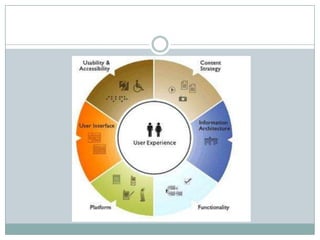
 UCD is a methodology
 Usability is an outcome of UCD practices
 This standard (ISO 13407: Human-centered design
 process) defines a general process for including
 human-centered activities throughout a development
 life-cycle, but does not specify exact methods.
UCD seeks to answer questions such as:

 Who are the users of this 'thing'?
 What are the users‟ tasks and goals?
 What are the users‟ experience levels with this
    thing, and things like it?
   What functions do the users need from this thing?
   What information might the users need, and in
    what form do they need it?
   How do users think this 'thing' should work?
   How can the design of this „thing‟ facilitate users'
    cognitive processes?
What is Information
  Architecture?
The term was largely dormant until in 1996 it was seized upon by a
couple of library scientists, Lou Rosenfeld and Peter Morville. They
used the term to define the work they were doing structuring large-
scale websites and intranets.
In Information Architecture for the World Wide Web: Designing
Large-Scale Web Sites they define information architecture as:
 The combination of organization, labeling, and navigation
  schemes within an information system.
 The structural design of an information space to facilitate task
  completion and intuitive access to content.
 The art and science of structuring and classifying web sites and
  intranets to help people find and manage information.
 An emerging discipline and community of practice focused on
  bringing principles of design and architecture to the digital
  landscape.
Let‟s get started
 Can use post-it notes
 3x5 cards
 Any type of paper really
 Pens
 There are two primary methods for performing card sorts.



  Open Card Sorting: Participants are given cards showing site
  content with no pre-established groupings. They are asked to sort
  cards into groups that they feel are appropriate and then describe
  each group. Open card sorting is useful as input to information
  structures in new or existing sites and products.
 Closed Card Sorting: Participants are given cards showing site
  content with an established initial set of primary groups.
  Participants are asked to place cards into these pre-established
  primary groups. Closed card sorting is useful when adding new
  content to an existing structure, or for gaining additional feedback
  after an open card sort.
Website Links

 http://www.boxesandarrows.com/view/card_sortin
 g_a_definitive_guide
 http://www.boxesandarrows.com/view/beyond_car
 dsorting_free_listing_methods_to_explore_user_c
 ategorizations
Sites Info Taken From:

 http://uxdesign.smashingmagazine.com/2010/10/0
  5/what-is-user-experience-design-overview-tools-
  and-resources/
 http://whitneyhess.com/blog/2011/04/23/youre-
  not-a-user-experience-designer-if/
 http://www.masternewmedia.org/how-to-use-
  personas-in-user-experience-design-and-
  development-research/
 http://www.peterme.com/archives/00000346.html

 These slides were created for educational purpose and not commercial.

Card sorting

  • 1.
  • 2.
    First Rule ofUCD Thou are not thy USER!
  • 3.
    What is card-sorting? Card sorting is a common technique within user- centred design (UCD) methodologies.  All too often information on websites is organized according to stakeholder perceptions. As User Experience professionals, our role is to bring focus back onto the perceptions and desires of the users to provide an optimal balance between the two. Card sorting is an established technique often used to help structure, organize, and generally improve the “findability of content or functionality” on a website, (Rubin and Chisnell, 2008, p. 18).
  • 4.
    Before recently, wemade design decisions based on just two things: what we thought was awesome and what the client wanted to see. There was no science behind what we did. We did it because the results looked good, because they were creative (so we thought) and because that was what our clients wanted.
  • 6.
  • 7.
    User Centered Design UCD is a methodology  Usability is an outcome of UCD practices  This standard (ISO 13407: Human-centered design process) defines a general process for including human-centered activities throughout a development life-cycle, but does not specify exact methods.
  • 8.
    UCD seeks toanswer questions such as:  Who are the users of this 'thing'?  What are the users‟ tasks and goals?  What are the users‟ experience levels with this thing, and things like it?  What functions do the users need from this thing?  What information might the users need, and in what form do they need it?  How do users think this 'thing' should work?  How can the design of this „thing‟ facilitate users' cognitive processes?
  • 9.
    What is Information Architecture?
  • 10.
    The term waslargely dormant until in 1996 it was seized upon by a couple of library scientists, Lou Rosenfeld and Peter Morville. They used the term to define the work they were doing structuring large- scale websites and intranets. In Information Architecture for the World Wide Web: Designing Large-Scale Web Sites they define information architecture as:  The combination of organization, labeling, and navigation schemes within an information system.  The structural design of an information space to facilitate task completion and intuitive access to content.  The art and science of structuring and classifying web sites and intranets to help people find and manage information.  An emerging discipline and community of practice focused on bringing principles of design and architecture to the digital landscape.
  • 11.
  • 12.
     Can usepost-it notes  3x5 cards  Any type of paper really  Pens
  • 13.
     There aretwo primary methods for performing card sorts.  Open Card Sorting: Participants are given cards showing site content with no pre-established groupings. They are asked to sort cards into groups that they feel are appropriate and then describe each group. Open card sorting is useful as input to information structures in new or existing sites and products.  Closed Card Sorting: Participants are given cards showing site content with an established initial set of primary groups. Participants are asked to place cards into these pre-established primary groups. Closed card sorting is useful when adding new content to an existing structure, or for gaining additional feedback after an open card sort.
  • 14.
    Website Links  http://www.boxesandarrows.com/view/card_sortin g_a_definitive_guide http://www.boxesandarrows.com/view/beyond_car dsorting_free_listing_methods_to_explore_user_c ategorizations
  • 15.
    Sites Info TakenFrom:  http://uxdesign.smashingmagazine.com/2010/10/0 5/what-is-user-experience-design-overview-tools- and-resources/  http://whitneyhess.com/blog/2011/04/23/youre- not-a-user-experience-designer-if/  http://www.masternewmedia.org/how-to-use- personas-in-user-experience-design-and- development-research/  http://www.peterme.com/archives/00000346.html  These slides were created for educational purpose and not commercial.