• 40Years in IT/Infrastructure
• Exxon, Canonical, Chef, Dell, Docker
• Founder of 11 Startups
• Spanned 4 Decades of Technologies
• Author 12 Books
• Instigator of the Devops Movement (CAMS)
Who Am I… @Botchagalupe (John Willis)
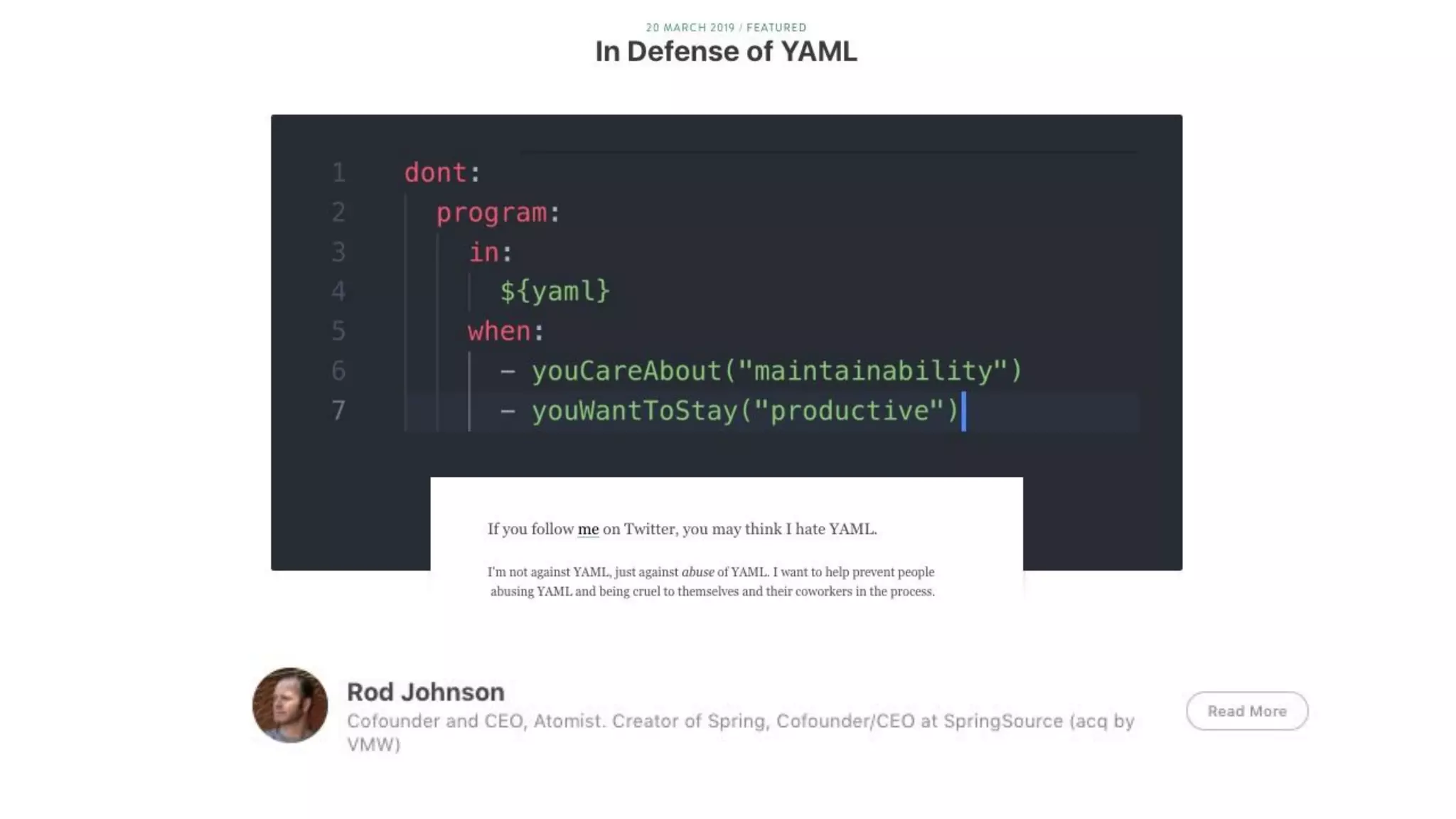
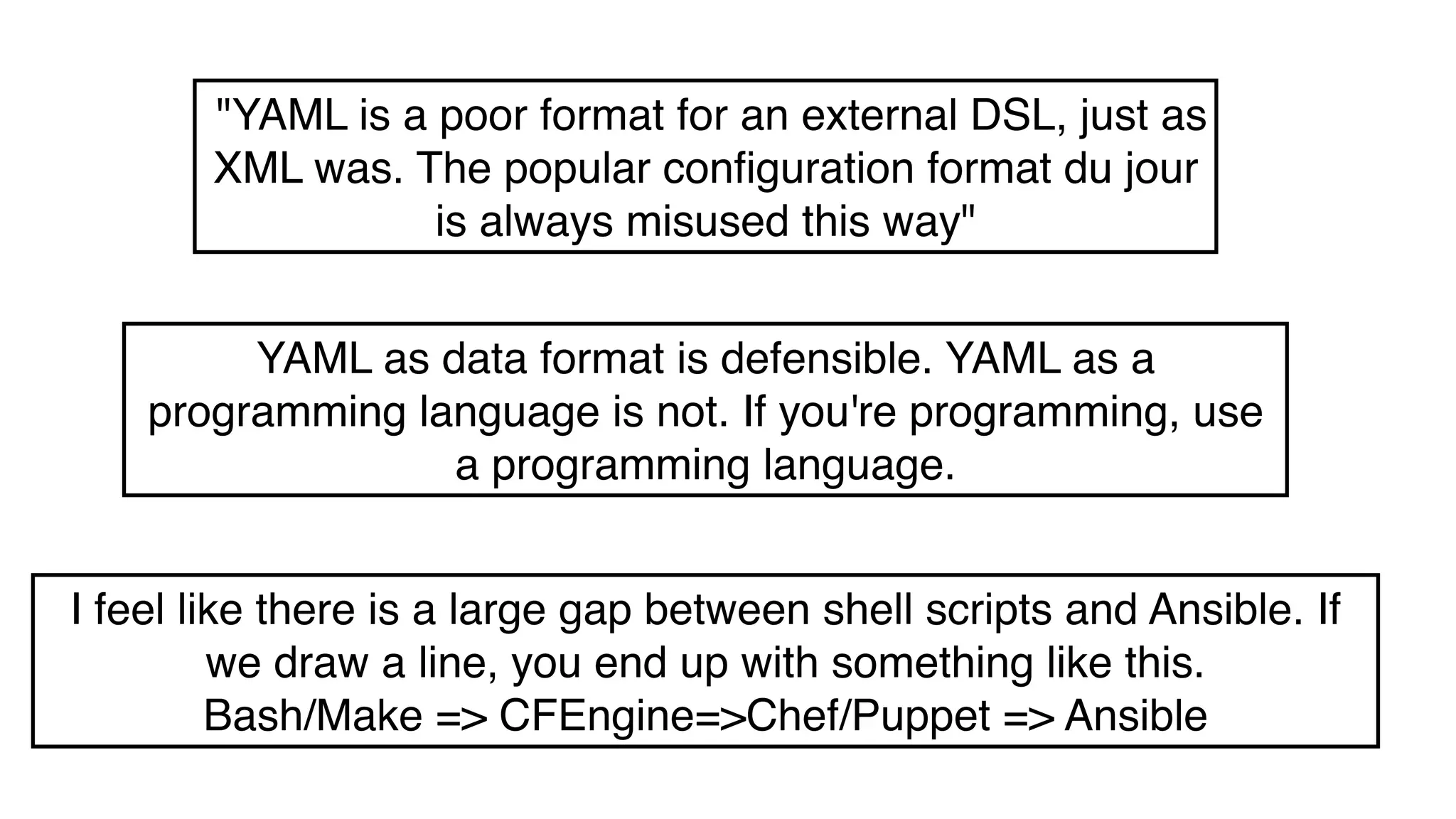
"YAML is a poor format for an external DSL, just as
XML was. The popular configuration format du jour
is always misused this way"
YAML as data format is defensible. YAML as a
programming language is not. If you're programming, use
a programming language.
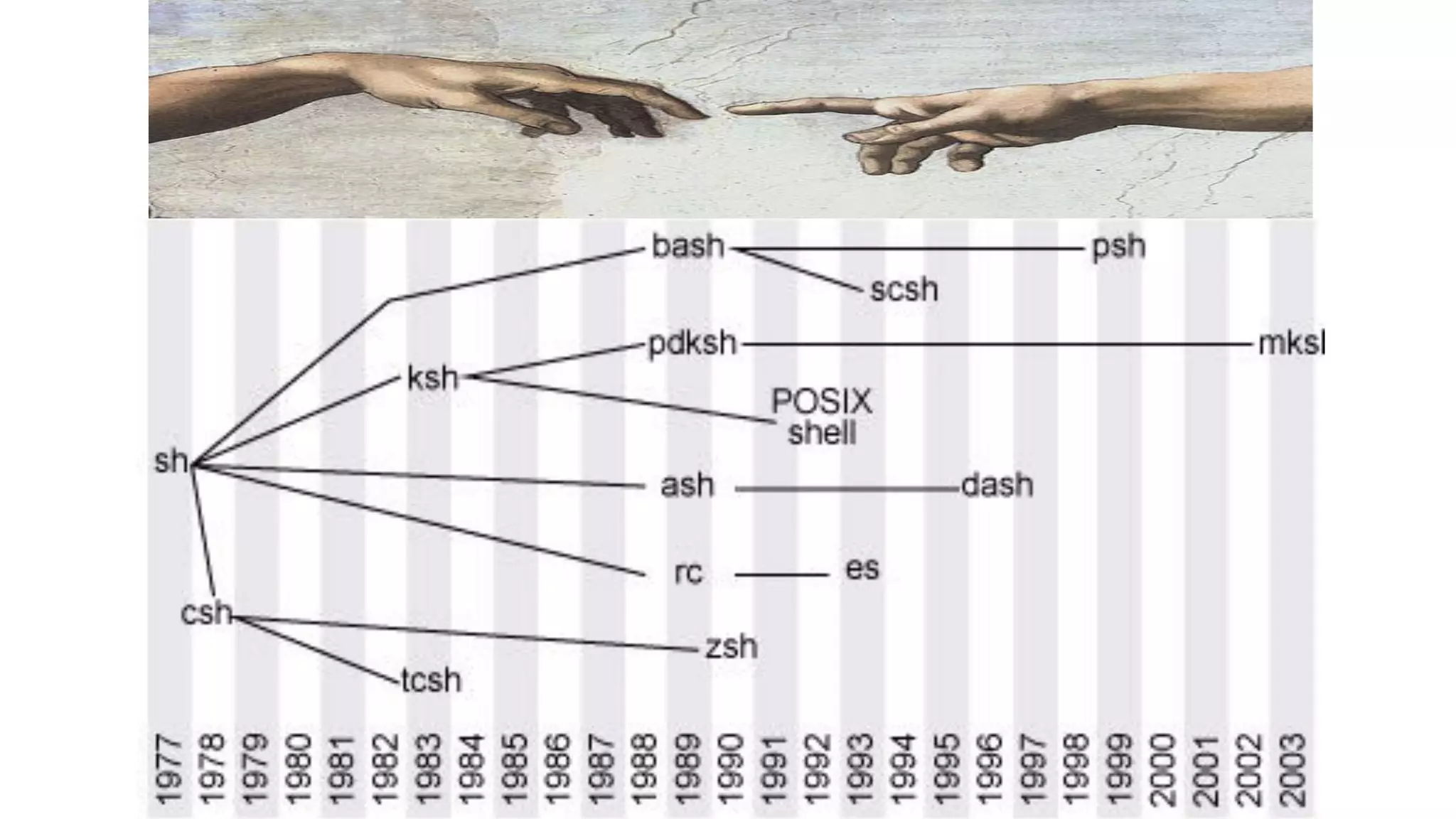
I feel like there is a large gap between shell scripts and Ansible. If
we draw a line, you end up with something like this.
Bash/Make => CFEngine=>Chef/Puppet => Ansible
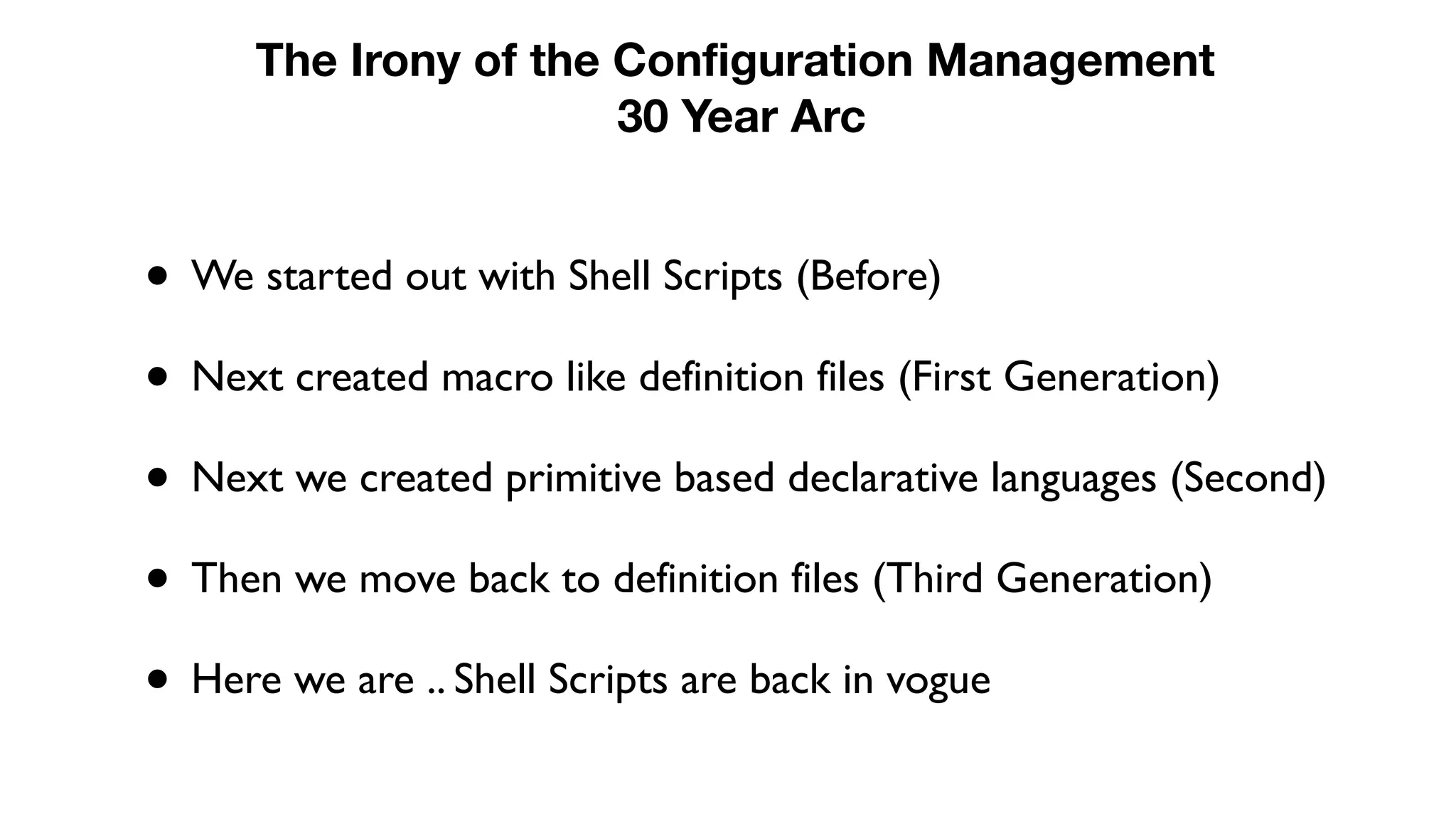
• We started out with Shell Scripts (Before)
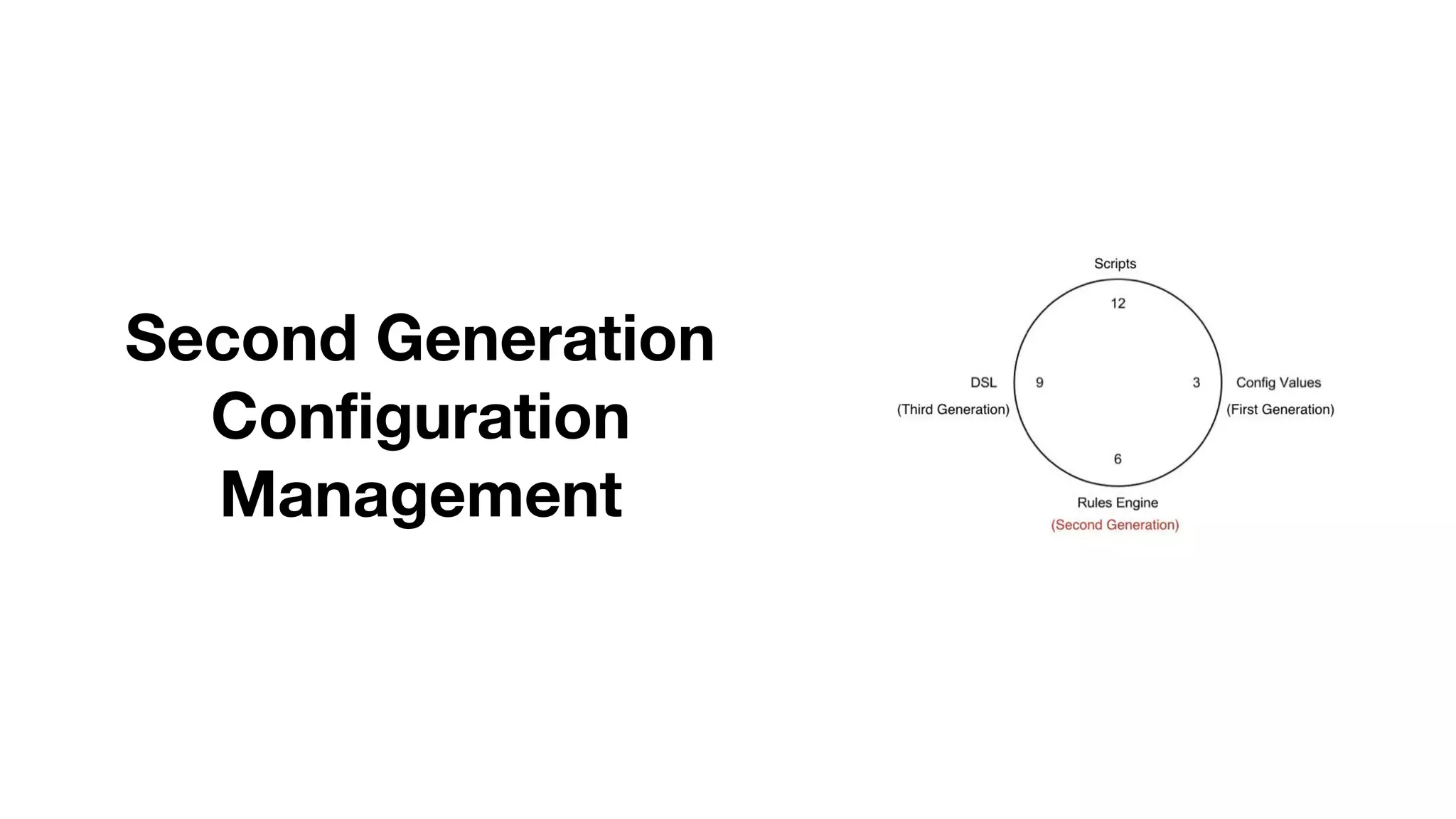
• Next created macro like definition files (First Generation)
• Next we created primitive based declarative languages (Second)
• Then we move back to definition files (Third Generation)
• Here we are .. Shell Scripts are back in vogue
The Irony of the Configuration Management
30 Year Arc
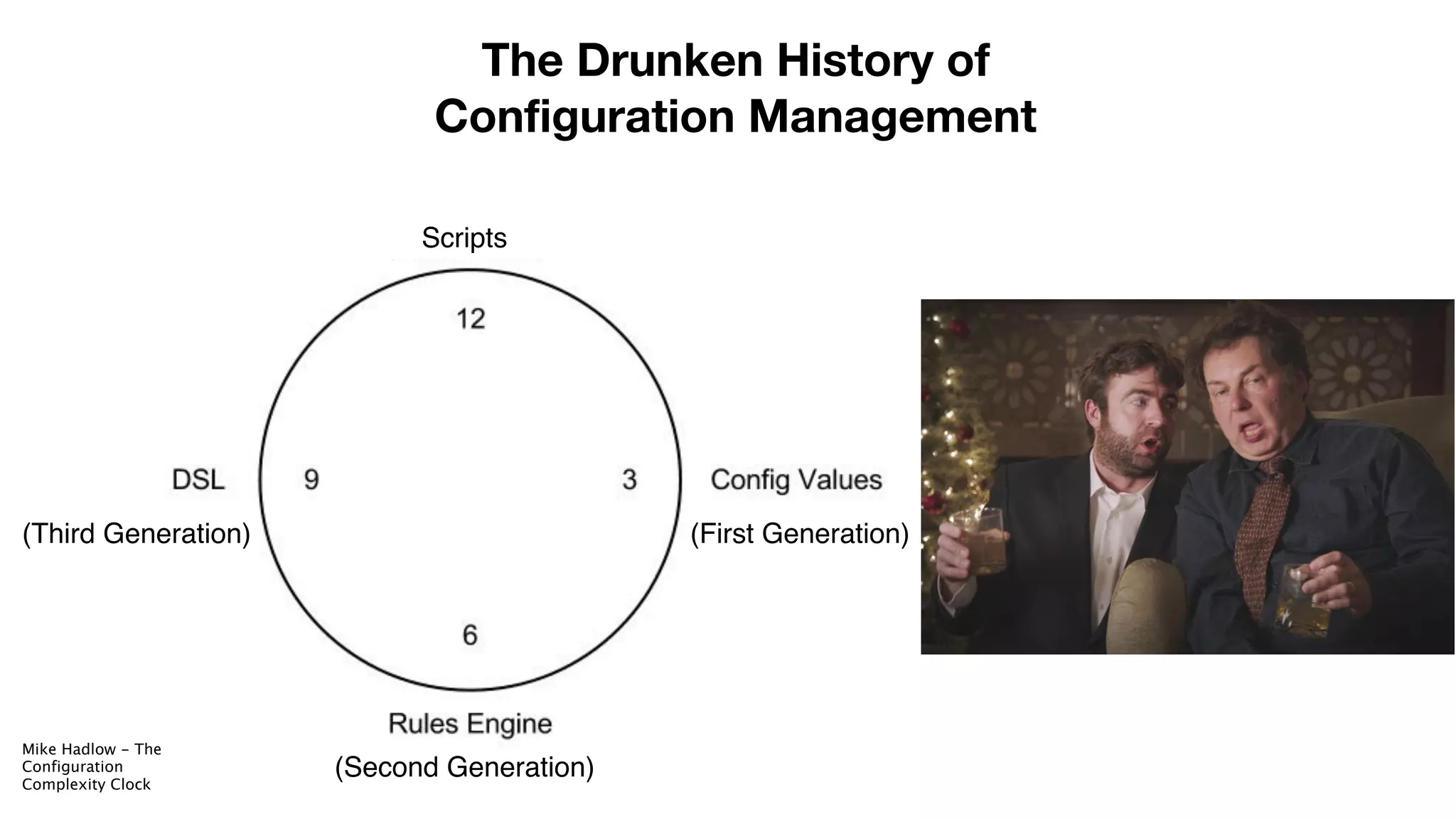
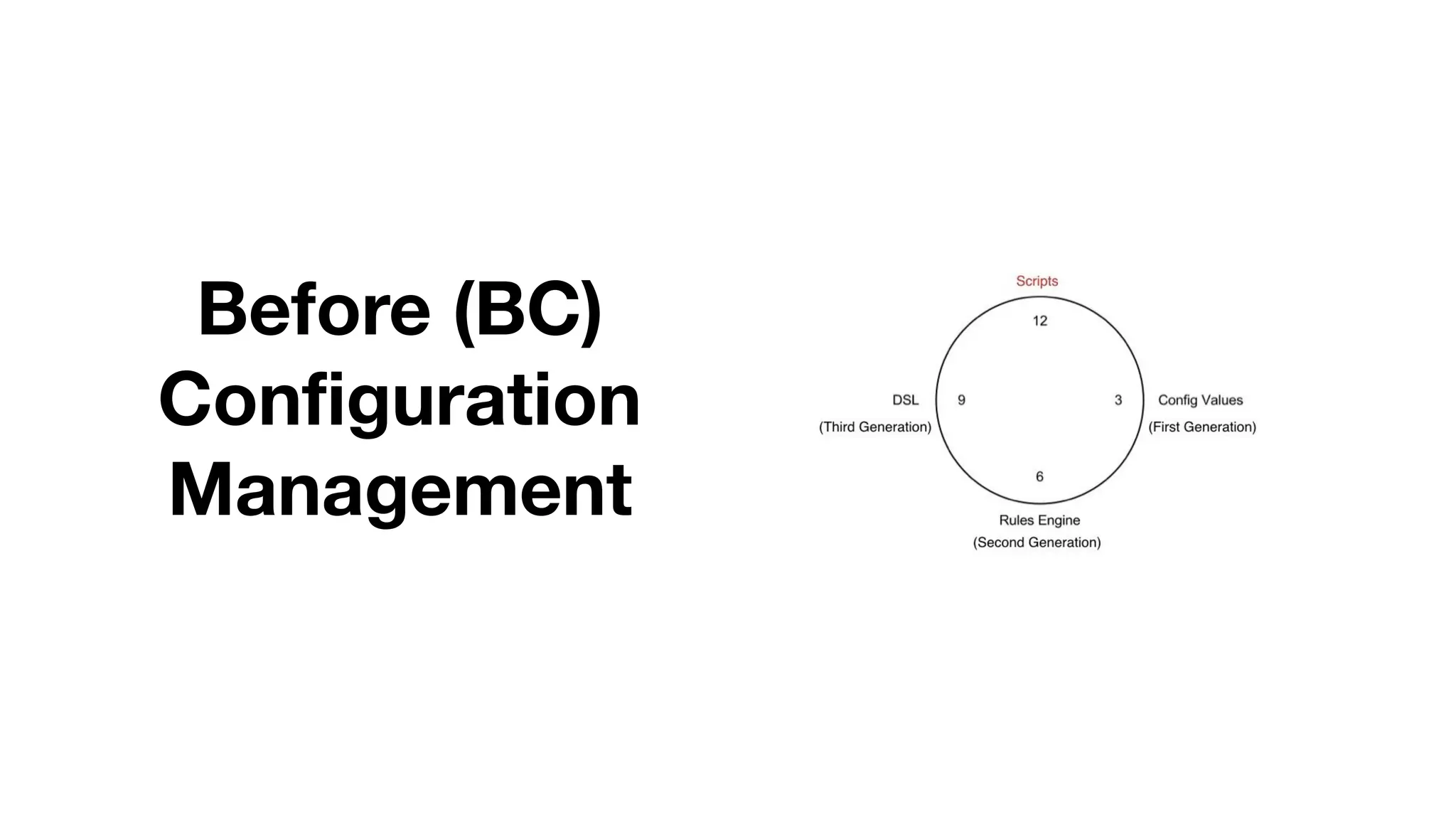
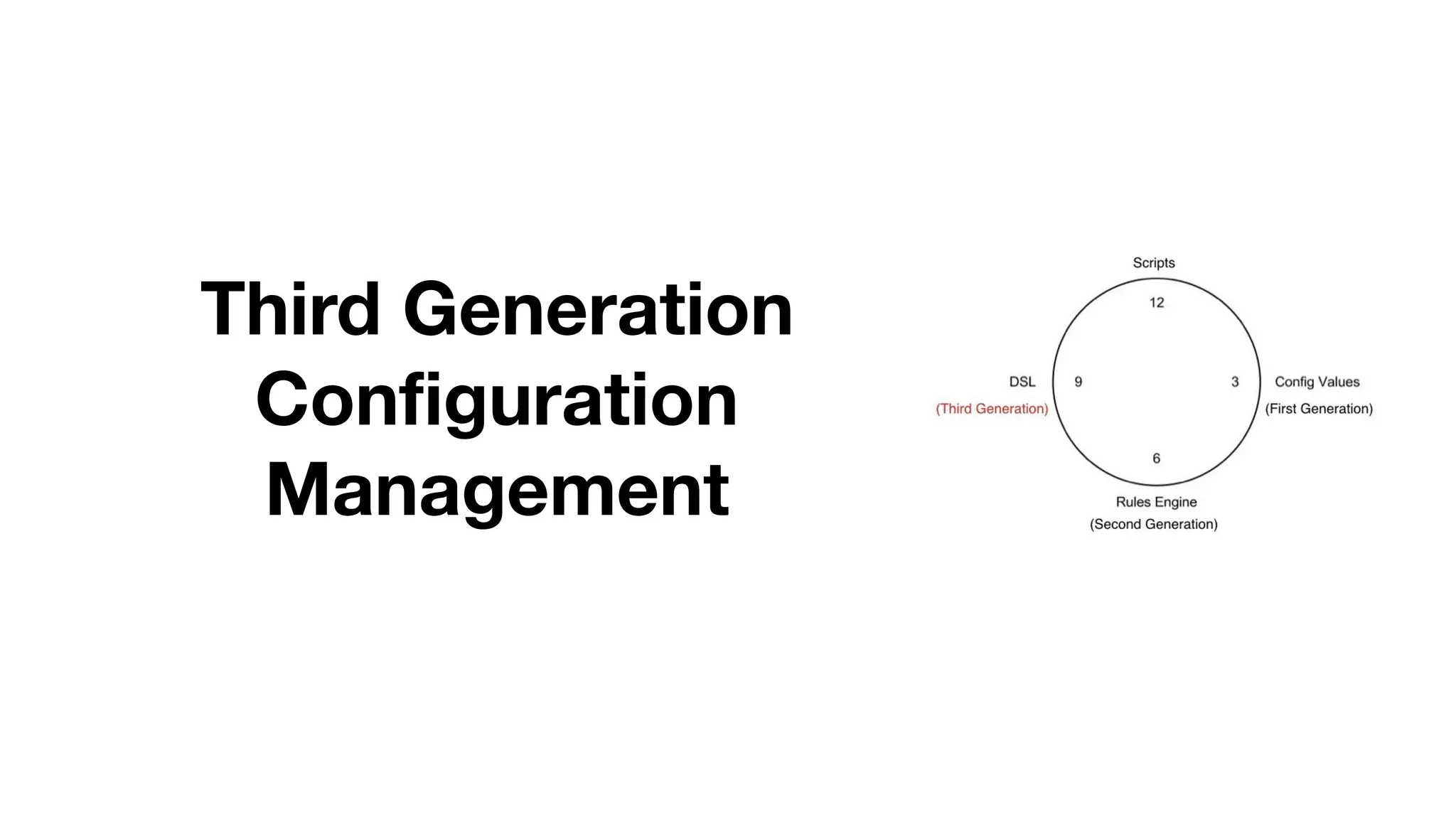
The Drunken History of
Configuration Management
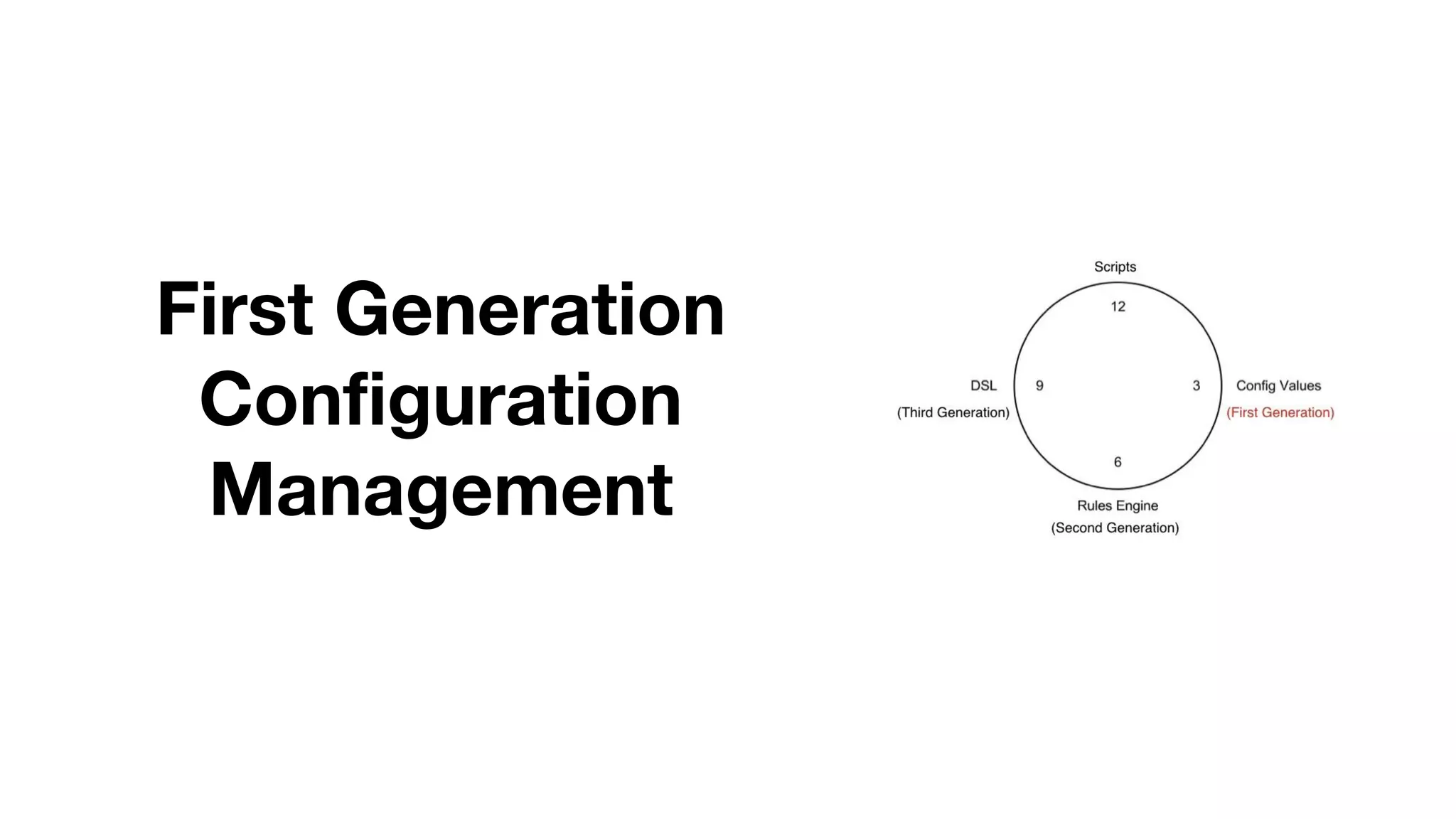
(First Generation)
(Second Generation)
(Third Generation)
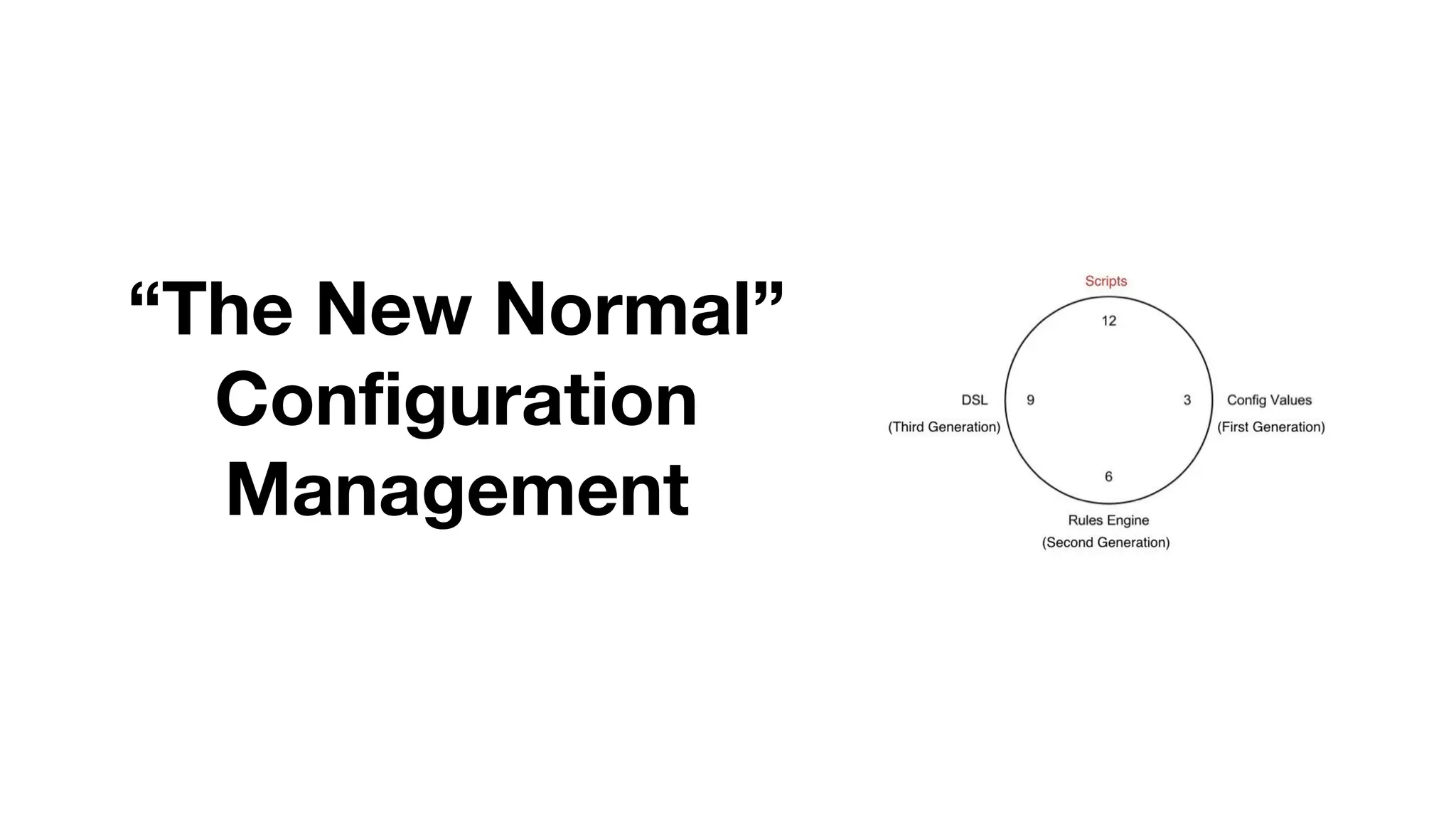
Scripts
Mike Hadlow - The
Configuration
Complexity Clock
Before (BC)
Configuration
Management
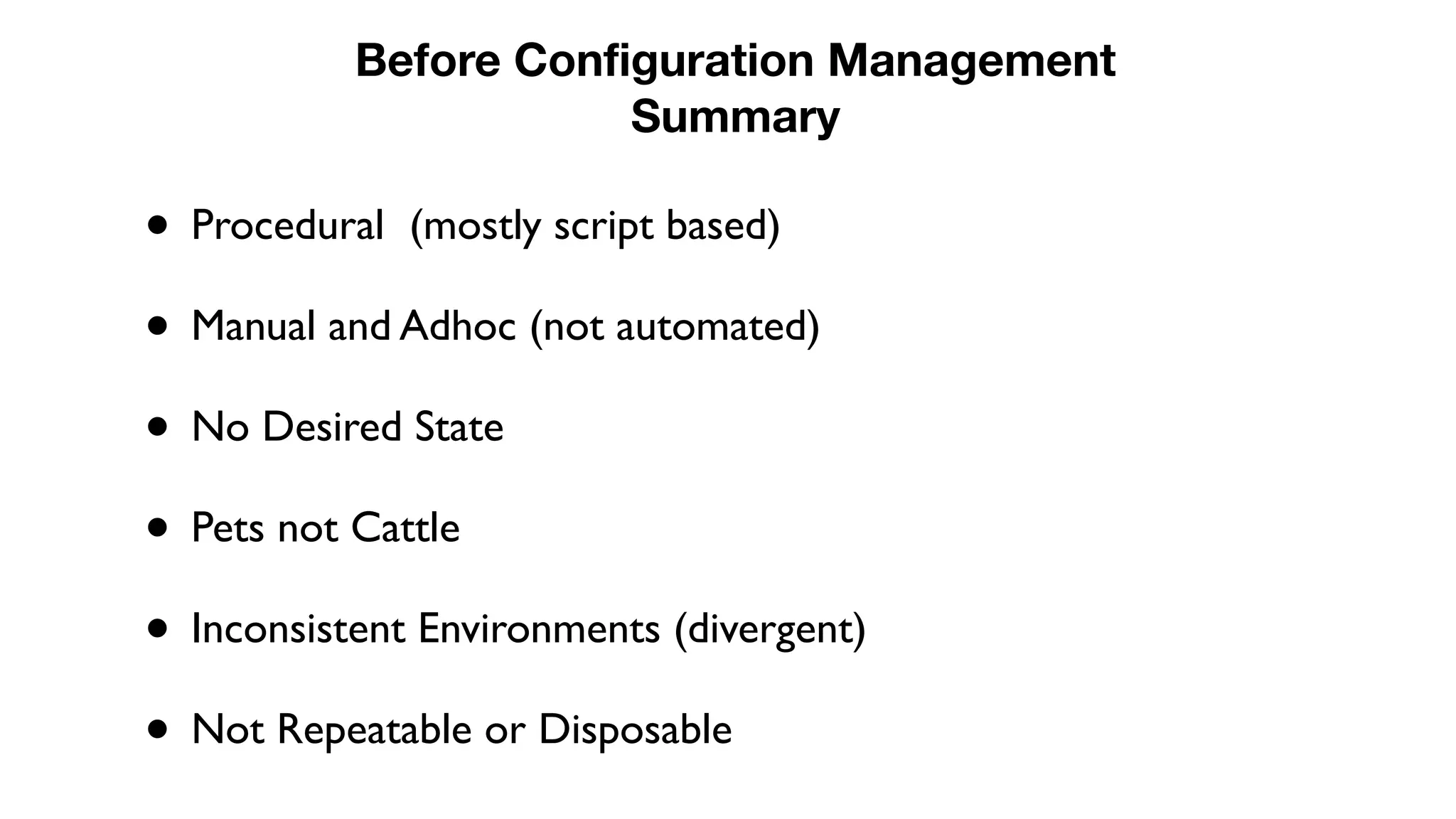
• Procedural (mostly script based)
• Manual and Adhoc (not automated)
• No Desired State
• Pets not Cattle
• Inconsistent Environments (divergent)
• Not Repeatable or Disposable
Before Configuration Management
Summary
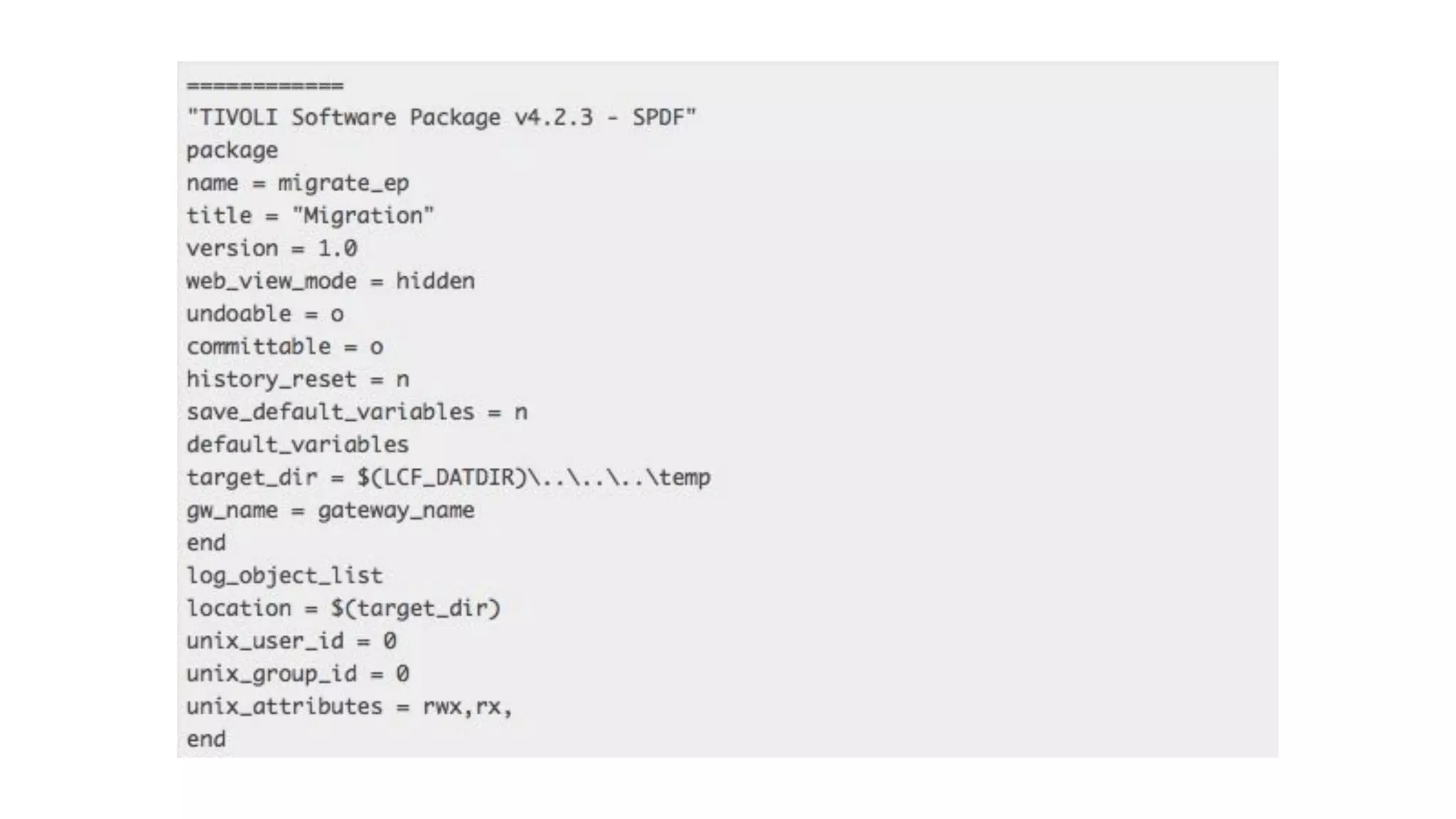
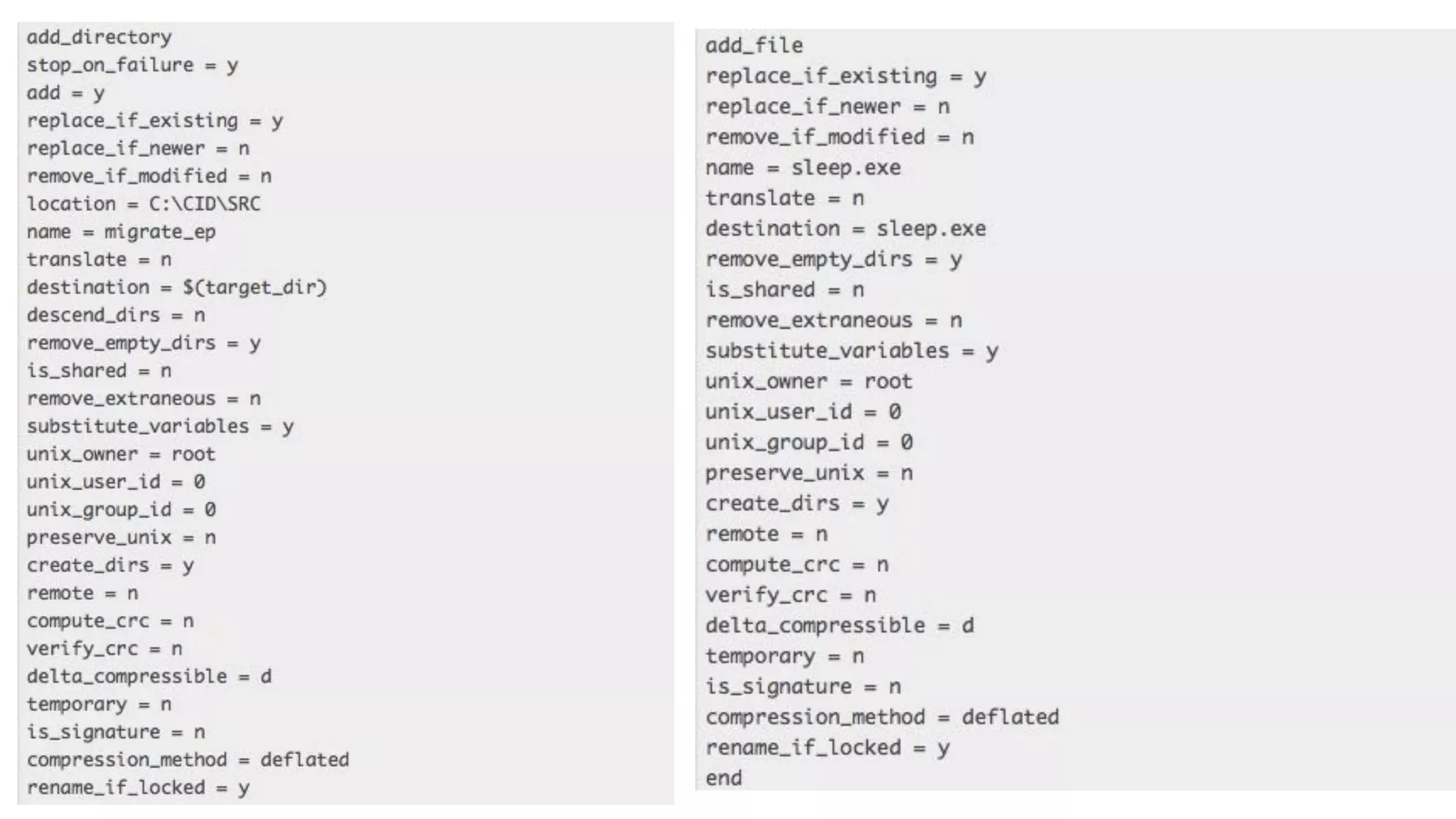
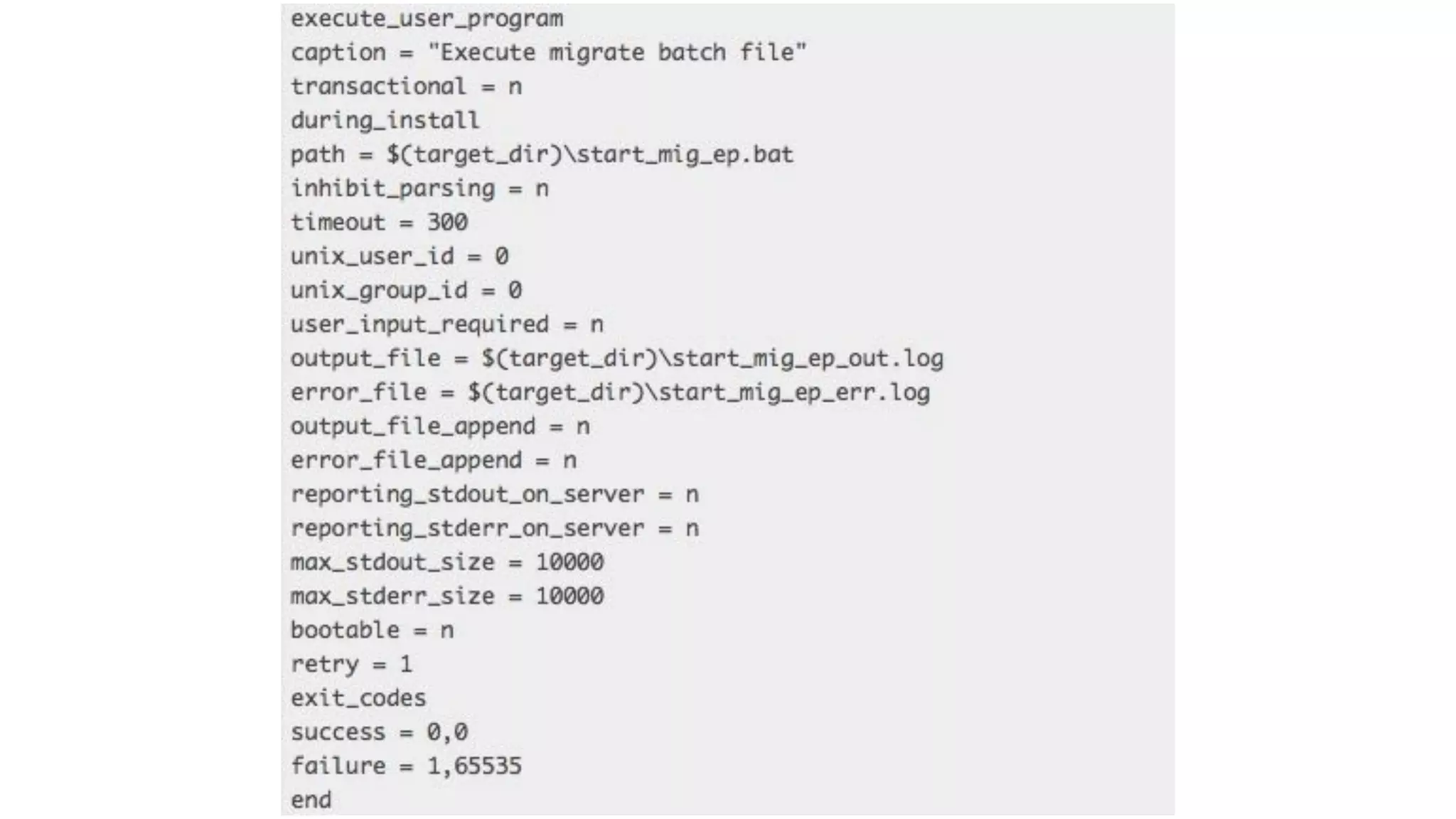
First Generation

Configuration
Management
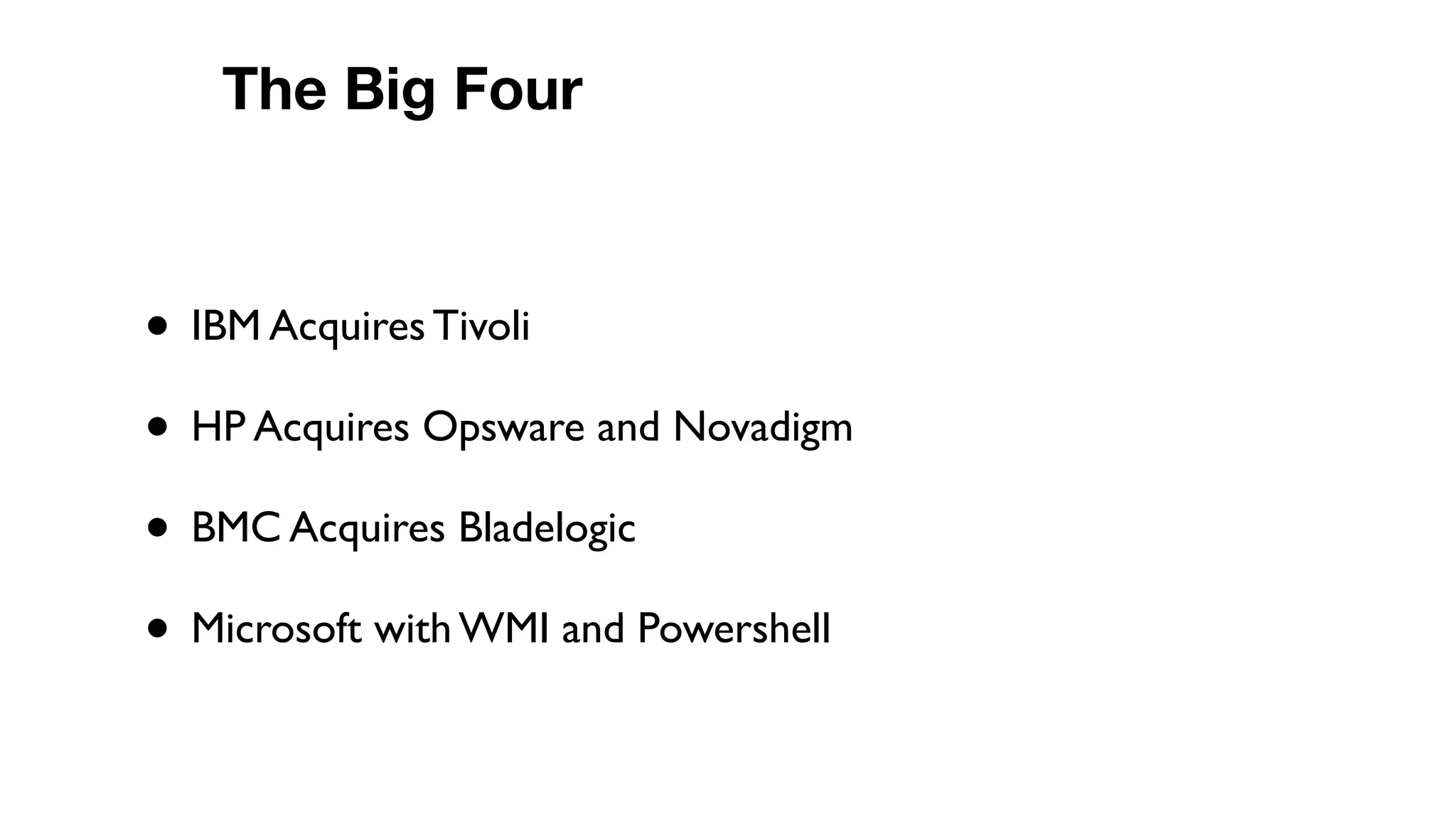
• IBM Acquires Tivoli
• HP Acquires Opsware and Novadigm
• BMC Acquires Bladelogic
• Microsoft with WMI and Powershell
The Big Four
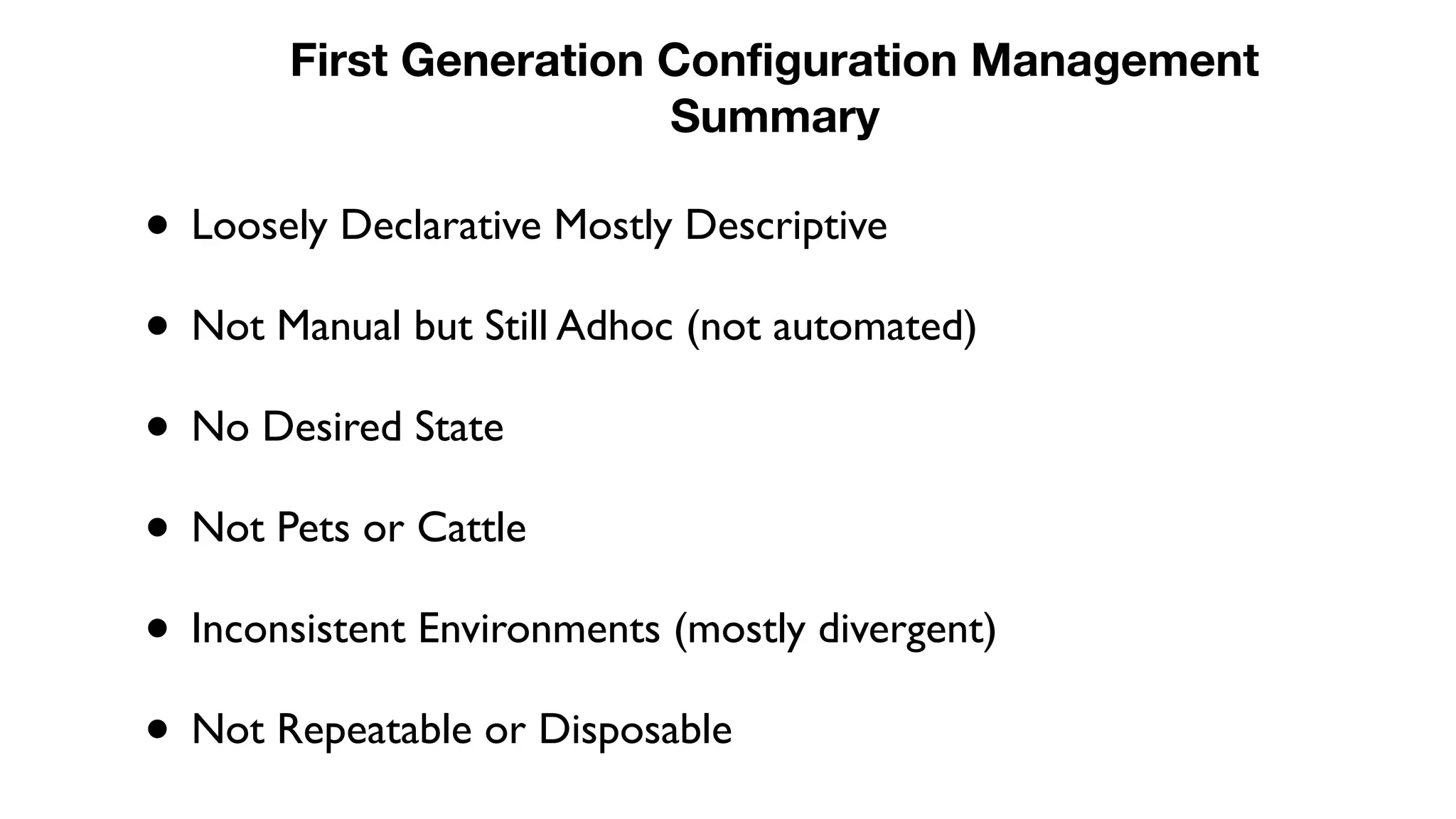
• Loosely Declarative Mostly Descriptive
• Not Manual but Still Adhoc (not automated)
• No Desired State
• Not Pets or Cattle
• Inconsistent Environments (mostly divergent)
• Not Repeatable or Disposable
First Generation Configuration Management
Summary
Second Generation

Configuration
Management
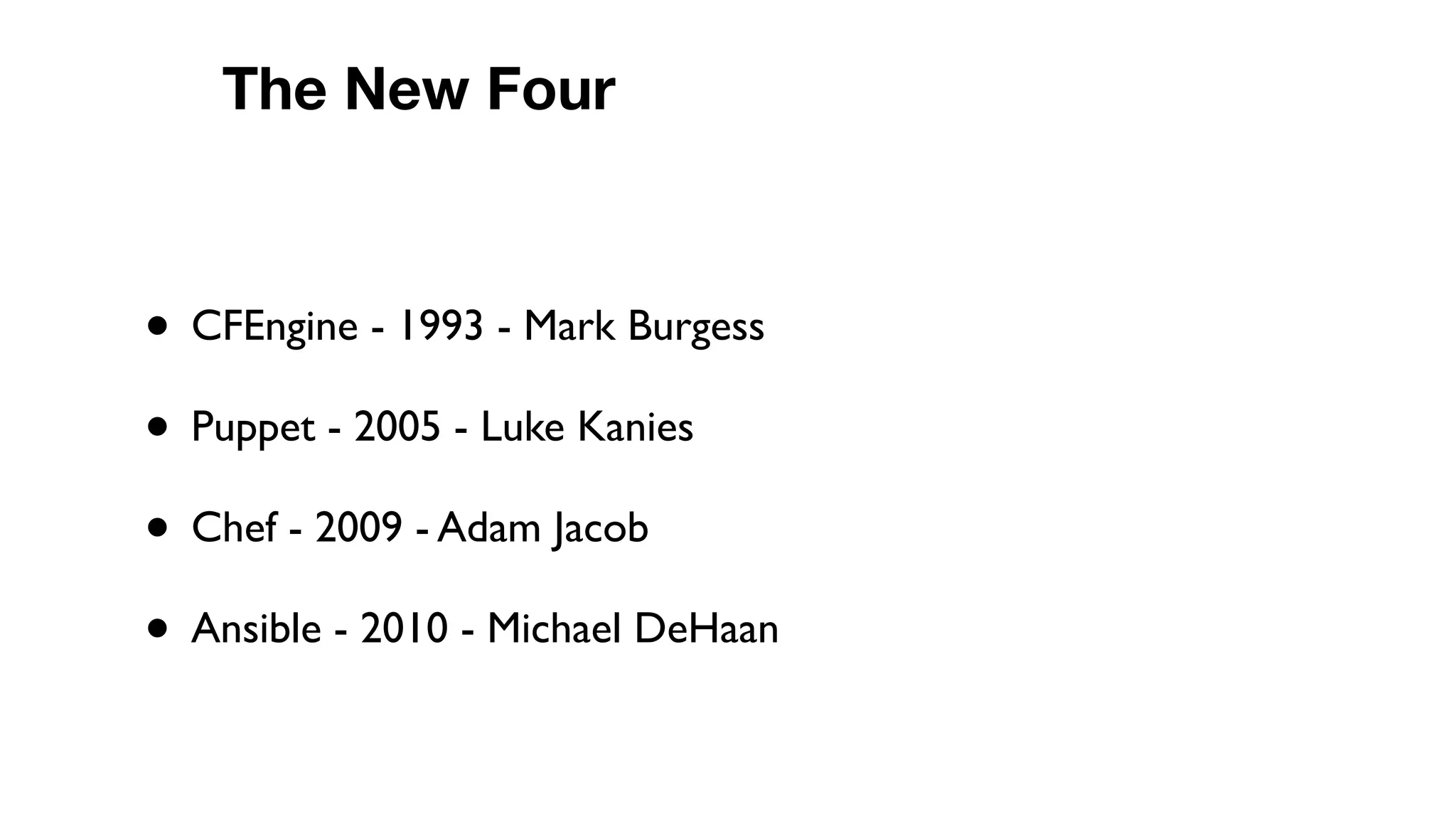
• CFEngine - 1993 - Mark Burgess
• Puppet - 2005 - Luke Kanies
• Chef - 2009 - Adam Jacob
• Ansible - 2010 - Michael DeHaan
The New Four
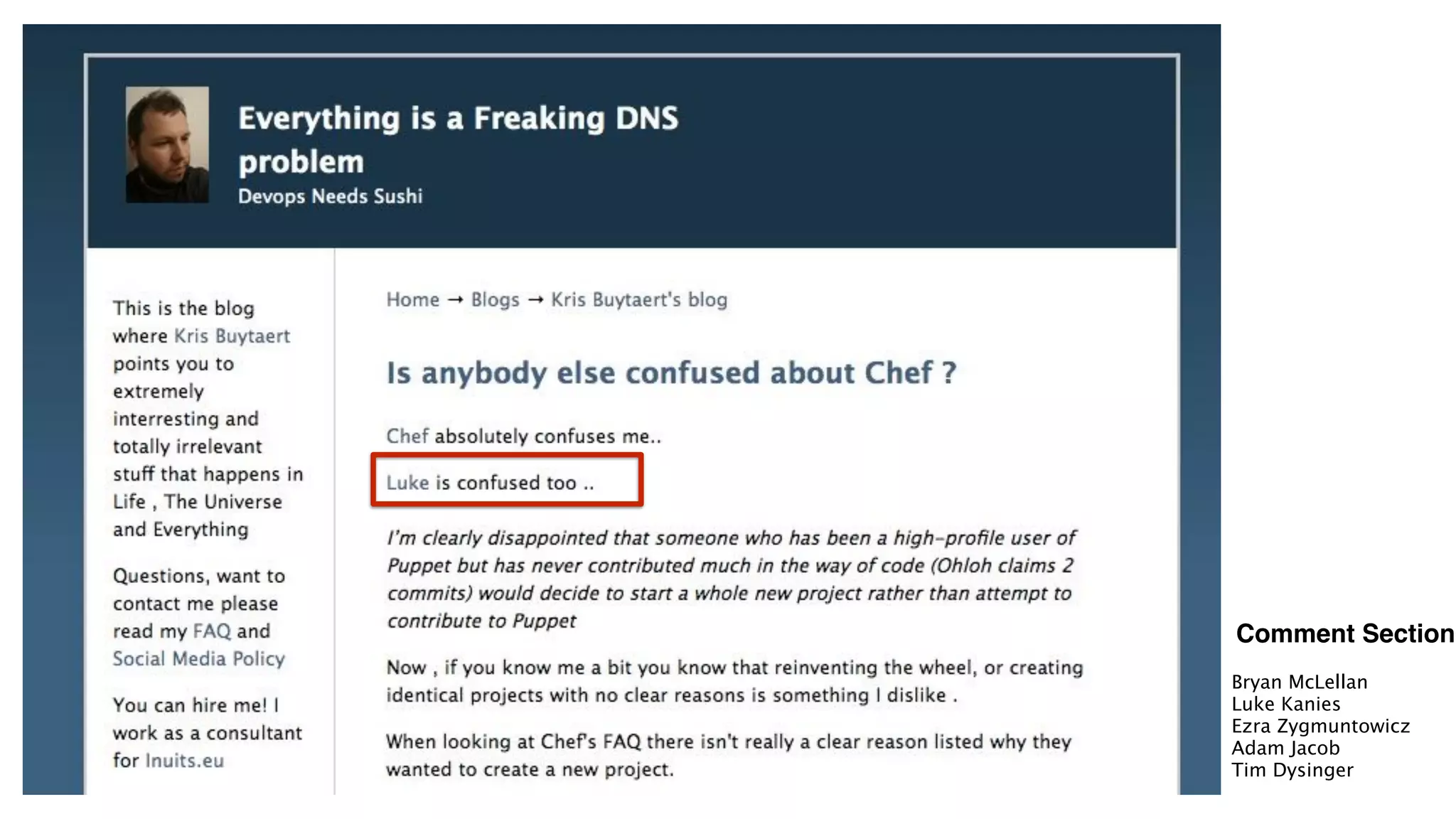
Comment Section


Bryan McLellan
Luke Kanies
Ezra Zygmuntowicz
Adam Jacob
Tim Dysinger
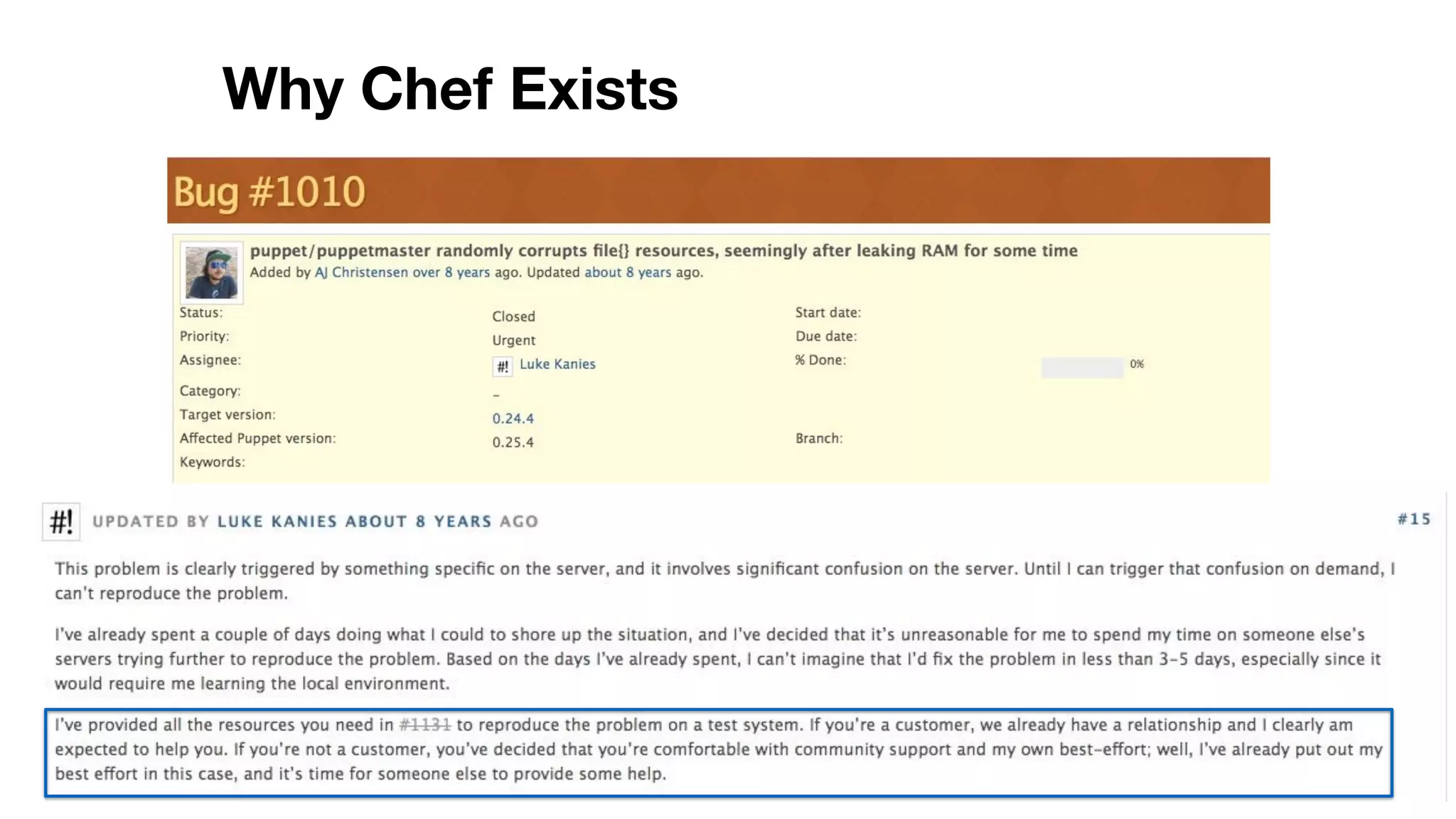
Why Chef Exists
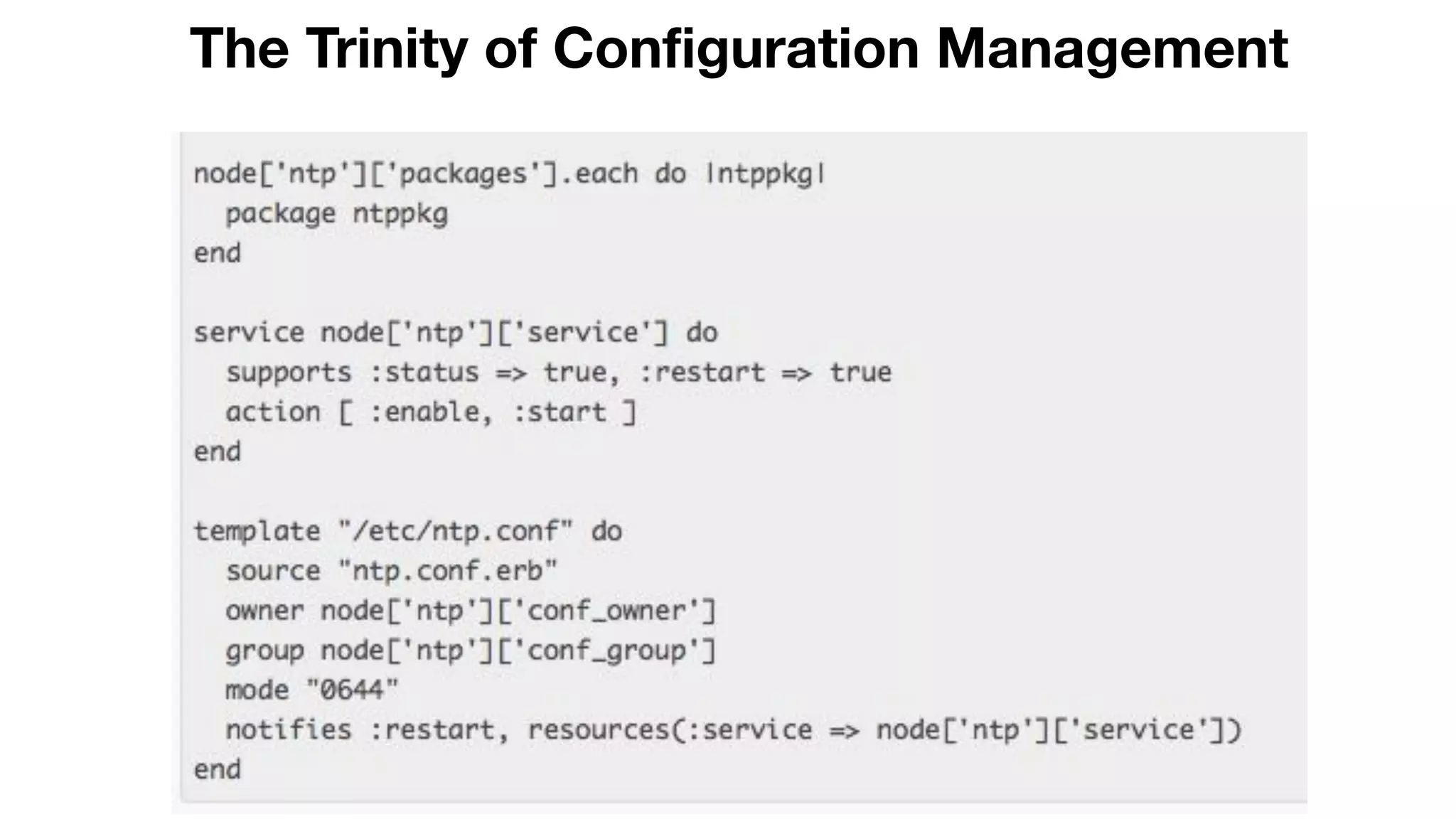
The Trinity of Configuration Management
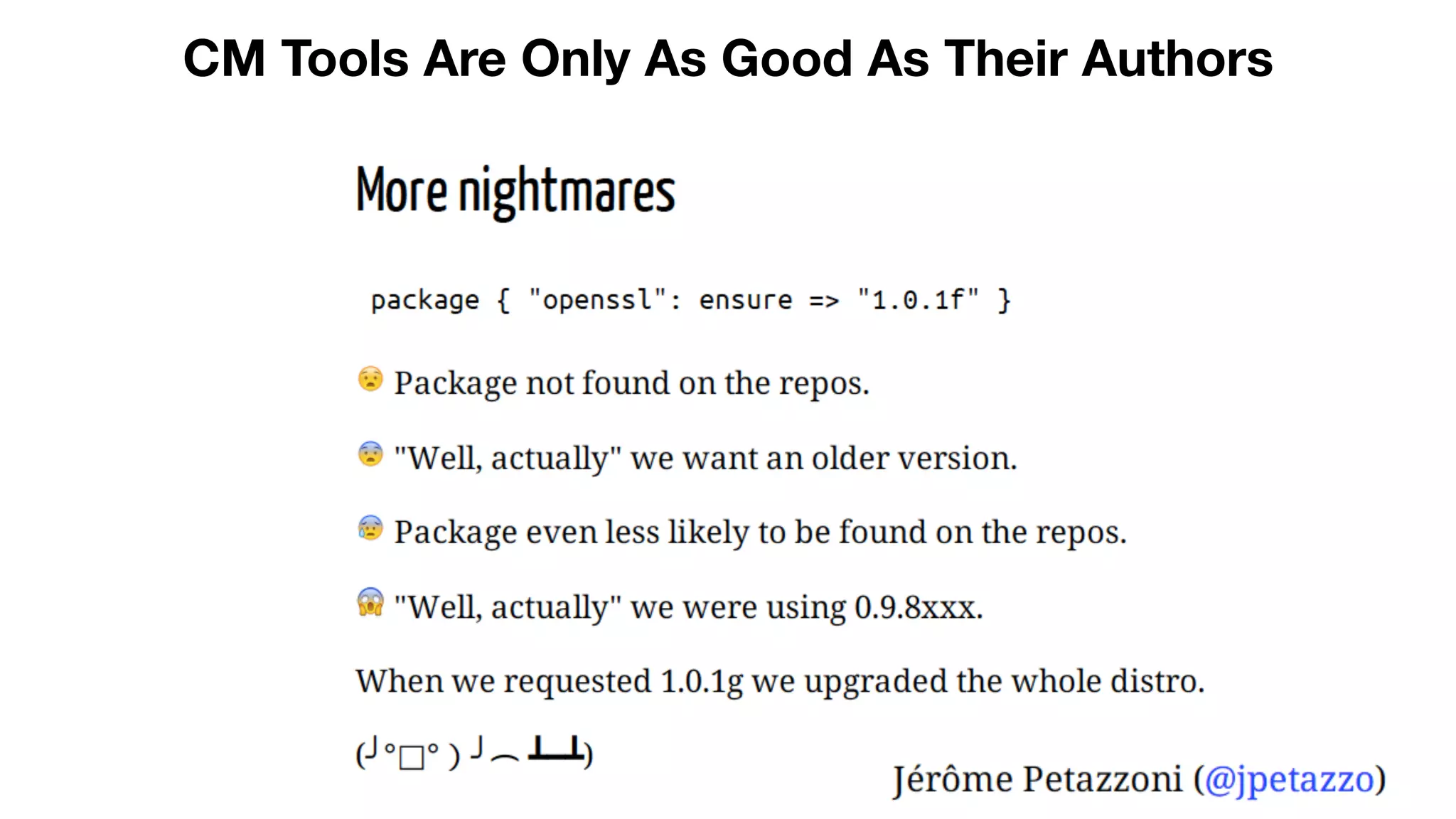
CM Tools Are Only As Good As Their Authors
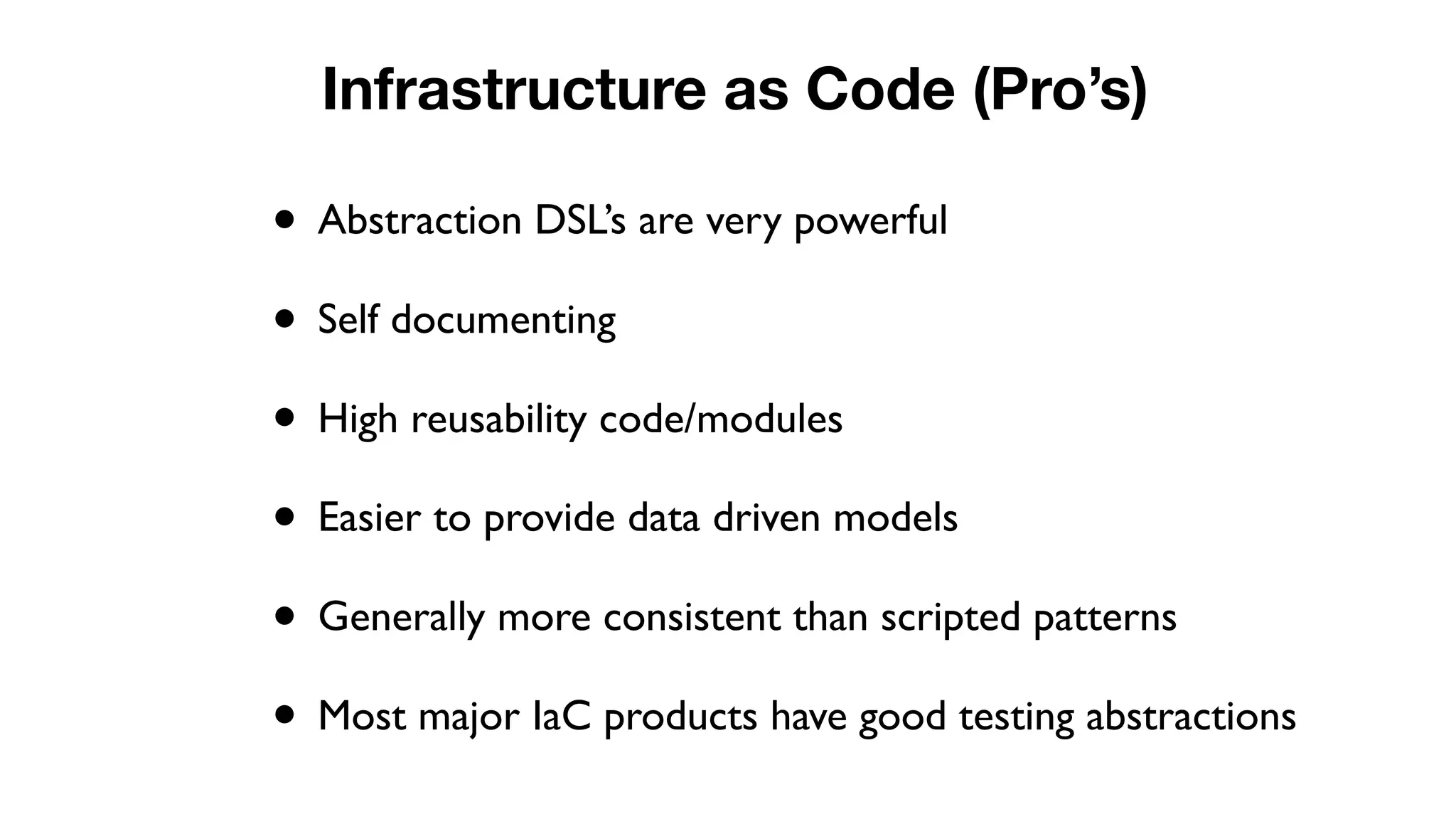
• Abstraction DSL’s are very powerful
• Self documenting
• High reusability code/modules
• Easier to provide data driven models
• Generally more consistent than scripted patterns
• Most major IaC products have good testing abstractions
Infrastructure as Code (Pro’s)
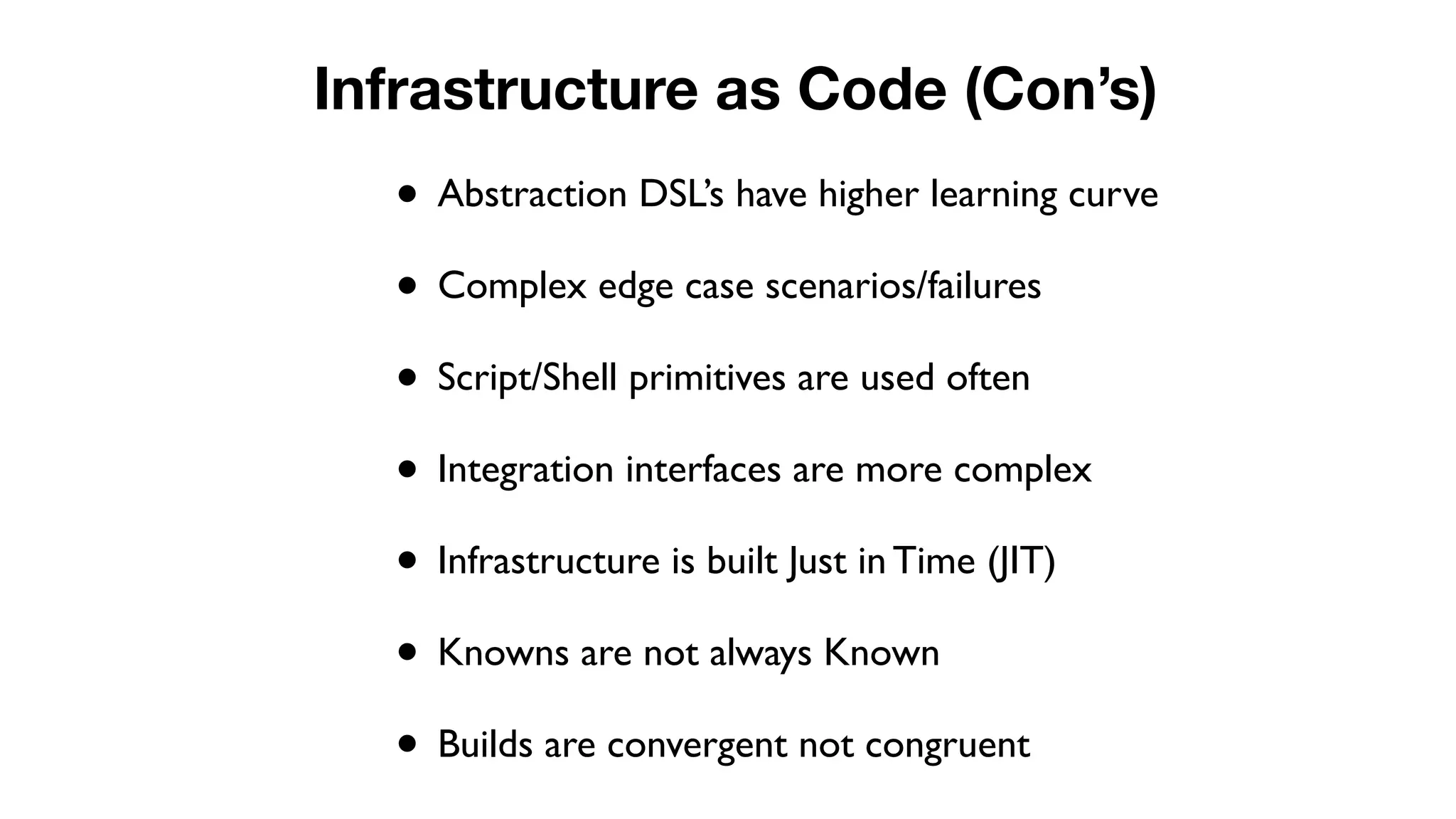
• Abstraction DSL’s have higher learning curve
• Complex edge case scenarios/failures
• Script/Shell primitives are used often
• Integration interfaces are more complex
• Infrastructure is built Just in Time (JIT)
• Knowns are not always Known
• Builds are convergent not congruent
Infrastructure as Code (Con’s)
• Mostly Declarative
• Fully Automated
• Desired State
• Cattle Not Pets
• Consistent Environments (convergent)
• Repeatable and Disposable
• Not Immutable
Second Generation Configuration Management
Summary
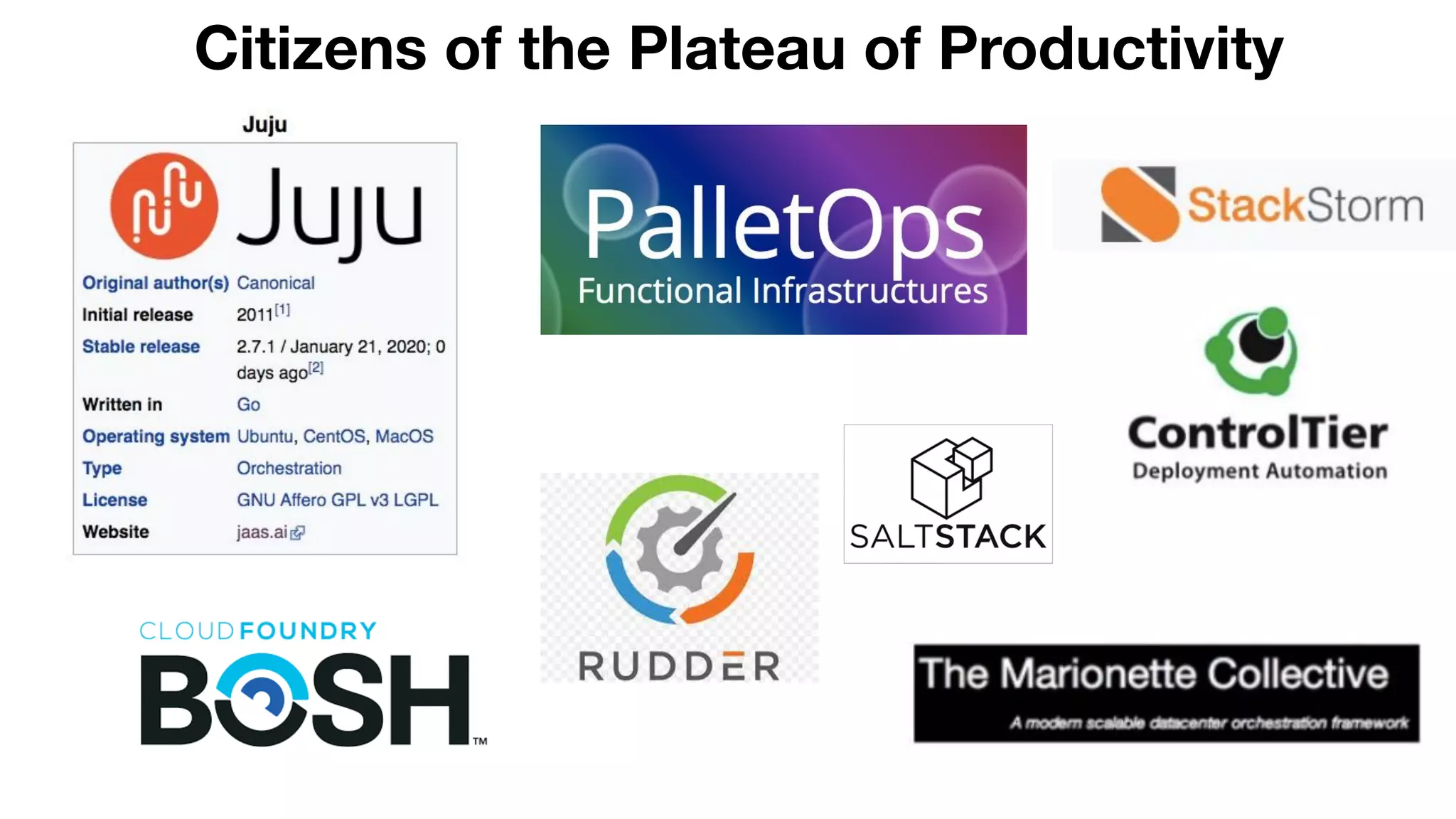
Citizens of the Plateau of Productivity
• Vagrant
• Packer
• Terraform
• Vault
Enter “Kid” Midas
Third Generation

Configuration
Management
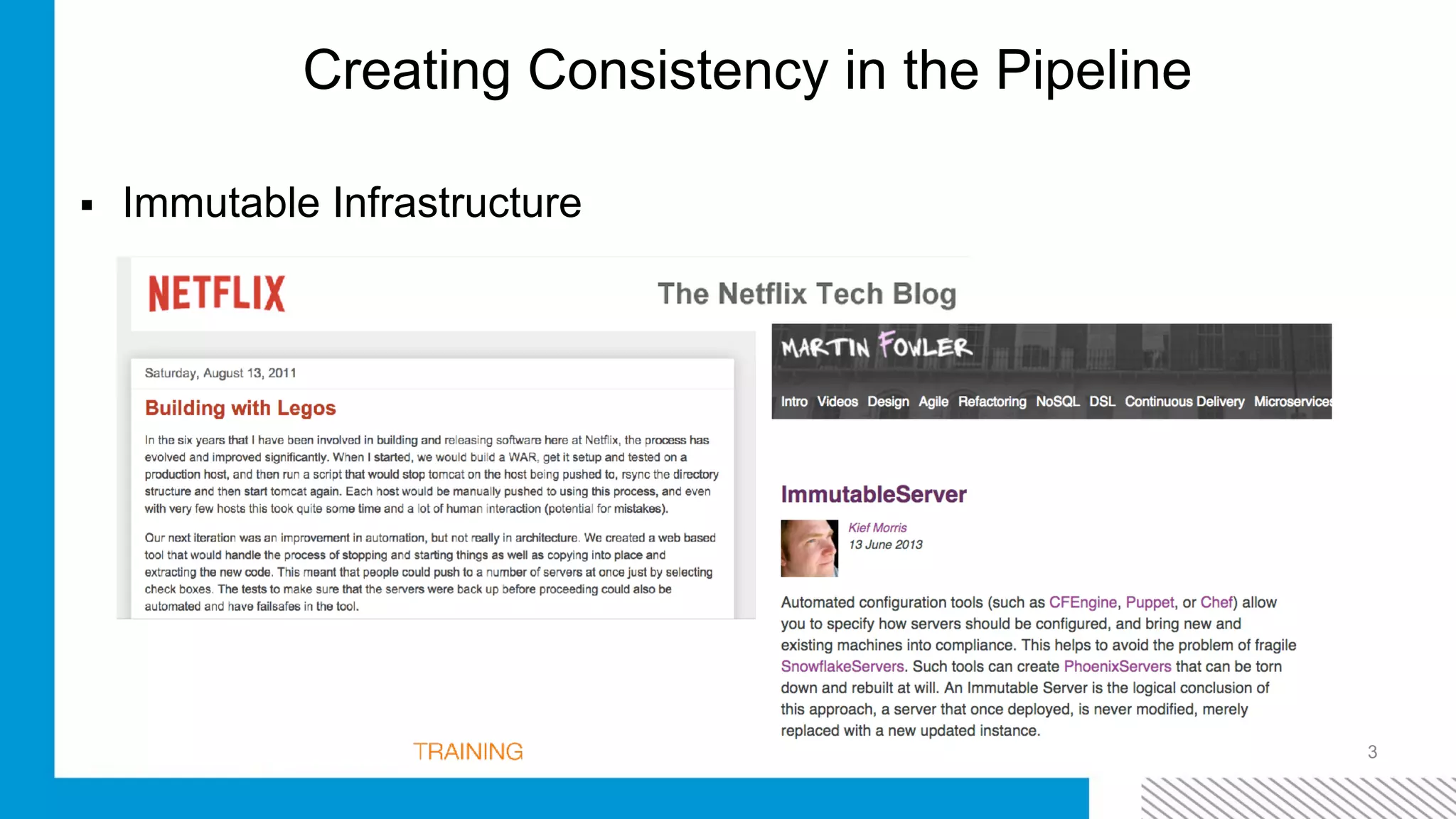
▪ Immutable Infrastructure
3
Creating Consistency in the Pipeline
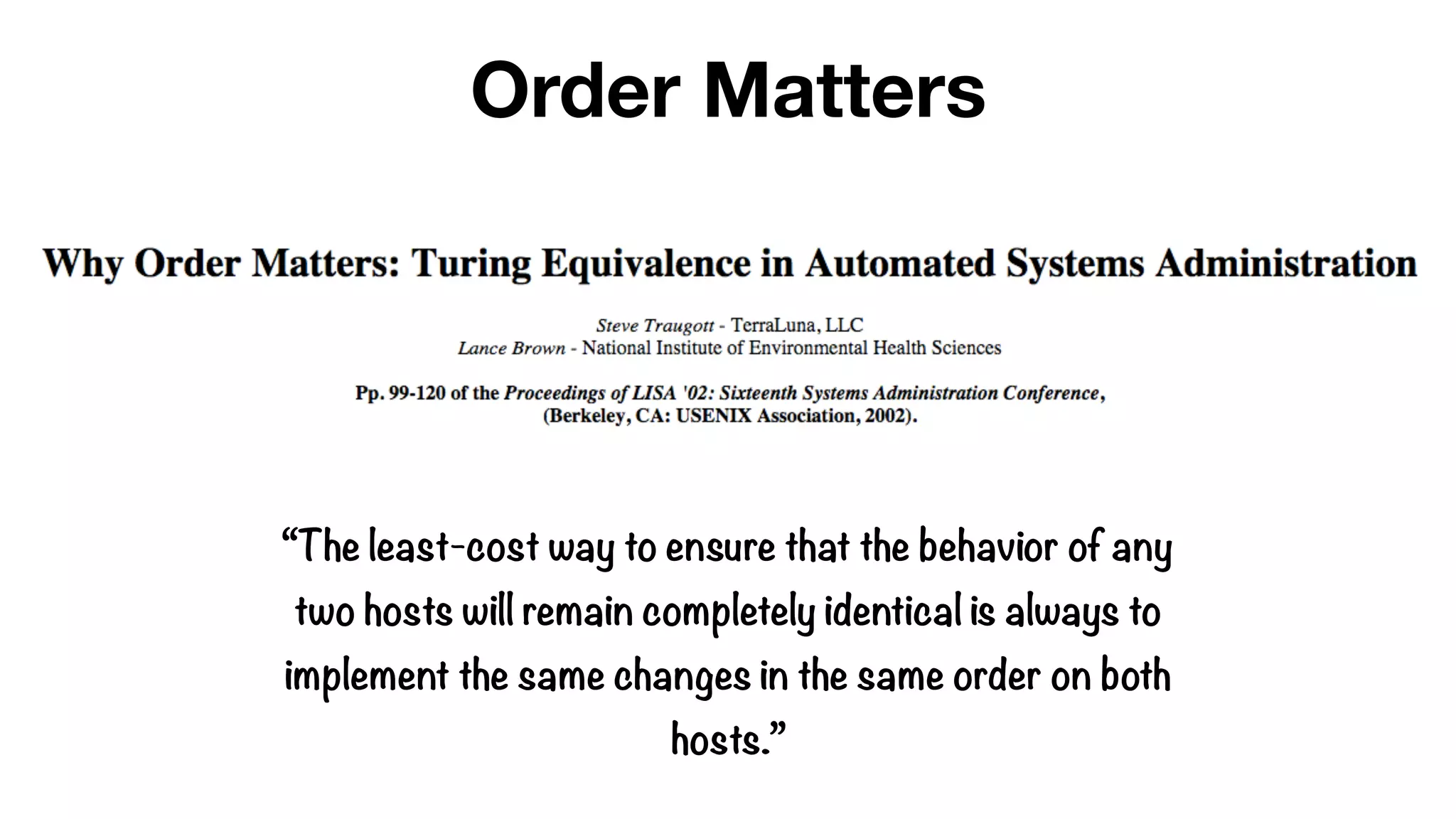
“The least-cost way to ensure that the behavior of any
two hosts will remain completely identical is always to
implement the same changes in the same order on both
hosts.”
Order Matters
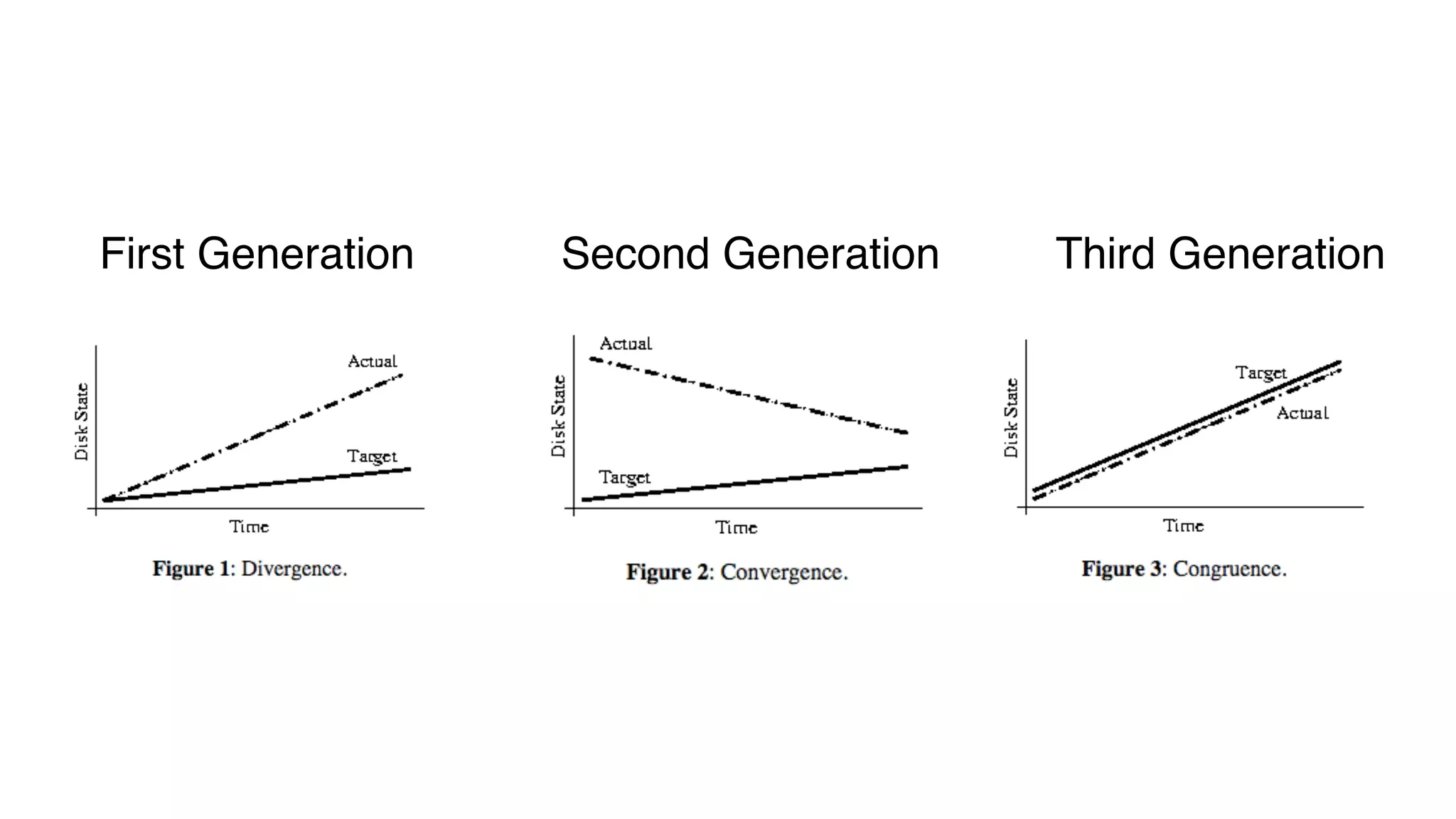
First Generation Second Generation Third Generation
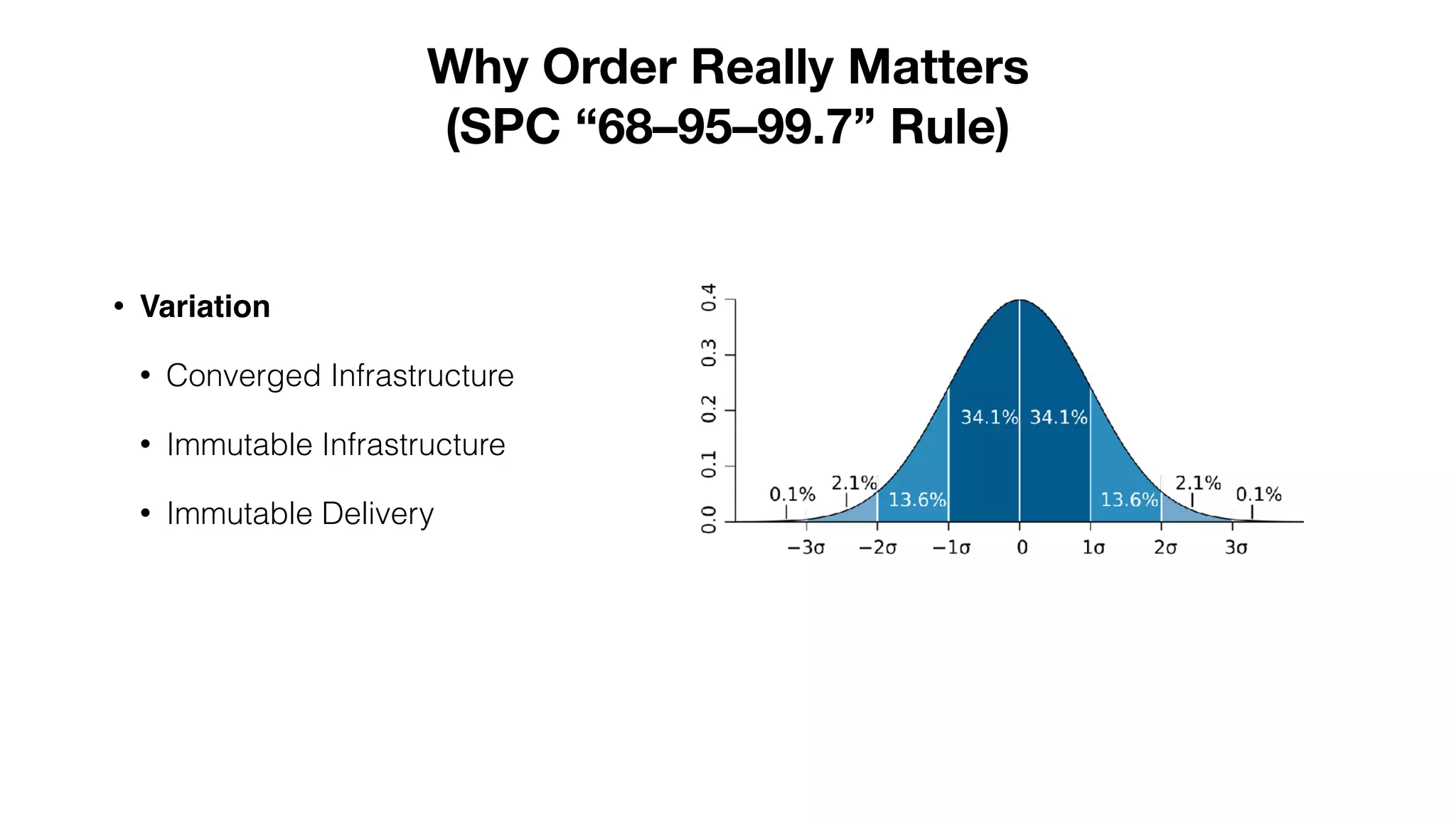
Why Order Really Matters
(SPC “68–95–99.7” Rule)
• Variation
• Converged Infrastructure
• Immutable Infrastructure
• Immutable Delivery
• Least variation pattern
• Faster provision model
• Fits well with Microservices architectures
• Less reliance on Infrastructure as code
• Binary consistency from dev to prod
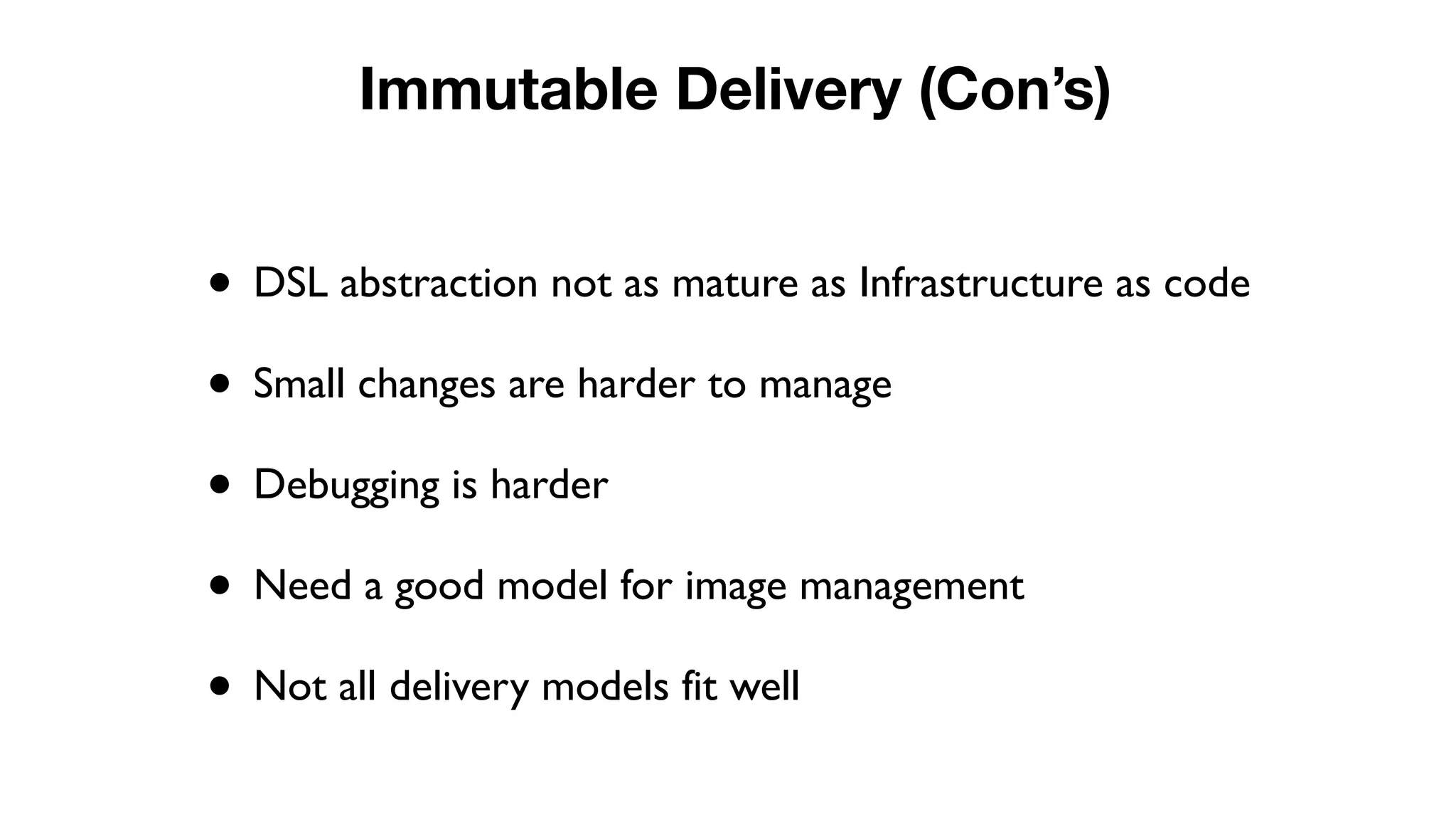
Immutable Delivery (Pro’s)
• DSL abstraction not as mature as Infrastructure as code
• Small changes are harder to manage
• Debugging is harder
• Need a good model for image management
• Not all delivery models fit well
Immutable Delivery (Con’s)
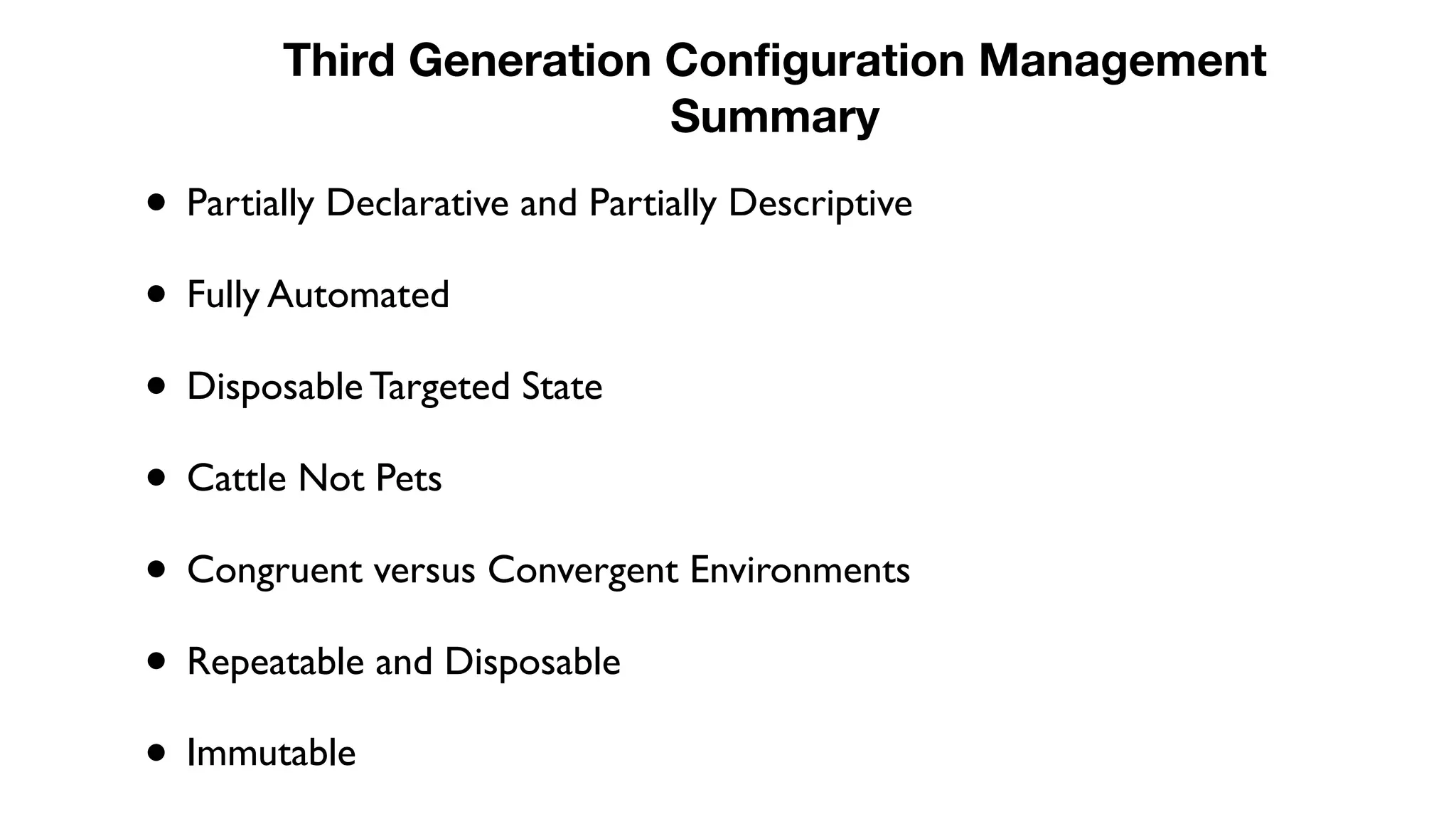
• Partially Declarative and Partially Descriptive
• Fully Automated
• Disposable Targeted State
• Cattle Not Pets
• Congruent versus Convergent Environments
• Repeatable and Disposable
• Immutable
Third Generation Configuration Management
Summary
“The New Normal”
Configuration
Management
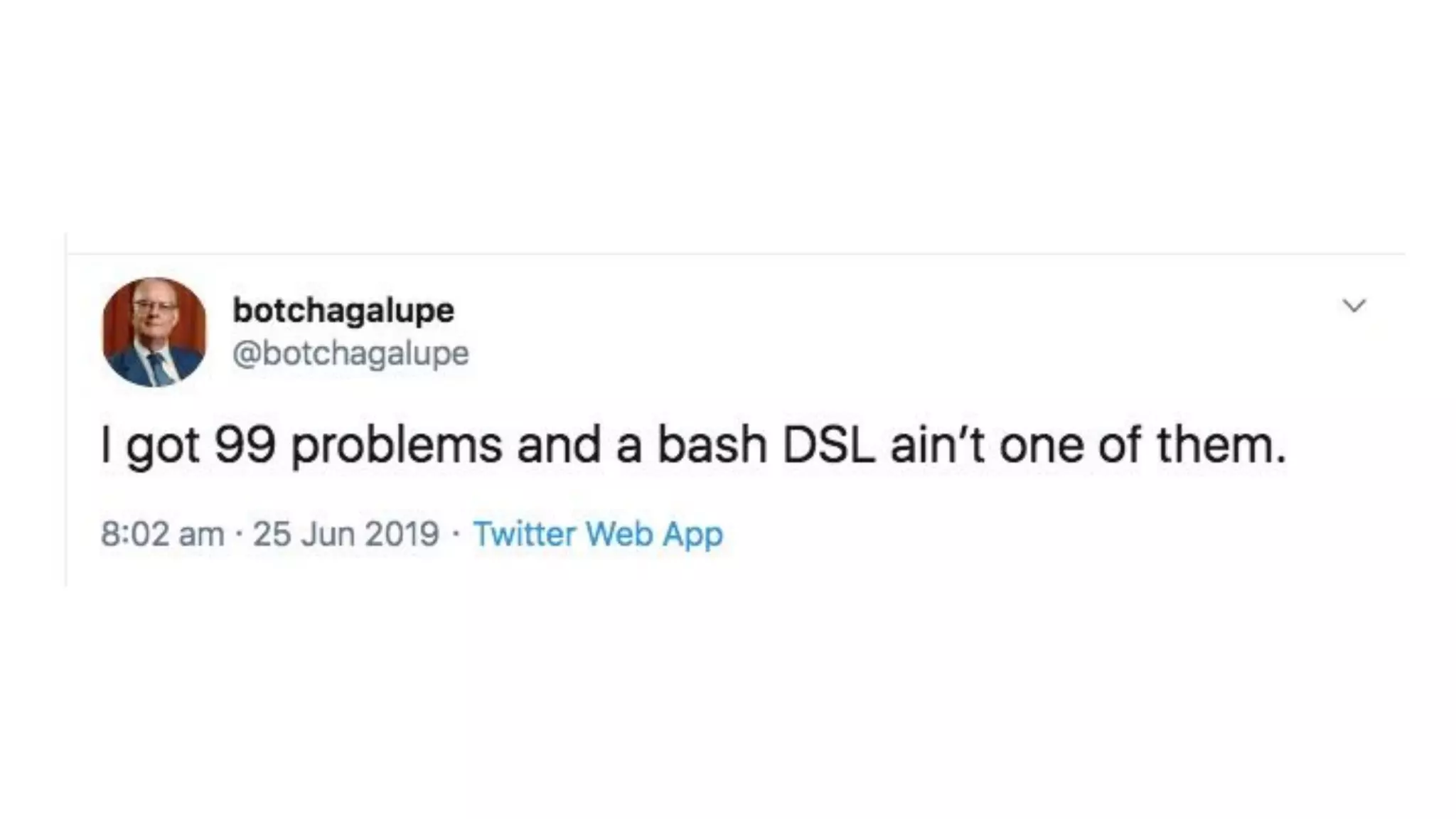
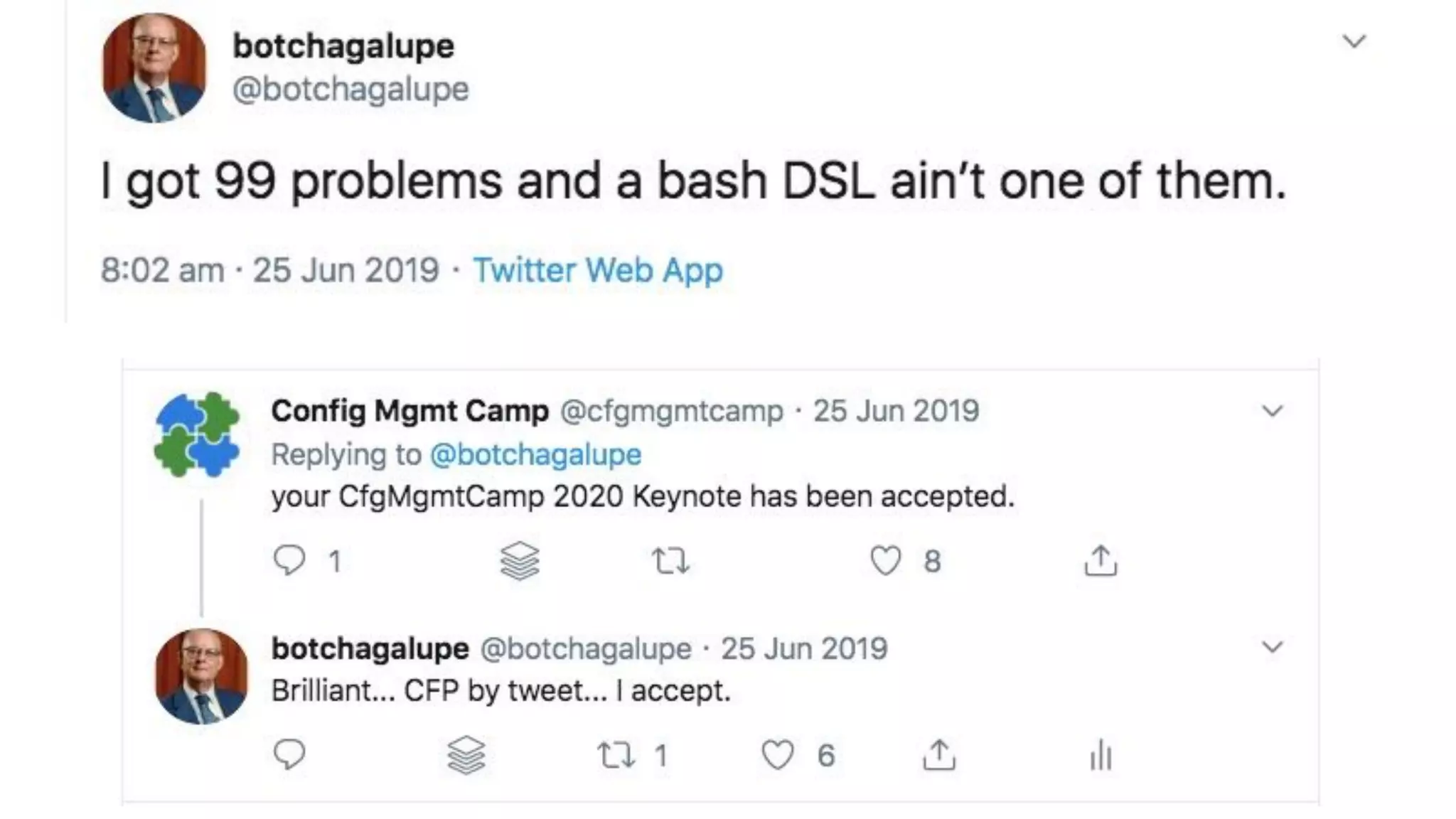
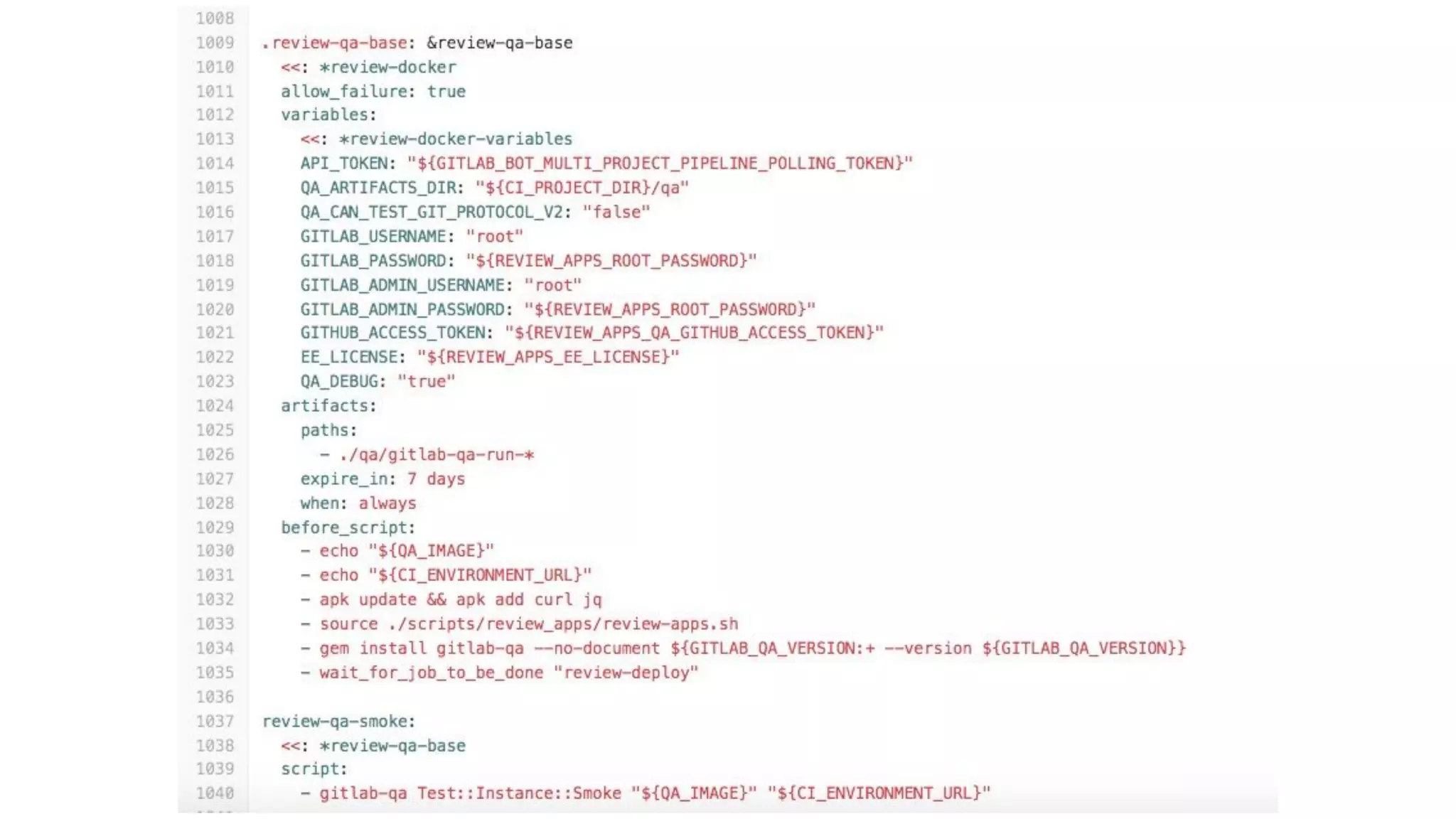
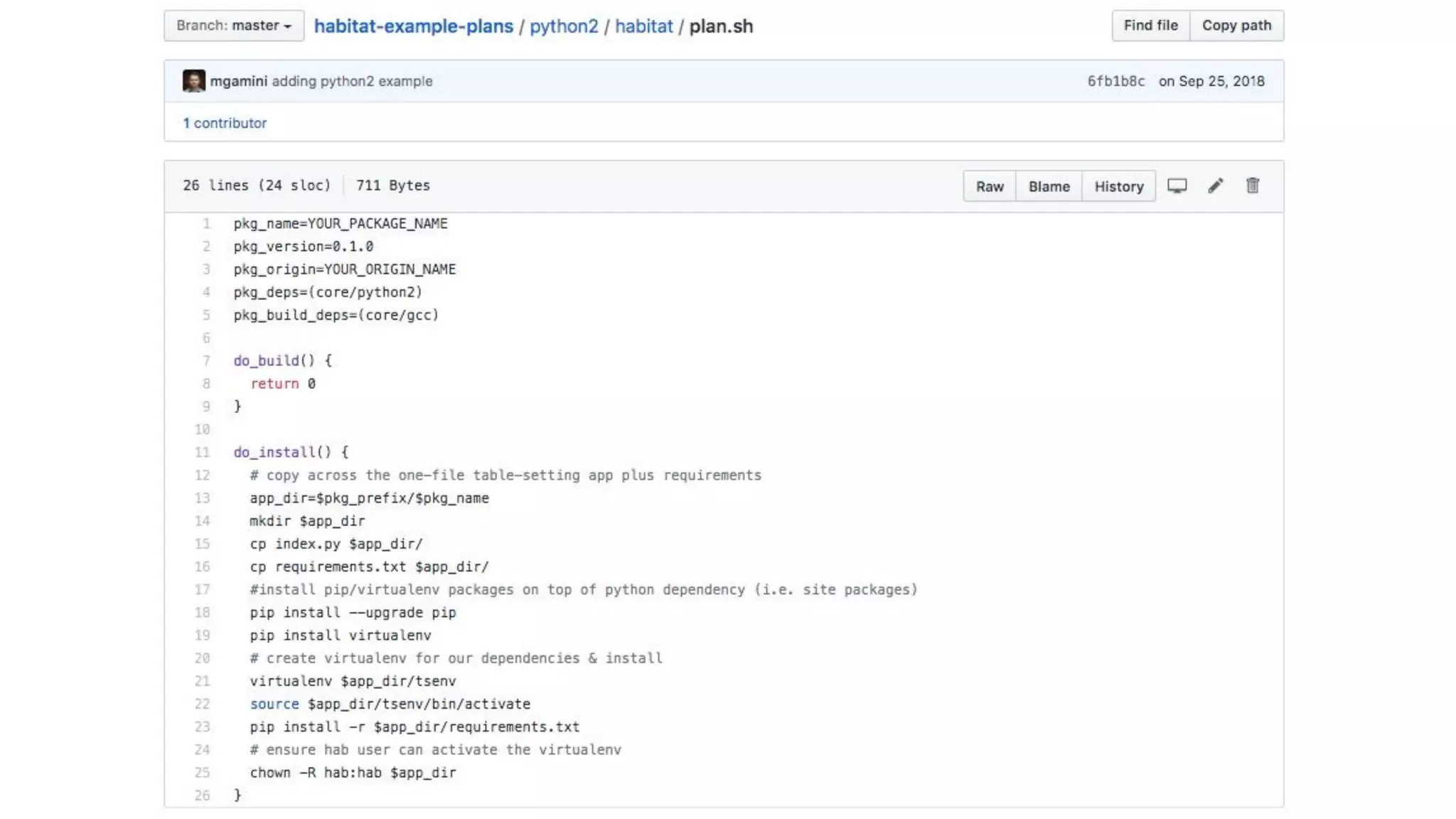
I Got 99 Problems and a Bash DSL Ain't One of Them

I Got 99 Problems and a Bash DSL Ain't One of Them

  • 2.
    • 40Years inIT/Infrastructure • Exxon, Canonical, Chef, Dell, Docker • Founder of 11 Startups • Spanned 4 Decades of Technologies • Author 12 Books • Instigator of the Devops Movement (CAMS) Who Am I… @Botchagalupe (John Willis)
  • 6.
    "YAML is apoor format for an external DSL, just as XML was. The popular configuration format du jour is always misused this way" YAML as data format is defensible. YAML as a programming language is not. If you're programming, use a programming language. I feel like there is a large gap between shell scripts and Ansible. If we draw a line, you end up with something like this. Bash/Make => CFEngine=>Chef/Puppet => Ansible
  • 7.
    • We startedout with Shell Scripts (Before) • Next created macro like definition files (First Generation) • Next we created primitive based declarative languages (Second) • Then we move back to definition files (Third Generation) • Here we are .. Shell Scripts are back in vogue The Irony of the Configuration Management 30 Year Arc
  • 8.
    The Drunken Historyof Configuration Management (First Generation) (Second Generation) (Third Generation) Scripts Mike Hadlow - The Configuration Complexity Clock
  • 9.
  • 13.
    • Procedural (mostlyscript based) • Manual and Adhoc (not automated) • No Desired State • Pets not Cattle • Inconsistent Environments (divergent) • Not Repeatable or Disposable Before Configuration Management Summary
  • 14.
  • 16.
    • IBM AcquiresTivoli • HP Acquires Opsware and Novadigm • BMC Acquires Bladelogic • Microsoft with WMI and Powershell The Big Four
  • 17.
    • Loosely DeclarativeMostly Descriptive • Not Manual but Still Adhoc (not automated) • No Desired State • Not Pets or Cattle • Inconsistent Environments (mostly divergent) • Not Repeatable or Disposable First Generation Configuration Management Summary
  • 21.
  • 23.
    • CFEngine -1993 - Mark Burgess • Puppet - 2005 - Luke Kanies • Chef - 2009 - Adam Jacob • Ansible - 2010 - Michael DeHaan The New Four
  • 24.
    Comment Section 
 Bryan McLellan LukeKanies Ezra Zygmuntowicz Adam Jacob Tim Dysinger
  • 25.
  • 26.
    The Trinity ofConfiguration Management
  • 27.
    CM Tools AreOnly As Good As Their Authors
  • 28.
    • Abstraction DSL’sare very powerful • Self documenting • High reusability code/modules • Easier to provide data driven models • Generally more consistent than scripted patterns • Most major IaC products have good testing abstractions Infrastructure as Code (Pro’s)
  • 29.
    • Abstraction DSL’shave higher learning curve • Complex edge case scenarios/failures • Script/Shell primitives are used often • Integration interfaces are more complex • Infrastructure is built Just in Time (JIT) • Knowns are not always Known • Builds are convergent not congruent Infrastructure as Code (Con’s)
  • 30.
    • Mostly Declarative •Fully Automated • Desired State • Cattle Not Pets • Consistent Environments (convergent) • Repeatable and Disposable • Not Immutable Second Generation Configuration Management Summary
  • 31.
    Citizens of thePlateau of Productivity
  • 32.
    • Vagrant • Packer •Terraform • Vault Enter “Kid” Midas
  • 33.
  • 36.
    ▪ Immutable Infrastructure 3 CreatingConsistency in the Pipeline
  • 38.
    “The least-cost wayto ensure that the behavior of any two hosts will remain completely identical is always to implement the same changes in the same order on both hosts.” Order Matters
  • 39.
    First Generation SecondGeneration Third Generation
  • 40.
    Why Order ReallyMatters (SPC “68–95–99.7” Rule) • Variation • Converged Infrastructure • Immutable Infrastructure • Immutable Delivery
  • 41.
    • Least variationpattern • Faster provision model • Fits well with Microservices architectures • Less reliance on Infrastructure as code • Binary consistency from dev to prod Immutable Delivery (Pro’s)
  • 42.
    • DSL abstractionnot as mature as Infrastructure as code • Small changes are harder to manage • Debugging is harder • Need a good model for image management • Not all delivery models fit well Immutable Delivery (Con’s)
  • 43.
    • Partially Declarativeand Partially Descriptive • Fully Automated • Disposable Targeted State • Cattle Not Pets • Congruent versus Convergent Environments • Repeatable and Disposable • Immutable Third Generation Configuration Management Summary
  • 44.